14 Night-Blooming Moon Flowers That Turn Your Yard into a Moonlit Escape

Updated August 11, 2026
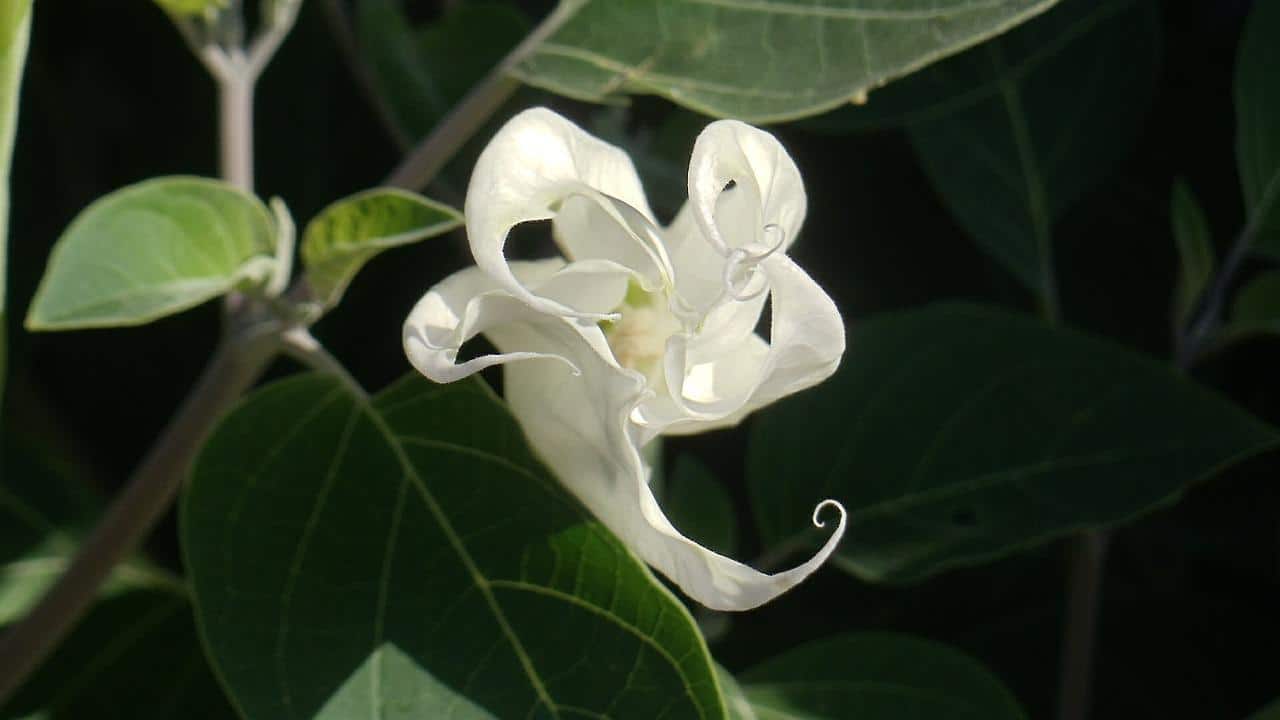
Most gardens go quiet once the sun sets, but a handful of flowering plants save their best performance for after dark. Different types of moon flowers open their petals in the evening, release their strongest fragrance under starlight, and rely on moths, bats, and other nocturnal pollinators instead of bees. Some glow almost white in the moonlight, while others unfurl so quickly you can watch the transformation happen in real time.
Gardeners across the United States plant these species together to create what’s often called a moon garden — a space designed to be enjoyed at dusk rather than at noon. This guide covers 14 moonflower varieties, from familiar vines to lesser-known desert bloomers, with growing notes, bloom habits, and the traits that make each one worth a spot near a patio or porch. For a broader look at nocturnal blooms and pollinator-friendly design, MasterClass has put together a useful moon garden guide that pairs well with the species below.
| Flower | Typical Bloom Time | Fragrance Level | US Growing Zones |
|---|---|---|---|
| Evening Primrose | Dusk to sunrise | Mild, lemony | 4-9 |
| Angel’s Trumpet | Evening onward | Strong, sweet | 9-11 (container elsewhere) |
| Flowering Tobacco | Late afternoon into night | Strong, clove-like | 10-11 (grown as annual) |
| Tuberose | Evening | Very strong, heady | 8-11 |
| Gardenia | Evening, holds into day | Strong, creamy | 8-11 |
| Four O’Clock | Late afternoon to morning | Mild, fruity | 2-11 (annual in cold zones) |
| Night Blooming Cereus | One night only | Strong, vanilla-like | 10-12 |
| Night Phlox | Evening | Strong, honey-almond | Grown as annual nationwide |
| Casa Blanca Lily | Evening intensifies | Strong, classic lily | 4-9 |
| Night Blooming Jasmine | Night | Very strong, sweet | 9-11 (container elsewhere) |
| Yucca | Evening | Mild | 4-11 |
| Night-Flowering Catchfly | Evening | Mild, clove-scented | Grown as annual nationwide |
| Datura | Dusk | Strong, musky | 9-11 (annual elsewhere) |
| Ipomoea Alba (Moonflower) | Evening, one bloom per night | Sweet, gardenia-like | 10-12 (annual vine elsewhere) |
1. Evening Primrose
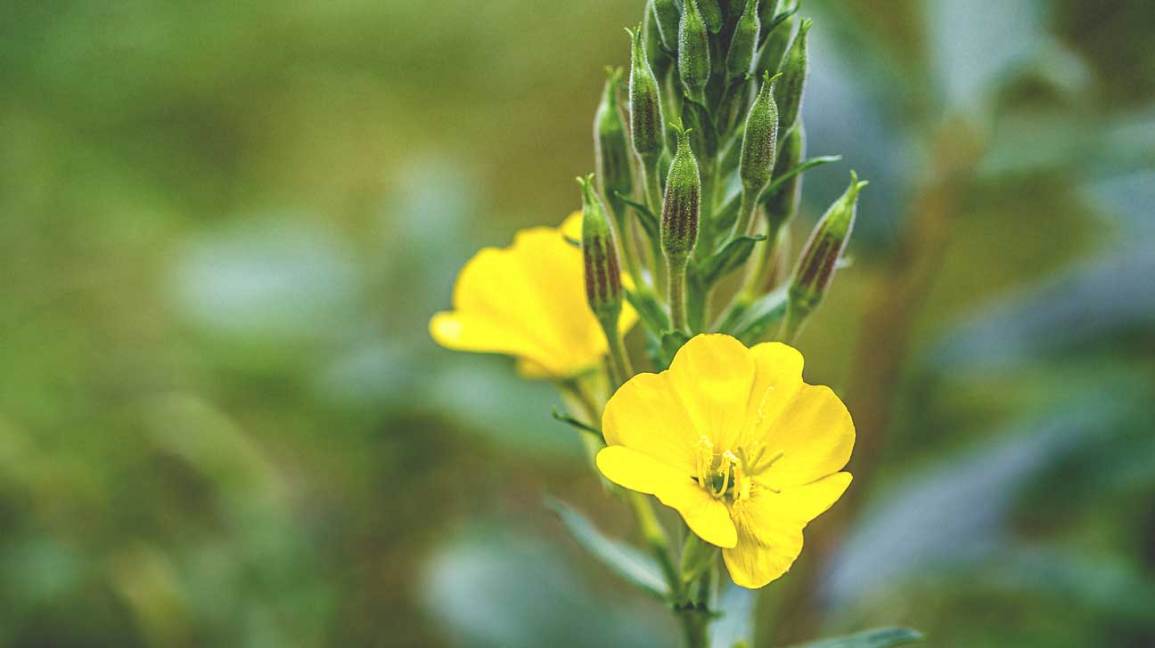
The evening primrose (Oenothera biennis) is a native North American wildflower that opens its pale yellow blooms so fast in the last light of dusk that the movement is visible to the naked eye. Each flower lasts only a single night, wilting by mid-morning, but a mature plant produces new buds continuously through summer. The lemony scent draws sphinx moths, which pollinate the plant while feeding on its nectar.
Evening primrose thrives in poor, sandy soil and full sun, making it a low-maintenance choice for USDA zones 4 through 9. Home gardeners often let it self-seed along fence lines or naturalized borders rather than growing it in tidy beds. The seeds and roots have a long history of use in traditional remedies, placing it alongside other edible flower species grown for more than looks.
2. Angel’s Trumpet
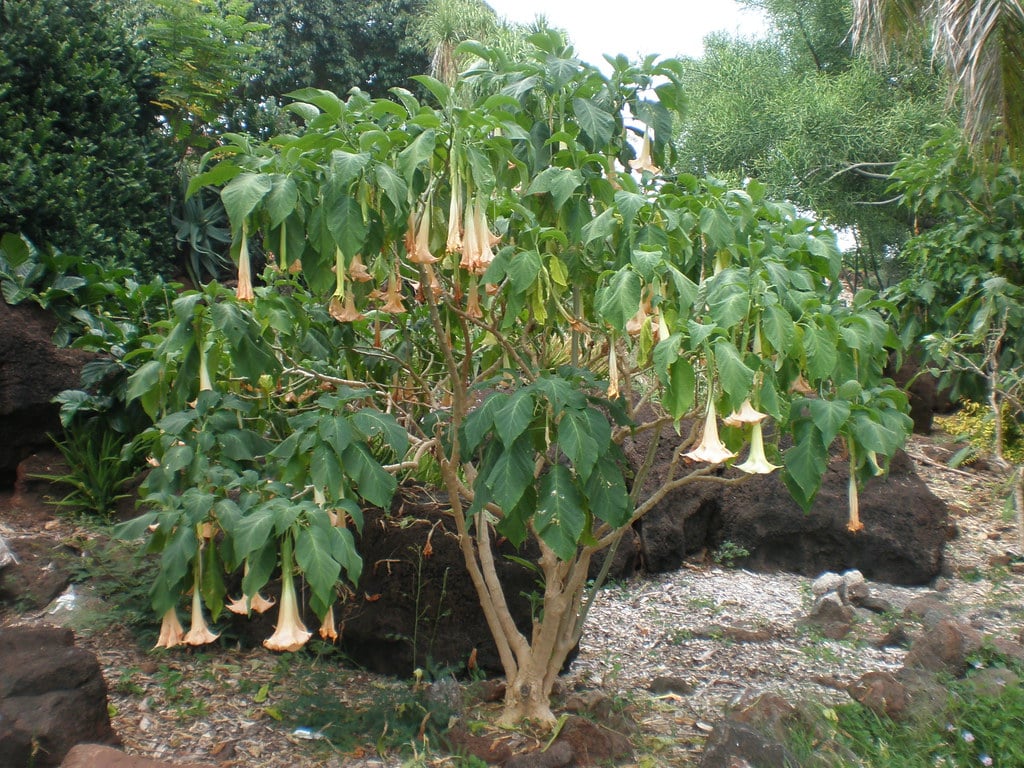
Angel’s trumpet (Brugmansia suaveolens) produces some of the largest blooms on this list — pendulous, trumpet-shaped flowers that can reach 10 inches long and hang from woody, shrub-like stems. The fragrance intensifies dramatically after sunset, filling an entire patio with a sweet, almost custard-like scent that many gardeners plant specifically near seating areas.
Every part of this plant is toxic if ingested, so it needs placement away from curious pets and small children. Gardeners in zones 9 through 11 can grow it in the ground; everyone else typically overwinters it in containers indoors. Its dramatic form pairs well with other night-focused plantings covered in LawnStarter’s roundup of night-blooming plants for moon gardens , and it shares a family resemblance with the trumpet-shaped, similarly showy Adenium flower varieties grown in warm-climate gardens.
3. Flowering Tobacco
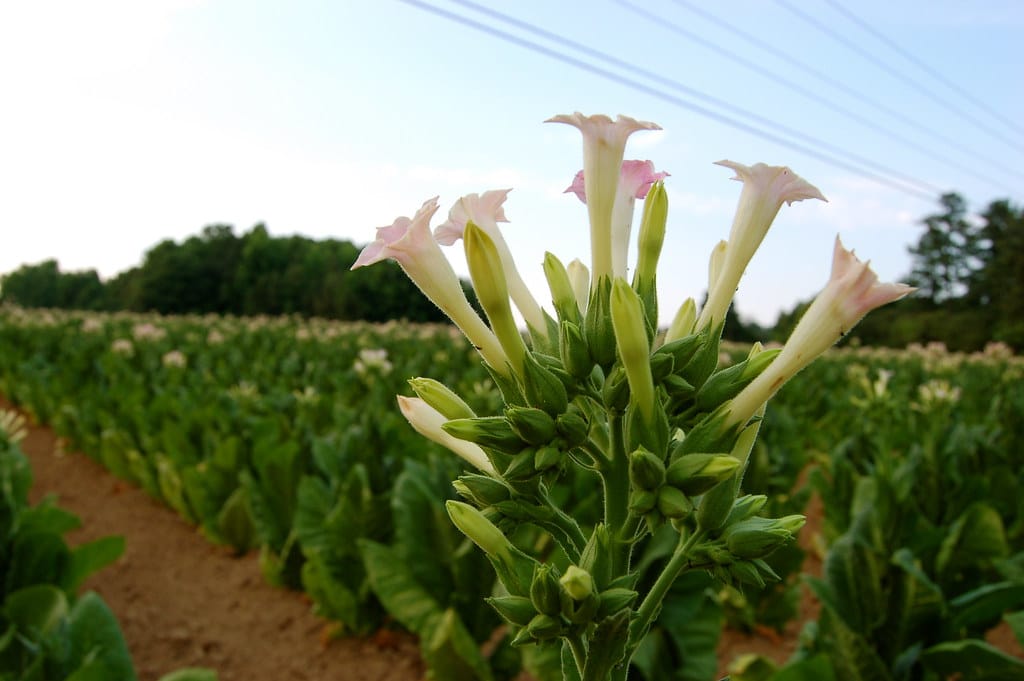
Flowering tobacco (Nicotiana alata) sends up tall, airy stems topped with star-shaped blooms in white, pink, or lime green. The flowers stay closed during the heat of the day and open fully once temperatures drop, releasing a clove-and-vanilla fragrance that carries well across a yard.
Gardeners grow it as an annual almost everywhere outside zones 10 and 11, starting seeds indoors six to eight weeks before the last frost. It tolerates part shade better than most moonflowers on this list, which makes it useful for filling in spots under trees near a patio. Its tubular blooms echo the shape of bellflower varieties, another group prized for nectar-rich, trumpet-like flowers.
4. Tuberose
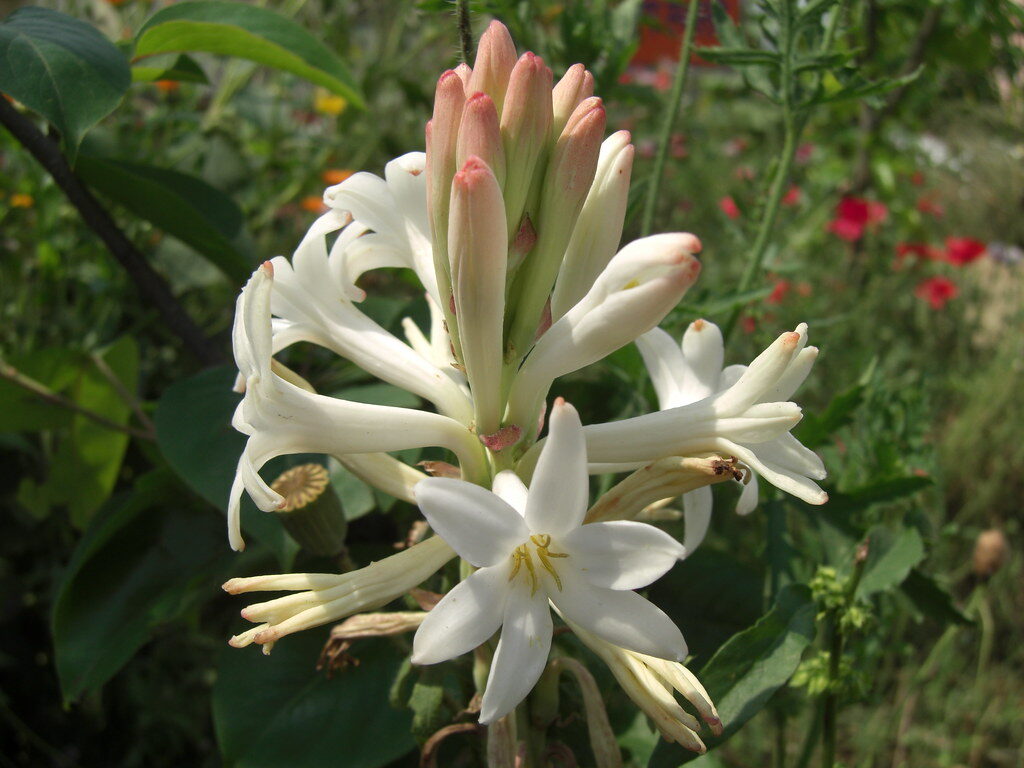
Tuberose (Agave amica, still widely sold under its older name Polianthes tuberosa) grows tall spikes of waxy white flowers that open from the bottom up over several weeks. The scent is one of the most concentrated of any night bloomer, which is why it remains a staple in perfumery and in wedding bouquets throughout the United States.
Plant the tuberous roots after the last frost in full sun; they need a long, warm growing season to flower well, so gardeners in zones 8 through 11 get the most reliable results outdoors. Colder regions typically dig up and store the tubers over winter, similar to dahlias. Dragonetti Florist notes that tuberose is consistently prized for its evening fragrance among cut-flower growers.
5. Gardenia
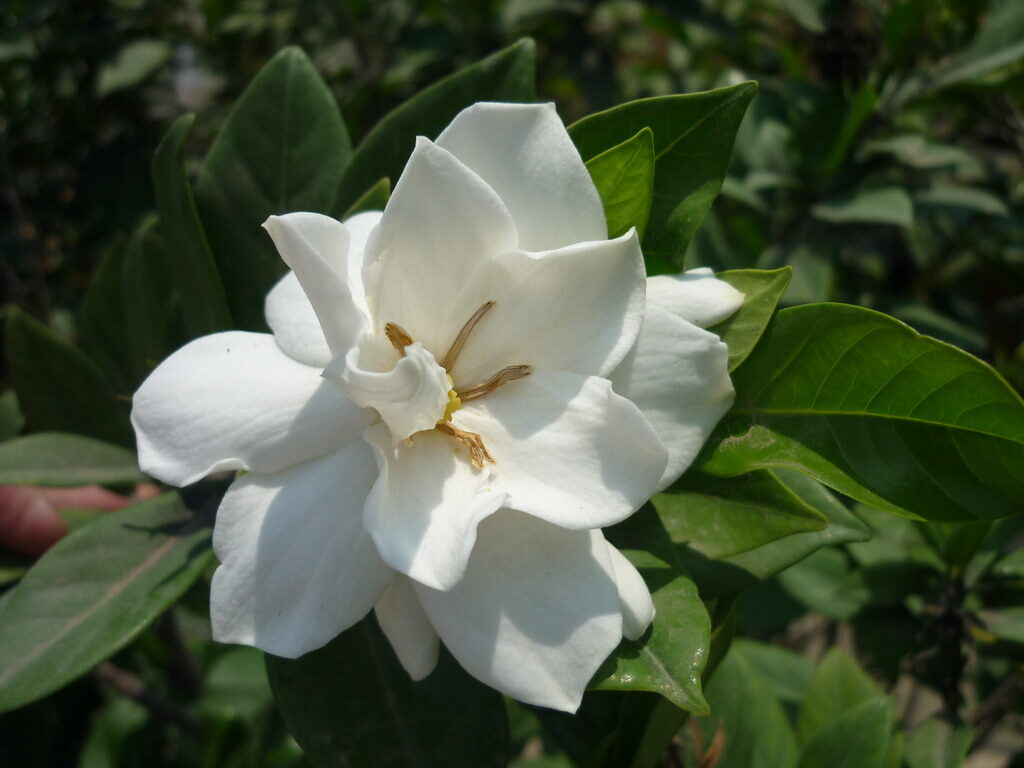
The gardenia (Gardenia jasminoides) is best known for its glossy evergreen leaves and creamy white blooms, but the fragrance actually peaks after dark, when cooler, humid air holds the scent close to the plant. A single flower can perfume an entire patio corner on a still summer evening.
Gardenias prefer acidic, well-drained soil and consistent moisture, and they can be fussy about temperature swings — sudden cold or dry indoor heat often causes bud drop. Gardeners in zones 8 through 11 grow them outdoors, while colder-climate homeowners keep them as one of several popular indoor flowering plants that need bright, indirect light near a window.
Pro Tip: Water gardenias with room-temperature water and avoid letting the roots sit in standing water — cold shocks and soggy soil are the two most common reasons buds drop before opening.
6. Four O’Clock
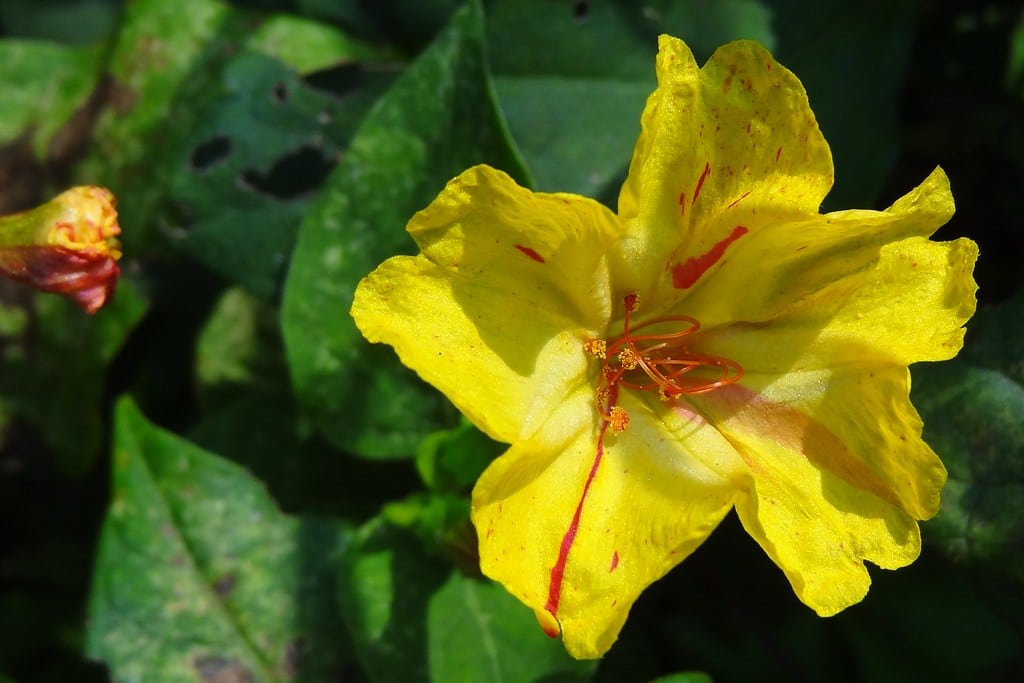
Four o’clock (Mirabilis jalapa) earns its common name from its habit of opening in late afternoon and staying open through the night, closing again by mid-morning. A single plant can carry flowers in multiple colors — pink, yellow, white, or striped — sometimes even on the same stem, since the pigmentation shifts from seed to seed.
This is one of the easiest moonflowers to grow from seed, tolerating heat, drought, and average soil once established. It self-seeds readily and returns as a perennial in zones 9 through 11, though most northern gardeners simply treat it as a reseeding annual. For general planting and care basics that apply to several moonflower relatives, HGTV’s moonflower plant care guide covers the fundamentals well.
7. Night Blooming Cereus
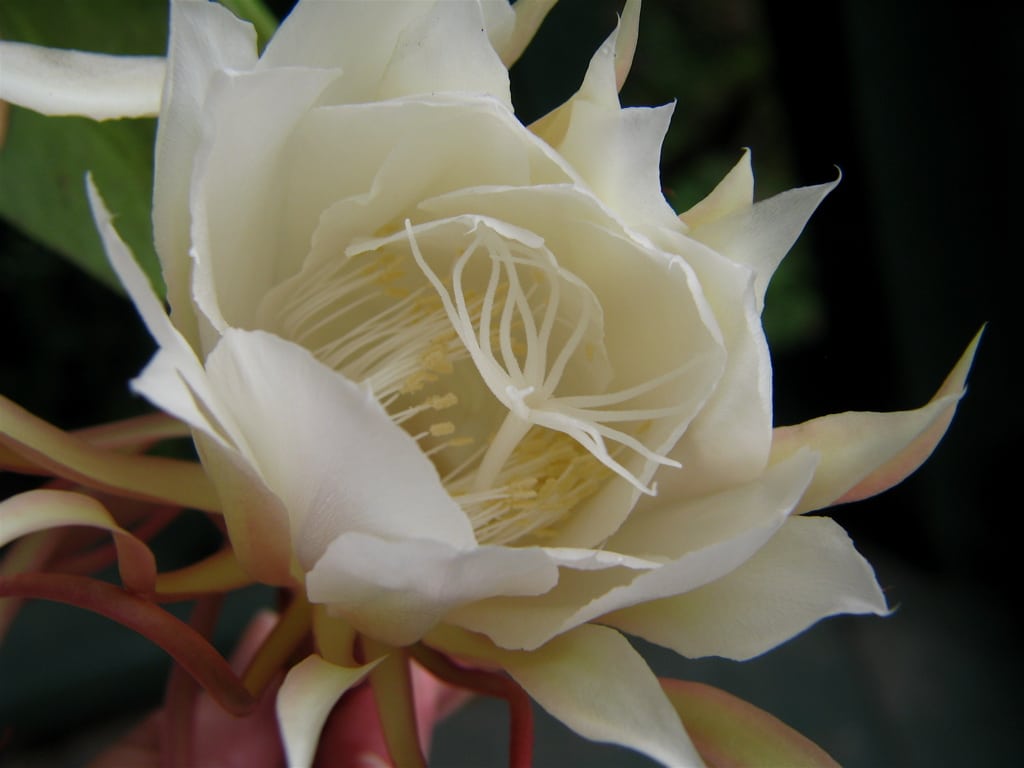
Night blooming cereus (Selenicereus grandiflorus) is a climbing cactus that stays unremarkable for most of the year and then produces a flower so large and dramatic that neighbors sometimes gather to watch. The bloom opens after dusk, reaches full size within a few hours, and wilts by morning — a single night of effort for a flower that can measure eight inches across.
Because it’s native to arid regions of the Americas, it needs excellent drainage and tolerates neglect better than regular watering. Gardeners in zones 10 through 12 grow it outdoors on a trellis or fence; elsewhere it’s kept as a container plant that gets moved indoors before frost. Lawn Love ranks it among the best night-blooming plants for a moon garden specifically because of its once-a-year spectacle.
8. Night Phlox
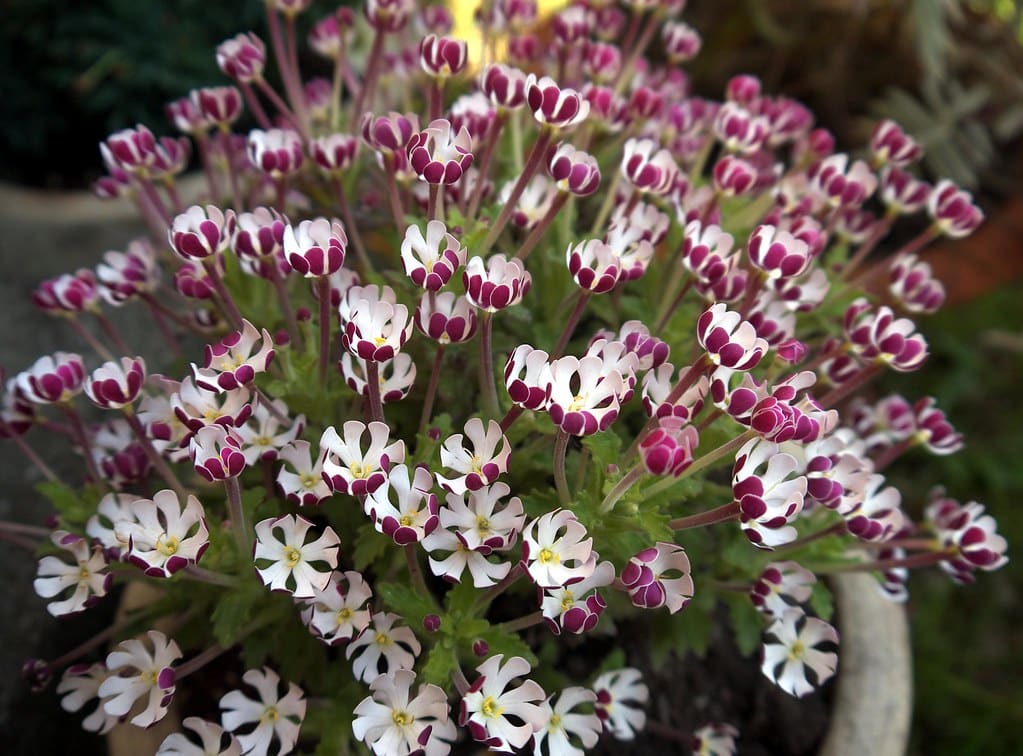
Night phlox (Zaluzianskya capensis) is a compact, low-growing annual that looks unassuming by day — its flowers stay closed and appear almost brownish-red on the outside. Once evening arrives, the petals unfurl to reveal white or cream faces and release a honey-and-almond fragrance strong enough to notice from several feet away.
Its small size makes it a natural fit for container gardens, window boxes, or the front edge of a moon garden bed where taller plants would block the view. Gardeners across the country grow it as a warm-season annual, starting seeds indoors or direct-sowing once the soil warms. Planet Natural’s step-by-step growing guide for night-blooming species includes similar care notes that apply well to phlox.
9. Casa Blanca Lily
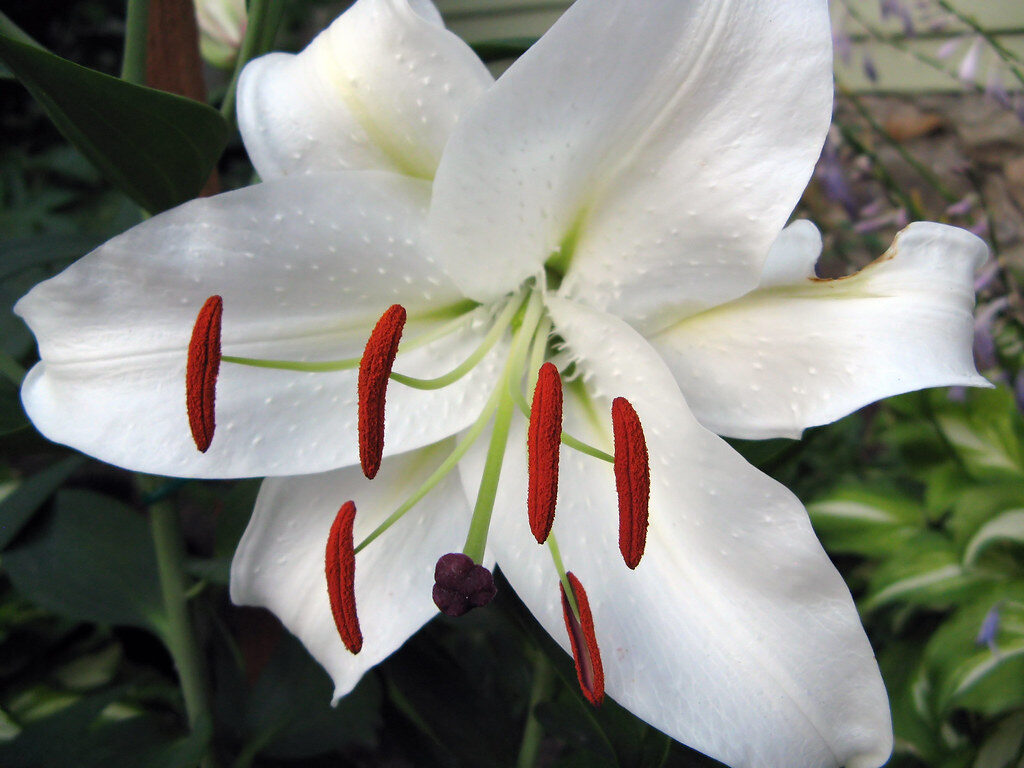
The Casa Blanca lily (Lilium ‘Casa Blanca’) is an Oriental lily hybrid known for its enormous, pure white blooms that can measure up to eight inches across. Fragrance builds steadily through the day and peaks in the evening, filling a garden bed or vase with a scent that’s often described as the classic “lily smell” at its most concentrated.
Plant the bulbs in fall or early spring in well-drained soil with full sun to light shade; they perform reliably in zones 4 through 9 and return year after year with minimal care. Because the pure white petals reflect available light so well, they’re a go-to choice for gardeners designing a moon garden meant to glow at dusk — a technique explored further in Home Quirer’s guide to lily flower varieties.
10. Night Blooming Jasmine
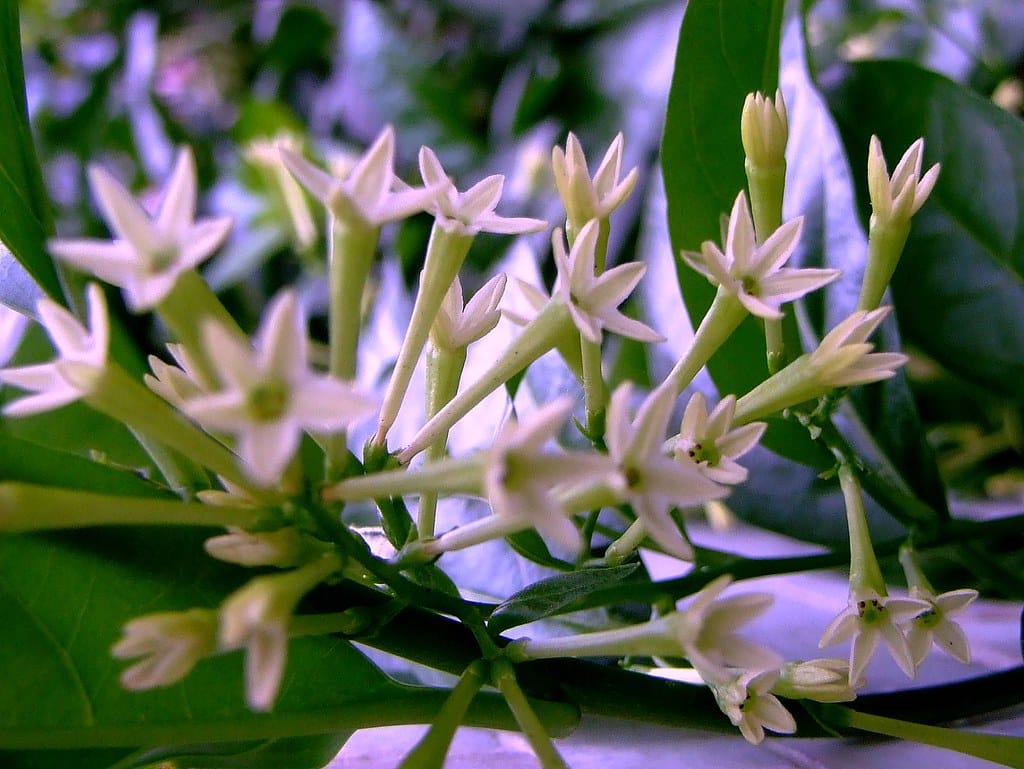
Night blooming jasmine (Cestrum nocturnum) is a shrub that produces clusters of small, tubular greenish-white flowers easy to overlook by day. After sunset, the plant releases one of the most powerful fragrances of any species on this list — sweet enough that a single shrub can scent an entire yard, which is why some gardeners plant it a bit farther from windows than they initially expect.
It grows best in zones 9 through 11 in full sun to partial shade and tolerates a range of soil types once established. Colder-climate gardeners grow it in large containers that can be moved indoors for winter. Gardening Know How highlights this species among flowers that support night-flying pollinators , since moths are drawn to its scent from a considerable distance.
11. Yucca
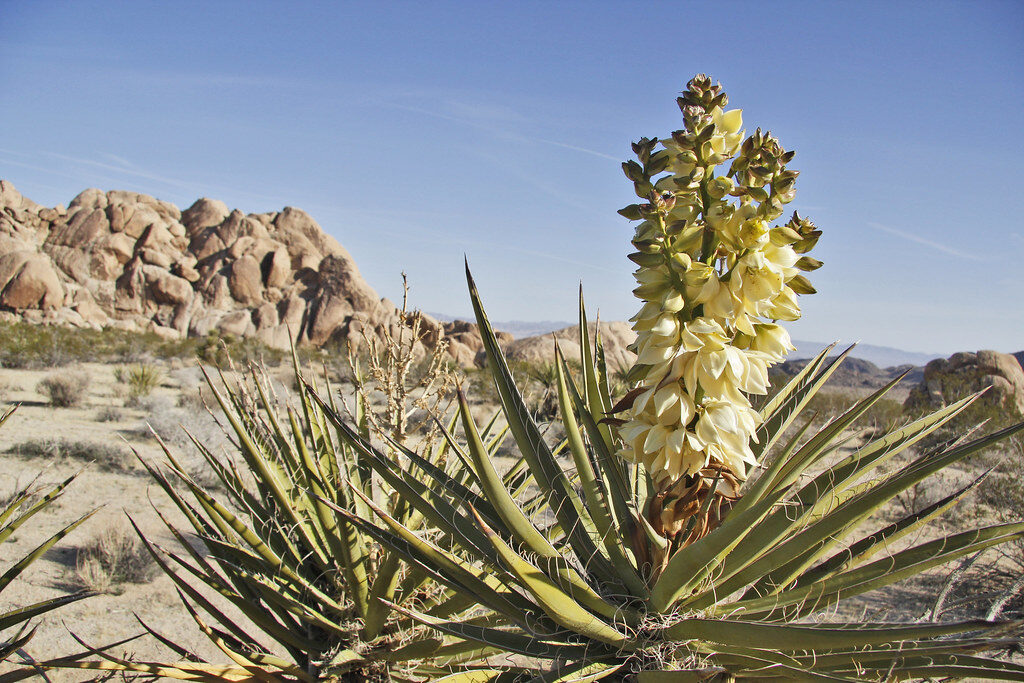
Yucca (Yucca filamentosa) sends up a tall flower stalk lined with dozens of bell-shaped, creamy white blooms that open primarily at night to attract the yucca moth — a pollinator so specialized that the two species depend entirely on each other to reproduce. By day, the plant is better known for its spiky, sword-like foliage than for its flowers.
Yucca tolerates drought, poor soil, and neglect better than almost anything else on this list, making it a staple of xeriscaped and low-water landscaping across zones 4 through 11. Its resilience places it firmly alongside other desert-adapted plants chosen for their ability to thrive with minimal irrigation.
12. Night-Flowering Catchfly
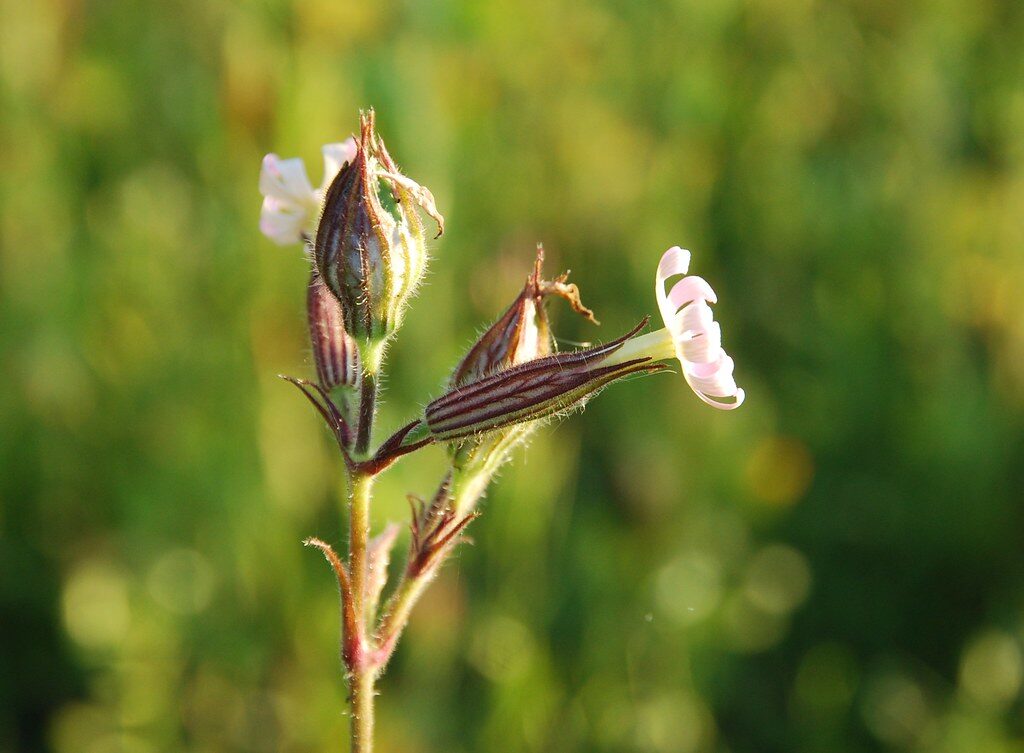
Night-flowering catchfly (Silene noctiflora) is a modest annual wildflower with pale pink to white blooms that close tightly during the day and open fully once the sun goes down. The petals release a clove-like fragrance overnight specifically to attract moths, then close again before morning heat sets in.
This species tolerates poor, disturbed soil and often shows up along roadsides and field edges throughout much of the United States, but it adapts easily to garden borders when given full sun. It’s a good candidate for gardeners who want an authentic wildflower look in a moon garden rather than a cultivated, showy centerpiece. Its bloom-and-close cycle mirrors the behavior of evening primrose, reinforcing how many moonflower plant species share this same daily rhythm.
13. Datura
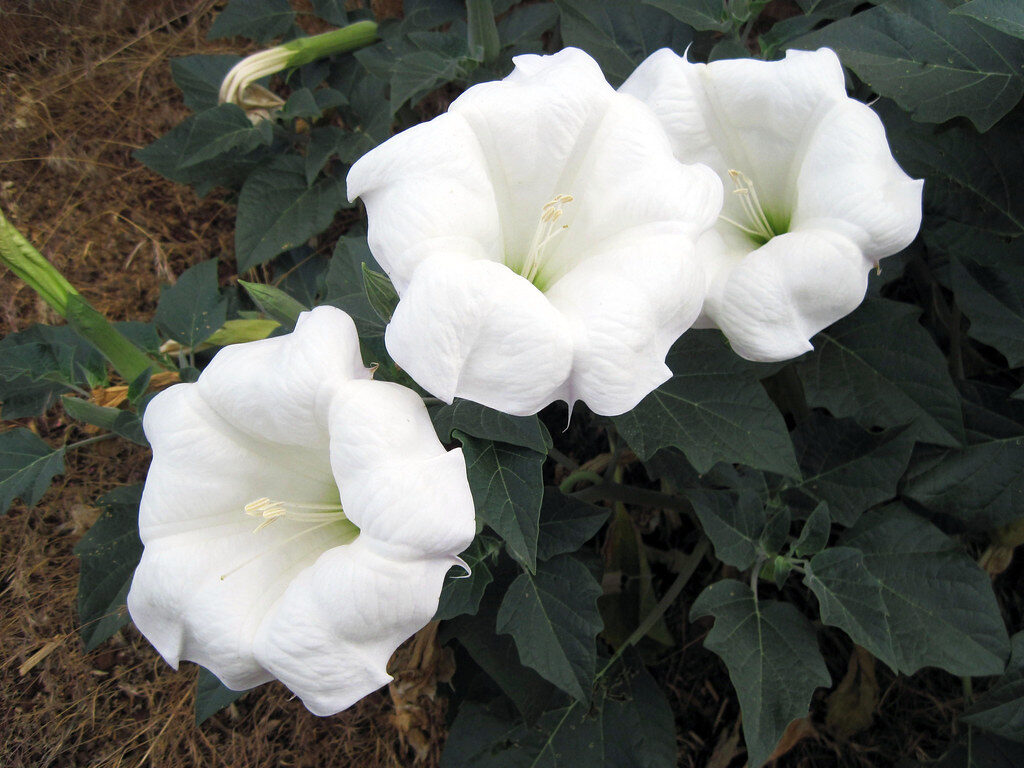
Datura (Datura stramonium), sometimes called moonflower thornapple or jimsonweed, produces large, trumpet-shaped flowers in white or pale lavender that unfurl at dusk and fill the air with a heavy, musky-sweet scent. The blooms are strikingly similar in shape to angel’s trumpet, though datura tends to grow as a bushier, shorter plant.
Important Note: Every part of the datura plant is highly toxic if ingested and can cause severe reactions in humans and pets. Unlike many edible flower varieties grown in home gardens, datura should be admired from a distance and planted well away from areas where children or animals play.
It grows as a self-seeding annual in most of the country and as a short-lived perennial in zones 9 through 11. Gardeners typically grow it for its dramatic form and moth-attracting fragrance rather than for any culinary or medicinal use.
14. Ipomoea Alba (Moonflower)
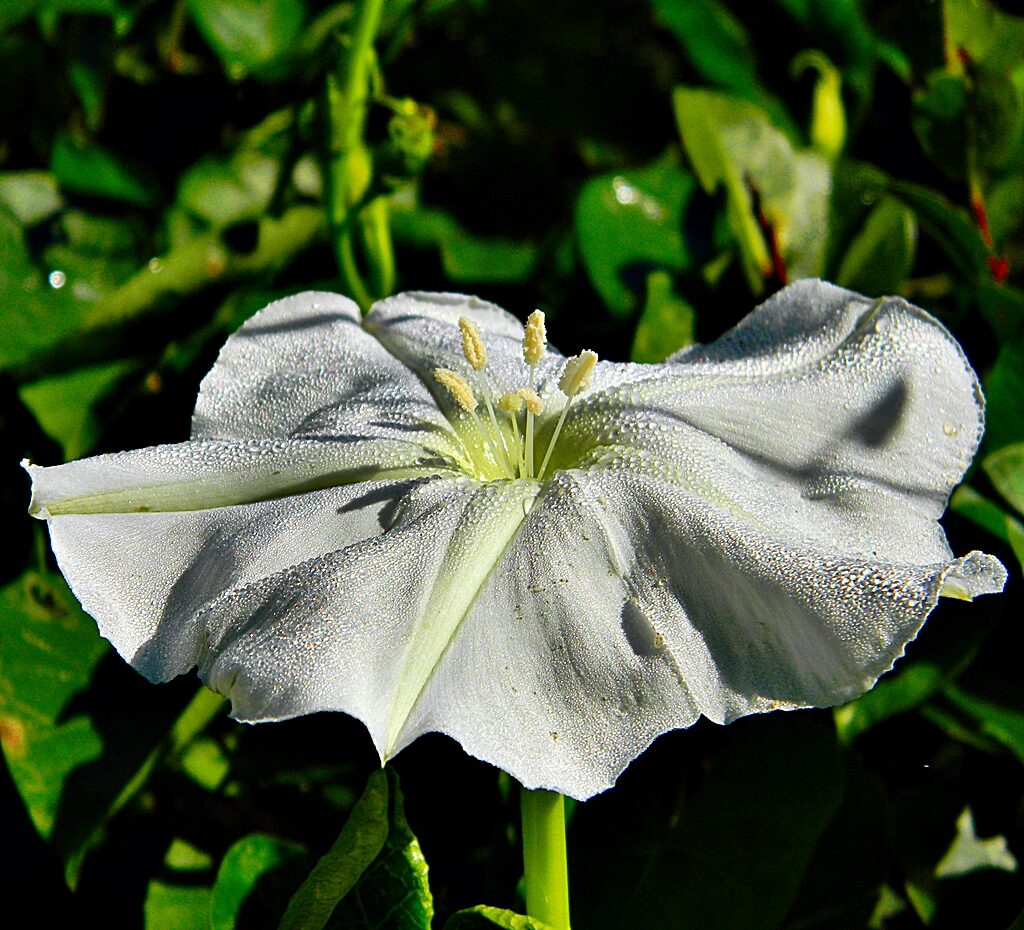
The plant most people picture when they hear “moonflower” is Ipomoea alba, a fast-growing vine related to morning glory that produces enormous white blooms up to six inches across. Each flower opens in a matter of minutes at dusk, stays open through the night, and closes for good once the sun hits it directly the next morning — a single-night performance repeated nightly through the growing season.
This vine can climb 10 to 15 feet in a single season, making it a favorite for covering trellises, arbors, and fences near patios where evening gatherings happen. It grows as a perennial in zones 10 through 12 and as a reliably fast annual vine everywhere else, provided it gets full sun and a sturdy structure to climb. Epic Gardening’s moonflower vine care guide covers seed-starting timing and support structures in detail for gardeners planning a first season with this species.
- Soak seeds overnight or nick the seed coat before planting to speed up germination.
- Start seeds indoors four to six weeks before the last frost in cooler climates.
- Provide a trellis, fence, or arbor at planting time so vines have support from the start.
- Water consistently during dry spells; moonflower vines wilt quickly under drought stress.
Learning how to grow moon flowers like this one often becomes a gateway to building an entire evening garden, since the vine’s height and vigor make it an ideal backdrop for shorter species such as four o’clock or night phlox planted at its base.
Taken together, these 14 species show just how varied moonflower characteristics can be — from cactus blooms that open once a year to vines that produce fresh flowers every single night. Pairing a few taller anchors, like angel’s trumpet or the moonflower vine, with lower-growing fillers such as night phlox or four o’clock creates layers of fragrance and color that carry a garden well past sunset. For gardeners who enjoy their outdoor space mostly in daylight, the contrast is worth noting: species like sunflower varieties chase the sun all day, while the plants above wait until it’s gone to put on their show.