Traditional Brazilian Clothing for Women: 11 Garments That Tell the Country’s Story

November 16, 2026
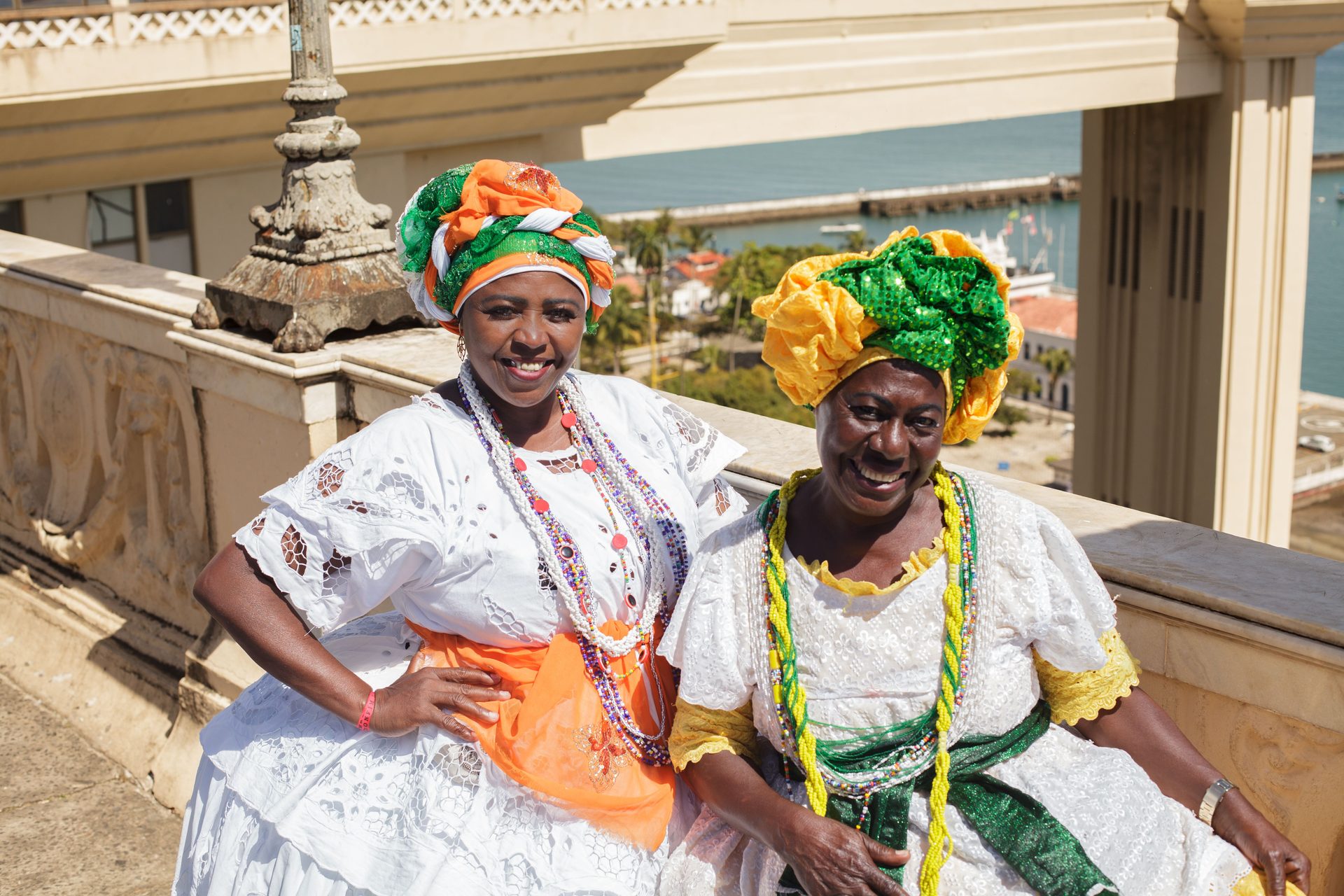
Many people picture a bikini or a sequined carnival costume when they think of Brazilian dress, but traditional Brazilian clothing for women runs far deeper than that. From the lace-trimmed skirts of Bahia to the wool ponchos of the southern pampas, each garment carries a distinct regional history shaped by African, Indigenous, and European influence. These clothes were built for work, worship, dance, and ranch life long before they became symbols of national identity.
This article walks through eleven garments worn by women across Brazil’s regions, explaining where each one comes from, what it is made of, and why it still matters today.
| Garment | Region | Primary Context |
|---|---|---|
| Baiana dress | Bahia, Northeast | Street vending, Candomblé, festivals |
| Canga | Coastal Brazil | Beachwear |
| Pano da Costa | Bahia, Maranhão | Candomblé ceremonies |
| Bombachas | Rio Grande do Sul | Ranch work, folk dance |
| Prenda dress | Rio Grande do Sul | Gaúcho festivals |
| Boiadeira clothing | Central-West, Pantanal | Cattle driving, rodeo |
| Carimbó attire | Pará, Amazon | Traditional dance |
| Candomblé ceremonial dress | Bahia | Religious ritual |
| White turban | Bahia | Candomblé, Baiana ensemble |
| Carmen Miranda costume | International stage | Theatrical performance |
| Fringed poncho | Rio Grande do Sul | Cold-weather folk wear |
1. Baiana Dress
The Baiana dress comes from Salvador, the capital of Bahia, where it grew out of the daily lives of Afro-Brazilian women who sold street food. The signature look features a headdress or cap, which is a nod to the region’s Afro-Islamic heritage, while a billowing white lace bodice and petticoat are wrapped in five meters of saia cloth to form an ample skirt, with a pair of cotton pants worn underneath. The result is a layered, voluminous silhouette built for both comfort in the heat and visual presence in a crowd.
The dress is tied to the women known as Baianas de Acarajé, who still sell the fried bean cake called acarajé on Salvador’s streets. To this day, acarajes are prepared and sold exclusively by women who wear the traditional costume of their ancestors. Scholars studying nineteenth-century portraiture note that these clothing compositions still survive today in the women’s clothing of African religions, such as candomblé, and in Catholic brotherhoods, according to research published by Harvard’s DRCLAS review .
Pro Tip: Visitors who want to see the Baiana dress in its full ceremonial form, rather than the simplified tourist version sold near beaches, should look for Candomblé festivals or the Lavagem do Bonfim in Salvador.
Readers interested in how other cultures build layered, regionally specific wardrobes can compare notes with homequirer’s guide to the broader world of traditional and cultural clothing styles.
2. Canga
The canga is a simple rectangular piece of cotton fabric, usually printed in bold colors or geometric patterns, that Brazilian women wrap, knot, or drape in dozens of ways. It can become a skirt, a dress, a halter top, a beach towel, or a head covering within seconds, which explains why it is sold by the thousands along Rio de Janeiro’s beachfront kiosks.
Unlike the Baiana dress or Candomblé attire, the canga has no strict religious or ceremonial rules attached to it. Its value lies in flexibility: a single piece of cloth does the job of several garments, a practical answer to Brazil’s heat and beach-centered social life. Coastal cultures elsewhere have developed similar multi-use wraps, a pattern readers can explore further in homequirer’s overview of traditional Australian clothing, where beach and outback life shape dress in comparable ways.
3. Pano Da Costa
The Pano da Costa is a rectangular length of cloth, often woven with bright patterns, that Afro-Brazilian women wrap around the shoulders, chest, or waist. It is most closely associated with Candomblé communities in Bahia and Maranhão, where it is layered over or under other garments during ceremonies and processions.
The cloth carries weight beyond decoration. In many households it doubles as a baby carrier, a shawl, or a marker of a woman’s standing within her religious community, depending on how it is tied and which fabric is used. Rectangular wrap-cloths that shift meaning through draping technique appear in several other wardrobe traditions, including the sari covered in homequirer’s guide to traditional Indian clothing.
4. Bombachas
Bombachas are loose, baggy trousers gathered tightly at the ankle, originally built for men working cattle on the open grasslands of Rio Grande do Sul. The wide cut allowed easy movement on horseback while the ankle cuffs kept dust and insects out of the boots, a practical design shared across the pampas region of southern South America.
Women have adopted bombachas as festival and folk-dance costume, particularly within Centros de Tradições Gaúchas, the clubs that preserve gaúcho culture across southern Brazil. Paired with a wide-brimmed hat and leather boots, bombachas now appear on women dancers during regional festivals as often as on working ranch hands. Loose, gathered trousers built for mobility show up in other climates and cultures too, something readers can see in homequirer’s piece on traditional Pakistani clothing.
Key Insight: The word “bombacha” is shared across Brazil, Argentina, and Uruguay, reflecting how gaúcho culture crosses national borders in the pampas region rather than stopping at a map line.
5. Prenda Dress (Gaúcho)
A prenda is the traditional female role within gaúcho culture, and her dress reflects the European immigrant communities that settled Rio Grande do Sul in the nineteenth century. The look is modest and fitted: a long skirt, often floral or in a solid jewel tone, paired with a fitted bodice, apron, and shawl, with hair typically braided or pinned up with a flower.
Southern Brazil’s ranching culture absorbed a strong Portuguese, Italian, and German settler influence, something reflected in the prenda dress’s tailored lines and modest silhouette compared to the looser, lighter garments found further north. Readers curious about how European settlement shaped regional dress elsewhere can see parallel patterns in homequirer’s article on traditional German clothing. The prenda dress appears most often during Semana Farroupilha in September, when gaúcho clubs across the south hold parades, rodeos, and folk dances.
6. Boiadeira Clothing
Boiadeira clothing belongs to the women of Brazil’s central-west cattle country, including the Pantanal wetlands of Mato Grosso. The outfit is built for long days on horseback driving cattle: sturdy leather boots, a wide-brim hat to block the sun, a button-up shirt, and either jeans or a long skirt depending on the region and the activity.
A bandana tied at the neck, useful for keeping dust out during cattle drives, has become a recognizable accessory of the look. What started as purely functional ranch wear has crossed over into rodeo and festival costume representing Brazil’s sertão and cerrado identity, in much the same way working cowboy gear elsewhere turned into festival dress, a shift covered in homequirer’s guide to traditional American clothing.
7. Carimbó Traditional Dance Attire
Carimbó is a circle dance from the northern state of Pará, built on African drumming traditions blended with Indigenous and Portuguese elements. The women’s costume centers on a long, flowing skirt, often ruffled and in bright floral prints, paired with an off-the-shoulder or fitted blouse that leaves the shoulders free for dramatic spinning movements.
Dancers traditionally perform barefoot, with flowers woven into the hair, and some regional variations add a scarf tied at the hip to emphasize the hip movement central to the dance. The skirt’s flare is not decorative alone; it is functional, designed to flip and swirl as dancers spin in the circle formation around the carimbó drum. Traditional dance costume built specifically to move with the body, rather than simply cover it, is a pattern also found in homequirer’s guide to traditional Japanese clothing.
8. Candomblé Ceremonial Dress (Axó Hoop Skirt with Tied Head Cloth)
Candomblé ceremonial dress, known as axó, centers on a hooped underskirt worn beneath a long white dress, paired with a head cloth tied in specific patterns. Women wear long white dresses in the traditional Bahian style along with multiple strands of beads in colors that relate to their orixás, and those with higher status within the group wear hoops under their skirts and multiple strands of thick, colorful beads.
Each aspect of the dress is symbolic; the way a turban is wrapped around the head in different styles holds specific meanings, according to a University of Pittsburgh account of a Candomblé ceremony in Bahia. Color plays a similar role: a white dress honors Oxalá, the deity associated with purity and creation, while other colors signal devotion to different orixás during initiation and possession rites.
Important Note: Candomblé ceremonies are religious practices, not tourist performances. Visitors are generally asked to dress appropriately by covering up and avoiding skimpy outfits, since white clothing is preferred. This article describes the clothing for educational purposes and is not a guide to religious participation.
9. White Turban (Headwrap Worn with Baiana Dress)
The white turban is wrapped from cotton or lace fabric and tied in patterns that can signal rank, role, or devotion within Candomblé, making it far more than a decorative headpiece. The headwraps, which are made with white lace, can be traced to the dress’s Afro-Islamic roots, a detail that ties the accessory directly to the West African heritage of the enslaved women who first wore it in colonial Bahia.
Writers covering Salvador’s textile traditions describe a silhouette made up of a voluptuous, elaborate headdress coupled with a white broderie anglaise dress with many layers, an ensemble documented by the textile magazine Selvedge . In a region of Brazil where many of its population are of African descent, this traditional white dress symbolizes one of the Candomblé deities known as Oxala. Outside religious contexts, the same turban appears on Baianas selling food in the street, where it still signals cultural pride even without the specific ceremonial wrapping rules.
10. Carmen Miranda-Style Costume
The Carmen Miranda costume is a theatrical reinvention of the Baiana dress, created by the Portuguese-Brazilian singer and actress for Broadway and Hollywood audiences in the 1930s and 1940s. It diverges sharply from the garment it was based on. Her version featured a shortened blouse that exposed the midriff, a figure-hugging, bias-cut, full-length skirt, eschewing the traditional baiana’s more modest white lace blouse and hooped underskirts, along with an elaborately decorated turban.
Carmen Miranda, who had worked as an apprentice milliner and was a skilled dressmaker, added sequins and a small imitation basket of fruit to her turban, a playful nod to the baskets of produce that baiana street vendors carried on their heads. Readers can trace the full story of the costume’s origins on the Wikipedia entry for the song that inspired it , written for the 1939 film that launched her international career.
Common Mistake: The fruit-topped turban and midriff-baring blouse associated with Carmen Miranda are not authentic Baiana or Candomblé dress. They are a stage costume, and conflating the two overlooks the religious and everyday garment’s real history. For more on well-known figures whose fashion choices shaped public perception, see homequirer’s roundup of notable celebrity women.
11. Fringed Wool/cotton Poncho
The fringed poncho belongs to the same southern gaúcho wardrobe as bombachas and the prenda dress. Made from wool for the cold pampas winters or lighter cotton for milder days, the poncho drapes over the shoulders with a slit or opening for the arms and a fringed border along the hem.
Striped or solid-color versions both appear at Rio Grande do Sul’s folk festivals, where women wear the poncho over a prenda dress during cooler months or at evening events. The weaving techniques behind these ponchos trace back to the same Portuguese, Italian, and German immigrant communities that shaped the region’s broader rural wardrobe, a connection explored further in homequirer’s guide to traditional German clothing. Similar fringed shoulder wraps appear across the pampas region shared by Brazil, Argentina, and Uruguay, underlining how gaúcho dress reflects a cross-border ranching culture rather than one tied to a single country.
Taken together, these eleven garments show that there is no single “Brazilian national dress.” Instead, Brazil’s traditional clothing for women reflects the country’s regional geography and layered history: African religious practice in Bahia, European settlement in the far south, Indigenous and African fusion in the Amazon, and ranching culture across the central plains. Readers who want to keep exploring how geography and migration shape what people wear can browse homequirer’s wider collection of traditional clothing guides from around the world.