Traditional Japanese Work Clothing: 10 Garments That Defined Everyday Labor

November 19, 2026
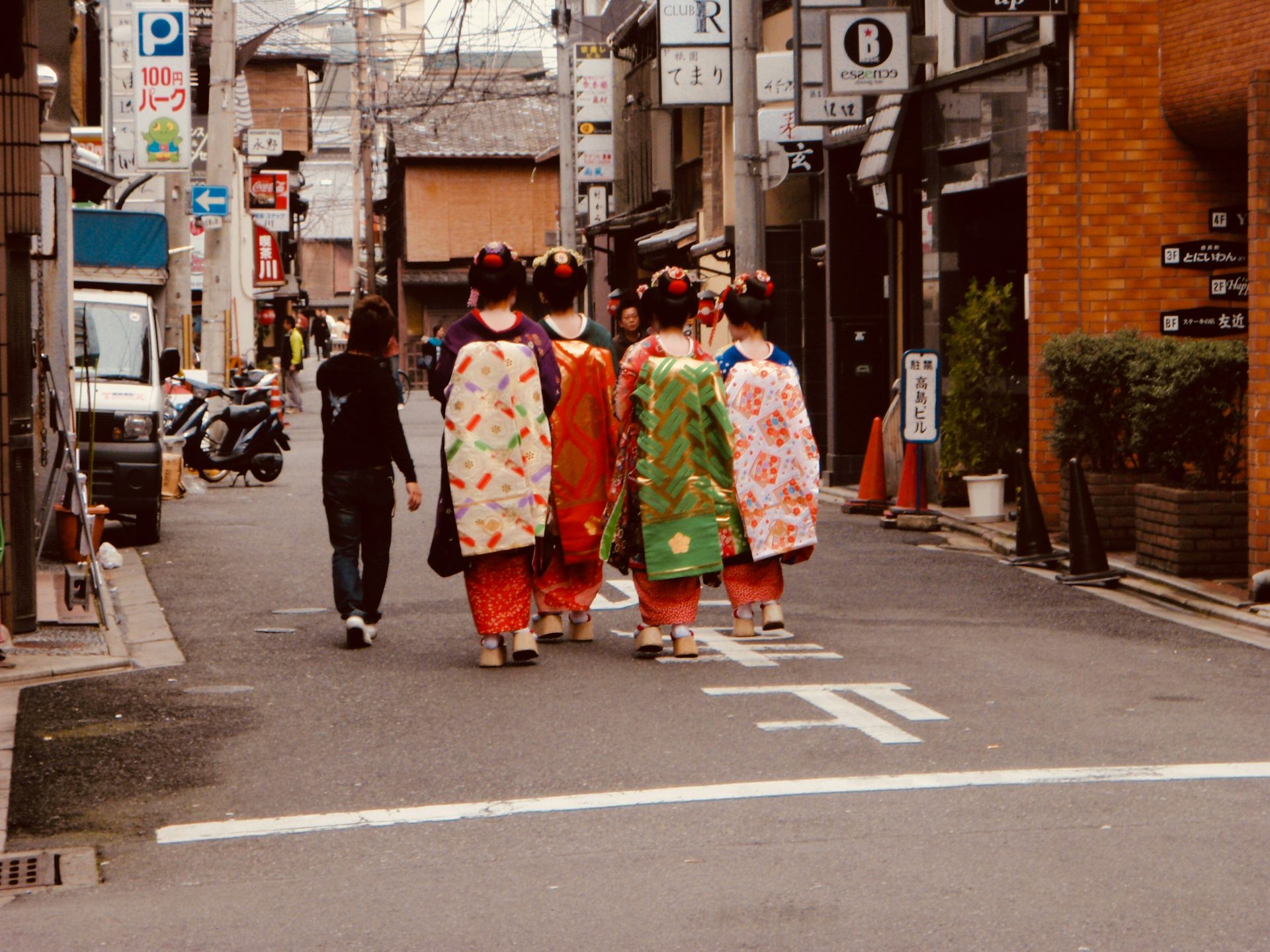
Long before synthetic fabrics and factory uniforms, Japan solved a practical problem: the elegant kimono was never built for hauling fishing nets, forging iron, or climbing scaffolding. Traditional Japanese work clothing grew out of that gap, producing a wardrobe of specialized garments for monks, farmers, firefighters, and artisans that still shapes Japanese fashion today. Each piece below answers a specific labor need, from ventilation in summer heat to knee mobility on a construction ladder.
Just as traditional American clothing produced denim overalls for farm and railroad work, Japan developed its own practical silhouettes, many of which sit alongside the more familiar traditional Japanese clothing most people picture first. The ten garments in this guide move from monastery robes to construction trousers to the kimono itself, tracing how function shaped fabric, cut, and color across different trades.
| Garment | Primary Wearers | Defining Feature |
|---|---|---|
| Samue | Zen Buddhist monks, artisans | Two-piece set for unrestricted movement |
| Jinbei | General public (summer) | Loose weave for ventilation |
| Tobi pants | Scaffolders, carpenters | Balloon thigh, tapered ankle |
| Noragi | Farmers, rural laborers | Patchwork and indigo reinforcement |
| Hanten | Firefighters, shopkeepers | Padded, quilted winter jacket |
| Momohiki | Craftsmen, rickshaw pullers | Close-fitting work trousers |
| Happi coat | Festival participants, shop staff | Crest or shop emblem on back |
| Maekake | Shopkeepers, chefs | Long apron tied at the waist |
| Haori | All classes (outerwear) | Open-front jacket over kimono |
| Kimono | General population (pre-Meiji) | T-shaped robe, foundational garment |
1. Samue
The samue is the work clothing of Japanese Buddhist monks and nuns, worn when engaged in samu , the physical labor of maintaining a temple. According to the same source, samue are made from cotton or linen and traditionally dyed brown or indigo to distinguish them from formal vestments, with monks across most Japanese Buddhist traditions wearing them for chores like temple upkeep and field work.
The garment traces back to the Edo period (1603-1868), a time when Zen Buddhism was flourishing throughout Japan and monks needed something simpler than ceremonial robes for daily tasks. Sweeping, cooking, and gardening at the monastery fall under samu, work considered a meditative practice rather than a chore to rush through.
Today the two-piece jacket-and-trousers set has moved well beyond temple walls. Potters, woodworkers, and other practitioners of traditional crafts wear samue for the same reason monks originally adopted it: it moves with the body instead of against it.
Pro Tip: If you are buying samue outside Japan, check the fabric weight first. Lighter cotton blends suit warm-climate wear, while heavier weaves hold up better for actual garden or workshop use.
2. Jinbei
A jinbei is a traditional set of Japanese clothing worn by men, women, and children during summer as loungewear , pairing a side-tying, tube-sleeved top with matching trousers. The garment was originally menswear only, although women’s jinbei have become popular in recent years.
Its roots reach back to the Edo period, when cotton fabric became more affordable and widely available , and the jinbei developed as workwear for laborers, farmers, and fishermen who needed a loose, breathable layer for hot days.
Important Note: Sources disagree on the jinbei’s exact design lineage. One account traces it to the haori, while some fashion historians argue the design borrowed specifically from the jinbaori , a basic battle surcoat samurai wore over armor. The short jacket-and-shorts combination recognized today is generally dated to around 1965.
3. Tobi Pants (Tobi Shozoku)
Tobi pants, or tobi zubon, are a type of baggy pants used as the common uniform of tobi shokunin, construction workers in Japan who work on high places such as scaffolding and skyscrapers. The trousers stay baggy to a point below the knees before abruptly narrowing at the calves, allowing them to tuck into high boots or jika-tabi.
The name comes from a specific trade association: in Japanese, tobi means “kite,” the bird of prey, and in a work context refers to scaffolders and high-rise construction workers admired for their agility at great heights. The signature balloon-leg shape is a postwar development, with the silhouette evolving from Japan’s adaptation of knickerbockers in the 1940s into specialized construction workwear.
The design is engineering disguised as fashion. The wide upper leg gives room for deep knee bends, high steps, and long strides, while the tapered lower leg reduces the chance of catching fabric on pipes or planks , a genuine safety feature on an active job site.
4. Noragi
Noragi were the everyday work jackets of Japanese farmers and rural laborers, cut from sturdy cotton or hemp and dyed with indigo for both durability and a degree of insect resistance. Rather than being replaced when worn through, a noragi was typically patched and reinforced for years, producing the layered, mended look now recognized internationally through the boro textile tradition.
The jacket’s practical features included:
- A loose, wrap-style front that allowed free arm movement during planting and harvesting
- Sashiko stitching, a running-stitch technique that reinforced high-wear areas like shoulders and elbows
- Indigo dye, prized for its reported insect-repelling properties in rice paddies and fields
- Patchwork repairs that extended a single garment’s working life across generations
In that sense, the noragi shares a purpose with rural workwear elsewhere in the world. Farming communities documented in traditional German clothing developed similarly rugged, regionally specific garments built to survive long days outdoors rather than to impress anyone.
5. Hanten
A hanten is a short, quilted jacket historically worn for warmth during cold-weather labor. Thin layers of cotton wadding were sewn between the outer and inner fabric, giving the garment enough insulation to make it practical winter wear for shopkeepers, craftsmen, and laborers in an era before heated indoor spaces were common.
The hanten is also tied closely to Edo-period firefighting culture. Hikeshi, the firefighting brigades of the era, wore heavy hanten-style jackets as protective gear, and many of these same brigades became associated with the elaborate body art documented in pieces on traditional Japanese tattoos. Shop owners also commissioned hanten printed with a family or business crest on the back, turning a work jacket into a form of visible branding.
Pro Tip: A quilted hanten with hand-dyed indigo panels is a reliable sign of traditional construction; mass-produced versions typically use printed patterns instead of dye-resist techniques.
6. Momohiki
Momohiki are close-fitting trousers, something like a traditional precursor to modern work leggings, worn either on their own or layered under a looser garment. Craftsmen, rickshaw pullers, and tradesmen favored momohiki because the snug fit kept loose fabric away from tools, wheels, and machinery, reducing the risk of catching material while working.
Cotton was the standard fabric, often dyed indigo for the same practical reasons farmers used it in the noragi. The cut prioritized leg mobility over comfort in the way many functional trouser traditions do; a similar logic shows up in the loose-fitting but movement-focused trousers found in traditional Pakistani clothing, where garment shape follows the demands of daily activity rather than fashion trends alone.
Momohiki were rarely worn in isolation. Paired with a happi coat or short jacket on top, they formed a complete working outfit that balanced warmth, coverage, and the freedom to crouch, climb, or pull a cart.
7. Happi Coat
A happi coat is a straight-cut, knee-length jacket, simpler in construction than a kimono or haori, traditionally dyed with a shop’s name, a family crest, or a festival emblem across the back. Merchants originally issued happi coats to employees as a form of uniform, making the wearer’s affiliation visible at a glance in crowded markets or during deliveries.
Over time the happi coat became strongly associated with festival culture rather than daily labor alone. Matsuri participants, taiko drum groups, and shop staff still wear happi coats today, often in bold colors with bold kanji characters printed on the back panel.
The coat’s loose, open cut made it practical for physical movement, which is part of why it carried over so easily from workwear into festival dancing and drumming, activities that likewise demand freedom through the shoulders and arms.
8. Maekake
Maekake is a long, sturdy apron tied at the waist, traditionally worn by shopkeepers, craftsmen, and food vendors over their regular clothing. Unlike a Western bib apron, the maekake typically covers only the front from waist to below the knee, leaving the upper body unrestricted for lifting, pouring, or handling tools.
Shop owners commonly had their store name or logo dyed directly onto the fabric, turning the apron into walking advertisement, a tradition still visible outside sake breweries, tofu shops, and traditional restaurants. The same practical logic extends to modern food service, echoing patterns found in traditional Japanese foods culture, where visible craftsmanship and branding matter as much in the kitchen as on the plate.
Pro Tip: Heavyweight canvas or thick cotton maekake hold their shape and dye better than thin fabric versions, which is worth checking if you want one for actual kitchen or workshop use rather than display.
9. Haori
A haori is an open-front jacket worn over a kimono, closed with a cord rather than a wide obi sash, which made it easier to put on and take off quickly. While formal haori made of silk became associated with higher social classes, cotton work versions were common among laborers who needed an extra layer for warmth without sacrificing arm movement.
The jinbaori, a sleeveless battle surcoat samurai wore over armor, is widely considered a close relative of the haori lineage, and some historians connect that same military garment to the development of the jinbei discussed earlier in this guide. The haori eventually spread across social classes during the Edo and Meiji periods, moving from a largely male garment to one worn broadly by women as well.
As outerwear, the haori also illustrates how much borrowing shaped Japanese dress generally. The base garment it was designed to cover, the kimono, itself descended from clothing styles documented in traditional Chinese clothing of the Tang dynasty, adapted over centuries into something distinctly Japanese.
10. Kimono
The kimono is the T-shaped robe most people picture when they think of Japanese dress, and it was, for centuries, everyday clothing rather than a special-occasion garment. Cotton work kimono, cut simpler and shorter than silk formal versions, were worn for farming, fishing, and craft labor well into the 19th century, before Western-style clothing became widespread.
The shift away from kimono as daily workwear had a practical cause rather than a cultural one: the garment is genuinely harder to move in than trousers and a jacket, which is precisely why specialized pieces like the samue, noragi, and momohiki developed alongside it rather than replacing it outright. Formal, luxurious kimono survived into the present largely because they were reserved for occasions where ease of movement mattered less than appearance.
Understanding the kimono’s working-class history reframes the rest of this list. Every garment covered above, from monastery robes to scaffolding trousers, exists because the kimono alone could not meet every labor demand Japan’s farmers, monks, and craftsmen faced.
Traditional Japanese work clothing never stopped evolving once Western fashion arrived; it simply moved into new contexts, from streetwear reinterpretations of tobi pants to samue worn by chefs and artisans worldwide. The underlying logic, however, has stayed consistent for centuries: clothing should serve the work, not the other way around. That same principle shows up across global dress traditions, whether in the rugged layering seen in traditional Indian clothing or the practical outback gear documented in traditional Australian clothing, each shaped by its own climate, trade, and terrain.