12 Pieces of Traditional Mongolian Clothing That Define Nomadic Culture

November 19, 2026
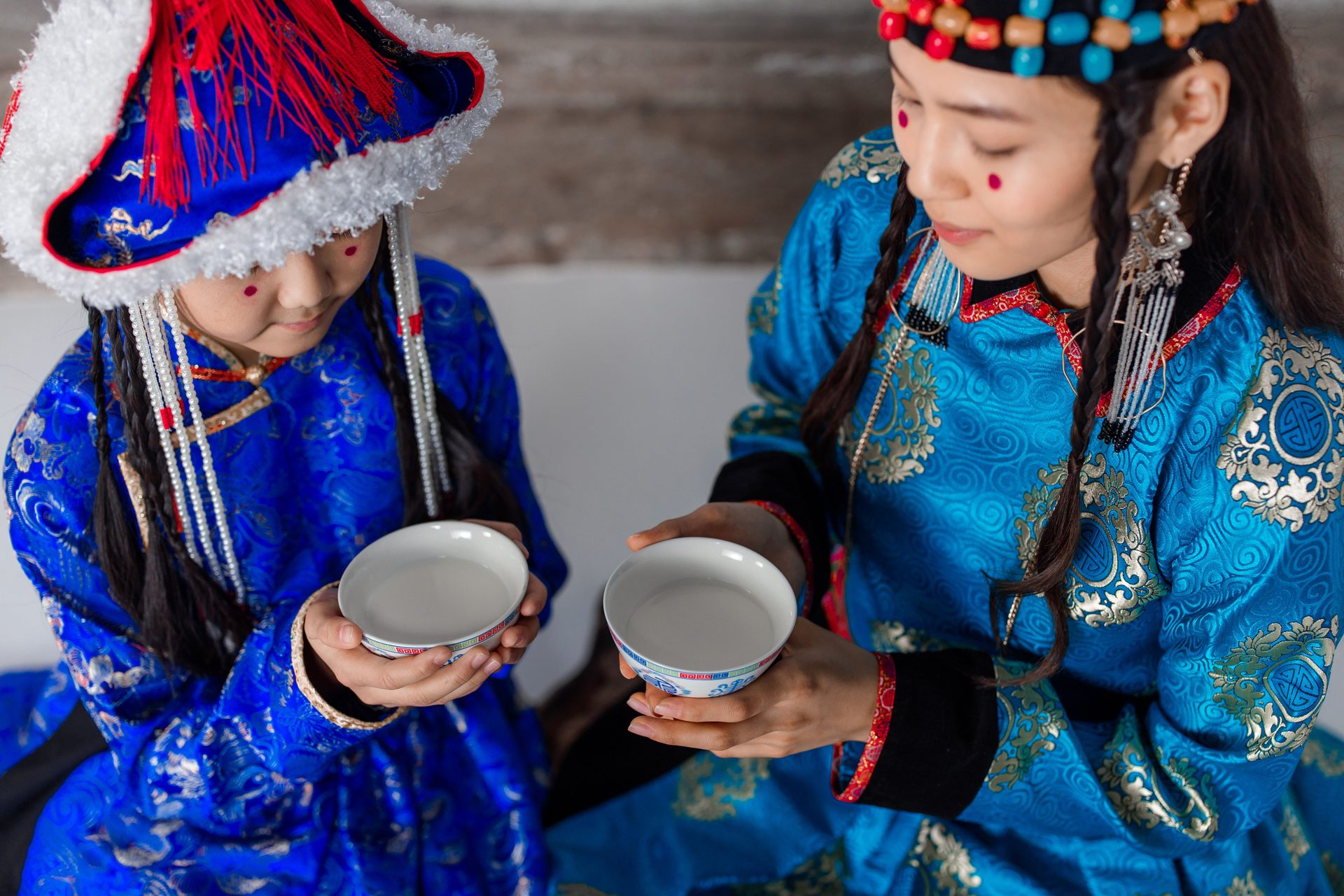
A good coat on the Mongolian steppe has to do more than look good. It has to survive a gallop across open grassland, block a wind that drops well below freezing, and still look sharp enough for a wedding or a Naadam opening ceremony. One tour guide to the region put it simply: Mongolian dress is “a robe engineered for −40° winters and a saddle at full gallop.”
Traditional Mongolian clothing is built around that single idea of function first, meaning second. Every sash, boot, and hat described below carries a practical job on the steppe along with a cultural one, from marking a person’s age and region to signaling status within a household. This guide walks through twelve pieces of the Mongolian wardrobe, starting with the robe that holds the whole outfit together.
1. Deel
The deel is the piece most people picture when they think of traditional Mongolian clothing, and for good reason. A deel is an item of traditional clothing commonly worn by Mongols and can be made from cotton, silk, wool, or brocade. It is a long, loose gown cut in one piece with the sleeves, with a high collar that widely overlaps at the front, and it is the garment most closely associated with Mongolian identity both inside the country and among diaspora communities.
The construction has stayed consistent across centuries for a practical reason. The deel is girdled with a sash, and Mongolian deels always close on the wearer’s right, traditionally with five fastenings. That wrap-and-tie closure keeps wind out of the chest while riding and lets a herder loosen or tighten the garment without buttons that could snap in the cold. Readers interested in how other wrap-style robes evolved around the world may also want to look at traditional Japanese clothing, where the kimono follows a surprisingly similar overlap-and-sash logic.
The deel is still commonly worn by both men and women outside major towns, especially by herders, while in urban areas it is mostly worn by elderly people or on festive occasions. Families often keep at least one formal deel for Tsagaan Sar (the Lunar New Year) and the Naadam festival, choosing brighter colors and silk brocade over the heavier wool or sheepskin versions used for daily herding work in winter.
Pro Tip: If you ever shop for a deel, ask whether it is a daily herding version or a festival version. The fabric weight and sleeve width change a lot between the two, and a heavy winter deel can feel overwhelming if you only need it for a single ceremony.
2. Gutal
Gutal are the boots that complete almost every traditional Mongolian outfit, and their shape is one of the more recognizable details in Mongolian dress. Gutal are traditional Mongolian boots made from leather and felt, recognized by their upturned toes, and designed to provide comfort and protection during horseback riding and harsh weather. That curled toe is not a stylistic flourish; it is a riding feature.
The upturned design is not just for aesthetic purposes but serves a practical function, helping prevent the wearer from tripping over stirrups while riding. The thick, stiff sole also keeps feet stable in a stirrup for long hours in the saddle, which matters in a country where herding families can still spend entire days on horseback moving livestock between pastures.
Each ethnic group in Mongolia has slight variations in gutal design, with intricate stitching and colorful patterns that can signal a wearer’s home region almost the way a tartan pattern can in parts of Europe. Readers curious about how footwear carries similar regional meaning elsewhere can compare notes with traditional Pakistani clothing, where embroidered khussa shoes serve a comparable identity role.
3. Malgai
Malgai is the general word for hats in Mongolian dress, and headwear carries more cultural weight here than in many other traditions. The malgai is a traditional Mongolian hat that varies in shape and size depending on region and season, often made from fur in the colder months and lighter materials in summer. A herder’s winter malgai, lined with fox or lamb fur, looks almost nothing like the lighter cap worn for a summer festival.
According to the cultural guide Mercht’s overview of Mongolian clothing , hats are a very important part of Mongolian culture, with specific styles reserved for specific seasons and occasions rather than one generic design worn year-round. This pattern of using headwear to mark season, status, and ceremony shows up across several of the hat types later in this guide, including the boqta, jangjin malgai, and loovuz.
The attention paid to hats in Mongolia has a rough parallel in Alpine regions, where felt hats historically marked village and occupation. For a European comparison, see how headwear functions within traditional German clothing, where regional Tracht hats carry a similar identity signal.
4. Uuj
The uuj refers to the overlapping front panel of the deel, the wide chest flap created when the robe wraps and closes on the wearer’s right side. This front overlap is the structural detail that makes the deel’s closure possible in the first place, and it is part of why the garment has a high collar and widely overlaps at the front rather than closing down a center seam the way a Western coat would.
Because the uuj sits across the chest, it is often the most decorated part of the garment on festival deels, carrying embroidery, contrasting trim, or metal button closures that distinguish a ceremonial robe from a plain herding one. The same wrap-front logic, where one broad panel crosses the body and is held by a sash rather than a row of buttons, appears in other draped traditions as well, including the layered wrapping seen in traditional Indian clothing.
Important Note: Mongolian garment terminology varies by dialect, region, and transliteration, and English-language sources do not always agree on exact definitions for smaller construction details like the uuj. Treat descriptions of these finer terms as general cultural guidance rather than a single fixed standard.
5. Khantaaz
The khantaaz is a sleeveless vest worn over the deel, and it has a longer history than most people assume. In the later Qing era, men stopped wearing a sleeved overcoat over the deel and instead wore only a sleeveless waistcoat, called khantaaz, that overlapped and buttoned to the right. Women also frequently wore this waistcoat over the deel.
According to the language guide Talkpal’s breakdown of Mongolian clothing terms , the khantaaz is a short, sleeveless vest worn over the del that serves both decorative and practical purposes, offering extra warmth, and is often adorned with embroidery and bright colors for festive occasions. A seller description from a Mongolian craft business adds practical detail: spring and autumn khantaaz are usually worn outside the deel and are made of fabric and embellished, with decoration level often marking whether the piece is meant for daily wear or a celebration.
The idea of a decorative vest layered over a main robe is far from unique to Mongolia. A similar layering principle shows up in traditional Chinese clothing, where the magua vest sits over a long robe in much the same structural role.
6. Büs
The büs is the sash or belt that holds the deel closed, and it carries more symbolic weight than a simple accessory normally would. The büs is an essential component of Mongolian traditional dress, worn over the deel not just as decoration but to keep the deel in place and provide back support, which is particularly useful for nomadic herders and horse riders; belts are typically made of cloth or leather, can be quite wide, and are often decorated with metal, embroidery, or other traditional motifs.
The büs even shaped Mongolian vocabulary around marriage. Since married women did not traditionally wear a sash, adult women came to be called büsgüi, meaning “beltless.” That single word captures how closely clothing and social status were tied together in traditional Mongolian society, where a glance at someone’s waist could tell you something about their marital status before a single word was exchanged.
Important Note: Some English-language sources use “sash” and “belt” loosely across both the büs and the khantaaz, which creates confusion since the two are different garments: the büs is the waist tie, while the khantaaz is the sleeveless vest. When reading about Mongolian dress elsewhere, it helps to check which specific Mongolian term a source is actually describing.
Belts and sashes carrying this kind of symbolic weight are not unusual cross-culturally; general clothing accessories often do the same quiet signaling work across traditions, a theme explored further on this site’s clothing and style section.
7. Boqta
The boqta is one of the most striking pieces of historical Mongolian headwear, though it has largely disappeared from everyday wear today. Described in cultural references as a tall, fancy headdress worn by noble women, the boqta reached its height of prominence during the era of the Mongol Empire, when it marked married women of high status at court.
Historical accounts from European travelers who visited the Mongol court, including William of Rubruck in the thirteenth century, describe tall, structured headdresses built over a frame and covered in silk or fur, worn by noblewomen as a visible marker of rank. While the fine construction details recorded by different historical sources vary, the general picture of the boqta as a status headdress for elite women is consistent across the record.
Key Insight: The boqta is a useful reminder that traditional Mongolian clothing was never one single uniform look. Dress varied enormously by class, region, and era, and pieces like the boqta belonged to a narrow slice of Mongol Empire society rather than to everyday herding life.
8. Zaam
The zaam belongs to the broader family of outer layers that Mongolian herders add over the deel during the coldest stretches of the year or for extended time outdoors. Rather than replacing the deel, outer garments in this category are worn on top of it, adding a second layer of insulation for the kind of extreme seasonal swings Mongolia’s climate produces, from scorching summers to winters that regularly fall far below freezing.
This layering approach, building warmth through multiple garments rather than one heavy coat, is a practical response to a climate where temperature can shift drastically within a single day. Other regions with harsh seasonal extremes have developed comparable layering logic, which readers can see reflected in traditional Australian clothing, where outback garments similarly prioritize adaptability over a single fixed design.
9. Khürem
The khürem is a long-sleeved jacket that has remained popular with younger generations even as some older Mongolian garments have fallen out of daily use. A long-sleeved jacket, or khürem, with traditional styling is popular with young men, making it one of the more visible examples of traditional Mongolian clothing adapting to modern tastes rather than disappearing entirely.
Because it sits closer to a modern jacket silhouette than the full-length deel, the khürem is often the easiest traditional piece for younger Mongolians to wear casually, outside of festivals or ceremonies. The same push and pull between heritage tailoring and everyday practicality plays out in other national dress traditions, including traditional American clothing, where historic workwear styles have found their way back into mainstream fashion.
10. Khimj
Khimj refers to the decorative trim and edging work applied to the collar, cuffs, and hem of Mongolian garments, a finishing technique that turns a plain deel or khantaaz into a festival-ready piece. This kind of edging often uses contrasting fabric or cord stitched along the border of a garment, reinforcing the seam while also adding color and pattern.
Decorative trim on Mongolian clothing frequently draws on symbolic patterns rather than purely abstract designs. A Mongolian clothing retailer’s description of khantaaz decoration notes that pieces are finished with “nine-hole auspicious, full auspicious, half auspicious” motifs connected by ornamental stitching, the kind of detail work that khimj-style trim is built to carry. The more elaborate the trim, the more formal or ceremonial the garment is generally understood to be.
11. Jangjin Malgai
The jangjin malgai, literally “general’s hat,” is a distinct style within the broader malgai category, historically associated with rank and ceremony rather than everyday herding wear. In Mongolia, the general’s hat, with a cloth knot on the peak, is commonly worn, standing apart from both the fur-lined winter malgai and the lighter summer caps described earlier in this guide.
The knotted peak on the jangjin malgai functions the way a cockade or braided cord might on a formal military hat in other cultures, as a small detail that signals rank or occasion rather than a purely decorative flourish. Its continued use at ceremonies and official events reflects how much Mongolian headwear in general is tied to status display rather than simple weather protection.
12. Loovuz
Loovuz is sometimes used as a broad umbrella term for Mongolian hats and sometimes as the name for a specific style, depending on the source. Loovuz is a generic term for Mongolian hats, which come in various shapes and styles depending on gender, age, and occasion, according to one language and culture guide, while another source describes loovuuz more narrowly as a warm hat style that covers the ears.
Important Note: Sources disagree on whether loovuz names an entire category of Mongolian hats or one specific ear-covering winter style. This is likely a regional or dialect difference rather than an error in either source, so both uses are worth knowing if you encounter the term.
Seeing all four headwear terms side by side makes the differences easier to track:
| Headwear | Primary Wearer | Typical Occasion | Defining Feature |
|---|---|---|---|
| Malgai | Men, women, children | Daily wear, all seasons | General term; fur-lined in winter |
| Boqta | Noblewomen (historical) | Mongol Empire court life | Tall, structured ceremonial headdress |
| Jangjin malgai | Officials, ceremonial wearers | Formal and official events | Knotted cloth detail on the peak |
| Loovuz | Men and women | Cold-weather daily wear | Ear-covering warmth; also used as a general hat term |
Taken as a set, these four terms show how much nuance sits inside a single English word like “hat” once you look at Mongolian headwear closely.
Together, these twelve pieces show that traditional Mongolian clothing was never designed as decoration layered on top of daily life. The deel, gutal, büs, and the hats that follow them were built to solve the specific problem of surviving and working on the steppe, and the decoration that developed around them grew out of that practical foundation rather than replacing it. Many of these garments, particularly the deel, khantaaz, and malgai, are still worn today at Naadam, Tsagaan Sar, and family celebrations, which keeps this wardrobe a living tradition rather than a museum piece.