Traditional Igbo Clothing: 13 Garments That Define Igbo Culture and Identity

November 19, 2026
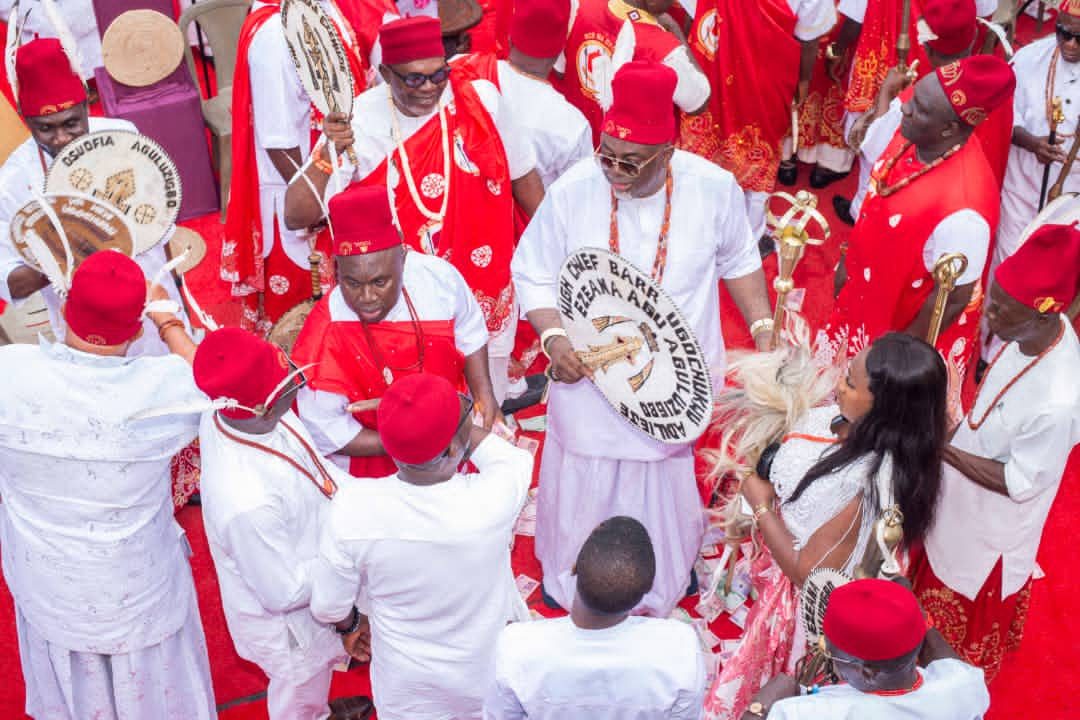
Traditional Igbo clothing tells a story that goes far beyond fabric and color. Among the Igbo people of southeastern Nigeria, what a person wears to a wedding, a title-taking ceremony, or a burial can reveal their family’s status, their community’s history, and even their personal achievements. Each garment, cap, and accessory carries its own name, meaning, and occasion, and together they form one of West Africa’s most recognizable dress traditions.
This guide walks through thirteen pieces that make up the core of traditional Igbo clothing, from the leopard-print Isiagu shirt to the coral beads and wrappers worn by Igbo women. Readers curious about how these garments compare with other cultural dress systems can also explore pieces on traditional clothing from around the world for broader context.
| Garment or Accessory | Typically Worn By | Primary Occasion |
|---|---|---|
| Isiagu | Men (increasingly women) | Weddings, chieftaincy ceremonies |
| Okpu agu | Titled men, warriors | Festivals, title ceremonies |
| Okpu mme | Nze na Ozo titled men | Title-taking, formal gatherings |
| Uwe / Uwe-olu | Men | Everyday and ceremonial wear |
| Ogodo / Wrapper | Married women | Weddings, church, meetings |
| Loincloth | Men (historically) | Daily wear in earlier eras |
| Puffed-sleeve blouse | Women | Paired with wrapper sets |
| Head tie | Married women | Formal and ceremonial occasions |
| Akpa-ukwu, Mgba aka, Mgbaji | Men and women | Accessories for ceremonies |
1. Isiagu
The Isiagu is the single most recognizable piece of traditional Igbo clothing worldwide. It is a highly prestigious attire worn by the Igbo people that signifies power, authority, and pride, and holds significant cultural and symbolic value. It is usually worn on special occasions like weddings and coronation ceremonies.
The Isiagu shirt gets its name from the embossed pattern across the fabric. The shirt may be long or short sleeved, some versions have gold buttons linked by a chain, and there is usually a breast pocket on the front. It is traditionally paired with the leopard-pattern cap known as Okpu Agu, which is covered in more detail in the next section.
The garment’s modern popularity has a specific historical root. The traditional attire became popular with the Igbo people after the Biafra War, when, feeling dejected and demoralized, Igbo inhabitants found their sense of purpose once again within the story of the fabric. Wearing it today, whether at a wedding in Lagos or a cultural festival abroad, still carries that layer of post-war resilience alongside its older association with chieftaincy. Readers interested in how Igbo families mark identity from birth onward may also find the piece on Igbo baby girl names useful, since naming and dress are closely linked in Igbo cultural practice.
2. Okpu Agu
If the Isiagu is the shirt, the Okpu agu is its signature crown. It is a traditional cap known for its bold red, black, and white stripes, and the name literally means “leopard cap,” referencing a creature admired in Igbo culture for its courage, wisdom, and nobility.
Historically, this cap was not for everyone. It was traditionally reserved for titled men, elders, and those who had achieved recognition in their community, so to wear it was to carry a visible sign of respect and accomplishment. It is described as a round slanting cap made of knitted wool in black, white, and red stripes, with a pattern that resembles leopard markings, from which the cap takes its name.
Pro Tip: If you are attending an Igbo title-taking ceremony as a guest, note that the Okpu agu is not a costume accessory to borrow casually. It is tied to earned status, so admire it rather than treat it as a prop.
3. Okpu Mme
Okpu mme refers to the feathered or plain red cap associated with the Nze na Ozo title society, one of the most respected institutions in Igbo tradition. The most prominent caps are the feathered red cap known as okpu ozo, which is regarded as sacred, with ordinary people prohibited from touching them, and the cap is a high-crowned red cap made of hide usually encircled with eight eagle feather plumes called ugo, worn by the title holders called Nze.
It can also be modest or low-crowned without the feather decorations when worn by Ozo title holders, and is also known as okpu mmee mmee, which literally translates to the color of the cap, or okpu mme, which signifies true loyalty; some Igbo regions also refer to it as okpu eze. The variation in names across communities is a reminder that Igbo dress customs are not uniform. What one town calls okpu mme, another may call by a different name entirely, even when describing the same red cap of office.
4. Uwe
Uwe is one of the foundational words in Igbo clothing vocabulary, and it covers more ground than a single garment. Uwe designates any garment, in particular a cloth worn over the torso of both genders, though it refers to a shirt specifically. Boston University’s Igbo language resource similarly lists Uwe/Afe as the term for shirt.
Because the term is so broad, a simple cotton shirt worn for farm work and a heavily embroidered ceremonial top can both fall under the uwe umbrella, with the finer details of fabric and tailoring signaling the occasion. This flexibility mirrors how many cultures use one base word for everyday dress while reserving embellished versions for formal events, a pattern also visible in traditional Chinese clothing where simple tunics and elaborate court robes share common roots.
5. Uwe-Olu
Uwe-olu sits one step up from the basic shirt in formality. Uwe-olu is described as a male shawl in Igbo dress vocabulary, a draped piece that adds visual weight to a man’s outfit without replacing the shirt underneath.
Related terminology exists in other regional resources. Boston University’s Igbo clothing glossary lists Akwa Olu as the word for scarf, which overlaps closely with the shawl-like function of uwe-olu. Shoulder drapes serving a similar ceremonial role appear in dress traditions elsewhere too, including the shawl-like layers seen in traditional Japanese clothing.
Important Note: Igbo clothing terminology varies by dialect and community, so the same accessory can carry slightly different names or descriptions (such as shawl versus scarf) depending on the source and region consulted.
6. Ogodo
Ogodo is the generic term most Igbo speakers use for a wrapper tied at the waist. Ọgọdọ is the generic term for a wrapper tied around the waist, typically reaching the ankles, though it can be shorter.
Regional accounts add texture to this definition. In the old days, typical men would wear what is called ọgọdọ, a type of white woven cloth tied around the waistline to cover nakedness, while women use the fabric as a wrapper to cover the body from the chest flowing down to the knees. This dual-gender use shows that the ogodo predates the more decorative, gender-specific wrapper styles worn today.
7. Wrapper
The wrapper is the piece most outsiders associate with Igbo women’s formal dress, and it is almost never worn alone. In the Nigerian context, the Igbos call it akwa or ogodo, and it is mostly worn in a double set by married women with their ịchafụ, meaning the wrapper and head tie function as a matched pair rather than separate pieces.
The settings where wrappers appear are strikingly varied. They are worn during eventful occasions and for different purposes such as age grade and association uniforms, wedding ceremonies, chieftaincy title taking, women’s monthly meetings, burial ceremonies, church activities, and August meeting. The double-wrapper set, usually made from George fabric, Ankara, or Akwete cloth, is often chosen to match a specific family or association color code for group events. Draped lower-body garments play a similarly central role in women’s formalwear in traditional Indian clothing, where the sari serves a comparable function.
8. Loincloth
Before tailored shirts and layered wrappers became standard, Igbo dress was far simpler, and the loincloth was often all that distinguished adults from children. The ancient Igbo traditional attire consisted of little clothing, as the purpose of clothing originally was simply to conceal private parts, although elders were fully clothed, and children were usually nude from birth until adolescence, the age when they were considered to have something to hide.
Even as layered clothing developed, the loincloth did not disappear entirely; it became a base layer rather than a complete outfit. Men could also tie a wrapper over their loin cloth, combining the older minimal garment with the newer, more elaborate wrapper styles worn for public occasions.
9. Puffed-Sleeve Blouse
For Igbo women, the puffed-sleeve blouse is the upper half of the classic ceremonial outfit, typically paired with a matching double wrapper set rather than worn on its own. The sleeves are cut full and often gathered at the shoulder or wrist, giving the garment visual volume that balances the straight lines of the wrapper below it.
Fabric choice does most of the talking in this ensemble. Lace, brocade, and richly patterned George or Ankara cloth are common choices for the blouse, often cut to match or complement the wrapper’s print so the whole outfit reads as one coordinated set. A similar blouse-and-wrap formula, where a fitted top pairs with draped lower-body fabric, appears in traditional Pakistani clothing ensembles such as the shalwar kameez, though the fabrics and cuts differ considerably.
10. Head Tie
The head tie completes the married Igbo woman’s formal look and is rarely considered optional for ceremonial dress. Igbo regalia and headdresses include the ịchafu, or head ties, among the broader set of garments, adornments, and accessories tied to status and identity.
As noted earlier in the wrapper section, the double wrapper set is mostly worn by married women with their ịchafụ rather than as a standalone piece. The style of tying, height, and fabric used for the head tie can signal everything from the wearer’s marital status to the formality of the event, much like elaborate headwear traditions function as status markers in traditional German clothing at regional festivals.
11. Akpa-Ukwu
Akpa-ukwu refers to a large traditional bag or pouch that appears as part of ceremonial dress, particularly for titled men and women during formal outings. The name combines terms relating to size and carrying, reflecting its role as a substantial accessory rather than a small everyday purse.
These bags are typically woven or beaded to match the rest of the outfit, often carried as a visible marker of status alongside caps, beads, and walking sticks. As with several accessory names in Igbo dress culture, the exact style and use of the akpa-ukwu can vary from one community to another, much the way carried accessories signal status differently across cultures, including within traditional Australian clothing customs tied to specific ceremonies.
12. Mgba Aka
Mgba aka describes bangles or bracelets worn around the wrist, forming part of the broader category of beads and bangles that make up Igbo ceremonial jewelry. Igbo regalia and headdresses include aka, or beads, and ola aka, or bangles, placing wrist ornaments firmly within the formal dress tradition rather than treating them as incidental decoration.
These bangles are often worn in sets, sometimes made of ivory, brass, or coral-adjacent materials depending on the wearer’s title or family tradition. Paired with coral beads at the neck and wrists, mgba aka adds a layer of ceremonial weight to an outfit that a plain shirt or wrapper alone cannot provide. Wrist and arm accessories carrying similar symbolic status appear across many dress traditions worldwide, including pieces explored in traditional American clothing histories.
Important Note: Exact names and styles for Igbo accessories such as akpa-ukwu, mgba aka, and mgbaji can differ by community and dialect. Readers researching a specific family or regional tradition should confirm local terminology with community elders or cultural associations where possible.
13. Mgbaji
Mgbaji generally refers to leg or ankle bangles, extending the bangle family from the wrist down to the lower leg. Like mgba aka, these pieces are worn for ceremonial occasions rather than daily use, often appearing alongside waist beads and other coral ornamentation during title ceremonies, weddings, and coming-of-age events.
The combination of wrist bangles, ankle bangles, and coral beads creates a layered look that is instantly recognizable at Igbo cultural events. Each piece on its own is modest, but together they form a complete accessory language that communicates status and occasion as clearly as the garments worn over them.
Conclusion
Traditional Igbo clothing is built from small, specific vocabulary, uwe, ogodo, okpu, mgba, each word pointing to a precise garment or accessory with its own history and occasion. From the leopard-patterned Isiagu and its accompanying Okpu agu cap to the paired wrapper and head tie worn by married women, these pieces still carry real weight at weddings, title-taking ceremonies, and burials across Igboland and the diaspora today.
What makes this dress system worth learning isn’t just the visual richness, it’s the layered meaning behind every item, from caps reserved for titled men to bangles that mark a coming-of-age milestone. Readers curious about how other cultures encode status and identity through dress can continue exploring comparative traditions, from wrapped and draped garments to ceremonial headwear, across the broader collection of traditional clothing guides available for further reading.