20 Types of Traditional Ethiopian Clothing and What They Represent

November 19, 2026
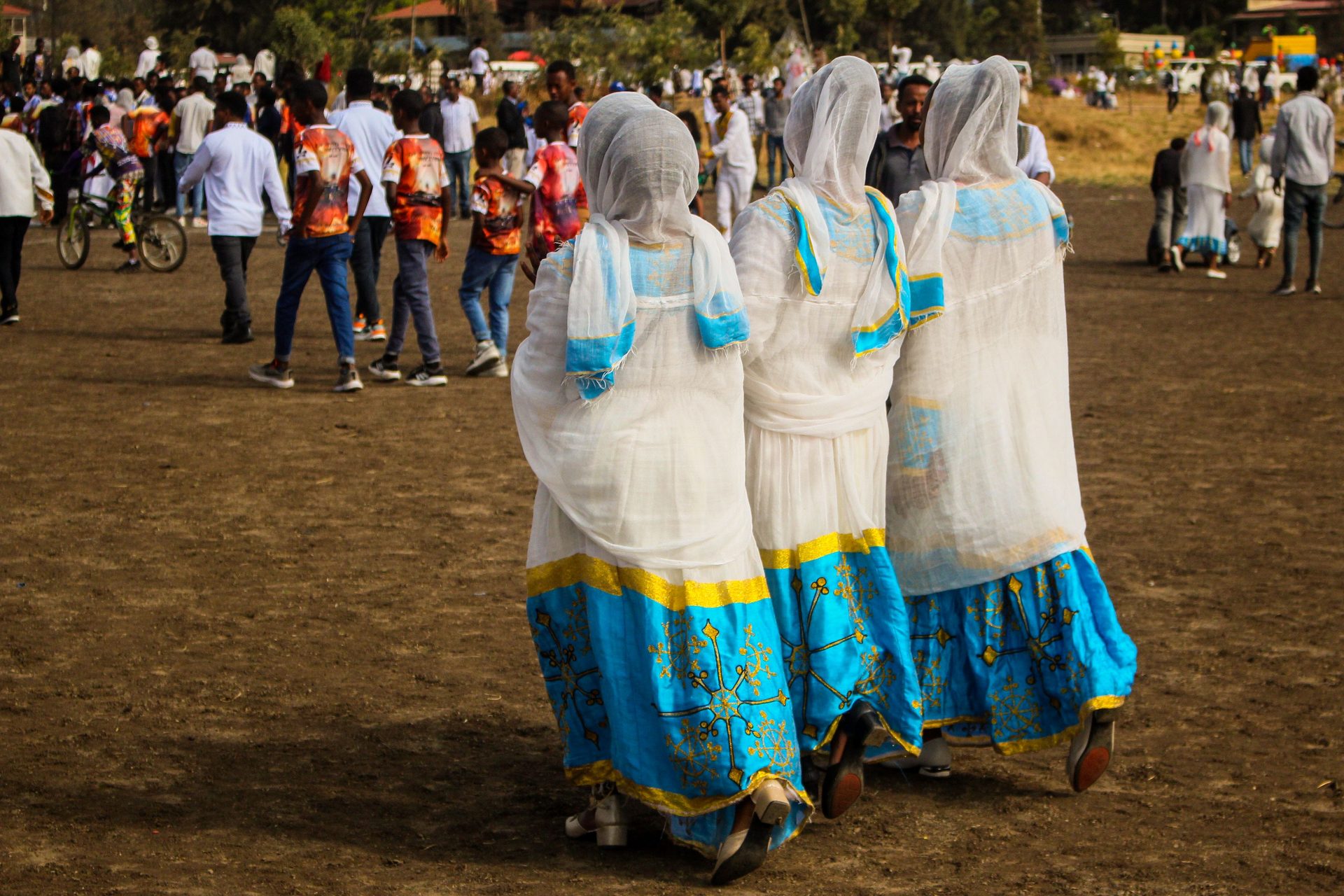
A single length of handwoven cotton can take Ethiopian weavers about two to three weeks to make enough fabric for a dress, long before it is ever cut, sewn, or embroidered. That kind of patience is part of why traditional Ethiopian clothing still shows up at weddings, church services, and holidays across the country, even as fast fashion dominates city streets.
Ethiopia’s wardrobe is not a single outfit but a layered vocabulary of shawls, wraps, dresses, cloaks, and accessories, each tied to a region, a season, or a stage of life. Some names on this list, like the Habesha kemis and netela, are recognized worldwide. Others are far more local, passed down through specific communities and rarely translated into English. This guide walks through 20 garments and textile terms that make up that wardrobe, explaining what each one is, how it is worn, and why it still matters.
| Garment | Typical Form | Common Context |
|---|---|---|
| Habesha Kemis | Ankle-length embroidered dress | Weddings, holidays, church |
| Netela | Thin cotton shawl | Daily wear, mourning, celebration |
| Gabi | Thick four-layer wrap | Cold weather, dowry gifts |
| Shemma | Handwoven cotton cloth | Base fabric for most garments |
| Bernos | Wool cloak | Highland cold-weather wear |
1. Habesha Kemis
The Habesha kemis is the garment most people picture when they hear “traditional Ethiopian clothing”: a long, white, ankle-length dress worn mainly by women across the Amhara and Tigrayan highlands. It is paired with netela, a light shawl draped over the shoulders, and the dress is worn at formal events, holidays, church ceremonies, weddings, and as everyday wear for rural Amhara people.
What separates one kemis from another is rarely the cut but the embroidery. Distinct regional variations exist within the Amhara region, distinguished by unique embroidery motifs known as tilet, with patterns differing across Gondar, Gojjam, Wollo, and Shewa. Shoppers comparing national dress traditions elsewhere will notice a similar pattern of regional variation in Indian clothing, where draping style changes from state to state even when the base garment stays the same.
Pro Tip: Look at the border embroidery, not just the dress color, to identify where a Habesha kemis was likely woven — tilet patterns are the clearest regional signature.
2. Netela
The netela is the shawl that completes almost every formal Habesha outfit, worn by both men and women. It is a very thin and delicate scarf made from cotton and is rather large, about 160 x 260 cm or 63 x 102 inches. It also communicates what the wearer is feeling or doing, since it normally covers the back and shoulders with the embroidered end folded over the right shoulder.
The way someone folds or wraps a netela can quietly signal the occasion. During mourning, the embroidered end of the netela is wrapped around the face rather than draped over the shoulder, a small adjustment that shifts the entire meaning of the garment. You can explore more detail on draping customs at allaboutETHIO’s guide to traditional dress .
3. Eje Tebab
Eje tebab translates loosely from Amharic as “handwork” or “hand skill,” a name that points directly to its purpose: decorative hand embroidery applied to cuffs, sleeve edges, and wrist bands on formal garments. Rather than a standalone piece of clothing, it functions as a finishing detail, the kind of close embroidery work that turns a plain cotton sleeve into something suited for a wedding or holiday.
This emphasis on hand-finished detailing at the wrist and cuff echoes a broader pattern seen in traditional Pakistani clothing, where embroidered cuffs and necklines carry similar weight as markers of craftsmanship and occasion.
4. Tenefanef
Tenefanef refers to a layered or wrapped addition worn over a base garment, typically adding warmth or formality without replacing the main dress or shirt underneath. Like many secondary wraps in the Ethiopian wardrobe, it is meant to be added or removed depending on temperature and setting rather than worn as a fixed, single-piece outfit.
Layering lighter garments over a core piece for both practicality and formality is not unique to Ethiopia. Traditional Chinese clothing uses a similar logic, with outer robes added over base layers depending on season and ceremony.
5. Kuta
The kuta is a lightweight shawl, generally thinner and more open-weave than the netela or gabi, and it is most associated with men’s warm-weather dress. It is a male’s thin gauzy shawl worn in warmer periods, standing in contrast to heavier wraps reserved for cold highland nights.
Because it is woven loosely from fine cotton, the kuta breathes well and drapes easily over the shoulders of an Ethiopian suit for warm-season church services or outdoor ceremonies. Details on how handloom weavers produce this kind of gauzy cloth are covered in Leila Atelier’s history of Ethiopian cotton weaving .
6. Gabi
The gabi sits at the opposite end of the weight spectrum from the kuta. It is a thicker garment with four layers of fabric holding significant cultural value in Amhara culture, worn by both men and women and intended for cold weather, making it a household good due to the high altitude of the Amhara homeland, especially among clergy and the elderly.
The gabi also carries weight beyond warmth. Amhara women traditionally gather to spin the yarn needed to make several gabis and present them as gifts for their husbands, and the gabi is a crucial part of the wedding dowry. Thick wool outerwear built for cold mountain climates appears across cultures, including the layered wool coats found in traditional German clothing from Alpine regions.
Key Insight: A gabi is rarely just a garment in Amhara households — it doubles as a blanket, a baby swaddle, and a dowry gift, which is why families invest real time spinning the yarn for it by hand.
7. Buleko
Buleko is closely related to the gabi and is sometimes used interchangeably with it, referring to the same thick, four-layer handwoven wrap. The buluko is a thicker, white handwoven wrap that is traditionally a dowry gift with significant cultural value, associated with weddings and important village ceremonies.
What distinguishes the buleko conversationally from the gabi often comes down to regional preference in naming rather than a difference in construction. Both terms describe garments built for the same purpose: serious cold-weather protection that doubles as a symbol of family commitment at marriage.
8. Bernos
The bernos is a wool cloak traditionally worn by Amhara men, most associated with the cooler Shewa region. It is a wool cloak-like garment and hood woven in one piece, traditionally worn by men of the Amhara ethnic group, most commonly in the relatively cold Shewa.
Unlike cloaks from other cold-weather traditions, the bernos has a distinctive shape. Unlike its Maghrebi counterpart the burnous, it does not have a hood but instead has a large point on one side of the shoulder, tailored that way so highlander men could rest a rifle there without rainwater entering the muzzle. That detail alone shows how closely Ethiopian garment design followed daily life rather than decoration for its own sake.
9. Shemma
Shemma is the raw material behind nearly everything on this list: handwoven cotton cloth that forms the base fabric for the Habesha kemis, netela, gabi, and kuta alike. For millennia, cotton cultivation and the production of hand-spun cotton cloth, known as shemma, have been central to the social and economic fabric of Amhara communities, and while the resulting white, ankle-length dress has become a national symbol of Ethiopia, it specifically reflects the weaving heritage of the Amhara.
Shemma production is still concentrated in specific communities using narrow pit looms, a technique passed down through generations of weaving families. The careful, slow handwork behind shemma has a close parallel in the hand-loomed silk traditions behind traditional Japanese clothing, where fabric production is treated as its own craft separate from garment construction.
10. Wandabo
Wandabo refers to a wrapped outer garment worn over the shoulders, generally associated with specific regional dress traditions outside the core Amhara and Tigrayan wardrobe. Ethiopia’s more than 80 ethnic groups each maintain their own garment vocabulary, and names like wandabo rarely appear in the same English-language sources that cover the Habesha kemis or netela in depth.
Important Note: Several garment and accessory names in this list, including Wandabo, Gorfo, Woya, and Sirra, are preserved mainly through regional and oral tradition rather than extensive English-language documentation. Descriptions here reflect general cultural context rather than claims about a single fixed construction.
This pattern of regional dress diversity within one country is not unusual. Traditional American clothing shows the same kind of variation, with garments differing sharply between regions and communities despite falling under one national umbrella.
11. Gorfo
Gorfo is a term used for a specific type of wrap or accessory tied to ceremonial dress, falling outside the six major textile categories most commonly documented in academic literature. Ethiopian traditional handwoven clothing is broadly classified into six main categories: Shema, Habesha Kemis, Tibeb, Netela, Gabi, and Kuta, all derived from Amharic terminology.
Terms like gorfo exist alongside that core classification as more localized or historical names, which is why researchers cataloguing Ethiopian textiles tend to group them as regional variants rather than separate major garment classes. You can see the full scholarly breakdown of that six-category system in the research published through Social Science Insights and Applications .
12. Woya
Woya describes a draped cloth accessory, typically lighter than a gabi and used more for styling than warmth. Like several entries on this list, it occupies a space between clothing and accessory, often added to an outfit rather than worn as its own complete garment.
Drape-based accessories that shift an outfit’s formality without changing the base garment show up across many traditional wardrobes. The sari in Indian clothing traditions works on a similar principle, where draping technique does more to signal occasion than the fabric itself.
13. Sirra
Sirra is a term tied to ceremonial order and dress, often used in reference to the specific arrangement or sequence of garments worn during formal occasions rather than a single physical item. In many Ethiopian communities, how a garment is layered and in what order carries as much cultural meaning as the garment itself.
This connection between sequence, tradition, and identity runs through many parts of Ethiopian culture beyond clothing, including naming practices. Readers interested in how Ethiopian families carry tradition through generations may also want to look at Ethiopian baby names, where meaning and heritage play a similarly central role.
14. Qollo
Qollo refers to a specific accessory or accent piece associated with regional dress, distinct from the core shemma-based garments like the kemis or gabi. Accessories like this tend to vary more by district and family tradition than the major garments, which is part of why they are harder to pin down with a single universal description.
Rather than a fixed national standard, qollo and similar accessory terms reflect how localized Ethiopian dress can get once you move past the handful of garments recognized nationwide.
15. Tey Eraz
Tey eraz names one half of a paired garment or accessory set, used in specific ceremonial contexts where two complementary pieces are worn or presented together. Paired naming conventions like this are common in Ethiopian ceremonial vocabulary, often marking a left-and-right or matched-set relationship between two items.
These paired terms are easiest to understand in context, as part of a full ceremonial outfit, rather than as standalone pieces described in isolation.
16. Gey Eraz
Gey eraz is the counterpart term to tey eraz, completing the paired set referenced above. Together, the two names describe a matched relationship between garments or accessories presented as a set during specific ceremonies.
Paired or matched ceremonial dress elements exist in many cultures as a way of visually reinforcing unity or partnership, a concept that also shows up in coordinated ceremonial dress within traditional Australian clothing, where matched accessories signal shared ceremonial roles.
17. Gay Gannafi
Gay gannafi refers to a style of dress or wrap associated with specific regional or ceremonial contexts outside the Amhara-Tigrayan core wardrobe. As with several other entries here, it represents the broader diversity of Ethiopia’s clothing vocabulary beyond the nationally recognized Habesha garments.
Names like this are a reminder that “traditional Ethiopian clothing” is really an umbrella term covering dozens of distinct local wardrobes, not one single national costume.
18. Melfota
Melfota describes a style of covering or wrap connected to dress customs in specific Ethiopian communities, used in both everyday and ceremonial settings depending on the region. Its exact form can shift from one area to another, which is typical of terms that sit closer to folk vocabulary than standardized national dress categories.
Modern designers working with Ethiopian textiles increasingly document and adapt these regional names for contemporary collections, a trend visible across the broader world of traditional and modern clothing styles being reinterpreted for new audiences.
19. Siyassa
Siyassa is another regionally specific term tied to traditional dress, generally referring to an accessory or finishing element added to a ceremonial outfit. As with several names near the end of this list, detailed documentation is limited, and descriptions tend to rely on community knowledge passed between generations rather than published records.
This gap in documentation is itself worth noting: it shows how much of Ethiopia’s clothing heritage still lives primarily in spoken tradition rather than written catalogues.
20. Gurda
Gurda closes out this list as a term for a ceremonial garment or accessory tied to specific regional customs. Like several other entries here, gurda represents the deep layer of localized dress vocabulary that exists beneath the handful of nationally recognized garments like the Habesha kemis and gabi.
For readers curious about how naming and heritage intersect in Ethiopian culture more broadly, the connection between family identity and tradition carries through to practices like naming customs in Ethiopia, where meaning is treated with the same care as the garments worn at a child’s naming ceremony.
Taken together, these 20 garments and terms show that traditional Ethiopian clothing is less a single outfit and more a living record of region, climate, and family history woven into cotton and wool. The Habesha kemis and netela may be the names most visitors learn first, but the gabi’s dowry significance, the bernos’s rifle-shoulder design, and the dozens of regional terms that rarely make it into English guides all point to the same thing: clothing in Ethiopia has always carried meaning well beyond what it covers.