Why Is My Succulent Turning Brown? Causes, Fixes, and Prevention Tips

August 25, 2026
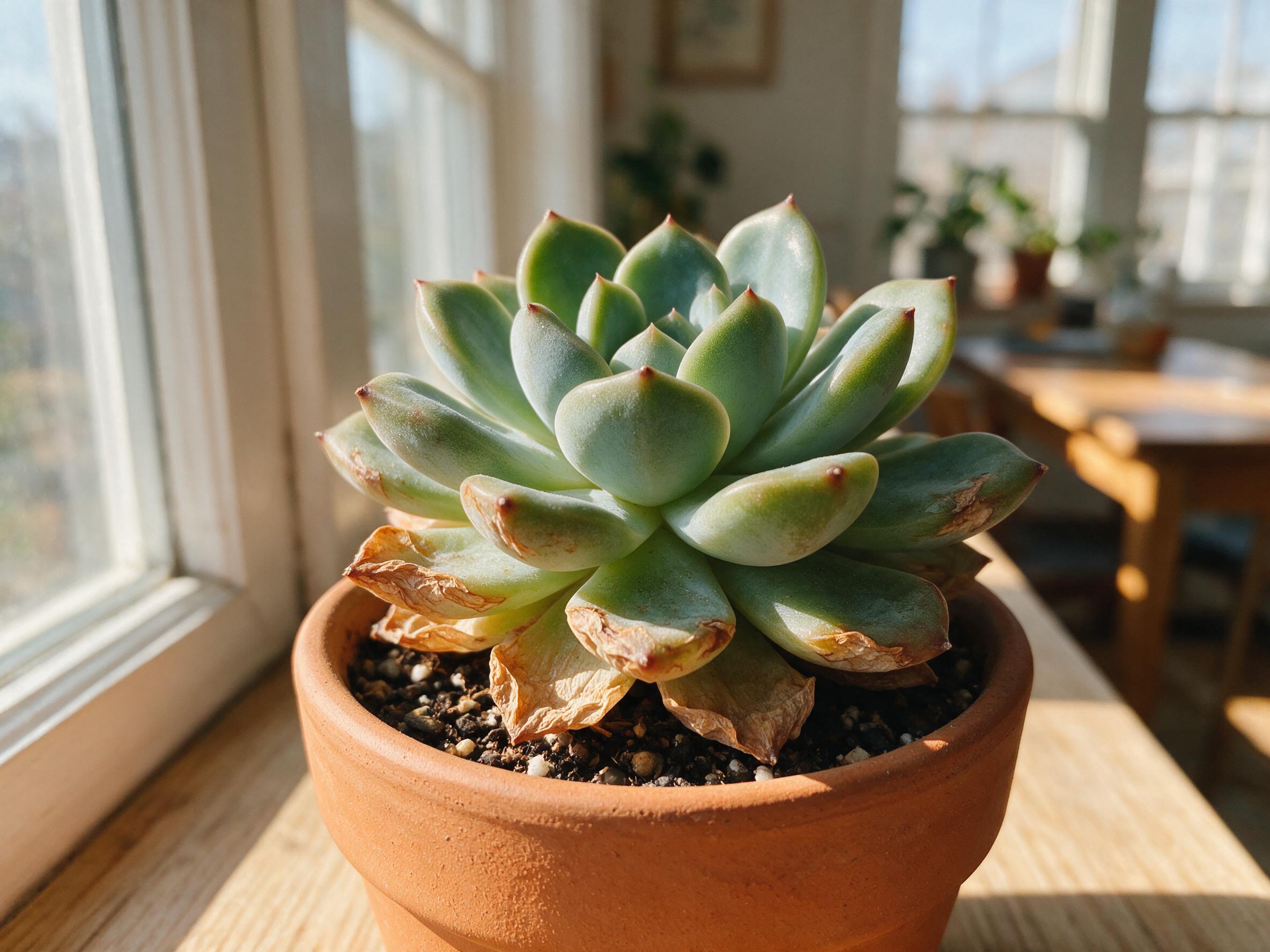
You glance at your succulent and notice the leaves have taken on an unwelcome shade of brown. Before you assume the worst, take a breath — browning is one of the most common issues succulent owners in the US deal with, and in most cases it is entirely fixable. The key is knowing exactly what you are looking at.
Succulents are celebrated for being low-maintenance, but that reputation can actually work against you. Because they seem so forgiving, subtle warning signs get ignored until the damage becomes hard to miss. The most likely explanations for a succulent turning brown include sun damage, watering issues, nutrition deficiencies, poor soil conditions, pests, disease, and over-fertilizing. This guide walks you through every one of those causes, shows you how to tell them apart, and gives you a clear action plan for bringing your plant back.
Pro Tip: Before you change anything about your care routine, spend two minutes examining the plant closely. The location, texture, and pattern of the browning will point you toward the right cause almost immediately.
What Does It Mean When Your Succulent Is Turning Brown?
Brown coloring on a succulent is the plant’s way of signaling that something in its environment or care routine is off. This color change can be attributed to several factors, each affecting the plant in unique ways. Understanding these causes is the first step in addressing and rectifying the issue.
That said, browning does not always mean your plant is in crisis. The location of the discoloration matters a great deal. Brown patches on the upper, sun-facing leaves tell a very different story than soft, dark browning creeping up from the base of the stem. The pattern of brown spots can be a dead giveaway. Fungal infections often present as concentric rings or irregular patches, while bacterial issues might show up as water-soaked lesions. If the spots are accompanied by a crispy texture, sunburn could be the culprit.
You will also want to consider the texture. Crispy, dry browning points toward sun or heat stress, while soft, mushy browning almost always signals excess moisture. A sun-damaged succulent usually presents as brown discoloration on the tips or most exposed sections of foliage. The discolored parts may look and/or feel dry. You might only see damage on one side of your succulent — the side that is facing the sun.
Is Browning in Succulents Always a Sign of a Problem?
Not always. Some browning is completely normal and does not require any intervention at all. Some succulents turn brown as part of the natural aging process. Succulents do not drop their foliage like deciduous plants do. However, older leaves will die off as a succulent grows. It is also normal for leaves to turn brown and fall off after being damaged. If you notice a little bit of browning on your succulent’s oldest leaves and the plant otherwise appears healthy, it may be a sign that those leaves have run their course.
Lower leaves on many succulents, especially those with a rosette growth habit, will occasionally dry completely and fall off. If the plant is otherwise healthy and growing well, a dried-up lower leaf or two is nothing to cause concern. You can simply pull those off at the base and move on.
Another benign cause is physical contact. Aeoniums are especially prone to brown marks from being handled. Lines and blotches show up a day after something or someone has touched the leaves. If you are making a bouquet of aeoniums or taking cuttings, hold them by their stems only, and do not let them brush against anything. This kind of cosmetic marking does not affect the plant’s health.
Where browning becomes a real concern is when it spreads quickly, affects new growth, is accompanied by mushiness or a foul smell, or appears alongside other symptoms like wilting, stretching, or pest activity. In those cases, you need to act fast. You can also explore our guide on how to plant succulents for a strong foundation on the basics before troubleshooting problems.
Watering Issues Causing Succulent Browning
Watering is the number-one source of trouble for succulents, and both too much and too little water can produce brown leaves — though the two look quite different from each other.
Overwatering
One of the most frequent reasons for succulents turning brown is overwatering. Succulents are adapted to arid environments and store water in their leaves. Excessive watering can cause the roots to rot, leading to brown, mushy leaves. Check the base of the plant first. If the lower portion of your succulent is dark brown or black and is mushy, your succulent has been overwatered and is experiencing root rot.
Root rot stems from overwatering and can lead to plant discoloration. This fungal disease is common in succulents that are planted in poor draining soils. If soils are not able to drain water away, root rot will develop quickly. Root rot is common in succulents that are overwatered or planted in unsuitable containers. Root rot starts below the soil surface and is difficult to catch until it’s too late.
The fix is straightforward if you catch it early. Cut back on watering right away. Allow the plant to dry out completely before watering again. A good rule of thumb is to feel the top inch of the soil before watering. The top inch needs to feel dry before you water again.
Underwatering
Succulents hold lots of moisture in their leaves, which is what gives them that plump, fleshy appearance. However, if a succulent goes too long without sufficient water, those moisture stores start to disappear. This can lead to brown leaf tips, dry or wrinkled flesh, and other unsightly symptoms.
It is not uncommon for these symptoms to appear even when you are adhering to a trusted watering schedule, and that is usually because your plant can suddenly become dehydrated due to extreme heat or excess sun exposure. These environmental factors naturally increase the amount of water the succulent needs to survive. They also speed up evaporation, so your succulent’s soil and excess water stores can dry out a lot quicker than normal.
The recovery is quick. Water the plant thoroughly until the soil is soaked and then let it drain completely. Always use a porous and well-draining soil mix so that it does not hold water for an extended amount of time and lead to root rot. The wrinkled leaves should perk up very quickly just after one or two watering cycles.
Pro Tip: Use the “soak and dry” method — water deeply until it drains from the bottom, then do not water again until the top 2 inches of soil are completely dry. This mimics the natural rainfall patterns succulents evolved to handle.
Light Conditions Behind Succulent Browning
Light is the second most common driver of browning, and it cuts both ways. Too much intense, direct sun scorches leaves, while too little causes the plant to weaken and discolor over time.
Too Much Direct Sun (Sunburn)
The most common reason for brown leaves on succulents is sunburn or sun damage. If you have recently moved your plant to a bright location, or if you have recently had a heatwave or intense heat and you notice your plants have brown spots on their leaves, these spots are equivalent to sunburn.
The primary cause of sun scald is when succulents are exposed for a length of time to low light levels and then suddenly transitioned to bright or direct sunlight. Most succulents appreciate protection from the hot afternoon sun and most do best in bright, indirect light. The dead areas burned by the bright light will not recover, and typically leaves with sun scald will eventually drop. Stems with sun scald damage will callus over creating a permanent scar. Transition succulents to new light conditions slowly to avoid damage in the future.
If you catch sunburn early — when the marks are still pale or white rather than brown — you may be able to limit the damage. If you catch it early, when the marks are still white, move the plant to shade and moisten the soil. Once the marks turn brown, brown spots from sunburn do not really harm the plant but they do leave a permanent mark on the leaves. These spots will not fade but the leaves will eventually fall off as new growth develops.
Too Little Light
Succulent plants require plenty of sunlight to thrive. If your plant is not getting enough sunlight, the leaves can start to turn brown and become weak. To solve this issue, move your plant to a sunnier location, or provide artificial light if necessary.
For indoor growers, the Iowa State University Extension and Outreach notes that when grown indoors, succulents need abundant bright, indirect light. Ideally, plants receive ten or more hours of light a day. If a bright enough location cannot be found by a window, then provide supplemental light utilizing high output, full-spectrum fluorescent or LED grow lights. Set plants within 12 inches of the light source and put lights on a timer to turn on for 12 to 16 hours a day.
Check out our list of the best houseplants for low-light areas if you are working with a particularly dim space and want to rethink your plant choices.
Soil, Nutrients, and Root Health Causing Succulent Browning
Even with perfect watering and lighting, the wrong soil or a depleted nutrient profile can push your succulent toward brown leaves. Root health starts at the soil level.
Poor Drainage and Root Rot
The main causes of root rot include soils with inadequate drainage and overwatering. All succulents need soils that drain quickly. Several retail nurseries provide specialized “cactus” mixtures, which are designed for plants in pots. Poorly draining soils will make plants more vulnerable to infections that cause root rot and even kill plants.
If root rot has already set in, act immediately. When you notice signs of root rot, stop watering the plant and repot in well-draining soil as soon as possible. You could also try to save your plant by removing any rotting tissue and a small portion of the surrounding good tissue. To do this, use a new razor or sharp knife disinfected in boiling water or cleaned with alcohol.
Nutrient Deficiency
Soil without the proper nutrient balance can cause plant discoloration. Succulents are typically not heavy feeders and do not need added nutrients. But occasionally the leaves can turn yellow from a lack of nutrients. Nutrient deficiencies generally show up rather quickly. Because succulents can stay in their pots or location for long periods of time, soils can be depleted of nutrients due to rarely being repotted or moved. After time, nutrients in the potting soil or ground will run out and need to be replaced or amended.
The best solution is to repot your succulent and add new soil back into the original pot or container. Fresh potting soil is a cost-effective and efficient way of solving a nutrient deficiency issue. You can also apply fertilizer as a fast solution, but fertilizers can cause burn if not applied properly. If you do fertilize, use a balanced, diluted formula designed for cacti and succulents, applied no more than once a month during the growing season.
Salt and Mineral Buildup
Other causes for browning may include salt buildup, water purity, or a need for repotting. Tap water in many US cities contains chlorine, fluoride, and mineral salts that accumulate in the soil over time, creating a toxic crust around the roots. If you notice a white, crusty residue on the soil surface or pot rim, flush the soil thoroughly with filtered or distilled water, or repot entirely in fresh mix.
Environmental Stress Triggering Succulent Browning
Sometimes the problem is not water or light but the broader environment your plant is sitting in. Temperature swings, humidity, and even poor air circulation can all cause browning.
For the most part, succulents thrive in temperatures ranging from 60 to 90 degrees Fahrenheit, so try to keep conditions within that range. In the US, this means protecting outdoor succulents from hard frosts in winter and from scorching afternoon heat in summer — especially in states like Arizona, Texas, and Florida where temperatures regularly push well above 90°F.
Cold damage is another culprit that US plant owners often overlook. Plant edema is caused by excessive soil moisture, insufficient illumination, and cold temperatures. It usually happens in the winter on succulent plants. The plant’s leaves begin to yellow, droop, and fall off if the damage is left untreated. Edematous leaves will not return, but you can stop a plant’s decline by increasing light and watering less frequently. Repotting to enhance soil drainage can also be beneficial.
Indoor succulents face their own environmental stressors. Heating and air conditioning vents create dry, hot or cold air drafts that dehydrate leaves rapidly. Placing your plant near a vent, radiator, or cold drafty window in winter is a common cause of browning that is easy to overlook. Simply relocating the plant a few feet away often solves the problem.
Pro Tip: In summer, if you are moving an indoor succulent outside for fresh air, acclimate it gradually over 7 to 10 days. Start with morning sun only, then slowly increase exposure. Skipping this step is one of the most common causes of sudden, severe sunburn.
Pests and Disease Leading to Succulent Browning
Pests are less common on succulents than on many other houseplants, but they do happen — and when they do, they can cause noticeable browning and spotting if left unchecked.
Common Pests
Pests such as mealybugs, spider mites, and aphids can cause significant damage to succulents, often leading to brown spots or patches on the leaves. These pests feed on the plant’s sap, weakening it and causing discoloration.
Mealybug looks like cottony masses often clustered along stems and leaf veins. Brown lower leaves on otherwise healthy plants are normal, as seen on this flapjack plant. Cottony masses, especially along the veins of leaves and where leaves and stems join, are signs of mealybug. This insect pest feeds on the plant sap and exudes a sticky substance called honeydew that covers lower leaves and surrounding tabletops and floors.
Scale insects are another concern. According to succulent expert Debra Lee Baldwin, grayish-white or brown dots that pepper a succulent’s skin are scale insects, which latch onto the plant and consume its tissues. The pests’ hard outer shell protects them like armor and makes them difficult to get rid of.
For treatment, rinsing foliage and physically removing the cottony masses can help reduce the infestation. Spray insects with a spray bottle of rubbing alcohol or dab with a cotton swab dipped in rubbing alcohol. Multiple applications are often needed for complete control. Pesticides like neem oil and insecticidal soap can also be used.
Fungal Disease
If one observes the presence of brown spots on succulent plants, it may be attributed to a fungal infection or overwatering while under direct sunlight. Fungal issues are most likely to appear in humid conditions with poor air circulation — common in bathrooms or kitchens with limited ventilation.
Adequate ventilation is essential when growing succulents indoors. If you are growing succulents indoors, it is important to keep an eye out for powdery mildew. This problem can be caused by watering habits and the planting environment. Improve airflow around your plants, avoid getting water on the leaves, and water in the morning so any surface moisture evaporates before temperatures drop at night.
If you suspect a more serious pest problem, our guide on the best iPhone apps for identifying plants can help you ID both the plant species and the pest you are dealing with. Android users can check out the best Android apps for identifying plants instead.
How to Diagnose Why Your Succulent Is Turning Brown
With so many possible causes, a systematic approach saves time and prevents you from making the wrong fix. Work through the following checklist before touching anything on the plant.
| What You See | Where It Appears | Most Likely Cause |
|---|---|---|
| Crispy, dry brown patches | Upper leaves, sun-facing side | Sunburn / sun scald |
| Soft, mushy brown or black | Base of stem, lower leaves | Overwatering / root rot |
| Dry, shriveled, brown tips | Leaf tips, upper growth | Underwatering or low humidity |
| Brown + yellowing, soggy feel | Older/lower leaves | Overwatering |
| Brown spots with cottony fluff | Stems, leaf joints | Mealybugs |
| Grayish-brown dots or crust | Leaf surfaces | Scale insects |
| Concentric rings or irregular patches | Leaf surfaces | Fungal infection |
| Brown lower leaves only, plant looks healthy | Bottom rosette leaves | Natural aging — normal |
| Corky, rough brown tissue | Lower stem, just above soil | Corking / edema (often normal in older plants) |
With such a long list of possible causes of why your succulent may be turning brown, it is worth spending some time understanding the root cause before you try to fix it. Once you match your plant’s symptoms to the table above, move to the next section for targeted solutions.
How to Fix a Succulent That Is Turning Brown
The right fix depends entirely on the cause you identified above. Here is a direct action plan for each scenario.
Fixing Sunburn
There is little you can do when the leaves are sunburned and have turned brown. Simply remove the damaged leaves and adjust the amount of sun exposure your succulent receives. Most succulents prefer full indirect sun, so you can let your plants enjoy the sunlight through a thin curtain or a glass window to block away some harmful UV rays. Move outdoor plants to a spot with afternoon shade, especially during summer months.
Fixing Overwatering and Root Rot
If the plant has root rot, you need to act quickly. Remove the succulent from its pot. Remove and discard all soil. Clean the pot thoroughly. Cut the infected stem from the succulent. Let the healthy portion dry on the end of the stem for several days. Replant in lightly moistened, almost dry soil. Water sparingly.
For less severe overwatering without full root rot, cut off the top part of the plant and remove any soggy yellow leaves or stems. Allow the cutting to dry out for a few days until the wounds are calloused over and propagate it in new soil. Refrain from watering right after you plant the cutting. Give it a couple of days to dry out and get settled in the new soil and you may see new growth appearing in no time.
Fixing Underwatering
If the leaves of your succulent plant have turned brown or have a shriveling appearance due to underwatering, the good news is that it is extremely easy to fix. All you need to do is fix the amount of water you are providing. Give your plant a good drink of water and let it dry out between watering. You should see leaves plump back up within a day or two.
Fixing Pest Infestations
Regularly inspect your succulents for signs of pests. If you notice an infestation, treat the plant with insecticidal soap or neem oil. Isolating affected plants can prevent the pests from spreading to other succulents in your collection. For mealybugs specifically, a cotton swab dipped in rubbing alcohol applied directly to each visible pest is highly effective for small infestations.
Fixing Nutrient Deficiency
Repot in fresh, well-draining cactus or succulent mix. One quick solution is to repot the plant in fresh potting mix. If repotting is not practical right now, apply a balanced, diluted liquid fertilizer (half the recommended strength) once during the growing season — spring through early summer in most US regions.
How to Prevent Succulent Browning Going Forward
Prevention is far less stressful than rescue. These habits, applied consistently, will keep the vast majority of browning problems from developing in the first place.
- Water on a soil-based schedule, not a calendar one. Indoor succulents only need to be watered when the soil is almost completely dry. Check the soil moisture levels weekly by inserting a soil moisture meter or two fingers at least 2 to 3 inches into the soil.
- Use the right soil from the start. Use potting mix for cacti and succulents, which drains out quickly. Avoid regular potting soil, which retains too much moisture for these plants.
- Acclimate plants to new light gradually. For outdoor succulents, gradual acclimation to direct sunlight can prevent sunburn. Increase exposure by an hour or two every few days rather than making a sudden shift.
- Provide afternoon shade in summer. If you believe your succulents are suffering from sunburn, move them to a shadier area. Afternoon shade is best for succulents because the sunlight and temperatures are typically more intense in the afternoon. If you cannot provide natural shade, you can place a shade cloth over your succulents to prevent burn.
- Never let pots sit in standing water. Never let indoor plants stand in a saucer of water. Empty drainage trays after watering.
- Inspect plants regularly for pests. Pests are more likely to attack plants that are already stressed from other factors such as root rot and sunburn. These pests are easy to treat if caught early enough.
- Repot every one to two years. Succulents can stay in the same pot for quite some time before you need to repot or replenish lost nutrients. Potting mixes come with added compost or fertilizers already in the mix. The plants can feed off those nutrients for quite some time but eventually the nutrients run out and will need to be replaced.
- Keep air moving around indoor plants. Good ventilation reduces the risk of fungal disease and helps the soil dry evenly between waterings.
For more plant care inspiration, browse our full guide to types of plants or explore our dedicated page on different types of aloe vera plants — a popular succulent family with its own specific care needs. If you grow aloe or other succulents outdoors, our roundup of drought-tolerant plants in Florida is worth a read for region-specific advice.
Frequently Asked Questions
Why Is My Succulent Turning Brown and Soft?
Soft, brown tissue almost always indicates overwatering or root rot. Overwatering is one of the most common reasons why succulent leaves turn brown. If the soil is too wet, the roots can become waterlogged and start to rot, which can cause the leaves to turn brown and mushy. Remove the plant from its pot, trim any rotted roots, and replant in dry, well-draining cactus mix.
Why Is My Succulent Turning Brown and Crispy?
Sunburn is the most frequent and likely cause of your succulent’s top becoming brown. It may seem strange because most equate cactus with scorching, arid deserts. However, certain cactus species do not thrive in direct sunshine; some require medium lighting and some shade to grow well. Move the plant to bright, indirect light and trim away the damaged leaves.
Can a Brown Succulent Recover?
Yes, in most cases. Many discoloration causes have solutions if you act quickly. By taking swift action, you can help prevent your succulent from dying. The exception is severe root rot that has traveled up most of the stem — at that point, your best option is to propagate any healthy sections rather than trying to save the whole plant.
Should I Remove Brown Leaves From My Succulent?
Yes, for hygiene and aesthetics. Dead or damaged leaves can harbor pests and fungal spores. Gently pull them away from the base of the stem rather than cutting, which leaves a stub that can also rot. Healthy leaves should detach cleanly with a slight downward tug.
Why Are the Tips of My Succulent Leaves Turning Brown?
If a succulent goes too long without sufficient water, those moisture stores start to disappear. This can lead to brown leaf tips, dry or wrinkled flesh, and other unsightly symptoms. Brown tips are also common when plants are placed too close to a heat source or air conditioning vent. Check the soil first — if it is bone dry, water thoroughly. If it is moist, look at the plant’s environment for temperature or airflow issues.
How Often Should I Water My Succulent to Prevent Browning?
There is no single universal answer, but a practical guideline is to water according to Iowa State University Extension and Outreach only when the soil has dried out thoroughly between waterings. Watering succulents in well-drained soils every 10 to 14 days should be sufficient to ensure plant health and growth. Adjust that window based on your climate, pot size, and season — plants need less water in winter and more during hot summer months.
What Is the White Crusty Stuff on My Succulent Soil?
That is mineral salt buildup from tap water. It is not immediately dangerous but can stress roots over time. Flush the soil with filtered water or repot in fresh cactus mix to remove the buildup. Switching to distilled or rainwater for regular watering will prevent it from returning.