Why Are My Fiddle Leaf Fig Leaves Turning Brown? Causes and Fixes

September 30, 2026
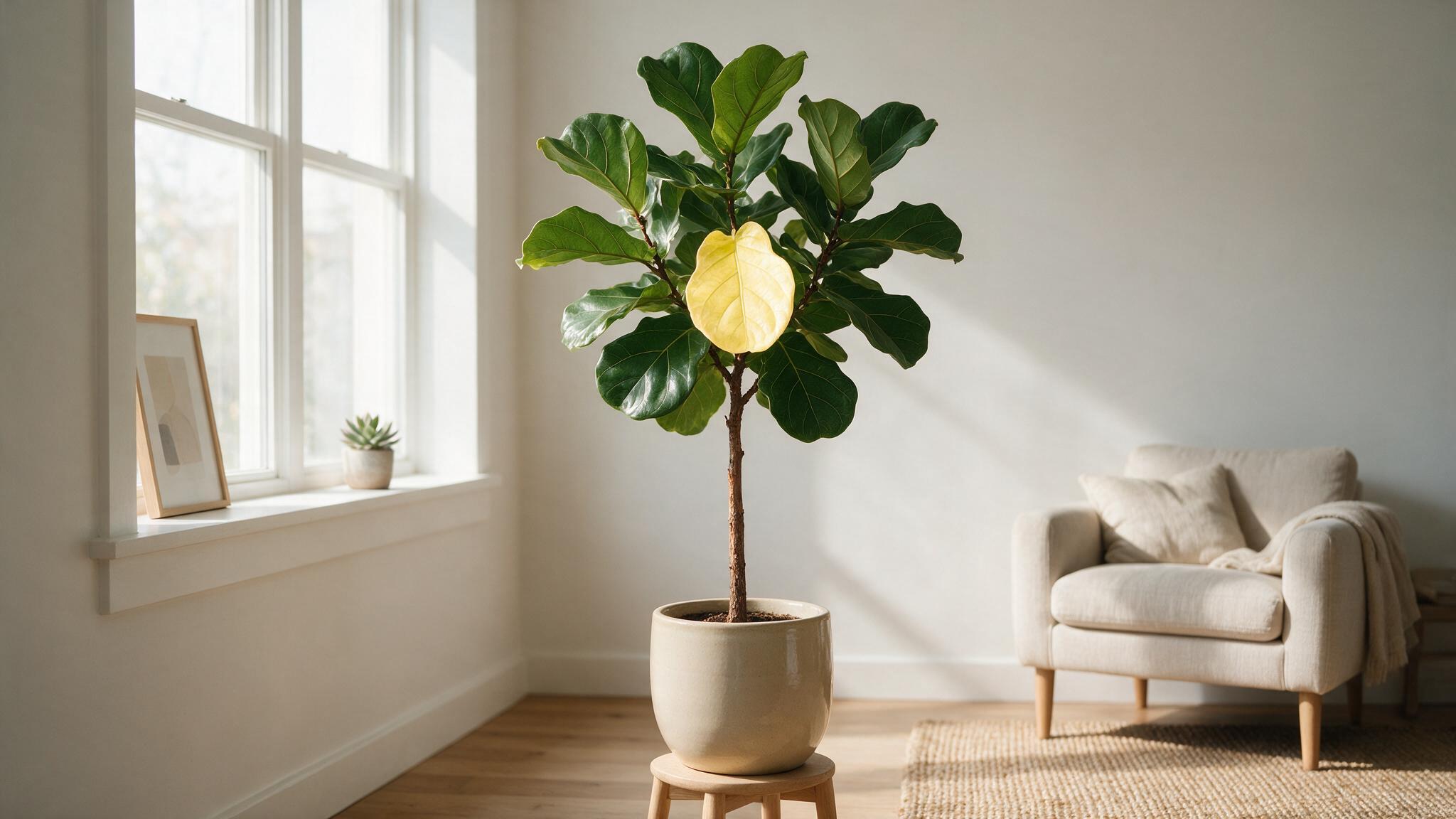
Few houseplants inspire as much admiration — and as much anxiety — as the fiddle leaf fig. Those big, glossy, violin-shaped leaves are the whole point, so when they start turning brown, it feels urgent. The good news is that brown leaves almost always have a fixable cause, and once you understand what your plant is telling you, recovery is very much possible.
The fiddle leaf fig (Ficus lyrata) is native to the lowland tropical rainforests of Western Africa, where it grows in warm, humid, consistently lit conditions. This plant can be a bit fussy, reacting to even the slightest change in its surroundings. That sensitivity is actually useful — it means the leaves act like a dashboard, showing you exactly what is wrong if you know how to read them.
This guide walks you through every major cause of brown leaves on a fiddle leaf fig, how to tell them apart, and what to do about each one. Whether your plant is a dramatic statement piece in a sun-filled living room or tucked into a cozy corner of your home, the answers are here.
What Does It Mean When Your Fiddle Leaf Fig Leaves Are Turning Brown?
Brown leaves on a fiddle leaf fig are a stress signal, not a death sentence. Brown spots on plant leaves often indicate the plant is under stress, and watering habits, light conditions, and care routines all play a role in their development. The key is reading the clues the browning pattern gives you.
A healthy fiddle leaf fig has glossy, deep-green leaves, steady new growth in season, a firm trunk, and white, firm roots, with no brown spots, yellowing, or mushiness. Any departure from that picture is worth investigating.
The location of the browning matters enormously. The exact cause of brown spots on a fiddle leaf fig varies greatly, and diagnosing it starts by asking: Is the spotting happening from the edge of the leaves out or the center in? Are they very dark brown spots or a lighter shade of brown? Those two questions alone can narrow the cause significantly before you even touch the soil.
Pro Tip: Take a photo of the affected leaves every few days. Tracking whether spots are spreading quickly or slowly — and in which direction — is one of the fastest ways to distinguish bacterial infection from root rot or environmental stress.
Is Brown Coloring in Fiddle Leaf Figs Always a Sign of a Problem?
Not always. Fiddle leaf figs are incredibly prone to browning on their leaves. While minor markings here and there are nothing to worry about, brown spots that begin to develop and spread should be looked into.
If your plant has just one or two damaged brown leaves, cut them off at the stem and give your plant time to recover. A single old leaf browning at the bottom of the plant as new growth appears at the top is often just the plant shedding older foliage — completely normal behavior.
However, if browning is spreading across multiple leaves, appearing on new growth, or accompanied by yellowing or leaf drop, that is a clear signal that something in the care routine needs to change. Brown spots, yellowing, leaf drop, a soft or mushy trunk or roots, a musty smell, and stalled growth all point to a problem, usually overwatering or poor light.
Watering Issues Causing Fiddle Leaf Fig Brown Leaves
Watering is the single most common source of brown leaves on a fiddle leaf fig, and the tricky part is that both too much and too little water produce brown spots — they just look different.
Overwatering and Root Rot
Brown spots that start in the middle of the leaf and spread outwards are likely caused by overwatering, which in turn causes root rot. Root rot is a common cause of brown spots on fiddle leaf fig leaves, typically resulting from overwatering or poor drainage. When the soil remains constantly soggy, the outer roots suffocate, weakening and eventually decaying. This disrupts the plant’s ability to absorb water and nutrients properly, leading to symptoms such as yellowing, wilting, and brown spots appearing on the leaves.
Signs that verify overwatering issues include yellowing and dropping leaves and muddy soil. The brown spots from overwatering tend to feel soft and look dark — almost mushy — unlike the dry, crispy texture you see with underwatering.
Underwatering
When a plant does not receive enough water, it struggles to stay hydrated, resulting in several symptoms. The leaves may become dry and brittle, with brown, crispy edges. As dehydration continues, the leaf tissue deteriorates, causing further browning and, in some cases, leaf curling.
Foliage with brown crispy edges or inward curling leaves are both guaranteed signs that your plant is thirsty and in desperate need of water. Another surefire indicator is hard compost that shrinks away from the edge of the pot.
A simple rule many US plant owners find helpful: the amount of water your fiddle leaf fig needs each week is unique and depends on the conditions of your home. A simple rule that many owners like to follow is to give a cup per two feet — so if your plant is two feet tall from the base of the soil to the tallest leaf, you would give it one cup of water a week. Although they like moist soil, figs in general hate sitting in sodden conditions.
Pro Tip: Use a moisture meter or the finger-dip test before every watering. Proper watering is crucial for your fiddle leaf fig’s health, but there is no one-size-fits-all routine. A simple approach is to check the top inch of soil — water only when it is dry.
Light Conditions Behind Fiddle Leaf Fig Brown Leaves
Light is the second-biggest driver of brown leaves, and fiddle leaf figs are particular about getting the right kind — not just any light.
Too Little Light
Too little sunlight is a real problem for fiddle leaf fig plants, and they will gradually start to develop yellow leaves, brown spots on leaves, or begin shedding leaves altogether. If you suspect this is the case, it is time to move your plant to a brighter position.
Fiddles are a bit particular about lighting; they need plenty of bright indirect light. Fiddles do well when they are near a bright light source but are not in the direct path of intense rays. If your home has a location that receives indirect light from two windows — perhaps a south-facing and east-facing, or south-facing and west-facing — it might just be the perfect spot for your fiddle. Check out our guide to the best houseplants for low-light areas if your space does not offer enough natural light for a fiddle leaf fig.
Too Much Direct Sun
If your plant gets too much direct sunlight, it can get a sunburn, which presents as light brown spots that may look bleached. The spots will be predominantly on the top leaves and sometimes can show some red or yellow coloring. Remove the sunburned leaves with sharp scissors or pruning shears and relocate your plant to an area that is protected from the direct rays of the sun.
To encourage even growth and prevent one-sided browning, place your fiddle leaf fig near a window with filtered light or in a room with reflected light. Rotate the pot every few weeks so all sides of the plant receive adequate light.
Soil, Nutrients, and Root Health Causing Fiddle Leaf Fig Brown Leaves
Even with perfect watering and light, the wrong soil or a depleted nutrient supply can show up as brown leaves over time.
Soil and Drainage
Ensure your pot has proper drainage to allow excess water to escape and prevent the roots from sitting in stagnant moisture. A well-draining potting mix is essential. It is crucial to ensure your plant is in a pot with sufficient drainage and well-draining soil. A mix of potting soil, perlite, and peat is often recommended.
Water quality also matters more than many US plant owners realize. Hard water is a common culprit for leaf discoloration. Tap water can contain chlorine, sodium, and other minerals. These minerals can make the surface of the leaves look white and pale, and they also weaken the plant as they prevent it from absorbing water and nutrients fully. Letting tap water sit out overnight or switching to filtered water can help.
Nutrient Deficiencies and Fertilizer
New growth is always a great sign of a healthy plant, and if the leaves on your fiddle grow large and strong, that means your plant is thriving. However, if the new leaves grow in small and stunted, it could be a sign that your plant is lacking in nutrients. If it has been years since you repotted, consider repotting to give your plant fresh soil, or simply fertilize your plant in the spring and summer to give it the extra nutrients it needs.
The ideal NPK ratio for fiddle leaf fig plants is 3:1:2, which means equal parts of nitrogen and potassium, and slightly less phosphorus. This balanced ratio promotes healthy growth and prevents root rot or nutrient deficiencies. Using a fertilizer formulated for fiddle leaf figs is important, as this will provide the optimal balance of nutrients for your plant’s needs.
On the flip side, too much fertilizer is also a problem. Applying too much fertilizer can burn roots and cause damaged or discolored leaves. Water thoroughly to flush your plant, and always apply fertilizer after watering in the future.
| Soil/Nutrient Issue | What You See | Fix |
|---|---|---|
| Poor drainage | Dark, mushy brown spots; soggy soil | Repot with perlite-amended mix; ensure drainage holes |
| Nutrient deficiency | Stunted new growth; pale leaves | Fertilize with 3:1:2 NPK ratio in spring and summer |
| Fertilizer burn | Brown leaf tips or edges; crispy texture | Flush soil thoroughly; reduce fertilizer frequency |
| Hard tap water | White or pale spots; weakened growth | Switch to filtered or overnight-rested water |
Environmental Stress Triggering Fiddle Leaf Fig Brown Leaves
Beyond watering and light, the everyday environment inside most American homes can cause significant stress to a fiddle leaf fig.
Low Humidity
Lack of humidity is a common cause of brown, crispy leaf edges. These tropical trees are accustomed to very high levels of humidity and prefer conditions to remain around 60%. A prolonged lack of humidity will result in moisture issues in the leaves, only stopping when conditions improve.
To boost humidity, consider using a plant humidifier near your plant to increase the moisture level in the air. Alternatively, you can place a shallow water tray near the plant or occasionally mist the leaves to provide extra moisture. Be cautious not to overdo it with misting, as excessive moisture on the leaves can encourage fungal growth.
Temperature Extremes and Drafts
Fiddle leaf figs are tropical plants that thrive in warm conditions and are sensitive to cold weather or extended freezes. Ideal conditions for optimal growth include a humidity level between 25% and 49%, temperatures ranging from 65°F to 75°F (18°C to 24°C), and exposure to bright, indirect sunlight.
Fiddle leaf figs prefer stable conditions with temperatures ranging between 60–75°F (15–24°C). They are also sensitive to drafts and temperature fluctuations, so placing them away from air vents, doors, or drafty windows is essential. In many US homes, central air conditioning in summer and forced-air heating in winter are the biggest environmental culprits.
Repotting and Relocation Shock
A plant can go through trauma simply by moving homes — that is, changing environments. If you recently moved your fiddle leaf fig to a new room, brought it home from a nursery, or repotted it, some browning during adjustment is normal. If you need to move your plant, do it gradually. Introduce it to the new spot by placing it there for a few hours each day, gradually increasing the time over a week or two. This gradual acclimation can help minimize stress and leaf loss.
Pro Tip: Once you find a good spot for your fiddle leaf fig, resist the urge to move it. These plants thrive on consistency and can drop leaves or develop brown spots simply from being relocated across the room.
Pests and Disease Leading to Fiddle Leaf Fig Brown Leaves
Nothing ruins a fiddle leaf fig’s appearance faster than pests and diseases. Both can easily cause brown spots on leaves, branches, or the plant stem. The good news is that most infestations are treatable when caught early.
Common Pests
Pests like spider mites, mealybugs, and aphids can cause significant damage to fiddle leaf figs. These pests feed on the plant by piercing its tissue and extracting sap, which weakens the plant and leads to discoloration. Their feeding often creates small brown or yellow spots on the leaves, accompanied by a speckled or stippled pattern.
The most common pest is likely mealybugs, minuscule insects that feed on leaves and stems. They usually leave a sticky residue that easily attracts other pests and can result in black spots or mold growth. Thrips and scale insects are also worth watching for. Scale can be mistaken for natural blemishes on the leaves as they sort of hide, stick to the leaves, and do not move. If you start to notice a lot of sticky sap or blemishes mainly on the leaf veins, take some time to eliminate the possibility of scale insects.
To treat a pest infestation, isolate the plant to prevent spreading. Treat with neem oil or insecticidal soap, applying as directed on the product label. For prevention, keep the leaves clean by wiping them with a damp cloth periodically, as dust can attract pests. You can also use a plant identification app to help confirm what pest you are dealing with before treating. If you have cats in the home, our guide on keeping cats out of houseplants can help protect your fiddle from additional stress.
Bacterial Leaf Spot and Fungal Disease
The telltale sign of bacterial leaf spot in your fiddle leaf fig is yellowing of the leaves in addition to the brown spots. With root rot, the leaves will typically remain dark green with brown spots, but with bacterial leaf spot, the leaf will turn yellow as the brown spot spreads.
One disease to look out for that causes brown patches is bacterial leaf spot. These patches occur randomly on new and old leaves, spreading and expanding to nearby areas and even to close plants. Rather than appearing uniform and circular, these patches will have undefined edges, often with yellow rings around them.
Fungal infections can also affect fiddle leaf figs, particularly in warm, humid environments with limited airflow. These conditions provide an ideal breeding ground for fungi, allowing diseases to spread more easily. Common symptoms include dark brown or black spots on the leaves, usually bordered by a yellowish halo.
How to Diagnose Why Your Fiddle Leaf Fig Leaves Are Turning Brown
Diagnosing the cause comes down to reading three things: where the spots appear, what they look and feel like, and what else is happening with the plant. Use this framework to work through it systematically.
- Check spot location. Brown spots that start in the middle of the leaf and spread outwards are likely caused by overwatering, which in turn causes root rot. Spots starting at the leaf edge point to underwatering, low humidity, or sunburn.
- Feel the spots. With underwatering, the brown areas will be dry and crispy. With overwatering, these areas look bad but still feel like the rest of the leaf.
- Inspect the roots. The only way to be certain that your plant has root rot is to remove the pot and inspect the roots. Healthy roots are white and firm. Brown, mushy roots confirm root rot.
- Look for pests. Use a magnifying glass to look for webs or insects on your plant. The giveaway to diagnose insect damage is small spots on the leaves that turn into holes. Check both the top and undersides of leaves.
- Assess the environment. Note whether the plant is near an air vent, drafty window, or south-facing glass that gets intense afternoon sun. The answers to these diagnostic questions can give you a better understanding of which solution you will need to implement.
- Check spread speed. The key difference between bacterial infection and root rot is the speed at which the brown spots spread. Bacterial infection will typically progress more rapidly and cause more widespread damage, while root rot may take longer to develop but can still be deadly if left untreated.
| Brown Spot Pattern | Most Likely Cause |
|---|---|
| Center of leaf, spreading outward, soft feel | Overwatering / root rot |
| Leaf edges, dry and crispy | Underwatering or low humidity |
| Top leaves only, bleached or tan patches | Sunburn from direct light |
| Small circular spots with stippled pattern | Pest infestation |
| Irregular patches with yellow halo, new and old leaves | Bacterial leaf spot or fungal disease |
| Dark spots spreading rapidly across multiple leaves | Bacterial infection |
How to Fix a Fiddle Leaf Fig That Has Brown Leaves
Once you have identified the cause, the fix becomes much more straightforward. Here is how to address each scenario.
Fixing Overwatering and Root Rot
If your plant has root rot, you will need to repot sooner rather than later. Remove the plant from its soil, thoroughly wash the roots, and remove any that are brown or mushy. Afterwards, repot in fresh soil with proper drainage and cut off the affected leaves.
Going forward, water regularly when the soil is 50–75% dry and monitor your plant to make sure it is getting enough moisture.
Fixing Underwatering and Low Humidity
Give your plant a good long drink, making sure the root ball is thoroughly wet — make sure water flows freely from the bottom of the pot. Let the plant rest and expel excess water before placing it back on its saucer.
For low humidity, try misting every one to three days or using a humidifier near your plant.
Fixing Light Problems
Move your plant to a brighter spot with indirect light if browning is linked to insufficient light. For sunburn, remove the sunburned leaves with sharp scissors or pruning shears and relocate your plant to an area that is protected from the direct rays of the sun.
Fixing Pests
Use a neem oil product designed for houseplants. Or use the homemade remedy of putting a tablespoon or two of baking soda and a teaspoon or two of mineral oil in a spray bottle of water. Shake the solution well and then spray all areas of the plant that are infected. Take your plant outside if possible, as the neem oil has an unpleasant smell that lingers. Spray all of the leaves thoroughly. Be sure to turn each leaf to spray the underside and do not forget where the leaf meets the stem. Wait two weeks, inspect again, then repeat the spraying process if needed.
Fixing Bacterial Leaf Spot and Disease
The trick to handling disease issues in houseplants is quick action. As soon as you notice any problematic areas, prune them away immediately and clean your shears after use. Continue to prune any new areas of disease and spray with an appropriate preventative product to prevent problems in future.
Once a leaf has turned brown, it will not turn green again. When leaves look dying, dead, or infected, the best solution is to prune them away to promote new growth and prevent the spread of any pests or diseases. Make sure to cut away leaves at a 45-degree angle near the base of the stem and use sharp, sterile pruning shears to prevent any additional damage to the plant.
For more context on big-leaf indoor plants like the fiddle leaf fig and how they compare to other options, our overview of types of plants can help you decide if this species is the right fit for your home.
How to Prevent Fiddle Leaf Fig Brown Leaves Going Forward
Prevention is far easier than recovery with a fiddle leaf fig. Building a consistent routine around the plant’s core needs will keep those glossy leaves looking their best.
- Water on a schedule, not a calendar. Always check the soil before watering. Give it bright indirect light, water only when the top two inches of soil are dry, use fast-draining soil and a pot with drainage, feed in the growing season, and rotate it.
- Fertilize in the growing season. If it has been years since you repotted, consider repotting to give your plant fresh soil, or simply fertilize your plant in the spring and summer to give it the extra nutrients it needs.
- Keep humidity stable. Optimal humidity for a fiddle leaf fig should range from 30 to 60%. A small humidifier near the plant works well in dry US climates, especially during winter heating season.
- Avoid drafts and vents. Fiddle leaf figs are sensitive to drafts and temperature fluctuations, so placing them away from air vents, doors, or drafty windows is essential.
- Rotate regularly. In most cases, uneven browning is because the entire plant is not getting even sunlight. Giving the plant a quarter turn every few weeks will solve the problem.
- Inspect leaves weekly. Regularly inspect your fiddle leaf fig for pests, paying special attention to the undersides of the leaves where they tend to hide. If you find any pests, act quickly to remove them.
- Use the right water. If your tap water is heavily chlorinated or hard, let it sit overnight before using it, or switch to filtered water to avoid mineral buildup on leaves and in soil.
- Wipe the leaves. Keep the leaves clean by wiping them with a damp cloth periodically, as dust can attract pests. This also helps the plant photosynthesize more efficiently.
Pro Tip: It is not uncommon to have several factors contributing to brown spots, so do not be afraid to combine solutions until you find the right balance. Fixing the watering alone may not be enough if low humidity and poor drainage are also at play.
If you enjoy caring for statement houseplants, explore our guides on different types of rubber plants and types of leaves to expand your indoor garden knowledge. You might also find our roundup of the best Android apps for identifying plants helpful for diagnosing future plant problems on the go.
Frequently Asked Questions
Will Brown Leaves on a Fiddle Leaf Fig Turn Green Again?
Once a leaf has turned brown, it will not turn green again. The best approach is to prune affected leaves to redirect the plant’s energy toward healthy new growth.
How Often Should I Water My Fiddle Leaf Fig?
Generally, fiddle leaf figs need to be watered once a week, but this may vary depending on the time of year and the size of the plant and pot. Always check the soil first — the top inch should be dry before you water again.
Can a Fiddle Leaf Fig Recover from Root Rot?
Yes, if caught early enough. If the damage is not severe, cut off all of the leaves with brown spots and repot your plant with fresh, sterile soil. Give it plenty of light and go easy on watering until it recovers. Severely rotted roots with widespread damage are much harder to reverse.
Why Are Only the Bottom Leaves on My Fiddle Leaf Fig Turning Brown?
If the older leaves towards the bottom are going first, it is likely overwatering. Check the soil for sogginess and inspect the roots if the problem persists. A single bottom leaf browning occasionally is normal as the plant matures.
What Is the Difference Between Root Rot and Bacterial Leaf Spot?
The telltale sign of bacterial leaf spot is yellowing of the leaves in addition to the brown spots. With root rot, the leaves will typically remain dark green with brown spots, but with bacterial leaf spot, the leaf will turn yellow as the brown spot spreads. Bacterial leaf spot prefers feeding on new growth, so if your newer leaves are worse off than your older leaves, bacterial leaf spot is likely to blame.
Should I Mist My Fiddle Leaf Fig?
Misting can help raise humidity, but use it carefully. Be cautious not to overdo it with misting, as excessive moisture on the leaves can encourage fungal growth. A small humidifier placed nearby is often a more consistent and safer option for US homes with dry indoor air.
Can I Use Tap Water on My Fiddle Leaf Fig?
The best solution for mineral buildup from tap water is to stop watering your plant with tap water. Instead, you can use filtered water. Tap water can be softened by letting it sit for at least one to two days. This will reduce the amount of harmful minerals; however, choosing filtered or spring water is still a better choice.