Why Is My Monstera Not Splitting? What’s Really Going On (and What to Do)

September 23, 2026
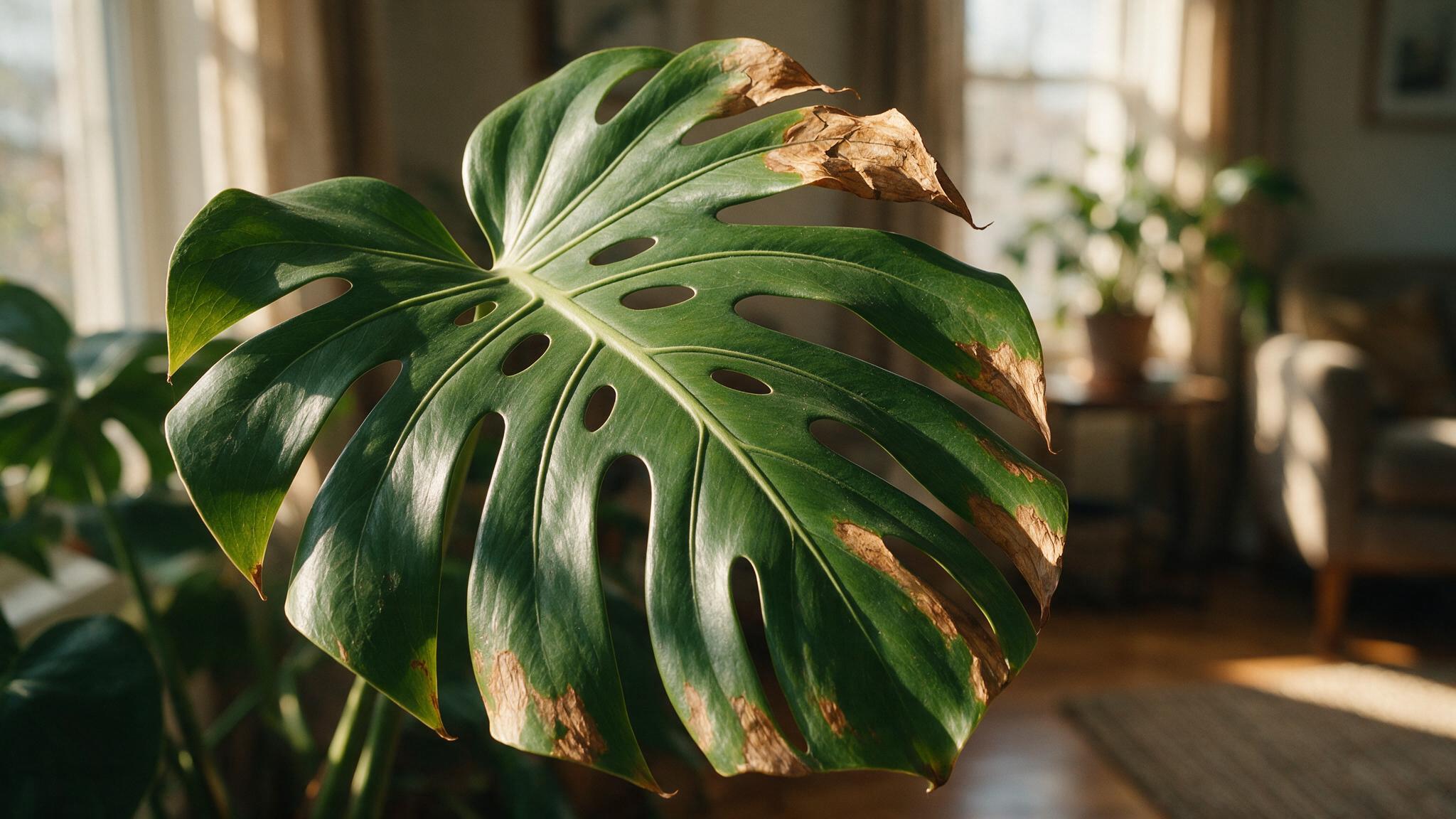
You brought home your Monstera, set it up in a sunny corner, and waited for those gorgeous split leaves to appear. Weeks pass. Months pass. The leaves keep coming in solid, smooth, and heart-shaped — no holes, no splits, no drama. What gives?
First, take a breath. You shouldn’t panic if your Monstera lacks leaf fenestration, as it usually doesn’t affect the overall health of the plant. The absence of splits is one of the most common concerns among Monstera owners in the US, and in most cases, the fix is simpler — or more patient — than you’d expect.
This guide walks through exactly what’s happening inside your plant, what triggers those iconic splits, and what you can realistically do about it. No fluff, just honest answers.
What’s Actually Happening to Your Monstera Right Now
Your Monstera is doing exactly what it’s supposed to do — it’s just not old enough, big enough, or well-lit enough to bother splitting its leaves yet. The splits you’re waiting for have a formal name: fenestration. Fenestration means an arrangement of holes or openings on a given surface — in this case, the leaves of a Monstera, where splitting occurs at a certain point.
The Monstera deliciosa (Monstera deliciosa) is a tropical climbing plant native to the rainforests of Central and South America. In the wild, it originates in the dense, humid, and shady tropical forests of Central and southern America, where the plant uses its aerial roots to climb nearby trees and access the light that fails to reach the forest floor.
Monstera deliciosa produces fenestrated leaves as a direct response to its environment. You could have a Monstera for 50 years and it won’t produce leaves with splits unless you give it a reason to. That’s the key insight most plant care articles skip over — fenestration isn’t automatic. It’s a calculated response.
Key Insight: A Monstera leaf either unfurls with splits or without them. An already-solid leaf will not develop splits later — only new leaves can come in fenestrated. So patience isn’t just a virtue here; it’s the only path forward.
Monstera leaves unfurl either with splits or without them, but an unsplit leaf won’t develop splits over time. When a new Monstera leaf unfurls, it will grow significantly, but nothing will change other than the shape. This means every new leaf your plant pushes out is a fresh opportunity — but you can’t go back and change the ones already open.
Is This Normal, or a Sign Something’s Wrong?
Whether the lack of splits is “normal” or a red flag depends almost entirely on your plant’s age. While it can be alarming to see a young Monstera plant without fenestration, it is completely normal for the younger houseplants not to have those iconic holes in their leaves.
The main reason why your Monstera’s leaves probably aren’t splitting is because of its age and size. Like other plants in the Araceae family, the shape of a Monstera’s leaves changes with age — while they start off by producing small, heart-shaped leaves, over time they begin to produce bigger leaves with an increasing number of splits.
Here’s a quick way to assess where your plant stands:
| Plant Age / Stage | Expected Leaf Appearance | Is It Normal? |
|---|---|---|
| Under 1 year old | Small, solid, heart-shaped leaves | Yes — completely normal |
| 1–2 years old | Larger solid leaves, no splits yet | Yes — still within normal range |
| 2–3 years old | First splits beginning to appear | Yes — this is the typical window |
| 3+ years old, no splits | Continued solid leaves | Worth investigating care conditions |
| Mature plant, splits stopped | New leaves coming in solid | Usually a light or stress issue |
It is a popular misconception that fenestration makes a Monstera “real” or “healthy.” This is not true. A Monstera without split leaves is equally healthy and beautiful. That said, if your plant is well past the two-to-three-year mark and still producing solid leaves, something in its environment is holding it back.
One thing worth checking: not every Monstera variety produces splits at all. Monstera standleyana and Monstera Peru plants do not fenestrate or split. If you’re unsure what variety you have, a plant identification app can help you confirm before you start troubleshooting the wrong problem. Android users can find equally solid options in this guide to plant ID apps for Android.
The Real Trigger Behind Monstera Leaf Splitting
The honest answer is that scientists haven’t fully agreed on one single cause. The reasons behind Monstera deliciosa’s fenestrations are a mystery, or at least, there is no one agreed-upon conclusion among researchers. But the leading theory is rooted in light and survival strategy.
Fenestrations, or the classic holes and splits you immediately recognize on a Monstera, actually exist to help lower leaves on the plant receive sunlight. In nature, these plants climb up a large tree and grow massive leaves that can span up to several feet in length. To ensure that the base of the plant continues to receive sunlight for photosynthesis, the plant evolved to grow these holes so that new large leaves aren’t blocking the undergrowth from getting light.
A few competing theories also hold up to scrutiny. Some argue holes developed in the large leaves to allow sunlight to pass through to the leaves lower down, maintaining leaf size in all parts of the plant. Others believe the holes help the stems resist damage from high winds and prevent water from collecting in the foliage and causing rotting.
What this means practically: split leaves photosynthesize less efficiently than solid ones because they have less chlorophyll. Monstera will only produce a less efficient leaf if that will produce a net gain — growing a split leaf allows both the split leaf and the leaf below it to photosynthesize. Your plant is making a logical trade-off. Give it a reason to make that trade-off, and it will.
Size matters more than age in this equation. For fenestration on the foliage, a Monstera needs to achieve a certain age. Splitting of the foliage only happens when leaves get to a specific width, mainly 8–14 inches wide, before they get cuts on them. Younger Monsteras don’t have broad foliage, and their leaves are limited to 4–6 inches only.
There’s also an interesting wrinkle for those who bought a cutting rather than a seedling. If you grow a Monstera from a cutting taken from a mature, fenestrated plant, the new growth may develop splits much earlier, sometimes as soon as 8 months, because the cutting retains the genetic “memory” of maturity.
Other Factors That Can Speed It Up or Make It Worse
Once your Monstera is old enough, these four variables determine whether those splits actually show up — and how dramatic they are.
Light: The Biggest Lever You Have
If you have a mature Monstera not growing split leaves, the likely culprit is insufficient light. Without plenty of light, your Monstera doesn’t know to produce those splits to let the light through. This is the single most controllable factor in your home.
These plants grow best when they get 6 to 8 hours of bright, indirect light each day. Without enough light, even mature Monsteras may stop producing split leaves. If your plant sits in a dark spot, it might not have the energy to make larger, fenestrated leaves. East- or west-facing windows are generally the best placement in a US home. If natural light is limited, LED grow lights can mimic natural sunlight and help encourage fenestration.
You can see the light effect in action when you forget to rotate your pots. One side of the plant closest to the light source may develop splits while the other leaves emerge solid. In some cases, a single leaf will develop splits on one side and not on the other. Rotating your pot every few weeks fixes this easily.
Humidity: Often Overlooked
Native to humid rainforests, Monstera thrives in high humidity (60–80%). Dry air can cause the plant to produce smaller, unsplit leaves to reduce moisture loss. Most American homes run significantly drier than that, especially in winter when heating systems kick in.
You can increase humidity by misting the leaves, using a pebble tray, or placing a humidifier nearby. Grouping plants together can also create a microclimate with higher humidity. If you keep other houseplants nearby, clustering them together is a simple, cost-free humidity boost.
Nutrition: Feed During the Growing Season
Nutrients play a vital role in leaf development. A lack of essential nutrients like nitrogen, phosphorus, or potassium can stunt growth and delay fenestration. Monstera plants benefit from a balanced, water-soluble fertilizer applied monthly during the growing season (spring and summer).
Look for an NPK ratio like 3-1-2, 9-3-6, or 15-5-10, and use it every 3 to 4 weeks during the growing season. Just make sure not to use it at full strength — this can damage the roots. It’s safer to mix it at half or even one-quarter of the amount listed on the label.
Root Crowding: An Easy Fix That’s Often Missed
If your Monstera is root-bound (roots circling tightly in the pot), it may struggle to absorb nutrients and water efficiently, leading to stunted growth and delayed fenestration. Repot the plant every 1–2 years into a slightly larger pot with fresh, well-draining soil to encourage healthy root and leaf development.
Support Structures: Mimic the Rainforest
A support structure doesn’t directly cause the leaves of your Monstera to split, but it can encourage the plant to grow larger, more perforated leaves. These supports mimic the tall trees in its natural habitat, stimulating the Monstera’s climbing instinct and causing it to grow faster and more vigorously. A moss pole is the most popular option among US houseplant enthusiasts, and it works best when the moss stays consistently damp so the aerial roots can attach.
Pro Tip: Don’t try to manually cut splits into your Monstera’s leaves. According to Planet Houseplant , the plant will seal the wound and the edges will turn brown — leaving you with an ugly, damaged leaf and no fenestration.
Can You Reverse It?
Here’s the honest answer: it depends entirely on why the splits aren’t there yet.
If your Monstera is simply young, there’s nothing to reverse — you’re just waiting for normal development. You can provide the most perfect care in the world, but a baby Monstera will not produce split leaves. Fenestration is a sign of maturity. It typically takes a Monstera deliciosa 2 to 3 years to mature enough to start producing its first fenestrated leaves. No amount of adjusting will speed that up beyond what the plant is biologically ready for.
If your mature plant stopped splitting after a move or a change in placement, that is reversible. According to botanist Lotte Berendsen of the PlantIn app, “The more light the plant gets, the faster it will grow, and the sooner it will produce mature and fenestrated leaves.” She adds: “If you find that your Monstera continues to grow small, un-fenestrated leaves, consider offering your plant more light and watch how fast your plant will grow.”
What you cannot reverse: any solid leaf already open on your plant. Monstera leaves unfurl either with splits or without them, but an unsplit leaf won’t develop splits over time. Improving conditions only affects the next leaf that unfurls — not the ones already there. Set your expectations accordingly: you’re playing the long game, leaf by leaf.
There’s also a scenario where reversal simply isn’t possible. If your Monstera is a non-fenestrating variety like Monstera standleyana or Monstera Peru, no amount of light, fertilizer, or humidity will produce splits. That’s just the plant’s genetics. If you want the classic Swiss cheese look, you may need to start fresh with a Monstera deliciosa or Monstera adansonii. Exploring a broader range of plant types can help you find the right fit for your space.
How to Prevent It Next Season
The best time to set your Monstera up for a strong fenestration season is right now — before the growing season hits its stride. Here’s what to put in place:
- Reposition for light. Move your plant to the brightest spot it can tolerate without direct afternoon sun scorching the leaves. An east-facing window is ideal in most US homes. If you’re working with a darker apartment, a grow light on a timer for 6–8 hours a day is a solid backup.
- Check the pot. In the right environments, Monsteras can grow incredibly quickly, filling out the available space in their pots in no time. Once roots start curling around each other and sneaking through the drainage holes, it’s time to repot. If you don’t give your plant this additional space to develop, it will stop growing and putting out new leaves, also potentially impacting splitting.
- Start a fertilizing routine. Without a regular fertilizing routine, your Monstera’s growth may slow dramatically, halting any potential splitting in the leaves. Feed your Monstera around once per month, depending on the performance and size of the plant. A balanced fertilizer will provide everything they require for strong growth. Avoid overfertilizing by reading the instructions and diluting your chosen product to half-strength.
- Add a moss pole or stake. Getting your Monstera to grow vertically rather than sprawl outward encourages the climbing behavior that triggers larger, more fenestrated leaves. Keep the moss damp so aerial roots can anchor into it.
- Address humidity before winter. Monstera growth slows during winter (dormancy), and fenestration may pause until spring. Reduced light and cooler temperatures signal the plant to conserve energy. Resume regular care in spring to support new growth and fenestration. Getting a humidifier or pebble tray in place before heating season starts keeps your plant from losing ground.
- Rotate the pot. To ensure even growth and leaf development, rotate your plant every few weeks to expose all sides to light equally. This prevents lopsided growth and gives every new leaf the best shot at fenestrating.
- Clean the leaves. Regularly wiping the leaves with a damp cloth ensures optimal photosynthesis, indirectly supporting fenestration. Dusty leaves absorb less light — a small fix with a real payoff.
If you have pets or young children around your Monstera, keep in mind that the plant’s sap is a skin and digestive irritant. Knowing how to keep cats away from houseplants is worth reviewing before your Monstera starts pushing out big, tempting new leaves.
Important Note: New leaves on a healthy Monstera appear roughly every 4–6 weeks during the growing season, according to Odd Leaf House Plants . Improvements you make now may not show up until the next leaf cycle, so give changes at least 6–8 weeks before deciding they aren’t working.
FAQ
Will My Monstera Ever Split if It Hasn’t by Year Three?
Only after 2–3 years of strong growth (and when the plant reaches 1–2 meters tall) does fenestration begin. Some plants do not do it until 3–5 years old. If your plant is past three years and still solid, the most likely culprit is insufficient light. Reassess your placement before assuming the plant is a non-fenestrating variety.
Can I Force My Monstera to Split Faster?
You can’t physically force a leaf to split, and you should never try to cut it yourself as this will damage the plant. The best “force” is providing optimal conditions — especially bright, indirect light, proper support, and consistent care — to encourage the plant to mature and produce fenestrated leaves naturally.
My Monstera Was Splitting Before — Why Did It Stop?
A mature Monstera that suddenly stops producing fenestrated leaves has almost certainly experienced a change in its environment. The most common triggers are a move to a lower-light spot, a drop in humidity during winter, or becoming severely root-bound. Monsteras in dark corners grow poorly and do not produce fenestrated leaves. Fenestration happens much more in bright light. If the plant is struggling — low light, poor nutrition — it focuses on basic growth, not fenestration. Trace back any recent changes and address them one at a time.
Do All Monstera Varieties Split?
No. Not all Monstera varieties have split leaves. The traditional split-leaf Monsteras include Monstera deliciosa, Monstera adansonii, and Monstera borsigiana. However, some common Monstera varieties do not have split leaves, such as Monstera siltepecana, Monstera dubia, and Monstera obliqua. Confirm your variety before spending months troubleshooting a problem that doesn’t exist.
Does a Monstera Without Splits Need Different Care?
Not really. To ensure your Monstera has the optimal growing conditions, you only need to water it when the soil is dry, provide bright indirect light, and humidity. The care routine is the same whether or not your plant is fenestrating — the splits are a bonus that comes with good conditions, not a separate goal to chase. If you enjoy growing other distinctive houseplants, rubber plants and spider plants are great companions that thrive in similar indoor conditions.