Why Is My Orchid Not Blooming? What’s Really Going On and How to Fix It

October 2, 2026
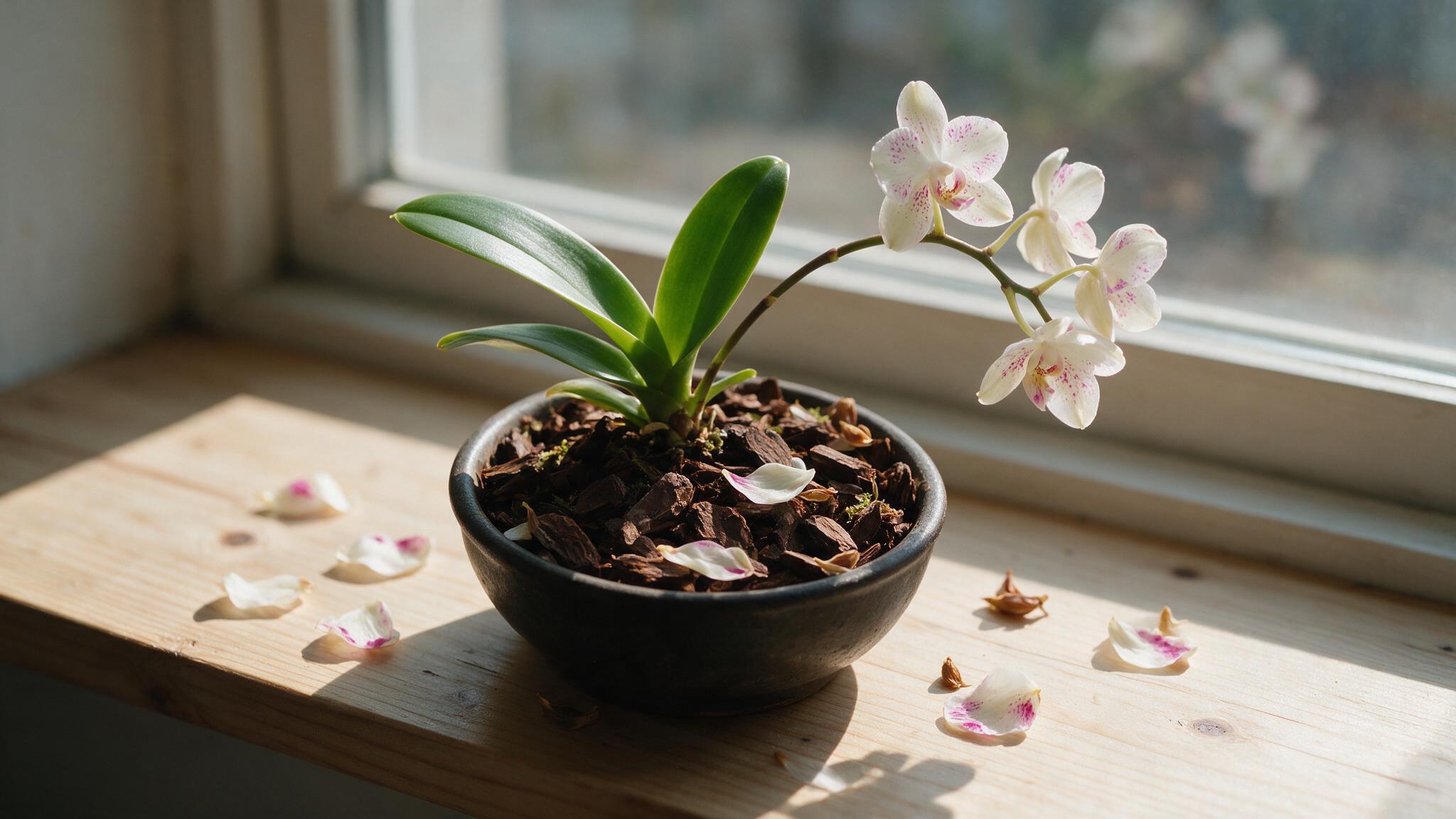
You bought a gorgeous orchid, enjoyed weeks of spectacular flowers, and then — nothing. The blooms dropped, the spike went brown, and now the plant just sits there looking perfectly healthy but stubbornly flowerless. Sound familiar? You are definitely not alone.
The good news is that a non-blooming orchid is almost never a dying orchid. Many people assume that once the blooms drop, the plant is “done” — but with the right care and a little patience, most orchids are absolutely capable of blooming again, sometimes year after year. You just need to understand what your plant is actually doing right now, and what it needs from you next.
This guide focuses primarily on the moth orchid (Phalaenopsis spp.), the most common orchid sold in American grocery stores, garden centers, and big-box retailers. Most of the principles also apply to other popular varieties, with notes where care differs.
What’s Actually Happening to Your Orchid Right Now
Orchids don’t bloom continuously, and that’s completely normal. After weeks or even months of flowering, the plant needs time to recover and replenish its energy reserves. During this rest phase, your orchid redirects energy away from flowers and toward growing strong roots and healthy leaves — the building blocks of future blooms.
Orchids typically enter a vegetative growth phase of several months after flowering to rebuild energy reserves for new growth. While the plant may appear inactive, it is not dormant — green leaves and active roots indicate it is still processing nutrients. Think of it less like a plant that has given up and more like an athlete recovering between competitions.
Most orchids grow during the summer and bloom in the fall, winter, or spring. Knowing the season that an orchid blooms helps alleviate the frustration of feeling like “It’s July, why isn’t my Phalaenopsis in bloom again now?” For example, the Phalaenopsis orchid is most likely to grow new leaves in the summer and early fall and set a bloom spike in late fall. The spike will elongate during the winter, with blooms emerging in late winter or early spring.
One more thing worth knowing: each orchid type has a time of the year when it naturally will bloom, and this may not be the same time of year that an orchid was blooming when you purchased it, since nurseries can force orchids to bloom off-cycle. So if your orchid bloomed in March when you bought it, its natural cycle may actually be different.
Pro Tip: Check your orchid’s roots through the clear plastic grow pot. Healthy roots are silvery-white when dry and vibrant green just after watering. Roots that look mushy, brown, or black are a warning sign that needs attention before reblooming is even possible.
Is This Normal, or a Sign Something’s Wrong?
Not every quiet orchid is simply resting. The first step in diagnosing why your orchid isn’t blooming is to examine the plant for anything out of the ordinary. Ask yourself if the plant looks different from when you bought it. You will need to resolve any of these issues before the orchid will be healthy enough to bloom.
Here’s a quick way to tell the difference between a resting orchid and one that has a problem:
| What You See | What It Likely Means |
|---|---|
| Green, firm leaves; silvery or green roots | Healthy rest phase — keep caring for it normally |
| Dark green, floppy leaves; no new growth | Insufficient light |
| Yellow leaves; mushy brown roots | Overwatering or root rot |
| Shriveled leaves; bone-dry roots | Underwatering or low humidity |
| Small black or brown spots on leaves | Possible bacterial, fungal, or viral issue |
| Sticky residue or white cottony patches | Pest infestation (e.g., mealybugs, scale) |
To determine the health of your orchid, ask yourself if it has been growing vigorously and appears free from viral, bacterial, and fungal problems, as well as pest infestations. Sometimes these problems are obvious. Other times, especially for some viral or bacterial issues, the plant simply looks less vibrant and has small black or brown spots on it. Any one of these conditions will stress the plant and limit its ability to bloom.
If your orchid has been growing new leaves at a steady pace and the roots look healthy, you are almost certainly looking at a normal rest period. If growth has stalled completely and the plant looks off, one of the factors below is likely the culprit.
The Real Trigger Behind Not Blooming
There are three core requirements an orchid must meet before it will produce flowers, according to the American Orchid Society : the orchid must be healthy, it must have made and stored sufficient carbohydrates during its growth period to support plant maintenance and blooming, and the orchid’s particular blooming cue must have been met. Miss any one of these, and the flowers won’t come.
The single most common reason all three conditions fail to align is insufficient light. Light is the single most important factor in orchid reblooming. Orchids need consistent light to photosynthesize and store enough energy to support flowers. Place your orchid near a bright window where it receives filtered sunlight throughout the day.
Orchids need at least 6 hours of bright, indirect light per day. An east-facing windowsill is ideal. A south or west-facing window with a sheer curtain works well, too. Avoid placing them on a shelf in the middle of a room, in a north-facing window, or anywhere more than 3 feet from a natural light source.
Your orchid’s leaves will tell you exactly how the light situation stands. Leaf color is the most visible factor in determining whether or not an orchid is receiving sufficient light. The leaves should be yellowish, grassy green, not lush dark green. A light-to-medium green leaf with yellow tones is in its natural healthy state. For most orchids, leaves should also be upright or horizontal instead of long and floppy. Droopy leaves indicate that there is not enough light.
The second trigger — one that surprises many growers — is the temperature cue. The most common reason Phalaenopsis fails to rebloom is a lack of temperature differential. In homes kept at a constant 70°F day and night, the plant never receives the signal to produce a new spike. Even a modest 10°F drop at night — easily achieved by turning the thermostat down or placing the plant near a cool window — is usually enough.
The blooming cue for Phalaenopsis orchids is a larger day-to-night temperature differential. This typically happens in the fall when the nighttime temperatures drop down into the 50s and 60s Fahrenheit (10°C–16°C). It’s also important to note that Phalaenopsis will not flower if the day temperature exceeds 82°F (28°C).
Key Insight: It’s important that your orchid is in a location where it can sense seasonal changes. For example, if you have your Phalaenopsis orchid sitting on a table in the middle of a room where there is a constant temperature, it may not bloom. A spot near a window — where temperatures naturally fluctuate between day and night — is far more effective than a central shelf.
Once a spike does appear, be patient. From the moment you spot a small spike until flowers fully open can take 8–12 weeks. It takes a month or two, or even several months for Phalaenopsis orchids to rebloom. Many other varieties of orchids bloom annually.
Other Factors That Can Speed It Up or Make It Worse
Light and temperature are the two primary triggers, but several other factors can accelerate reblooming or quietly prevent it from happening at all.
Watering Habits
Improper watering practices — both overwatering and underwatering — can prevent orchids from blooming. Overwatering leads to root rot, compromising the plant’s ability to absorb nutrients and water, which are essential for blooming. Conversely, underwatering can dehydrate the plant, leaving it too weak to support flower production.
Orchids like a rhythm, not soggy roots. If the roots are silvery-gray, they need water. If they’re green, they’re hydrated. Water thoroughly, then let the potting mix dry slightly before watering again. Most orchids are grown in bark, not soil, which dries faster and allows air to reach the roots.
Fertilizing
Use a balanced orchid fertilizer at one-quarter to one-half strength, every 2–4 weeks during active growth. This supports healthy leaves and roots, which are necessary before flower spikes can form. No fertilizer won’t usually kill an orchid — but it can slow or stop reblooming.
Be careful not to fertilize too much. An overload of nitrogen can prevent blooms. When orchids are blooming, don’t feed them with nitrogen, because nitrogen pushes them to put out green growth, and while doing this they are likely to drop their blooms.
Potting Mix and Root Health
The breakdown of the potting medium is a common reason why orchids fail to bloom. Over time, organic components decompose, leading to compacted, poorly aerated soil that can suffocate roots and inhibit water and nutrient uptake.
Repotting involves replacing the old, decomposed growing medium with fresh material, which helps prevent root rot and nutrient deficiency. This process, best done every two to three years, ensures proper root growth and promotes more robust blooms. Use fresh orchid bark — not regular potting soil — and choose a pot with drainage holes. If you want to monitor root health easily, a clear plastic pot with drainage holes helps you monitor root health without disturbing the plant.
Humidity
Orchids love warm days and cooler nights, often needing a 10–15°F drop to trigger flower spikes. Humidity between 50–80% is ideal, which can be achieved with a humidifier, tray, or even a tabletop fountain. Most American homes run dry in winter when the heating is on, so this is worth checking if your orchid sits in a heated room from November through March.
For more ideas on choosing houseplants suited to lower-light environments, that guide can help you decide where to position your orchid relative to other plants in your home.
Can You Reverse It?
Here’s the honest answer: it depends on what the problem actually is. Most of the common causes of non-blooming are completely reversible with adjustments to light, temperature, watering, and fertilizing. But a few situations have hard limits.
- Insufficient light or wrong temperature: Fully reversible. Move the plant to a brighter window or introduce a nighttime temperature drop, and most healthy orchids will respond within one growing season.
- Overwatering and mild root damage: Often reversible. Repot into fresh bark, trim any dead roots with sterile scissors, and resume a proper watering rhythm. Root trouble is often the result of overwatering or lack of repotting. Orchid roots need oxygen to survive, and without it they smother.
- Severe root rot: Difficult to reverse. Root rot is caused by overwatering, poor drainage, or decomposed potting media that stays too wet. Symptoms include mushy brown or black roots, yellowing leaves, and a general wilting that doesn’t respond to watering, because the root system is already dead. If most of the roots are gone, the plant may not recover.
- Viral infection: Not reversible. A virally infected orchid should be isolated and discarded to protect other plants. There is no cure.
- Bud blast (buds forming but dying before opening): The buds themselves cannot be saved once blast occurs. This dreaded phenomenon is called “bud blast” and vexes growers, as there are many different potential causes — including a plant that is not quite mature enough to fully develop its flowers, and exposure to ethylene gas from ripening fruit. Future cycles can be protected by moving the plant away from fruit bowls and avoiding sudden drafts.
Important Note: A spent flower spike that has turned completely brown will not produce new blooms. A brown or dry spike will not rebloom. In this case, cut the spike all the way back to the base of the plant. This allows your orchid to fully rest and redirect its energy toward roots and leaves, which often results in stronger, more impressive blooms the next time around.
If the spike is still green, there’s a different option. A green spike indicates the plant still has energy stored in that stem. You can cut the spike just above a node — the small bump beneath a spent flower. In some cases, this encourages a secondary spike to form from that node, which may produce another round of blooms within a few months.
The bottom line: if your orchid has green leaves, healthy roots, bright indirect light, proper watering, and a little temperature variation, it wants to rebloom. Most orchids that “never bloom again” simply aren’t getting one of those key ingredients.
How to Prevent It Next Season
Once you’ve identified what held your orchid back, a simple seasonal routine keeps the conditions right all year. Here’s how to set your plant up for reliable blooms each cycle:
- Keep it near a window year-round. Once the orchid finishes flowering, it needs energy to produce another flower spike. Just around the time when that spike should begin developing — late fall to early winter — daylight starts getting scarcer in the Northern Hemisphere. Your easiest solution is to move your orchid to a spot where it gets a few hours of direct morning or late-afternoon sun during those shorter days. A plant identification app can also help you confirm the exact variety you’re growing and look up its specific light requirements.
- Allow a natural temperature drop in fall. Many orchids need cooler nighttime temperatures — about 10–15°F cooler than daytime — for a few weeks to signal that it’s time to bloom again. This often happens naturally near windows in fall or early winter. You don’t need to do anything extreme — just avoid keeping orchids in rooms that are warm 24/7.
- Fertilize during the growing season, then ease off. Apply fertilizer every other week in the warmer months, March through December. Stop fertilizing when the active growing season ends and as temperatures cool. Resume a diluted feeding schedule once you see new root or leaf growth returning.
- Repot on schedule. Check the orchid’s potting mix and repot it if the mix has broken down or if the orchid has outgrown its container. Repotting is typically done every one to two years. Always repot right after blooming, not while buds are forming.
- Supplement light in winter if needed. An east-facing window is ideal. If natural light is limited, consider supplementing with grow lights positioned about 12–24 inches above the plants. This is especially relevant in northern US states where winter days are short and overcast.
- Watch the roots, not just the leaves. Healthy roots mean a healthy bloom cycle. Good roots bring good blooms. An orchid may have deceptively beautiful leaves with a root system that is in dire trouble. Check roots each time you water.
If you enjoy growing a variety of plants alongside your orchid, you might find our guide to types of plants helpful for planning your indoor garden. For growers who use Android devices, our roundup of the best Android apps for identifying plants can make diagnosing orchid problems even easier.
Frequently Asked Questions
How Long Does It Take for an Orchid to Rebloom?
From spike formation to open flowers can take 2–4 months, sometimes longer. Orchids don’t rush — but when they bloom, they reward you with weeks or months of flowers. The full rest-to-rebloom cycle, from the last flower dropping to the first new bud opening, typically spans six months to a year for most Phalaenopsis varieties.
Why Is My Orchid Growing Leaves but No Flowers?
An orchid growing leaves but no flowers usually indicates insufficient light or a lack of temperature variation. The plant has enough energy to grow vegetatively but hasn’t received the environmental cue to switch into flowering mode. Try moving it closer to a window and introducing a cooler nighttime temperature.
Can I Force My Orchid to Bloom?
You can create the conditions that trigger blooming, but you can’t force it on a timeline. Your orchid is genetically programmed to bloom as a way to propagate its species. If it’s healthy, has produced sufficient carbohydrates, and senses the correct blooming cues, it will bloom. Rushing the process by overwatering or over-fertilizing tends to backfire.
Should I Cut the Spike After Blooming?
It depends on the spike’s condition. A green spike can be trimmed just above a node to potentially encourage a secondary bloom. A brown or dry spike will not rebloom — in that case, cut the spike all the way back to the base of the plant. Always use clean, sterilized scissors to avoid introducing bacteria or fungal spores.
How Often Do Phalaenopsis Orchids Bloom?
Under good conditions, most Phalaenopsis bloom about once per year. When everything is to their liking, many Phalaenopsis will bloom twice a year. Consistent light, a seasonal temperature drop, and proper watering are the three factors most likely to push a healthy plant toward two bloom cycles annually.
Is My Orchid Dead If It Has No Leaves?
Not necessarily, but it’s in serious trouble. An orchid with no leaves has lost its ability to photosynthesize and can only survive if the roots are still alive. Check the roots: if any are green or silvery-white and firm, the plant may still recover with careful repotting and bright, indirect light. If all roots are brown and mushy, the plant is unlikely to survive.