
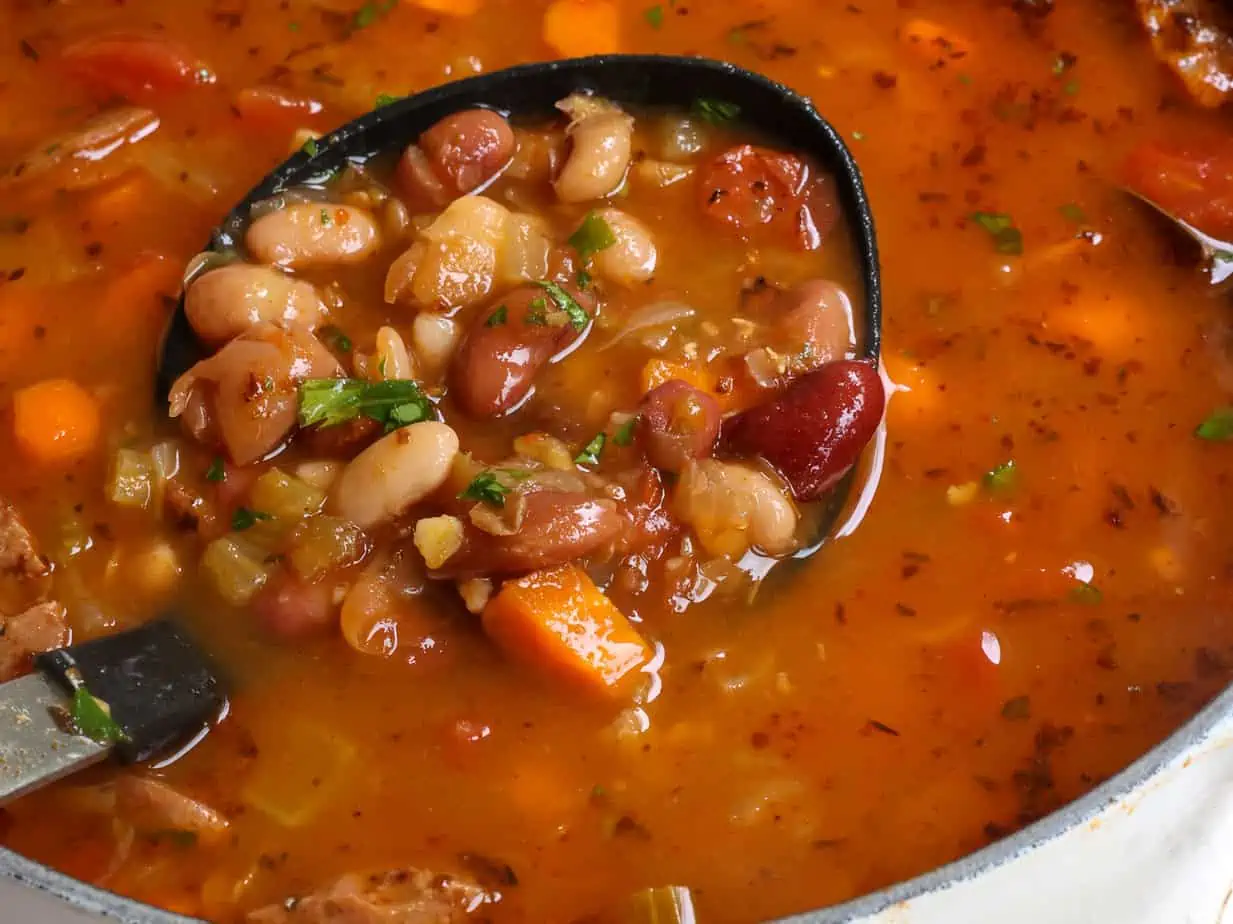
If you’ve ever made a big pot of 15 bean soup with ham, you know the problem: it yields a lot, and eating it all within a few days isn’t always realistic. The good news is that this is one of the best soups you can freeze. Unlike creamy soups or those loaded with pasta and potatoes, 15 bean soup with ham holds up exceptionally well in the freezer — with only minor changes to texture and zero loss of that rich, smoky flavor.
Whether you made it from a Hurst’s HamBeens mix or built it from scratch using a leftover holiday ham bone, this guide walks you through everything you need to know about freezing, storing, thawing, and reusing your soup.
Can You Freeze 15 Bean Soup with Ham?
Yes, you can freeze bean soup with cooked ham, and it freezes very well — preserving the flavor and texture just fine. This is especially useful if you batch-cook on weekends or want to stretch a holiday ham as far as possible.
This type of soup falls under the broader category of broth-based legume soups, which are known for their excellent freezability. Unlike creamy soups or those containing pasta, rice, or potatoes, ham and bean soup maintains its integrity through freezing and reheating cycles.
Unlike dairy- or potato-heavy soups — which often separate or turn grainy when frozen — bean soups generally hold up well due to their starchy base and robust ingredients. So if you’re wondering whether it’s worth the effort, the short answer is yes, absolutely.
Pro Tip: Make a double batch specifically to freeze. The active cooking time is nearly identical, and you’ll have ready-made meals waiting for busy weeknights.
Does Freezing Change the Texture or Taste of 15 Bean Soup with Ham?
Freezing does cause some minor changes, but nothing that should stop you. Beans absorb more water during thawing and may turn softer or slightly grainy. Broth may also separate slightly, but stirring while reheating resolves this.
What can happen is that the beans appear to break down and result in more of a creamy-style soup than the clear broth you started with. The taste stays about the same — it’s mainly the texture that shifts. Many home cooks actually prefer this thicker consistency.
On the flavor side, the news is even better. Some users report deeper flavor after freezing, as ingredients continue to meld. The ham, beans, and aromatics have even more time to come together, which can make reheated soup taste richer than the original batch.
Freezing has minimal impact on the nutritional content of ham and bean soup. Protein, fiber, and most vitamins remain stable. Some water-soluble vitamins may degrade slightly, but the overall profile remains robust and balanced.
How to Freeze 15 Bean Soup with Ham the Right Way
Good results come down to a few straightforward steps. Rushing any of them — especially the cooling stage — is where most people run into problems.
- Cool the soup completely first. Always cool soup within 2 hours of cooking. Do not leave it at room temperature overnight. To speed things up, divide the soup into shallow pans and put them in the refrigerator to cool it more quickly.
- Choose the right containers. Use BPA-free freezer bags or airtight, freezer-safe containers. Leave ½–1 inch of headspace for expansion.
- Remove as much air as possible. For bags, submerge them in water using the water displacement method to push out air before sealing. This helps prevent freezer burn.
- Label clearly. Include the date and contents on each bag or container — something like “15 Bean Soup with Ham – July 2026” works perfectly.
- Freeze flat. Ladle the soup into freezer bags with the date written on the outside. Lay the bags flat in the freezer, and when they are frozen, store them upright to save freezer space.
Pro Tip: Freeze in single-serving or two-serving portions rather than one large batch. Smaller portions thaw faster and let you pull out exactly what you need without defrosting more than necessary.
One thing to keep in mind: avoid freezing potatoes or pasta in a soup. They can get grainy or mushy. If you plan to add these ingredients, add them as you serve the soup, after defrosting. The same applies to rice — if your version of 15 bean soup includes rice, leave it out before freezing and stir it in fresh when you reheat.
If you need to ship frozen soup to someone, check out this guide on how to ship frozen food with ease for packaging tips that keep everything solidly frozen in transit.
How Long Can You Freeze 15 Bean Soup with Ham?
Most sources agree on a practical storage window. Frozen ham and bean soup stays safe indefinitely at 0°F (-18°C), but for best quality, consume within 3 months. Beyond that, flavor and texture may degrade due to freezer burn or moisture loss.
Some cooks report good results beyond the 3-month mark. The general recommendation for freezing soup is up to three months, but soup can freeze for up to six months as long as you seal it in a high-quality freezer bag with the air squeezed out. The key variable is how well you removed air and how consistently cold your freezer stays.
| Storage Method | Estimated Shelf Life | Notes |
|---|---|---|
| Refrigerator | Up to 5 days | Store in an airtight container |
| Freezer (airtight container) | Up to 3 months (best quality) | Safe beyond, but flavor may decline |
| Freezer (vacuum-sealed bag) | Up to 6 months | Air removal is critical for extended storage |
How to Thaw Frozen 15 Bean Soup with Ham
Thawing safely matters as much as freezing correctly. Thaw in the refrigerator overnight — not on the counter. Countertop thawing puts the soup in the temperature danger zone (40°F–140°F) for too long, which creates a food safety risk.
You have a couple of practical options depending on how much time you have:
- Overnight fridge thaw: Thaw the soup slowly, overnight in the refrigerator (or for up to 24 hours depending on the amount). This is the safest and most hands-off method.
- Direct stovetop from frozen: You can place a frozen block of soup directly into a pot with a splash of water or broth. Heat over low to medium-low heat, stirring occasionally as it thaws and warms. This method works well and avoids needing microwave-safe containers.
Once thawed, warm the soup on the stove over medium-low heat, stirring occasionally. Add broth or water if it’s too thick. Reheat to at least 165°F (74°C), ensuring the internal temperature is uniform.
Pro Tip: Add a splash of chicken broth when reheating to restore the original consistency, since some liquid is absorbed by the beans during freezing and thawing.
Can You Refreeze 15 Bean Soup with Ham After Thawing?
This is a question worth taking seriously. Never refreeze previously thawed soup unless it was reheated to boiling first. If you thawed the soup in the fridge and it never warmed above 40°F, you technically can refreeze it — but the texture of the beans will suffer noticeably with each freeze-thaw cycle.
The better approach is to portion the soup before freezing so you only thaw what you need. Beans absorb more water during thawing and may turn softer or slightly grainy, and broth may separate slightly. A second round of freezing amplifies both of these effects.
If you’ve already thawed a large batch and can’t finish it, reheat the entire portion to a full boil, let it cool properly, then refreeze. This resets the safety clock, though the beans will be noticeably softer after the second freeze.
How to Use Frozen 15 Bean Soup with Ham (Best Uses After Freezing)
Once thawed and reheated, your soup is ready to serve just as you would fresh. 15 bean soup is excellent with biscuits, garlic bread, or cornbread. It’s a very hearty, complete meal. A side of ideas for what to serve alongside soup can give you even more pairing options.
Beyond serving it as-is, thawed 15 bean soup works well in several other applications:
- Thickened into a stew: Drain off part of the liquid, then take a cup of beans out and smash them, and add back into the soup. This turns a brothier soup into something closer to a thick stew.
- As a base for other dishes: Use thawed soup as a filling for burritos or tacos, or spoon it over rice for a complete meal.
- Stretched with greens: Stir in a handful of kale or spinach during the last few minutes of reheating to add color and nutrition without changing the flavor much.
- Served with fresh herbs: Add fresh herbs like parsley or thyme after reheating — they lose flavor and color when frozen. Dried herbs added during cooking survive freezing well and contribute to the base taste.
Signs That Frozen 15 Bean Soup with Ham Has Gone Bad
Even properly frozen soup can go bad if it was stored too long, thawed improperly, or contaminated before freezing. Here’s what to look for before you reheat a batch:
- Off smell: A sour, rancid, or otherwise “wrong” odor when you open the container is a clear sign to discard the soup. Fresh bean soup with ham has a savory, smoky aroma — anything sharp or unpleasant is a red flag.
- Visible mold: Any fuzzy growth on the surface or container edges means the soup should be thrown out immediately.
- Unusual color: Gray or dull-colored ham, or beans that have turned an unexpected shade, can indicate spoilage or severe freezer burn.
- Excessive freezer burn: Store soup in an airtight container so it doesn’t get freezer burn. If large sections of the soup are dry, discolored, and crystallized, the quality will be unacceptably poor even if it’s technically safe.
- Slimy texture after thawing: A slimy or unusually slippery texture in the broth or on the beans after thawing indicates bacterial growth. Discard without tasting.
Safety hinges on proper handling. Always cool soup within 2 hours of cooking, and do not leave it at room temperature overnight. If you’re ever in doubt about whether a batch is still good, it’s not worth the risk — throw it out.
Important Note: Fat from the ham may solidify on top of the soup after freezing. This is completely normal and not a sign of spoilage. Simply skim it off or stir it back in during reheating.
Frequently Asked Questions
Can You Freeze 15 Bean Soup Made with Canned Beans?
Yes, you can freeze ham and bean soup made with canned beans. While dried beans tend to hold texture slightly better, canned beans freeze safely and maintain good flavor. Just be aware they may become softer after thawing — which many find acceptable in hearty soups.
How Long Does 15 Bean Soup Last in the Refrigerator?
The best way to store soup is to let it cool completely and then place it in a storage container with a lid. Store in the refrigerator for up to 5 days. If you know you won’t finish it within that window, freeze it right away rather than waiting until the last day.
Can You Freeze 15 Bean Soup with a Ham Bone In It?
It’s better to remove the ham bone before freezing. Pull the meat off the bone, stir it back into the soup, and discard the bone. Bones take up space, can splinter further in the freezer, and don’t add any additional flavor once the soup is already cooked. Boneless soup also thaws more evenly.
Does Freezing Affect the Nutritional Value of the Soup?
Freezing has minimal impact on the nutritional content of ham and bean soup. Protein, fiber, and most vitamins remain stable. You’re not sacrificing nutrition by choosing to freeze rather than eat fresh.
Can You Freeze 15 Bean Soup That Has Already Been Refrigerated for a Few Days?
Yes, as long as it has been stored properly in the refrigerator and is still within the 5-day window. Package it tightly in a freezer bag or container and freeze for up to 3 months. Don’t wait until the soup is on the edge of going bad — freeze it while it’s still at its best.
What Containers Work Best for Freezing Bean Soup?
Both freezer bags and rigid airtight containers work well. Freezer bags are easier because you can stack flat bags of frozen soup, which saves a lot of room and also means the soup thaws faster. For rigid containers, leave at least half an inch of headspace so the liquid has room to expand as it freezes without cracking the lid.