Why Is My Spinach Turning Yellow? Causes, Diagnosis, and Fixes

September 17, 2026
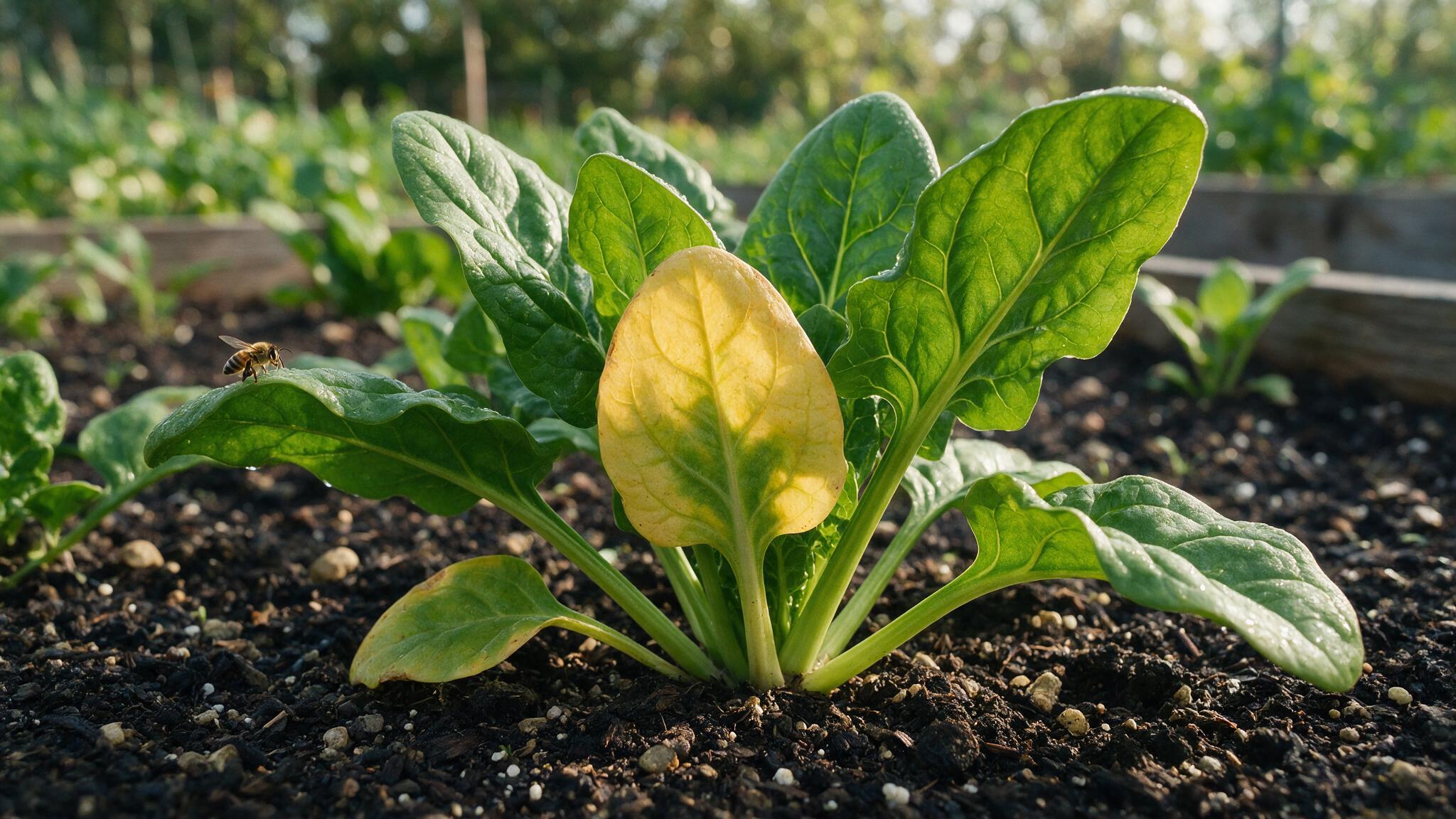
You step outside to check on your spinach patch, and instead of the deep, glossy green you were hoping for, you find leaves fading to a pale, sickly yellow. It is one of the most common and frustrating sights in the home vegetable garden — but it is also one of the most readable. Yellow spinach leaves are not random; they are a precise signal from the plant that something in its environment is off.
The good news is that many of these problems are treatable, and most can be prevented by adjusting your care routine. Whether you are growing spinach in raised beds in the Pacific Northwest, containers on a Texas balcony, or a backyard plot in the Midwest, this guide walks you through every likely cause and what to do about it — fast.
What Does It Mean When Your Spinach Is Turning Yellow?
Yellowing in spinach leaves is called chlorosis — a breakdown in chlorophyll, the green pigment that powers photosynthesis. When chlorophyll degrades faster than it is synthesized, yellowing appears not as a vague symptom, but as a precise physiological signal. The plant is telling you that something is interfering with its ability to produce or maintain that pigment.
Spinach (Spinacia oleracea) is a fast-growing, cool-season leafy green with shallow, fibrous roots and a high metabolic demand for nitrogen, iron, and consistent moisture. Unlike kale or Swiss chard, spinach lacks significant root storage tissue and cannot buffer nutrient shortages or drought stress. Its leaves contain up to 92% water by weight, making them exceptionally sensitive to osmotic imbalances.
The location of yellowing on the plant matters enormously for diagnosis. Interveinal chlorosis — yellow tissue between green veins — points strongly to iron or magnesium deficiency. Uniform yellowing starting at older, lower leaves signals nitrogen shortage or overwatering. Yellow mottling with stippling or curling suggests aphids or spider mites.
Is Yellowing in Spinach Always a Sign of a Problem?
Not always. There is one natural exception worth knowing: the very first leaves that emerge from a spinach seed are called cotyledons. When your spinach starts to emerge from the ground, it begins with two small leaves called cotyledons. As your plants mature, these beginner leaves will turn yellow and die. This is completely normal and not a cause for concern.
Similarly, a single yellow leaf on an otherwise healthy plant may simply be an aging outer leaf completing its natural lifespan. Just because you see these warning signs does not mean it is necessarily a major cause for alarm. Many of the causes have quick fixes and can be prevented by adjusting your care.
Pro Tip: Track yellowing patterns over two to three days before taking action. A single aging leaf is data. Two or more leaves yellowing in the same pattern — especially if spreading — is a system alert that needs attention.
That said, spinach leaves typically only turn white or yellow when there is a problem with your plant. If more than one or two leaves are affected, or if the discoloration is spreading, something in your care routine or environment needs to change. The sections below walk through every likely cause.
Watering Issues Causing Spinach Yellowing
Watering problems are the first place to look when your spinach turns yellow. Spinach is around 93% water, meaning correct watering is a vital part of care. Too little or too much can have several negative consequences, including yellowing leaves.
Overwatering
Spinach roots are shallow and particularly intolerant of waterlogged conditions. Overwatered plants wilt paradoxically — roots cannot uptake water when deprived of oxygen — and show yellowing from the bottom up. You may also notice a soggy smell from the soil and limp stems even when the ground feels wet.
The fix for overwatering is to stop watering and let the top two inches dry out. Improve drainage by adding perlite or grit to the mix, or lift plants into a well-drained potting soil. Remove rotten roots and repot if root rot is present.
Underwatering
Too little water makes leaves yellow at the tips, feel papery, and stunt growth. With underwatering, the yellowing tends to start at leaf edges and tips rather than spreading uniformly from the base of the plant.
The fix for underwatering is to water deeply until runoff so roots get soaked, then mulch to retain moisture. Water in the morning and check every few days during heat. For containers, lift the pot — dry soil will be noticeably light.
Drip irrigation or soaker hoses are the most effective ways to water spinach plants because they minimize water evaporation and deliver moisture directly to the root zone, reducing the risk of fungal issues caused by wet foliage.
Pro Tip: The fastest no-gadget moisture check: push a screwdriver two inches into the soil. If it slides in easily and the soil feels cool and slightly damp, you are in the right zone. Bone dry or pulls out muddy are both problems.
Light Conditions Behind Spinach Yellowing
Light affects spinach in two distinct ways: total sunlight hours and day length. Both can trigger yellowing, but for different reasons.
Spinach requires plenty of sunlight but can also tolerate partial shade. It should receive six hours of sunlight a day. Spinach grows best in cool temperatures between 50–70°F. High temperatures can cause the plant to bolt and turn yellow. When temperatures push above 75–80°F, the plant shifts its energy away from leaf production toward flowering and seed set.
Day length is equally important. Spinach is highly sensitive to the amount of daylight it receives. Once the days stretch longer than 14 hours, the plant receives a biological signal to stop producing leaves and start producing seeds. This transition can happen faster than you might expect.
If you notice your plants growing tall and narrow rather than wide and bushy, they are likely reacting to the changing light. Providing a bit of afternoon shade can sometimes trick the plant into staying in its leafy stage for a few extra weeks. A 30–40% shade cloth installed over your bed in late spring is a practical solution for US gardeners in warmer climates like the Southeast or Southwest.
On the flip side, too little light — such as spinach grown under heavy tree canopy or in a north-facing bed — can also cause pale, washed-out leaves. If your spinach is not getting at least four to six hours of direct sun, move it to a brighter location or supplement with a grow light if growing indoors. You can explore houseplants suited to low-light conditions if you want to grow greens in a shadier indoor spot instead.
Soil, Nutrients, and Root Health Causing Spinach Yellowing
Nutrient deficiencies are among the most common reasons spinach turns yellow. The key is identifying which nutrient is missing, because the fix for each one is different — and applying the wrong amendment can make things worse.
Nitrogen Deficiency
A general yellowing of the oldest, lower leaves that progressively moves upward through the plant indicates nitrogen deficiency. Unlike iron, nitrogen is mobile in plants, so when supply tightens the plant cannibalizes older leaves to feed new growth. You will see uniform, pale yellow coloration without the distinct green-vein pattern of iron chlorosis.
To fix this, apply a balanced, water-soluble organic fertilizer or a top-dressing of well-aged compost. Fish emulsion is another quick-acting option that provides an immediate nitrogen boost without burning the delicate root systems of your plants. According to Grow Organic , foliar sprays of liquid organic fertilizer can also deliver a fast nitrogen boost during active growth.
Iron Deficiency (Interveinal Chlorosis)
Iron deficiency causes new leaves to show bright yellow between green veins — a pattern called interveinal chlorosis. This is the opposite of nitrogen deficiency, which starts on older leaves. This pattern is especially common in limestone-rich regions such as the Midwest and Southwest US, or in over-limed gardens, where these micronutrients bind tightly to soil particles and become unavailable.
Fix iron deficiency by spraying chelated iron or iron sulfate on foliage for a rapid lift, and correct high pH for a long-term solution.
Magnesium Deficiency
Sometimes yellowing occurs between the veins of the leaves while the veins themselves stay green. This is often a sign of magnesium deficiency. A quick fix involves dissolving a tablespoon of Epsom salts in a gallon of water and misting the leaves gently.
Soil pH Problems
Spinach prefers slightly acidic soils with a pH of around 6.5. It can handle some variation, but nothing above the neutral zone. If your soil is too alkaline, it can cause your spinach leaves to turn yellow and remain discolored. Send a soil sample to your local extension service for a complete nutrient report. If pH is above about 7.5, suspect iron lockout and lower pH slowly with elemental sulfur.
Overfertilizing
Overfertilizing will damage the roots and burn the leaves of your spinach. The buildup of excess nutrients, salts, and chemicals in the soil has an adverse effect on health, placing the plant under severe stress. When the plant is stressed, the leaves will begin to yellow and wilt. If you suspect over-fertilization, flush the soil thoroughly with water and pause all feeding for two to three weeks.
| Nutrient Issue | Which Leaves Yellow First | Pattern | Quick Fix |
|---|---|---|---|
| Nitrogen deficiency | Older, lower leaves | Uniform pale yellow | Fish emulsion or compost top-dress |
| Iron deficiency | Newer, upper leaves | Yellow between green veins | Chelated iron foliar spray |
| Magnesium deficiency | Older leaves | Yellow between veins (marbled) | Epsom salt foliar spray |
| High soil pH | New growth | Interveinal chlorosis | Elemental sulfur to lower pH |
| Overfertilizing | Any | Yellow with brown tips or spots | Flush soil with water, pause feeding |
Environmental Stress Triggering Spinach Yellowing
Even when your watering and nutrients are dialed in, environmental conditions can push spinach into stress-related yellowing. Possible causes of yellow spinach leaves include poor drainage, soil compaction, damaged roots, high soil pH, too much or too little water, too low or too high a temperature, or cold temperatures followed abruptly by very warm temperatures of 80°F or greater.
Bolting is one of the most common environmental stress responses US home gardeners encounter. Bolting can be brought on by long daylight and very warm temperatures, or cool temperatures followed abruptly by very warm temperatures of 80°F or greater. Plant spinach so that it comes to harvest in cool weather. Once a plant bolts, the leaves turn bitter and begin to yellow as the plant diverts all energy to seed production. At that point, harvest whatever you can and pull the plant.
Soil compaction is another overlooked stressor, particularly in clay-heavy soils common in parts of the Southeast and Midwest. Compacted soil restricts root growth and limits oxygen availability, which in turn blocks nutrient uptake. Loosening the soil with a broadfork before planting and adding aged compost each season helps prevent this problem. If you grow a variety of edibles together, understanding companion planting strategies can also improve overall bed health.
Pro Tip: In warmer US regions like the South or Southwest, time your spinach plantings for fall and winter rather than spring. Planting in late August or September allows the crop to mature during the coolest months, avoiding the bolt-and-yellow cycle entirely.
Pests and Disease Leading to Spinach Yellowing
When cultural causes have been ruled out, pests and disease move to the top of the suspect list. Several common spinach problems produce yellowing as a primary symptom.
Aphids
Aphids cluster on leaf undersides and petioles, sucking sap and injecting toxins. Early feeding causes subtle yellow speckling; heavy colonies trigger widespread chlorosis and leaf distortion. Aphids are tiny, oval, yellowish to greenish pear-shaped insects that colonize the undersides of leaves. They leave behind sticky excrement called honeydew, which can turn into a black sooty mold. Knock them off with a strong spray of water or apply insecticidal soap.
Leaf Miners
The most distinctive spinach growing problems caused by insects are the winding trails left by leaf miners. These tiny larvae live inside the leaf tissue, eating their way through the middle. Leafminer larvae tunnel inside leaves. Destroy infected leaves and cultivate the garden to destroy larvae and keep adult flies from laying eggs. Cover crops with floating row covers.
Downy Mildew
Yellow angular patches on the upper leaf surface, with a grey-purple fuzzy growth on the underside directly beneath the yellow areas, indicate downy mildew. This is one of the most economically damaging spinach diseases in the US, with over 15 known pathotypes. Downy mildew thrives in cool (50–65°F), wet conditions with high humidity — exactly the conditions spinach prefers. Improve air circulation, switch to drip irrigation, and choose resistant varieties when replanting. Check your state’s cooperative extension service for the pathotypes most common in your region.
Fusarium Yellows and Spinach Blight
Fusarium wilt, also called spinach yellows, is a fungal disease that infects plant vascular tissues. Fungal spores live in the soil and can be carried by cucumber beetles. Spinach blight or spinach yellows is also a mycoplasma disease spread by leafhoppers. Remove infected plants, control leafhoppers, and keep the garden free of weeds that can harbor disease. Neither disease has a chemical cure — removal and crop rotation are the primary management tools.
How to Diagnose Why Your Spinach Is Turning Yellow
A systematic diagnosis saves time and prevents misapplied fixes. Ignoring distinctions leads to misdiagnosis: adding nitrogen to an iron-deficient plant will not restore green color, and draining soggy soil will not stop aphid transmission of viral yellows. Work through these steps in order.
- Check which leaves are yellowing first. Older leaves yellowing first suggests nitrogen deficiency; new leaves yellowing between veins suggests iron chlorosis or high pH.
- Test soil moisture. Stick a finger two inches into the soil — soggy or foul smell points to overwatering or root rot, bone dry points to underwatering.
- Inspect leaf undersides. Fuzzy gray growth indicates downy mildew, white powder suggests powdery mildew, and serpentine trails point to leaf miners.
- Look for bolting. A flower stalk and bitter, small leaves indicate stress from heat.
- Test soil pH. An inexpensive pH meter or test kit from a garden center gives you an immediate reading. Spinach prefers a pH of around 6.5. Anything above 7.0 can lock out iron and magnesium.
- Review recent fertilizer use. Check recent fertilizer or salt damage and test soil pH with an inexpensive kit.
If you are unsure after working through this checklist, Epic Gardening’s spinach yellowing guide offers additional visual references. You can also use a plant identification app to help read visual symptoms — see our roundup of the best iPhone apps for identifying plants or the best Android apps for identifying plants for options that work well in the garden.
How to Fix a Spinach Plant That Is Turning Yellow
Once you have identified the cause, act quickly. Once chlorophyll degrades and cell structure breaks down, the leaf cannot regenerate functional chloroplasts. However, new growth will be green if the underlying cause is corrected within 48 hours. Remove yellow leaves to redirect energy to healthy tissue.
Work through these steps based on your diagnosis:
- Overwatering / root rot: Stop watering immediately. If soil is waterlogged, pause watering for 48 to 72 hours, improve drainage with compost and grit, or move plants to a raised bed. Remove and discard any blackened or mushy roots.
- Underwatering: If soil is bone dry, water deeply once, then switch to twice-weekly soakings. Add a two-inch layer of straw mulch to slow evaporation.
- Nitrogen deficiency: Side-dress with compost or a fast organic source such as fish emulsion or blood meal, following label rates. Within a week you should see greener new growth.
- Iron or magnesium deficiency: For suspected iron or magnesium deficiency, apply chelated iron or a foliar Epsom salt spray — one tablespoon per gallon — once a week for three weeks.
- High soil pH: Amend soil with elemental sulfur (half a cup per 10 square feet) to gradually lower pH, or grow future crops in raised beds filled with pH-adjusted potting mix.
- Pests: For aphids, use insecticidal soap or a strong water spray. For something more serious, do not hesitate to bring out neem oil — but be precise and purposeful. Remove leaf miner-damaged leaves by hand and destroy them.
- Fungal disease: Always isolate sick plants immediately, disinfect tools with a 10 percent bleach solution, and never compost heavily infected material.
- Bolting: Once a plant bolts, harvest any remaining usable leaves and pull the plant. Replant in a cooler season.
Pro Tip: Remove 30 to 50 percent of heavily yellowed foliage right away. This reduces the plant’s energy drain and makes it easier to monitor whether new growth is coming in green after your fix.
How to Prevent Spinach Yellowing Going Forward
Prevention is far easier than recovery. Most spinach yellowing problems in US home gardens come down to a handful of repeatable habits that, once established, keep plants green from seed to harvest.
- Start with a soil test. Soil tests are a plant’s health check-up and are non-negotiable. If they show a deficiency, act. Your local cooperative extension office offers affordable testing and region-specific recommendations.
- Amend before planting. Grow spinach in rich, well-drained soil and add aged compost to the planting bed before planting. This builds a nitrogen reserve that the plant can draw on throughout its 40–50 day lifecycle.
- Time your plantings correctly. Plant spinach in late summer so that plants mature in the cool days of fall. In most US growing zones, a second planting window opens in early spring as soon as the soil can be worked.
- Feed regularly but moderately. Side-dress with a balanced fertilizer (10-10-10) at one pound per 100 square feet of bed, or water in a diluted fish emulsion (5-1-1) every two weeks.
- Use drip irrigation or soaker hoses. Overhead watering promotes fungal diseases like downy mildew. Keeping foliage dry is one of the simplest disease-prevention steps you can take.
- Try companion planting. Plant spinach alongside onions, peas, and beans. They can help prevent pests and diseases that may cause yellowing spinach leaves. Onions act as a natural repellent for insects, while peas and beans fix nitrogen in the soil.
- Choose bolt-resistant varieties. Plant varieties that resist bolting, such as Bloomsdale Long Standing, Big Crop, and America.
- Rotate crops. Avoid planting spinach in the same bed two seasons in a row. Rotation breaks disease and pest cycles, especially for soil-borne pathogens like Fusarium.
If you enjoy growing a variety of edibles and ornamentals, expanding your garden knowledge helps everything thrive together. Browse our guide to types of plants for a broader look at what grows well in different conditions, or explore drought-tolerant plants for Florida gardens if you are gardening in a hot, dry climate where spinach struggles most.
FAQ
Can yellow spinach leaves turn green again?
Once chlorophyll degrades and cell structure breaks down, the leaf cannot regenerate functional chloroplasts. However, new growth will be green if the underlying cause is corrected within 48 hours. Remove the yellow leaves and focus on the health of new growth coming in.
Can I still eat spinach that has turned yellow?
Yes — if yellowing results from nutrient deficiency, overwatering, or mild stress. Discard leaves with mold, slime, or foul odor. Never consume yellowed spinach from plants treated with systemic pesticides or showing viral mosaic symptoms such as irregular light and dark green patches.
Why is my spinach turning yellow after transplanting?
Transplant shock is a common cause. When roots are disturbed, the plant temporarily struggles to absorb water and nutrients, leading to brief yellowing on outer leaves. Heavy rain or overwatering leaches nitrogen rapidly from sandy soils; raised beds with compost-amended soil are far less prone to deficiency. Keep the transplant consistently moist (not wet) and avoid fertilizing for the first week.
Why are my spinach seedlings turning yellow?
Most of the time, seedlings do not need fertilizer when they first start growing. Using a fertilizer too early can cause your plants to suffocate from fertilizer buildup, which can turn seedling leaves yellow. Check soil moisture first, then rule out damping off (a fungal root disease caused by overwatering) before adding any amendments.
How often should I water spinach to prevent yellowing?
Spinach plants need consistent moisture to thrive, so keep the soil evenly moist but not waterlogged. Watering deeply once or twice a week is a good baseline — though it depends on weather conditions. Always check soil moisture before watering rather than following a rigid schedule.
What is the white fuzzy growth under my spinach leaves?
Downy mildew produces a purple-gray fuzzy growth underneath the leaves, while white blisters on the underside indicate white rust. Both diseases produce yellow spots on the upper leaf surface. Improve air circulation, stop overhead watering, and remove badly affected plants promptly to limit spread.