Why Is My Croton Dropping Leaves? Causes, Fixes, and Prevention Tips

September 2, 2026
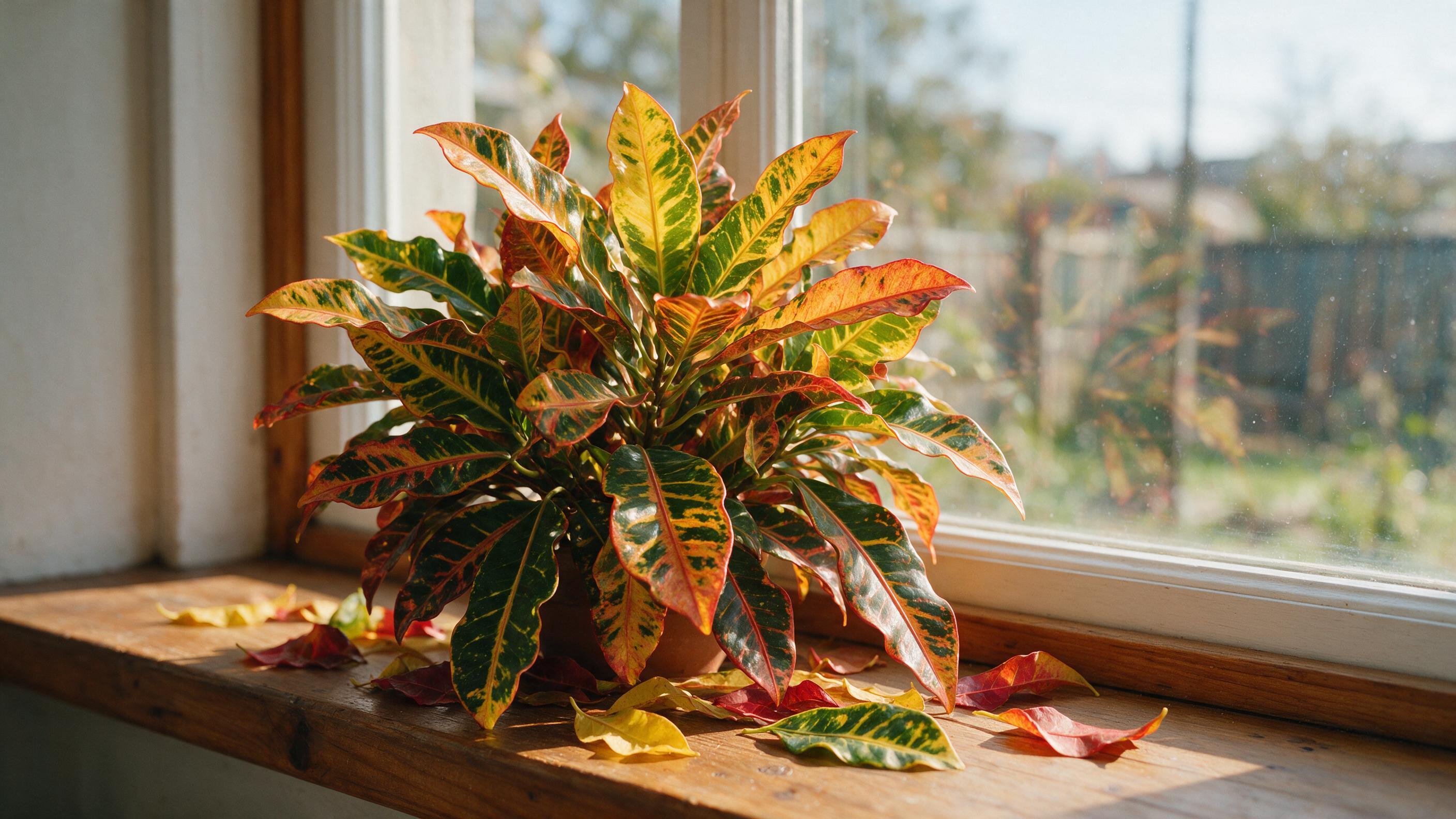
Few houseplants make a statement quite like a croton. Those bold, multicolored leaves in shades of red, orange, yellow, and green are the whole point — so when they start falling off, it feels like a crisis. Leaf drop on croton plants can be expected any time the plant is stressed or out of balance. The good news is that the causes are almost always fixable once you know what to look for.
Whether you just brought your plant home from a nursery or it’s been living on your windowsill for months, this guide walks you through every reason your croton might be shedding leaves and exactly what to do about it. You’ll also find a simple step-by-step diagnosis checklist and a prevention plan to keep your plant looking its best going forward.
What Does It Mean When Your Croton Is Dropping Leaves?
The croton — known scientifically as Codiaeum variegatum — is a tropical broadleaf evergreen native to open forests and scrub areas of Southeast Asia, Indonesia, and the Pacific Islands. While it is a resilient and robust houseplant, Codiaeum variegatum is very averse to change, and its reaction to the shock of sudden environmental changes is to drop its leaves.
If your croton plant is dropping leaves, it could be caused by any kind of alteration in environmental conditions such as temperature, humidity, light, and location. Think of leaf drop as your plant’s primary communication tool — it’s telling you something in its environment isn’t right. The challenge is figuring out which signal it’s sending.
Change can be difficult for a croton plant. A croton plant dropping leaves is often a new plant’s response to being transplanted or transported from the greenhouse to your home. It’s natural for a croton to drop leaves as it adjusts to environmental changes. If you’ve had your plant for a while and it suddenly starts shedding, however, something specific has shifted in its care or surroundings.
Is Dropping Leaves in a Croton Always a Sign of a Problem?
Not always. It can be very discouraging to see your plant dropping leaves, but most of the time leaf drop is totally normal. There are a few situations where shedding is simply part of the plant’s natural behavior rather than a distress signal.
Over time, Codiaeum variegatum stems become woody, and the oldest leaves at the bottom occasionally drop off. This is standard aging — the plant is redirecting energy to new growth at the top. As long as you’re seeing fresh leaves emerging, there’s nothing to worry about.
Seasonal shifts in your home’s humidity and light levels — especially in winter when heating systems dry out the air — can also trigger minor shedding that resolves on its own. Most of all, be patient! Let nature take its course — if you’re seeing new growth, keep doing what you’re doing.
Pro Tip: Gently scratch the main stem of your croton with your fingernail. If the tissue underneath is still green, your plant is alive and may recover. Even a heavily defoliated croton can bounce back with consistent care.
Watering Issues Causing Croton Leaf Drop
Watering problems are the most common trigger for croton leaf drop, and both too much and too little water cause the same symptom — which makes diagnosis tricky. One of the most common culprits of croton leaf drop is overwatering. Crotons prefer their soil to be consistently moist but not soggy. When the roots sit in standing water for too long, they can become waterlogged, leading to root rot and, ultimately, leaf loss.
If a pot is too dry, the foliage may turn brown before shriveling up and dropping off. When conditions are too wet, the leaves may fall soon after yellowing. Those two clues — brown and crispy versus yellow and limp — can help you tell the two problems apart before you even touch the soil.
Croton plants can also lose their leaves due to underwatering. When they don’t receive an adequate amount of water, they may start shedding leaves as a survival mechanism to reduce water loss through transpiration.
The fix for both problems starts with a consistent watering routine. Be sure that your watering schedule is consistent — water when the top 2–3 inches of the soil are dry. When you do water, water deeply until liquid escapes from the drainage holes. Make sure to tilt the pot to drain the perched water and empty the saucer of the excess.
Overwatering can damage the roots and cause croton leaf drop. When the soil on top feels dry, water until the overflow begins to pool in the tray. To prevent root rot, use a pebbled tray or pour off any pooled water after 30 minutes.
Pro Tip: If your croton’s soil has dried out completely, it will benefit from a good soak in the sink or tub to properly rehydrate the soil. Keep in mind that when the soil goes from bone-dry to saturated, it can cause stress for your croton and cause leaves to drop. Give it some time to adjust.
Light Conditions Behind Croton Leaf Drop
Your croton prefers a sunny spot. If it’s placed in an area without adequate light, it will start to shed leaves. Light isn’t just about keeping the plant alive — it directly drives the vivid leaf colors that make crotons worth growing in the first place.
The color of your croton’s leaves will also indicate if it’s receiving enough sunlight. Leaves will grow in mostly green and lack the vibrant reds, oranges, and yellow colors that crotons are known for if it is in too dark of a spot. Fading color before leaf drop is often the first warning sign.
Crotons need a lot of light to maintain their vibrant colors. Place them in a spot where they can receive bright, indirect sunlight for at least 6–8 hours a day. Direct sunlight can scorch their leaves, so filtered light is best.
There are more than 750 varieties of croton plant, some needing more light than others. In general, the more variegated the plant, the more light it craves. For most US homes, western or southern window locations provide optimal conditions. If natural light is limited where you live — especially in northern states during winter — consider using a grow light instead.
Also remember that houseplants are notoriously dusty, and when the debris on the leaves is thick enough, it can block sunlight and inhibit photosynthesis, triggering a growth slowdown and systemic stress. Eliminate this possible cause by wiping the foliage with a damp cloth every week or two to prevent dust accumulation.
Soil, Nutrients, and Root Health Causing Croton Leaf Drop
What’s happening underground matters just as much as what you can see above the soil. Poor soil structure, nutrient imbalances, and root crowding all stress the plant in ways that show up as leaf drop.
Choose a humus-rich potting mixture for your croton plant that will allow you to provide your plant with plenty of water but doesn’t remain soggy, as this will cause root rot, which will stress the plant and lead to leaf drop. Well-drained and nutrient-rich potting soil is ideal for crotons. A mix containing peat moss, pine bark, and perlite works well. They prefer a slightly acidic to neutral pH.
On the fertilizing side, during the spring and summer growing season, it’s beneficial to fertilize monthly with a liquid houseplant food diluted to half strength. Fertilize croton with a diluted liquid fertilizer or slow-release granular feed that has an NPK ratio around 3-1-2 once a month from March to September. Stop fertilizing in fall and winter when the plant’s growth naturally slows.
When a croton outgrows its pot, it generally becomes root bound, a condition in which the roots wind into a mass and no longer nourish the plant efficiently. The first clue is usually roots poking through the drainage hole. The solution is to repot in a container no more than two inches wider than the current one, or one size up.
Important Note: A vessel that is too large encourages more root than leaf growth, an undesirable imbalance. The excess soil around the roots can also lead to oversaturation. Always size up gradually — never jump to a dramatically larger pot.
Environmental Stress Triggering Croton Leaf Drop
Crotons are famously sensitive to environmental disruption. Crotons are tropical plants that thrive in consistent, warm environments. Sudden changes in temperature, humidity, or light levels can cause significant stress, leading to leaf drop. This can happen when a croton is moved to a new location, such as from outdoors to indoors, or when the plant is exposed to drafts or air conditioning.
The best temperature range for C. variegatum is between 60 and 85°F. When the temperature falls below 50°F, leaves wilt and drop from cold shock. In most US homes the ambient temperature stays in a safe range, but the sudden changes that affect these plants can also come in the form of fluctuations in temperature that can occur if the plant is located near an exterior door or window, close to a heating or cooling vent, or in a drafty room.
Humidity is another major factor. In nature, C. variegatum lives in tropical rainforests in Australia and Southeast Asia, where the humidity ranges between 77 and 88 percent. Healthy indoor humidity is generally between 40 and 60 percent — well below what crotons naturally prefer. The dry air common in many homes, especially during winter when heaters are running, is harsh on the leaves. It pulls moisture from them faster than the roots can replenish it, causing the leaf tips to turn brown and crispy, and eventually the entire leaf may yellow and drop.
To raise humidity around your plant, increase the humidity around your plant by misting the leaves on a regular basis, using a pebble tray, or moving a humidifier nearby. Bathrooms and kitchens naturally hold more moisture and can work well as croton spots if light levels are adequate. You can also check out our guide to best houseplants for low-light areas if you’re trying to find the right plant for a dimmer room.
Pests and Disease Leading to Croton Leaf Drop
Croton are susceptible to two major pests: scale insects and spider mites. Both pests are more common on plants that are moved outdoors for the summer and grown inside during the winter months. Mealybugs and aphids round out the list of common offenders.
Here’s how to identify each pest:
- Spider mites: Look for fine, silken webbing on leaf undersides and stem junctions — not full-blown webs like spiders produce, but delicate, gossamer strands connecting veins. Spider mites most often attack when either the humidity is very low indoors or the weather is hot and dry outdoors.
- Scale insects: Scale insects have a hard, protective shell. They can appear as small, brown bumps on stems and leaves, making them easy to overlook. However, they can cause a lot of damage by feeding on your plant’s sap.
- Mealybugs: Inspect the undersides of leaves weekly, especially where new growth emerges; use a 10× hand lens to confirm cottony masses (mealybugs).
- Aphids: Aphids are small, soft-bodied insects that can be green, black, or even pink, and they love to feast on the sap of your plants. As they feed, aphids excrete a sticky substance known as honeydew, which can lead to fungal issues like sooty mold.
For treatment, if you notice any of these pests on your plant, isolate it from other plants and treat it with insecticidal soap or neem oil. For spider mites specifically, spraying the plant with a sharp stream of water from a hose outdoors may clean most of the mites and webbing from the plant. Concentrate the spray on the undersides of the leaves and in the leaf nodes where the mites spin their webs.
Quarantining your houseplants before bringing them in for the winter helps to pinpoint and treat any potential pests before they can enter the house. Both spider mites and scale insects are easily transmitted to other houseplants, although early detection typically prevents any major damage. You can find plant identification apps or Android plant apps useful for confirming pest identification from photos.
How to Diagnose Why Your Croton Is Dropping Leaves
Before you can fix the problem, you need to pinpoint it. Work through this checklist in order — most croton issues reveal themselves within the first few steps.
- Check when the shedding started. Did it begin right after you brought the plant home or moved it? That points to transplant or relocation shock. Once settled, in three or four weeks, your plant will begin to produce new growth.
- Inspect the soil moisture. Push your finger 2 inches into the soil. Soggy soil with a musty smell suggests overwatering or root rot. Bone-dry, pulling-away-from-the-pot soil indicates underwatering.
- Look at the leaf color before it falls. If a pot is too dry, the foliage may turn brown before shriveling up and dropping off. When conditions are too wet, the leaves may fall soon after yellowing.
- Assess the light level. Hold your hand 12 inches above the plant at midday. If you can’t see a clear shadow, the light is too low. Check whether the leaves have lost their color intensity — fading color before drop is a light warning.
- Check the temperature and location. Is the plant near an air vent, exterior door, or drafty window? The leaves of croton may turn brown if temperatures or humidity levels are too low. If the plant is too close to the heating or air conditioning vents, the tips may brown first.
- Inspect for pests. Inspect the undersides of leaves weekly, especially where new growth emerges; use a 10× hand lens to confirm tiny moving specks (spider mites), cottony masses (mealybugs), or immobile brown bumps (scale).
- Check the roots. When a croton outgrows its pot, it generally becomes root bound. The first clue is usually roots poking through the drainage hole. If roots are mushy and dark, root rot from overwatering is the likely culprit.
Key Insight: With crotons, multiple stressors often pile on at once. With a sensitive species like croton, one or multiple stressors may cause leaf shedding. If you fix one issue and the shedding continues, keep working down the checklist.
How to Fix a Croton That Is Dropping Leaves
Once you’ve identified the cause, here’s how to address it. Match your fix to your diagnosis rather than trying to change everything at once — too many adjustments at the same time add more stress to an already-stressed plant.
| Cause | Fix | Timeline to Improvement |
|---|---|---|
| Transplant / relocation shock | Place in a stable spot; don’t move again. Maintain consistent watering and humidity. | 3–4 weeks |
| Overwatering / root rot | Let soil dry out; repot with fresh well-draining mix if roots are mushy; trim rotted roots before repotting. | 2–6 weeks |
| Underwatering | Soak thoroughly in sink; resume consistent watering when top 2–3 inches dry out. | 1–2 weeks |
| Insufficient light | Move to a south or east-facing window; add a grow light if natural light is limited. | 2–4 weeks |
| Temperature stress / drafts | Relocate away from vents, AC units, and drafty windows; keep room at 60–85°F. | 1–3 weeks |
| Low humidity | Add a humidifier, pebble tray, or mist leaves daily. Target 40–60% indoor humidity. | 1–2 weeks |
| Pests | Isolate plant; treat with insecticidal soap or neem oil; repeat every 3–5 days. | 2–4 weeks |
| Root bound | Repot into a container no more than 2 inches wider; use fresh, well-draining mix. | 3–6 weeks |
For pest treatment, insecticidal soap or neem oil can be effective. Repeat treatments every few days until the mites are under control. For scale, immediate action — starting with physical removal using 70% isopropyl alcohol on a cotton swab — halts population explosions.
If your plant has lost most of its leaves, don’t give up. Crotons are tough. Even if your croton is brown and leafless, it doesn’t mean that your lovely plant is gone forever. Continue to care for your plant’s watering and environmental needs. In several weeks, it’s quite likely that your patience and care will be rewarded with the first of new, bright leaves.
Explore our guide to different types of rubber plants or yucca plants if you’re looking for hardier tropical houseplant alternatives while your croton recovers.
How to Prevent Croton Leaf Drop Going Forward
The best strategy for a healthy croton is building a stable, consistent routine from day one. It’s particularly important that you move croton plants as little as possible. Once you find a spot that works, commit to it.
Here are the key habits that keep crotons thriving long-term:
- Water on a schedule, not a calendar. Maintain a consistent watering schedule, ensuring the soil is neither too wet nor too dry. Water the plant when the top inch of soil becomes dry, and be mindful of the plant’s needs during different seasons.
- Protect from drafts year-round. Keep your croton away from drafts, air vents, and frequently opened doors. These can create sudden changes in temperature that crotons are not fond of.
- Maintain humidity, especially in winter. Keep an eye on the humidity levels, especially during winter when indoor heating can dry out the air. Mist the leaves or use a humidifier to increase the moisture around your croton.
- Fertilize during the growing season only. Feed with liquid fertilizer during growing months and repot every 2–3 years. Avoid high-nitrogen formulas that encourage soft growth attractive to pests.
- Wipe leaves regularly. Wipe the foliage with a damp cloth every week or two to prevent dust accumulation that blocks light and can harbor pests.
- Quarantine new plants. Quarantining your houseplants before bringing them in for the winter helps to pinpoint and treat any potential pests before they can enter the house.
- Acclimate before moving. When moving the croton to a new location, gradually expose it to the new light and temperature conditions. Start by placing it in a spot with similar conditions for a few hours a day and gradually increase the exposure over a week or two.
If you’re building out your indoor plant collection alongside your croton, our guides on types of spider plants and types of aloe vera plants cover other tropical-friendly options. For a broader look at what’s possible indoors, visit our overview of types of plants to find varieties that suit your home’s conditions.
Pro Tip: A south or east-facing window is often ideal. These spots provide bright, indirect light without the harsh afternoon sun. Pair that placement with a nearby humidifier and a stable temperature, and your croton will have everything it needs to stay lush.
FAQ
Why is my croton dropping leaves after I just bought it?
A croton plant dropping leaves is often a new plant’s response to being transplanted or transported from the greenhouse to your home. It’s natural for a croton to drop leaves as it adjusts to environmental changes. Once settled, in three or four weeks, your plant will begin to produce new growth. Keep it in a stable spot, water consistently, and be patient.
Can a croton recover after losing all its leaves?
Yes. Even if your croton is brown and leafless, it doesn’t mean that your lovely plant is gone forever. Gently scratch the main stem. If the tissue underneath is still green, your plant is alive and may recover. Resume proper care and give it several weeks before drawing any conclusions.
How often should I water my croton?
Crotons prefer to have consistently moist soil, but be sure not to over- or underwater your plant. Be sure that your watering schedule is consistent — water when the top 2–3 inches of the soil are dry. The frequency will vary by season — more often in summer, less in winter.
Why are my croton leaves turning yellow and falling off?
When conditions are too wet, the leaves may fall soon after yellowing. Yellow leaves before drop typically point to overwatering or root rot. Check your soil moisture and drainage, and inspect the roots for dark, mushy tissue.
What temperature is too cold for a croton?
Croton prefer temperatures between 60 and 85°F, often suffering leaf drop if temperatures remain below 50°F. Keep your plant well away from cold drafts, uninsulated windows in winter, and air conditioning vents during summer months.
Do crotons need high humidity?
Maintaining higher humidity levels, ideally between 40–80%, contributes to the plant’s overall health. Insufficient humidity may cause leaf drop, and the colors may lose their spirit. A humidifier, pebble tray, or regular misting all help bridge the gap between typical US indoor air and what crotons naturally prefer.
What pests cause croton leaf drop?
The most common croton plant pests are spider mites, mealybugs, scale insects, and aphids — each causing distinct damage patterns. Inspect the undersides of leaves weekly and treat any infestation promptly with insecticidal soap or neem oil to prevent serious defoliation.