
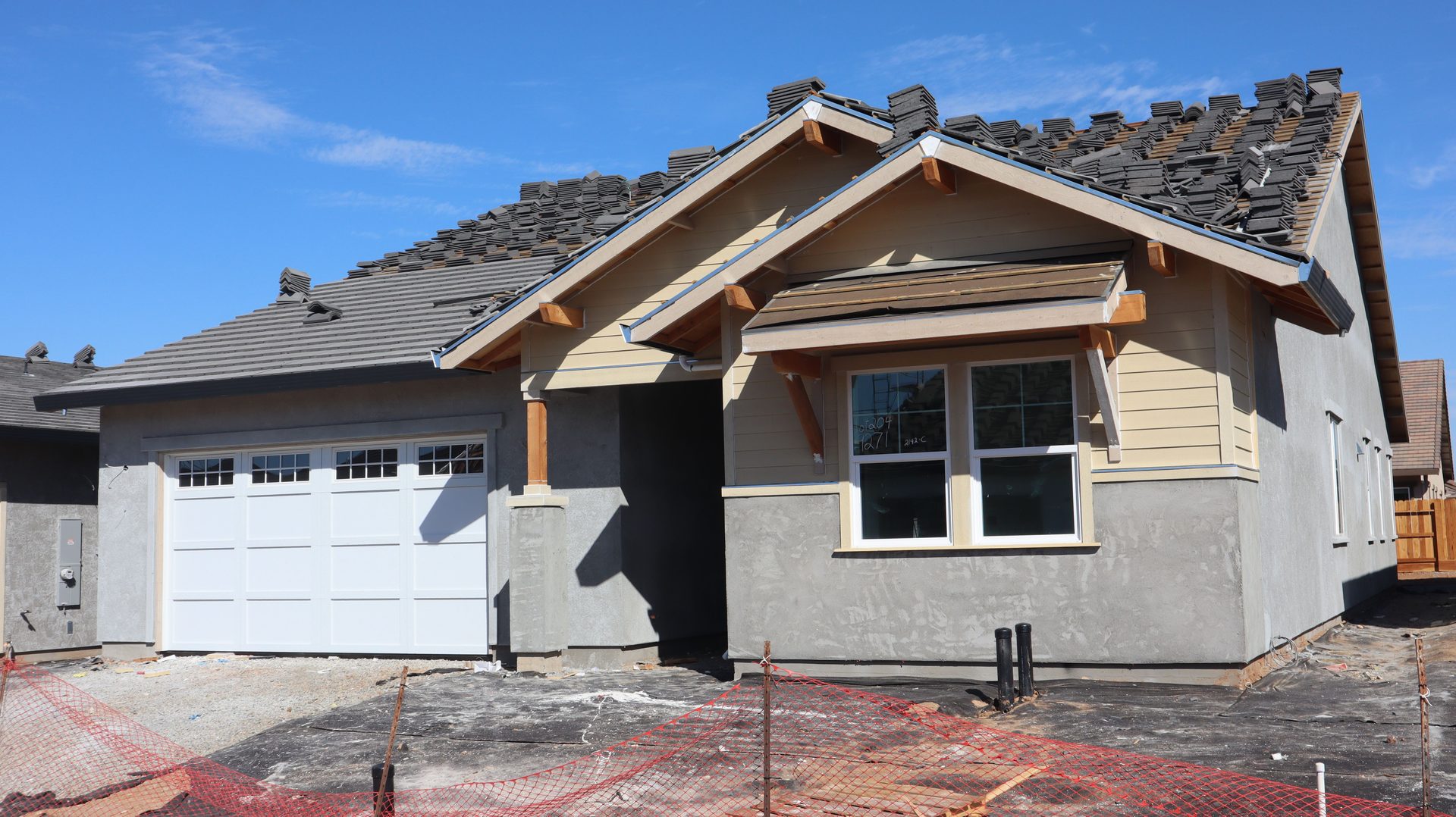
Building your own home in Scotland is one of the most financially significant decisions you can make — and the costs involved are far more layered than a single headline figure suggests. Whether you’re eyeing a rural plot in the Highlands or a serviced site on the outskirts of Edinburgh, the total price tag depends on your land, your specification, your build method, and a long list of professional fees that are easy to underestimate.
This guide breaks down every major cost category so you can build a realistic budget before you commit to a plot — and understand exactly where your money goes once the project is underway.
Pro Tip: Always add a contingency fund of at least 15–20% on top of your build cost estimate. Unexpected ground conditions, design changes, and material price shifts are common on Scottish self-build projects.
Average Cost to Build a House in Scotland
Based on a standard specification for a typical three-bedroom house, you can expect to pay around £271,140, not including the price of land — a figure that covers construction expenses like materials and labour. That benchmark is a useful starting point, but your actual total will shift significantly depending on where in Scotland you build and what level of finish you choose.
Parts of Scotland can be closer to £1,400 per m² for basic builds, while London and the South East remain the most expensive regions in the UK, where prime locations can exceed £3,500 per m². Scotland’s relative affordability is a genuine draw for self-builders priced out of southern England.
Here is a general overview of average build costs in Scotland by house size, excluding land:
| House Type | Approximate Floor Area | Estimated Build Cost (Standard Spec) |
|---|---|---|
| 2-Bedroom House | 70–85 m² | £98,000–£170,000 |
| 3-Bedroom House | 90–120 m² | £126,000–£271,000+ |
| 4-Bedroom House | 140–180 m² | £196,000–£360,000+ |
| 5-Bedroom House | 200–240 m² | £280,000–£600,000+ |
Homes in Scotland offer the largest average floor space in Britain, with a median size of 128 m². Edinburgh has the smallest average house size at 104 m², while Shetland residents enjoy some of the most spacious homes, averaging 172 m². Keep that in mind when benchmarking your own plans against national averages.
Cost to Build a House Per Square Foot in Scotland
As a ballpark cost to build a house in the UK, you can expect to pay anything from £1,400 to £3,000 per m² — and Scotland generally sits towards the lower end of that range for standard builds, though bespoke and architect-designed homes push costs considerably higher.
A middle-of-the-road figure for how much it costs to build a house would be around £2,200+ per m², on the assumption you’ll be doing some of the project management and mostly using experienced trades to finish your scheme. At this kind of price point, you can expect an average self-build spec — but still better quality than a typical developer house.
The price per m² will rise significantly if you want to increase the quality or intend to hand the project over to professionals — expect to pay at least £2,750 per m² for a main contractor build. A real-world example from Aberdeenshire illustrates this well: Coldwells Build recently finished a bespoke, architect-designed bungalow in rural Aberdeenshire — a 198 m² home built using a prefabricated timber frame kit, with a total construction cost of £580,000, equating to £2,929 per m².
Here is a cost-per-square-metre breakdown by build specification:
| Build Specification | Cost Per m² | Cost Per sq ft (approx.) | Notes |
|---|---|---|---|
| Basic Spec | £1,400–£1,800 | £130–£167 | Entry-level finishes, self-managed |
| Standard Spec | £1,800–£2,500 | £167–£232 | Mid-range finishes, partial management |
| Premium / Bespoke | £2,750–£3,500+ | £256–£325+ | Architect-designed, main contractor led |
Key Insight: Two homes with the same floor area can cost very different amounts. Specification, location, construction method, and ground conditions all change the final price — so treat any per-m² figure as a starting estimate, not a fixed quote.
Cost Breakdown: What You’re Actually Paying For in Scotland
Understanding where your budget goes is essential before you commit to a design. Build costs in Scotland can be divided into several major categories, each carrying its own variables.
Groundworks and Foundations
Most new builds require £8,000–£25,000 for foundations, though challenging ground conditions can increase this significantly. Some of the biggest cost uncertainty sits below the surface of your plot. Boggy ground can require extra drainage work and deeper excavation; rocky ground can require crushing and removal of surplus material; slopes often add costs due to extra digging, filling, and levelling needed to create stable, even ground for foundations.
Labour
Labour costs usually make up between 35% and 55% of the total cost when building a home. In 2025, the Federation of Master Builders found that 61% of small to medium-sized UK builders had raised their prices, with 75% reporting increased material costs. Labour costs are rising fast.
Materials
The price of construction materials surged rapidly in 2022, reaching a 40-year high. Although inflation has slowed, prices are still climbing — just not as quickly. The Building Cost Information Service predicts material prices will rise by 13% between 2025 and 2030.
Professional Fees
Professional fees — architects, structural engineers, surveyors, planning consultants, and building control — typically add 8–15% of the total build cost. These are paid separately from your construction contract and are often the first costs you incur, before a single brick is laid.
Services and Connections
If your plot isn’t already hooked up to water, electricity, and broadband, it will cost extra to extend existing connections or install new ones. Rural plots may also need a septic tank or treatment plant if you can’t connect to the mains sewerage system.
VAT Considerations
For new builds, VAT is zero-rated, which means VAT-registered builders or subcontractors must zero-rate their work and not charge VAT. If you’re undertaking a self-build project, however, you will have to pay VAT at full rate for the purchase of any materials. This can be reclaimed at the end of the project under HMRC’s DIY Housebuilder’s Scheme.
Important Note: In Scotland, building regulations are governed by the Building (Scotland) Act 2003 — separate from the Building Act 1984 that applies in England and Wales. Make sure your designer and contractor are familiar with Scottish standards.
Cost of Land in Scotland
Land is often the single largest variable in your total project budget. The cost of land typically accounts for about 30–40% of the overall spend, though in high-demand areas it can climb even higher.
Plot prices in Scotland vary enormously by region. Urban plots with planning permission in cities like Edinburgh or Glasgow command a significant premium, while rural and Highland plots can be far more accessible. As of February 2026, the most expensive area to purchase a property was the City of Edinburgh, where the average cost was £295,000. Average house prices in Scotland increased by 2.3% in the 12 months to February 2026, to £187,000 (provisional estimate).
For self-build plots specifically, expect a wide range:
- Urban plots with planning permission (Edinburgh, Glasgow): £100,000–£250,000+
- Suburban or commuter-belt plots: £60,000–£150,000
- Rural plots with planning permission: £30,000–£80,000
- Undeveloped land without planning permission: £5,000–£30,000 (subject to planning risk)
Land and Buildings Transaction Tax (LBTT) is Scotland’s version of Stamp Duty Land Tax. As a fully devolved tax, its rates and regulations are set independently by the Scottish Government — so any stamp duty changes announced by the UK Government do not affect LBTT in Scotland.
When purchasing land, you should also factor in legal fees (typically around 2% of land costs), a land survey, and any planning contributions required by the local authority under Section 75 agreements in Scotland, which fund affordable housing or local infrastructure improvements.
Common Mistake: Buying land without planning permission and assuming you’ll secure it later is a significant financial risk. Always make any offer subject to planning permission, and consult the local authority’s development plan before committing.
Factors That Affect Building Costs in Scotland
No two Scottish self-build projects cost the same. Site conditions, construction method, design, and specification all influence the final cost. Here are the key variables you need to understand before finalising your budget.
Location Within Scotland
Labour rates, material transport costs, and trade availability all shift depending on where you build. Remote Highland and island sites typically carry a cost premium due to longer supply chains and fewer available tradespeople. In 2025, 61% of builders struggled to hire skilled tradespeople, and 49% reported job delays because they couldn’t get the labour they needed.
Construction Method
Traditional brick-and-block builds generally cost more than modular or timber-frame options, although they may hold resale value differently. Some companies sell timber frame “kit homes” that are already designed and ready to be assembled. A kit home may cost less to build than a similar home built using traditional methods — however, you may need to pay more upfront to buy the kit.
Design Complexity and House Size
Two-storey homes often offer better value per m² because the roof and foundations are spread across more floor area. Single-storey homes tend to cost more per m² due to larger roof spans and footprint. Intricate designs with complex rooflines, large glazing areas, or bespoke joinery will push costs higher regardless of size.
Energy Efficiency Standards
The Scottish Government has signalled that all new homes will soon be expected to meet a “Scottish equivalent” of the Passivhaus standard — a science-based approach to ultra-low energy homes that can reduce heating bills by 79% compared to current Scottish new builds. Passivhaus homes typically cost about 4–8% more than traditional homes due to the need for higher quality materials and specialist professionals. Sustainable features like triple glazing, heat pumps, high insulation levels, or solar systems may add 5–15% initially but can significantly reduce long-term energy costs.
Site Conditions
Site conditions can significantly shape build cost. A sloped and extremely rocky plot may require extra labour for site preparation, enormous rocks to be excavated and crushed, and even a retaining wall — all of which increase the overall cost of the project. Always commission a ground investigation survey before purchasing a plot.
Project Management Approach
Broadly speaking, there are three options: engage a main contractor who manages the entire build; hire tradespeople and oversee each aspect yourself, facilitating cost savings but requiring significant time investment; or delve into hands-on self-building by completing certain tasks yourself based on your skills. Each route carries a different cost and risk profile.
Building vs. Buying a House in Scotland
One of the most common questions prospective self-builders ask is whether building actually saves money compared to buying an existing home. The honest answer: it depends on how you manage the project — and what you’re comparing it to.
Self-building can be cheaper than buying from a developer. On average, a self-build project may cost 15–25% less than purchasing a new build from a developer, primarily because you avoid developer profit margins. However, self-builds involve more responsibility, from managing trades to ordering materials and ensuring building regulation compliance.
Developer builds, while more expensive, offer fixed pricing, professional management, and predictable timelines. For many buyers, the certainty of a fixed price and a completion date outweighs the potential savings of self-build.
| Factor | Building Your Own Home | Buying an Existing Home |
|---|---|---|
| Upfront Cost | Potentially 15–25% less than new-build developer | Fixed purchase price, easier to budget |
| Customisation | Full control over design and specification | Limited — renovations needed for changes |
| Timeline | 12–24+ months from plot purchase to move-in | Weeks to months from offer to completion |
| Risk | Budget overruns, planning delays, ground issues | Survey surprises, chain collapse |
| Energy Efficiency | Built to current standards from the outset | Older homes may need costly upgrades |
| VAT | Zero-rated for new build (VAT reclaimable on self-build) | No VAT on existing residential property |
The key risk with self-builds is budget overrun, often caused by delays, design changes, or underestimating material and labour costs. If you’re comparing building to buying an existing home in Scotland, keep in mind that average house prices in Scotland increased by 1.3% in the 12 months to January 2026, to £188,000 (provisional estimate) — meaning the resale market remains active and competitive. You can also explore what apartment costs look like in other markets to benchmark your housing spend more broadly.
How to Save Money When Building a House in Scotland
Keeping costs under control on a Scottish self-build requires planning, discipline, and a few strategic decisions early in the process. Here are the most effective ways to reduce your total spend without sacrificing quality.
1. Choose the Right Build Method
Timber frame and kit homes are among the most cost-effective construction routes available in Scotland. A kit home may cost less to build than a similar home that is built using traditional methods. Prefabricated panels are built off-site in controlled conditions, which reduces on-site labour time and weather-related delays — both of which are particularly relevant in Scotland’s climate. If you’re considering a greenhouse or outbuilding as part of your project, understanding greenhouse build costs can help you plan those additions separately.
2. Manage the Project Yourself (Where Possible)
A hybrid route — hiring a project manager for certain phases while managing others yourself — can offer a balance of savings and reduced stress. Even taking on coordination tasks like scheduling trades, ordering materials, and liaising with your architect can save thousands compared to handing full control to a main contractor.
3. Lock In Material Prices Early
Building materials tend to go up twice a year, in the spring and again in the autumn — so try to agree fixed prices on as much as you can. This is particularly important for timber, insulation, and brickwork, where price volatility has been highest in recent years.
4. Choose a Simpler Design
Two-storey homes often offer better value per m² because the roof and foundations are spread across more floor area. Avoiding complex rooflines, excessive glazing, and bespoke architectural features will reduce both materials and specialist labour costs. Work with a designer who understands cost control from the outset — not just aesthetics.
5. Reclaim Your VAT
Self-builders can save on VAT for most building materials under UK self-build VAT exemption rules, but this requires strict documentation and timely applications for refunds. Keep every receipt from day one, and engage an accountant or specialist adviser familiar with HMRC’s DIY Housebuilder’s Scheme before you start purchasing materials.
6. Get Multiple Quotes and Compare Like-for-Like
The best way to get an idea of build costs is to speak with local builders — but contractors can only start to firm up their prices once you have detailed drawings and a reasonably accurate specification. Rushing to get quotes before your plans are finalised will result in wide variations that are hard to compare meaningfully. Aim for at least three quotes on every major trade package.
7. Build to the Right Size
In general, the larger the floor plan, the higher the cost. It’s worth thinking about how the home will be used today and in five years — for example, do you need bedrooms that sit empty most of the year, or would fewer, more generous bedrooms be better value? Right-sizing your home from the start is one of the most effective cost-saving decisions you can make. You can also look at what renters pay in comparable housing markets — such as apartment costs in Seattle or San Francisco rental prices — to understand the broader context of housing affordability.
Pro Tip: Engage a quantity surveyor (QS) early in the design process if you’re planning a high-spec or large home. A QS can identify cost-saving opportunities before they become expensive changes to an approved design.
Building a house in Scotland is a complex undertaking, but with the right preparation it can deliver a home that is better specified, more energy efficient, and more personally suited to your needs than anything available on the open market. The key is understanding your full cost picture — land, build, professional fees, connections, and contingency — before you commit to a plot. Use the figures in this guide as a starting framework, get detailed quotes early, and engage professionals who know the Scottish planning and building regulations landscape well.