Why Is My Boston Fern Dying? Causes, Fixes, and Prevention Tips

August 27, 2026
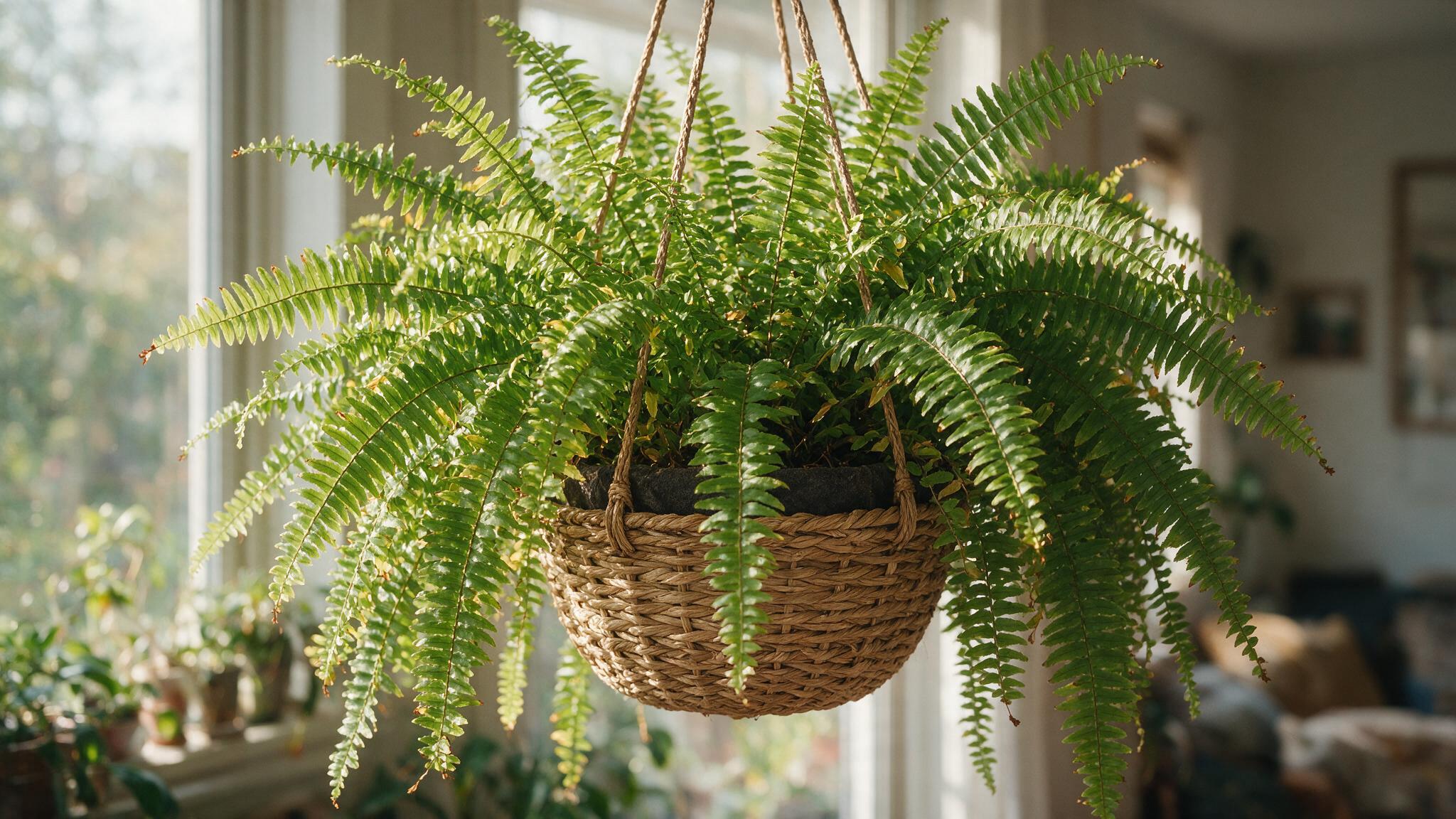
Few houseplants are as dramatic about their unhappiness as the Boston fern. One week it looks lush and full; the next, fronds are browning at the tips, leaves are raining onto your floor, and the whole plant looks like it’s given up. If you’re staring at a struggling plant right now, you’re not alone — and the good news is that most cases are entirely fixable.
The Boston fern (Nephrolepis exaltata) evolved on humid tropical forest floors, which means it has very specific expectations for moisture, light, and air quality. Most Boston ferns die from chronic low humidity and inconsistent watering, not disease or pests. When fronds turn yellow, brown at the tips, or drop suddenly, it’s almost always a signal of environmental mismatch — air that’s too dry, waterlogged or bone-dry soil, or sudden temperature shifts. Understanding exactly which condition is at fault makes the difference between a plant that recovers and one that keeps declining.
This guide walks you through every major cause of a dying Boston fern, how to diagnose what’s wrong with yours, and the specific steps to bring it back to full health. Whether you’re a first-time fern owner or a seasoned houseplant enthusiast, you’ll find a clear path forward here. You can also check out our guide to fern houseplant care for a broader look at growing ferns indoors.
What Does It Mean When Your Boston Fern Is Dying?
When your Boston fern starts to look unwell, it’s communicating through its foliage. When a Boston fern starts to deteriorate, the leaves may turn yellow, indicating a lack of nutrients and moisture. Brown fronds are another sign of trouble, suggesting that the plant is not receiving adequate care. Wilting foliage signals dehydration, while slow soil drying points to an imbalance in watering.
This plant grows delicate green-blue foliage and tiny leaves, reaching a maximum height of three feet in perfect growing conditions. Yet in some cases, the plant might start to show stress symptoms before it eventually dies. These symptoms include stunted growth, yellow or brown leaves, droopy foliage, and dead leaves that eventually fall off.
The key thing to understand is that “dying” covers a wide spectrum. A fern losing a few older fronds at the base is behaving normally. A fern where the majority of fronds are yellowing, collapsing, or turning crispy brown is in genuine distress. Keep in mind that there could be more than one issue causing your Boston fern to die — if you find one cause, do not assume it is the only one. You could have an issue with overwatering and pests at the same time, both destroying your plant. Pinpointing the primary stressor — and any secondary ones — is the first step toward recovery.
Is Dying in a Boston Fern Always a Sign of a Problem?
Not every sign of decline means your plant is in serious trouble. Some leaf loss and browning is completely natural, and it’s worth knowing the difference before you start changing your care routine.
Even though it looks awful when leaflets fall from Boston fern plants, this symptom isn’t generally indicative of a serious problem. More often, the cause of Boston fern losing leaves is something in the care the plant’s receiving, and that can be changed overnight. Most often when leaves or leaflets yellow, dry up, and drop, it’s due to one of these common problems: the age of leaves. Older leaves will eventually dry and die — that’s just how it goes. So if you’ve got just a few dropping leaves and the care you’re giving your plant is otherwise excellent, don’t sweat it.
It is very normal for older leaves to fall from your Boston fern. They can be tidied up and trimmed off to make room for new growth and keep your plant looking fresh and healthy. Similarly, brown spots on Boston ferns may just be spores, a normal part of the fern’s reproductive process. These appear as neat rows of small brown dots on the undersides of healthy fronds — not a cause for alarm.
The situations that do signal a real problem are widespread yellowing across multiple fronds, fronds that are collapsing or going entirely crispy, a foul smell from the soil, or rapid leaf drop that isn’t limited to the oldest, lowest fronds. If any of those describe your plant, the sections below will help you find the cause.
Pro Tip: Before changing anything about your care routine, spend two minutes observing your plant closely. Check the soil moisture, look at the underside of a few fronds, and note which fronds are affected — oldest and lowest, or newest growth too. That observation alone will narrow the cause significantly.
Watering Issues Causing Boston Fern Dying
Watering problems are the single most common reason a Boston fern starts to decline, and both extremes — too much and too little — produce symptoms that can look deceptively similar at first glance.
Overwatering
The most common cause of a Boston fern dying is overwatering or persistently waterlogged conditions. This results in root rot that will quickly kill your plant. An overwatered Boston fern will show its displeasure through yellowing and wilting leaves. Waterlogged soil causes the plant to develop root rot or other diseases. You may also notice the soil smells sour or the pot feels unusually heavy even days after watering.
Overwatering can give your Boston fern a waterlogged situation where the water cannot drain properly. As a result, roots start to rot due to being overly soaked. Since standing water makes the soil mushy and soggy, roots get fungal infections.
Underwatering
Underwatering won’t cause your Boston fern to die as fast as overwatering, but the plant will look really poorly if it’s regularly underwatered. The tiny leaves will start drying up, first on the fronds’ tips and then the whole fronds. Once dried out, there is no turning back for those leaves.
Although your Boston fern may forgive you for occasionally forgetting to water, consistent underwatering can lead to a variety of serious issues if not solved in time. The most common signs of an underwatered Boston fern are dry leaves, light brown spots on the leaves, and drooping stems.
Getting Watering Right
All kinds of ferns like to sit in well-hydrated soil. However, they like a happy medium, where the soil remains moist but never stays soggy. A reliable method: check if your fern needs watering by inserting your finger an inch into the soil and feeling for dryness. Watering your Boston fern in the morning is an excellent practice that allows the leaves to dry before the sun evaporates everything.
Water quality also matters. Boston ferns are generally OK with tap water, even if you don’t let it sit overnight. However, when the water is really heavy in minerals or highly chlorinated, issues can arise. If you suspect your water isn’t ideal, let it sit for a day before watering or use filtered water.
Light Conditions Behind Boston Fern Dying
Light is one of the most overlooked factors in Boston fern health, partly because the plant’s needs are easy to misread. It’s not a low-light plant, but it absolutely cannot handle direct sun.
Insufficient light causes Boston fern fronds to become dark green and spindly, while excessive light burns fern foliage, leaving it brown and dry. The Boston fern prefers partial shade or indirect light. A position near a north-facing window is usually ideal for this plant.
While it’s true that Boston ferns love sunshine, direct light can actually scorch the leaves on your plant pretty quickly as they are very thin and delicate. This is especially common in summer when the sun is a lot stronger and is out for most of the day. Although there is no reversing the sunburn that’s already been caused, solving the issue is easy — all you have to do is relocate your Boston fern to a spot in your home that doesn’t receive any or as much direct light.
Boston ferns need moderate light to produce the greenest fronds, but they are prone to burning on the tips if the light is too intense. Ferns should not be placed in southern windows, as the heat and light will be too much for the plant. An east-facing window that catches gentle morning light and then diffused afternoon light is often the best placement inside a US home. You can browse our list of best houseplants for low-light areas if you’re working with a particularly dim space and want companions that will thrive alongside your fern.
While a Boston fern is unlikely to actually die when kept in a shaded location, it will not grow and flourish. Low light also increases the risk of overwatering, and a plant weakened by insufficient light can also be more susceptible to pests and diseases.
Pro Tip: If you’re unsure whether your window provides enough indirect light, hold your hand about a foot above a white piece of paper in that spot. A soft, blurry shadow means indirect light — ideal for a Boston fern. A sharp, crisp shadow means direct sun — too intense for the plant’s delicate fronds.
Soil, Nutrients, and Root Health Causing Boston Fern Dying
Even when watering and light are dialed in, poor soil composition or fertilizer mistakes can quietly push a Boston fern into decline. The root zone is where long-term health is won or lost.
Soil and Drainage
The Boston fern needs to grow in rich loamy soil, or the plant won’t be able to absorb the essential nutrients. When the soil has poor drainage, the Boston fern won’t survive. While the Boston fern likes humidity and plenty of water, it will begin to fail if the soil in its pot is compacted.
According to Gardening Know How , repotting Boston ferns using a mixture of 50% peat moss, 12% horticultural bark, and the rest perlite will provide the excellent drainage the plant requires. This blend holds enough moisture to keep roots happy without ever becoming waterlogged.
Overfertilizing
As a light feeder, the Boston fern prefers water-soluble fertilizer two times per month in the spring and summer. The salts in fertilizer build up in the soil and harm the roots of your plant if you fertilize it too frequently. The roots and leaves get poisoned when the salts build up too much. The chemical buildup due to overfertilization causes the browning of leaves — you’ll see browning beginning around the tips and edges of your fern’s fronds.
Fertilizers are only needed in very small quantities — no more than a dose of 10-5-10 a month, even during heavy growth. When you habitually overfertilize, the unused nutrients build up in the soil. You may notice white flakes on the soil’s surface or your fern may turn brown and yellow in isolated areas.
Underfertilizing
Skipping fertilizer entirely for more than six months leads to pale, thin fronds and slow fiddlehead emergence. The fix is straightforward: from April through September, apply diluted fish emulsion (2-4-1) at quarter strength every three weeks. Never fertilize in fall or winter.
If salt crust has already built up, the solution is simple — flush the soil repeatedly to dissolve and remove all of those excess salts, and fertilize your Boston fern sparingly in the future.
Root Rot
Rotten roots will be black or brown, fragile, mushy, and will likely have an offensive smell. You should prune off all affected roots with sterile pruning shears. If you have to prune many roots, you should also prune the foliage back so that the remaining roots can support the plant.
Environmental Stress Triggering Boston Fern Dying
Temperature swings, drafts, and dry indoor air are some of the most underestimated threats to a Boston fern — especially in US homes where central heating and air conditioning run for months at a time.
Humidity
Over 73% of dying Boston ferns in residential settings suffer first and foremost from dry air. Symptoms appear in sequence: frond tips turn pale yellow, then progress to brown and brittle, then entire fronds collapse inward. This isn’t seasonal — it’s cumulative stress.
A related issue that will cause your Boston fern to go brown is insufficient humidity. The optimal humidity for your fern is about 50–60%. Misting alone fails because droplets evaporate in under 90 seconds indoors, offering negligible humidity lift. Worse, evening misting encourages fungal leaf spot.
Better long-term solutions include a pebble tray and a humidifier. Moving your dying Boston fern to the bathroom or kitchen is another option, as these rooms have naturally higher humidity levels because of steam from showering and cooking — just make sure you don’t place your fern too close to the cooker, as this can dry out the plant quickly.
Temperature and Drafts
Temperatures should be about 65 degrees F. (18 C.) during the night and no higher than 95 degrees F. (35 C.) during the day. Hotspots caused by radiators or cookers and drafts caused by cracks in windows or doors can also be really damaging to your Boston fern. You might find that the overall temperature in the room is perfect but are not detecting the hot spot or cold draft in the room which is causing your Boston fern to start dying. Use a digital thermometer to check the spot in which your Boston fern is living and adjust the environment or move it to a new spot to prevent it from dying.
Protect the fern from temperature fluctuations and drafts, as these can stress the plant and lead to decline. In the US, this is especially relevant during winter months when heating vents blow dry, hot air, and during summer when air conditioning units create cold drafts near windows and floor vents.
Pro Tip: HVAC vents are one of the most common hidden culprits behind a struggling Boston fern in American homes. Even if the vent is across the room, the air current it creates can reduce the humidity around your plant significantly. Use a calibrated hygrometer to monitor the actual humidity at plant level, not just room temperature.
Pests and Disease Leading to Boston Fern Dying
Pest infestations are less common than watering and humidity issues, but they can escalate quickly because of how densely Boston ferns grow. Scales, spider mites, and mealybugs hide in fern crowns and on the undersides of fronds. Spider mites spin near-invisible webs between fronds; scales look like brown sesame seeds on stems. Both drain sap, causing stippling and premature drop. Because ferns grow densely, infestations spread fast before visible signs emerge.
Here’s a quick reference for the most common Boston fern pests:
| Pest | Visual Signs | Primary Damage | Treatment |
|---|---|---|---|
| Spider Mites | Fine webbing between fronds, tiny moving dots | Stippling, bronzing, frond drop | Neem oil or insecticidal soap spray weekly |
| Mealybugs | White cottony clusters, sticky residue | Yellowing, wilting, weak roots | Isopropyl alcohol on a cotton swab, then neem oil |
| Scale Insects | Brown bumps on stems, shiny sugary secretion | Frond yellowing, leaf drop, plant decline | Horticultural oil, manual removal |
| Fungus Gnats | Tiny flies near soil, larvae in roots | Soft roots, yellowing, wilting | Let soil dry slightly between waterings, sticky traps |
Inside the house, spider mites usually infest your Boston fern, but unfortunately they can be overlooked because they’re too small to detect. Treating pests depends on how early they’re detected, because sometimes the plant is too damaged to be saved. Early detection is everything — inspecting any fern before purchasing it or bringing it into the home helps to avoid the introduction of these pests. Regular monitoring and promptly cutting off infested portions of fronds keeps an infestation minor.
For disease, high humidity seldom poses a problem for Boston ferns on its own. However, lots of humidity combined with low ventilation can cause the plant to attract disease. Foliar nematodes are another concern: the harm caused by foliar nematodes is caused by their direct grazing on the leaves. They like wet environments and moderate temperatures. Keep the air moving well and get rid of any contaminated plant components.
If you share your home with cats, keep them away from your fern — Boston fern browning may be caused by poor soil, inadequate drainage, lack of water or humidity, too much light, excess salt, or simply mechanical injury. If your cat tends to chew on the leaves, the tips will turn brown and die. Our guide on how to keep cats out of houseplants has practical strategies for protecting your fern.
How to Diagnose Why Your Boston Fern Is Dying
Rather than guessing, work through this systematic checklist to identify the most likely cause before making any changes. Changing multiple variables at once makes it impossible to know what actually worked.
- Check the soil moisture first. Push your finger one inch into the soil. Wet and soggy points to overwatering or poor drainage. Bone dry and pulling away from the pot edges points to underwatering. Evenly moist is correct.
- Smell the soil. A sour or rotten odor is a strong sign of root rot from overwatering or fungal infection.
- Look at which fronds are affected. If your Boston fern is drooping despite the soil being wet, or if fronds are turning yellow particularly at the lower fronds first, or if the tips of the fronds are turning brown despite plenty of water and humidity, you likely have a root rot issue from overwatering.
- Examine the light conditions. Is the plant in direct sun for more than an hour a day? Move it. Is it in a very dim corner with no natural light? That will suppress growth and make it vulnerable.
- Measure the humidity. Monitor with a calibrated hygrometer — most phone apps are ±12% inaccurate. Readings below 40% are a red flag for a Boston fern.
- Inspect for pests. Check the undersides of fronds with a magnifying glass. Look for webbing, white fluff, brown bumps, or tiny moving dots. Signs include seeing bugs, especially on the undersides of the leaves; finding a sticky mold that covers the undersides, left by pests like whiteflies and mealybugs; and finding silky webs on the fronds or near the stem left by spider mites.
- Review your fertilizer history. If you’ve been fertilizing monthly or more, the unused nutrients may have built up in the soil. You may notice white flakes on the soil’s surface or your fern may turn brown and yellow in isolated areas.
- Check for drafts and heat sources. Hold a damp finger near HVAC vents, windows, and exterior doors to feel for air movement near your plant’s location.
If you want help identifying your plant or ruling out lookalike species, the best iPhone apps for identifying plants and best Android apps for identifying plants can be surprisingly useful tools for visual diagnosis.
How to Fix a Boston Fern That Is Dying
The good thing with Boston ferns is, even though yours might be dying, they are hardy plants and aren’t easy to kill. Even if yours is really struggling, the chances of bringing your dying Boston fern back to full life are pretty high. So even if your fern has started drooping, losing leaves, drying up, and its foliage isn’t as full as it used to be — don’t despair.
Fixing Overwatering and Root Rot
If you think your plant has been overwatered and is showing symptoms, gently slide your Boston fern out of the pot and remove excess soil to inspect the roots. Rotten roots will be black or brown, fragile, mushy, and will likely have an offensive smell. Prune off all affected roots with sterile pruning shears. If you have to prune many roots, also prune the foliage back so that the remaining roots can support the plant. Gently rinse the healthy roots to remove as much of the old soil as possible. The old soil will still contain the pathogens that caused root rot, so it is best to plant in fresh soil.
Choose a new pot that is just a little larger than the plant. Make sure it has plenty of drainage holes. Repot your Boston fern using a well-draining houseplant potting mix, ideally with additional perlite or coarse sand to improve drainage.
Fixing Underwatering
As long as there are at least a few healthy green leaves on your fern, there is a chance to bring them back. Prune all dead foliage — once the fronds have died off, they won’t miraculously spring back to life. You can trim fronds that are only partially dried. Then water the plant. If the soil is dirt dry, you will need to soak it in water for an hour or so, so it loosens up.
Fixing Humidity Problems
Use a cool-mist humidifier placed 3–4 feet away (not directly above) set to maintain 50–60% relative humidity. Place the pot on a pebble tray filled with water — but ensure the bottom of the pot never touches water. Grouping your Boston fern with other humidity-loving plants also creates a microclimate that benefits all of them. You can explore types of plants that share similar humidity preferences for good companions.
Fixing Pest Infestations
Pests like spider mites and mealybugs are like uninvited guests. Quarantine your plant and treat with horticultural or neem oil. Spray weekly until the pests are gone. Avoid harsh insecticides that can do more harm than good. Isolate your infected Boston ferns and start treating your fern immediately to prevent spread to other houseplants.
Fixing Fertilizer Buildup
Water your plant excessively, letting the water run through the soil a few times. This will wash out some of the minerals and salt that was building up in the soil. Do not fertilize again this season. You can also opt for repotting the plant into fresh soil.
Pro Tip: After any major intervention — repotting, root pruning, or flushing for salt buildup — move your Boston fern to a stable, low-stress location with consistent indirect light and moderate temperatures for at least two to three weeks before making any other changes. Recovery takes time, and stability matters more than perfection during that window.
How to Prevent Boston Fern Dying Going Forward
Once your Boston fern is back on track, a consistent routine is the best insurance against future decline. Most Boston fern problems come from imbalance — too much sun, too little humidity, inconsistent watering, or poor soil drainage. When you recreate their natural environment — bright indirect light, steady moisture, high humidity, and breathable soil — Boston ferns reward you with lush, cascading green fronds.
Here are the core prevention habits to build into your routine:
- Water consistently, not on a fixed schedule. Check the top inch of soil before every watering. Moist but not soggy is the target year-round, though you’ll water less frequently in winter.
- Maintain humidity above 40%, ideally 50–60%. A pebble tray is a low-cost baseline; a cool-mist humidifier is the most reliable long-term solution for US homes with central heating or air conditioning.
- Keep the plant away from HVAC vents, radiators, and drafty windows. Protect the fern from temperature fluctuations and drafts, as these can stress the plant and lead to decline.
- Fertilize lightly during the growing season only. Use a water-soluble plant food mixed to half the recommended strength every two weeks, and once per month in winter. Always rinse the foliage after fertilizing Boston fern plants to prevent leaf burn.
- Prune regularly. It’s normal for the fronds to turn brown as they age, so pruning is a great way to tidy the plant and expose the younger, greener growth. Dead or yellowing fronds don’t recover. Leaving them attached drains energy from the plant.
- Inspect for pests monthly. Conduct regular inspections of your Boston fern. Keep an eye out for any signs of distress, such as yellowing leaves, brown fronds, or wilting. By catching these symptoms early on, you can take prompt action to address the underlying issue and prevent further decline.
- Use appropriate water. Rainwater or distilled water is preferred when it comes to hydrating your Boston fern. However, if there is no other option, you may use tap water — tap water is high in minerals or chlorine, so let the water sit for 24 hours before hydrating your fern.
- Repot when necessary, but don’t rush it. Boston ferns grow quickly, but constant repotting stresses them. Avoid oversized pots, which retain too much moisture. Repot only when roots are circling the base of the pot or pushing through drainage holes.
Caring for a Boston fern long-term is really about building habits rather than reacting to crises. If you enjoy growing ferns and want to expand your collection, our guide to types of spider plants covers another low-maintenance, humidity-friendly houseplant that pairs well with Boston ferns. You might also find inspiration in our roundup of different types of rubber plants for other bold indoor foliage options.
FAQ
Can a Boston Fern Come Back From the Dead?
If you think that your Boston fern is knocking on death’s door, don’t panic. In most cases, it is completely possible to revive this plant with a little care and damage control. As long as there is at least some, even one, healthy frond (or partially healthy frond), there is a chance to bring your dying Boston fern back to full life. Start with the most likely cause — humidity or watering — and give the plant two to three weeks to respond before assuming the worst.
Why Are My Boston Fern Fronds Turning Yellow?
The most likely cause of yellow leaves on your Boston fern is overwatering. Make sure you let the soil dry out a little before watering. Trim off any lower yellow and brown leaves to make way for fresh growth — your Boston fern will benefit from a regular haircut. Yellow fronds that are also limp and accompanied by wet, heavy soil almost always point to overwatering or root rot.
Why Are the Tips of My Boston Fern Turning Brown?
Brown tipping of the fronds is most likely a result of low humidity and perhaps drying out a little too much between waterings. The indoor environment may also be a little too drafty or cold. Brown tips on the fronds of your Boston fern are most likely being caused by either too little water or perhaps too much sun. If you find that the soil is dried out, give the plant a good soak and trim off any brown tips. If your plant is getting too much sun, simply change its position to somewhere with more indirect light.
How Often Should I Water a Boston Fern Indoors?
There’s no single universal schedule — it depends on your home’s temperature, humidity, light levels, and pot size. It’s a good idea to give your Boston fern a drink once every 3–4 days, letting the topsoil dry out by around 0.5 inches (1–2 cm). Always check the soil before watering rather than following a rigid calendar, especially in winter when the plant’s needs drop significantly.
Should I Mist My Boston Fern?
Misting can help, but it’s not a substitute for proper humidity management. During winter, be careful about misting during the late afternoon and evening, as you want there to be enough time for the water to evaporate before the temperatures drop at night. Cold wet leaves are the perfect combination for leaf rot, which is especially damaging to an already dying Boston fern. Morning misting is fine as a supplement, but a pebble tray or humidifier will do far more for your plant’s long-term health.
What Soil Mix Is Best for a Boston Fern?
The right soil mix can make all the difference. Aim for a light, fast-draining medium with a touch of acidity — think peat moss and perlite. Repot with fresh mix every so often to keep your fern feeling fresh. According to Gardening Know How , a blend of 50% peat moss, 12% horticultural bark, and the remainder perlite provides excellent drainage and aeration for Boston ferns.
Are Boston Ferns Safe for Pets?
Boston ferns are generally considered non-toxic to cats and dogs according to the ASPCA, which makes them a popular choice for pet-friendly homes. That said, curious cats that chew on the fronds can damage both the plant and potentially upset their stomachs. Our guide on plants that repel cats can help you create a natural deterrent around your fern. For more on managing pets and houseplants together, see our article on how to keep cats out of houseplants.