Why Are My Geraniums Turning Yellow? Causes, Fixes, and Prevention Tips

September 9, 2026
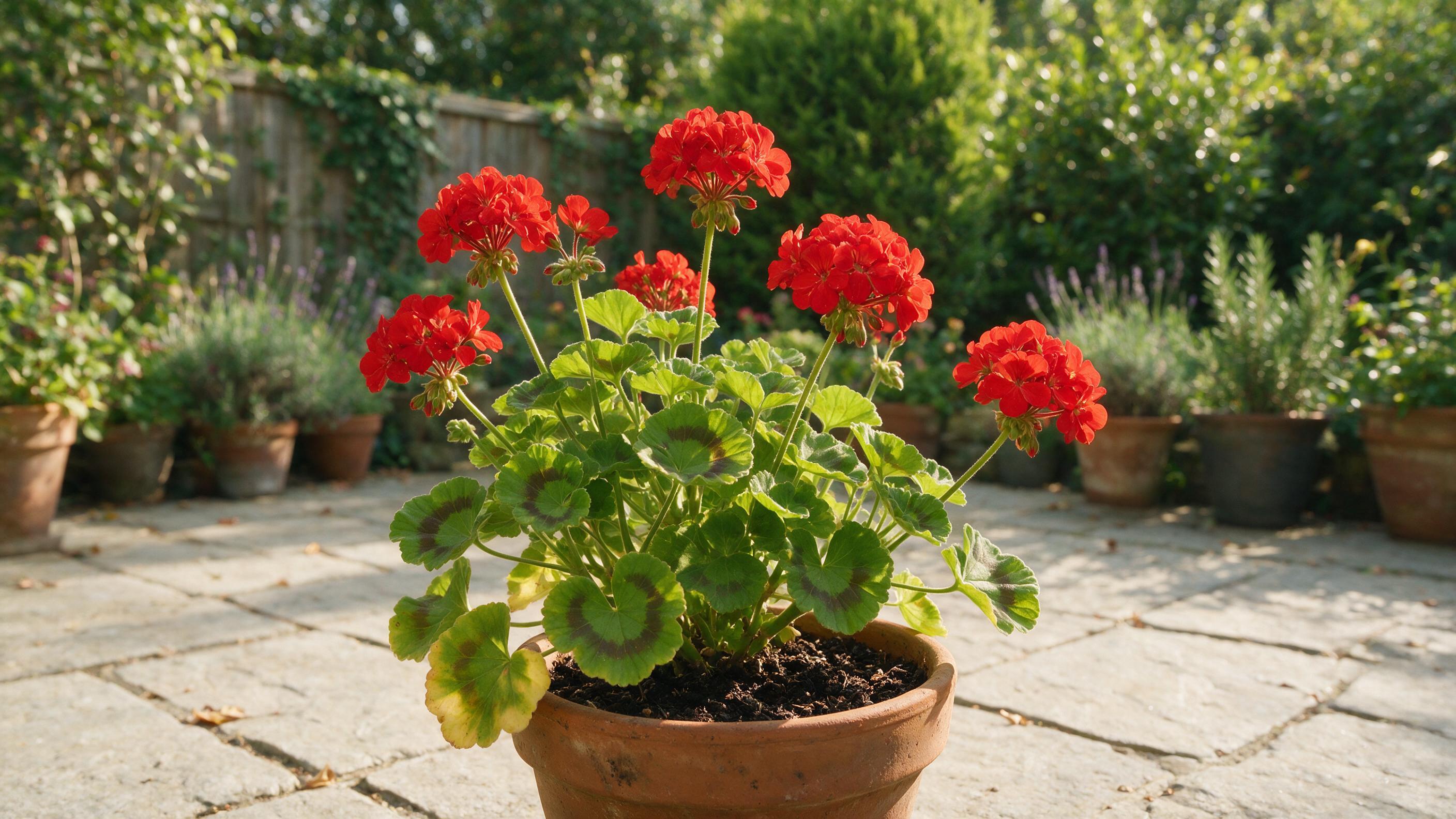
You step outside to check on your geraniums, and instead of a flush of green leaves and bright blooms, you spot a patch of yellow. It’s one of the most common frustrations for gardeners across the United States — and the good news is that it’s almost always fixable once you know what you’re dealing with.
The most common reasons for geranium leaves turning yellow include infections, lack of nutrients, pest infestation, too much water, too little water, and physical damage from exposure to frost or even herbicides. That’s a wide range of potential culprits, which is why yellow leaves can feel so confusing at first glance.
This guide walks you through every cause, how to tell them apart, and exactly what to do to get your geraniums back on track. Whether you’re growing them in containers on a patio or in garden beds, the answers are here.
What Does It Mean When Your Geraniums Have Yellow Leaves?
Yellow leaves on geraniums are the plant’s way of telling you something is off. The color change — called chlorosis — happens when leaves lose chlorophyll, the pigment responsible for green color and photosynthesis. When chlorophyll breaks down or stops being produced, yellow is what’s left behind.
In conjunction with yellow leaves, you might notice other troubling symptoms such as wilting, brown spots, and dropped leaves. Paying attention to those secondary clues is often the fastest way to narrow down the cause.
The location of the yellowing on the plant matters, too. Yellow leaves at the base usually point to overwatering or nitrogen deficiency. Yellow edges and tips more often signal underwatering or cold stress. Yellowing between the veins — while the veins stay green — is a classic sign of a nutrient imbalance. Knowing where the yellow appears gives you a real head start on diagnosis.
Geraniums (Pelargonium spp.) are among the most popular bedding plants, mostly due to their drought-tolerant nature and their lovely, bright, pom-pom like flowers. Their resilience is part of what makes yellowing leaves stand out — when these tough plants show stress, it’s worth paying attention.
Is Yellowing in Geraniums Always a Sign of a Problem?
Not always. Some yellowing is completely normal and nothing to worry about. Geraniums will sometimes drop underperforming leaves as they get older. Those at the bottom of the plant, likely shaded by the upper foliage, are often candidates for the plant to self-prune. The plant moves nutrients from the lower leaves to the upper leaves, causing the old leaves to yellow and eventually drop off. It’s natural and nothing to worry about.
Seasonal changes also play a role. Hardy geraniums will be dormant in the winter, so yellow leaves in fall are to be expected. If you’re growing a hardy perennial variety and you notice yellowing as temperatures drop in autumn, that’s the plant entering its natural rest cycle — not a distress signal.
The key question to ask yourself is: is the yellowing isolated to a few old, lower leaves, or is it spreading to newer growth and multiple parts of the plant? Isolated lower-leaf yellowing on an otherwise healthy plant is usually just normal aging. Widespread or rapidly spreading yellowing calls for a closer look.
Pro Tip: Before diagnosing a problem, check whether the yellow leaves are old and lower on the stem. If the rest of the plant looks healthy and is producing new green growth, you may simply be watching natural leaf turnover.
Watering Issues Causing Geranium Yellowing
Overwatering just might be the most common reason for geranium leaves turning yellow. Annual geraniums dislike wet feet, and prolonged exposure to standing water can contribute to root rot. All the extra moisture in the soil smothers and subsequently rots plant roots. In time, the affected plant’s leaves turn yellow, die, and drop off.
One of the most common causes of yellowing leaves is too much moisture or overwatering. Generally, on overwatered plants, the bottom portions of geraniums have yellow leaves. They may also develop pale looking water spots. If you press on those leaves and they feel soft or limp rather than firm, overwatering is almost certainly the issue.
Underwatering can cause yellowing, too, though it looks different. Yellowing due to underwatering isn’t common but can happen during prolonged dry spells. When this happens, yellowing typically starts at the leaf edges and tips. Geranium leaves with yellow edges or yellow-tipped leaves are usually attributed to a lack of water or dehydration. While geraniums are drought-tolerant, they do need some water.
Drainage is just as important as watering frequency. Drainage is a fundamental aspect of plant care, especially for geraniums. When a pot or planting area lacks adequate drainage, it leads to water accumulating at the bottom, creating an environment conducive to waterlogging and causing the leaves to turn yellow.
The simplest watering rule: stick your finger in the soil. If it feels dry an inch down, it’s time to water. Geraniums should be watered at the base of the plant, avoiding the leaves, which helps prevent fungal infection.
Pro Tip: If you grow geraniums in decorative pots, check the drainage holes — some decorative pots don’t have any or only one small hole. Repotting into a container with adequate drainage can solve chronic yellowing almost overnight.
Light Conditions Behind Geranium Yellowing
Geraniums are sun-loving plants requiring at least six to eight hours of direct sunlight daily to thrive. The leaves may turn yellow if your geraniums are not receiving adequate sunlight. This is a particularly common problem for container geraniums that get moved to shaded patios or porches during summer entertaining.
Geraniums are sun-loving plants that require a sufficient amount of sunlight to thrive. When they do not receive enough sunlight, their chlorophyll production decreases, resulting in yellowing leaves. In practical terms, a geranium sitting in a north-facing spot or under a porch overhang for most of the day is likely to struggle.
Too much sun can also be an issue in certain climates. Too much sunlight, normally only a problem in areas with extremely hot climates, may cause plants to bleach out and look pale, which may be mistaken for yellowing. If you’re gardening in the Southwest, Florida, or other hot-summer regions, select a location where the plant gets morning sun and afternoon shade.
To remedy insufficient light, place your geraniums in a location with sufficient sunlight. If they’re potted, consider moving them to a sunnier spot or investing in artificial grow lights if natural sunlight is limited. You can also use a plant identification app to confirm your geranium variety and its specific light preferences.
Soil, Nutrients, and Root Health Causing Geranium Yellowing
Nutrient deficiencies are one of the most overlooked causes of yellow geranium leaves, especially in container plants where nutrients get depleted over time. When geranium leaves turn yellow, it is often a sign of a nutrient deficiency. Plants require a balance of essential nutrients to thrive, and any imbalance can result in visible symptoms such as yellowing leaves.
The three main deficiencies to watch for are nitrogen, iron, and magnesium. One common cause of yellowing leaves in geraniums is a lack of nitrogen — an essential nutrient that promotes healthy leaf growth and overall plant vigor. When there is a deficiency of nitrogen, the leaves may turn yellow from the bottom up. Another potential cause is a lack of iron or magnesium. Iron deficiency can result in interveinal chlorosis — yellowing between the veins — while magnesium deficiency can cause general leaf yellowing.
The most common nutrient deficiency in geraniums is magnesium, which is essential for photosynthesis. Magnesium deficiency is usually caused by poor soil quality or can be depleted by having soil that is acidic (low pH). If magnesium deficiency is the culprit, Epsom salts are a good source of magnesium and can be added to the soil or diluted and sprayed on the leaves.
Geranium plants should be fertilized with a complete, water-soluble fertilizer (preferably one with micro-nutrients) at least every third watering or once monthly. Not only will fertilizer help prevent yellow leaves on geraniums, but it will also help the plant to grow bigger faster with more blooms.
Soil pH also affects nutrient availability. If you’re unsure about the nutrients and pH levels in your soil, soil testing may be advisable — particularly for new planting beds. Your local USDA cooperative extension service can often process soil tests at low cost and give you region-specific recommendations.
Root health ties directly into nutrient uptake. Well-drained soil is crucial for geraniums to thrive. Without it, your plants may struggle to absorb nutrients effectively. Even if you’re fertilizing correctly, compacted or waterlogged soil can block roots from actually taking up what you’re applying.
Pro Tip: For container geraniums, refresh the potting mix every season. Old mix breaks down, loses structure, and becomes nutrient-depleted — even with regular fertilizing.
Environmental Stress Triggering Geranium Yellowing
Geraniums are warm-weather plants, and temperature swings are a real stress trigger. Water or air temperature that is too cool can result in geranium yellow leaves. Geraniums are a warm-weather plant and they do not deal with cool weather well. Cold snaps in the spring or extended cool weather, especially cool, wet weather, can cause geraniums with yellow leaves.
Geraniums are sensitive to cold temperatures. Their leaves can become yellow and even damaged if exposed to chilly conditions or frost. To protect your geraniums from cold weather, bring potted geraniums indoors, cover garden bed plantings with frost cloth, or move them to a warmer location.
Herbicide exposure is a less obvious but surprisingly common cause of yellowing, particularly in suburban neighborhoods. Yellowing leaves can occur as collateral damage from nearby weed killer applications. Broadleaf herbicides used on patios and sidewalks to kill weeds growing in the cracks may drift onto your geraniums. Even DIY weed killers made with common household chemicals or a flame weeder used on a nearby gravel path can cause leaves to yellow.
Limit the use of weed killers, whether commercial or DIY, near your garden beds, and be aware of the prevailing wind direction when planting if you know a neighbor uses these products. If you suspect herbicide drift, there’s unfortunately little you can do to reverse the damage — but removing the affected leaves and improving overall plant care gives the geranium the best chance of pushing out healthy new growth.
If you’re gardening in a region with strong seasonal winds, pairing geraniums with wind-tolerant companion plants as a windbreak can reduce environmental stress significantly.
Pests and Disease Leading to Geranium Yellowing
Common pests like aphids and spider mites sometimes target annual geraniums. Besides the aphids and (tiny!) spider mites themselves, look for evidence of the sticky honeydew and fine webbing that each respective pest leaves behind.
Aphids are sap-sucking pests that can cause geranium leaves to yellow and deform. They often cluster on the undersides of leaves and can be managed by introducing natural predators or using insecticidal soaps. Also inspect for whiteflies, spider mites, and other pests, which may require specific insecticides or cultural controls.
Disease is a more serious concern. Geraniums are susceptible to several fungal diseases, including botrytis blight, bacterial leaf spot, and Pelargonium rust. These diseases can cause the leaves of your plant to turn yellow or brown and may also affect the stems and flowers.
Verticillium is a fungal infection that can cause stunted growth, wilting, and bright yellow leaves. It presents with leaves that turn yellow and wilt, often starting at the base and moving upwards. Infected plants should be removed and destroyed, and soil should be solarized to kill the remaining pathogens.
Bacterial blight is another serious threat. A bacterium that only attacks geraniums, Xanthomonas campestris pv. pelargonii, causes brown blotches with yellowing borders on geranium leaves. Like verticillium wilt, bacterial blight is generally a plant death sentence — remove and dispose of affected plants promptly to protect others nearby.
When watering, avoid splashing plant leaves, since this is a common cause of pathogen spread. Also, space plants so that light and air can circulate around them. For minor fungal issues, practice good sanitation by removing affected leaves, providing adequate air circulation, and using fungicides if necessary.
How to Diagnose Why Your Geraniums Are Turning Yellow
Good diagnosis starts with observation. Rather than guessing, work through the likely causes systematically by checking a few key things before reaching for any treatment.
- Check where the yellow appears. Bottom leaves only? Likely overwatering or nitrogen deficiency. Leaf edges and tips? Underwatering or cold stress. Yellowing between veins with green veins intact? Iron or magnesium deficiency. Spreading spots with lesions? Possibly disease.
- Feel the soil. An overwatered geranium often presents with leaves that are not only yellow but also limp or soft to the touch. The soil may appear waterlogged, and there could be signs of root rot, such as a foul smell coming from the soil.
- Inspect for pests. Start with a visual inspection of the leaves and stems, looking for any unusual spots or insects. Flip leaves over to check undersides for aphids, mites, or whitefly eggs.
- Assess light exposure. Count the hours of direct sun your plant receives. If it’s under four hours, light is likely a contributor.
- Consider recent events. Did temperatures drop suddenly? Was weed killer applied nearby? Did you recently repot or transplant? These events can trigger stress yellowing.
- Test your soil. Consider using soil test kits, which can help you determine the nutrient levels in your soil, guiding you on what your geraniums might be lacking. You can also send samples to your area extension agency to check for specific nutrient deficiencies.
Using a plant care app on Android can also help you photograph symptoms and get a second opinion on potential diseases or pest damage.
Key Insight: Work through the checklist in order — watering issues are far more common than disease. Treat the most likely cause first before moving on to more complex interventions.
How to Fix a Geranium That Is Turning Yellow
Once you’ve identified the cause, here’s how to address each one effectively.
For overwatering: Allow waterlogged plants to dry out and, before watering, check the top few inches of soil to determine whether water is needed. Use your finger to gauge moisture levels. If root rot has set in, remove the plant from its pot, trim away any black or mushy roots with clean scissors, and repot in fresh, well-draining mix.
For underwatering: If the soil feels overly dry or a potted geranium feels extremely light for its size, give it a slow, deep watering. Water until the soil feels moist as deep as your finger reaches.
For nutrient deficiency: Apply a balanced, general-purpose flower fertilizer following the package directions. The plant should start to green up or at least stop yellowing within a week or two. Don’t succumb to the urge to overfertilize, which leads to other problems. For magnesium specifically, Epsom salts are a good source of magnesium and can be added to the soil or diluted and sprayed on the leaves.
For light problems: Move potted geraniums to a sunnier spot. For in-ground plants, trim back overhanging branches or neighboring plants that are blocking light. In very hot climates, shift to a spot with morning sun and afternoon shade.
For pest infestations: Pick off small infestations by hand or control with an insecticidal soap or peppermint spray. For organic control, consider using insecticidal soap or neem oil, which are effective and safe for the environment.
For disease: When it comes to highly infectious diseases, it’s game over for your plants. Remove and discard them and instead focus on prevention moving forward. For less severe fungal issues like early-stage botrytis, remove affected leaves, improve airflow, and apply an appropriate fungicide.
For yellow leaves themselves: Leaves that are yellow quickly turn brown and fall off. It’s best to remove them when you see them turning yellow. Removing them keeps the plant tidy and directs energy toward healthy growth. Note that once a leaf has turned yellow, it won’t regain its green color. However, once you identify the cause and take immediate care, new growth can remain green, and further yellowing of other leaves can be prevented.
If you’re dealing with a persistent or unidentified problem, exploring the range of plant types and their care requirements can help you understand whether a different variety might be better suited to your growing conditions.
How to Prevent Geranium Yellowing Going Forward
Prevention is simpler than treatment. Building good habits into your regular care routine means you’ll rarely have to troubleshoot yellow leaves again.
- Water on a soil-check basis, not a calendar. Rather than water geraniums on a schedule, it’s preferable to check the soil. When the top 1 inch is dry, then they need to be watered.
- Use well-draining soil and containers. Geraniums prefer to be grown in well-drained soil, which helps prevent overwatering. Add perlite to potting mixes to improve drainage if needed.
- Fertilize consistently through the growing season. If your geranium leaves are turning yellow due to a lack of nutrients, fertilize your plant. Geraniums should be fertilized once a month during the growing season. You can use a liquid fertilizer or slow-release pellets.
- Give them enough sun. For consistently healthy foliage, your annual geraniums need plenty of sunlight, a regular watering schedule, and well-draining soil.
- Maintain good airflow. Good air circulation and routine disease and insect pest checks are a big help, too. Space plants adequately and avoid crowding them against walls or fences.
- Protect from cold snaps. As hardy geraniums enter dormancy in the fall, some yellowing is natural. However, protect them from sudden cold snaps in the spring with frost cloths or by bringing potted plants indoors.
- Inspect regularly for pests. Regular monitoring is crucial for the early detection of pest infestations. Catching aphids or spider mites early — before populations explode — makes control much easier.
- Avoid herbicide drift. Be mindful of where and when you apply weed killers, and communicate with neighbors if their herbicide use is affecting your garden.
If you enjoy growing other flowering plants alongside your geraniums, check out companion planting strategies and explore low-light houseplants for shaded spots where geraniums won’t thrive.
FAQ
Why Are Only the Bottom Leaves of My Geranium Turning Yellow?
One of the most common causes of yellowing leaves is too much moisture or overwatering. Generally, on overwatered plants, the bottom portions of geraniums have yellow leaves. However, it can also be a sign of nitrogen deficiency, since the lower leaves on geranium plants starting to yellow may indicate a nitrogen deficiency — this sometimes causes plants to cannibalize missing nutrients from their own older leaves.
Can Yellow Geranium Leaves Turn Green Again?
Once a leaf has turned yellow, it won’t regain its green color. However, once you identify the cause and take immediate care, new growth can remain green, and further yellowing of other leaves can be prevented. Remove yellowed leaves to keep the plant tidy and encourage healthy new growth.
How Often Should I Water Geraniums to Prevent Yellow Leaves?
There’s no single answer — it depends on your climate, container size, and season. The best approach: the frequency of watering depends on several factors, including soil type, climate, and container size. A general guideline is to water when the top inch of the soil feels dry. Overwatering can lead to root rot, so always ensure proper drainage.
What Fertilizer Is Best for Yellow Geranium Leaves?
Yellowing leaves may indicate a lack of essential nutrients. Geraniums require a balanced fertilizer with adequate amounts of nitrogen, phosphorus, and potassium. Consider using a slow-release fertilizer or a water-soluble fertilizer to provide necessary nutrients. A fertilizer labeled for flowering plants or annuals is a reliable choice.
Why Are My Geranium Leaves Turning Yellow in Summer?
Summer yellowing is often caused by heat stress, inconsistent watering, or nutrient depletion in container soil. Factors such as inadequate sunlight or cold temperatures can stress the plant, resulting in yellow leaves. Ensuring optimal light conditions and protecting geraniums from frost are vital steps. In very hot regions, afternoon shade and consistent watering are your best defenses during peak summer heat.
Should I Remove Yellow Leaves From My Geranium?
Yes. Remove any remaining yellow or diseased leaves, as they may continue to sap energy from the plant. Use clean and sharp pruners to make precise cuts just above healthy buds or leaves. Pruning encourages new growth and helps maintain a compact and attractive shape.
Could My Geranium’s Yellow Leaves Be From a Disease?
Geraniums can be susceptible to diseases like bacterial leaf spot, fungal infections, or viral diseases, which can cause yellowing and browning of leaves. Remove and destroy infected leaves or plants, practice good sanitation, and consider using appropriate fungicides or treatments to control and prevent disease spread. If the entire plant is rapidly declining, removal is often the safest option to protect nearby plants.