Why Are My Dahlia Leaves Turning Yellow? Causes, Fixes, and Prevention

September 3, 2026
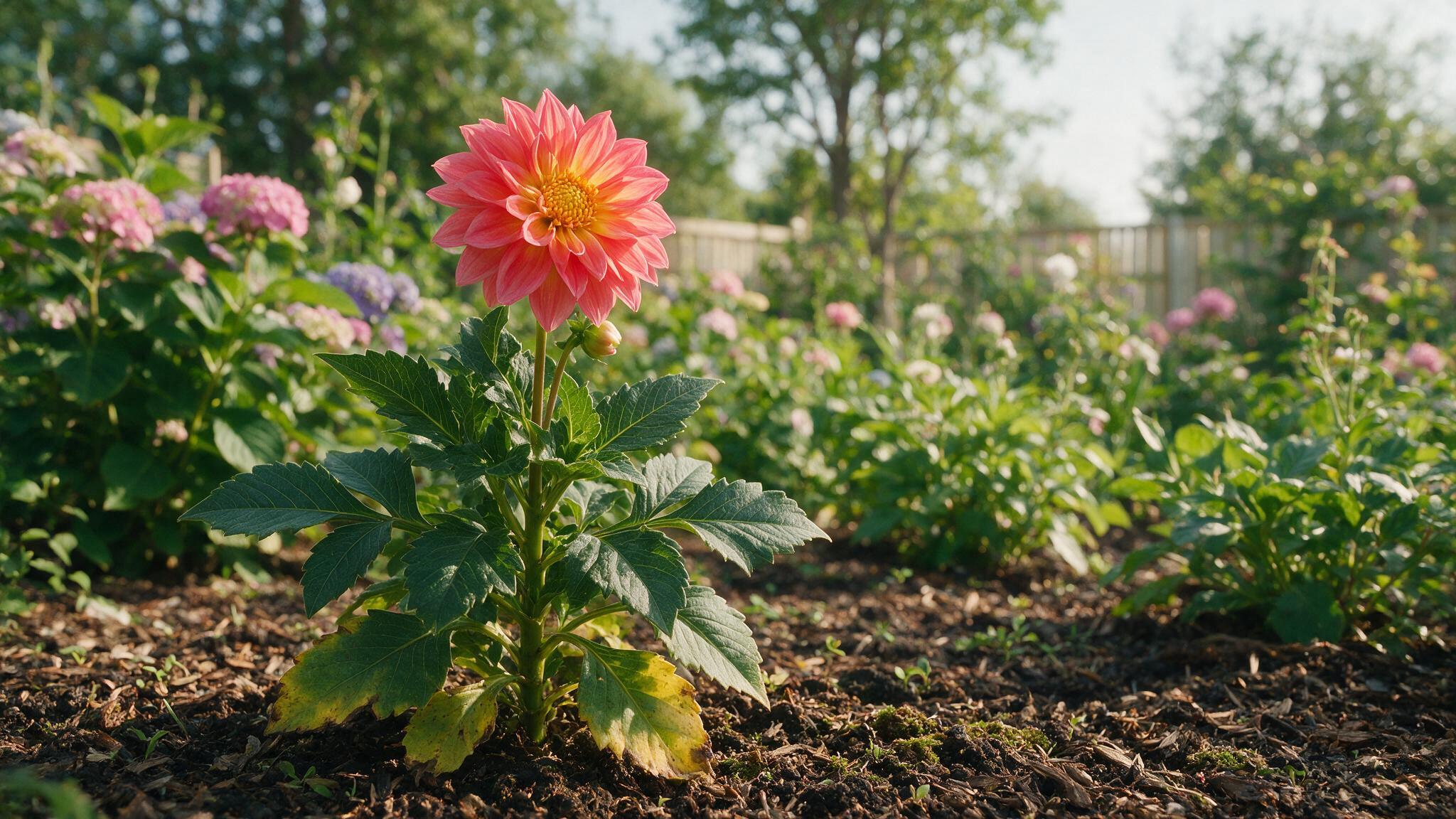
You head out to check on your dahlias and notice it right away — the leaves that should be deep, glossy green have started fading to yellow. It’s one of the most common concerns among dahlia growers across the United States, and the good news is that it’s usually fixable once you know what you’re dealing with.
Dahlia leaves turn yellow for many different reasons, ranging from simple watering mistakes to nutrient shortfalls, pest pressure, and even natural seasonal changes. The tricky part is that most of these causes look similar at first glance. This guide walks you through every major cause, how to tell them apart, and exactly what to do about each one — so you can get your plants back on track and enjoy those big, colorful blooms all season long.
What Does It Mean When Your Dahlia Leaves Are Turning Yellow?
When dahlia leaves turn yellow — a condition called chlorosis — it signals that something is interfering with the plant’s ability to produce chlorophyll. Chlorophyll is what gives leaves their green color and powers photosynthesis, so when production drops, the foliage fades.
Yellowing dahlia plants are common, and the condition may be caused by disease, insect infestation, improper or poor soil, or general site conditions. Because several different problems can produce the same visible symptom, you’ll need to look at the full picture — where the yellowing starts, how it spreads, and what else is going on with the plant — before you can pinpoint the cause.
Botanically speaking, “chlorotic” is the term used to describe a plant leaf that lacks chlorophyll. When green tissue turns yellow, it’s an indication that something has disrupted the process of photosynthesis, and it can be caused by a number of issues. Paying close attention to the pattern of yellowing is your single best diagnostic tool. You can also use a plant identification app to help cross-reference symptoms if you’re unsure what you’re seeing.
Is Yellowing in Dahlias Always a Sign of a Problem?
Not every yellow leaf is a red flag. Some yellowing is completely normal, and learning to tell the difference will save you a lot of unnecessary worry — and unnecessary treatment.
Yellowing leaves on a garden dahlia can be misleading. If it’s just the older leaves turning yellow and dropping, it’s likely the plant’s way of saying it’s getting on in years. But if the yellowing is widespread or affects new growth, your dahlia is waving a distress flag.
Keep in mind that if yellowing occurs towards the end of the growing season, it is likely due to the plant getting ready for its normal dormancy period. In most US growing zones, dahlias begin winding down in late summer and fall as temperatures drop and day length shortens. A few yellowing lower leaves at that time of year are nothing to panic about.
Where you should pay close attention is when yellowing appears early in the season, spreads quickly, affects new growth, or comes with other symptoms like wilting, spots, or sticky residue. Those patterns point to a real problem that needs your attention.
Pro Tip: Before treating anything, take a photo of the affected leaves and note where on the plant the yellowing is starting — bottom up, top down, or scattered. That single detail narrows down the cause faster than anything else.
Watering Issues Causing Dahlia Leaves to Turn Yellow
Dahlias have specific watering requirements, and too much or too little can cause the leaves to turn yellow. They need even, consistent watering in order to thrive — they should never dry out, but they should never be drenched. Getting this balance right is one of the most important things you can do for your plants.
Overwatering
Excessive soil moisture is a leading cause of yellow dahlia leaves. Overwatered soil suffocates roots, impairing nutrient uptake and causing lower leaves to yellow first. Mushy or rotting tubers, a musty smell, and floppy, pale stems are red flags.
If your yellow dahlia leaves are droopy, soft to the touch, and have brown tips, you’re probably overwatering. Tuberous roots can get waterlogged quickly, and their vascular systems can be clogged by muddy conditions. Overwatering also opens the door to issues like root and stem rot.
Underwatering
Growing in full sun in mid-summer, dahlias need regular watering. If leaves are yellowing, brown, or have crisp edges, or if the soil is dry or even compacted, these are all signs of underwatering.
If leaves are crunchy and dry, you may be underwatering your dahlias. Tuberous roots are highly susceptible to drought, and the first above-ground sign of distress will be dying yellow foliage that curls under at the margins.
How Much Water Do Dahlias Actually Need?
Dahlias do best with the equivalent of about 1 inch of water per week, provided the soil is well-draining. If the soil is clay-heavy, it won’t drain fast enough, so even an inch per week could still be too much.
Depending on your grow zone and precipitation rate, this means watering somewhere between one and three times per week. Ideally, use a slow soaker hose or a gentle spray as close to the soil as possible, and water in the morning so leaves have a chance to dry before nightfall.
Light Conditions Behind Dahlia Leaves Turning Yellow
Dahlias require 6 to 8 hours of direct sunlight daily. They may become weak and susceptible to diseases without enough sunlight. However, too much direct sunlight can also lead to dahlia leaves turning yellow.
Too little light is a common issue for US gardeners who plant dahlias near fences, under trees, or on the north side of a building. When a dahlia doesn’t get enough sun, it can’t photosynthesize efficiently, and the foliage gradually loses its color. The stems may also become leggy and weak.
Too much sun can cause leaves to become dry and crunchy. If your dahlias are getting more than 8 hours of direct sunlight per day, moisture may be evaporating faster than the plant can replace it. This is especially common in hot, dry climates like the Southwest and Southern Plains.
If there is extreme heat and dry weather, even sun-loving plants like dahlias can be scorched. They need consistent watering to thrive. In the hottest climates, you may want to choose a location where they receive some shade or protection during the most extreme heat of the day. If you’re growing in containers, you have the advantage of being able to move them to a more sheltered spot during heat waves. For more ideas on plants that handle challenging light conditions, see our guide to the best houseplants for low-light areas.
Soil, Nutrients, and Root Health Causing Dahlia Leaves to Turn Yellow
Dahlias are heavy feeders and quickly show signs of distress if nutrients are lacking, particularly nitrogen. Nitrogen deficiency typically appears as yellowing leaves, stunted growth, and less vigorous blooms. Deficiency in iron, magnesium, or potassium can also trigger chlorosis.
The pattern of yellowing tells you which nutrient is most likely missing:
- Nitrogen deficiency: Yellowing leaves starting from the bottom of the plant could be a sign of nitrogen deficiency. A lack of nitrogen causes yellow dahlia leaves starting from the tips and moving toward the base of the leaf, because nitrogen deficiency affects older leaves first.
- Iron deficiency: Iron aids in the production of chlorophyll and helps with energy transfer within the plant. When there is an iron deficiency, dahlia leaves can turn yellow with the veins remaining green. This is because iron deficiency affects new leaves first.
- Magnesium deficiency: Magnesium plays a key role in the photosynthetic process and is the most common nutrient deficiency in the dahlia garden. If you notice older leaves suffering before new growth, your soil may be lacking magnesium.
Soil pH and Drainage
The preferred soil acidity for dahlias is a pH of 6.5. Clay-heavy soil affects drainage, and when the soil doesn’t drain fast enough, the result is plant stress. In dahlias, the leaves turn yellow, so the first check to do is a pH test — if it’s above 6.5, the soil likely isn’t draining as well as it needs to.
Leaves turning yellow with veins remaining green indicate an iron deficiency causing a lack of chlorophyll production. This problem can be traced back to soil acidity, because when the soil rises above 6.5 pH, iron becomes insoluble. If you’re fertilizing regularly and still not seeing improvements, it’s likely because the iron can’t be absorbed by the plant due to the soil acidity.
Heavy clay soil does not make for good growing conditions for dahlias. Dahlias grow best in well-drained soil that’s loose and crumbly. They are particularly unhappy in garden beds with a heavy clay content since their tuberous roots are easily clogged and highly susceptible to rot.
Fixing Nutrient Deficiencies
Always start with a soil test before adding fertilizers. Don’t guess — a soil test is like a blood test for your plant. It will tell you what’s missing and keep you from blindly throwing supplements at your dahlia.
To address iron deficiency, you can add iron sulfate or chelated iron to the soil. These products provide a quick source of iron for the plant, helping it regain its healthy green color. For magnesium, if you notice a general fade to yellow, it’s time to consider Epsom salts — about a tablespoon per gallon of water should do the trick.
Key Insight: If you’re using wood-based mulch around your dahlias, be aware that a nitrogen deficiency caused by the natural decomposition of wood can cause yellowing. In that case, a targeted nitrogen boost may be exactly what your plants need.
Environmental Stress Triggering Dahlia Leaves to Turn Yellow
Dahlias can be sensitive to extreme heat, cold snaps, or harsh winds. For US gardeners, this covers a wide range of scenarios — from summer heat waves in Texas and Arizona to late spring cold snaps in the Midwest and Northeast.
When the weather suddenly becomes too hot or too cold, it can shock the plant, causing its leaves to turn yellow. Temperature fluctuations can also affect the plant’s ability to absorb nutrients and water, leading to nutrient deficiency that manifests as yellowing leaves.
Dahlias thrive in areas with moderate humidity levels. High humidity can create a favorable environment for fungal diseases, which can cause yellowing of leaves and other symptoms. In humid regions like the Southeast, keeping good air circulation around your plants becomes even more important.
Wind is another factor that often gets overlooked. Strong, drying winds pull moisture from leaves faster than roots can replace it, which stresses the plant and can trigger yellowing. Planting near a windbreak or fence can help in exposed areas. You might also explore our list of wind-tolerant plants if you’re gardening in a consistently breezy location.
Pests and Disease Leading to Dahlia Leaves Turning Yellow
Microscopic pests such as spider mites, aphids, and thrips suck sap from leaves, causing mottling, yellow patches, or curling. Severe infestations can cover leaves in sticky residue or fine webbing.
Common Pests to Watch For
If your dahlia leaves are mottled yellow, curled, and accompanied by fine, sticky webs, spider mites may be to blame. Mites usually work from the ground up, first targeting stems and lower foliage near the soil line. Because spider mites thrive in dry, dusty conditions, keeping your dahlia leaves slightly moist can help discourage them.
If the leaves appear stippled with yellow and have a sticky black substance attracting ants, aphids are likely the cause. These rapidly multiplying, pear-shaped insects can cause significant damage in a short time and should be dealt with promptly.
The potato leafhopper is prone to attacking dahlia plants in early spring. These feed on the underside of leaves, cause leaves to yellow and curl, and when a dahlia is under attack from leafhoppers, it will not bloom.
Fungal and Viral Diseases
Dahlia leaves may yellow due to diseases such as root rot, powdery mildew, or Verticillium wilt. Fungal infections often arise from persistently wet soil, contaminated tools, or poor air circulation.
Verticillium wilt is a soil-borne fungal disease that invades the roots and spreads through the plant’s vascular system, hindering water and nutrient transport. The fungi responsible, primarily Verticillium dahliae, can persist in the soil for years, making management challenging. Infected plants exhibit wilted, yellowing, and stunted leaves, often on one side of the plant or a single branch.
Smut is a fungal disease that causes yellow mottling in leaves. Mosaic diseases cause irregular yellow patches and spots on leaves. Both are spread by insects and contaminated tools, so good garden hygiene goes a long way toward prevention.
Aster yellows is a disease caused by a phytoplasma, a type of bacteria-like organism. It affects a wide range of plants, including asters, dahlias, and various vegetables. Transmitted by leafhoppers, it disrupts normal plant growth, leading to stunted and distorted development.
Important Note: There is no cure for Aster yellows or mosaic virus once a plant is infected. Remove and destroy affected plants promptly to prevent spread to healthy dahlias nearby.
How to Diagnose Why Your Dahlia Leaves Are Turning Yellow
Good diagnosis is all about reading the clues your plant gives you. Work through these steps before reaching for any treatment:
- Check soil moisture first. Stick your finger 2 to 3 inches into the soil. If it’s soggy, reduce watering or improve drainage. If dry, water deeply.
- Look at where the yellowing starts. Yellowing starting at the base suggests a nitrogen shortage. Interveinal chlorosis — where leaves turn yellow between the veins — points to iron deficiency. Leaf tips curling and turning brittle may indicate a magnesium lack.
- Inspect for pests. Look for insects, sticky residue, webbing, or fungal spots. Check the undersides of leaves, where most pests hide.
- Assess the light and location. Count how many hours of direct sun the plant receives. Consider whether recent weather has been unusually hot, cold, or windy.
- Check the tubers if nothing else adds up. If plants are not perking up, gently dig up a tuber to check for firmness and signs of rot.
The table below summarizes the most common causes and their distinguishing symptoms to help you narrow things down quickly:
| Cause | Where Yellowing Starts | Other Clues |
|---|---|---|
| Overwatering | Lower leaves first | Droopy, soft leaves; mushy tubers; soggy soil |
| Underwatering | Scattered; leaf edges | Dry, crispy leaf margins; dry, compacted soil |
| Nitrogen deficiency | Older/lower leaves first | Pale overall color; stunted growth |
| Iron deficiency | New/upper leaves first | Veins stay green (interveinal chlorosis) |
| Magnesium deficiency | Older leaves first | Yellow between veins; leaf curling |
| Too much sun/heat | Upper/exposed leaves | Dry, crunchy texture; browning edges |
| Spider mites | Lower stems upward | Fine webbing; mottled, stippled texture |
| Aphids | New growth | Sticky residue; ants present; distorted leaves |
| Verticillium wilt | One side of plant | Wilting; stunted; persists despite watering |
| Natural senescence | Oldest/lowest leaves | Late season; rest of plant looks healthy |
Using a reliable plant identification app for Android can also help you cross-reference what you’re seeing with known disease and deficiency patterns.
How to Fix a Dahlia That Is Turning Yellow
Yellowing leaves might be the first indication that something is wrong with your dahlias, but they aren’t necessarily a death sentence. Most causes are reversible with the right response. Here’s how to address the most common culprits:
Fix Watering Problems
If overwatering is the issue, stop watering immediately and let the soil dry out. Don’t water your dahlia plants too frequently. The soil should be well-drained. You can also improve drainage by adding organic matter to the soil. If the tubers have started to rot, you may need to dig them up, trim off any soft, diseased sections, and replant in fresh, well-amended soil.
If underwatering is the problem, increase the frequency and amount of water you provide, being careful not to overcompensate and cause waterlogging. Adding a 2- to 3-inch layer of organic mulch around the base of the plant helps retain moisture between waterings.
Correct Nutrient Deficiencies
To address nutrient deficiencies, start by testing your soil to determine which nutrients are in short supply. Then apply a high-quality, balanced fertilizer formulated for dahlias, following the instructions on the package. You can also supplement with specific nutrient-rich amendments, such as compost or bone meal, to address any imbalances.
For iron deficiency specifically, iron deficiency shows as yellowing between green veins, especially in new growth. For a quick fix, apply a chelated iron product. Also check and correct soil pH, since when the soil rises above 6.5 pH, iron becomes insoluble.
Treat Pests
A natural way to remove aphids is to regularly spray the undersides of affected leaves with a strong stream of water. For more persistent infestations, horticultural oils and soaps or neem oil are also effective at keeping sucking pests away from your prized dahlia plants.
Insecticidal soap is the best solution for ridding dahlias of problem pests, but if you have none on hand, a good spray of water to rinse the majority off is better than leaving them all there to feast on the plant’s leaves.
Address Disease
To manage powdery mildew, increase air circulation, reduce overhead watering, and prune affected areas. Apply fungicides or homemade solutions like baking soda sprays. Neem oil and horticultural oils can also suppress the spread. Ensure good garden hygiene to prevent recurrence.
Start by carefully pruning any severely damaged or yellowing leaves. This will help the plant redirect its energy to healthy growth and prevent the spread of any underlying issues. Always sterilize your pruning tools between cuts when disease is present.
How to Prevent Dahlia Leaves from Turning Yellow Going Forward
Prevention is far easier than treatment. Building good habits into your routine from the start of the season gives your dahlias the best shot at staying healthy and green all the way through to fall.
- Start with the right soil. Ensure your soil is well-draining and rich in organic matter. Amend the soil with compost or other organic materials before planting your dahlias to create the ideal growing medium.
- Get the pH right. Conduct a soil test to determine your soil’s pH. Dahlias prefer slightly acidic conditions, with an ideal pH around 6.5. To adjust the pH, add lime to raise it or peat moss to lower it, depending on your test results.
- Water consistently and correctly. Water deeply but allow the soil to dry slightly between waterings. Water at the base, not overhead, and always water in the morning.
- Fertilize thoughtfully. Use only the recommended amount of fertilizer, and fertilize no more than once per month while the plants are growing. Avoid high-nitrogen formulas once plants are established, as they push leafy growth at the expense of blooms.
- Ensure good air circulation. Don’t crowd your dahlias. Spacing them properly reduces humidity around the foliage and makes fungal disease much less likely.
- Inspect regularly. If you devote a portion of your maintenance routine to examining leaves, employ sound cultural practices, and know what to watch for, you can get out in front of most issues.
- Use mulch wisely. Organic mulch keeps temperature and moisture levels more consistent. It won’t be exact, but it will better prevent plants from drying out or drowning. Keep mulch pulled back slightly from the base of the stem to prevent rot.
Fortunately, good care can usually keep the plant alive until it goes dormant. Dahlias are resilient when their basic needs are met, and most US gardeners find that consistent attention to watering and soil health prevents the majority of yellowing problems before they start. For a broader look at the types of plants you can grow alongside your dahlias, or ideas for companion planting strategies in your garden beds, those resources can help you build a healthier overall garden ecosystem.
FAQ
Why are only the bottom leaves on my dahlia turning yellow?
Yellowing leaves starting from the bottom of the plant is often a sign of nitrogen deficiency. It can also be a normal part of the plant’s aging process, especially later in the season. Check whether the rest of the plant looks healthy and vigorous before treating.
Can yellow dahlia leaves turn green again?
It depends on the cause. Leaves that have yellowed due to a correctable issue — like a nutrient deficiency or watering problem — may recover some color once the underlying cause is fixed. However, leaves that are fully yellow or showing tissue damage typically won’t fully revert. Pruning severely damaged or yellowing leaves helps the plant redirect its energy to healthy growth.
Should I remove yellow leaves from my dahlia?
Yes, in most cases. Removing yellowed leaves keeps the plant tidy, improves air circulation, and prevents any potential disease from spreading. Use clean, sharp scissors or pruners, and dispose of the removed leaves rather than composting them if disease is suspected.
Why are my newly planted dahlia tubers turning yellow?
If you notice your dahlias turning yellow early in their growth cycle, it could be the soil or cultural problems. New plantings are especially sensitive to waterlogged soil, which can rot tubers before they even get established. Make sure the planting site drains well and resist the urge to overwater while the tubers are still getting established.
What is the white powdery stuff on my dahlia leaves along with yellowing?
Powdery white or grayish-white fungal growth on the leaves and stems, along with yellowing or curling of leaves, is a sign of powdery mildew. Improve air circulation, reduce overhead watering, and treat with neem oil or a baking soda solution to bring it under control.
Do dahlias need full sun to avoid yellowing?
Dahlias require 6 to 8 hours of direct sunlight daily. They may become weak and susceptible to diseases without enough sunlight. That said, in very hot US climates — think the Southwest or Deep South — some afternoon shade during peak summer heat actually helps prevent heat stress and the yellowing that comes with it.