15 Traditional Uzbek Clothing Pieces That Define Uzbekistan’s Heritage

October 19, 2026
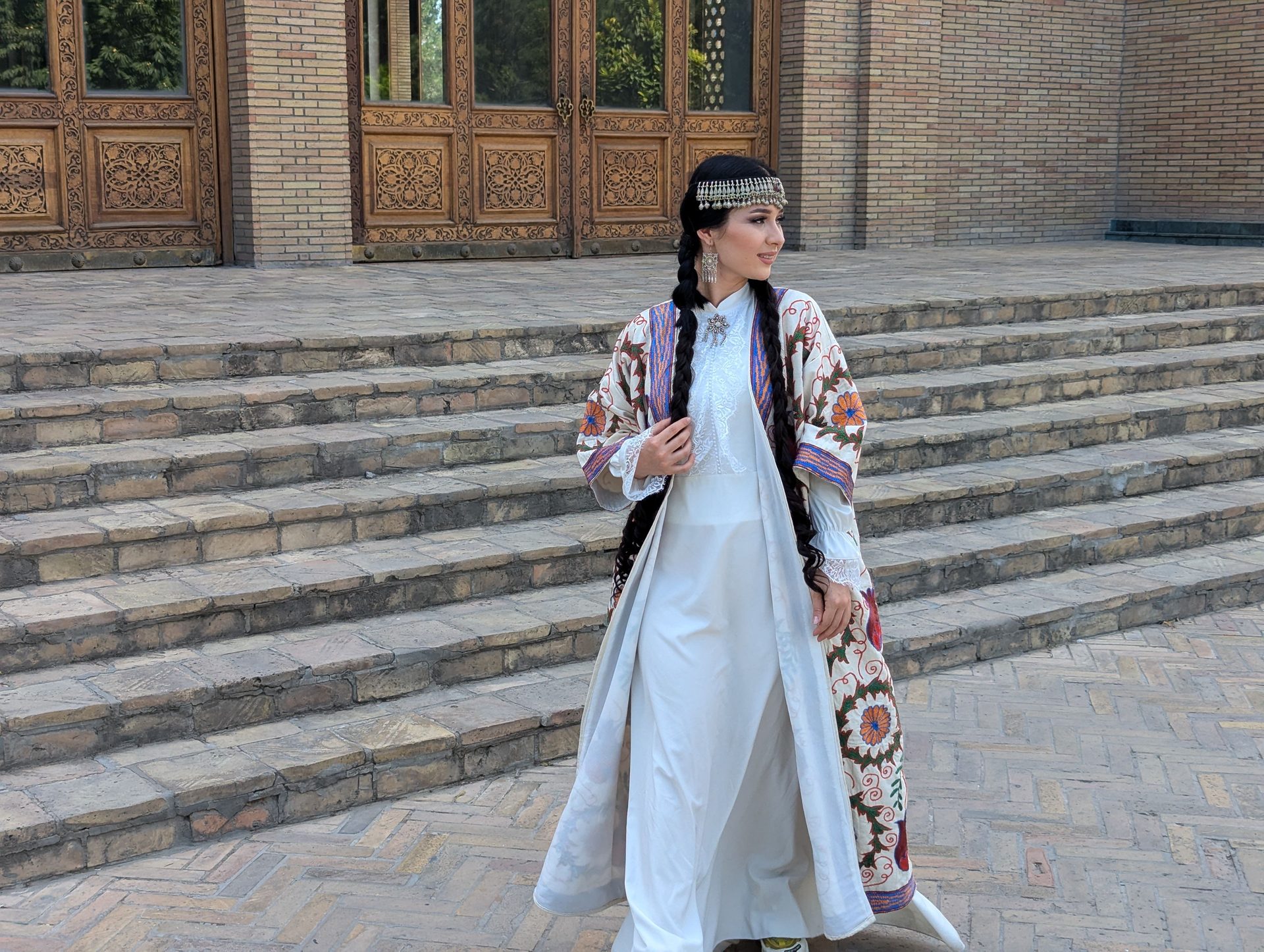
Walk through a market in Bukhara or Khiva and traditional Uzbek clothing is still easy to spot: a quilted robe draped over the shoulders, a square embroidered cap, a dress in shifting silk colors. In cities, it is no longer rare to find people in national dress worn for traditional festive events, but in the countryside it still serves as part of both everyday and weekend attire. That split between festive city wear and daily village wear is part of what makes this wardrobe so layered and regional.
By the time Uzbek dress settled into a recognizable form, it had absorbed centuries of trade and migration along the Silk Road. By the 16th–17th centuries, Uzbek dress had taken on a relatively stable form, typically multi-layered, consisting of undergarments, outer robes, and a variety of headdresses and jewellery. That same crossroads history shaped neighboring wardrobes, including the silk-driven aesthetics found in traditional Chinese clothing.
Each piece below, from the outer robe down to the belt that holds it closed, carries its own name, fabric logic, and social meaning. Here is a quick reference before the full breakdown.
| Garment | Type | Commonly Worn By |
|---|---|---|
| Chapan | Quilted outer robe | Men and women |
| Doppi | Embroidered skullcap | Men, women, children |
| Kuylak | Undershirt / tunic | Men and women |
| Kukrak burma | Pleated dress | Women |
| Lozim | Wide trousers | Women |
| Mursak | Open-front robe | Men and women |
| Kaltacha | Short robe | Men, children |
| Nimcha | Short vest-coat | Men and women |
| Ishton | Wide trousers | Men |
| Ton | Robe (regional term) | Men |
| Yachtak | Lightweight single-layer coat | Men |
| Chakman | Long outer robe | Men |
| Zarchapan | Gold-embroidered ceremonial robe | Men and women, special occasions |
| Chugurma | Fur hat | Men, winter wear |
| Kushak | Sash or belt | Men |
1. Chapan
The chapan sits at the center of traditional Uzbek clothing and is the garment most people picture first. This quilted robe, often knee-length or longer, combines warmth and style. It is loose-fitting and straight-cut without buttons or collar, and two small straps at chest level hold the overlapping front panels together to shield against harsh weather.
Beyond function, the chapan carries weight as a social gesture. Historically, chopons, called khalat in Russian sources, were given as presents to indicate fealty or approval. Gifting a chapan is a deeply rooted tradition that signifies goodwill and respect, and it is common to present one to honored guests or elders as a token of appreciation. Color choice is not random either:
- Dark colors such as black and navy are associated with maturity and wisdom, often worn by elders.
- Bright colors such as red, green, and blue symbolize youth, energy, and prosperity.
The same layering logic, where an outer robe signals status at a glance, shows up in the kimono tradition described in traditional Japanese clothing.
2. Doppi
The doppi is the skullcap that completes a traditional Uzbek outfit, and its name points to its shape. Tubeteika is derived from the Turkic word “tube”, which means “top, peak.” It is a common style of Uzbek headgear, typically square with pointed edges, though styles vary widely by region.
Doppis cross gender and age lines more than almost any other garment on this list. Tubeteika is worn by everybody, men, women, and children, and only elder women do not wear tubeteikas. Over time it took on a practical role too: the doppi, most commonly a quilted black cap with white embroidery, has largely replaced the turban as everyday headwear. For a broader look at how headwear fits into full outfits across cultures, see this clothing style overview.
Pro Tip: Doppi patterns are regional signatures. A cap from Fergana rarely matches one from Bukhara, so the embroidery itself can hint at where someone is from.
3. Kuylak
The kuylak is the base layer underneath everything else in traditional Uzbek clothing. It was the basic undergarment, a long, loose-fitting tunic-style shirt, usually made of white cotton, which highlighted the vivid colours of the outer garments and created a striking contrast between the layers.
For men, the garment served a slightly different, more utilitarian role. Kuylak is the men’s straight-cut undershirt, worn beneath the chapan and cinched with a simple belt for daily wear. This idea of a plain inner tunic anchoring a brighter outer layer has parallels in the shalwar kameez tradition covered in traditional Pakistani clothing.
4. Kukrak Burma
Kukrak burma is a more recent addition to the women’s wardrobe, and its name describes exactly how it is built. In the late nineteenth and early twentieth centuries, a new knee-length dress known as kukrak burma appeared, with the name literally meaning “gathering at the chest,” characterised by a yoke and small pleats across the upper part of the dress.
Today, when people speak of Uzbek national dress, they often have in mind the kukrak burma made from brightly coloured khan atlas fabric. Its silhouette, a fitted chest panel opening into a looser pleated body, gives it a distinct shape compared to the straight-cut kuylak worn underneath it. The same kind of fitted-bodice festive dress logic appears in embroidered regional outfits featured in traditional Indian clothing.
5. Lozim
Lozim refers to the wide trousers worn by Uzbek women, typically paired underneath a kuylak or dress. The traditional clothes of Uzbek women consisted of dresses, kuilak, and wide trousers called lozim. These loose-cut pants were often made of the same fabric as the tunic or out of complementary fabric, with the bottom gathered and decorated with embroidered braid.
Important Note: Sources do not fully agree on who wears lozim. Most ethnographic descriptions tie it to women’s dress, while the Wikipedia entry on Central Asian clothing notes that men of Uzbekistan wear the lozim with a long robe called the chakmon. The discrepancy likely reflects regional naming differences rather than a single fixed rule.
6. Mursak
The mursak is an open-front robe, and that open front is the whole point of the design. Women sometimes wore a mursak as an open-front robe that allowed the jewellery and decorative trim of the inner layers to remain visible.
It was not exclusive to women, either. A mursak robe served as upper clothing for both women and men, made long and loose like a tunic, light for summer and quilted on cotton wool for winter. That seasonal swap between a light summer cut and a padded winter version is a recurring theme across the outer-robe garments on this list, similar to layering strategies seen in traditional German clothing.
7. Kaltacha
Kaltacha is a shorter-cut robe, trimmed down from the ankle-length chapan to roughly hip or waist length. The shorter hem made it easier to move in, which is why it shows up most often as a lighter indoor layer or as a smaller version sized for children rather than a formal outer coat for cold weather or ceremony.
Where the full chapan announces status at a distance, the kaltacha works more like a practical, everyday jacket. Families often kept one in lighter cotton for warm months and a slightly padded version for cooler evenings, following the same light-versus-quilted logic used across other Uzbek outer layers.
8. Nimcha
Nimcha describes a short, sleeveless or short-sleeved vest-coat worn over the kuylak. The name itself hints at its cut, since “nim” relates to “half,” pointing to a garment that covers only the upper body rather than running the full length of a robe like the chapan or mursak.
Because it skips long sleeves, the nimcha worked well as a middle layer, adding warmth or decoration without the bulk of a full robe underneath an outer coat. Both men and women used shorter vest-style pieces like this, often in richer fabric than the plain kuylak beneath, as a way to add color without replacing the whole outfit.
9. Ishton
Ishton is the men’s counterpart to lozim, built for movement rather than display. Ishton is men’s wide trousers, narrowed at ankles, cut loose through the leg and tapered at the bottom so they could be tucked into boots.
Paired with the kuylak above and a simple sash, ishton formed the base of daily men’s dress before a chapan or ton went on top. A kuilak was put on the body as a men’s undershirt of a straight cut, along with an ishton, with feet shod in boots made of thin leather. That three-piece foundation, shirt, trousers, boots, barely changed for generations even as outer robes grew more elaborate.
10. Ton
Ton is a regional term for the outer robe, used interchangeably with chapan in parts of Uzbekistan. Over their kuylak and ishton, men typically wore a robe known as a chapan or ton.
The overlap between the two names reflects how much naming in traditional Uzbek clothing shifts by valley and dialect rather than by garment construction. In practice, a ton and a chapan from the same era are often difficult to tell apart by cut alone; the distinction tends to be linguistic rather than structural.
11. Yachtak
Yachtak refers to a lightweight, single-layer coat, unlined and unpadded, worn in warm weather when a full quilted chapan would be too heavy. Its name draws on the idea of “one layer,” distinguishing it from the thicker winter robes meant to trap heat.
For men working outdoors during hot stretches of the year, a yachtak offered the shape and status cues of a robe without the insulation that made chapans impractical in summer. It functioned as the warm-weather sibling to garments like the chakman, trading warmth for breathability.
12. Chakman
Chakman is a long outer robe, heavier than the everyday chapan and generally cut for colder conditions or outdoor labor. Among Uzbekistan coat and material styles, men of Uzbekistan wear the lozim with a long robe called the chakmon.
Where the chapan leans toward decoration and social signaling, the chakman is built more for durability, often in wool or a heavier woven cloth that holds up to wind and cold. Shepherds and travelers historically favored this heavier cut over the lighter chapan when distance and weather demanded it.
13. Zarchapan
Zarchapan takes its name from “zar,” meaning gold, and refers to a chapan embroidered with gold thread for the most important occasions. For special occasions and traditional holiday garments, satin fabric with gold embroidery is favored, often paired with a warm, quilted chapan.
Weddings are the clearest example of when this version appears. Such a chapan is often crafted from Suzani fabric, renowned for its luxurious quality and intricate embroidery, and traditionally these garments are not intended for everyday use but are reserved for special occasions, such as weddings, or presented as prestigious gifts. The gold-thread technique connects to a wider regional embroidery tradition; a similar metallic-thread approach, zardozi, appears in ceremonial pieces within traditional Indian clothing.
14. Chugurma
Chugurma is a fur hat, typically made from lambskin, worn in colder regions or winter months as an alternative to the cotton doppi. Headwear is one of the main elements in traditional Uzbek clothing, and the chugurma covers that role when a lightweight skullcap will not hold up against winter wind.
Its dense fur construction made it practical for travel and herding work in mountainous or northern areas, where temperatures drop well below what a quilted doppi alone can handle. Unlike the doppi’s embroidered patterns, the chugurma relies on the natural texture and warmth of the pelt itself rather than needlework for its character.
15. Kushak
The kushak is the belt that closes a chapan or ton, and it carries almost as much symbolism as the robe itself. An essential element of men’s dress was the belt, known as the kushak.
Formality dictated the material. Belts in full dress are often very elegant, velvet or embroidered, with silver patterned plaques and buckles, while everyday kuilak was girded with a long scarf-like sash. The kushak also had a practical side beyond holding a robe shut: it was sometimes tied as a colorful sash that holds a dagger, turning a belt into part of a man’s everyday toolkit. A similar belt-as-status-marker idea shows up in the leather and embroidered sashes found in traditional German clothing.
Taken together, these fifteen pieces show that traditional Uzbek clothing was never a single outfit but a system: an undershirt, trousers, a robe matched to the season and occasion, a cap or fur hat for the head, and a belt to hold it all together. Many families still bring out a chapan, doppi, or zarchapan for weddings and holidays, even in cities where Western dress dominates daily life. Readers curious about how other regions built their own layered wardrobes around climate and status can find comparable stories in traditional American clothing and traditional Australian clothing.