Traditional Bolivian Clothing: 12 Garments That Tell Bolivia’s Story

November 18, 2026
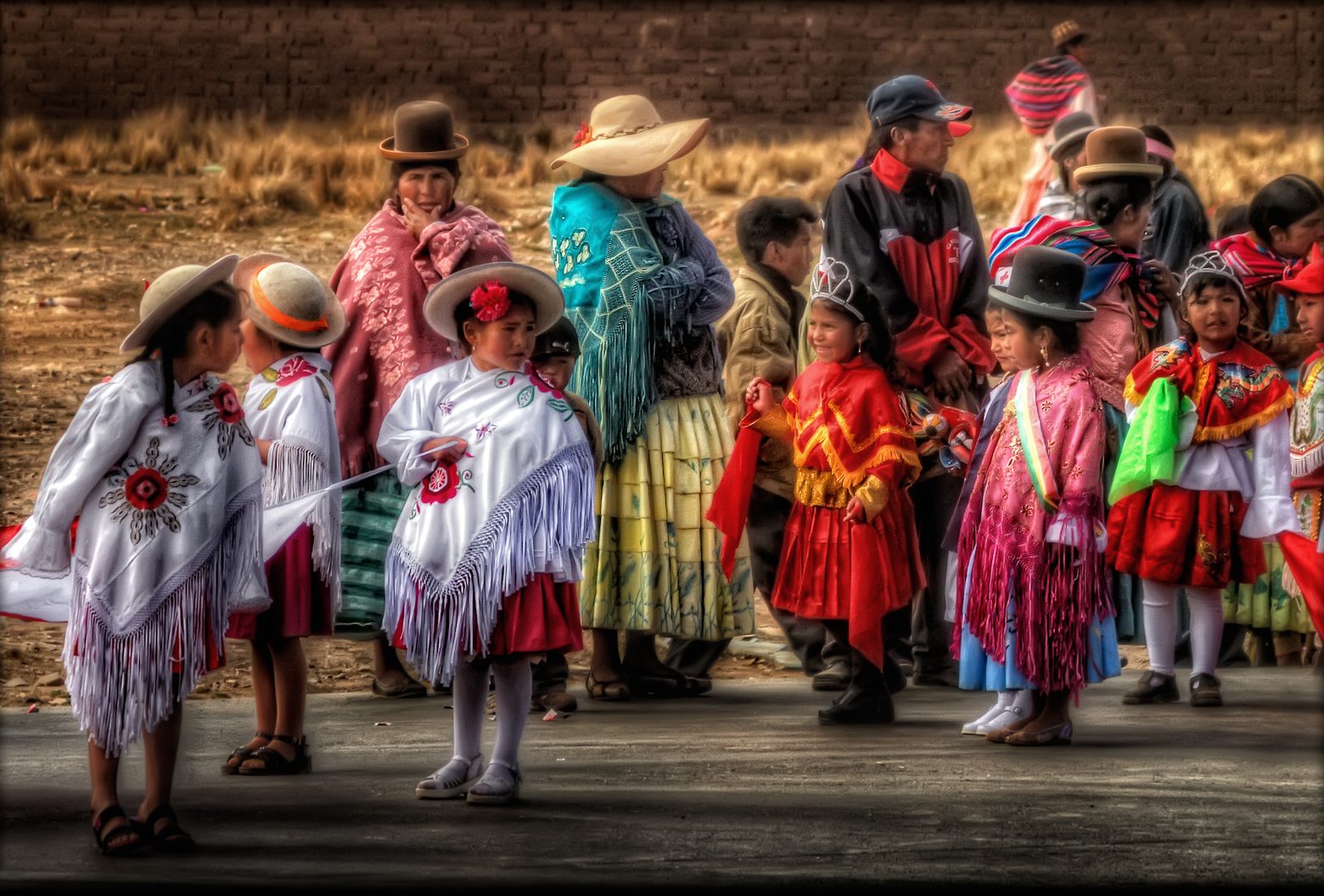
Walk through a market in La Paz or El Alto and the first thing most visitors notice is color: pleated skirts swinging below the knee, shawls knotted tight across the shoulders, and bowler hats perched at a precise, deliberate angle. Traditional Bolivian clothing is not a costume reserved for festivals. For many Aymara and Quechua women, it is daily dress worn with pride while mining, climbing mountains, or running a market stall.
Each garment on this list carries a layered history of Andean craftsmanship, Spanish colonial pressure, and modern reclamation. Understanding what the pollera, chullo, aguayo, and the other pieces below actually mean turns a glance at a cholita’s outfit into a reading of five centuries of Bolivian identity.
1. Pollera (Pleated Skirt)
The pollera is the single most recognizable piece of traditional Bolivian clothing, a bell-shaped skirt built from layered petticoats that can take up several meters of fabric. In Bolivia the word denotes a pleated skirt associated with both the urban mestizo and rural indigenous classes , and the urban version worn on the altiplano is typically made from roughly 8 meters of cloth paired with four or five embroidered underskirts.
The garment’s origin is colonial rather than Incan. Spanish authorities in the 1500s required Andean women to abandon the woven one-piece dress their grandmothers wore in favor of something closer to Spanish peasant style, and the pollera traces back to the pre-colonial urkhu garment before being reshaped under Spanish rule into its pleated form . A 1795 Spanish decree even tried to ban Inca-associated dress outright, yet the skirt survived and was eventually reclaimed as a marker of indigenous continuity rather than subjugation.
Key Insight: Bolivian miners, wrestlers, and even professional mountain climbers now wear the pollera for physically demanding work, treating the once-stigmatized skirt as a statement of strength rather than an obstacle to it.
Today the skirt is worn for ordinary weekdays as much as for festivals, a pattern that distinguishes Bolivian dress from more ceremonial-only traditions like those found in traditional Japanese clothing.
2. Bombín/Borsalino (Bowler Hat)
No piece of traditional Bolivian clothing draws more curiosity from outsiders than the bombín, the stiff felt bowler hat balanced on top of a cholita’s head rather than pulled down snugly the way European wearers once wore it. The most commonly repeated origin story holds that the bombín is more commonly known to English speakers as the bowler hat, or derby, the very same hat once considered indispensable by British bankers .
How the hat crossed the Atlantic remains debated. One account traces it to British railway contractors who ordered a shipment of hats for workers in the 1920s, only to find the sizes ran too small; rather than waste the stock, merchants marketed the hats to local women as the newest European fashion. A separate retelling, equally popular and charming, universally repeated, and entirely undocumented , says the bowler reached the Altiplano by the early twentieth century and had become standard by the 1920s regardless of which version is true.
The way a woman tilts the hat carries social meaning. Centered on the head generally signals she is married, tilted to one side suggests she is single or widowed, and worn toward the back of the head is a running joke about a complicated relationship status. The hat pairs with other regional variations found across the country, much like how traditional German clothing changes shape from one state to the next.
3. Manta (Shawl)
The manta is the shoulder shawl that completes the classic cholita silhouette alongside the pollera and bombín. Bolivian women’s traditional dress pairs the pleated skirt and bowler hat with a silky shawl known as a manta , usually fastened at the chest with a decorative pin.
Unlike the heavier aguayo used for carrying goods, the manta tends to be lighter and more decorative, often embroidered with floral or geometric motifs in silk or fine wool. It is draped loosely across the back and shoulders rather than knotted for weight-bearing, functioning more as an accessory of refinement than a working tool. Families often keep a dressier manta reserved for weddings, baptisms, and festival processions, separate from the everyday version worn to market.
4. Aguayo (Patterned Carrying Cloth)
Where the manta is decorative, the aguayo is functional. This square woven cloth, woven in bold geometric bands of red, orange, pink, and black, is knotted across the back to carry everything from market produce to sleeping infants. One guide to Bolivian dress lists the aguayo as a shawl or carrying cloth known for strong material and bright patterns , placing it alongside the pollera as a defining piece of women’s traditional clothing.
The patterns woven into an aguayo are rarely random. Many communities encode family or regional identity into the color bands and borders, a practice that echoes the way other cultures use textile pattern as a form of identification, similar to the regional variation seen across traditional Indian clothing. Aguayos are sold in nearly every Bolivian market and remain one of the most recognizable textile exports associated with Andean craft.
5. Chullo (Knitted Hat)
The chullo is the earflap cap most closely associated with Bolivian men’s traditional dress, though children and some women wear smaller versions too. The woolen hat, usually made from alpaca or llama wool, features earflaps on both sides and is typically knitted by hand using techniques passed down within families.
The chullo predates Spanish colonization by centuries, and its patterns are far from decorative filler. The colors and motifs knitted into a chullo carry different meanings rooted in Andean tradition, and in some communities specific patterns once indicated whether the wearer was married or single, or signified social standing within the community. That symbolic weight makes the chullo closer in function to ceremonial headwear found in other indigenous dress traditions than to a simple winter accessory.
Important Note: Chullo patterns and their meanings vary by region and community, so a design that signals one thing in the Altiplano may carry a different meaning in the Yungas valleys or Potosí.
6. Lliclla (Shoulder Cloth)
The lliclla is a rectangular shoulder cloth worn primarily by Quechua women in Bolivia’s highland communities, pinned at the front with a metal tupu brooch rather than simply knotted. It sits close in function to the manta but carries its own distinct weaving tradition, typically produced on a backstrap loom using alpaca or sheep’s wool dyed in deep reds, blacks, and indigos.
Weavers often spend weeks completing a single lliclla, incorporating narrow pattern bands called pallay that depict animals, stars, or geometric figures specific to a weaver’s home community. Because the cloth is worn daily rather than reserved for ceremony, a lliclla tends to show more wear and personal history than festival-only garments, making it a quiet but telling marker of a woman’s home region.
7. Uncu/Ccahua (Men’s Sleeveless Tunic)
The uncu, also called ccahua in some Quechua-speaking communities, is a sleeveless tunic that predates the Spanish arrival by centuries and once formed the core of Inca-era men’s dress across the Andes. Woven as a single rectangular piece and folded with an opening for the head, it was belted at the waist and worn over light trousers, sometimes layered under a poncho for warmth at altitude.
In the Inca state, cloth itself carried enormous value, and finely woven tunics distinguished rank the way jewelry or metalwork might elsewhere. While the uncu is far less common in everyday Bolivian dress today than the chullo or poncho, it survives in ceremonial and festival contexts, particularly among communities working to preserve pre-colonial textile forms rather than only the garments introduced after Spanish rule.
8. Llacota/Yacolla (Mantle)
The llacota, sometimes spelled yacolla, is a large rectangular mantle traditionally draped over the shoulders and fastened with a pin, functioning as an outer layer over the uncu in pre-colonial Andean dress. Men wore it as both protection against the cold Altiplano wind and a visible marker of status, since the density and fineness of the weave signaled the wealth and position of the wearer.
Unlike the poncho, which is a single piece with a head opening, the llacota is wrapped and pinned rather than pulled on, closer in construction to a toga than a cloak. Though it has largely been replaced by the poncho in daily wear, the llacota appears in some regional festival reenactments and historical dance performances that aim to recreate pre-Hispanic Andean dress.
9. Anacu/Acsu (Women’s Wrap Garment)
Before Spanish colonizers mandated the pollera, Andean women wore the anacu, also called acsu, a one-piece wrap dress tied at the shoulders with pins and cinched at the waist with a woven belt called a chumpi. This garment is widely understood as the direct ancestor of the modern pollera, since the pollera traces back to the pre-colonial urkhu garment later transformed under Spanish rule into its now-recognizable pleated form .
The anacu was typically woven from alpaca or llama wool in a single continuous piece, with minimal cutting or shaping compared to the constructed, tailored pollera that replaced it. Some highland communities in Bolivia and neighboring Peru still produce ceremonial versions of the anacu for festivals that specifically honor pre-colonial heritage, treating the garment as a counterpoint to colonial-era dress rather than a forgotten relic.
10. Alpaca Wool Poncho
The poncho is the defining piece of Bolivian men’s traditional clothing, and for good reason: it is warm, simple to produce on a backstrap loom, and adaptable to nearly any region’s climate. For indigenous men in the highlands, the poncho is the quintessential clothing piece , typically brightly colored with decorative woven patterns that shift depending on the wearer’s home region.
Most ponchos are woven from the fleece of the alpaca (Vicugna pacos), a domesticated camelid native to the high Andes whose wool is prized for its softness and insulating quality at altitude. The exact origin of the poncho is still debated among researchers, who point to possible roots in Mexico, Ecuador, Peru, Bolivia, or Spain, though the garment has clearly maintained a distinct and long-standing identity in Bolivian dress regardless of where it first appeared. Visitors drawn to Andean textile craft will find the weaving traditions behind the poncho share surprising parallels with wool-based garments in traditional Australian clothing, where climate and material availability shaped the final form just as strongly.
11. Tinku Festival Outfit
Tinku is a ritual combat festival held each year in the Potosí region, and the dress worn for it is built for both ceremony and physical contact. Participants wear a hard leather or woven helmet called a montera, modeled loosely on Spanish conquistador helmets, paired with a heavily fringed or embroidered vest and wide, reinforced belts that double as light protection during the ritualized fighting.
Underneath the montera, fighters typically wear a chullo for extra padding, along with ojota sandals and trousers suited to movement rather than display. The outfit’s practical construction sets it apart from purely decorative festival dress; every piece serves the physical demands of the ritual itself, which communities view as a way of settling disputes and ensuring agricultural fertility for the coming year.
12. Carnaval De Oruro Costume
The Carnaval de Oruro is Bolivia’s largest and most elaborate festival, and the costumes built for it rank among the most visually dense traditional garments anywhere in the Andes. The pollera skirt itself is central to the celebration, since many women still wear the pleated skirt for the Carnaval de Oruro or Virgen de la Candelaria festival , often in a heavier, more ornate version than their everyday skirt.
Dance troupes performing the festival’s best-known routines, including the diablada devil dance, wear elaborately embroidered masks and costumes layered with sequins, mirrors, and metallic thread that can take months to produce by hand. UNESCO recognizes the Carnaval de Oruro as part of humanity’s intangible cultural heritage, a status that reflects both the scale of community participation and the depth of craftsmanship behind every costume on display.
| Garment | Typically Worn By | Primary Occasion |
|---|---|---|
| Pollera | Women | Daily wear and festivals |
| Bombín | Women (cholitas) | Daily wear |
| Aguayo | Women | Carrying goods, market days |
| Chullo | Men, children | Daily wear, cold climates |
| Alpaca poncho | Men | Daily wear, festivals |
| Tinku outfit | Men and women | Tinku ritual festival |
| Diablada costume | Dance troupes | Carnaval de Oruro |
Visitors interested in how festival dress compares across cultures may also enjoy looking at the ceremonial layers found in traditional Chinese clothing or the regional variety documented across traditional Pakistani clothing, both of which, like Bolivia’s festival wardrobe, reserve their most elaborate pieces for specific annual celebrations.
Traditional Bolivian clothing works as a living record of the country’s history rather than a museum display. The pollera and bombín carry the memory of colonial imposition turned into pride, the chullo and poncho preserve pre-Hispanic weaving knowledge, and festival dress like the Tinku outfit and Carnaval de Oruro costume keep ritual and community practice alive season after season. Readers curious about how other nations balance everyday dress against ceremonial wardrobes can explore the comparisons gathered in this broader clothing collection, or look at how distinct regional identity shows up in traditional American clothing and traditional Indian clothing as well.