Traditional Dutch Clothing for Women: 16 Pieces Behind the Folk Costume

November 17, 2026
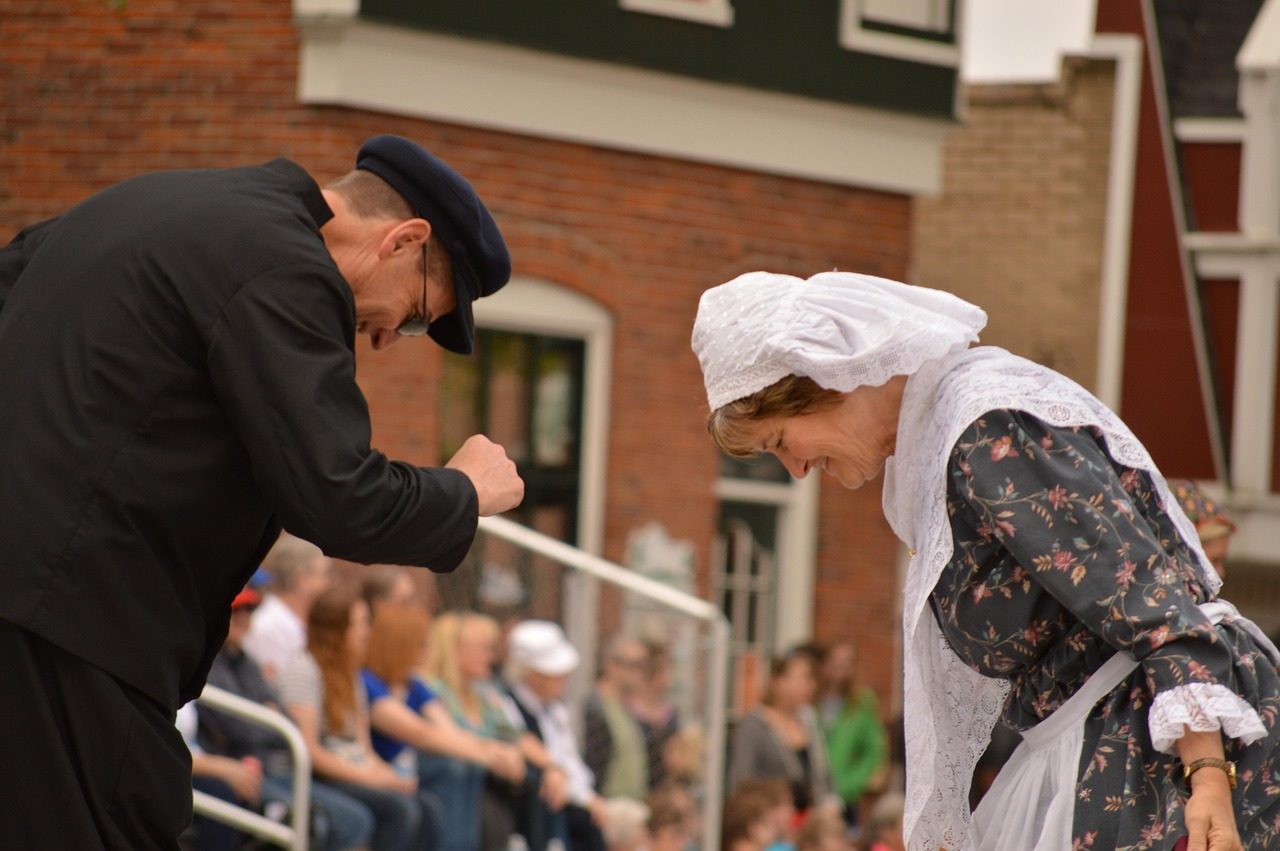
Ask a dozen people what traditional Dutch clothing for women looks like, and most will picture a single image: a lace cap, a striped skirt, a pair of wooden shoes. The reality is far more layered. The Netherlands never had one national costume at all — klederdracht changed from village to village, carried through metal headpieces, embroidered chest panels, and jewelry passed down for generations.
This piece walks through 16 of the garments, accessories, and small details that built those regional looks, from the metal frame hidden under a bonnet to the brooch pinned over the heart. Many of these pieces still turn up in museum collections, family heirlooms, and the handful of villages that keep the tradition alive. For readers curious how Dutch dress compares to other traditional clothing styles around the world, the parallels in craftsmanship and regional pride are striking.
| Garment or Accessory | Associated Region | Primary Function |
|---|---|---|
| Oorijzer | Friesland, Zeeland, North Holland | Metal frame anchoring the cap |
| Hoofdijzer | Scheveningen | Forehead-set metal ornament |
| Zeeuwse knop | Zeeland | Filigree button jewelry |
| Kraplap | Zeeland, South Holland | Decorative chest covering |
| Klompen | Nationwide | Carved wooden footwear |
| Hul | Zuid-Beveland, Walcheren | Cap worn by unmarried women |
| Ondermuts | Nationwide | Plain base-layer cap |
| Fôrflechter | Limited regional record | Hair-securing structure |
| Gooise kap | Het Gooi | Formal lace outer cap |
| Flodder muts | Zaanstreek, North Holland | Everyday winged cap |
| Kanten muts | Nationwide | Formal lace cap |
| Rouwmuts | Nationwide | Mourning cap |
| Kappenspelden | Nationwide | Pins securing cap to hair |
| Bloedkoraal | Zeeland, South Holland | Red coral bead jewelry |
| Beugeltas | Nationwide | Metal-frame handbag |
| Borstspeld | Nationwide | Decorative chest brooch |
1. Oorijzer
The oorijzer, literally “ear-iron,” is the piece that most other items on this list attach to. According to Wikipedia , it is part of the Dutch folk costume for women, especially in the northern provinces and in the province of Zeeland, and it was originally everyday wear before regional costume absorbed it. What began as a plain metal bracket holding a fabric coif in place slowly became something else entirely.
Over time, the ear-iron grew into a showpiece, with decorated gold plates or curls protruding from the front and pins used to attach the cap to the frame. The Metropolitan Museum of Art notes that these frames were initially purely functional and all but hidden, used to hold fabric coifs in place, before the pointed ends sitting against the wearer’s cheeks became increasingly decorative by the later eighteenth century. A woman’s oorijzer could signal her husband’s profession, her hometown, or even her faith.
Pro Tip: In old family photographs or paintings, the oorijzer is often nearly invisible under layers of lace. Look for the glint of metal at the temples or behind the ears rather than expecting an obvious headpiece.
2. Hoofdijzer
The hoofdijzer, or “head-iron,” is a close cousin of the oorijzer, but the decoration sits above the forehead rather than beside the ears. The term is specifically tied to the costume of Scheveningen, the fishing village now absorbed into The Hague, where women wore it as part of a distinctive silhouette that set their dress apart from neighboring coastal towns.
Where a Friesland oorijzer flares outward toward the cheeks, the Scheveningen hoofdijzer sits higher and more centrally, often paired with a tightly pleated white cap. The placement mattered: a glance at where the metal sat on a woman’s head told an informed observer which fishing community she belonged to, long before she said a word.
3. Zeeuwse Knop
The Zeeuwse knop, or Zeeland button, is one of the most recognizable pieces of traditional Dutch jewelry, built around a domed filigree center that resembles a tightly wound knot. Worthpoint describes it as an important part of traditional Zeeland folklore dress for centuries, made in copper, silver, or gold, where the bigger the knot button, the richer and more honorable the wearer was assumed to be.
These buttons rarely stood alone. A costume blog documenting the Volendam and Zeeland traditions notes that the decorative spirals on the ends of an oorijzer, called krullen, were often the only visible part of the frame, used as a base from which pairs of bellen hung down like earrings on either side of the face. Zeeuwse knop buttons followed that same logic — worn as earrings, bracelet links, brooches, and hatpins, all built from the same recognizable button shape.
Key Insight: The size and metal of a Zeeuwse knop was not just decoration. In Zeeland’s fishing villages, a larger silver or gold button on a cap or jacket was a visible marker of a family’s standing within the community.
4. Kraplap
The kraplap is a stiff, often brightly colored panel worn over the chest and shoulders, closing the gap between a bodice and a high collar. In the Zeeland and South Holland regional costumes, it typically appears in red or another saturated color, sometimes finished with small metal buttons or lace trim along the edges.
Its practical job was modesty and warmth in a climate shaped by sea wind, but the kraplap also became a canvas for status. Wealthier families used richer fabric and finer embroidery on this single panel, since it sat in plain view beneath an open jacket at church or on market day.
5. Klompen
No piece of Dutch dress is more internationally recognized than klompen, the carved wooden shoes worn across rural provinces for generations. Farmers, fishers, and dairy workers wore them because wood insulated feet from wet, muddy ground far better than leather, and a damaged clog could simply be recarved rather than discarded.
Women’s klompen in regional costume were often painted in bright colors or carved with simple floral patterns, distinct from the plainer working versions worn daily on the farm. Similar logic shows up in other European folk traditions — German regional dress relies on equally practical, locally made footwear suited to specific terrain and climate.
6. Hul
The hul is a close-fitting cap historically associated with unmarried young women in parts of Zeeland, particularly Zuid-Beveland and Walcheren. Unlike the more elaborate married women’s caps, the hul tended to be simpler in shape, signaling a woman’s unmarried status at a glance within her own community.
Cap shape carried this kind of social information across much of the Netherlands. A woman’s marital status, religious background, and even her village could often be read from her headwear alone, which is part of why so many distinct cap styles survived side by side in a country as small as the Netherlands.
7. Ondermuts
Before any decorative outer cap went on, women wore an ondermuts, or under-cap, as the foundation layer against the hair. Wikipedia explains that the oorijzer itself was worn over this bottom cap, with a luxurious top cap or bonnet then fastened to the metal frame on top.
This layering system — plain under-cap, metal frame, decorative outer cap — is part of what made Dutch headwear so flexible across formality levels. The same oorijzer and ondermuts could support a simple everyday cap for housework or an elaborate lace piece for a wedding, simply by swapping the top layer. A similar layered logic appears in traditional Japanese clothing, where multiple garment layers build toward a single formal silhouette.
8. Fôrflechter
The fôrflechter is one of the lesser-documented terms connected to regional Dutch headwear, generally understood to describe a plaited or braided structure used to help secure hair beneath a cap before the outer layers went on. Unlike the oorijzer or kraplap, detailed English-language sources on this specific element are scarce.
Important Note: Historical costume terminology varies significantly by village and even by individual family archive. Readers researching this term for genealogical or academic purposes should consult Dutch-language regional costume museums or archives for the most reliable detail.
9. Gooise Kap
The Gooise kap takes its name from Het Gooi, the wooded region between Amsterdam and Utrecht historically known for its wealthier farming communities. This formal lace cap sits close to the head with a structured shape, often worn for church services and special occasions rather than daily chores.
Compared to the more austere caps of the northern fishing villages, the Gooise kap tends toward finer lacework, reflecting the relative prosperity of the region’s landowning families. It remains one of the caps most often reproduced for folklore festivals and regional heritage days in the area today.
10. Flodder Muts
The flodder muts, sometimes translated loosely as a “floppy” or winged cap, was an everyday working cap worn in parts of North Holland, including the Zaanstreek. Its looser, less structured wings distinguished it from the stiffer, more tailored caps reserved for formal wear.
Regional variation like this is a constant theme in Dutch costume: a cap style that looks casual in one province might be the formal version somewhere else entirely. The same pattern of local garments adapting to climate and daily work shows up in traditional Australian clothing, where practical, regionally specific pieces evolved for very different but equally demanding conditions.
11. Kanten Muts
The kanten muts, or lace cap, is the broad category most people picture when they imagine Dutch traditional headwear. Wikipedia describes the general style as usually made of white cotton or lace, sometimes characterized by triangular flaps or wings that turn up on either side, a shape that can resemble certain nurse’s cap styles familiar to English-speaking readers.
Within this broad category sit dozens of local variations — Volendam’s peaked lace cap, Friesland’s fuller version, and the stiffer Zeeland styles among them. The fine linen or lace used for the best examples could take weeks of handwork to complete, and many families owned only one or two truly formal kanten muts pieces, reserved for weddings and church. Readers interested in how elaborate headwear signals status across cultures may also enjoy comparing notes with traditional Chinese clothing, where headpieces carried similarly specific regional and status meanings.
12. Rouwmuts
The rouwmuts, or mourning cap, marked a period of grief within a family or community. Traditionally made in black fabric rather than the white or cream used for everyday and festive caps, it followed the same basic shape as a woman’s usual headwear but swapped the color to signal loss.
Mourning periods in rural Dutch communities often followed strict, locally understood timelines, and the rouwmuts was one of the clearest outward signs of where a widow or grieving family member stood in that process. Some regions layered additional black accessories, including dark ribbons or simplified jewelry, alongside the cap itself.
13. Kappenspelden
Kappenspelden, or cap pins, are the small but essential hardware holding an entire headwear assembly together. A costume history resource describing Dutch jewelry traditions notes that ornate head ornaments known as “kissers” were sometimes attached directly to the oorijzer beneath the outer cap, particularly in the Staphorst costume, where prominent spiral kissers sat visibly under the black cap.
Beyond their structural role, decorative cap pins were often part of a woman’s personal jewelry collection, made in silver or gold and sometimes passed down as heirlooms separately from the caps themselves. A single cap might use several pins at different points — one to anchor the base layer, others to fix the outer lace in its finished shape.
Pro Tip: When examining antique Dutch headwear in museum collections, look closely at the base of the cap near the ears. Small pinholes or wear marks often reveal where kappenspelden were used for decades.
14. Bloedkoraal
Bloedkoraal, or blood coral, refers to the deep red coral beads strung into necklaces and bracelets as part of traditional Zeeland and South Holland dress. The intense red color made coral jewelry visually striking against the dark wool fabrics typical of these regional costumes, and it was often one of the few bright accents in an otherwise somber color palette.
Multiple strands of coral beads, sometimes graduated in size with larger beads at the front, were considered valuable family possessions. Coral necklaces were frequently included in a bride’s dowry alongside silver jewelry, reinforcing the link between personal adornment and family wealth that runs through so much of traditional Dutch dress.
15. Beugeltas
The beugeltas is a handbag built around a rigid metal frame, or “beugel,” that snaps or clicks shut at the top rather than relying on a drawstring or zipper. Women carried these bags as part of formal regional dress, often in dark leather or fabric that matched the rest of the costume.
The metal frame itself could be plain or decorated, occasionally matching the silverwork found elsewhere in a woman’s jewelry. Practical accessories like this appear across many folk costume traditions worldwide — traditional Pakistani clothing similarly pairs structured, decorative accessories with its regional garments to complete a formal look.
16. Borstspeld
The borstspeld, or breast pin, is a brooch worn over the chest, often at the point where a kraplap or jacket closes. Many of the brooches surviving in collections today were built around the same Zeeuwse knop filigree button style used elsewhere in Dutch jewelry.
A jewelry dealer describing one surviving example notes that this type of traditional folk piece fastens on the back with a rollover clasp and steel pin, intricately made despite its relatively small size. Like other jewelry on this list, a woman’s borstspeld often reflected what she could afford to inherit or have made, making it as much a family record as a fashion accessory. The role jewelry plays in signaling status and heritage is far from unique to the Netherlands; traditional Indian clothing carries a similarly rich tradition of regional jewelry tied to family and community identity.
Common Mistake: Assuming there is one single “traditional Dutch dress.” As costume historians frequently point out, there is no single national costume — each province, and often each village, developed its own distinct combination of cap, jewelry, and garment styles.
Taken together, these 16 pieces show how much detail sat inside what outsiders often flatten into a single “Dutch costume” image. A cap style, a pin placement, or the size of a filigree button could tell an entire story about where a woman came from, her age, her marital status, and her family’s standing — all without a single word being spoken. Most of these pieces are now preserved in museum collections or brought out only for heritage festivals, but in villages like Volendam and parts of Zeeland, elements of this dress tradition are still stitched, pinned, and worn with the same care as generations before.
Readers who enjoyed tracing how climate, craft, and community history shape a country’s dress may also want to explore traditional American clothing for a comparison of how a much younger, more diverse country built its own regional dress traditions.