Traditional Hungarian Clothing: 20 Garments, from Suba to Díszmagyar

November 18, 2026
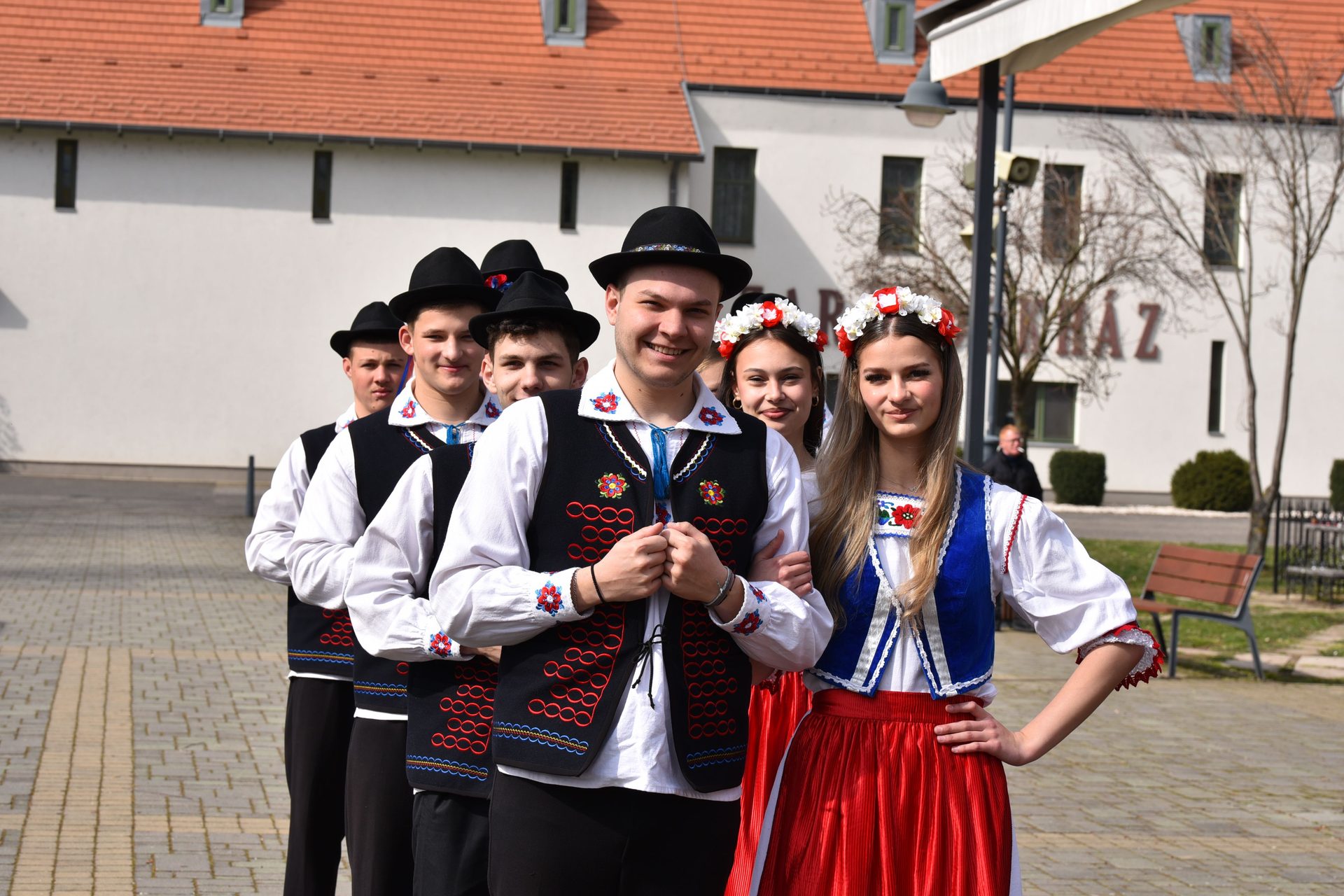
Ask ten Hungarians what “traditional Hungarian clothing” looks like, and expect ten different answers. According to the Hungarian Ethnographic Encyclopaedia, this system varies by smaller and larger regions, which all have local folk costumes that characterise the given area, and when talking about Hungarian folk costume, scholars distinguish four main regions: Transdanubia, Uplands, Great Hungarian Plain and Transylvania.
That regional patchwork is exactly what makes Hungarian folk dress worth studying piece by piece. From a shepherd’s sheepskin cloak to the gold-braided coat a nobleman wore to Parliament, each garment carried its own name, material, and social signal. This guide walks through twenty of the most recognizable pieces of traditional Hungarian clothing, tracing what they were made from, who wore them, and why a few are still pulled out of the closet for weddings and national holidays today.
1. Suba
The suba is the garment most outsiders picture first: a floor-length sheepskin cloak associated with the herdsmen of the Great Hungarian Plain. On the Great Hungarian Plain it was a long, sleeveless overgarment usually made from sheepskin, and it was a sheepskin cloak used by both men and women, circular in shape when spread out because it was sewn from triangular pieces of sheepskin, and it could serve as a garment, blanket, tablecloth, or bedcover.
A 19th-century example held by the Metropolitan Museum of Art shows why the suba was prized beyond its warmth: despite their grand appearance, subas served more than just festival purposes, providing shepherds working outside with protection from weather as well as a seat or bed, and the suba also served as a surface for eating or drying meat. The same silhouette appears, in lighter form, in other European herding cultures, much like the weatherproof outerwear found in traditional German clothing.
Pro Tip: Look for the black lamb-pelt collar when identifying an authentic suba—dyed or synthetic collars are a quick sign of a modern costume reproduction rather than a historical piece.
2. Szűr
The szűr is the everyday cousin of the suba: a felted wool mantle rather than a skin cloak. It was a frieze mantle of various designs, used at first by the poorest men and women before more ornate, embroidered variants appeared, and it usually had fake sleeves—sewn-up sleeves used to carry small utensils—and a very wide collar that reached the waist.
Its roots run deep. According to the Hungarian folk costume glossary , the szűr eventually outlasted the suba as daily wear, and it became the much more common pair, a coat-like overgarment. Shepherds who needed rugged, weatherproof layers for open-range work had the same practical instincts seen in traditional Australian clothing, where oilskin coats serve an almost identical purpose.
3. Szűrdolmány
Less famous than the szűr itself, the szűrdolmány was a shorter, lighter version built for movement. Documentation from the Hungarian Ethnography and Folklore archive notes that a frieze jacket was called szűrdolmány or kankó, and although it provided less warmth, it was easier to work in.
That trade-off made the szűrdolmány the practical choice for herders who needed to bend, climb, and move quickly through the day rather than stand guard against a storm. It shows up most often in accounts of the Great Plain’s working wardrobe, worn alongside—rather than instead of—the heavier szűr depending on the season.
4. Ködmön
The ködmön is a sheepskin jacket, shorter and more fitted than the suba, and it was worn by both sexes though its decorated versions became strongly associated with women. Ethnographic sources describe it this way: the ködmön, or dakuködmön, reached to below the waist, had a 3 or 4 cm wide red suede overlay sewn on its edges all around, and was embroidered with flowers in colourful yarn.
The American Hungarian Museum traces the garment back even further, noting that on an 11th-century stone relief in the Cathedral of Pécs, Hungarian gentlemen wore shirts embroidered with beads, a coat thrown over the shoulder with clasps, peaked caps, and embroidered leather or fur jackets, alongside high boots. That makes the ködmön one of the longest-surviving silhouettes in Hungarian dress history.
5. Bunda
The bunda is another sheepskin cloak, often confused with the suba, but regionally the two names split along different lines. The folk costume glossary defines it plainly: bunda is a collarless cloak made from sheepskin, using the fur of Hungarian long-woolled sheep, and it is one of the most popular outerwear garments in Hungary.
A shorter winter version existed too—the kis bunda, a female short sheepskin cloak used in winter. Regional naming varied so much that the same basic garment could be called a suba in one county and a bunda just a few villages over, a quirk that still trips up museum cataloguers today.
6. Mente
The mente is where Hungarian dress turns aristocratic. It was a decorated mantle worn over the shoulders, and the American Hungarian Museum notes that the Byzantines also liked and adopted the Hungarian “kabát” coat and “mente.” By the 19th century it had become a showpiece: one described example is an aristocrat in red velvet mente decorated with fur and gold passementerie.
For women, the glossary clarifies that the mente was female outerwear similar to the male dolman. The garment’s function—signaling rank through fabric, fur, and metallic trim—parallels the way elaborate court robes operated in traditional Chinese clothing, where embroidery density and color marked social standing just as clearly.
7. Dolmány
The dolmány is the fitted jacket worn underneath the mente, and together the two formed the backbone of formal Hungarian menswear. It is described as a doublet—a tight fitting jacket—and the glossary adds more detail: the dolmány was male outerwear similar to a Polish zhupan, usually knee-length and often richly embroidered, with long sleeves and a row of buttons running from the neck to the waist.
Seen together, the main outer layers of Hungarian dress line up into a rough order of warmth and formality:
| Garment | Primary Material | Typical Wearer |
|---|---|---|
| Suba | Sheepskin (whole hide) | Shepherds, herdsmen |
| Szűr | Felted wool | Peasants, farmhands |
| Szűrdolmány | Lighter frieze wool | Working herders |
| Ködmön | Tanned sheepskin, embroidered | Men and women, peasantry |
| Bunda | Sheepskin (collarless) | General rural population |
| Mente | Velvet, broadcloth, fur trim | Nobility, burghers |
| Dolmány | Embroidered broadcloth | Men, formal occasions |
8. Gatya
The gatya is the wide linen trouser that defines Hungarian summer dress, and almost every historical account mentions how much fabric it used. One researcher who examined an original garment noted that the pants, known as gatya, are worn over most of Hungary, especially in the summer, made from plain white linen or cotton, with a construction that is very simple and very full—one example’s waistband measured 5½ yards around.
Shepherds needed more than one pair: their shirts and gatyas were of linen, and later cambric, with two white and two greased gatyas belonging to each shepherd’s stock of clothes, the latter soaked with ashes and tallow until impregnated to guard against rain, worn for sheep shearing or other dirty work. The sheer volume of pleated linen fabric gives the gatya a loose, skirt-like silhouette comparable to the flowing cuts found in traditional Indian clothing, where lightweight draped trousers serve a similar warm-climate purpose.
9. Kacagány
The kacagány is one of the oldest pieces on this list, a fur pelt worn loosely over the shoulder rather than tailored into a coat. The American Hungarian Museum describes it as wild animal skin thrown loosely over the shoulder, used for the past eleven centuries, and elsewhere specifies it as the skin of a tiger, panther, or wolf.
Daily News Hungary confirms the garment persisted into peasant wardrobes long after its warrior origins, describing it simply as furred animal skin worn on the back. Its collar even migrated onto other garments—ethnographers note a full suba’s neck was finished with an ún. kacagánygallér, sewn from a whole black lambskin.
10. Lajbi
The lajbi is a waistcoat, simpler and more utilitarian than the embroidered vests worn by women. In herding communities it often appeared in its plainest form: the simplest among the garments were those made of skins, the melles and the bőrlajbi, or sheepskin waistcoat, which here was buttoned in front.
Because it layered easily under a coat or szűr without adding bulk, the lajbi functioned much like the tailored waistcoats worn under formal outerwear in traditional Pakistani clothing, where a fitted vest provides structure beneath a looser outer layer.
11. Pruszlik
The pruszlik is the decorative bodice Hungarian women wore over their blouses, and it came in two distinct cuts depending on region. Ethnographers describe both: women wore a bodice over their blouses, of which there are two basic types—the older one shorter than the waist with a more widely cut neck, surviving longest in the south, and a newer form with a closed neck that extends past the waist, worn in the northern areas—usually richly ornamented with embroidery and embellished edges.
A catalogued example from Tura, documented by the Stitch Project , shows the style at its most elaborate: made of velvet embroidered with tiny buds and blue floral mustard on a black background, cut to a close-fitting fit with a deep, round neckline, and lined with white cotton linen.
12. Pendely
The pendely is a linen underskirt or petticoat, worn as the foundation layer beneath a woman’s outer skirts. The glossary defines it as a linen petticoat with high waistband, and in Transylvania it was described alongside the blouse as the two essential basics: the two basic articles of the women’s clothing, the blouse and the petticoat, were made of linen, with the blouse ornamented by frills on its short sleeves and the petticoat very full, its waist gathered into folds of palm-sized width.
Daily News Hungary’s survey of folk costume elements lists the pendely, a linen underskirt, alongside the many skirts layered over it—sometimes 4 to 10 or even more baggy skirts over the pendely, used to “shape” the hip.
13. Bikla
The bikla is a lighter, more festive petticoat than the everyday pendely, made for visibility rather than warmth. The glossary describes it simply: a white petticoat made from tulle, linen, or cambric.
Because it sat closer to the surface of an outfit than the heavier pendely, the bikla often carried whatever lace or trim a family could afford, making it a small but telling marker of a household’s means. Readers curious about how layered underpinnings shape silhouette across cultures can find more context in the broader clothing and style coverage on this site.
14. Párta
The párta is a stiff, crown-like headdress worn exclusively by unmarried Hungarian girls, typically decorated with beads, ribbons, or metallic thread and removed for good on the wedding day. It sat at the top of a young woman’s festive outfit the way a tiara might in Western dress, signaling marital status at a glance—a detail outside observers often miss but one every village understood instantly.
The glossary of Hungarian folk costume terms lists the párta among the standard pieces of the national wardrobe, and related headdresses for unmarried women, such as the beaded pille, a small beaded cap on a rigid base worn by Hungarian unmarried females, served a similar signaling function. Elaborate hair ornaments marking a young woman’s unmarried status show up in other folk traditions too, including the hairpins and combs seen in traditional Japanese clothing.
15. Süveg
The süveg is a peaked or conical hat, usually felted wool or fur, that appears again and again in descriptions of early Hungarian menswear. The American Hungarian Museum’s account of an 11th-century relief in Pécs describes Hungarian men wearing peaked caps alongside their embroidered shirts and fur jackets—almost certainly an early form of the süveg.
Later versions grew taller and more decorated, sometimes finished with a feather or rosette for festive wear. Because felt-making and fur tanning were already advanced Hungarian crafts, as the same source notes ancestors knew the art of tanning and bootmaking, had skilled furriers and saddlers, and knew how to make felt or szűr-cloth, the süveg benefited directly from those same skills.
16. Csizma
The csizma is the riding boot that became the standard Hungarian men’s footwear for centuries, prized as much for status as for function. One ethnographic account of a Great Plain herder’s formal winter outfit notes: in the winter they wore dark blue broadcloth and a coat cut in Hungarian fashion, with a suba or szűr over it, and the feet were covered by boots made of cordovan or other leather, with spurs fastened on the heels—this costume in its characteristic form lasted only until the First World War.
Boots and tight trousers together formed the backbone of formal Hungarian menswear going back centuries, paired with tight trousers resembling stockings, boots, and mente. The csizma’s practical heel and sturdy leather made it as recognizable a national symbol as the riding boot is in traditional American clothing, where the cowboy boot carries a comparable cultural weight.
Key Insight: The csizma’s slight heel and close fit were designed for stirrup riding, which is why its silhouette barely changed between peasant and noble wardrobes—only the leather quality and decoration differed.
17. Bocskor
The bocskor sits at the opposite end of the footwear spectrum from the csizma: a simple moccasin-style shoe cut from a single piece of rawhide and tied around the foot and ankle with leather thongs. It appears in the standard glossary of Hungarian folk costume pieces alongside the csizma, listed simply as bocskor among the core garments every regional costume drew from.
Because it required no stitching and little tanning expertise, the bocskor was the everyday shoe of the poorest peasants and shepherds, reserved for fieldwork while the csizma was saved for market days, church, and festivals. The contrast between the two is a useful shorthand for reading Hungarian dress generally: the plainer the footwear, the more practical the rest of the outfit tended to be.
18. Zsalikendő
The zsalikendő belongs to the broad family of Hungarian headscarves and shoulder kerchiefs (kendő) worn by women across almost every region, typically folded into a triangle and tied under the chin or at the nape of the neck. Regional kerchief styles varied enormously in color and fabric—young unmarried women in Transylvania, for instance, covered their shoulders with a white shawl, the hárászkendő, while married women elsewhere favored darker, heavier weaves.
Important Note: Hungarian kerchief and headscarf names shift considerably by village and dialect. If researching a specific family heirloom, cross-check the regional name against the costume’s home county before assuming it matches a glossary entry exactly.
19. Lázsiás
The lázsiás refers to coin-based jewelry that Hungarian women, particularly brides, wore strung into necklaces or sewn directly onto bodices and headdresses as a display of family wealth. Silver or gilt coins repurposed into adornment were common across much of Central and Eastern European folk dress, and Hungarian regional costumes incorporated the practice into festive and wedding attire in much the same spirit as the embroidered coin-sets found in neighboring folk traditions.
The exact styling of lázsiás pieces varied by village, with some regions favoring dense clusters of small coins and others preferring a few larger pendant pieces worn at the throat. Because so much of this jewelry was melted down or sold during hard times, surviving examples are rarer in museum collections than embroidered textiles from the same era.
20. Díszmagyar
The díszmagyar is the grand finale of Hungarian traditional dress: a full ceremonial ensemble built from many of the garments already covered, worn by the nobility and later by officials at coronations, parliamentary sessions, and state occasions. It typically combined a dolmány and mente, tucked into csizma boots, finished with a fur cap and a ceremonial sword—essentially the dress code of Hungarian formal power.
Unlike everyday peasant dress, the díszmagyar was explicitly designed for display rather than labor, following the same logic that several decrees were issued over the last thousand years which prohibited the wearing of those extraordinarily expensive clothes, dear to all the people—a sign of just how much status the richest versions of this attire carried. Versions of the díszmagyar are still worn today at select ceremonial state functions, much as formal court dress persists in other national traditions covered in this site’s clothing and style section.
Twenty garments, four major regions, and centuries of overlapping names make Hungarian traditional clothing a genuinely difficult subject to summarize in one sentence—which is exactly the point. The suba and bunda tell a story of practical shepherd life on the open plain, the mente and díszmagyar tell one of aristocratic display, and pieces like the pruszlik and párta reveal how much information a single garment could communicate about a woman’s age, status, and home village. Understanding these distinctions is the difference between recognizing a costume and actually reading one.