15 Traditional Hispanic Clothing Styles and Their Cultural Roots

November 17, 2026
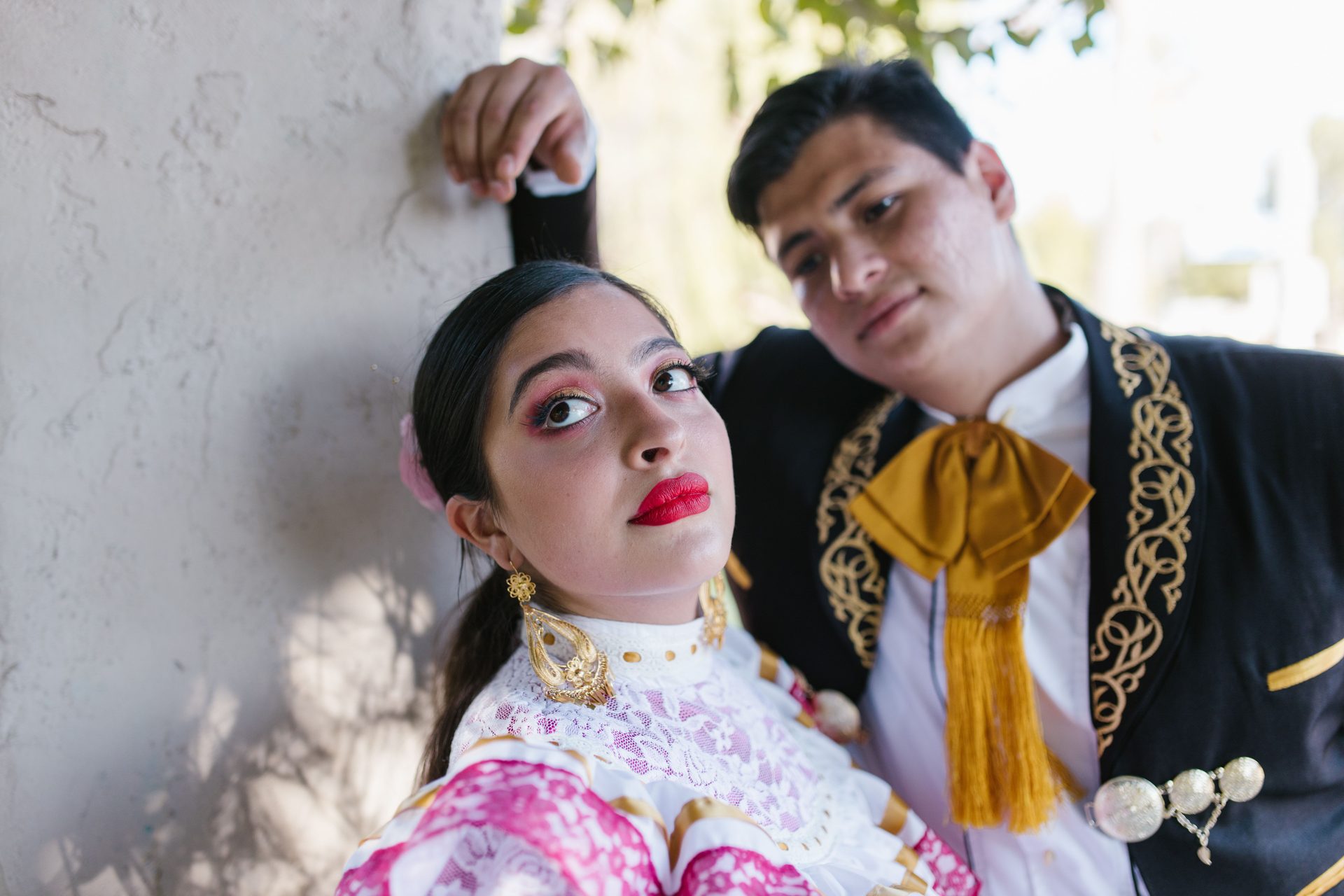
Traditional Hispanic clothing spans an enormous geographic and cultural range, from the cotton tunics woven on Maya backstrap looms to the silver-buttoned suits of Mexican charros and the lace veils still worn at Spanish festivals. Each garment carries its own regional accent, shaped by indigenous weaving traditions, colonial trade routes, and generations of artisans who kept the techniques alive. Exploring these pieces one by one shows how clothing becomes a living record of history rather than just fabric and thread.
This look at traditional clothing styles from across the Hispanic world covers fifteen garments that remain part of everyday life, festival dress, or formal ceremony in Mexico, Central America, the Andes, Venezuela, and Spain. Some are instantly recognizable outside their home countries; others stay closely tied to a single region or ethnic group. Together they build a fuller picture of how Hispanic clothing traditions developed and why they still matter today.
1. Guayabera
The guayabera is a lightweight men’s shirt built around two vertical rows of fine pleats (alforzas), four patch pockets, and a straight hem meant to be worn untucked. It has become a staple of formal and semi-formal dress across Mexico, Cuba, and much of the wider Caribbean, especially in hot, humid climates where its loose linen or cotton construction keeps the wearer cool.
Its exact origin is still debated. Wikipedia’s entry on the guayabera notes that this style originated in Mérida, Mexico, though some historians attribute the shirt to the people of the Philippines, who introduced the design to Mexico via the Manila-Acapulco galleon trade, from there spreading to Cuba and the rest of the Caribbean. That theory links the shirt to the barong tagalog, which has documented origins in the Philippines prior to Spanish colonisation in the late 16th century.
A separate line of evidence points toward the Yucatán Peninsula, where, according to Connolly England’s history of the guayabera , the garment is sometimes called the camisa de Yucatán, reflecting its status as the everyday men’s shirt in that region by the mid-19th century, well before Western-style shirts took over. Wherever it began, the guayabera now travels comfortably between rural fieldwork and formal weddings, and it has crossed into traditional American clothing circles through Cuban and Mexican communities in the United States.
Pro Tip: A genuine guayabera is distinguished from a filipina or barong shirt by its patch pockets and pleated panels rather than U-shaped chest embroidery.
2. Rebozo
The rebozo is a long, rectangular woven shawl found throughout Mexico, built from cotton, wool, or silk and finished with hand-knotted fringe called rapacejo. It is one of the most versatile pieces of traditional Hispanic clothing, functioning as a head covering, shoulder wrap, baby carrier, and even a tool used by midwives during labor and postpartum care.
Weaving towns such as Santa María del Río and Tenancingo remain centers of rebozo production, where artisans still use the ikat-style dyeing technique that creates the garment’s signature blurred patterns. The draping and multipurpose use of the rebozo echoes practices seen in traditional Indian clothing, where long shawls and dupattas serve similarly flexible roles across daily life and ceremony.
- Everyday head or shoulder covering
- Formal accessory paired with regional dresses
- Baby sling or carrying cloth
- Ceremonial piece for weddings and religious events
3. Huipil
The huipil is a loose tunic made from two or three rectangular panels of hand-woven cloth, joined with stitching or ribbon and left open at the neck and arms. According to the Fashion History Timeline at FIT , the word huipil comes from the Nahuatl language of Mexico, from the word huipilli, but is now commonly used throughout Mesoamerica.
The Minneapolis Institute of Art describes the huipil as a traditional Maya blouse that represents a 1,500-year-old creative tradition, worn by Maya women since before the 16th century, when the Spanish arrived in the region. The same piece notes that Frida Kahlo famously wore the garment, and more recently Mexican President Claudia Sheinbaum wore one as a symbol of cultural pride, a reminder that the huipil still carries political and cultural weight well beyond its original indigenous communities.
One of the oldest surviving examples, often called “La Malinche,” is believed to have been worn by Hernán Cortés’s interpreter, giving textile historians a rare physical link to the earliest years of contact between Mesoamerica and Spain. The embroidery, color, and weaving pattern of a huipil can still identify the wearer’s home village, much as embroidery traditions in traditional Pakistani clothing signal regional and family identity through needlework.
Key Insight: A huipil’s colors and motifs are not decorative, they function as a visual language that can reveal village, marital status, and social standing at a glance.
4. Poncho
The poncho is a single rectangular piece of fabric with a slit or hole cut for the head, worn as an open outer layer over the shoulders. Its origins trace to the Andean highlands, where Mapuche weavers in present-day Chile and Argentina developed the garment from dense alpaca or llama wool to withstand cold mountain winds.
From the Andes, the poncho spread north into Mexico and Central America and became closely tied to gaucho horsemen on the pampas of Argentina and Uruguay. Its practical, all-weather design shares logic with heavy wool outerwear found in traditional German clothing, where regional wool capes and cloaks served a similarly protective purpose in cold climates.
5. Sarape
The sarape, sometimes spelled serape, is a brightly colored woven blanket-garment most closely associated with Saltillo, Mexico, where weavers became famous for intricate diamond-patterned designs using fine wool and cotton. Unlike the everyday poncho, a well-made Saltillo sarape was historically a luxury item, traded and collected for its artistry as much as its warmth.
Sarapes are worn draped over one shoulder or wrapped around the body and remain a fixture of charreada events and folkloric dance performances. The weaving precision required to produce the diamond motifs invites comparison with the layered silk and brocade techniques found in traditional Chinese clothing, where pattern and color also carry symbolic meaning.
6. Jorongo
The jorongo is often confused with the sarape, but it is typically thicker, plainer, and built for daily use rather than display. Common in the cooler highlands around Toluca and central Mexico, the jorongo is usually a solid or simply striped wool wrap, worn as a working garment rather than a festival piece.
The distinction between these wool-wrap garments can be hard to keep straight, since several similar pieces appear across Mexico, the Andes, and Colombia. The table below lines up four of the most commonly confused styles.
| Garment | Region | Typical Material | Primary Use |
|---|---|---|---|
| Poncho | Andes (Chile, Argentina, Peru) | Alpaca or llama wool | Everyday outerwear, cold-weather protection |
| Sarape | Saltillo, Mexico | Fine wool and cotton | Festive wear, charreada events, display |
| Jorongo | Central Mexican highlands | Coarse wool | Daily labor, cold-weather use |
| Ruana | Colombian Andes | Sheep’s wool | Daily outerwear, open-front design |
7. Quechquémitl
The quechquémitl is a diamond or triangular shoulder cape that predates Spanish contact, worn by indigenous women in parts of central and northern Mexico, including Otomi, Nahua, and Huastec communities. Unlike the huipil’s rectangular construction, the quechquémitl is built from two pieces joined to form a distinctive point at front and back.
The garment’s construction method marks it as a separate tradition from the huipil rather than a variation of it, even though both are sometimes worn together. As The Garment Atlas puts it, every huipil woven on a backstrap loom, every quechquémitl embroidered with ancestral motifs, and every rebozo knotted with patience and skill asserts a connection to a specific community, language, and worldview that predates the Spanish conquest.
8. Mantilla
The mantilla is a lace veil worn over the head and shoulders, most strongly associated with Spain, where it remains part of Holy Week processions, bullfighting culture, and formal religious occasions such as weddings and First Communion. Made from black or white lace, it drapes over a tall comb and frames the face in a way that has made it one of the most photographed pieces of Spanish traditional dress.
Spanish colonization carried the mantilla to Mexico, Peru, and other parts of Latin America, where it was adapted into local formal wear and church attire. The draped veil tradition parallels head-covering customs found in traditional Indian clothing, where veils and dupattas similarly combine modesty with ceremonial elegance.
9. Peineta
The peineta is the ornamental comb that anchors the mantilla in place, traditionally carved from tortoiseshell or lightweight wood and sometimes decorated with gold or silver trim. Taller peinetas, fashionable in 19th-century Spain, created a dramatic silhouette by lifting the veil high above the head before it cascaded down over the shoulders.
Though less common in everyday dress today, the peineta survives in flamenco costume, formal bullfighting attire, and religious festivals across Spain and parts of Latin America. It belongs to a broader world of regional traditional clothing and accessory traditions where a single ornamental piece can signal status, occasion, or regional identity at a glance.
10. Mantón De Manila
The mantón de Manila is a large, heavily embroidered silk shawl with long knotted fringe, closely tied to Spanish flamenco dress and the Mexican China Poblana ensemble. Despite the name, the shawl’s story starts in China rather than the Philippines.
Chinese silk textiles were shipped to Manila and then carried across the Pacific and Atlantic along the same Manila-Acapulco galleon trade route credited with influencing the guayabera’s development, eventually reaching Spain and Mexico where the shawls were renamed for their port of departure rather than their point of origin. Local embroiderers in Spain and Mexico then layered on floral and bird motifs reminiscent of the embroidery seen in traditional Chinese clothing, blending Asian textile craft with European and Mexican fashion sensibilities.
Important Note: The mantón de Manila is a clear example of how a garment’s name can reflect a trade route rather than its true place of origin.
11. Alpargatas
Alpargatas are rope-soled, canvas or fabric shoes related to the espadrille, with roots tracing back to the Pyrenees region shared by Spain and France. Once carried to Latin America, alpargatas became especially associated with Argentine and Uruguayan gaucho culture, where their light weight and breathability suited long days spent working outdoors.
Historically worn by rural and working-class communities across both Spain and its former colonies, alpargatas later moved into urban fashion as a casual, low-cost shoe option. Their practical, rugged design for outdoor labor invites comparison with the function-first approach seen in traditional Australian clothing, where garments were similarly built around demanding outdoor conditions.
12. Pollera
The pollera is a full, layered skirt with multiple flounces, worn across several Latin American countries with distinct regional versions. Panama’s pollera panameña is the most elaborate, paired with gold jewelry, hair combs, and ornamental hairpins called tembleques, and recognized as the country’s national dress for formal festivals.
Peru, Bolivia, Colombia, and Venezuela each maintain their own pollera traditions, varying in color, fabric, and the number of layers used to create volume. The skirt’s dramatic, tiered silhouette bears some resemblance to the layered construction found in traditional Japanese clothing, where multiple garment layers similarly build toward a formal, ceremonial shape.
13. Ruana
The ruana is an open-front wool wrap worn across the shoulders, closely tied to the Colombian Andes, especially the departments of Boyacá and Santander, with related versions worn in parts of Venezuela. Unlike the closed-side poncho, the ruana has no seams along the sides, making it simpler to produce and easier to layer over other clothing.
The garment traces back to the Muisca, an indigenous Chibcha-speaking people of the Colombian highlands, and was later adapted by Spanish colonizers who recognized its usefulness against the region’s cold mountain air. This same cold-weather logic appears in traditional German clothing, where wool capes and wraps developed for comparable reasons in Alpine and northern climates.
14. Liquiliqui
The liquiliqui is a men’s formal suit from Venezuela, with closely related versions worn in the plains regions of neighboring Colombia. It consists of a high-collared, buttoned jacket paired with matching trousers, traditionally made from white or cream linen or cotton to suit the hot climate of the llanos, Venezuela’s vast tropical grasslands.
Originally worn by llaneros, the plainsmen who worked cattle across these grasslands, the liquiliqui later became formal and even political attire while keeping its association with joropo music and dance. Its continued presence at festivals connects naturally to the broader cultural world explored in pieces on traditional Venezuelan food, where regional dress and cuisine often appear together at the same llanero celebrations.
15. Charro Suit
The charro suit, or traje de charro, is Mexico’s ornate horseman’s outfit, built around a fitted jacket and trousers decorated with rows of silver buttons (botonadura), worn with a wide-brimmed sombrero and sometimes a bow tie or short necktie. It developed from the working attire of hacienda horsemen and became formalized as competitive charreada, Mexico’s traditional rodeo sport, grew in the 19th and 20th centuries.
Beyond the charreada arena, the suit is now most recognized as mariachi performance dress, a role that has carried it well beyond Mexico’s borders into Mexican-American communities and festivals throughout traditional American clothing traditions in the United States. At celebrations, it is frequently paired with the china poblana dress worn by female dancers, creating one of the most recognizable couple’s outfits in Mexican folk culture.
Taken together, these fifteen garments show that traditional Hispanic clothing was never a single uniform style but a patchwork of regional materials, trade routes, and indigenous techniques that adapted as they moved across borders. A guayabera’s pleats, a huipil’s woven symbolism, and a liquiliqui’s tailored collar each point to a different chapter of the same larger story: clothing as a record of who made it, where they lived, and what mattered enough to stitch into the cloth.