Traditional Colombian Clothing: 12 Garments That Tell Colombia’s Story

November 18, 2026
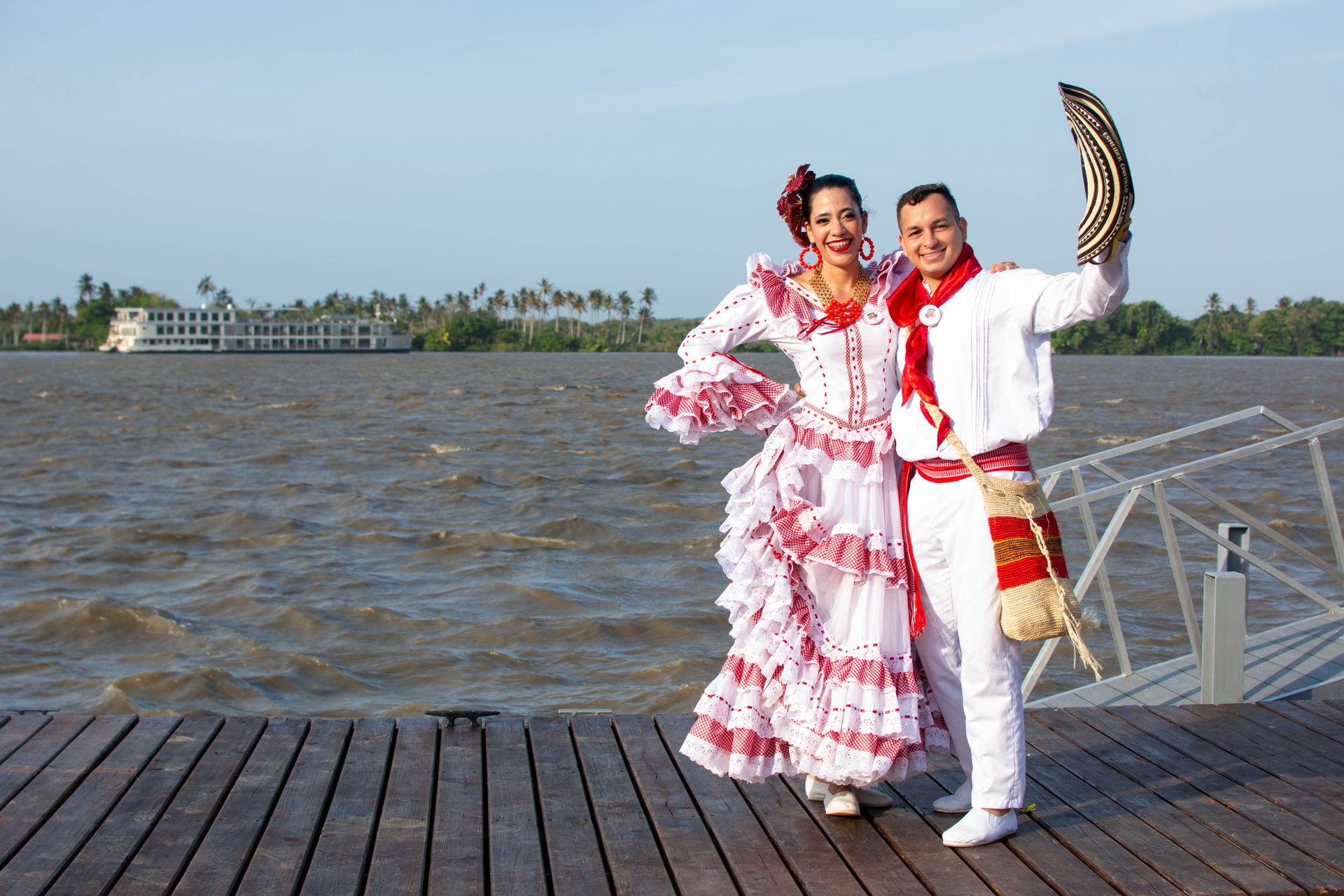
Few countries pack as many distinct regional wardrobes into one map as Colombia does. Traditional Colombian clothing shifts dramatically between the cool Andean highlands, the humid Caribbean coast, the eastern plains, and the Sierra Nevada mountains, and each zone shaped its own hats, ponchos, bags, and footwear long before national borders existed.
Some of these pieces, like the sombrero vueltiao, became official symbols of the nation. Others, like the Wayúu mochila bag or the Arhuaco susu, remain tied to specific Indigenous communities who still weave them by hand. The twelve garments below move from the wool-heavy Andes down to the coast and across to Colombia’s Indigenous territories, showing how geography, colonization, and Indigenous craft all left their mark on what Colombians wear.
| Garment | Region | Primary Material | Typically Worn By |
|---|---|---|---|
| Ruana | Andean highlands | Wool | Rural and urban Andean residents |
| Sombrero vueltiao | Córdoba, Sucre (Caribbean) | Caña flecha fiber | Zenú artisans, festival-goers |
| Sombrero aguadeño | Caldas (Eje Cafetero) | Straw/palm fiber | Coffee-region men |
| Sombrero de Sandoná | Nariño | Iraca palm fiber | Andean hat weavers |
| Alpargatas | Andean and Llanos regions | Cotton canvas, cabuya sole | Campesinos, llaneros |
| Cabuya espadrilles | Andean highlands | Cabuya (fique) fiber | Rural artisans and farmers |
| Liquiliqui | Llanos (plains) | Linen or cotton | Llanero men, formal occasions |
| Carriel | Antioquia | Leather | Paisa men, arrieros |
| Cumbia pollera | Caribbean coast | Cotton, lace | Cumbia dancers |
| Mochila wayúu | La Guajira | Cotton or wool thread | Wayúu women weavers |
| Mochila arhuaca | Sierra Nevada de Santa Marta | Wool, fique | Arhuaco men and women |
| Susu | Sierra Nevada de Santa Marta | Natural fiber | Arhuaco mamos (spiritual leaders) |
1. Ruana
The ruana is a rectangular wool cape worn over the shoulders, open at the front, and common across the cold Andean plateau around Bogotá, Boyacá, and surrounding departments. It looks like a cross between a poncho and a wide shawl, and it remains one of the few traditional pieces still worn daily rather than reserved for festivals.
Its roots go back to the Muisca people, who produced ruanas from cotton woven on backstrap looms, with patterns and colours signalling community of origin. Wool took over as the dominant fiber only after Spanish colonisation introduced sheep to the highland plateau, with wool gradually replacing cotton because of its insulating quality in the cool, high-altitude climate. For readers curious how other cultures handle cold-weather layering, the wool capes and coats found in traditional German clothing share a similar logic of warmth over practicality.
Pro Tip: A genuine handwoven ruana from Boyacá or Nariño feels noticeably heavier and denser than a mass-produced acrylic version, and the weight is usually a good indicator of quality wool content.
2. Sombrero Vueltiao
The sombrero vueltiao is Colombia’s best-known hat and arguably its most recognizable national emblem, with a flat crown, upturned brim, and alternating black-and-white geometric bands. It originates with the Zenú people of the Sinú and San Jorge valleys in the Córdoba and Sucre departments, where its history dates back to the Indigenous Zenú communities who inhabited the Sinú and San Jorge valleys in present-day Córdoba.
The hat’s name comes from the weaving technique itself: the term “vueltiao” comes from the spiral weaving technique, which requires turning (“volver”) the cane arrow during manufacture. Caña flecha braiding, the craft behind the hat, is significant enough that it contributes to productive development, sustainable soil use, and sustainable tourism in the region according to UNESCO’s profile of the practice. The hat’s status was formalized when it was officially named a National Cultural Symbol by the Colombian government through Law 908 in 2004.
Quality varies by how many pairs of fiber strips go into the weave, with finer hats taking considerably longer to produce by hand than the simplest commercial versions. The craftsmanship parallels the patience required in hand-woven textile traditions elsewhere, including the meticulous dyeing and folding techniques found in traditional Japanese clothing.
3. Sombrero Aguadeño
Named after the town of Aguadas in Caldas, the sombrero aguadeño is a pale, tightly woven straw hat associated with Colombia’s coffee-growing region, the Eje Cafetero. Its rounded crown and medium brim make it lighter and less structured than the vueltiao, suited to the warmer Andean foothills where coffee is grown and harvested.
The hat is almost never worn alone in traditional dress. It typically appears alongside a ruana or poncho, rolled-up trousers, a leather carriel satchel, and rope-soled sandals, forming the recognizable outfit of a “paisa” or coffee-region farmer at regional fairs and the annual Feria de Manizales. Aguadas itself still hosts hat-making workshops where the craft is passed between generations rather than mechanized.
4. Sombrero De Sandoná
Sandoná, a small town in the Nariño department in southern Colombia, built its identity around fine straw-hat weaving using iraca palm fiber, the same plant family used for the better-known “Panama hat” woven in neighboring Ecuador. Sandoná’s hats tend to have a smoother, more tightly packed weave than the coastal sombrero vueltiao, reflecting a different fiber and a drier mountain climate.
Local weavers in Sandoná have exported hats regionally for generations, and the town holds an annual hat festival celebrating the trade. The tight, almost fabric-like weave takes real skill to produce consistently, a level of textile precision comparable to the handloom traditions documented in traditional Indian clothing, where regional weaving centers similarly built their reputations around one signature technique.
5. Alpargatas
Alpargatas are flat, rope-soled sandals made from woven cotton canvas uppers and natural fiber soles, worn across both the Andean countryside and the eastern plains. The Spanish word likely traces to “abarcar,” meaning to clasp or encompass, hinting at the sandal’s simple wraparound construction introduced during the colonial period.
They remain practical daily footwear in rural Colombia rather than a purely ceremonial item. In the Llanos region, alpargatas pair naturally with the rest of the cowboy-style outfit, where alpargatas are worn for daily wear alongside rolled trousers and a wide-brimmed straw hat. Lightweight, breathable footwear built for hot climates shows up in many traditional wardrobes, including the sandals and open-weave shoes common in traditional American clothing from warmer regions.
6. Cabuya Espadrilles
Cabuya refers to the fiber extracted from the fique plant, a type of agave native to Colombia’s Andean slopes, and it forms the sole material for a distinct style of rope-soled espadrille. Artisans twist the raw fique fiber into cord, then coil and stitch it into a flat, durable sole before attaching a woven or canvas upper.
The craft overlaps with alpargata-making but is often treated as its own specialty because of the labor involved in processing raw fique into usable cord. Families in fique-growing regions of Boyacá, Santander, and Cauca have supplied this material to shoemakers for generations, and the plant itself is also used for sacks, rope, and other household textiles beyond footwear.
Key Insight: Cabuya and the caña flecha used in the sombrero vueltiao come from entirely different plants, but both reflect the same broader pattern in Colombian traditional dress: raw material availability shaped regional craft specialties more than any single national design.
7. Liquiliqui
The liquiliqui is a matching jacket-and-trouser suit worn by men, closely associated with the Llanos plains that stretch across eastern Colombia and western Venezuela. It is traditionally white, beige, cream, or ecru, and it is traditionally made of linen or cotton cloth, although gabardine and wool can be used, with the outfit made up of a pair of full-length trousers and a jacket.
The jacket’s signature stand-up collar has a surprisingly international backstory. Research into colonial trade suggests the introduction of Asian textiles, documented in colonial cargo manifests as “ropas de la China” or “lienzos de Cantón,” helped shape a garment that combined European military structure with the cut of Pacific apparel, a blend visible in the mandarin collar and button arrangement that also influenced the guayabera worn across the Caribbean. That cross-continental trade history makes an interesting parallel with the structured, collared garments found in traditional Chinese clothing.
The collar itself fastens with a decorative chain link rather than standard buttons; the jacket has long sleeves and a rounded Nehru-style collar fastened by a chain link similar to a cufflink called a “junta”. The garment’s best-known modern moment came when Gabriel García Márquez wore a liquiliqui to receive the Nobel Prize in Literature in 1982, deliberately choosing the Llanero costume over a tuxedo to signal his Caribbean Colombian identity. Because the Llanos region straddles both countries, the liquiliqui’s history is as tied to Venezuelan cuisine and ranching culture as it is to Colombia’s, a connection worth exploring alongside traditional Venezuelan food.
8. Carriel
The carriel is a compact leather satchel historically carried by arrieros, the mule drivers who hauled coffee and goods across Antioquia’s mountain trails before modern roads existed. Made from tanned cowhide and often trimmed with fur or leather straps, it closes with metal clasps and holds several small internal compartments for documents, tobacco, or tools.
It functions as the finishing accessory of the paisa regional outfit, worn slung across the chest or shoulder alongside a ruana, sombrero aguadeño, and rolled trousers. Antioquia’s Museo del Carriel and regional fairs still showcase handmade versions built by leatherworkers who learned the craft from family workshops rather than formal training.
9. Cumbia Pollera
The pollera is a full, brightly colored skirt worn by women on Colombia’s Caribbean coast, most visibly during cumbia dance performances at Carnival and other coastal festivals. The style known as pollera colora pairs the skirt with a fitted top, and this vividly coloured skirt is matched with a round-necked blouse that reveals the shoulders.
Decorative details matter as much as color: both pieces are decorated with ruffles or lace around the neck or hem, and the skirts also have bands of bright colours with various motifs printed onto them. The wide skirt is designed to flare and swirl during the circular steps of cumbia, turning the garment into part of the choreography rather than just an outfit. The same impulse toward bold, swirling color appears in festival dress worldwide, including the embroidered, embellished garments seen in traditional Pakistani clothing.
Important Note: Pollera styles vary noticeably by coastal town, and what is called “pollera colora” in one region may differ in cut, color scheme, or trim from the “pollera de gala” worn elsewhere on the coast, so treat it as a family of related garments rather than one fixed design.
10. Mochila Wayúu
The mochila wayúu is a crocheted shoulder bag made by Wayúu women in La Guajira, the arid peninsula that stretches into northern Colombia and Venezuela. Each bag is worked by hand using a single continuous thread, built up in rounds rather than sewn from separate pieces, which is part of why no two bags come out exactly alike.
The geometric patterns woven into each bag, known locally as kanaas, are drawn from a shared visual vocabulary that Wayúu weavers learn from mothers and grandmothers, with designs often tied to elements of the natural world or personal symbolism. Because the weaving process is slow and entirely manual, a single bag can represent many hours of concentrated work, and the craft has become one of the most internationally recognized examples of Colombian Indigenous textile art. The reliance on inherited, hand-passed pattern knowledge echoes how certain regional weaving guilds in traditional Indian clothing protect specific motifs within a single family or village.
11. Mochila Arhuaca
The mochila arhuaca comes from the Arhuaco people, who live in the Sierra Nevada de Santa Marta, an isolated mountain range near Colombia’s Caribbean coast. Unlike the brightly colored, crocheted Wayúu bag, the Arhuaco mochila is typically woven from wool or fique fiber in more muted natural tones, using a technique closer to twining than crochet.
Patterns on an Arhuaco mochila are not purely decorative. Weavers describe the geometric motifs as representations of the Sierra Nevada’s landscape, animals, and the Arhuaco worldview, in which the mountain range itself is treated as a living, sacred space the community is responsible for protecting. Bags are worn daily by both men and women and also appear in ceremonial contexts, distinguishing them from mochilas made primarily for sale outside the community.
12. Susu
Within Arhuaco tradition, the susu refers to a smaller woven bag most closely associated with men, particularly the mamos, the community’s spiritual and political leaders. It is typically woven from natural plant fiber and used to carry personal and ceremonial items, including the lime used alongside the poporo gourd in coca-leaf chewing rituals that remain central to Arhuaco spiritual life.
The susu sits within the same weaving tradition as the broader mochila arhuaca but serves a more specific, often ritual purpose rather than general daily carrying. Outsiders rarely encounter the susu directly, since its use is tied closely to Arhuaco religious practice rather than to tourism or trade, which is part of why it remains less documented than the mochila wayúu or mochila arhuaca in general reference material.
Pro Tip: When shopping for Indigenous Colombian textiles like the mochila wayúu or mochila arhuaca, buying directly from artisan cooperatives in La Guajira or the Sierra Nevada supports the communities that originated the craft, rather than mass-produced imitations sold under the same names.
Traditional Colombian clothing never settled into one single national look, and that is arguably its most interesting feature. A wool ruana from the cold Andean plateau, a caña flecha hat from the tropical Caribbean coast, and a hand-twined mochila from an isolated mountain range all count as Colombian, even though they come from communities with almost nothing else in common materially or culturally.
Many of these pieces still carry real, documented meaning rather than existing purely as souvenirs: the sombrero vueltiao’s status as a legally recognized cultural symbol, the liquiliqui’s place in García Márquez’s Nobel ceremony, and the susu’s ongoing role in Arhuaco spiritual practice all show how clothing in Colombia keeps doing cultural work well beyond festival season. Readers interested in how other nations balance similarly distinct regional wardrobes under one flag might also enjoy comparing notes with traditional Australian clothing or browsing broader style coverage on clothing and style.