
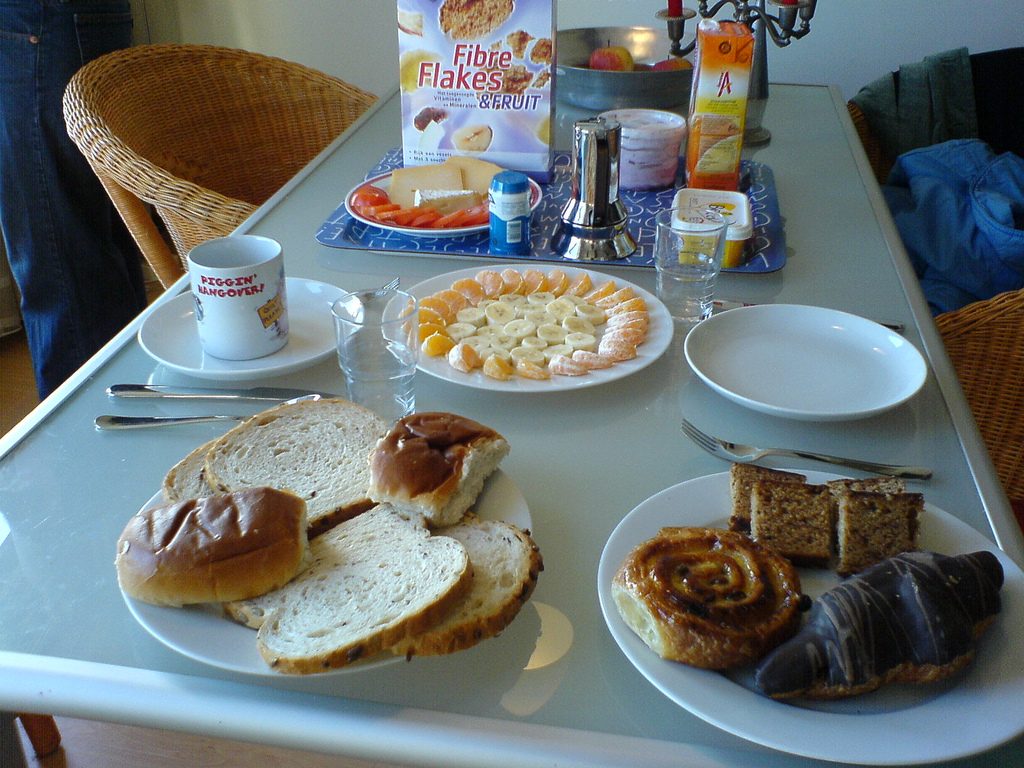
A traditional Dutch breakfast rarely involves a frying pan. Instead of bacon and eggs, most mornings in the Netherlands start with bread, a few deliberate toppings, and a cup of strong coffee. That simplicity is deceptive, because the dishes that make up this breakfast tradition carry centuries of history, regional pride, and a few genuinely odd ingredients that outsiders often have to see to believe.
This piece walks through seven dishes that define how the Dutch eat in the morning, from miniature pancakes sold at market stalls to a chocolate sprinkle topping with its own patent history. Along the way, there’s room to compare these customs with other breakfast traditions around the world, since no two countries seem to agree on what the first meal of the day should look like.
| Dish | Sweet or Savory | Base Ingredient | Typical Occasion |
|---|---|---|---|
| Poffertjes | Sweet | Buckwheat or wheat batter | Weekend treat, markets, fairs |
| Hagelslag | Sweet | Buttered bread, chocolate sprinkles | Everyday breakfast |
| Ontbijtkoek | Sweet | Spiced rye loaf | Breakfast or snack with butter |
| Uitsmijter | Savory | Bread, fried eggs, meat, cheese | Late breakfast or lunch |
| Appelflap | Sweet | Puff pastry, spiced apple | Bakery snack, breakfast on the go |
| Stroopwafel | Sweet | Thin waffle, caramel syrup | With coffee, any time of day |
| Wentelteefjes | Sweet | Stale bread, milk, egg, cinnamon | Breakfast or dessert |
1. Poffertjes
Poffertjes are small, puffy pancakes cooked in a special cast-iron or copper pan with dozens of shallow indentations, flipped one by one with a skewer rather than a spatula. Poffertjes get their name from the Dutch verb “pofferen,” meaning to puff up , which describes exactly what the batter does the moment it hits the hot metal.
Their exact origin is debated, but most food historians agree poffertjes were first created in the Netherlands in the 17th century as Dutch bakers experimented with new pancake styles. One popular account traces them to a Dutch abbey, where monks are said to have made the tiny cakes as a substitute for communion bread before street vendors picked up the recipe and turned it into a market staple.
The buckwheat flour traditionally used in poffertjes wasn’t a flavor choice so much as a necessity. Poffertjes were originally seen as a poor man’s dish , largely because wheat shortages tied to the French Revolution pushed bakers toward the cheaper, slightly bitter grain. Today’s versions usually blend buckwheat with wheat flour, milk, and eggs for a softer bite, then arrive dusted with powdered sugar and a pat of butter.
Pro Tip: If you don’t own a poffertjespan, a mini pancake pan or an aebleskiver pan will get close to the right shape, though the classic Dutch indentations are shallower and cook faster.
Street stalls at markets like Amsterdam’s Albert Cuyp still sell poffertjes by the paper plate, and they turn up on breakfast tables across the country, especially on weekends when there’s time to fire up the pan. For readers planning a sweet start to any morning, the same instinct shows up in ideas for a Valentine’s Day breakfast spread, where small, shareable sweets tend to outperform anything heavy.
2. Hagelslag
Hagelslag is the Dutch breakfast habit that confuses almost everyone who didn’t grow up with it: chocolate sprinkles, eaten cold or slightly melted, scattered over buttered bread. Wikipedia describes hagelslag as small, oblong, sweet-tasting chocolate sprinkles or granules sprinkled on slices of buttered bread or rusks , and notes they’re traditionally eaten by the Dutch for breakfast or lunch.
The name itself translates to “hailstorm,” and the story behind it is oddly specific. According to Food Republic, the name was inspired by an autumn hailstorm in 1919 in Amsterdam , when Venco director B.E. Dieperink was searching for a new confection and the storm outside gave him the idea. That first version was white and anise-flavored rather than chocolate.
Chocolate hagelslag as it’s known today came later. Peters Gourmet Market credits its invention to a specific company and date: Dutch chocolate hagelslag was invented in 1936 by Gerard de Vries for Venz , the company that built the first machine capable of producing the tiny strands at scale. For a product to legally carry the hagelslag name in chocolate form, it also has to clear a quality bar, since true Dutch chocolate hagelslag must contain at least 32% cocoa .
Important Note: Consumption figures for hagelslag vary by source and year, with some reports citing roughly 30 million pounds consumed annually and others giving different totals in kilos. Treat any specific national consumption number as an estimate rather than a fixed statistic.
Brands matter here almost as much as flavor. De Ruijter has been making hagelslag for generations , and most Dutch pantries keep at least one box within reach. The habit of topping a morning staple with something sweet and distinctive isn’t unique to the Netherlands, either; readers curious about similar contrasts might enjoy comparing it with the carefully portioned sets found in a traditional Japanese breakfast, where balance takes priority over sweetness.
3. Ontbijtkoek
Ontbijtkoek sits somewhere between bread and cake. It’s a dense, spiced loaf made primarily from rye flour, sweetened with sugar or honey, and seasoned with a warm mix of cinnamon, cloves, ginger, and nutmeg, which gives it an aroma closer to gingerbread than anything typically called a loaf.
In parts of the northern Netherlands, particularly Groningen, the regional version known as Groninger koek is thick enough to eat with a fork rather than slice thin. Most households serve ontbijtkoek simply, with a layer of butter and nothing else, since the spice blend already does the flavor work. It functions as both a breakfast food and an anytime snack, which is part of why it has stayed a pantry staple for generations.
The texture and spice profile put ontbijtkoek in the same family as other European spiced breads, a category that includes versions found across German home cooking traditions, where warming spices and dense, slow-baked textures play a similar comfort-food role. Ontbijtkoek keeps well for days, which made it practical long before refrigeration was common and still makes it a favorite for packed lunches and travel.
4. Uitsmijter
Uitsmijter translates loosely to “bouncer” or “one who throws out,” and the dish earned that nickname because it was traditionally served late to guests as a hint that the evening was over. It has since become one of the most common savory breakfast and lunch orders in Dutch cafés.
At its core, an uitsmijter is open-faced: a slice of buttered bread topped with ham, roast beef, or cheese, then finished with one or two fried eggs, yolks left runny. Some versions add a slice of tomato or a scattering of fresh herbs, but the formula rarely strays far from bread, meat, and egg.
It’s the closest thing the Dutch breakfast table has to a hearty, protein-forward option, which makes it a natural comparison point for the open sandwiches found in French culinary tradition, where a croque-monsieur follows a similar logic of bread, cheese, and egg built into one plate. Cafés across the Netherlands often list uitsmijter under “breakfast” and “lunch” simultaneously, since it works equally well at either time.
Key Insight: Because uitsmijter is served open-faced with runny yolks, it’s typically eaten with a knife and fork rather than picked up like a sandwich.
5. Appelflap
An appelflap is a triangular or half-moon pastry made from puff pastry or shortcrust, folded around a filling of spiced, diced apple, sometimes mixed with raisins or a touch of cinnamon sugar. Bakeries sell them fresh in the morning, and the pastry stays crisp enough to eat on the walk to work or school.
The appeal is partly about portability. Unlike ontbijtkoek or uitsmijter, which usually require a plate and a seat, an appelflap travels well, which has helped it stay popular as a grab-and-go breakfast alongside coffee. Bakeries typically bake a fresh batch each morning rather than holding stock from the day before.
The combination of fruit filling wrapped in layered pastry puts appelflap in company with other flaky, fruit- or cheese-filled pastries found across Greek baking traditions, where phyllo dough plays a similar structural role. What sets the Dutch version apart is the specific apple-and-spice filling, which leans toward the same cinnamon-forward profile found in ontbijtkoek and stroopwafel.
6. Stroopwafel
Stroopwafel is a thin, crisp waffle cookie pressed with a honeycomb pattern and bound together with a layer of caramel syrup, known in Dutch as stroop. The classic way to eat one isn’t straight from the bag; it’s balanced over the rim of a hot cup of coffee or tea so the steam softens the syrup layer inside, turning a crunchy cookie into something closer to a warm, gooey treat.
The town most associated with the stroopwafel’s origin is Gouda, where bakers are believed to have first pressed the thin waffles sometime in the 18th century. Fresh stroopwafels, sold warm at markets, are noticeably softer and chewier than the packaged versions found in supermarkets, which are baked for a longer shelf life rather than immediate eating.
Pro Tip: If a stroopwafel feels too stiff to bend, it hasn’t been warmed enough; a minute resting over a hot drink is usually all it needs.
Stroopwafels have traveled further internationally than most items on this list, showing up as a coffee-shop novelty well beyond Dutch borders. That same pattern of a simple street snack becoming an international export shows up in Malaysian street food culture, where portable, syrup- or sauce-based snacks follow a comparable path from local market to global appeal.
7. Wentelteefjes
Wentelteefjes is the Dutch answer to French toast, built from slightly stale bread soaked in a mixture of milk, egg, and sometimes a splash of cinnamon before being fried until golden. The dish began as a practical way to use up bread that was a day or two old rather than let it go to waste, a habit that still shapes how many Dutch households think about leftover bread today.
Once fried, wentelteefjes is typically finished with a dusting of cinnamon sugar, and some versions pair it with a dollop of applesauce or fresh fruit on the side. It occupies a flexible spot on the table, showing up as a weekend breakfast in some homes and as a simple dessert in others.
The stale-bread-to-sweet-breakfast transformation isn’t unique to the Netherlands; similar bread puddings and soaked-bread dishes appear in South African home cooking, where resourceful, bread-based comfort food plays a similarly central role. What distinguishes wentelteefjes is the specific cinnamon-and-milk soak, which ties it stylistically back to ontbijtkoek and stroopwafel rather than to savory dishes like uitsmijter.
Taken together, these seven dishes show that a traditional Dutch breakfast leans sweet, bread-centered, and unfussy compared to the fried, multi-course spreads common elsewhere. That contrast becomes even sharper next to a traditional Balkan breakfast, where dishes like byrek and other savory Albanian breakfast dishes built around cheese, olives, and pastry reflect a very different, Mediterranean-leaning food culture. Readers exploring authentic Albanian recipes will notice that petulla and trahana follow their own savory, bread-based logic, proof that regional breakfast traditions can start from similar ingredients and end up in entirely different places by the time the plate reaches the table.