Traditional Russian Clothing for Women: 21 Garments That Define Folk Costume

November 19, 2026
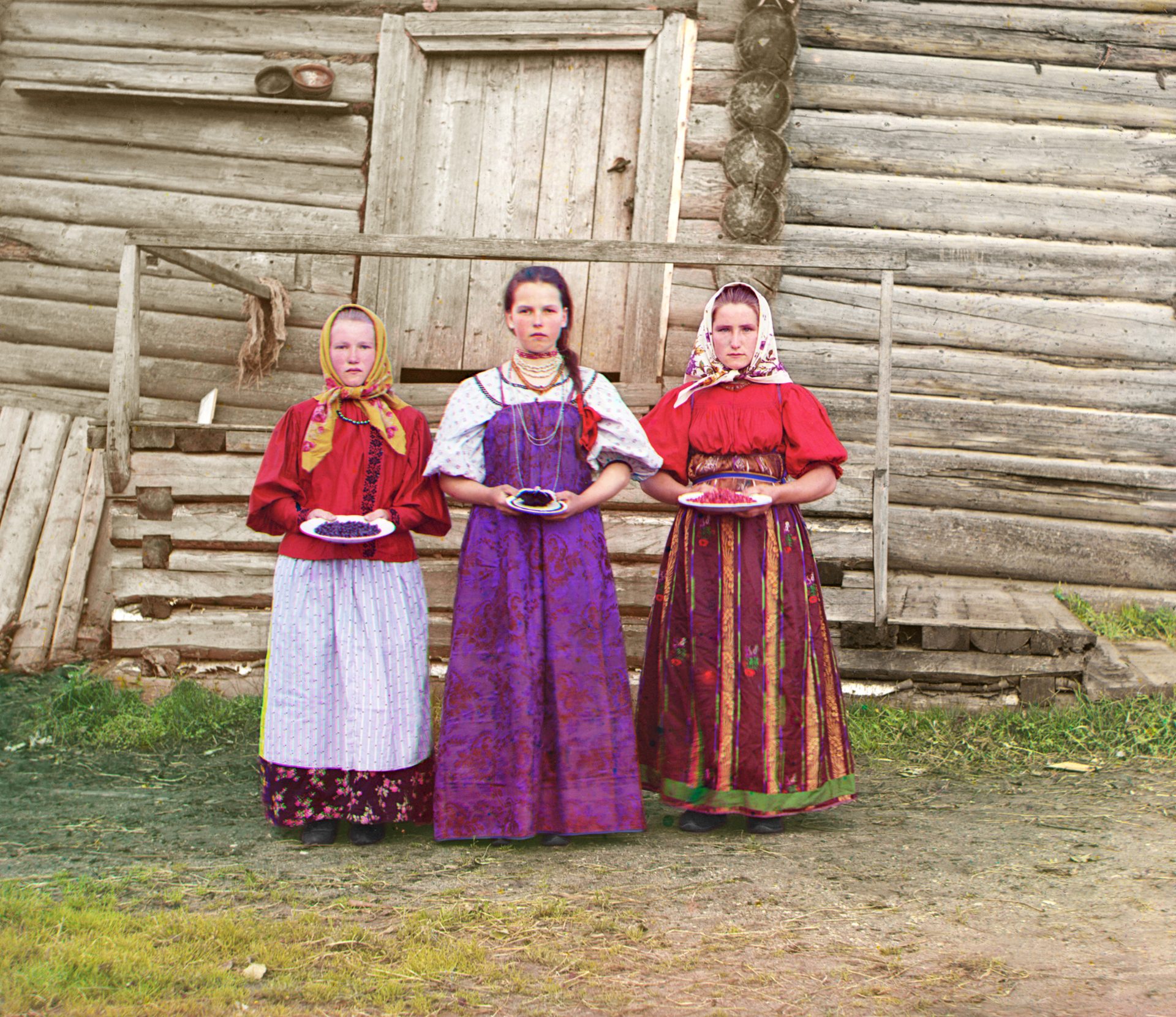
Long before fashion seasons and ready-to-wear collections existed, a Russian woman’s clothing told strangers almost everything about her at a single glance: her marital status, her home province, and often her family’s standing. Traditional Russian clothing for women grew into a layered system of shirts, skirts, dresses, headwear, and footwear, with each piece carrying its own name, construction method, and social meaning.
Traditional Russian costumes developed between the 12th and 18th centuries and varied between social classes, with peasant costumes most preserved into the early 20th century and distinctive elements for women like the poneva skirt or sarafan dress. This guide walks through 21 of those garments and accessories, from the everyday linen shirt worn under everything else to the jeweled headdresses reserved for a bride’s wedding day. For readers curious about how clothing choices connect to broader customs, traditional Russian food follows a similarly regional logic, with recipes and ingredients shifting from the northern forests to the southern steppe.
1. Rubakha
The rubakha was the foundation layer of nearly every Russian outfit, worn by men and women alike underneath heavier garments. A fine linen shirt known as the rubakha was worn under the sarafan, and while rubakhas varied in color and embroidery, most were puffy at the shoulder and gathered at the wrist, making it a staple item worn by men and women all over Russia.
What set the rubakha apart from a plain work shirt was its embroidery, which was never purely decorative. The rubakha worn underneath was the one garment every Russian woman, regardless of rank, decorated with embroidery, with the collar, cuffs, and hem as the focus because these were the edges where, according to folk belief, harmful spirits could enter the body, and protective patterns were stitched there as a form of spiritual armor.
Key Insight: The placement of embroidery on a rubakha was never random. Openings at the neck, wrists, and hem were considered vulnerable points on the body, so stitched patterns there were believed to work as a kind of protective barrier.
2. Sarafan
The sarafan is the garment most people picture when they think of traditional Russian clothing for women: a long, trapezoidal dress worn over the rubakha. A sarafan is a long, trapezoidal Russian dress worn by girls and women and forming part of Russian traditional folk costume. Beginning at the turn of the 18th century, the sarafan became the most popular article of peasant women’s clothing in the Northern and Central regions of Russia, and sarafans were regularly worn until well into the 20th century, having first been mentioned in chronicles dating back to the year 1376.
Construction mattered as much as color. Its silhouette was deliberately loose and flowing, designed to allow free movement during physical work and to layer easily over heavier undergarments in cold months. Red was the most prized shade, and that preference runs deeper than aesthetics. The variety of colors used in the traditional costumes displays ethnic diversity, and it is interesting to note that the Russian word for “beautiful” comes from “krasny,” which means “red” in Russian. Other traditional dress systems carry similarly loaded color symbolism; traditional Chinese clothing assigns comparable weight to red for celebration and status.
3. Poneva
While the sarafan dominated the north, the poneva was the signature garment of southern Russia. The poneva is one of the oldest elements of the traditional folk costume worn by Russian women. The word “poneva” means “blanket,” and the garment is a handspun woolen fabric that women wrap around their hips.
Unlike the sarafan, the poneva had a shrinking footprint over time. The poneva fell out of popularity in the 17th century, and at that point it was only worn by women in Southern Russia, where girls traditionally received a poneva when they came of age and were eligible to marry. It was worn in southern Russian regions as an alternative to the sarafan, consisting of panels of wool cloth wrapped and tied at the waist, often in a dark plaid or checked pattern, and historians use the poneva ensemble to distinguish the northern costume tradition from the southern one.
4. Panova
The panova is closely related to the poneva and the two names are sometimes used interchangeably in regional dialects, though in parts of western and central Russia the panova referred specifically to a closed, fully sewn skirt rather than an open wrap-around panel. This “glukhaya,” or closed, construction meant the fabric was stitched into a tube that a woman stepped into, rather than wrapped and tied at the waist like the open poneva. The distinction mattered for everyday movement and labor, since a closed skirt stayed in place during farm work without needing constant readjustment.
Regional variation of this kind is common in folk dress systems around the world, where a single base garment splits into local names and constructions depending on the village or district. Readers interested in how other national costumes handle similar regional splintering may find traditional Pakistani clothing a useful comparison, since its regional garments also vary in cut and name from province to province.
5. Zanaviska
The zanaviska was a decorative front apron, its name drawn from the Russian word for “curtain,” worn over the shirt and skirt in the ensembles of southern provinces like Voronezh and Tambov. Unlike a plain kitchen apron, the zanaviska was a showpiece: heavily embroidered, trimmed with lace or ribbon, and designed to cover the front of the body much like a curtain hangs across a window. It was typically reserved for festival dress rather than daily chores, layered over the poneva or panova ensemble to complete the look.
The zanaviska illustrates a broader pattern in traditional dress, where a functional garment type gets reimagined as a purely ornamental layer for special occasions. A similar shift from utility to display shows up across many folk wardrobes, something explored further on this site’s clothing and style section.
6. Letnik
The letnik belonged to a different social world entirely: the households of Moscow’s boyar nobility between the 15th and 17th centuries. It was a long, wide outer garment with distinctive hanging sleeves that draped well past the hands, often decorative rather than functional, and it was typically made from silk or other costly imported fabric. The name derives from “leto,” meaning summer, since the letnik was conceived as a lighter-weight robe for warmer months, in contrast to fur-lined winter coats worn by the same class of women.
Wearing a letnik was itself a statement of rank, since the fabric and the sheer volume of material required put it well out of reach for peasant households. Decorative panels called “vosklasniki” were sometimes attached at the shoulders, adding yet another layer of ornament that only the wealthiest women could afford to commission.
7. Dushegreya
The dushegreya, whose name translates loosely to “soul-warmer,” was a short, often sleeveless quilted jacket worn over the sarafan for extra warmth and visual richness. It sat at the waist or slightly below, fastened at the front, and was commonly trimmed with fur along the edges for merchant-class and noblewomen who could afford the extra material. Peasant versions existed too, usually simpler and made from wadded cotton rather than fur.
Layering short warm jackets over a base dress is a recurring idea in cold-climate traditional dress more broadly. Traditional German clothing includes comparable short bodice jackets worn over dirndl-style dresses, built for the same practical reason: insulation without sacrificing the silhouette underneath.
8. Navershnik
The navershnik was a wide, long overgarment pulled on over the complete sarafan or poneva ensemble for special occasions, its name literally meaning “that which goes over.” Typically made from white linen with woven or embroidered trim along the hem and sleeves, it added an extra ceremonial layer to an outfit that was already complete without it. Northern Russian villages favored this style most, pairing it with the tall headdresses typical of that region.
Because it went over an already-finished outfit rather than replacing any part of it, the navershnik functioned more like a ceremonial robe than a practical garment. Layered overgarments of this kind appear in many Asian traditional dress systems as well, including the structured outer robes found in traditional Japanese clothing, where an outer layer signals occasion rather than warmth alone.
9. Telogreya
The telogreya was a long, front-opening robe worn by noblewomen over other garments during cold weather, closely related to the dushegreya but considerably longer and more substantial. Its name combines “telo,” meaning body, with the verb for warming, and it typically featured decorative buttons running down the front along with fur trim at the collar and cuffs. This style was especially associated with 16th and 17th century Moscow court fashion, where it served as both practical outerwear and a display of embroidery skill.
The telogreya is often considered a direct predecessor to the shuba in terms of cut and purpose, though it remained a lighter, more tailored garment rather than a full fur coat. Long front-opening coats worn over base layers show up across many cold-weather wardrobes, a pattern also visible in traditional Indian clothing from the country’s colder northern regions.
10. Shuba
The shuba is the fur coat that anchored a Russian winter wardrobe, worn by both men and women across social classes, though the quality of fur marked the difference between a peasant’s coat and a noblewoman’s. A shuba, sometimes called a dublenka, is simply defined as a fur or sheepskin coat in most glossaries of Russian traditional dress, reflecting how central the garment was to everyday survival through harsh winters.
Sheepskin shubas were the most accessible version, while wealthier households commissioned coats lined with fox, sable, or other prized furs. The garment was worn over the sarafan and any additional layers like the dushegreya or telogreya, making it the outermost piece in a full winter outfit.
11. Kokoshnik
No piece of traditional Russian clothing for women is more recognizable than the kokoshnik, the tall, arched headdress that has come to symbolize Russian folk costume worldwide. The kokoshnik is a traditional Russian headdress worn by women and girls to accompany the sarafan, with a tradition that has existed since the 10th century in the city of Veliky Novgorod and spread primarily in the northern regions of Russia, where it was very popular from the 16th to 19th centuries.
The name itself has a surprisingly humble origin. Its name comes from an ancient Russian word “kokosh” meaning “a hen,” since the headdress was compared to a crest on the bird’s head, and it was designed for married women, entirely covering the hair because it was scandalous for a married woman to appear bareheaded outdoors; the front was richly decorated with pearl and nacre, colored glass beads or natural precious stones, while the back was made of silk or velvet with gold embroidery.
Key Insight: A kokoshnik was not an everyday accessory. Families treated it as an heirloom, bringing it out only for weddings, major holidays, or formal portraits, then carefully storing it for the next occasion.
12. Povoynik
If the kokoshnik was the headdress for grand occasions, the povoynik was its everyday counterpart. In everyday life, women wore povoyniki, soft hats with a shawl tied around to conceal the hair. Married women were expected to keep their hair covered at all times in public, and the povoynik made that possible without the weight and expense of a full kokoshnik.
Construction was simple by comparison: a soft fabric cap, sometimes stiffened slightly at the crown, with a cloth wrapped and tied to secure it in place. Because it was worn daily rather than for show, surviving povoyniki tend to be far plainer than the ornate kokoshniks that museums typically display.
13. Volosnik
The volosnik worked as an inner layer within the headdress system, tucked beneath a povoynik or an ubrus to keep every strand of hair contained. The volosnik was a mesh cap with an embroidered fabric border, worn over a povoynik, or either over or under an ubrus.
Because married women were required to keep their hair fully hidden, a single outer headdress often was not enough to guarantee coverage throughout a day of movement and work. The mesh structure of the volosnik let it sit close to the scalp, gathering loose hair before a heavier layer went on top.
| Headdress | Worn By | Typical Use |
|---|---|---|
| Kokoshnik | Married women | Weddings, holidays, formal portraits |
| Povoynik | Married women | Daily wear, underneath other headdresses |
| Volosnik | Married women | Inner hair-covering layer |
| Ubrus | Married women | Veil-style covering, pinned in place |
| Kika | Married women (southern Russia) | Horned ceremonial headdress |
| Venets | Unmarried girls | Open-back circlet for maidens |
14. Ubrus
The ubrus was a veil, closely related to the volosnik and povoynik in purpose but distinct in shape. The ubrus was a towel-like veil closely wrapped around a woman’s head and secured with special pins. It evolved from an earlier form called the povoy, which served the same function under a slightly older name.
The towel-like wrap gave the ubrus a softer silhouette than the structured kokoshnik, and it was often the final visible layer over a volosnik. Special pins held the fabric in place, a detail that distinguishes it from headdresses that relied purely on ties or ribbons.
15. Kika
South of Moscow, married women favored the kika over the kokoshnik as their primary ceremonial headdress. Southern Russian costume paired the homespun ponyova skirt with the crown-shaped kika headdress usually found in the south, in contrast to the sarafan and tall kokoshnik typical of North Russia. The kika’s defining feature was its horn-like or crescent-shaped front, a silhouette that set it apart visually from the kokoshnik’s crest.
Scholars sometimes group the kika under the broader kokoshnik family because both served the same social function of marking a married woman’s status. Regional museums tend to catalogue the two separately, though, since the construction techniques and materials differed from district to district.
16. Venets
Unlike every headdress discussed so far, the venets was worn by unmarried girls rather than married women, making it the clearest visual marker of maiden status. The venets was a late-period maiden’s headdress made on a foundation of birchbark or leather with ornamental cut-outs at the top, in the shape of spikes, embattlements, or leaves.
Visitors sometimes confuse the venets with the kokoshnik at first glance, but the two are built on opposite principles. The main difference between the two accessories lies in the high crest of the kokoshnik, which resembles a rooster’s comb, while the venets stays open at the back since a maiden’s hair did not need to be hidden the way a married woman’s did.
17. Kosnik
A maiden’s single braid was never left completely bare; the kosnik was the decorative ornament fastened to its end. Usually triangular or shield-shaped, the kosnik was embroidered or set with beads, giving a girl’s hair a finished, ceremonial look without requiring any headdress at all. Since unmarried women typically wore one visible braid rather than the two braids tucked under a married woman’s headdress, the kosnik became an important visual cue of its own.
The ornament doubled as a small piece of jewelry, often passed down or gifted as a girl approached marrying age. For readers curious about the broader naming and identity customs tied to Russian womanhood, this site’s guide to Russian girl names covers a related thread of cultural tradition.
18. Podniz
The podniz added a final touch of shimmer to the front of a kokoshnik or kika: a fringe or netting of pearls, beads, or glass drops hung along the lower edge, framing the forehead. It was not worn alone but attached as an accessory to the main headdress, extending its decorative reach down toward the eyebrows and temples.
The weight and density of a podniz often signaled wealth just as clearly as the headdress itself, since a dense fringe of genuine pearls represented a significant investment of labor and material. Beaded ornamentation of this kind appears in formal headwear traditions elsewhere too, a comparison explored in the coverage of traditional American clothing on this site.
19. Valenki
Moving from headwear to footwear, the valenki is the felt boot that defined Russian winter practicality. Valenki are described simply as felt winter boots in glossaries of Russian traditional dress, made from pressed wool felt without stitched seams, which made them remarkably warm for their simple construction.
Because they had no seams or separate sole originally, valenki needed to be worn with dry feet and were typically paired with a rubber overshoe once roads turned slushy. Their insulating properties made them standard winter wear well beyond any particular region, cutting across class lines in a way few other garments on this list did.
20. Lapti
Before rubber boots and leather shoes became widely affordable, the lapti was the standard peasant shoe across rural Russia. Lapti are identified as bark shoes worn by peasants, woven from strips of linden or birch bark into a simple, flexible shoe shape that could be made at home without a cobbler.
Weaving a pair of lapti was a basic household skill, and because bark wore through quickly under daily use, families often kept several pairs in rotation. The shoe’s simplicity made it accessible to even the poorest households, standing in sharp contrast to the leather boots worn by merchants and nobility.
| Footwear | Material | Typical Wearer |
|---|---|---|
| Valenki | Pressed wool felt | All classes, winter use |
| Lapti | Woven birch or linden bark | Peasants, rural households |
| Onuchi | Woven linen or wool cloth strips | Worn under lapti or boots |
21. Onuchi ;
The onuchi was not a shoe at all but the cloth wrapping worn underneath one, functioning as a substitute for socks long before knitted stockings became common. Strips of linen in summer or wool in winter were wound tightly around the foot and lower leg, then the lapti or boots went on top to hold the wrapping in place.
This system of foot wrapping was practical as much as it was traditional, since cloth strips could be rewound to adjust for wear or dampness in a way a fixed sock could not. Similar wrap-and-layer footwear logic appears in cold-climate dress systems worldwide, a theme touched on in this site’s coverage of traditional Russian drinks and the broader customs that accompanied winter life in rural Russia.
Taken together, these 21 garments show how much information a single outfit could carry in traditional Russian society, from the province a woman called home to whether she was married, unmarried, or dressed for a holiday rather than a workday. Many of these pieces survive today mainly in museum collections, folk dance ensembles, and the occasional runway nod to Russian heritage, but the logic behind them, protection through embroidery, status through headwear, warmth through layering, still offers a clear window into how clothing and daily life were once inseparable.