Traditional Samoan Clothing: The Garments and Regalia of Fa’a Samoa

November 19, 2026
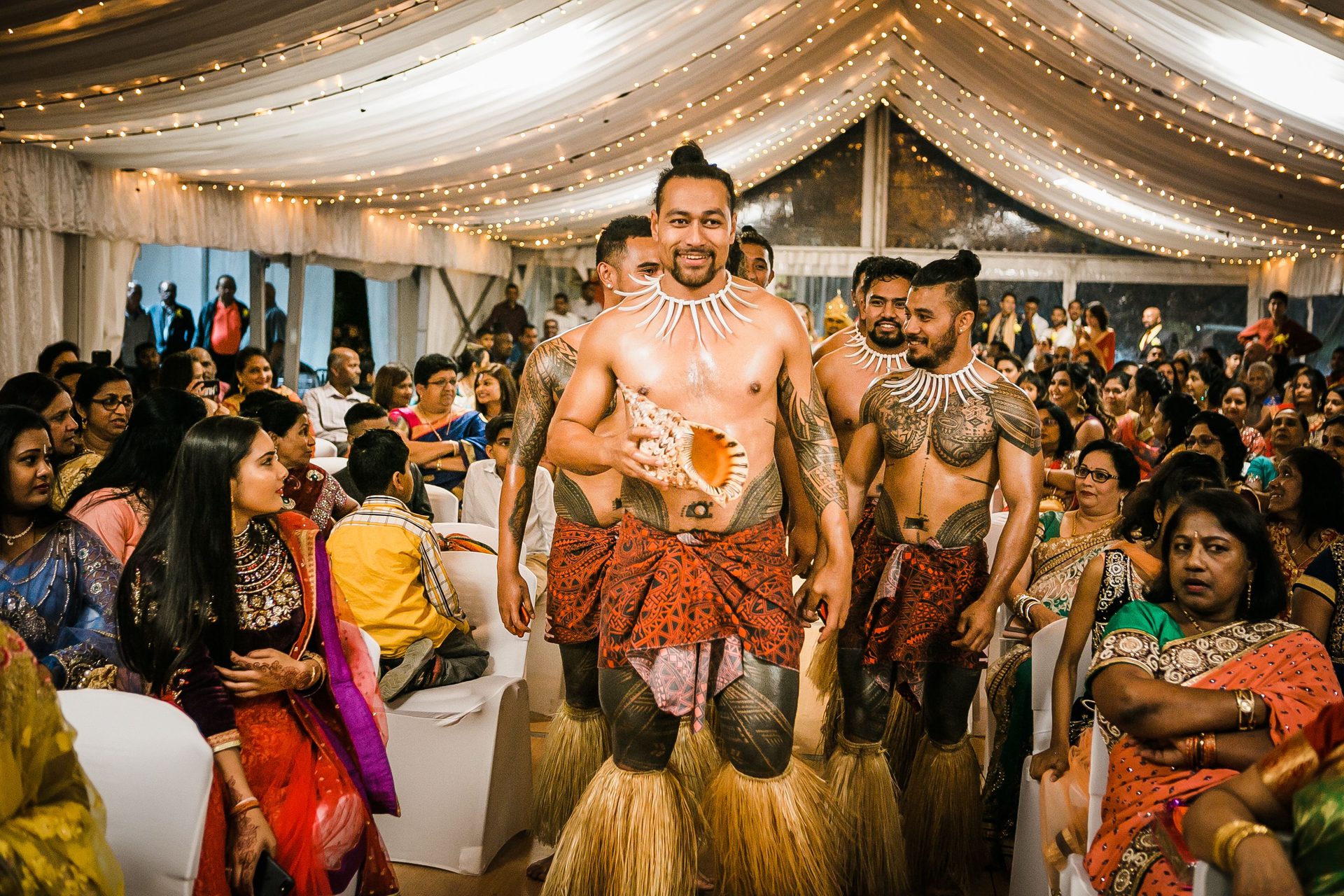
In Samoa, a finely woven mat that can take years to complete is never actually used as a floor mat. It is worn briefly, displayed at ceremonies, and then passed between families as a gift more valuable than money. That contradiction sits at the center of traditional Samoan clothing, where garments double as currency, rank markers, and spiritual objects bound up with fa’a Samoa, the Samoan way of life.
This guide looks at eight defining pieces of Samoan dress: the lavalava, ‘ie faitaga, puletasi, ‘ie toga, siapo, tuiga, ula nifo, and vala. Each one carries its own materials, occasions, and unwritten rules about who wears it and when.
1. Lavalava
The lavalava is the garment most people picture first when they think of Samoan dress. It is an article of daily clothing traditionally worn by Polynesians and other Oceanic peoples, made from a single rectangular cloth wrapped around the body much like a sarong or kilt. The word itself is both singular and plural in the Samoan language.
Before cotton and calico arrived with traders, lavalava were made from far more labor-intensive materials. The most special lavalava were made from fine mats called ‘ie toga, woven from pandanus leaves, while others were made from siapo, tapa cloth from the bark of trees like paper mulberry or wild hibiscus. Samoans also fashioned everyday lavalava from flower petals, leaves, feathers, and seashells attached to a backing of plaited plant fibers.
Today, calico and loomed cotton cloth have largely replaced woven or barkcloth lavalava for everyday use. Patterns tend to be bold and colorful for casual wear, while men in uniformed roles such as police or office staff often wear a plain, single-color version as part of their dress code. Readers interested in how other cultures adapt a single wrapped garment across contexts might compare this with the layered draping seen in traditional Indian clothing.
2. ‘Ie Faitaga
The ‘ie faitaga is the formal cousin of the everyday lavalava, reserved for church, weddings, and official functions. These specially tailored linen lavalava extend to mid-calf, often feature pockets and ties or buckles, and are consistently solid in color rather than the bright patterns seen on everyday wraps — known in Samoan specifically as ‘ie faitaga.
The style has a documented origin point outside Samoa itself. The formal, tailored linen lavalava styles worn across Tonga, Samoa, and Fiji trace back to the Fijian noble Ratu Sir Lala Sukuna, who introduced the buckled sulu to Fiji in 1920 after his military service and university education in Europe. From there, the tailored silhouette spread through the region, with each island group giving it a local name.
| Garment | Occasion | Typical Material |
|---|---|---|
| Lavalava | Daily wear, plantation work, casual outings | Printed cotton or calico |
| ‘Ie faitaga | Church, weddings, formal men’s events | Solid-colored linen or tailored cloth |
| Puletasi | Church, formal women’s events, cultural ceremonies | Matching printed cotton or silk two-piece |
Pro Tip: If attending a Samoan church service or formal gathering, a plain-colored ‘ie faitaga paired with a buttoned shirt is considered appropriate dress for men, while women typically wear a puletasi rather than a Western dress.
3. Puletasi
The puletasi is the standard formal dress for Samoan women, worn to church, weddings, and cultural celebrations. For events or work attire, the traditional garment for women is the puletasi, a matching skirt and tunic decorated with Samoan designs. It evolved from the late 19th-century “missionary dress,” which paired a lavalava with a loose, yoked, long-sleeved blouse or overdress introduced during the Christian missionary period.
At weddings especially, the puletasi carries extra symbolic weight. Brides often wear elaborately decorated puletasi, sometimes made with tapa cloth or adorned with woven mats. Everyday versions use lighter cotton prints in bold Polynesian motifs, while ceremonial puletasi may be embellished with lace, sequins, or siapo-inspired patterns. The two-piece cut has since spread beyond Samoa, with Tongan and Fijian women wearing closely related styles under different names, much as traditional Pakistani clothing shares tailoring traditions across neighboring regions.
4. ‘Ie Toga
No Samoan garment carries more weight, literally or culturally, than the ‘ie toga, commonly translated as “fine mat.” An ‘ie tōga is a special finely woven mat that holds important cultural value in Samoa; it is commonly called a “fine mat” in English even though it is never actually used as a mat, since its value is purely cultural.
Weaving one is a serious undertaking. Preparing the pandanus leaves for weaving can take many days, since the leaves must be soaked, dried, and bleached before being slit into strips, with the thinness of each strip determining the fineness of the finished mat — a process that can take years for the most prized examples. A finished ‘ie tōga has an unwoven fringe and a strip of red feathers, and is exchanged during cultural ceremonies such as matai chief title bestowals, weddings, and funerals.
The ‘ie toga’s status reaches well beyond Samoa’s shores now. Known as “ie Samoa,” the fine mat was added to UNESCO’s Representative List of the Intangible Cultural Heritage of Humanity. Collectively, these mats represent most of the traditional wealth held by Samoan families. You can see preserved examples through the Museum of New Zealand Te Papa Tongarewa’s collections , which document how individual mats are tied to specific families and historical events.
5. Siapo
Siapo is Samoa’s barkcloth, made long before woven cotton reached the islands. Tapa cloth, called siapo in Samoa, was made from mulberry bark and decorated with natural dyes in bold geometric designs. Artisans beat the inner bark flat, then join sheets together and stamp or freehand-paint them with repeating patterns drawn from nature, such as stars, fish, and plant forms.
- Primary material: bark from the paper mulberry or wild hibiscus tree
- Decoration method: natural dyes applied in geometric or figurative patterns
- Common uses: ceremonial clothing, wall hangings, gift wrapping for fine mats
- Status today: still produced by artisan communities for cultural events and tourism
‘Ie toga and siapo wraps continue to be worn today for ceremonial and festive occasions and during dance performances, even though calico has taken over most daily clothing. The craft parallels barkcloth and resist-dye traditions found elsewhere, in the same way regional print traditions distinguish traditional Australian clothing styles from one community to the next.
6. Tuiga
The tuiga is the ceremonial headdress worn by a village’s taupou, the ceremonial maiden, and occasionally by a manaia, her male counterpart, during formal dances and cultural presentations. It rises in a fan shape above the head and is traditionally assembled from several distinct materials, each requiring its own preparation.
- A base frame, historically built to fit the wearer’s head and support the weight of the piece
- Strands of human hair, often bleached to a reddish-blonde shade and arranged to radiate outward
- Decorative elements such as feathers, shell discs, or mirrors fixed along the frame
- A centerpiece ornament, sometimes incorporating tortoiseshell or carved bone
Because the tuiga is reserved for formal cultural performances rather than everyday dress, it functions less like clothing and more like regalia — comparable in social weight to ceremonial headpieces found in other Pacific and Asian courtly traditions, including the layered formal wear seen in traditional Chinese clothing.
7. Ula Nifo
The ula nifo is a necklace historically made from whale ivory, bone, or shell, worn by women of high status as a visible marker of rank within the village hierarchy. It is typically strung with carved tooth-shaped or disc-shaped pieces that sit close against the collarbone, often paired with the tuiga and other ceremonial ornaments during formal presentations.
Jewelry of this kind sits alongside other adornments described in accounts of Samoan ceremonial dress. At weddings, grooms may wear lavalava with tailored jackets, while both bride and groom may be adorned with leis, shells, or ula fala. The ula nifo follows the same logic: it is not an everyday accessory but a piece brought out specifically to signal status during weddings, chiefly title ceremonies, and major village events.
8. Vala
The vala is a sash-like wrap, generally made from tapa cloth, that appears in the most formal end of Samoan ceremonial dress rather than in daily life. Some Samoans still wear a tapa cloth vala sash in this way, though it is generally restricted to the ceremonial and festive regalia of orators or of people dressing as taupou maidens and manaia beaus.
Worn over or alongside a lavalava, the vala adds a second layer of texture and pattern that signals the wearer holds a specific ceremonial role, whether as an orator delivering a formal speech or as part of a dance troupe performing traditional siva. Because it is tied to role rather than simple decoration, the vala is rarely seen outside matai title ceremonies, weddings, and cultural performances staged for visiting dignitaries or diaspora celebrations abroad.
Key Insight: Across all eight garments, the pattern holds: the more labor a Samoan textile demands, from barkcloth beating to years-long fine-mat weaving, the more ceremonial weight it carries, while cotton and linen versions handle the practical demands of daily life.
Taken together, these eight garments show how Samoan dress operates on two tracks at once. Everyday pieces like the lavalava and puletasi keep pace with modern life, while the ‘ie toga, siapo, tuiga, ula nifo, and vala preserve a slower, hand-made record of status, family ties, and ceremony that Western fashion rarely asks a single outfit to carry. Readers curious about how other nations balance everyday and ceremonial dress can find similar contrasts in traditional Japanese clothing, traditional German clothing, and traditional American clothing, or browse the broader clothing and style category for more cultural dress guides.