Why Is My Pothos Turning Brown at the Tips? Causes and Fixes

September 29, 2026
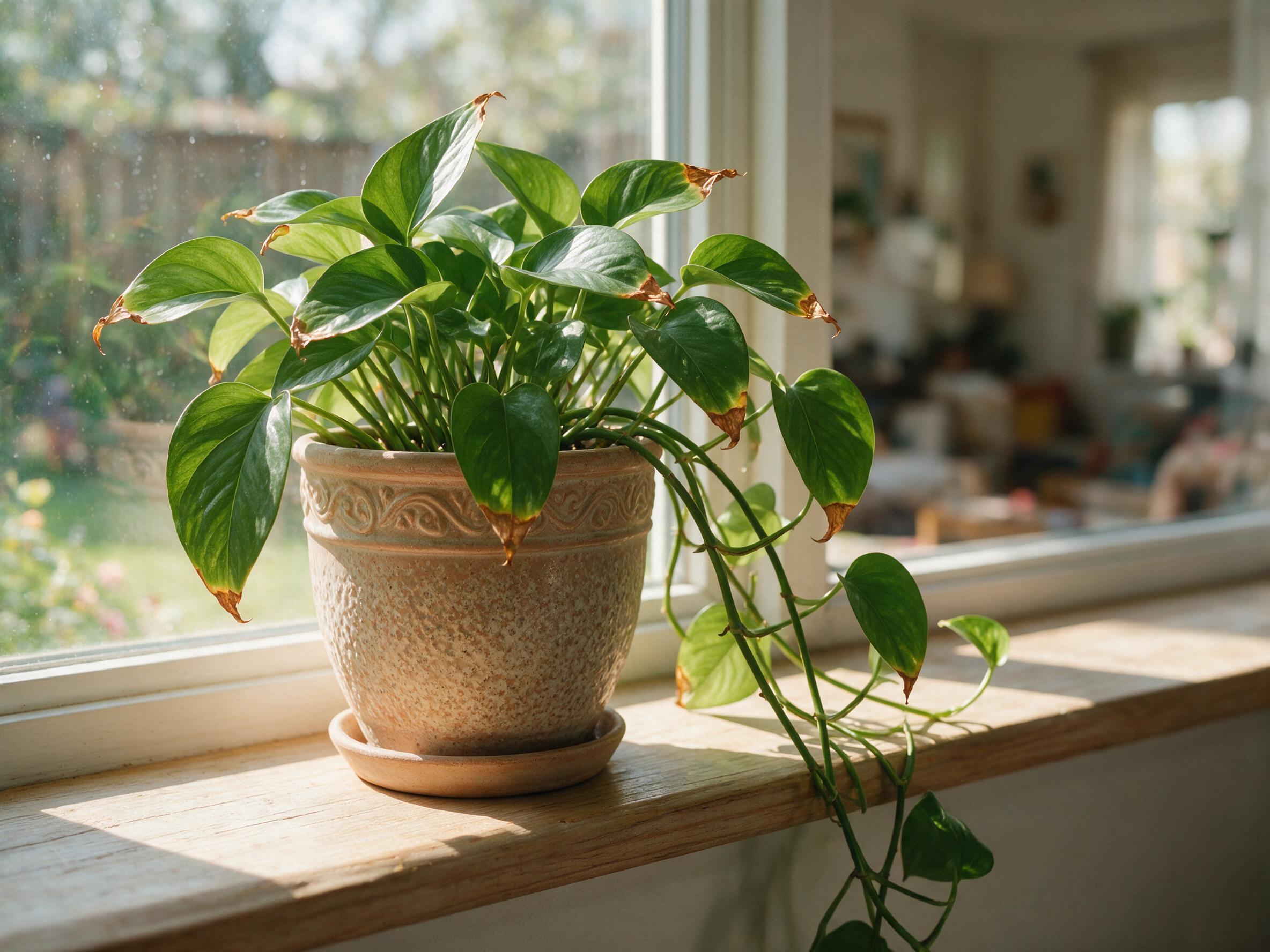
You glance over at your pothos and notice the leaf tips have gone crispy and brown. It can feel discouraging, especially when this plant has a reputation for being nearly indestructible. The good news is that brown tips on a pothos almost always point to a fixable care issue — and once you know what to look for, recovery is straightforward.
Pothos (Epipremnum aureum) is a hardy, fast-growing tropical vine that thrives in a wide range of indoor conditions. But even this forgiving plant sends distress signals when something is off. Brown tips are one of the most common — and most misread — of those signals. This guide walks you through every possible cause, how to tell them apart, and exactly what to do about each one.
What Does It Mean When Your Pothos Has Brown Tips?
Brown leaf tips and edges on pothos typically signify fertilizer or mineral burn. However, that is just one possible explanation. Pothos leaves can turn brown due to a variety of factors including pest infestation, fungal diseases, improper fertilizer application, too much or too little light, and other environmental factors.
The location and texture of the browning tell you a lot. If you notice your pothos leaves turning brown at the tips, this is an indication that the roots are being prevented from absorbing enough water — which can involve giving the plant too much or too little water, as well as too much fertilizer. Meanwhile, when the leaves turn brown and dry, it is most likely due to temperature change or too much direct sunlight.
Think of brown tips as your plant’s way of flagging a problem upstream — in the roots, the soil, the air, or the light. The tip is simply the last point to receive water and nutrients, so it shows stress first. The parts of the plant farthest from the roots will lose their moisture first, so you will see the edges of the leaves turning brown and crispy before the rest of the leaf is affected.
Is Brown Tipping in Pothos Always a Sign of a Problem?
Not always. All plants naturally lose their old leaves, which turn brown and die. This is a regular part of their life cycle. Deciduous plants drop all their leaves at the end of their growing season, but evergreens like pothos only shed their oldest leaves.
It is normal for the oldest leaves of a pothos to yellow or brown and eventually fall off as new growth takes over. If the browning is limited to one or two older, lower leaves while the rest of the plant looks healthy and is producing new growth, you likely have nothing to worry about. Simply trim those leaves and move on.
Where you should pay attention is when browning spreads to multiple newer leaves, appears on tips across the whole plant, or is accompanied by other symptoms like wilting, spots, or sticky residue. That pattern points to a care problem worth addressing.
Pro Tip: Check where the brown is appearing. Old, lower leaves going brown one at a time is normal aging. Multiple leaf tips browning across new and old growth at the same time signals a fixable care issue.
Watering Issues Causing Pothos Brown Tips
The most common reason for brown leaves starts with how and when your pothos is being watered. Both overwatering and underwatering produce brown tips — but the texture of the browning tells you which direction you have gone wrong.
Too little water will dehydrate your plant and result in brown, crispy leaves, while too much water will cause the plant cells to burst and result in soft, wilted, yellow-brown leaves. When overwatering is the culprit, the leaves may look mushy and typically yellow first before turning brown. Pothos like evenly moist soil, not soggy conditions.
For underwatering, if your pothos leaves are browning at the tips or edges and feel dry or crispy, underwatering is the likely culprit. Pothos might be drought-tolerant, but prolonged dry soil will stress the plant and cause it to sacrifice leaf tissue.
A hidden watering-related cause that many US plant owners overlook is tap water quality. Many municipal water systems contain fluoride, chlorine, and dissolved minerals, and fluoride and mineral salts cause brown leaf tips that many beginners misdiagnose as underwatering. Hard water is especially common in the Southwest, Midwest, and Rocky Mountain states. If you suspect this, let tap water sit overnight in an open container before using it, or switch to filtered or distilled water.
Water your pothos once a week when the top 2–3 inches of the soil become entirely dry. You can check with your finger or a simple soil moisture meter — both work well.
Light Conditions Behind Pothos Brown Tips
Light is a surprisingly common driver of brown tips, and it can go wrong in both directions. Too much direct sunlight can make pothos leaves turn brown — a condition often referred to as sunburn. The leaves might develop large, light brown patches in the center or on one side, and browning at the tips or edges is another sign of too much light.
Variegated pothos need brighter light than all-green varieties, but none should be exposed to prolonged, harsh sunlight for extended periods. If your plant sits on a south- or west-facing windowsill that gets strong afternoon sun, that is a likely culprit. If your pothos is growing by the side of the window, place a sheer curtain to control the amount of sunlight it receives.
Too little light also causes problems. The leaves of pothos can become discolored if they are exposed to too little light. Even though pothos can tolerate low light conditions, the best way to solve the problem of brown leaf tips is to provide moderate indirect light for your houseplant. If your plant is in a genuinely dark corner, consider moving it closer to a window or supplementing with a small grow light on a timer.
The sweet spot for pothos is bright, indirect light — think a few feet back from a sunny window, or directly in front of a north- or east-facing window. The morning sun is gentler than afternoon sun, so an east-facing window often works really well.
Pro Tip: If the brown patches on your pothos appear on the side of the leaf closest to the window, direct sunlight is almost certainly the cause. Move the plant back a few feet or add a sheer curtain to filter the rays.
Soil, Nutrients, and Root Health Causing Pothos Brown Tips
What is happening underground matters just as much as what you can see above it. Three soil-related problems commonly produce brown tips: fertilizer burn, depleted soil, and being root-bound.
Over-fertilizing your pothos can cause brown leaves due to an imbalance of nutrients in the soil. This fertilizer burn damages roots, preventing them from absorbing water properly. If you feed your pothos too often or with extremely strong fertilizer, you may notice browning soon after.
The fix is to flush the soil. Run water through the pot thoroughly several times, allowing excess fertilizer salts to drain out. Moving forward, feed your plant only once every four to six weeks during the growing season with a diluted, balanced fertilizer. Less is more when it comes to pothos — they do not need heavy feeding to thrive indoors.
Depleted or compacted soil is another culprit. Think about the last time you repotted your pothos. If it has been in the same pot for years, the soil could be compacted and depleted of nutrients. Healthy roots should be firm and light-colored. If they look dark and mushy or overcrowded, repot the plant in fresh soil and a new pot that is a little larger.
Being root-bound can cause a lack of minerals in the soil and might even lead to root rot, and these issues often result in the leaves turning brown. When you do repot, use a pot that is about 1 to 2 inches bigger in diameter so the roots have room to grow without overwatering becoming a problem.
If you suspect root rot from overwatering, take the plant out of the infected soil, cut off any infected roots with a sterilized blade, and clean the plant with a mixture of 1–3% hydrogen peroxide to 2 parts distilled water. Replant in clean, well-aerated, well-draining soil.
Environmental Stress Triggering Pothos Brown Tips
Your home’s indoor environment — especially in the US, where central heating and air conditioning are the norm — can stress a pothos in ways that show up as brown tips.
Humidity is one of the biggest factors. Pothos are native to tropical regions, so they naturally thrive in humid conditions. In dry indoor environments, especially during winter with heaters running, leaf edges may dry out and turn brown. If you notice crispy tips despite proper watering, low humidity could be a problem.
A room humidity of about 50% is fine for pothos, but if the plant is near heat sources or in an overly dry room, brown spots may appear on the leaves. You can raise humidity by grouping plants together, placing a humidity tray with pebbles and water under the pot, or using a humidifier. Regular misting helps temporarily but is not as effective as consistent humidity. Keeping your pothos in a bathroom or kitchen can also provide a naturally more humid environment for lush growth.
Temperature swings are another source of stress. Temperatures below 45°F will lead to black edges on pothos, and temperatures exceeding 80°F will also cause dry brown marks and curling leaves. It is important to keep your golden pothos away from vents or any area of your home with a draft, as temperature fluctuations are bad for the plant’s leaves.
Transplant shock is worth mentioning too. When pothos plants are repotted or moved to a new spot, they can get stressed, and this can sometimes mean the leaves turn brown. Give your pothos time to adjust to the new home or pot — after it has been moved or repotted, let it have a few weeks to get used to its new environment.
Pests and Disease Leading to Pothos Brown Tips
When care conditions look right but browning persists, pests or disease may be to blame. Sometimes the brown spots on your pothos are due to pests. Take a close look at the discolored areas and see if there is any webbing, sticky substances, or moving little dots. Spider mites and mealybugs love pothos plants and can cause brown spots as they feed on the leaves.
Here is what to look for with each common pest:
- Spider mites: Spider mites are microscopic arachnids that thrive in dry conditions. They create fine webbing on leaves and cause stippling — tiny yellow dots — as they feed. To confirm, hold a sheet of white paper below affected leaves and shake them gently; specks that look like ground pepper falling onto the paper are a positive ID.
- Mealybugs: Mealybugs appear as white, fluffy clusters on stems and leaf joints. They excrete sticky honeydew, attracting mold and further harming the pothos.
- Scale insects: Scale insects appear as brown bumps attached to stems and the undersides of leaves, often along the midrib. They produce sticky honeydew below the plant and are easy to miss because they look like part of the plant.
For treatment, isolate the plant to prevent spread, rinse leaves with a strong stream of water to dislodge mites, and apply neem oil or insecticidal soap weekly, focusing on leaf undersides. Increase humidity around the plant to deter future infestations. For mealybugs, dab them with a cotton swab dipped in rubbing alcohol, then spray with a mixture of water, dish soap, and neem oil. Prune heavily infested areas to save the plant’s energy.
On the disease side, diseases like root rot, leaf spot, and bacterial wilt can cause brown spots on pothos leaves. They usually happen when you have overwatered your plant, there is not enough airflow, or the humidity is too high. Bacterial leaf spot caused by Pseudomonas cichorii can lead to yellow-brown spots or halos on the leaves and is mainly caused by extreme humidity and overhead watering. Improve air circulation and avoid wetting the foliage when you water.
You can find more guidance on keeping unwanted visitors away from your houseplants in this article on how to keep cats out of house plants, which also covers general plant protection strategies.
How to Diagnose Why Your Pothos Has Brown Tips
Running through a quick physical check resolves most cases without guesswork. Use the pattern of the browning and the condition of the soil and roots to narrow it down fast.
A three-step physical check resolves the majority of diagnoses in under two minutes. First, press a finger 2–3 inches into the soil: wet soil with a yellowing or drooping plant points to overwatering; bone-dry soil with wilting points to underwatering. Second, remove the plant from its pot and examine the roots: white and firm means healthy; brown and soft means rot. Third, inspect the undersides of three to four leaves with a strong light: fine moving dots are spider mites; white cottony clusters are mealybugs; brown bumps with a sticky surface are scale.
Use this quick-reference table to match your symptoms to the most likely cause:
| Symptom Pattern | Texture | Most Likely Cause |
|---|---|---|
| Tips only, across many leaves | Crispy and dry | Underwatering or low humidity |
| Tips and edges, soft or mushy | Soft, yellow-brown | Overwatering or root rot |
| Tips spreading inward | Dry, sometimes crusty soil rim | Fertilizer salt buildup or hard water |
| Large patches on one side of leaf | Bleached, papery | Direct sunlight / sunburn |
| Spots with webbing or sticky residue | Stippled or speckled | Spider mites, mealybugs, or scale |
| Yellow-brown halos or rings | Water-soaked edges | Bacterial leaf spot |
| Only oldest, lowest leaves affected | Dry and papery | Normal aging — no action needed |
If you want a broader look at what various browning patterns mean across different plant types, this overview of why pothos turns brown covers the full picture, including stems and whole-leaf browning. You can also use one of the best iPhone apps for identifying plants to help cross-reference symptoms with a visual database.
How to Fix a Pothos That Has Brown Tips
Once you have identified the cause, the fixes are straightforward. Work through the steps that match your diagnosis.
For overwatering: Stop watering immediately and move the plant to a dry, well-aerated spot for a few days. The initial step in saving a pothos plant affected by overwatering is usually to remove the plant from its pot to inspect the soil and roots for sogginess and disease. If roots are brown and mushy, trim the rotted portions with sterilized scissors and repot in fresh, well-draining soil.
For underwatering: Water thoroughly until liquid drains from the bottom, then let the soil partially dry before watering again. Establishing a consistent watering routine will help prevent crispy leaves and keep your pothos thriving with full, healthy foliage.
For fertilizer burn: Flush the soil by watering it thoroughly several times, allowing excess fertilizer salts to drain out. Going forward, use a diluted balanced fertilizer only during the spring and summer growing season.
For low humidity: Use a humidifier to raise the room’s humidity to around 50%, or group your potted plants closer together to slightly increase humidity around them.
For sunburn: Move your plant to a spot where it will receive medium to bright indirect light. If your pothos is growing by the side of the window, place a sheer curtain to control the amount of sunlight it receives.
For pests: Isolate the affected plant immediately. Treat spider mites and mealybugs with neem oil or insecticidal soap applied weekly. Whatever the pest, you have to be persistent — a single treatment rarely deals with an infestation.
After addressing the root cause, trim the brown tips. If only the tip of the leaf is brown, you can snip off the dead part. If more than a third of the leaf is brown or yellow, cut off the leaf close to the node, where the leaf meets the stem. Always use clean, sharp scissors to avoid introducing bacteria. Removing brown leaves allows your pothos to direct energy toward new growth.
If you are also noticing yellow leaves alongside the brown tips, check out this guide on why pothos turns yellow — the causes often overlap and addressing both together speeds recovery.
Pro Tip: When trimming brown tips, follow the natural pointed shape of the leaf with your scissors rather than cutting straight across. The result looks far more natural and your plant will not look like it had a haircut.
How to Prevent Pothos Brown Tips Going Forward
Prevention is mostly about building consistent habits. It is usually something small done consistently wrong — watering on a schedule instead of reading the soil, placing a tropical next to a furnace vent, or keeping a pothos in a corner darker than a closet — that causes ongoing problems.
Here are the key habits to build:
- Water by feel, not by schedule. Watering on a fixed schedule instead of checking soil moisture is a leading cause of houseplant problems. Press your finger into the top 2–3 inches of soil. If it is dry, water. If it is still moist, wait.
- Use the right water. If you live in an area with hard tap water, let it sit overnight before using it, or switch to filtered water. Hard water is especially common in the Southwest, Midwest, and Rocky Mountain states, where mineral buildup is a frequent hidden cause of brown tips.
- Match light to the plant’s needs. Pothos need regular, indirect sunlight. Direct sunlight will cause scorching, while too little light will cause your plant to use more energy than it consumes.
- Feed lightly and only during the growing season. Brown leaves can mean your pothos has been given too much or too little fertilizer. You only want to give your plant a light feeding in the spring and summer.
- Maintain moderate humidity. Pothos like conditions similar to where they naturally grow in Southeast Asia — warmth, moderate humidity, and filtered light. A pebble tray or nearby humidifier makes a real difference in dry US homes during winter.
- Inspect leaves regularly. Regularly dusting your pothos will give you the opportunity to check for pests and get rid of them if you see any. Catching an infestation early is far easier than treating a heavy one.
- Repot when needed. Signs a plant genuinely needs repotting include roots circling out of drainage holes, roots pushing through the soil surface, or water running straight through the pot without being absorbed. Repot in spring when the plant is entering active growth.
For more ideas on easy-care indoor plants that pair well with pothos, browse this list of the best houseplants for low-light areas. You can also explore the different types of pothos plants to find a variety that suits your specific light and humidity conditions.
FAQ
Can brown tips on pothos turn green again?
No. Once leaf tissue has died and turned brown, it will not revert to green. You can trim the brown portion off with clean scissors, but the discolored cells are gone for good. The goal is to fix the underlying cause so new growth comes in healthy.
Why are only the tips brown and not the whole leaf?
The parts of the plant farthest from the roots will lose their moisture first, so you will see the edges and tips of the leaves turning brown and crispy before the rest of the leaf is affected. Tips are essentially the last stop on the plant’s water and nutrient delivery system.
How do I know if it is low humidity or underwatering causing the brown tips?
Check the soil first. If the soil is dry, underwatering is the more likely cause. If the soil is adequately moist but the tips are still browning — especially in winter when your heat is running — low humidity is the more probable culprit. This is especially common in centrally heated homes during winter, when indoor relative humidity can fall below 30%.
Is tap water causing my pothos tips to brown?
It can be. Browning tips on green leaves are sometimes caused by a buildup in the soil of salts, chlorine, minerals, or fluoride from tap water. If you are in a hard-water area and have ruled out other causes, switching to filtered or distilled water and flushing the soil is worth trying.
How often should I fertilize my pothos to avoid brown tips from fertilizer burn?
Feed your plant only once every four to six weeks during the growing season with a diluted, balanced fertilizer. Do not fertilize at all during fall and winter when the plant’s growth naturally slows.
My pothos has brown tips after I repotted it. Is that normal?
Yes, it can be. Repotting stress typically comes from root damage during the process itself or from a pot that is too large for the current root ball. Damaged roots temporarily reduce water and nutrient uptake — some drooping or leaf drop over two to three weeks is a normal part of recovery. Keep the plant in stable light and temperature while it adjusts.
Can I use the same diagnosis approach for other plants?
The soil-check method works across most tropical houseplants. If you grow a variety of plants at home, it helps to learn the specific needs of each species. Browse the types of plants guide for a broader look at how different plant families respond to care conditions, and check out the care guides for rubber plants and aloe vera plants if you grow those alongside your pothos.