Why Is My Lavender Leggy? What’s Happening and How to Fix It

September 24, 2026
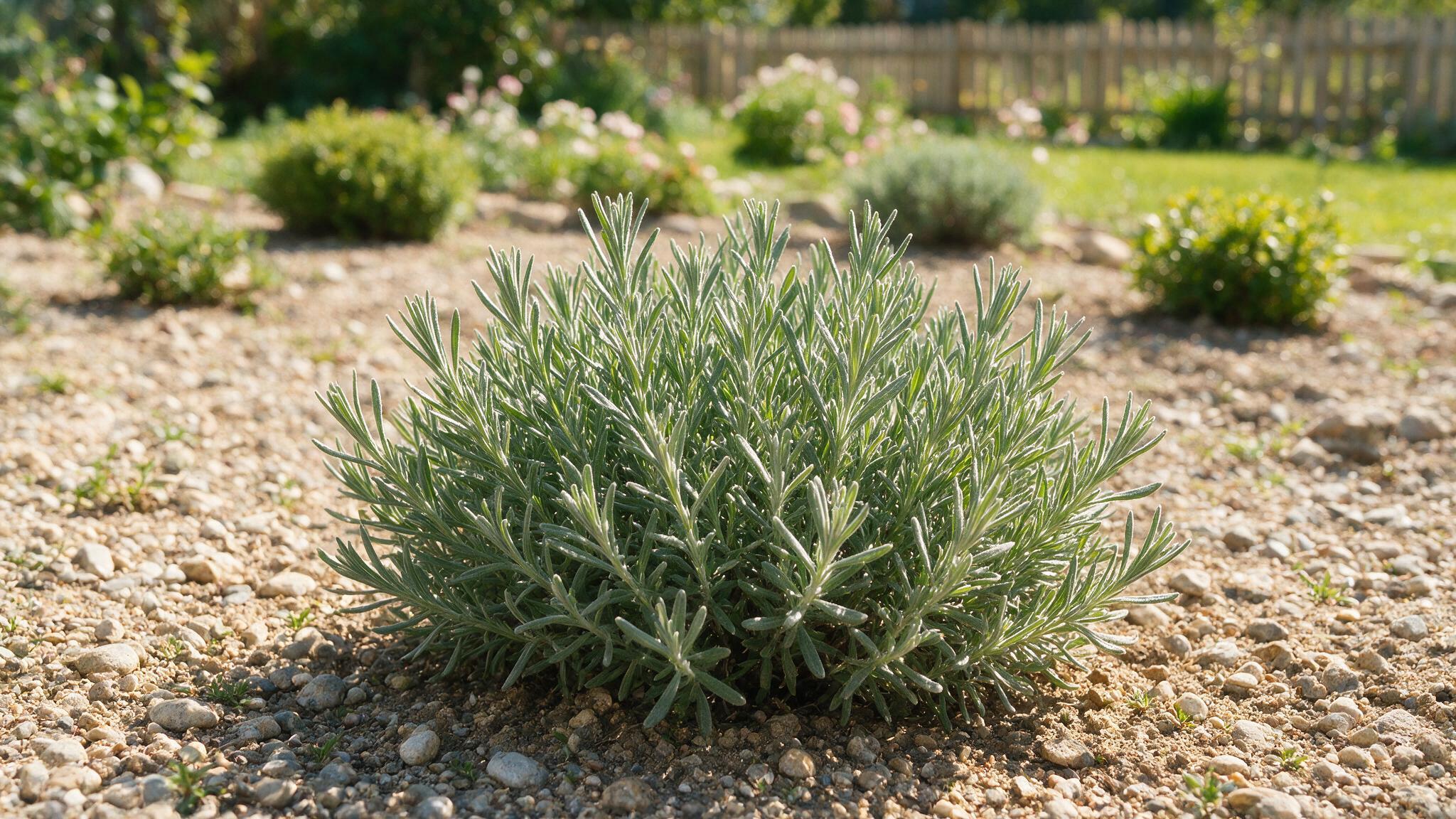
You step outside, glance at your lavender, and something feels off. The plant that’s supposed to look like a tidy, fragrant mound has turned into a sprawling tangle of long bare stems with a thin tuft of green barely hanging on at the tips. It looks exhausted — and you’re not sure whether to prune it, move it, or just start over.
The good news is that leggy lavender is one of the most common problems US gardeners run into, and in most cases it’s completely fixable — as long as you understand what’s actually driving it. The fix depends entirely on the cause, and the wrong move (cutting into old wood, for example) can finish the job that neglect started. This guide walks you through exactly what’s happening, why it happened, and what you can realistically do about it.
What’s Actually Happening to Your Lavender Right Now
Lavender is a sub-shrub, not a herbaceous perennial. It doesn’t reset itself each season the way hostas or echinacea do. That distinction matters a lot when you’re trying to understand why your plant looks the way it does.
English lavender (Lavandula angustifolia) produces new growth only from the current season’s green stems — not from the old brown wood at the base. Lavender becomes leggy and woody when it is not pruned regularly. The plant produces new growth from the current season’s stems, not from old wood. Without annual pruning, the base of the plant becomes an increasingly thick tangle of bare wood.
Left unpruned, the green zone at the top of each stem migrates upward by 2–4 inches every growing season. After three or four years without pruning, you’re left with stems that are 80–90% grey wood, with a thin crown of green barely clinging to the tips. That’s the leggy plant you’re looking at right now.
Lavender’s growth habit is to expand outward and upward each year. Unpruned plants grow heavy with woody stems that eventually split open under their own weight, leaving a gap in the centre of the plant. If you’re seeing that open, hollow center, the woody takeover is already well underway.
Pro Tip: Run your fingers down a stem from the tip toward the base. The point where you feel the transition from soft green growth to hard brown wood is your pruning boundary. Never cut below it.
Is This Normal, or a Sign Something’s Wrong?
Some woodiness at the base of a mature lavender plant is completely normal — even healthy. A plant that’s three or four years old will naturally have a woody crown. That’s not a problem. The problem is when the woody zone has crept so far up the stems that there’s almost no green left.
Here’s a quick way to tell where your plant stands:
- Mildly leggy: Stems are long and open, but green growth is still visible within 4–6 inches of the base. This plant is very salvageable.
- Moderately leggy: Green growth is only at the tips, with 6–10 inches of bare wood below. Recovery is possible but takes a full growing season.
- Severely leggy: If the plant is 80% or more bare wood with no green growth visible below 6 inches, replacement is the most reliable option.
New silver shoots after pruning mean recovery. Fresh silver-gray shoots pushing out from the base of the stems after spring pruning signal the plant still has healthy living wood and is actively growing. If you see those after a prune, you’re on the right track.
It’s also worth checking whether your plant is simply dormant rather than dying. It’s hard to distinguish between dormant and dead lavender plants. Though dormant plants will take on a woody appearance throughout winter, growth should resume with the arrival of warmer temperatures in the spring. If you’re reading this in late winter or early spring, give it a few more weeks before making any decisions.
The Real Trigger Behind Leggy Lavender
There’s almost always one primary cause behind leggy lavender. Identifying yours before you pick up the pruners makes all the difference.
Skipped or Insufficient Pruning
This is the most common culprit, by a wide margin. Gardeners’ World warned: “Lavender can become very leggy, bearing few flowers. The reason for this is lack of, or poor, pruning. Many gardeners just deadhead hardy types, which also leads to leggy plants and not many flowers.”
Lavender needs regular haircuts to maintain its bushy form and encourage prolific flowering. If you only deadhead the spent blooms or prune very lightly, the woody stems at the base can become dominant, and the plant will put all its energy into growing long, weak shoots rather than compact, leafy growth.
Annual pruning into the green growth prevents the plant from going woody and keeps new flower-bearing stems coming from the base. Skip pruning for two or three years and recovery becomes very difficult.
Not Enough Sun
Insufficient sun is the most common cause of leggy growth and sparse flowering. When lavender doesn’t get enough direct light, it stretches its stems in search of it — a process called etiolation. This reaching causes longer internodes (the space between leaf nodes) and fewer leaves along the stem, leading to that characteristic sparse, leggy appearance.
NC State Extension’s plant profile for Lavandula angustifolia specifies a minimum of 6 hours of direct, unfiltered sunlight daily. The key word is unfiltered. Dappled shade from a nearby tree counts as shade, not sun. If your plant is near a fence, wall, or established shrub, check how that shadow moves across the bed throughout the day — not just in the morning.
Pruning alone won’t solve shade-driven legginess — the new growth will just stretch again in the same conditions. First, remove or reduce the shade source if possible. If the plant is in a pot, move it. If it’s in the ground and the shade is structural (a wall, a fence, a permanent tree), transplant to a sunnier position in early spring.
Soil That’s Too Rich
This one surprises a lot of US gardeners who are used to amending their beds with compost every season. Lavenders thrive on neglectful care and actually grow and produce more flowers in soil that is medium to low fertility. The soil in their native Mediterranean is relatively poor and sandy but it is in these conditions that lavenders grow best and produce the strongest aromas.
While less common, sometimes overly rich soil or too much nitrogen fertilizer can contribute to leggy growth. Lavender prefers lean, well-draining soil and doesn’t need a lot of extra feeding. Excess nitrogen encourages leafy growth over flowers and can make stems weaker and more prone to stretching.
If your lavender is planted in a bed where you regularly apply compost, mulch, or fertilizer, that enrichment is working against it. Established lavenders will not need any additional fertilizer. This advice is verified by the English Royal Horticultural Society and from speaking to commercial lavender growers in California.
Pro Tip: If you suspect your soil is too rich, don’t just stop fertilizing — amend. Mix coarse builder’s sand or horticultural grit into the planting area at roughly a 30% sand-to-70% soil ratio to recreate the lean, fast-draining conditions lavender prefers.
Other Factors That Can Speed It Up or Make It Worse
Once legginess sets in, a few secondary conditions can accelerate it or make recovery harder. It’s worth checking these even if you’ve already identified your main cause.
Overwatering
Water only when the top two inches of soil are dry. English lavender is drought-tolerant once established and suffers more from too much water than too little. Consistently wet soil weakens the root system, which in turn weakens the plant’s ability to support compact growth. If your lavender is in heavy clay soil or a low spot that holds water after rain, the drainage problem will keep undermining any pruning work you do.
You can learn more about drought-tolerant plants and how they handle soil moisture to better understand why lavender thrives in lean, dry conditions.
Crowding and Competition
One of the biggest companion planting mistakes gardeners make is placing lavender near moisture-loving plants. Hydrangeas, hostas, impatiens, and astilbe all prefer more water than lavender needs. When lavender shares a bed with these plants, you end up watering on their schedule — which is too often for lavender.
Avoid planting lavender near aggressive spreaders or dense shrubs that will shade it as they mature. A plant that looks fine in its first year can become chronically shaded by a neighbor that fills in over time. If you’re exploring companion planting options, check out this guide on plants that grow well together for ideas on pairing plants with compatible needs.
Wrong Variety for Your Climate
Not all lavender behaves the same way. English lavenders, such as Hidcote and Munstead, are the most popular, and the hardiest. Other European varieties — namely French and Spanish lavender — are less hardy, and may need a little more care when pruning. In colder US climates (USDA zones 5–6), French and Spanish lavender may die back more severely in winter, leaving you with a plant that looks leggy from frost damage rather than neglect. Choosing the right variety for your region is one of the easiest preventive steps.
Organic Mulch Around the Crown
Plant lavender on a slight slope or raised mound. Never mulch around the crown with organic matter — use gravel or grit instead, which does not retain moisture. Bark mulch and wood chips trap humidity right at the base of the plant, which encourages both root rot and weak, leggy growth. If you’ve been mulching your lavender the same way you mulch everything else in your beds, that habit is worth changing.
Can You Reverse It?
Here’s the honest answer: it depends on how far the woodiness has progressed. Unlike a bolted lettuce or a cracked tomato, leggy lavender isn’t always a dead end — but there are real limits to how far back you can pull it.
The non-negotiable rule: never cut back into old, brown, leafless wood. Unlike most woody plants, lavender cannot regenerate from bare wood — cut below the lowest leaves and the stem simply dies. Always prune only into the green growth above the woody base.
With that in mind, here’s what’s actually possible:
Mildly Leggy Plants (Salvageable This Season)
For mildly leggy plants (green growth within 4–6 inches of the base), prune to just above the lowest ring of green leaves, shaping the plant into a rounded dome.
Timing matters. Once you’ve diagnosed the cause, wait for the right moment. In spring, prune only after green growth is clearly visible emerging from the base of the plant — not before. In late summer, prune within two to three weeks after the last flowers fade.
For the actual cut, prune back by about one-third. Using a sharp pair of hand pruners or hedge shears, cut plants back by at least one-third the length of each stem to remove leggy growth, cutting approximately 2 inches above the woody part of the stems. Then shape the whole plant into a dome — the rounded form sheds wind and rain better than a flat top.
Moderately Leggy Plants (One-Season Recovery)
If the green zone is only at the stem tips, a single hard prune may not be enough. If woody but still has green growth, cut back to just above the lowest set of green leaves you can find. Apply a light mulch of gravel and water in with a dilute seaweed feed. Recovery takes one full growing season.
For a severely overgrown plant, a two-year rehabilitation approach can reduce shock. If a plant is severely overgrown, it will require a two-year rehabilitation. In the first spring, trim it back by one-third. Leave the remaining two-thirds until the next year. This helps reduce shock.
Severely Woody Plants (Replacement Is Realistic)
If your lavender has almost no green growth left below the tips, you’re facing a hard truth. The plant can sometimes be salvaged by cutting back hard to just above the lowest green growth, but prevention through annual pruning is far easier. For plants that are already too far gone, take cuttings and start fresh.
Take 4–6 inch stem cuttings from any healthy non-woody growth before discarding the parent plant. Root cuttings in perlite — success rate is high if cuttings are taken from green stems. That way you’re not starting from zero — you’re carrying the plant forward in a healthier form.
Important Note: Never cut into old brown wood expecting regrowth. Lavender is not like a rose or a butterfly bush that rebounds from hard renovation pruning. If there’s no green below your cut point, that stem will not recover.
How to Prevent It Next Season
Prevention really is far easier than recovery. Plants that are pruned annually stay compact, productive, and healthy for 10–15 years. Here’s the maintenance routine that keeps lavender looking its best year after year in US gardens.
Prune Twice a Year — Every Year
Pruning lavender twice per year will result in neat and tidy lavenders. The first prune should be in the early spring just as green leaves are emerging from the base of the lavender. The second prune should be a lighter trim in the late summer to neaten the appearance and limit any leggy growth. This will also extend the life of the lavender and stimulate more flower growth.
For the spring prune, all you need to do is remove the top third of the green growth and shape the plant into a nice even round, mound shape. The mound shape is important as it will help prevent the lavender from resisting the weather’s effects and keep it tidy so it does not become leggy. What you need to avoid is cutting back into or near the woody base of the plant as growth does not generally rejuvenate from this part of the plant.
For the late-summer prune, in late summer after flowering (August–September), cut back all flowered stems by about one-third. Aim to leave a compact, rounded mound shape. Cut to just above a set of leaves or green sideshoot, never into bare wood.
And if you missed the late-summer window, don’t panic. If you missed pruning your lavender in late summer or it’s looking untidy or frost-damaged, mid to late spring, when new growth appears, is the perfect time to prune.
Plant It in the Right Spot From the Start
The vast majority of lavender problems in US home gardens are preventable by following four rules that reflect the plant’s natural habitat. Full sun, always. A minimum of 6 hours of direct sun per day is non-negotiable for healthy growth and flowering. Lavender does not compromise on light.
For indoor or low-light situations, lavender is genuinely not the right fit. If you’re looking for plants that work in shadier spots, our guide to the best houseplants for low-light areas has better options. For outdoor beds, south-facing slopes and raised beds with gritty, fast-draining soil are ideal.
Get the Soil Right Before Planting
Mix in at least 30% coarse grit, perlite, or horticultural sand before planting. Sharp drainage is the most important structural defense against root rot, which is the top cause of sudden lavender death.
Never fertilize. Lavender evolved in nutrient-poor soil. Rich soil, lawn fertilizer, and organic mulches all produce the same outcome: lush, weak plants that don’t flower and are susceptible to pests and disease. If your neighbors are fertilizing their lawn right up to your lavender bed, that runoff can be enough to push it into leggy territory.
For more on understanding different plant types and their needs, the types of plants guide is a helpful starting point — lavender’s sub-shrub classification explains a lot about why it behaves so differently from the annuals and herbaceous perennials most US gardeners are used to.
Use a Plant Identification App to Confirm Your Variety
If you inherited lavender with your home or bought a plant without a clear label, knowing exactly which variety you have helps you prune at the right time and expect the right growth habit. Spanish lavender blooms earlier and needs different timing than English lavender. The best iPhone apps for identifying plants and the best Android apps for identifying plants can help you nail down your variety quickly.
| Lavender Type | Hardiness (USDA Zone) | Best Pruning Time | Leggy Risk |
|---|---|---|---|
| English (L. angustifolia) | Zones 5–8 | Early spring + late summer | Moderate — responds well to annual pruning |
| French (L. dentata) | Zones 8–11 | After each bloom flush | Higher — blooms longer, needs more frequent trimming |
| Spanish (L. stoechas) | Zones 7–11 | Late spring, after first bloom | Higher — faster growing, prone to open centers |
| Lavandin (L. × intermedia) | Zones 5–8 | Late summer | Lower — naturally more compact if pruned annually |
Frequently Asked Questions
Can I cut my leggy lavender all the way back to the ground?
No. Always make your pruning cuts above new leaf growth rather than cutting into the woody sections of the plant, since lavender will not form new growth on old wood. The exception is dead or damaged stems, which should be removed right down to the base. Cutting to the ground on a woody plant will kill it.
My lavender is leggy but still blooming — should I still prune it?
Yes, but wait until the blooms finish. Prune your lavender shrubs after the flowers have faded in mid-to-late summer. This is the most important time of year to prune your plants because it will neaten their appearance and control any lanky growth. Pruning while it’s in full bloom removes flowers you could otherwise enjoy.
Will leggy lavender produce fewer flowers?
Yes. If your lavender plant looks unkempt and straggly, it is probably leggy. Leggy plants have a wild, untamed appearance. They may also produce fewer flowers than usual. The more energy the plant puts into maintaining long woody stems, the less it has for flowering.
How long does it take for lavender to recover from a hard prune?
Recovery takes one full growing season. Be patient — the plant may look sparse for several months before you see the compact new growth that signals it’s bouncing back. If you see fresh silver-green shoots pushing out from the stems within a few weeks of pruning, that’s a very good sign.
Is leggy lavender the same as dying lavender?
Not necessarily. Lavender naturally becomes leggy with open, woody regions at the center of the plant. Legginess is a growth habit problem, not a disease. Dying lavender typically shows yellowing foliage, mushy stems at the crown, or sudden collapse — which usually points to root rot from overwatering or poor drainage rather than legginess alone. Check out resources on deer-tolerant plants and wind-tolerant plants if you’re also dealing with environmental stressors in your garden that may be compounding the problem.
Can I grow lavender in a pot to avoid legginess?
Yes, and it has real advantages. You can try growing lavender in a pot so you can move it around to find the perfect spot. When grown indoors, lavender plants need a south-facing window to get enough sunlight. Containers also give you full control over soil drainage and fertility — two of the biggest contributors to leggy growth. Just make sure the pot has drainage holes and that you’re using a gritty, fast-draining mix rather than standard potting soil.