Why Is My Lavender Dying? How to Diagnose and Revive Your Plant

September 24, 2026
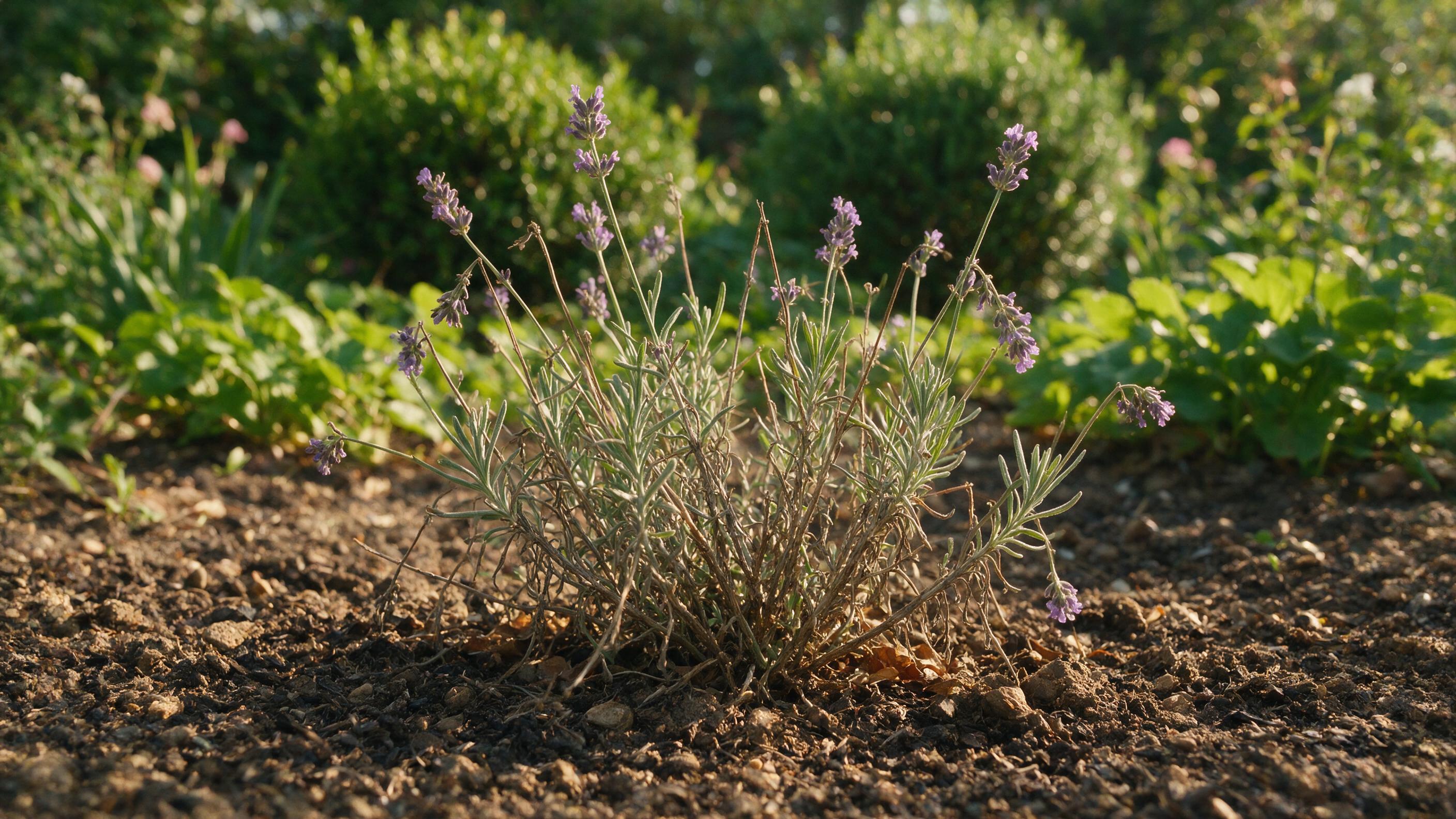
Lavender is one of the most beloved plants in American gardens — fragrant, drought-tolerant, and stunning in full bloom. So when yours starts wilting, turning brown, or dropping leaves, it can feel both baffling and disheartening. The frustrating truth is that lavender dying or looking poorly is one of the most misdiagnosed plant problems, because the symptoms of almost every possible cause look identical — brown, drooping, wilting foliage can mean overwatering, root rot, too much shade, wrong soil, overly woody growth, or simply old age.
The good news? There are several things that can cause your lavender to struggle, but most have easy fixes. Identify the problem, apply the solution, and your lavender should look as wonderful as the first day you bought it in no time. This guide walks you through every possible cause, helps you pinpoint exactly what is happening to your plant, and gives you clear, actionable steps to bring it back to health.
What Does It Mean When Your Lavender Is Dying?
Lavender (Lavandula) is a beautiful, aromatic plant native to the Mediterranean, which many gardeners incorporate into their landscape — sometimes with dismaying results. Understanding why it struggles starts with understanding what it actually needs. Lavenders originate in the Mediterranean regions of Europe, preferring areas with dry, hot summers and rainy winters. They are happy in dry, poor-quality soil for long periods and do not require additional watering very often.
When your lavender starts to look unwell, the symptoms are usually a combination of yellowing or browning leaves, wilting stems, sparse flowering, or a general collapse of the plant. The most common reasons for a lavender plant dying are improper watering, over-fertilization, acidic soil pH, diseases, pests, or inadequate sunlight. Each of these causes tends to present with overlapping symptoms, which is why a careful, step-by-step diagnosis matters far more than guessing and treating blindly.
Before you assume the worst, it also helps to know that lavender can look alarming without actually being in danger. Some people may think their lavender plant is dying when in fact it is dormant. Dormancy happens when temperatures cool and sunlight is less available. A quick scratch test on the stem can clarify things immediately.
Is Dying in Lavender Always a Sign of a Problem?
Not always. Lavender goes through natural cycles that can mimic distress, and knowing the difference saves you from making unnecessary interventions that could actually harm the plant. It is hard to distinguish between dormant and dead lavender plants. Though dormant plants will take on a woody appearance throughout winter, growth should resume with the arrival of warmer temperatures in spring. Plants that have died will not produce green growth and will retain their browned, brittle appearance.
The scratch test is your fastest diagnostic tool. The cambium layer beneath the bark stays green in living shrubs and brown in dead ones. Underneath the bark lies the cambium layer, where the plant holds its vascular tissue for transporting nutrients and moisture. When the plant is alive, the cambium is green; it is brown when the shrub is dying.
Age is another natural factor. Even healthy lavender plants eventually decline. Many varieties begin to lose vigor after 5 to 10 years, especially if they have become woody. If your plant is older and has never been pruned back regularly, what you are seeing may simply be the end of its natural lifespan rather than a correctable problem. In that case, taking cuttings and propagating a new plant is the best path forward.
Pro Tip: Use a plant identification app to confirm your lavender variety before treating any problem. Different species — English, French, and Spanish — have different cold hardiness and care needs. Check out the best iPhone apps for identifying plants or the best Android apps for identifying plants to get a quick ID.
Watering Issues Causing Lavender Dying
Watering is the number one cause of lavender death in American gardens, and the tricky part is that both too much and too little water produce similar-looking symptoms. The most likely reason your lavender is dying is overwatering. If lavender receives too much water, it will develop root rot and show symptoms of stress such as a drooping or wilting appearance and a browning of the foliage.
It is very common to mistake the drooping appearance and brown foliage as an underwatered plant, at which point many people compound the problem by watering even more, and consequently the root rot becomes worse and the plant dies quickly. This misdiagnosis loop is one of the most common mistakes home gardeners make. In fact, established lavenders — more than two years old — are so hardy that in temperate climates they will not need any additional water at all, attaining more than enough from rainfall, even during dry spells in summer.
Underwatering, while less common, can still damage your plant — especially younger specimens and those grown in containers. While overwatering is more common, underwatering can also cause your lavender to decline, especially newly planted ones or those in containers. Symptoms include drooping leaves and stems, leaves turning brittle and crispy, slow growth, and lack of flowering. The plant looks generally parched.
The best approach is to water based on soil moisture rather than a fixed schedule. For established plants, allow the top 2–3 inches of soil to dry out completely between waterings. In hot, dry weather, this might be once a week; in cooler, humid weather, it could be every 2–3 weeks or even less. Container plants will generally need more frequent watering.
Pro Tip: Push your finger two inches into the soil before every watering. If it still feels damp, wait. Lavender would always rather be slightly too dry than slightly too wet.
Light Conditions Behind Lavender Dying
Lavender is a sun-worshipping plant that evolved on open, rocky hillsides. Shade is one of the quieter killers — it does not cause sudden collapse, but it steadily weakens the plant until it becomes susceptible to every other problem on this list. Lavenders need at least 6 hours of direct sunlight per day during the spring and summer months to grow successfully. If they receive less than 6 hours of sun, lavenders will have disappointing growth, a lack of color in the leaves with poor fragrance, and potentially die back.
English lavender blooms on the energy it gathers from full sun. In a spot with less than six hours of direct sun daily, the plant stays green but puts almost nothing into flower production. Even partial shade from a nearby fence or tree can cut the bloom significantly. This is especially relevant in densely planted American backyards where structures and mature trees cast shifting shadows throughout the day.
Light also plays a secondary protective role. Sunlight drives evaporation from the surrounding soils, can reduce humidity, and minimizes the chance of diseases such as root rot in lavenders. A plant in too much shade stays damp longer after rain or irrigation, creating the perfect conditions for fungal problems. If your lavender is struggling and sitting in partial shade, relocating it to a sunnier spot is often the single most effective fix you can make. Check out our guide to best houseplants for low-light areas if you need a plant better suited to shady spots in your home.
Soil, Nutrients, and Root Health Causing Lavender Dying
Soil quality is the foundation of lavender health, and getting it wrong creates problems that no amount of correct watering or sunlight can fix. Lavenders prefer soil that is sandy with a friable structure that allows water to drain through quickly without holding onto moisture. Lavender will not do well in clay soils, soils that are heavy and compacted, or soil that contains a lot of organic matter, as they will likely hold onto water, which leads to root rot, and the plant will turn brown and slowly die.
Soil pH matters too. Soil pH plays an important role in plant health. Lavenders prefer an almost neutral soil pH between 6.5 and 7.5. They do not mind excessively alkaline soil but can struggle if the soil is far too acidic, around 5 or lower. A simple soil test kit — available at most garden centers and hardware stores across the US — will tell you exactly where your soil stands.
One of the most counterintuitive facts about lavender is that fertilizing it can actually kill it. Lavenders are happiest when grown in nutrient-poor soil. They do not need any additional fertilizers or organic materials to thrive, as they flower best and have the most impressive fragrance when left alone. In fact, adding additional nutrients to the soil could be the reason for your plant’s demise. An excess of nutrients — particularly nitrogen — will cause the leaves of your plant to turn yellow. Growth may be spotty, and the plant may stop flowering altogether.
| Soil Problem | Symptoms | Fix |
|---|---|---|
| Heavy clay / poor drainage | Wilting, browning, root rot | Amend with coarse sand or grit; consider raised beds |
| Too acidic (below pH 6.5) | Poor growth, yellowing | Add garden lime to raise pH |
| Over-fertilized / high nitrogen | Yellow leaves, no flowers, leggy growth | Stop feeding; amend with river sand to dilute nutrients |
| Compacted soil | Slow drainage, wilting after rain | Aerate and mix in horticultural grit |
Root rot is the most serious outcome of poor soil conditions. Root rot is the most serious lavender problem and is almost always fatal if it reaches the main stem crown. It is caused primarily by Phytophthora and Pythium species — water mold pathogens that thrive in saturated soil. Root rot can establish within 2–3 weeks of sustained waterlogging. Healthy lavender roots are white to pale tan, firm, and fibrous. Rotted roots are brown or black, soft, and may have a sour smell. If the main crown at soil level is brown and mushy rather than green and firm, root rot has reached the stem.
Environmental Stress Triggering Lavender Dying
Beyond watering and soil, a range of environmental factors can push lavender into decline — many of them specific to particular US climates and regions. Temperature extremes are a common culprit. Temperature is another reason why your lavender plant may be dying. Snow does not affect mature lavender plants, but chilly temps will. Mature lavender tolerates lows of 10 degrees F (−12°C); however, newly planted lavenders may succumb to temperatures below 40 degrees F (4°C) at night.
In the Pacific Northwest and other wet regions, persistent rain and humidity create a double threat. The frequent rains of the Pacific Northwest make it even more important to give your lavender very sharply drained soil. When lavender struggles, it is almost always due to a problem with soil quality and drainage. If fungal rot has taken hold, it is definitely caused by excess soil moisture.
Choosing the right lavender variety for your USDA hardiness zone is one of the most important decisions you can make before planting. Spanish lavender (L. stoechas) and French lavender (L. dentata) are only reliably hardy to Zone 7 (0°F) and will die in colder winters. Choose cold-hardy varieties such as English lavender for colder climates. Gardeners in Zones 5 and 6 across the Midwest and Northeast should stick with Lavandula angustifolia to avoid cold-weather losses.
Over-pruning is another environmental stressor that is easy to overlook. Lavender benefits from regular pruning, but cutting too deeply into old woody stems can permanently damage the plant. Lavender does not always regenerate from old wood the way many shrubs do. Prune lightly after flowering and avoid cutting into thick woody stems. Companion planting choices also matter — one of the biggest companion planting mistakes gardeners make is placing lavender near moisture-loving plants. Hydrangeas, hostas, impatiens, and astilbe all prefer more water than lavender needs. Learn more about smart plant pairings in our guide to plants that grow well together.
Pests and Disease Leading to Lavender Dying
Lavender plants typically do not attract pests — and in fact are often used as companion plants to repel other pests or attract beneficial insects. However, a stressed or weakened plant becomes far more vulnerable, and a handful of specific insects and diseases can do real damage.
The most common pest you will encounter in US gardens is the spittlebug. One of the more common lavender infestations is the spittlebug, also called the frog-hopper bug. Spittlebugs begin as early as spring and create a foamy substance that covers the stems of the lavender. Typically branches of the plant may die from spittlebugs, but not the entire plant. The four-lined plant bug is another sucking insect that feeds on new leaves and stems from late May to early July. Infested leaves end up spotted with uniform white or gray dots.
Aphids are another pest worth watching. Aphids also infest lavender plants. While the aphids themselves are not particularly harmful, they carry a disease called alfalfa mosaic virus. Horticultural oil, neem oil, or diatomaceous earth are all effective treatments for aphids. Whiteflies can also appear, especially on stressed plants. Whiteflies gather on the bottoms of the lavender’s leaves and drink sap from the plant. Whitefly infestations distort the appearance of the plant and hamper its vitality. The greater danger caused by the whitefly is an accompanying substance they leave on the leaf that can result in mold infection.
On the disease side, the most serious threats are fungal. Root rot is by far the number one killer of lavender. It is caused by various soil-borne fungi — like Phytophthora, Fusarium, Pythium, and Rhizoctonia — that thrive in wet, waterlogged, or poorly drained soil. Botrytis (gray mold) is another fungal disease that appears in humid conditions. Botrytis appears as a fuzzy gray coating on stems and foliage, typically in humid conditions after wet summers or in poorly ventilated spots. Remove affected material immediately with clean secateurs, improve air circulation around the plant, and if possible, move it to a drier, sunnier position. Avoid overhead watering.
Lavender shab is the most serious fungal disease specific to this plant. Shab is a serious fungal disease that causes stems to die back suddenly, leaving brown, shriveled patches that spread from individual stems to entire sections of the plant. It is caused by the fungus Phoma lavandulae and is more prevalent in wet years and poorly drained soils. There is no chemical cure registered for home use against shab in the US, so removing and disposing of infected plants is the only option.
Pro Tip: Always sanitize your pruning tools with a 10% bleach solution or rubbing alcohol between plants. This simple step prevents spreading fungal spores from one lavender to another — and to other plants in your garden.
How to Diagnose Why Your Lavender Is Dying
Accurate diagnosis comes before any treatment. Treating the wrong problem — for example, watering more when the plant already has root rot — will accelerate decline rather than reverse it. Before treating anything, spend a moment actually looking at the plant. The pattern and location of the symptoms tell you almost everything. Pull back some of the outer foliage with your hands. Smell the base of the plant. Push your finger an inch into the soil. These three simple checks will point you clearly toward the most likely cause.
Work through this checklist in order:
- Check the soil moisture — Push your finger 2 inches into the soil. Damp soil combined with wilting almost always points to overwatering or poor drainage, not underwatering.
- Smell the base of the plant — A sour or foul odor near the crown signals root rot is already underway.
- Inspect the roots — Gently ease your plant out of its pot (if container-grown) or carefully dig around the base (if in the ground). Healthy roots are typically white or light tan and firm. Dark, mushy, or foul-smelling roots are a strong indicator of root rot, often caused by overwatering.
- Do the scratch test — Scratch a small section of stem with your fingernail. Green underneath means the plant is alive; brown means that section is dead.
- Count the sun hours — Track how many hours of direct sun the plant actually receives across a full day, not just at one moment.
- Look for pest evidence — Check for white foam (spittlebugs), tiny moving dots (aphids), or small white insects on leaf undersides (whiteflies).
- Review your care history — Have you fertilized recently? Pruned into old wood? Planted near moisture-loving neighbors?
Many lavender plant problems have similar symptoms, so it is really important to inspect your plant carefully before deciding what action to take. Think about the conditions your plant has been growing in, as well as the care you have been providing. In general, overwatering, overfertilizing, and lighting problems are the most likely causes of a lavender plant dying. Check these first before moving on to check for other causes.
How to Fix a Lavender Plant That Is Dying
Once you have identified the cause, the fix is usually straightforward — provided you act before the root system is completely destroyed. Here is how to address each major problem:
Overwatering and Root Rot: Stop watering immediately and let the soil dry out. If your lavender has root rot, pull the plant from the soil and trim off the affected roots. If some green stems and firm roots remain, cut back the dead wood hard and replant in fresh, dry, gritty soil in full sun on a raised mound or in a container. Do not replant in the same spot without improving drainage first.
Poor Drainage: Before planting, improve the drainage of your soil by mixing in a good amount of sand and rocks. This mixture should be slightly deeper than the planting hole to ensure any new root growth does not sit in moist soil. If you have already planted the lavender in the wrong soil, move the plant to a pot with a well-draining potting mix, or remove the plant, amend the soil, and replant.
Insufficient Sunlight: If your lavender displays poor growth and a lack of flowers, move the plant to a sunnier location in your garden. For potted lavender, this is as simple as moving the container. For in-ground plants, transplant in early spring or fall to minimize transplant shock.
Over-Fertilization: If you have not added any fertilizers, transplant the lavender to an area with more suitable soil. Alternatively, you can amend the soil with large amounts of river sand to decrease the concentration of nutrients in the soil.
Pest Infestations: Some natural solutions include insecticidal soap (made from Castile soap) and neem oil. Prune the plant to improve airflow and light, which can reduce pest populations. For whiteflies, a strong stream of water from a hose can physically remove them from the plant.
Fungal Disease (Botrytis or Septoria): Botrytis and Septoria can be treated with an appropriate fungicide and a reduced watering schedule to lessen dampness and humidity. For shab or mosaic virus, remove and dispose of infected plants immediately — do not compost them.
Recovery timeline: If you scale back watering to the appropriate amount and your soil drains quickly, your lavender should recover in about three weeks and show no sign of ill effects by the next season.
How to Prevent Lavender Dying Going Forward
Prevention is far easier than rescue, and lavender is genuinely low-maintenance once its basic needs are met. The habits below will keep your plant healthy for years to come.
- Plant in the right spot from the start — Choose a location with full sun (at least 6 hours daily) and naturally well-draining soil. Raised beds and slopes are ideal in wetter US climates like the Pacific Northwest and Southeast.
- Match your variety to your zone — Use cold-hardy Lavandula angustifolia (English lavender) in Zones 5–6, and reserve Spanish and French varieties for Zone 7 and warmer.
- Water by touch, not by schedule — Always check soil moisture before watering. Lavender in particular likes to dry out between waterings, and it is better to underwater than overwater.
- Never fertilize — Lavenders are happiest when grown in nutrient-poor soil. They do not need any additional fertilizers or organic materials to thrive, as they flower best and have the most impressive fragrance when left alone.
- Prune annually, but carefully — Prune in late summer immediately after the flowers fade, cutting back by about one third into the green leafy growth. Never cut into old, thick woody stems.
- Space plants for airflow — Space lavender plants at least 18–24 inches apart to allow airflow between plants. Good air circulation is one of the best defenses against fungal disease.
- Use gravel mulch, not organic mulch — Apply a 2–3 inch gravel mulch over the root zone after the ground freezes to prevent freeze-thaw heaving. Do not use organic mulch against the crown — it traps moisture.
- Choose compatible neighbors — Pair lavender with other drought-tolerant plants or wind-tolerant plants that share its preference for lean, dry conditions. Lavender also makes an excellent natural pest deterrent — explore our guides on plants that repel wasps and plants that repel snakes for smart companion planting ideas.
- Plan for replacement — Lavender is not a forever plant, and even with regular care, it will become ragged and woody after several years. Take cuttings from healthy stems every few years so you always have a replacement ready.
Pro Tip: If you live in a humid region like the Southeast or Pacific Northwest, growing lavender in terracotta containers with a cactus-mix potting medium gives you far more control over drainage and moisture than planting directly in garden soil.
FAQ
Why is my lavender turning brown and dying?
Brown, drooping, wilting foliage can mean overwatering, root rot, too much shade, wrong soil, overly woody growth, or simply old age. Start by checking soil moisture and inspecting the roots. Mushy, dark roots confirm root rot from overwatering or poor drainage. Dry, brittle roots point toward underwatering or heat stress.
Can I save a dying lavender plant?
Often, yes. If root rot has not completely destroyed the roots, many lavender plants can recover when their growing conditions improve. The key steps are reducing watering, improving drainage, removing dead growth, and moving the plant into full sun. Act as soon as you notice symptoms — the earlier you intervene, the better the odds.
How do I know if my lavender is dead or just dormant?
Perform the scratch test. Check the lavender stems to see if they are bendy and alive (dormant) or brittle and dead. Lifeless stems are brown under the bark and snap in half with little force. If the cambium layer beneath the bark is still green, the plant is alive. Also look for small buds forming near the base of the stems as temperatures warm in spring.
Should I water lavender every day?
No. If you water your lavender as frequently as other plants in your garden, you will eventually kill the plant. In fact, established lavenders — more than two years old — are so hardy that in temperate climates they will not need any additional water at all, attaining more than enough from rainfall, even during dry spells in summer.
Why is my potted lavender dying?
For lavender grown in pots, the most common reasons for dying plants are overwatering and lack of sunlight. For lavender in pots, it is essential to have both well-draining soil and a pot with drainage holes. Otherwise, the potting mix will not dry out properly, leaving your plant with wet feet. Switching to a terracotta pot with a cactus-blend mix and moving it to a sunnier window or patio often resolves the problem quickly. For more guidance on choosing the right types of plants for your space, including which ones thrive indoors versus outdoors, browse our full plant library.
Is lavender a good plant for repelling pests in the garden?
Yes — healthy lavender is well known for deterring certain insects. Its strong fragrance makes it a natural companion plant in many American gardens. See our article on plants that repel cats for more ideas on using fragrant plants strategically in your yard.