Why Are My Azalea Leaves Turning Yellow? Causes and Fixes

September 18, 2026
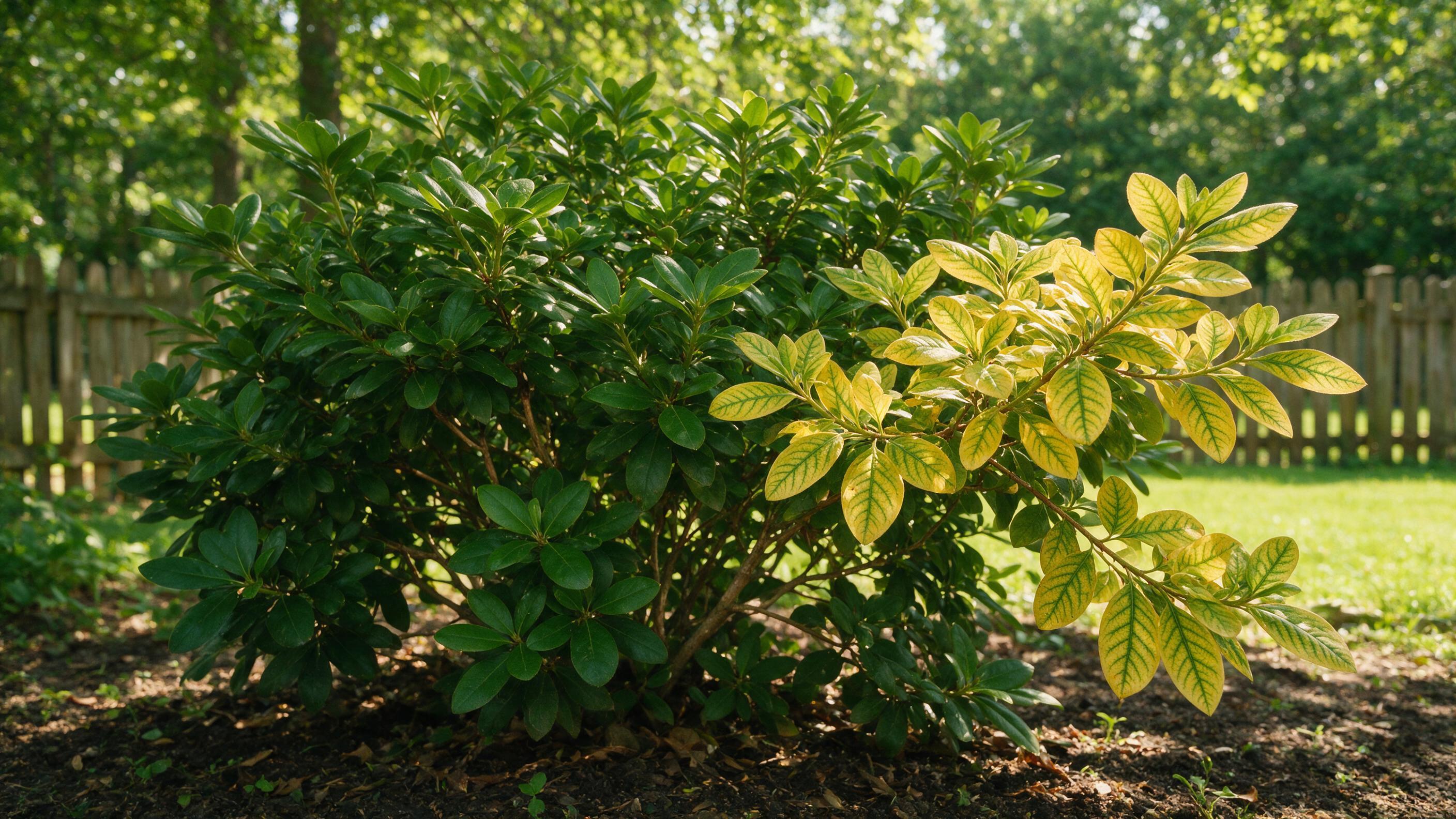
You walk out to your yard and notice it — the leaves on your azalea have gone from lush green to a concerning shade of yellow. Before you panic or start dumping fertilizer on the roots, take a breath. Yellow leaves on azaleas are one of the most common plant problems home gardeners in the United States encounter, and in most cases the fix is straightforward once you know what you are looking at.
Azaleas communicate their problems very clearly through their leaves, and the specific pattern of discoloration tells you exactly what is going wrong. The key is reading those clues correctly. This guide walks you through every possible cause, how to diagnose your specific situation, and exactly what to do about it.
What Does It Mean When Your Azalea Leaves Are Turning Yellow?
Azaleas (Rhododendron spp.) are a woody group of plants that usually bloom in spring. The leaves of azaleas often turn colors from green to yellow, a condition known as chlorosis. While the word sounds alarming, chlorosis simply means the leaf tissue is producing less chlorophyll than it should — and that loss of green pigment has a root cause you can address.
Azalea leaves turning yellow indicates the plant is stressed in some way. If the problem persists, it can lead to poor growth, smaller blooms, and potentially even plant death. That said, not every yellow leaf is cause for alarm — context matters enormously.
The pattern of yellowing is your most important diagnostic clue. Yellow leaves on your azalea might be a nutrient distress signal. Iron, magnesium, and nitrogen are often the missing links. Iron deficiency? Look for yellowing young leaves with green veins. Magnesium issues? Older leaves turn yellow first. And if the entire leaf is pale, nitrogen could be the absentee.
Is Yellow Foliage in Azaleas Always a Sign of a Problem?
Not always. One of the most reassuring things you can learn about azaleas is that some seasonal yellowing is completely normal. There is nothing to worry about — they may just be molting and losing their leaves. Even evergreens lose their leaves, just not all at once like deciduous plants do. Azaleas set their leaf buds in the fall, and the emergence of these buds prompts molting. Having random yellow leaves scattered throughout your azaleas is normal.
Bright yellow leaves on azaleas are usually due to natural leaf molting. Evergreen shrubs like azaleas lose leaves gradually, not all at once, but the process is often triggered by new leaf buds forming in the fall. If you see a handful of older interior leaves yellowing while the rest of the plant looks healthy, this is likely all that is happening.
Pro Tip: To tell normal molting from a real problem, look at which leaves are yellowing. If older leaves deep inside the canopy are dropping yellow while new growth at the tips stays green, you are probably watching a natural cycle. If the yellowing is spreading outward to young leaves or affecting the whole plant uniformly, investigate further.
A healthy azalea has a full canopy of green leaves, new shoots in spring, and a nice crop of flowers in season. If your plant lacks any of these, it is time to try to figure out what is going on.
Watering Issues Causing Azalea Yellow Leaves
The one issue that most azaleas will have at some point is a water issue — either too much or too little. Although azaleas like moist soil, they do not like to have soggy roots. Getting this balance right is the single most impactful thing you can do for your plant’s leaf color.
Overwatering and Root Rot
Azaleas love moist soil, but above a certain threshold, moisture will start to affect the plants negatively. Yellowing of leaves is one such sign of excess water. Most often it is not that you are giving them too much water — the soil could be the culprit. The amount of water in the soil is mostly determined by the draining capacity of the soil. Poor draining soils are most likely to accumulate water, mainly when soils have high clay concentrations or not enough sand or grit content. It can cause puddles to form or, worse, accumulation of water at the roots where you cannot see.
Root rot is a fungal disease caused by overly wet soil, often from poor drainage or overwatering. Symptoms include wilting leaves, yellowing foliage, and stunted growth. When roots drown, they lose the ability to transport water and nutrients upward, so the leaves turn yellow even though the ground is soaking wet.
Underwatering and Drought Stress
Keeping an azalea too dry will cause the leaves to first turn yellow, then brown. Azaleas have extremely shallow, fine root systems that dry out rapidly during hot, dry weather, causing the foliage to scorch. This is a particular concern during summer heat waves across the South and Mid-Atlantic states.
A good watering schedule is essential during the growing season. Azaleas need the equivalent of 1 inch of rain every 7 to 10 days. It is best to water as deeply and infrequently as possible. Always water at the base of the plant, not from overhead. Watering from below minimizes getting water on the leaves and mitigates the chances of disease. The best time to water is always in the morning, giving the sun time to dry off whatever water lands on the foliage.
Pro Tip: Before watering, push your finger 2–3 inches into the soil near the root zone. If it feels dry, water deeply. If it feels wet or smells sour, hold off and check drainage. This simple test takes five seconds and prevents the most common azalea mistakes.
Light Conditions Behind Azalea Yellow Leaves
Azaleas prefer cool, partially shaded sites, such as the filtered shade of pine trees. Azaleas planted beneath hardwoods with shallower roots must compete with these trees for nutrients and water, though if placed in the right location they can do well. Although some varieties tolerate sun better than others, they all prefer an area that is not exposed to long periods of hot full sun and drying winds.
If your azalea is suddenly exposed to high-intensity light, the leaf tissue may become scorched. This can result in azalea leaves turning yellow with brown spots. You will notice this most often on the side of the plant facing west or south, where afternoon sun is most intense.
Too little light creates a different problem. Do not plant azaleas in heavy shade, as poor flowering and weak growth result. A plant struggling for light will produce pale, washed-out foliage that can look yellow before it simply stops flowering altogether. The sweet spot for most American home landscapes is morning sun with afternoon shade — a north- or east-facing bed, or the dappled light under a tall pine canopy.
Azaleas exposed to full sun are also more susceptible to lace bugs, which themselves cause yellowing — so poor light placement can trigger a cascade of problems. If you have recently transplanted an azalea or moved a container plant outdoors, give it time to acclimate gradually rather than placing it in full sun immediately. You can learn more about matching plants to their light requirements in this guide to the best houseplants for low-light areas.
Soil, Nutrients, and Root Health Causing Azalea Yellow Leaves
Soil chemistry is at the heart of most persistent azalea yellowing problems in the United States. Most azalea failures trace back to the same problem: the wrong soil pH. Not the wrong watering schedule or too little sun — the wrong pH. Azaleas are ericaceous plants adapted to acidic conditions between pH 4.5 and 6.0.
Iron Chlorosis from High Soil pH
Chlorosis symptoms, caused by a deficiency of iron, appear as yellow leaves with prominent green veins. These symptoms are usually caused by high soil pH. A soil test can determine if the pH is too high. Iron is most readily available in acidic soils between pH 4.5 and 6.0. When the soil pH is above 6.5, iron may be present in adequate amounts but is in an unusable form.
This can occur when plants are placed too close to cement foundations or walkways, a very common scenario in suburban American yards. The lime in concrete gradually leaches into the surrounding soil, raising the pH over time. If your azalea is planted near a driveway, patio, or house foundation and is showing yellow leaves with green veins, that is almost certainly the cause.
Fixing iron chlorosis requires a two-step approach to correct both the immediate deficiency and the long-term soil chemistry. You can apply a liquid iron chelate spray directly to the leaves for a quick green-up, but this is only a temporary fix. To solve the underlying problem, you must lower the soil pH by applying elemental sulfur or an acidifying fertilizer formulated for acid-loving plants.
Nitrogen Deficiency
Nitrogen deficiency is a common issue that manifests as general yellowing of older leaves and stunted growth. This nutrient is vital for leaf development and overall plant vigor, making its absence noticeable. Unlike iron chlorosis, nitrogen deficiency tends to produce a uniform pale yellow across the whole leaf rather than a green-veined pattern.
While adding mulch will ensure moisture retention and decreased evaporation from the soil, it will also consume nitrogen values in the soil. If you have overused mulch, take steps to correct this immediately. The best time to fertilize azaleas is in the spring, right after they are done flowering. That may be enough, but if you get a good deal of rain, you could give them a second boost in midsummer.
Mulching and Root Depth
Azalea roots are shallow and fibrous, concentrated in the top 12 to 18 inches of soil. In waterlogged conditions they fail rapidly. Proper mulching protects these roots without suffocating them. Think “2 and 2” when mulching azaleas — 2 inches of mulch, 2 inches away from the trunk. This deters critters from munching on them. Acidic mulches like pine straw, pine bark, and chopped oak leaves are best. As the mulch breaks down, it gives azaleas the nutrients they love.
For more on how soil and root health affect different types of plants, including acid-loving shrubs, it helps to understand the broader relationship between soil chemistry and plant health.
Environmental Stress Triggering Azalea Yellow Leaves
Beyond soil and water, the surrounding environment can push an otherwise healthy azalea into a stress response that shows up as yellow foliage. Several environmental triggers are especially relevant for US gardeners.
- Winter burn: Evergreen azaleas often suffer from winter burn, which causes the foliage to turn a rusty brown or purple-brown during the colder months. This happens when the ground freezes solid and the roots are unable to replace the moisture that harsh winter winds strip away from the leaves. The damage is usually most severe on the side of the plant facing the prevailing wind.
- Frost damage: Azaleas are susceptible to cold injury, especially when exposed directly to early morning sun after a hard freeze. The rapid thawing of frozen branches and twigs may result in bark splitting. Sudden early freezes in the fall and late freezes in the spring also cause bark-splitting.
- Temperature extremes: Cold weather can damage azaleas, especially newer growth, leading to blackened or brittle branches. In the Deep South, extreme summer heat combined with drought stress can cause leaf scorch that begins as yellowing at the tips and margins.
- Transplant shock: A recently moved or newly planted azalea may show temporary yellowing as its root system adjusts. This is normal and typically resolves within a few weeks if watering and soil conditions are correct.
Good cultural practices such as careful plant location, provision of good aeration and drainage, mulching, and good watering habits will reduce the incidence of environmental stress, disease, and insect damage.
Pests and Disease Leading to Azalea Yellow Leaves
When cultural conditions look fine but yellowing persists, pests and disease are the next place to look. Azaleas are particularly prone to fungal issues, and a handful of insects cause yellowing that is easy to misread as a nutrient deficiency.
Azalea Lace Bugs
Azalea lace bug (Stephanitis pyriodes) and Rhododendron lace bug damage is indicated by stippling — very tiny spots — on leaves of plants growing on dry sites and those with low plant diversity. Damage usually begins in early May on old leaves and later appears on new growth. Black fecal spots will be present on the lower sides of stippled leaves. Heavy infestations of lace bug may cause leaves to turn yellow and then brown.
These tiny insects suck the sap from the foliage, leaving the tops of the leaves looking stippled, silvery, or pale yellow. Gardeners often confuse this washed-out appearance with a nutrient deficiency until the leaves eventually turn brown and drop off. If you suspect insect damage, flip a few leaves over and inspect the undersides. Lace bugs leave behind hard, black, tar-like spots of excrement that confirm their presence.
Treating them requires coating the undersides of the leaves thoroughly with horticultural oil or insecticidal soap. You will need to repeat this application a few times throughout the season to break their life cycle and protect the new growth.
Spider Mites
Spider mites cause leaves to become yellow-flecked with stippled areas. Fine webs on leaves may be visible with close observation. Like lace bugs, spider mites are most active in hot, dry conditions, so they tend to peak in mid to late summer across the US. Check the undersides of leaves with a magnifying glass — you will see tiny moving dots if mites are present.
Fungal Diseases
More spots on azalea leaves can be due to the fungal disease leaf spot, resulting from a number of different species of fungus. These spots can be yellow, brown, or black and be tiny or the size of half-dollars. The size and color depend on the fungus. This fungal issue can impact older leaves all year long, but it only hits new foliage as it emerges.
If you see white powdery growth on your azalea leaves that causes them to fall to the ground early, it is likely powdery mildew. This is more common on deciduous azaleas than evergreen species — especially young shrubs grown without direct sun — and is most often seen during fall during cool, moist weather. Pick up and dispose of all infected fallen leaves. Leaf spot is usually caused by overhead watering, which is one more reason to always water at the base.
Key Insight: Most fungal problems on azaleas trace back to excess moisture on the foliage. Switching from overhead sprinklers to drip irrigation or a soaker hose eliminates the wet-leaf environment that fungal spores need to germinate.
Scale Insects and Nematodes
Scale insects are usually found on twigs or branches. They can appear in various colors and shapes. Some look like bits of white cotton; others are brownish. Yellowing leaves, dying branches, and honeydew deposits on bark and leaves — which lead to sooty mold fungus — are telltale signs. White scale crusts become visible as the bark darkens.
Nematodes cause leaves to turn yellow and plants to become stunted. Affected plants do not respond favorably to water and fertilizer applications. No chemical control is available. Other conditions mimic nematode injury; collect a soil sample from the root zone for nematode analysis. Your local cooperative extension service can test for nematodes and recommend next steps.
How to Diagnose Why Your Azalea Leaves Are Turning Yellow
Work through the following steps in order. Most cases are resolved by step four.
- Identify the yellowing pattern. Uniform yellowing often points to a broad environmental or systemic nutrient issue related to soil health or watering habits. Patch discoloration may indicate fungal or bacterial infections. Yellow leaves with green veins point specifically to iron chlorosis.
- Check the soil moisture. Dig down with your fingers 3 to 4 inches to examine the soil and the roots to determine if they are moist, dry, or wet. Soggy soil with a sour smell means root rot risk. Bone-dry soil means drought stress.
- Test the soil pH. The first step to determine the cause of yellowing is a soil test to determine the soil pH. Start with a soil test from your county extension office, typically under $20, to establish a baseline pH. Home test kits from garden centers also work for a quick read.
- Inspect the undersides of leaves. Inspect the leaves and stems for pests like aphids or spider mites. These pests can cause significant damage if left unchecked. Look for webbing or sticky residue, which are indicators of infestation. For lace bugs specifically, look for black tar-like spots of excrement on the leaf undersides.
- Evaluate the plant’s location. Is it near a cement foundation or driveway? Is it in full afternoon sun? Has it been recently transplanted? Has the weather been unusually hot, cold, or wet? These environmental factors narrow down the diagnosis quickly.
If you want help identifying your plant or comparing leaf symptoms visually, the best iPhone apps for identifying plants and the best Android apps for identifying plants can help you cross-reference what you are seeing with expert databases.
The table below summarizes the most common causes and their distinguishing symptoms:
| Cause | Yellowing Pattern | Other Clues | Confirm With |
|---|---|---|---|
| Iron chlorosis (high pH) | Young leaves yellow, veins stay green | Near concrete, alkaline soil | Soil pH test |
| Nitrogen deficiency | Older leaves uniformly pale yellow | Slow growth, sparse foliage | Soil nutrient test |
| Overwatering / root rot | Dull yellow-brown, wilting | Soggy soil, mushy roots | Finger test + root inspection |
| Underwatering | Yellow turning brown at edges | Dry, crumbly soil | Finger test |
| Lace bugs | Stippled, silvery, pale yellow | Black tar spots on leaf undersides | Inspect leaf undersides |
| Spider mites | Yellow flecking, stippling | Fine webbing on leaves | Magnifying glass |
| Fungal leaf spot | Yellow, brown, or black spots | Overhead watering history | Visual inspection |
| Normal seasonal molting | Random older interior leaves | Fall season, new buds forming | No other symptoms present |
How to Fix an Azalea That Is Turning Yellow
Most azalea problems stem from planting them in the wrong environment or failing to understand their shallow root systems. Once you identify the root cause, you can take specific steps to save your shrub and get it back on track.
For iron chlorosis: Soil amendments that acidify the soil, such as iron sulfate or sulfur, are the best long-term solution. Some fertilizers such as ammonium sulfate will also acidify the soil. Foliar sprays of iron sulfate or chelated iron can reduce symptoms quickly. Adjusting soil pH is a slow process that takes months to show permanent results, so you have to be patient and avoid over-applying chemicals. Maintaining a thick layer of pine needle or pine bark mulch will also help naturally acidify the soil as it breaks down.
For nitrogen deficiency: Fertilize in spring right after flowering. If you get a good deal of rain, you could give a second boost in midsummer, but not too late into the summer when the sun is scorching. Acidic fertilizer is probably best, especially if your soil is not truly acidic to begin with. The New York Botanical Garden recommends organic fertilizers such as Holly-tone formulated for acid-loving plants.
For root rot: Check the roots of the plant. Healthy roots should be firm and white, while rotting roots appear brown and mushy. If root rot is present, remove the affected parts of the roots and repot or replant the azalea in fresh, well-draining soil. Prevent future issues by ensuring the planting site has excellent drainage.
For lace bugs: Lace bugs are active breeders, so a small problem can quickly become a big problem. Spray with insecticidal soap, making sure to drench the underside of the leaves. For persistent infestations, apply a foliar systemic insecticide like acephate or imidacloprid for quick control. For longer-lasting prevention, use a soil-applied systemic treatment such as imidacloprid-based products.
For fungal issues: Remove yellowing or diseased leaves to promote new growth and improve overall plant health. Use clean, sharp pruning shears to prevent infection and ensure a clean cut. Switch to base watering and apply a labeled fungicide if the problem is widespread. You can also explore types of leaves and their common disease patterns to sharpen your identification skills.
For winter burn and frost damage: Prune back frost-damaged areas in the spring after you are sure no more frost is coming. Apply a layer of mulch around the base to insulate the roots during winter.
Important Note: If you have addressed all the obvious causes and your azalea is still yellowing, it is a good idea to consult a professional. A nursery, horticulturist, or cooperative extension agent can help diagnose stubborn problems. The Clemson University Home and Garden Information Center and the Mississippi State University Extension Service both offer free region-specific guidance for US gardeners.
How to Prevent Azalea Yellow Leaves Going Forward
Prevention is far easier than treatment. These habits, built into your regular care routine, address the most common causes of yellowing before they start.
- Choose the right site from the start. Choose a site with morning sun and afternoon shade. Prepare soil with compost and acidic peat moss before planting. Avoid spots near concrete foundations or driveways.
- Test your soil annually. Test your soil every one to two years to monitor pH levels. Regular testing helps you maintain optimal conditions for your plant. Your local county extension office can test soil samples for a nominal fee.
- Mulch properly every year. Adding a layer of mulch is essential to retain moisture, keep weeds out, and maintain even soil temperature. Stick to acidic mulches — pine straw, pine bark, or chopped oak leaves — and keep mulch 2 inches away from the trunk.
- Fertilize at the right time. Do not fertilize until after the last frost and try not to fertilize after August. Late fertilization encourages soft new growth that is vulnerable to winter damage.
- Water at the base, in the morning. Watering your azaleas early in the morning helps reduce evaporation, ensuring the plants get the moisture they need. Keeping foliage dry reduces fungal disease risk dramatically.
- Inspect leaves regularly. Regular inspection is key to catching pests and diseases early. Check the undersides of leaves for signs of infestations such as spider mites or aphids. Look for unusual markings or webbing that could indicate a problem. Early detection is vital for effective treatment.
- Prune dead and yellowing growth. Prune dead or yellowing branches and spent blooms regularly to promote new growth. Thoroughly clean up fallen leaves from around the plant. This prevents the spread of disease.
If you are building out a broader garden around your azaleas, understanding which companion plants share similar growing conditions can help create a healthier overall environment. You can also browse companion planting principles or explore deer-tolerant plants if wildlife pressure is an issue in your yard. For gardens in warmer, drier US climates, drought-tolerant plants in Florida offer ideas for designing resilient landscapes that reduce watering stress on your azaleas.
The Azalea Society of America and the University of Missouri Extension are also excellent ongoing resources for region-specific care advice across the United States.
FAQ
Why Are My Azalea Leaves Turning Yellow but the Veins Stay Green?
Leaves that turn light green to yellow while the veins remain green indicate chlorosis, which is usually caused by the soil pH being too high, making iron unavailable to plants. The soil pH may be lowered by adding ferrous sulfate, finely ground sulfur, or iron chelate. This is the most specific and diagnosable pattern of azalea yellowing.
Can Yellow Azalea Leaves Turn Green Again?
Yes, in many cases. Check your soil moisture level and correct the situation. Do not over-compensate — instead make sure the soil is the proper moisture level, no more and no less. In a few weeks the plant should make a full recovery. For nutrient deficiencies, recovery depends on how quickly you correct the soil chemistry, but new growth should emerge green once conditions improve.
Should I Remove Yellow Leaves from My Azalea?
Yes, for diseased or pest-damaged leaves. Trimming all the unhealthy leaves will redirect the nutrients to the healthy parts of the bush. This will help you assess whether there is a nutrient deficiency in the soil or if the roots are either waterlogged or too dry. For naturally molting leaves in fall, you can leave them — they will drop on their own.
What Is the Best Fertilizer for Yellow Azalea Leaves?
Organic fertilizers such as Holly-tone 4-3-4 and Plant Health Care 3-4-4 for Azaleas and Rhododendrons are good candidates. For iron deficiency specifically, chelated iron supplements are your best option for quickly restoring green color to affected leaves while you work on correcting the underlying soil pH.
Why Are My Azalea Leaves Turning Yellow After Blooming?
After azaleas bloom, yellowing and browning leaves can indicate natural leaf aging or nutrient imbalance, especially nitrogen deficiency. Trim only the dead, shriveled leaves to improve appearance and airflow, avoiding cutting healthy foliage. Apply a balanced, acid-loving plant fertilizer with nitrogen near the base to support recovery.
How Do I Know if My Azalea Has Lace Bugs?
Silvery and yellow mottled or even bleached-looking leaves indicate a potential lace bug infestation, one of the most common pests to azaleas. If you cannot tell whether the leaves are molting or have an insect problem, simply look at the underside of the leaves. The presence of small black tar-like spots on the leaf undersides is the definitive confirmation of lace bug activity.