Why Is My Lettuce Bolting? Causes, Fixes, and Prevention Tips

September 17, 2026
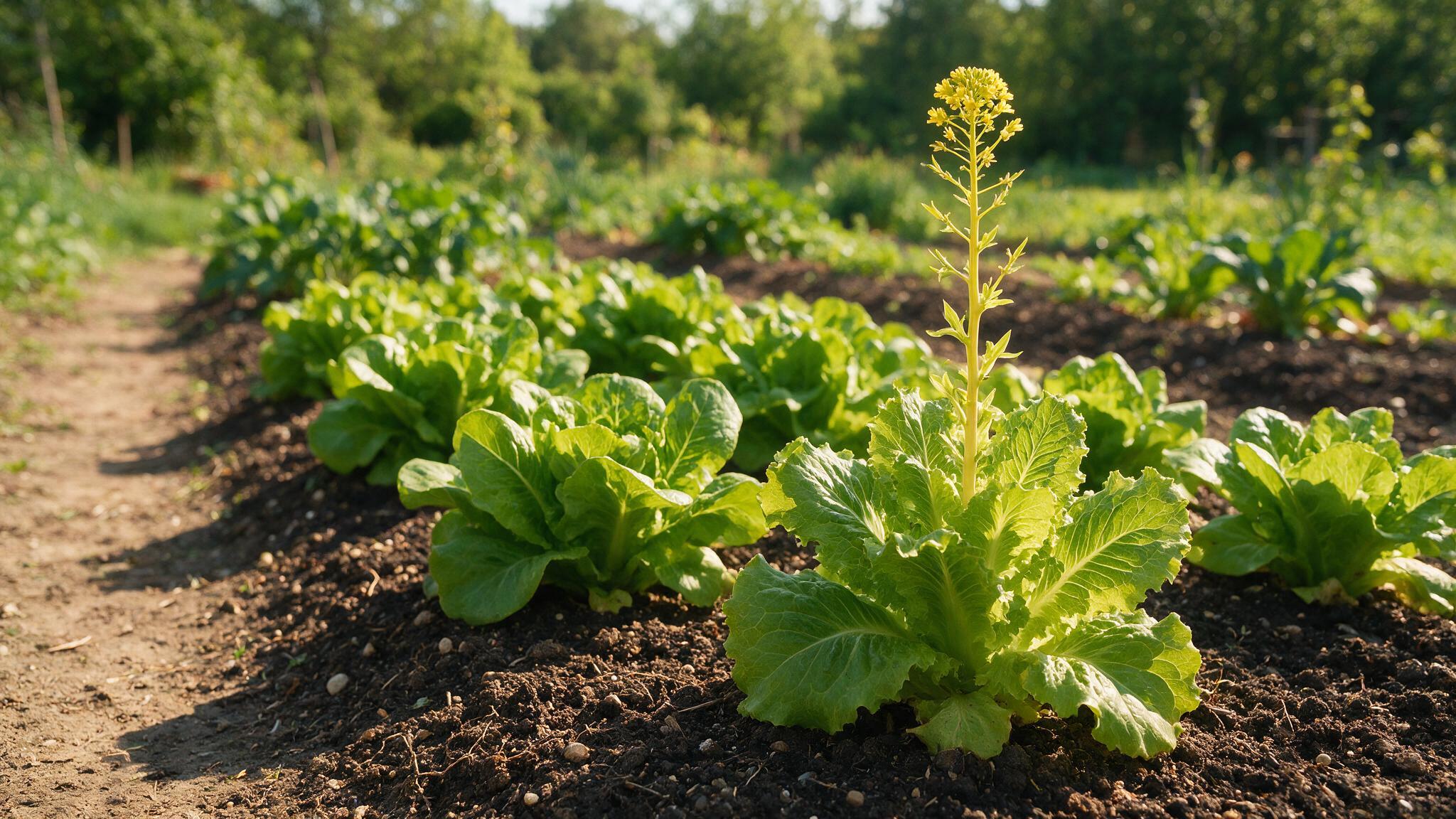
You step outside to check on your lettuce, and something looks off. The center of the plant is stretching upward, the leaves are getting smaller, and the whole thing looks more like a weed than a salad green. Your lettuce is bolting — and if you’ve never dealt with it before, it can feel like the crop is failing right in front of you.
The good news is that bolting is one of the most well-understood problems in the vegetable garden. Once you know what’s driving it, you can take real steps to slow it down, save what’s left of your harvest, and set yourself up for better results next season. This guide walks you through everything: what bolting actually is, what causes it, how to diagnose it, and how to fix and prevent it.
What Does It Mean When Your Lettuce Is Bolting?
Lettuce bolt refers to the process where the plant prematurely transitions from its vegetative state — producing leaves — to its reproductive state, producing flowers and seeds. It’s the plant’s way of completing its life cycle before conditions get worse.
Lettuce plants start out in leaf-making mode. They make leaves, get bigger, and store energy. But as the lettuce plant gets big enough — and as things around it act as triggers — the lettuce plant changes gears and moves into flowering mode. It bolts.
Visually, the signs are hard to miss. You can identify a bolting lettuce plant by its stretched-out, leggy appearance. You’ll see a slender stalk where the leaves are attached. Next, the now-lanky lettuce sends up a flower stalk. Meanwhile, the leaves become bitter and tough.
Lettuce (Lactuca sativa) is a cool-season annual, and bolting is simply the natural end of its one-year life cycle. When lettuce bolts, it begins producing a flower stalk, which, once pollinated, will develop seed. Lettuce does not follow a rigid timetable but instead responds to environmental cues to determine when it is time to reproduce. As days become longer, hotter, and drier — typically at the start of summer — lettuce is triggered to flower.
Pro Tip: Check the center of your lettuce head every few days once temperatures start climbing above 65°F. Catching the early signs of bolting gives you time to harvest before the bitterness sets in.
Is Bolting in Lettuce Always a Sign of a Problem?
Not necessarily. Lettuce bolts because it is moving into the next stage of its life cycle. These leafy vegetables do not bolt because a gardener is “doing something wrong” or damaging the plant. Bolting is simply the natural progression of lettuce as it attempts to reproduce.
Flowering is part of the natural development of lettuce plants, so at some point, all lettuce will run to seed. This means that if you leave lettuce in the bed too long, bolting is inevitable. The real concern is when it happens too early — before you’ve had a chance to harvest a full head or enjoy a decent number of leaves.
Some lettuce plants flower prematurely. The reason for this is usually that the lettuce plant has been under some sort of environmental stress — exposed to heat, cold, or drought, for example. Pest infestation or disease are two further causes. When bolting happens weeks ahead of schedule, that’s the signal to investigate your growing conditions.
There’s also a silver lining. Lettuce blossoms are very attractive to many species of parasitic wasps, syrphid flies, and other beneficial insects that help gardeners control pests in the landscape. Some species of pollinators nectar on them as well. Lettuce bolting flowers will be buzzing with insect activity soon after they open, and they’ll continue to bloom for many weeks. So if your crop has already bolted, consider leaving one or two plants for the beneficial bugs.
Watering Issues Causing Lettuce Bolting
Inconsistent or insufficient watering is one of the most common reasons lettuce bolts ahead of schedule. During periods of drought or if the soil dries out, the plant interprets this as a threat to its survival. As a survival mechanism, it speeds up its lifecycle and bolts.
When watering is uneven — for example, letting the soil dry out too much, then following it with a heavy soaking — the plant feels stressed. This stress signals to the lettuce that it might not survive much longer, pushing it into survival mode and causing it to bolt and produce seeds as quickly as possible. These sudden swings throw off the plant’s natural rhythm, making it more likely to shift from leafy growth to seed production.
The fix is consistency. Don’t rely solely on a schedule. Physically check the soil moisture by inserting your finger 1–2 inches deep near the plants. If it feels dry at that depth, it’s time to water. In hot, dry, or windy weather, or for container plants, you may need to check daily or even twice daily.
Aim for about 1 inch of water per week, morning watering, and a consistent schedule — and increase frequency in heat. Do your best to keep the soil consistently moist. An inch-thick layer of organic mulch like leaf litter or finely shredded hardwood can help keep that water where you want it.
Pro Tip: Water in the morning so the soil can absorb moisture before afternoon heat drives evaporation. Container-grown lettuce dries out much faster than in-ground beds and may need daily attention during summer.
Light Conditions Behind Lettuce Bolting
Light is actually the single biggest trigger for lettuce bolting. Heat and water stress can cause lettuce to prematurely bolt, but after many studies have been done, it has been concluded that the increase in daylight is the biggest factor that contributes to lettuce bolting.
Plants need certain stimuli to make the transition into the generative phase. Many lettuce varieties are classed as long-day plants, meaning that they automatically start to bolt when there are more than 14 hours of daylight. Other lettuce plants react in the same way when the right temperature has been reached.
This is why timing your planting matters so much. Lettuce and spinach are alike in the sense that they are both sensitive to longer days, so to have the most success when growing either, it’s best to plant them early in the season and keep them shaded well — or plant them later in your fall garden as the days begin to shorten.
If you’re growing during warmer months, shade is your best tool. One of the most important factors when growing lettuce during times of year when daytime temperatures approach 75°F is providing adequate shade. Shade cloth is especially useful in these conditions and is available in several different types. For growing lettuce during warm weather, a woven white or red shade cloth works best. A shade cloth rated to block 30 to 60% of the sun’s rays is ideal.
You can also use companion planting to your advantage. You can plant vegetables such as spinach, lettuce, and arugula in the shade of larger plants like tomatoes. Check out our guide on different plants to grow with tomatoes for companion planting ideas that benefit your whole garden.
Soil, Nutrients, and Root Health Causing Lettuce Bolting
Soil conditions play a bigger role in bolting than many gardeners realize. Poor soil structure, compaction, and nutrient imbalances all create the kind of stress that pushes lettuce toward early seed production.
Root stress can happen in a few ways. If lettuce stays too long in a seed tray, pot, or small container, the roots can start to circle around and get crowded. Compacted soil is another problem, because heavy, dense dirt makes it hard for roots to spread and drain properly, making the plant feel stuck.
Rough transplanting — like tearing the roots or planting too shallow or too deep — can also shock the plant. Even pulling weeds too close to the plant and accidentally disturbing the roots can cause stress and lead to early bolting.
On the nutrient side, uniform pale leaves and slow growth usually mean nitrogen deficiency. Yellowing between veins suggests iron or magnesium issues. Purple tints point to phosphorus trouble. Any of these deficiencies weaken the plant and can accelerate the transition to flowering. It is essential to fertilize new plants with a 10-10-10 fertilizer to give them a balanced nutritional foundation from the start.
To improve soil health before planting, loosen compacted beds with a garden fork, topdress 1 to 2 inches of compost, then water in. For feeding, use compost tea or a balanced organic fertilizer, and apply chelated iron for iron chlorosis. If you’re unsure about your soil’s pH, a simple soil test will tell you whether to add lime or elemental sulfur to correct it.
Environmental Stress Triggering Lettuce Bolting
Beyond water and light, a range of environmental conditions can push lettuce over the edge into bolting. Heat is the most well-known culprit. The most common cause of bolting lettuce is heat. For outdoor crops, high air temperatures are the usual culprit, but dry soil, too much sun, and lack of nutrients can also play a role.
Lettuce bolt will occur when daytime temperatures go above 75°F and nighttime temperatures above 60°F. In addition, an internal clock inside lettuce keeps track of the number of daylight hours that the plant receives. This limit varies from cultivar to cultivar; however, once the limit is reached, the plant will send up a flower stalk with reproduction in mind.
Cold snaps can also be a trigger, especially in spring. If you see your lettuce seedlings forming buds early in the season, a spring cold snap was probably the reason. Young plants exposed to a sudden freeze may interpret the temperature drop as a sign that conditions are deteriorating, prompting early reproduction.
Overcrowding is another environmental stressor that US home gardeners frequently overlook. Stress can cause lettuce to bolt sooner. When lettuce plants are tightly packed into a garden, there’s less space for roots, less space for leaves to grow, and less moisture. These stresses can make lettuce plants bolt sooner. Give looseleaf varieties 6 to 8 inches of spacing, romaine 10 to 12 inches, and large head lettuce 12 to 18 inches.
| Stress Trigger | Threshold | What Happens |
|---|---|---|
| Heat (daytime) | Above 75°F | Bolting begins; near-universal above 85–90°F |
| Heat (nighttime) | Above 60°F | Accelerates the bolting process |
| Daylight hours | More than 14 hours | Triggers long-day varieties to flower |
| Drought / dry soil | Any significant dry period | Plant enters survival mode, rushes to seed |
| Overcrowding | Less than recommended spacing | Root competition and moisture stress |
| Cold snap (seedlings) | Sudden freeze in spring | Can trigger early bud formation |
Pests and Disease Leading to Lettuce Bolting
While heat and light are the most common bolt triggers, pest pressure and disease can weaken lettuce plants enough to push them into early reproductive mode. The reason for premature bolting is usually that the lettuce plant has been under some sort of environmental stress. Pest infestation or disease are two further causes.
Aphids are one of the most common lettuce pests. They have a soft-bodied, pear-shaped appearance and come in many colors — green, black, gray, or pink. They congregate in large colonies on the underside of lettuce leaves or on growing lettuce tips. Aphid feeding causes leaves to curl and stunts growth. Left unchecked, heavy aphid infestations can weaken or even kill young lettuce plants.
Small clusters on the underside of leaves, sticky honeydew, and curled new growth signal aphids; blast them off with a strong spray, use insecticidal soap, or release ladybugs. Weakened plants become susceptible to secondary disease and may be inoculated with viruses carried by aphids. Viral diseases transmitted by green peach aphids include potato leaf roll, potato virus Y, beet mosaic, beet yellows, and lettuce mosaic.
On the disease side, downy mildew causes grayish-blue, fuzzy growth on the bottom of leaves. Spores overwinter in crop residues to infect new leaves during cool, wet weather. Lettuce mosaic virus stunts and distorts growth. It spreads through contact with infected plants or via aphid vectors. Symptoms include mottling, yellowing, and deformation of leaves.
Inspect the undersides of leaves weekly, use floating row cover early, and deploy yellow sticky traps for aphids. Keeping pests under control reduces the chronic stress that speeds up bolting. You can also use plant identification apps or Android gardening apps to help diagnose pest and disease symptoms quickly.
How to Diagnose Why Your Lettuce Is Bolting
Diagnosing the cause of bolting is mostly about working through a checklist of the most common triggers. Start with timing and temperature, then move outward to watering, soil, light, and pests.
- Check the calendar and temperature. If it’s late spring or summer and daytime temps are consistently above 75°F, heat and long days are almost certainly the primary cause. This is the most common scenario for US gardeners from the Midwest to the Southeast.
- Check your watering consistency. Has the soil been drying out between waterings? Have you had a stretch of dry, windy weather? Uneven moisture is a fast path to bolting.
- Look at your spacing. Are plants crowded together? Crowding causes disease and bolting. Thinning the bed can relieve competition stress.
- Inspect the leaves for pests. Flip leaves over and look for aphid colonies, slime trails from slugs, or chewed edges from caterpillars. Uniform pale leaves and slow growth usually mean nitrogen deficiency. Yellowing between veins suggests iron or magnesium issues. Purple tints point to phosphorus trouble.
- Assess the light exposure. Is your lettuce in full sun all day? In summer, afternoon shade is not optional — it’s necessary. If your bed gets more than 6 hours of direct sun during the hottest part of the day, that’s contributing to the problem.
- Consider the variety. Some varieties are simply more bolt-prone than others. If you’ve been growing the same cultivar for years and it bolts fast every summer, switching to a slow-bolt variety may be the simplest fix.
Key Insight: In most US home gardens, bolting is caused by a combination of factors — not just one. Heat, long days, and dry soil often hit at the same time in June and July, which is why summer lettuce is so challenging without intervention.
How to Fix a Lettuce Plant That Is Bolting
Here’s the honest truth: lettuce bolting to seed cannot be reversed, and when it happens it’s time to replace the cool season vegetables with more heat tolerant plants. Once the flower stalk has formed, you can’t undo it. But you can still make the most of what’s there and take immediate action to extend your harvest window.
Harvest immediately. Cut off the flower with sharp, clean garden shears or scissors as soon as you notice the flower stalk. However, you can’t stop the bolting process once it’s started. It’s best to harvest the leaves immediately when you see a flower stalk. Even if the leaves have started to turn slightly bitter, they’re still usable.
Reduce the bitterness. You can try soaking harvested leaves in cold water overnight to draw out some of the bitter flavor compounds. Bitter bolted leaves also work well in cooked dishes — soups, stir-fries, or sautéed greens — where the bitterness is less noticeable. If you’re looking for recipe ideas, check out our guide on what to serve with lettuce wraps or what to serve with Asian lettuce wraps.
Try the transplant trick. A little shock can temporarily derail the plant’s readiness to bolt. Dig up and transplant a few of your perfect heads of lettuce to give yourself a few extra days of lettuce harvest. This won’t work on a plant that’s already sent up a flower stalk, but it can buy time on plants that are just beginning to stretch.
Consider what to do with fully bolted plants. Bunnies, guinea pigs, and many species of birds, including chickens, enjoy munching on lettuce leaves even after the plants have gone to flower and are too bitter for human consumption. Lettuce can be a good source of vitamins and minerals, and the entire plant — including leaves, stems, and flowers — can be fed to chickens. You can also leave bolted lettuce in the bed and harvest the seeds once it has flowered. Always harvest your seeds from the largest, best-looking heads to get the best future crop.
How to Prevent Lettuce Bolting Going Forward
Prevention is far more effective than any fix. Most of the strategies below are simple adjustments to timing, variety selection, and garden management that make a measurable difference.
Time your plantings correctly. Lettuce thrives during the cool season, whether that is spring in the Midwest or winter in coastal California. In most of the US, aim to get lettuce in the ground 4–6 weeks before your last frost date in spring, or 8 weeks before your first frost date in fall. Avoid the hottest stretch of summer entirely if you’re in the South or Midwest.
Choose slow-bolt varieties. Some lettuce types, such as Butterhead or Red Romaine, are naturally less sensitive to day length, while specific varieties like Summertime (crisphead), Salad Bowl (leaf), Nevada (romaine), Jericho (heat-tolerant romaine), and Black Seeded Simpson (leaf) are well-known for their stronger resistance to bolting. Choosing these varieties can help you enjoy a longer harvest window, even during warmer or brighter parts of the growing season. Browse our full guide to different types of lettuce to explore your options.
Use shade cloth. Used correctly, shade cloth lowers the growing temperature around lettuce while helping the soil retain moisture, making it an excellent summer growing aid. Plant summer lettuce in pots on a shady deck or alongside taller, shade-producing crops like corn or pole beans. You can also erect a mini hoop tunnel over summer lettuce beds, topping it with a piece of shade cloth.
Mulch and water consistently. Apply 2 to 3 inches of straw or well-composted mulch to keep roots cool and retain moisture. Pair this with consistent morning watering to keep soil evenly moist throughout the growing season.
Thin your plants. When sowing a bed of lettuce, seed fairly densely at first. But as the little lettuce plants grow, pull out some of the small plants as you harvest. This allows more space between remaining plants. Less competition means less stress and a longer window before bolting kicks in.
Start seeds indoors. Starting lettuce indoors under lights and placing them outside while it is still nippy gives them a head start and may reduce the tendency to bolt. This is especially useful in the US South, where the window between “cold enough for lettuce” and “too hot for lettuce” can be very short.
Practice crop rotation. Move lettuce to a new bed every 2 to 3 years; avoid planting where other Asteraceae grew last season to reduce soil pathogens. Healthier soil means less disease stress, which means less premature bolting. If you’re looking for broader inspiration on what to grow in your garden, our types of plants guide is a helpful starting point.
Important Note: Even the most heat-tolerant lettuce varieties have upper temperature limits. According to Savvy Gardening , seed company Johnny’s Selected Seeds recommends avoiding planting lettuce during the warmest part of the season in areas such as the South and Midwest — even with slow-bolt cultivars.
FAQ
Can you eat lettuce after it bolts?
If a lettuce plant bolts, it’s still edible but the flavor turns bitter. Once lettuce begins to bolt, it starts producing compounds called sesquiterpene lactones. They are the plant’s natural defense mechanism to ward off pests so that it can successfully produce seeds. Young leaves from a just-bolting plant are more palatable than older ones, and soaking leaves in cold water overnight can reduce some of the bitterness.
Why is my lettuce bolting so early in the season?
Early bolting is usually caused by a combination of stress factors. If you see your lettuce seedlings forming buds early in the season, a spring cold snap was probably the reason. Nutrient deficiencies, root disturbance during transplanting, and overcrowding can also push plants to bolt before they’ve had a chance to fully develop.
Does cutting the flower stalk stop bolting?
You can cut off the flower with sharp, clean garden shears or scissors as soon as you notice the flower stalk. However, you can’t stop the bolting process once it’s started. Very rarely, bolting can be temporarily slowed down if you catch it early enough and trim off the flowering stalks. Harvest what you can right away.
What lettuce varieties are slowest to bolt?
Lettuce cultivars known to have improved heat and bolt tolerance include ‘Inferno’, ‘Jericho’, and ‘Ezra’. Butter lettuce, Batavian, and romaine have all been found to be less prone to bolting than other types of lettuce. The Summer Crisp or Batavia class of lettuce is the most heat tolerant, with varieties like Muir, Panisse, and Rouxai worth trying in warmer US regions.
Does bolting spread from plant to plant?
Bolting itself is not contagious — it’s a response to individual plant conditions, not something that passes between plants. However, if one plant is bolting due to a disease like lettuce mosaic virus, that virus can stunt and distort growth and spreads through contact with infected plants or via aphid vectors. Remove diseased plants promptly and control aphid populations to protect the rest of your bed.
Should I save seeds from bolted lettuce?
Lettuce plants are largely self-pollinating, so if you save the seeds of open-pollinated, heirloom lettuce varieties, there’s a good chance the seeds will come true-to-type — meaning you’ll get the same variety when you plant those collected seeds into next year’s garden. Always harvest your seeds from the largest, best-looking heads to get the best future crop. If you take seeds from smaller lettuce heads that have bolted prematurely, it is likely they will yield plants with similar characteristics.