Why Is My Succulent Turning Black? Causes, Diagnosis, and Fixes

September 18, 2026
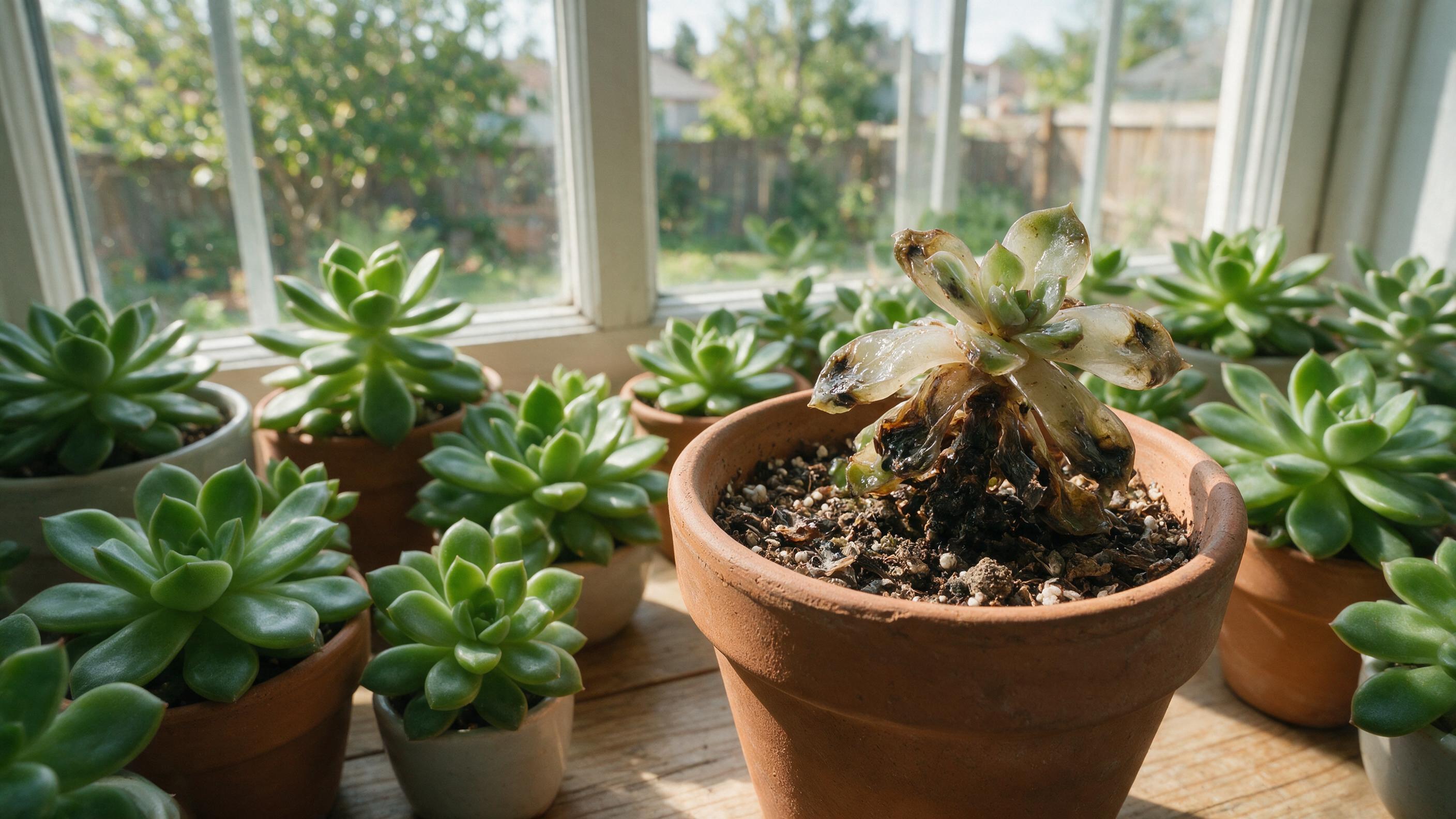
A succulent turning black is one of the most alarming things a plant parent can discover — especially when these plants have a reputation for being nearly indestructible. The good news is that blackening rarely happens overnight, which means you usually have time to act if you catch it early and understand what you’re dealing with.
The causes range from simple watering mistakes to fungal disease and pest damage, and the location of the discoloration on your plant is often the biggest clue. Whether the blackness is starting at the base, spreading across the leaves, or appearing as isolated spots, this guide walks you through every likely cause and exactly what to do about it.
What Does It Mean When Your Succulent Is Turning Black?
Black coloration on a succulent is almost always a distress signal, not a normal part of the plant’s growth cycle. When you notice your succulent turning black, it usually means it is rotting from the roots upward — and this occurs when the plant has been given too much water and has been sitting in it for too long. That said, overwatering is not the only explanation.
Random black or brown spots appearing on leaves can be puzzling, and dark spots like this could have several causes — this is a random issue that can be caused by very different things. The location, texture, and pattern of the blackening are what separate one cause from another.
Here is a quick breakdown of what different blackening patterns typically indicate:
- Black starting at the base and moving upward: Classic root rot from overwatering or poor drainage
- Black or brown patches on the top or sun-facing side of leaves: Sunburn or sun scald
- Soft, mushy black spots on lower leaves: Fungal disease or overwatering damage
- Black tips on otherwise healthy leaves: Underwatering or cold/frost exposure
- Black spots with a sticky or sooty residue: Pest activity (mealybugs, scale, aphids)
- Isolated dark lesions that spread rapidly: Anthracnose or another fungal infection
Understanding which pattern matches your plant is the first step toward an accurate diagnosis and a successful recovery.
Is Blackening in Succulents Always a Sign of a Problem?
In almost every case, yes — black coloration on a succulent signals that something is wrong. Unlike the red or purple stress coloring that some succulents develop in response to bright sun or temperature shifts (which is harmless and even attractive), black is not a normal pigment change.
The tell-tale sign of healthy sun stress is that many succulents develop an attractive coloration on their leaves, typically in shades of brick or wine red — for example, bear paw (Cotyledon tomentosa) develops what look like bloody little claws on the tips of its paw-like leaves when it gets an abundance of sunlight. That kind of color change is fine. Black is not.
The one exception worth knowing: succulents normally shed dead leaves from the bottom of the plant as new leaves develop, with new leaves growing from the top as well as on the sides of the stem — and losing these dead leaves is normal and should not be a concern. If a single lower leaf dries up, shrivels, and darkens before dropping off, that is natural leaf senescence, not a disease. But if multiple leaves are blackening, if the stem is involved, or if the discoloration is spreading, you have a real problem that needs attention.
Pro Tip: Gently squeeze a black leaf. If it feels mushy and releases liquid, you are almost certainly dealing with rot from overwatering. If it feels dry and papery, the cause is more likely sunburn, underwatering, or cold damage.
Watering Issues Causing Succulent Blackening
Water-related problems are by far the most common reason succulents turn black in American homes. The most common reason succulent leaves turn black is overwatering. Succulents store water in their leaves and stems, so they require less frequent watering than other plants. When you water too often, you overwhelm that storage system.
Succulent plants store extra water in their leaves, roots, and stems to withstand the dry conditions of their desert habitats — but too much water causes the leaf tissues to exceed their water storage capacity, leading to swelling and bursting. The damaged tissue then becomes a breeding ground for fungal pathogens, and the resulting black spots spread fast.
Overwatering symptoms to watch for include:
- Leaves that feel soft, translucent, or mushy when squeezed
- Blackening that starts at the lowest leaves and climbs upward
- Soil that stays wet or damp for days after watering
- A faint sulfurous or sour smell from the pot
- Fungus gnats hovering around the soil surface
Underwatering, while less dramatic, can also cause blackening — specifically at the leaf tips. Although succulents are drought-tolerant, they still need water to survive, and when they do not get enough, the leaves can dry out and turn black at the tips. These tips will feel dry and crispy rather than soft.
The fix for overwatering starts immediately: stop watering if overwatering is suspected, allow the soil to dry out thoroughly between waterings, and make sure the container has a drainage hole that excess water can freely drain from — also ensure that trays or sleeves are not left full of water. You can learn more about proper succulent planting technique in this guide on how to plant succulents.
For underwatered plants, the fix is usually straightforward — give the plant a good drink and let the water reach its roots so it can be absorbed. The “soak and dry” method works best: water thoroughly until it drains from the bottom, then wait until the top inch of soil is completely dry before watering again.
Light Conditions Behind Succulent Blackening
Light — both too much and too little — plays a bigger role in succulent blackening than many growers expect. On the too-much-sun side, sunburn is a real and common problem. While succulents love sunlight, too much intense, direct light can cause sunburn — and this often happens when a succulent is moved from a shaded spot to direct sunlight too quickly without acclimatization. Sunburned leaves will develop black or brown patches, usually on the side facing the light.
Brown or tan patches that form on leaves and/or stems, especially interior leaves or on new growth, are common symptoms of sun scald — and the primary cause is when succulents are exposed for a length of time to low light levels and then suddenly transitioned to bright or direct sunlight. This is especially common in the US when people move indoor plants outside for the summer without a gradual transition period.
On the too-little-sun side, low light does not cause blackening directly, but it creates the conditions that do. Trying to grow the plant in a low light spot or a cold location slows the plant’s metabolic activity — which means the plant hardly needs any water, making it easy to overdo watering accidentally.
When grown indoors, succulents need abundant bright, indirect light — ideally ten or more hours of light a day. If a bright enough location cannot be found by a window, provide supplemental light using high-output, full-spectrum fluorescent or LED grow lights. Check out our guide to the best houseplants for low-light areas if you are working with a darker space and want to choose plants accordingly.
For sunburned leaves, restoring a sunburnt succulent is relatively straightforward — start by removing the sunburned leaves since they will not grow back, and relocate the plant to a shaded area. Then reintroduce it to brighter light gradually over one to two weeks.
Soil, Nutrients, and Root Health Causing Succulent Blackening
The soil your succulent grows in is either protecting it or setting it up to fail. Most succulents evolved to grow in extremely rocky soil with little organic matter, often in locations where it rains hard but rarely. Standard potting mix holds far too much moisture for these plants and is one of the most overlooked causes of blackening in home collections.
The soil your succulents are planted in plays a role in their health, and poor soil conditions can lead to a host of problems including black leaves — if the soil is too dense or retains too much moisture, it can suffocate the roots and cause rot.
Root rot is the most serious consequence of bad soil and overwatering combined. The roots turn black and mushy — healthy roots are usually white, firm, and strong, while rotting roots are mushy, soft to the touch, and dark, often with a foul odor. This prevents the roots from absorbing water and nutrients, which can quickly lead to the death of the succulent.
Nutrient deficiency is another soil-related cause of discoloration, though it tends to produce yellowing before blackening. Although succulents do not need a lot of fertilizer, they can suffer from nutrient deficiencies that manifest as black spots or patches on leaves — a lack of essential nutrients like potassium or phosphorus can lead to weak, discolored leaves.
To build a soil environment that prevents these problems:
- Use a well-draining potting mix specifically for cacti and succulents, and add perlite or pumice to improve aeration and drainage.
- If making your own mix, mix 40 percent coarse sand with 25 percent potting soil and 35 percent crushed pebbles or stone.
- Repot your succulents every couple of years to refresh the soil and check root health.
- Always use a pot with drainage holes — no exceptions.
Succulents are not the only plants with specific soil and drainage needs. If you grow a variety of plants, our overview of types of plants can help you understand each one’s unique requirements.
Environmental Stress Triggering Succulent Blackening
Environmental factors outside of watering and light can push a succulent into distress and trigger blackening. Temperature is the most common culprit in this category, particularly for growers in colder US climates or those who keep plants near air conditioning vents or drafty windows.
Too-low temperatures are a real threat — mild frost damage can quickly turn leaves or parts of the stem black. Depending on how long temperatures stay below 32°F, frost-tender succulents may show varying degrees of damage — when moisture in the cells of a vulnerable plant freezes, it expands, bursts cell walls, and turns leaves to mush. In a light frost, leaf tips alone may show damage, which is sometimes called frost burn.
High humidity is another stressor that American growers in the Southeast and Gulf Coast states often overlook. Succulents can be susceptible to sooty mold disease due to two primary factors — the first is inadequate ventilation during high temperatures and humidity, which typically occurs during the summer and rainy seasons.
Repotting stress and physical damage can also cause localized blackening. Repotting is sometimes necessary but can stress a succulent, especially if done too frequently or incorrectly — a stressed plant might show signs such as black tips on the leaves or other discoloration.
To protect your succulents from environmental stress:
- Keep most varieties above 40°F — bring outdoor plants inside before the first frost
- Trim off the damaged part and move your succulents to a warmer spot away from freezing temperatures, as severe frost damage may not be reversible and affected leaves may eventually die and fall off.
- Improve airflow around indoor plants to reduce humidity buildup
- Avoid placing succulents directly in front of AC vents or cold drafts from windows
Pro Tip: If you live in a humid region like Florida, the Gulf Coast, or the Pacific Northwest, consider placing a small fan near your indoor succulent collection. Good airflow reduces the moisture that fungal pathogens need to thrive.
Pests and Disease Leading to Succulent Blackening
Even with perfect watering and ideal light, pests and disease can still cause your succulent to turn black. Although most problems associated with cacti and succulents grown as houseplants are bacterial or fungal diseases caused by overwatering, they do get the occasional insect pest — the most common pests are scale, mealybugs, and root mealybugs, while less common pests include spider mites and fungus gnats.
Succulents can develop black spots as a result of pest infestations — common pests that attack succulents include spider mites, mealybugs, and scale insects, which can cause black spots along with other symptoms like yellowing, wilting, and a sticky residue on the leaves.
On the disease side, several fungal infections are worth knowing by name:
Black rot is one of the most aggressive. Black rot is a severe fungal disease that can cause parts of your succulent to turn black and mushy — it often starts at the base of the plant and can work its way up if not treated promptly.
Anthracnose, caused by Colletotrichum spp., is highly contagious. Anthracnose initially appears as one or more conspicuous black spots on the tender leaves — these spots are soft to the touch and can spread quickly if not managed effectively, and if left untreated, anthracnose can rapidly spread and infect adjacent succulents, leading to the shedding of a significant number of leaves even upon slight touches.
Bacterial soft rot, caused by Erwinia carotovora, is unfortunately incurable. Bacterial soft rot collapses stems, leaving plants water-soaked and slimy, and the damage may not be as apparent at the root level because it is likely to be internal — bacterial soft rot is incurable, so dispose of affected plants in the trash.
For pest treatment: first isolate the affected plant to prevent the pests from spreading to other plants, then use a natural insecticide like neem oil or insecticidal soap to kill the pests — be sure to follow the instructions on the product label carefully and repeat the treatment as necessary. For mealybugs specifically, dip a cotton swab in rubbing alcohol and gently dab the mealybugs to remove them — the alcohol dissolves their waxy coating, effectively killing them.
You can use a plant identification app to help confirm what pest you are dealing with. Our roundup of the best iPhone apps for identifying plants and best Android apps for identifying plants includes tools that can help with pest and disease ID as well.
How to Diagnose Why Your Succulent Is Turning Black
A systematic diagnosis saves time and prevents you from applying the wrong fix. Work through these steps in order before doing anything to the plant.
- Check the location of the blackening. Is it at the base and moving up? That points to root rot. Is it on sun-facing leaf surfaces? That suggests sunburn. Is it at the tips? Think underwatering or frost.
- Squeeze a black leaf. Mushy and wet means rot or overwatering. Dry and papery means sunburn, cold damage, or dehydration.
- Check the soil. Push your finger an inch into the soil. If it is still damp two or more days after your last watering, drainage is the problem. One method to determine if plants need water uses a chopstick — insert it into the soil, and if it comes out with moisture on it (indicated by a darker color), the plant does not yet need to be irrigated.
- Unpot and inspect the roots. Look for brown or black roots, which indicate rot — healthy roots should be white or light tan.
- Look for pests. Inspect your plants regularly for signs of pests — look underneath leaves and around the base. Check for cottony white residue (mealybugs), dome-shaped bumps (scale), or fine webbing (spider mites).
- Review recent changes. Did you move the plant to a sunnier spot? Did temperatures drop recently? Did you repot it? Changes in environment are often the trigger.
- Smell the soil and stem. When succulent leaves turn yellowish-brown and become soggy, they are likely on their way to turning black due to root rot — other symptoms of root rot include a limp stem and a sulfurous smell.
Important Note: If you cannot find a clear cause after this inspection, consider that multiple stressors may be at work simultaneously. A succulent weakened by low light is more vulnerable to both overwatering and pest attack — fixing just one issue may not be enough.
How to Fix a Succulent That Is Turning Black
The treatment depends on your diagnosis, but the steps below cover the most common scenarios. Act quickly — catching black root rot early can stop the spread of the fungal infection and save your other plants.
For root rot (the most common fix):
- Remove the plant from its pot and gently shake off the soil.
- Sterilize a sharp pruning knife or shears with rubbing alcohol — make sure to clean the knife with alcohol both before and after using it on each plant to avoid spreading disease from one plant to another.
- Use the knife to cut off any damaged roots, as well as any leaves that appear too discolored and soft to be rehabilitated, then repot the pruned succulent using an appropriate pot and soil.
- Let the roots air-dry for 24–48 hours before repotting into fresh, dry, well-draining soil.
- Wait three to five days before watering again.
For fungal disease (black rot, anthracnose):
- Remove the affected parts by cutting away any blackened areas with clean, sharp tools, sterilize your tools to prevent spreading the fungus, and if the rot is extensive, repot in fresh, sterile soil to help eliminate the fungus.
- Garden plants may respond to treatment with a copper fungicide — Bonide Liquid Copper Fungicide treats anthracnose, Phytophthora water molds, and various bacterial blights.
- Improve airflow and stop overhead watering immediately.
For sunburn: Move the plant to a spot with bright but indirect light. Remove the damaged leaves — they will not recover. The damaged leaves will not recover, but new growth should be healthy and green. Reintroduce direct sun exposure gradually over one to two weeks.
When the damage is too far gone: If the rot has spread to the whole plant including the roots, stems, and leaves, beheading your succulent might save it — beheading is just like propagation, which can salvage a part of your plant. Cut a healthy section of stem well above the rotted area, let the cut end callus for a few days, then plant it in fresh dry soil. You can find detailed propagation guidance in our full article on how to plant succulents.
How to Prevent Succulent Blackening Going Forward
Prevention is far easier than treatment, and most of it comes down to getting three things right: watering, soil, and drainage. Providing well-draining soil, proper sunlight, and infrequent watering helps create an environment unfavorable to fungal growth.
Watering habits: Setting up a wet-dry cycle where the soil is completely wetted and then allowed to completely dry out is the best way to avoid root rot in succulents. Pay attention to the season — succulents need less water during their dormant period in winter. In most US climates, that means cutting watering frequency roughly in half from November through February.
Soil and drainage: Use plant pots with plenty of drainage holes — drainage holes get rid of extra moisture in the soil, and planting succulents in drainage-friendly pots combined with exposure to sunlight will prevent dead leaves and bring about healthier growth.
Light management: Transition succulents to new light conditions slowly to avoid damage in the future. If you are moving a plant from indoors to a sunny patio in summer, give it one to two weeks of partial shade first.
Pest prevention: Keeping your plants healthy and stress-free is the best way to prevent pest problems — regularly cleaning your succulents and ensuring they have good airflow can help deter unwanted guests. Succulents have relatively few pest and disease issues, but you should scout plants frequently to catch problems early and treat them before they become severe.
Avoid overhead watering: Aim for the stem base and the soil instead of the leaves and branches — succulents absorb water through the roots, and watering the leaves heavily can lead to fungal infections as fungi prefer moist surfaces to grow on.
If you grow other drought-tolerant plants alongside your succulents, our guides to drought-tolerant plants in Florida and different types of aloe vera plants offer complementary care advice. For a broader look at plant families that share similar needs, explore our overview of different types of yucca plants.
FAQ
Can a Succulent Recover from Turning Black?
Yes, but recovery depends on how far the blackening has progressed. Fixing the roots of your succulent before your plant dies completely depends on how early you determine the rotten roots and start treating them. If the blackening is limited to a few leaves or a small section of the roots, the plant has a good chance of recovery with prompt action. If the stem itself has turned black and mushy all the way through, survival is unlikely — but you may still be able to propagate healthy cuttings from any green sections remaining.
Why Is My Succulent Turning Black at the Base?
Root rot, often caused by fungi in damp soil, leads to stunted growth and leaves turning from yellow to brown and black, starting at the base. This is the most common scenario and almost always traces back to overwatering, poor drainage, or both. Unpot the plant immediately, inspect the roots, trim any black or mushy sections, and repot in fresh dry soil.
Why Are There Black Spots on My Succulent’s Leaves?
Excessive water can cause some brown tips or random patches on the leaves, and focused sun damage — while less common since burns usually destroy an area instead of turning it black — can still happen. Physical damage from knocking the plant, pest feeding, frost exposure, and fungal disease like anthracnose can all produce spots as well. The texture of the spot (mushy vs. dry vs. raised) is your best clue to the cause.
Is a Black Succulent the Same as a Normal Color Variation?
Some succulent varieties are bred or naturally occur with very dark, near-black foliage — varieties like Aeonium arboreum ‘Zwartkop’ and certain dark Echeveria hybrids have deep purple-black leaves that are completely normal. If your plant has always had dark leaves and they look firm, plump, and healthy, there is nothing to worry about. The problem arises when leaves that were previously green, gray, or another color start turning black — that change is the warning sign.
Should I Remove Black Leaves from My Succulent?
Yes. If you pick off the affected leaves before the damage is extensive, you may be able to save your plants. Removing blackened leaves also eliminates the decaying tissue that fungal spores use as a launching point to infect healthy parts of the plant. Always sterilize your scissors or pruning shears with rubbing alcohol before and after cutting to avoid spreading any infection.
Can I Use Neem Oil on a Succulent Turning Black from Pests?
Yes — neem oil is one of the safest and most effective treatments for pest-related blackening on succulents. First isolate the affected plant to prevent the pests from spreading to other plants, then use a natural insecticide like neem oil or insecticidal soap to kill the pests. Apply in the evening or early morning to avoid leaf burn, and repeat every seven to ten days for two to three rounds to catch any newly hatched eggs. Avoid applying neem oil to a plant that is already stressed from root rot, as it can add unnecessary strain.