Why Does My Fiddle Leaf Fig Have Brown Spots? Causes and Fixes

August 26, 2026
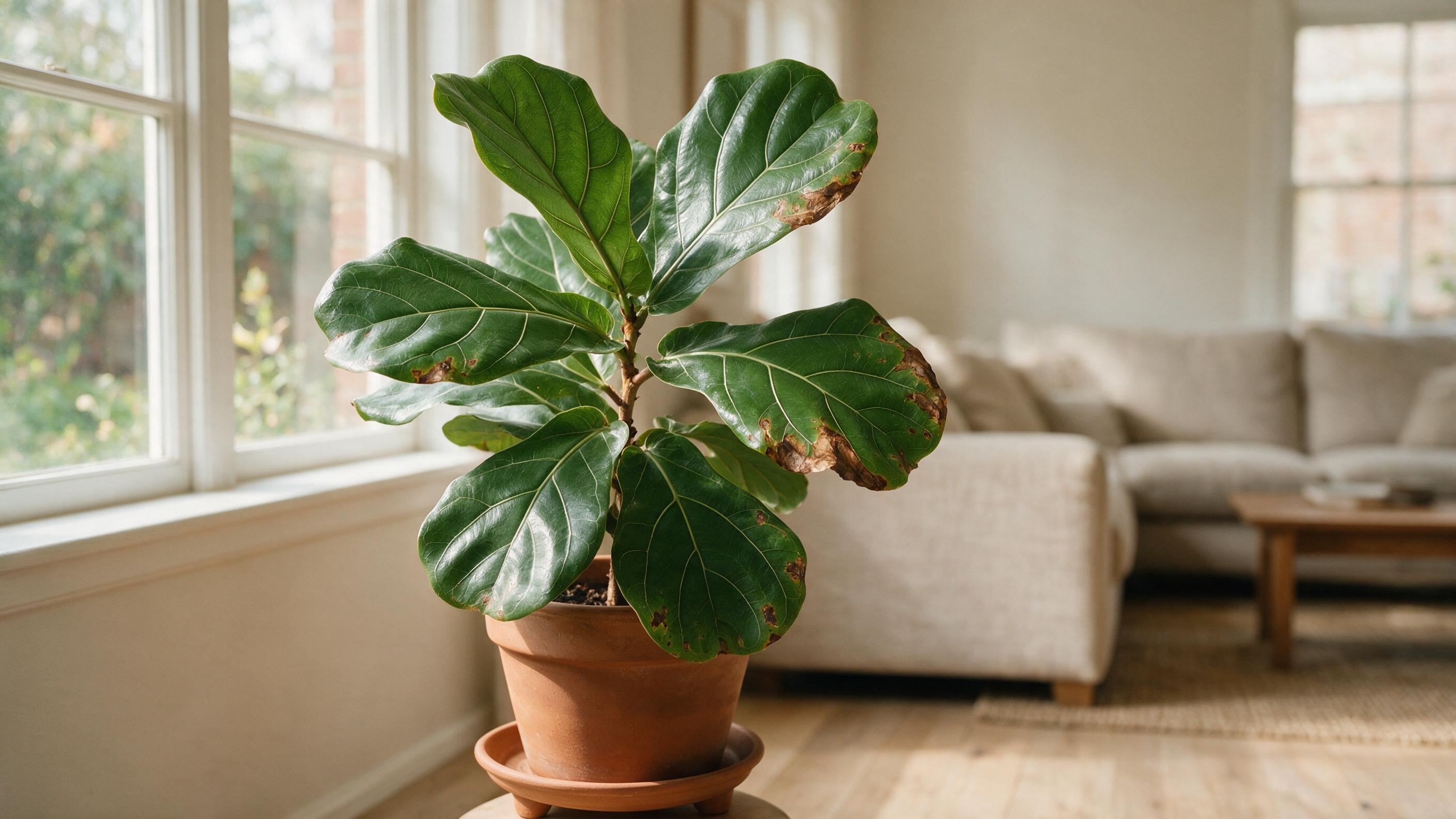
Few houseplants turn heads quite like the fiddle leaf fig. Those oversized, glossy leaves make a bold statement in any living room — right up until the moment you notice brown spots creeping across them. Many things cause brown spots, so assessing your plant’s overall health and considering factors such as environmental conditions, watering schedule, and fertilizer use is important.
The tricky part is that brown spots on a fiddle leaf fig can look similar regardless of the cause, yet each cause requires a completely different fix. Treating an underwatered plant like an overwatered one — or vice versa — only makes things worse. Fiddle leaf figs show brown spots when stress hits hard enough to kill leaf tissue, and those marks are permanent — dead cells do not recover — but your plant will put out fresh leaves once conditions stabilize.
This guide walks you through every major cause of brown spots on a fiddle leaf fig (Ficus lyrata), shows you how to read the clues your plant is leaving you, and gives you clear, actionable steps to fix the problem and prevent it from coming back.
What Does It Mean When Your Fiddle Leaf Fig Has Brown Spots?
Brown spots on plant leaves often indicate the plant is under stress. Watering habits, light conditions, and care routines all play a role in the development of these spots, and identifying the root cause is key to providing the right care and preventing further damage.
Brown spots on the leaves of fiddle leaf fig plants develop from several stressors that damage leaf cells in different ways. Location on the leaf, texture, and the speed of spread give the clearest clues to the cause. Think of each brown spot as a message — you just need to learn the language.
A healthy fiddle leaf fig has glossy, deep-green leaves, steady new growth in season, a firm trunk, and white, firm roots, with no brown spots, yellowing, or mushiness. When any of those qualities start to slip, brown spots are usually the first visible warning sign.
Pro Tip: Take a photo of the brown spots the moment you notice them. Tracking whether they spread, stay the same, or appear on new leaves over the next week is one of the fastest ways to narrow down the cause.
Is Brown Spotting in a Fiddle Leaf Fig Always a Sign of a Problem?
Not always — and knowing the difference between a harmless blemish and a real threat can save you a lot of unnecessary intervention. While poor care can contribute to brown spots, other factors like spent leaves, natural plant aging, and active growing cycles may also be at play.
Brown spots on a new plant that show up a week or so after you move your plant are often from physical trauma. This is because the large leaves on a fiddle leaf fig are often damaged during a move, and the bruises left on the plant will turn brown over time. Often, these spots look like cracks or tears. Brown spots from physical trauma are certainly a bummer, but they do not need treatment and your plant will generally recover very well.
If you’ve recently bought a fiddle leaf fig and have noticed brown spots, keep an eye on the spots to monitor if they spread or get worse. Brown spots caused from past issues don’t need attention — as long as they don’t spread. Think of them like a scar. Unfortunately, leaves won’t recover from damage, so the important thing is to make sure it doesn’t continue to get worse.
Edema is another non-threatening cause worth knowing about. Edema in fiddle leaf figs is quite common and not too much of a problem. However it can be scary to witness and lead you to think something is terribly wrong. Edema looks like small, red-brown dots on newly developing leaves. These dots are caused by water pressure in the cells and typically resolve on their own as the leaf matures.
Watering Issues Causing Fiddle Leaf Fig Brown Spots
Watering is the single biggest source of brown spots on a fiddle leaf fig, and the frustrating reality is that too much water and too little water can both cause browning. The key to telling them apart is in the details.
Overwatering and Root Rot
Arguably the most common cause of brown spots in a fiddle leaf fig is root rot from overwatering. Root rot is a fungal infection that takes place when the roots sit in water for too long and don’t have adequate drainage. Fiddle leaf fig roots in particular need fast-draining soil and ample drainage.
Fiddle leaf fig brown spots caused by overwatering can start at any place on a leaf — the spot may appear in the middle of a leaf, near the edge, or towards the stem. Overwatering brown spots are very dark — almost black — and murky looking. Brown spots on the bottom leaves of a fiddle leaf fig often indicate root rot, and spreading black or dark brown spots followed by leaf drop commonly indicate root rot.
If you suspect root rot, take the plant out of the pot and examine the roots — infected roots will look mushy and brown or black in color. To treat root rot, you will need to remove all infected roots and repot the plant. Always empty saucers after watering to avoid standing water.
Underwatering
Fiddle leaf fig brown spots caused from underwatering generally happen because the plant is too dry. Underwatering brown spots are crispy, light brown, and will generally start at the leaf’s outer edges and work their way in. The leaves will often droop from lack of water.
The brown spots of a dry plant will typically start at the edge of the leaf, not in the middle. They’ll also affect leaves all over the plant, from top to bottom, where root rot will usually affect the lower leaves more than the top leaves. Finally, the leaves of your dry fiddle leaf fig may look otherwise healthy, whereas the leaves of a plant with root rot will begin to look sickly, yellow, or have tiny brown spots.
The fix is straightforward: make sure the top four inches of soil is being moisturized during watering and water consistently until new healthy leaf growth occurs. A good rule to go by is to only water when the top 2 inches of soil is dry.
Pro Tip: The finger test alone can be misleading. Depending on the aeration of your soil, the top of the soil might be bone-dry while the root ball is still soaking wet. A moisture meter gives you a much more accurate read of what’s happening deeper in the pot.
Light Conditions Behind Fiddle Leaf Fig Brown Spots
Fiddle leaf figs thrive in bright, indirect sunlight. Insufficient light weakens the plant, making it more susceptible to stress, which often appears as brown spots or yellowing leaves. Conversely, too much direct sunlight can cause sunburn. Prolonged exposure to intense sunlight can scorch the leaves, resulting in brown or yellow patches with dry, crispy edges.
If your plant gets too much direct sunlight, it can get a sunburn, which manifests as light brown spots that sometimes look bleached. Sunburn will not occur on leaves that are hidden below other leaves — this is a good way to be sure sunburn is the cause. It will usually occur on higher leaves or areas that see the sun.
Too little light creates a different set of problems. If your fiddle leaf fig is any further indoors than 1–2 feet from a bright window, it’s likely lacking in sunlight — move it to a brighter spot. Keep in mind that a fiddle leaf fig that does not get enough light is more prone to overwatering, because the soil dries out much more slowly in dim conditions.
The ideal placement for most US homes is a few feet from a large south- or east-facing window. Place your fiddle leaf fig near a window with filtered light or in a room with reflected light to ensure it gets enough light without the risk of direct sunlight scorching its leaves. To encourage even growth, rotate the pot every few weeks so all sides of the plant receive adequate light.
If your home doesn’t have a naturally bright spot, check out our guide to the best houseplants for low-light areas — or consider supplementing with a grow light rather than forcing a fiddle leaf fig into a dim corner where it will struggle.
Soil, Nutrients, and Root Health Causing Fiddle Leaf Fig Brown Spots
Even if you’re watering correctly, the wrong soil or a depleted nutrient profile can still cause brown spots. Like most houseplants, the fiddle leaf fig requires a balance of nutrients to thrive. Often, when the plant isn’t getting enough phosphorus, you’ll notice brown spots around the edges of the leaves. While this can look like an underwatering issue, it’s a tell-tale sign of nutrient deficiency if an overall yellowing of the whole plant accompanies it.
If the new leaves grow in small and stunted, it could be a sign that your plant is lacking in nutrients. If it’s been years since you repotted, consider repotting to give your plant fresh soil, or simply fertilize your plant in the spring and summer to give it the extra nutrients it needs.
When it comes to fertilizing, feed monthly during the growing season from spring through early autumn with a balanced liquid fertilizer at half strength. Fiddle leaf figs are moderate feeders — consistent monthly fertilizing during the active season maintains good growth and leaf color. Avoid fertilizing in winter when growth has slowed or stopped.
Soil composition matters just as much as fertilizer. It’s crucial to ensure your plant is in a pot with sufficient drainage and well-draining soil. A mix of potting soil, perlite, and peat is often recommended. This type of mix allows excess moisture to escape quickly, protecting roots from the soggy conditions that lead to rot and brown spots.
| Cause | Spot Location | Spot Color/Texture | Other Signs |
|---|---|---|---|
| Overwatering / Root Rot | Lower leaves; center or anywhere on leaf | Dark brown to black, murky | Mushy roots, yellowing, leaf drop from bottom |
| Underwatering | Edges of leaves throughout plant | Crispy, light tan-brown | Drooping, dry soil, curling leaves |
| Sunburn | Upper/exposed leaves only | Light brown, bleached-looking | Only on sun-facing leaves |
| Nutrient Deficiency | Leaf edges | Brown edges with overall yellowing | Stunted new growth |
| Bacterial Infection | All over the plant, including new leaves | Medium brown, often with yellow halo | Spreads quickly to new growth |
| Pests | Scattered, often on undersides | Small, stippled or speckled spots | Webbing, sticky residue, visible bugs |
| Physical Trauma | Anywhere on otherwise healthy leaf | Brown cracks or tears | Appears after moving the plant |
Environmental Stress Triggering Fiddle Leaf Fig Brown Spots
Your fiddle leaf fig is a tropical plant at heart. Fiddle leaf figs, native to tropical climates, thrive in warm, humid environments. In homes with low humidity, however, the plant struggles to retain moisture, causing the edges of the leaves to dry out and develop brown, crispy spots.
Fiddles can adjust to low humidity levels, but will thrive better when humidity is above 60%. Many US homes — especially those running central air conditioning in summer or forced-air heat in winter — drop well below that. A very cold winter will mean that the heat is blasting more than usual and drying out the plant’s soil much more quickly than usual. This seesawing of wet and dry is stressful for the plant, so keep a good eye on soil moisture and keep the air around the plant humid to minimize the drying.
To raise humidity around your plant, consider using a plant humidifier near your plant to increase the moisture level in the air. Alternatively, you can place a shallow water tray near the plant or occasionally mist the leaves to provide extra moisture. Be cautious not to overdo it with misting, as excessive moisture on the leaves can encourage fungal growth.
Position stability is also more important than most plant owners realize. Fiddle leaf figs are acutely sensitive to environmental change. Moving the plant, even from one side of a room to the other, triggers a stress response that causes leaf drop within one to two weeks. Bringing a plant home from a warm, humid nursery environment into a cool, dry interior causes the same response. If your fiddle sits in the range of a heater or has any type of air blowing on it, dry air hitting your plant can definitely be a huge cause of dryness — change its location out of the draft.
Pests and Disease Leading to Fiddle Leaf Fig Brown Spots
Common Pests
Common pests like spider mites, mealybugs, and aphids can be detrimental to fiddle leaf figs. These pests usually appear on the underside of leaves or at leaf joints and can cause damage by sucking sap from the plant. Regularly inspect your plant for signs of pests, including webbing, sticky residue, or visible bugs.
Each pest leaves a slightly different calling card. Spider mites are characterized by tiny rust-colored clusters of dots with silky webbing. Mealybugs appear with a cottony substance and wet honeydew. Fungus gnats can be entirely invisible or show themselves in a cloud of fruit fly-looking swarms when you walk by. While small circular spots usually indicate a pest problem, larger patches of brown may be a sign of disease.
You can learn more about identifying common houseplant intruders with a plant identification app — many now include pest diagnosis features that can help you confirm what you’re dealing with before you treat. If you also have cats that get into your plants, our guide on how to keep cats out of houseplants can help you manage that additional stressor.
Treatment for most pests follows the same general approach: isolate the plant to prevent spreading, then treat with neem oil or insecticidal soap, applying as directed on the product label. For spider mites specifically, spider mites are actually pretty easy to get rid of — all you have to do is get them off the leaves, as they don’t attach themselves like scale or other insects. A jet of water is an effective way to dislodge spider mites.
Bacterial and Fungal Infections
Bacterial infection can be difficult to tell from root rot. Whereas root rot usually shows up as dark-brown spots on the lower leaves, bacterial infection appears all over the tree, manifesting in medium-brown spots — sometimes more than one on a single leaf — often ringed by slight yellowing.
Small, irregular brown spots with a yellow halo indicate bacterial or fungal infection, often caused by water sitting on the leaf surface or overwatering in cool conditions. Fungal infections can also affect fiddle leaf figs, particularly in warm, humid environments with limited airflow — these conditions provide an ideal breeding ground for fungi, allowing diseases to spread more easily.
To treat a bacterial or fungal issue, carefully remove the spotted leaves with clean hands and tools, and repot the tree into fresh soil and a clean pot with drainage. Keep the leaves dry when watering and ensure good air circulation around the plant. Remove affected leaves and apply a fungicide or bactericide as recommended, and avoid overhead watering to keep the foliage dry.
How to Diagnose Why Your Fiddle Leaf Fig Has Brown Spots
Diagnosing the cause of brown spots comes down to asking the right questions in the right order. The exact cause of brown spots on a fiddle leaf fig varies greatly, and the best solutions start by asking yourself the following questions the moment you notice blemishes on the leaves: Is the spotting happening from the edge of the leaves out or the center in? Are they very dark brown spots or a lighter shade of brown?
Work through this step-by-step process:
- Check the spot location. Brown spots that start in the middle of the leaf and spread outwards are likely caused by overwatering, which in turn causes root rot. Spots starting at the edges point to underwatering, sunburn, or low humidity.
- Check the spot color and texture. Brown edges and curling leaves are often from dry soil. Brown spots that start in the center or are accompanied by yellowing may be from overwatering or an infection caused by bacteria or fungus. A green leaf with very dark brown spots is typically a sign of root rot.
- Check which leaves are affected. Brown spots from dryness will affect leaves all over the plant, from top to bottom, where root rot will usually affect the lower leaves more than the top leaves. Bacterial infection affects new and old leaves equally.
- Check the soil moisture. Push your finger 2 inches into the soil. Soggy soil points to overwatering; bone-dry soil points to underwatering. A moisture meter gives a more reliable reading.
- Check for pests. Look for signs of pests including webbing, sticky residue, or visible bugs, especially on the undersides of leaves. Spider mites are small and difficult to spot — the giveaway sign is the tiny webs hanging over the leaves and stems.
- Check the roots. Root rot is indicated by mushy, brown, or black roots, along with wet or smelly soil. The plant may also show signs of discolored, wilted leaves or brown spots.
Key Insight: It’s not uncommon for fiddle leaf figs to exhibit signs of both overwatering and underwatering — especially if the plant has been on an inconsistent watering schedule. This is known as erratic watering, and it can confuse even seasoned plant owners. If you’re seeing a confusing mix of symptoms, inconsistent watering is often the culprit.
How to Fix a Fiddle Leaf Fig That Has Brown Spots
Once you’ve identified the cause, here’s how to take action. The good news is that while fiddle leaf fig brown spots can be frustrating, they are fixable. By identifying the underlying causes and implementing the right solutions, you can restore your plant’s health.
- For overwatering/root rot: Remove the plant from its soil, thoroughly wash the roots, and remove any that are brown or mushy. Afterwards, repot in fresh soil with proper drainage and cut off the affected leaves. Give it at least a week to dry out before watering again — the brown spots should stop spreading.
- For underwatering: Water deeply so the entire root ball is saturated, then let the top 2 inches of soil dry before watering again. Signs of recovery include healthy new leaf growth, a firm waxy leaf texture, and no more brown spots. Be sure to prune affected or dying leaves off the plant to help facilitate faster, healthier growth.
- For sunburn: Move the plant back from the window or add a sheer curtain to filter the light. The burned leaves will not recover, but new growth should come in clean.
- For nutrient deficiency: Nutrient deficiencies are among the easiest to fix, remedied quickly by including a liquid fiddle leaf fig plant food into your watering routine. The ideal plant food will have a balance of nitrogen, phosphorus, and potassium with additional macronutrients.
- For pests: Isolate the plant and take steps to remove pests immediately. Use insecticidal soap or neem oil, repeating applications until any hidden bugs have completely disappeared.
- For bacterial/fungal infection: If you notice signs of fungal disease, take immediate action to prevent it from spreading. Begin by removing any infected leaves, then treat the plant with a fungicide or a natural remedy like a diluted baking soda spray.
No matter the cause, pruning damaged leaves helps improve the plant’s overall appearance and encourages healthy growth. Just be sure to use clean, sharp scissors or pruning shears to avoid introducing any infection.
For more on caring for large-leafed tropicals like this one, see our article on big-leaf indoor plants and our broader guide to types of plants for your home.
How to Prevent Fiddle Leaf Fig Brown Spots Going Forward
Prevention is simpler than treatment, and a consistent routine makes all the difference. Your best bet to ensure optimal health for your fiddle leaf fig is to closely monitor plant health, maintain consistent watering, and incorporate proper fertilization into your care routine.
Follow these core habits to keep brown spots from returning:
- Water on a consistent schedule. Water your fiddle leaf fig every 1–2 weeks, depending on the moisture level of the soil. During the growing season (spring and summer), you may need to water more frequently, while in the dormant season (fall and winter), less frequent watering is sufficient.
- Choose the right pot and soil. Always use a pot with drainage holes and a fast-draining mix. Ensure your pot has proper drainage to allow excess water to escape and prevent the roots from sitting in stagnant moisture.
- Find a stable, bright spot. The single most important decision in fiddle leaf fig care is choosing the right position before the plant arrives, and not moving it after. Consistency in light and temperature prevents stress-triggered browning.
- Keep humidity up. In dry US climates or during winter heating season, run a humidifier nearby or use a pebble tray with water to maintain adequate moisture in the air around the plant.
- Fertilize during the growing season. Feed monthly from spring through early fall with a balanced liquid fertilizer at half strength, and skip feeding entirely in winter.
- Inspect leaves regularly. Regularly inspect your fiddle leaf fig for pests, paying special attention to the undersides of the leaves where they tend to hide. Keep the leaves clean by wiping them with a damp cloth periodically, as dust can attract pests.
- Rotate the pot. Rotate the pot every few weeks so all sides of the plant receive adequate light and grow evenly without straining toward the window.
If you enjoy growing a variety of houseplants alongside your fiddle leaf fig, our guides on different types of rubber plants and types of spider plants can help you build a thriving indoor collection. You might also find our article on different types of aloe vera plants useful, as aloe is another low-maintenance option that pairs well with a fiddle leaf fig in bright-light spaces.
Important Note: Brown spots that have already formed will not disappear — the damaged leaf tissue is permanent. Your goal is always to stop the spots from spreading and encourage the plant to push out healthy new growth. Signs of recovery include healthy new leaf growth, a firm waxy leaf texture, and no more brown spots.
FAQ
Why Does My Fiddle Leaf Fig Have Brown Spots Even Though I Water It Regularly?
Regular watering doesn’t always mean correct watering. It’s not uncommon for fiddle leaf figs to exhibit signs of both overwatering and underwatering — especially if the plant has been on an inconsistent watering schedule. This is known as erratic watering, and it can confuse even seasoned plant owners. Always check soil moisture before watering rather than following a fixed calendar schedule.
Should I Remove Brown Leaves from My Fiddle Leaf Fig?
Yes. Pruning damaged leaves helps improve the plant’s overall appearance and encourages healthy growth. Just be sure to use clean, sharp scissors or pruning shears to avoid introducing any infection. Removing heavily spotted leaves also lets you see clearly whether new spots are forming on healthy tissue.
Can Brown Spots on a Fiddle Leaf Fig Spread to Other Plants?
It depends on the cause. Brown spots from watering issues, sunburn, or nutrient deficiency are not contagious. However, spider mites travel by air, using their webbing to catch breezes to other plants, so it’s important to keep infected plants away from your other houseplants. All it takes is a short breeze from an open door or fan for spider mites to spread from one plant to another. Bacterial and fungal infections can also spread through shared tools or splashing water.
How Long Does It Take for a Fiddle Leaf Fig to Recover from Brown Spots?
Depending on the severity of the pest or disease issue, it may take several weeks for a fiddle leaf fig to fully recover. However, with proper treatment and care, your plant can thrive again without any unsightly brown spots. A plant recovering from root rot may take longer — sometimes two to three months — before you see robust new growth.
What Does a Healthy Fiddle Leaf Fig Look Like?
A healthy fiddle leaf fig has glossy, deep-green leaves, steady new growth in season, a firm trunk, and white, firm roots, with no brown spots, yellowing, or mushiness. In good conditions during the growing season, expect a new leaf every few weeks. A long stretch with no new growth can signal a light, water, or nutrient issue.
Is a Fiddle Leaf Fig a Good Choice for Beginners?
The difficulty is real but specific: fiddle leaf figs are not demanding in every aspect of care, but they are highly sensitive to two things that are easy to get wrong — overwatering and environmental instability — and the consequences of errors in these areas are dramatic and visible. Getting these two factors right makes the rest of the care manageable. With the right spot and a consistent watering routine, even a first-time plant owner can keep one thriving.