Why Are My Marigold Leaves Turning Yellow? Causes and Fixes

September 21, 2026
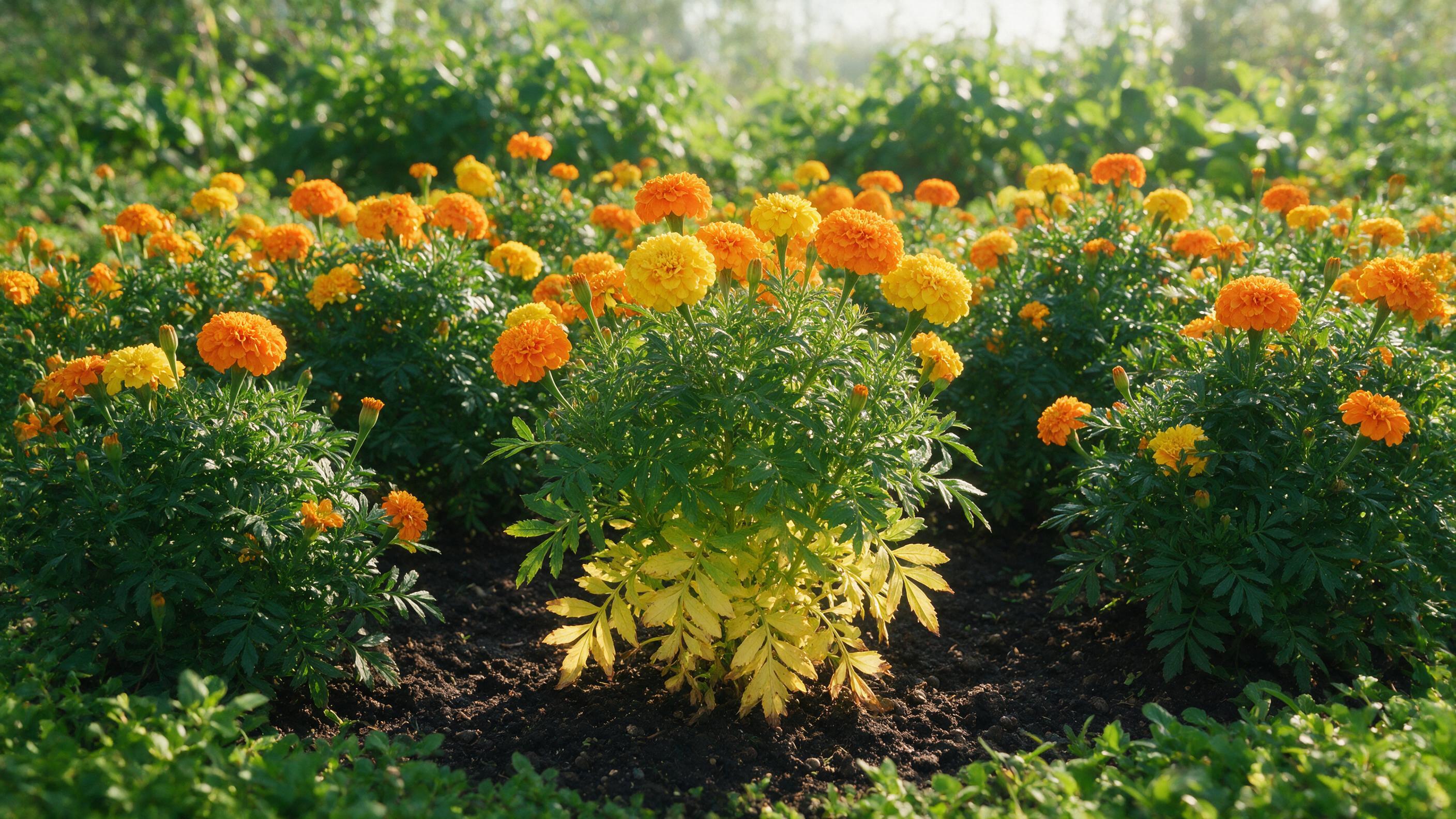
Marigolds are some of the most rewarding flowers you can grow in a US garden — tough, cheerful, and usually trouble-free. So when those bright green leaves start fading to yellow, it can feel alarming. The good news is that yellowing leaves are almost always a signal you can read and respond to.
Understanding why your marigold leaves are turning yellow is the first step to fixing the problem. Whether you’re growing them in garden beds, raised planters, or containers on a patio, the causes are the same — and most of them are easy to correct once you know what to look for.
What Does It Mean When Your Marigold Leaves Are Turning Yellow?
Yellowing leaves, a condition called chlorosis, is a distress signal indicating that something in your marigold’s environment or care routine is unbalanced. It can result from various factors, including nutrient deficiencies, water issues, pests, or diseases. The leaves are essentially your plant’s way of communicating that something needs to change.
Marigolds — most commonly the African marigold (Tagetes erecta) and French marigold (Tagetes patula) — are grown as annuals across the United States and are known for being low-maintenance. They are hardy flowers, but they are not immune to problems, and there are a few common issues that plague many flower gardeners, no matter the climate.
The pattern and location of the yellowing are your biggest diagnostic clues. Yellowing that starts on the lowest, oldest leaves tells a very different story than yellowing that appears on new growth at the top of the plant. Pay attention to where the discoloration begins before reaching for a watering can or fertilizer bag.
Pro Tip: Before doing anything else, check whether only the lowest one or two leaves are yellow while everything above looks healthy. If it’s just the lowest two or three leaves and everything above looks healthy, that is natural aging and needs no action.
Is Yellowing in Marigolds Always a Sign of a Problem?
Not every yellow leaf means your marigold is in trouble. Yellow leaves aren’t always a reason to panic, and can be a normal part of a plant’s life cycle. Unless brand new leaves are turning yellow or all the leaves change color at once, it’s likely just your plant shedding old leaves.
Perhaps the most overlooked cause of leaf yellowing is simply aging. As leaves get old, they will naturally yellow, wither, and fall off. You can tell if age is the cause by checking the juvenile leaves. If they’re normal and healthy, you know it’s just age, but if the juvenile leaves are also turning yellow, there’s an actual problem.
It’s perfectly normal for the very bottom leaves to turn yellow and drop off as the plant grows taller and focuses its energy on new growth and flowers. This is especially common mid-season when marigolds are putting energy into blooming. You can simply remove those lower leaves to keep the plant looking tidy.
The situations that do require attention are when yellowing spreads upward through the plant, when new leaves are affected, when the discoloration is accompanied by wilting or spotting, or when multiple leaves change color at the same time. In those cases, it’s time to investigate further.
Watering Issues Causing Marigold Yellowing
Overwatering and root rot are the most likely cause of problems in marigolds, since they are sensitive to wet soil. It’s a very common mistake, especially for newer gardeners who interpret any wilting as a sign the plant needs more water.
Overwatering
With overwatering, lower, older leaves turn yellow and feel soft or mushy. The soil is constantly wet, and you might see mold or fungus gnats. The plant looks wilted despite wet soil. That last detail — wilting even though the soil is soaked — is the telltale sign that roots, not drought, are the problem.
Waterlogged soil suffocates the roots. They can’t breathe, leading to root rot, which means they can’t transport water and nutrients to the leaves. Overwatering can also lead to fungal and bacterial infections and an increased risk of infestations.
To fix overwatering, stop watering immediately and let the soil dry out. Check drainage holes in your pot to ensure they aren’t blocked. If the plant is in the ground, improve soil aeration by gently loosening the top layer. For severe cases, you may need to uproot the plant, trim away any black, mushy roots, and replant it in fresh, well-draining soil.
Underwatering
With underwatering, leaves turn yellow, then brown and crispy, starting from the tips and edges. The plant will look droopy and the soil will be dry and pulling away from the pot’s edges. This is a much easier fix than overwatering.
Give the plant a deep, thorough watering, and water until it runs out of the drainage holes. Going forward, use the finger-test method: stick your finger 1–2 inches into the soil. If it feels dry, it’s time to water. Marigolds prefer soil that dries out slightly between waterings.
Pro Tip: Soft, limp leaves suggest overwatering; dry, crispy leaves indicate underwatering. Use this quick texture check every time you’re unsure which watering problem you’re dealing with.
Light Conditions Behind Marigold Yellowing
Marigolds do not bloom well due to lack of sunlight. Plants that are not producing flowers usually aren’t getting enough sunlight. Marigolds are full sun plants and will take all the sunlight they can get. The same light shortage that suppresses blooming also causes foliage to pale and yellow over time.
Marigolds need at least 6–8 hours of direct sun daily. Weak, stressed plants in the shade are more prone to disease. In many parts of the US, this is easy to achieve during summer, but plants tucked under trees, against north-facing fences, or crowded by taller neighbors often don’t get enough light.
Insufficient light is a common reason seedlings struggle. Seedlings on a windowsill without supplemental lighting stretch and pale within days. Move them closer to a bright window or use a grow light for 14 to 16 hours daily.
On the opposite end, intense afternoon sun in hot climates — like the American Southwest — can cause heat scorch. Extreme temperatures and excessive sunlight can stress marigolds, leading to yellow leaves. Marigolds thrive in full sun but may scorch in intense heat. If you’re in a region with brutal summer afternoons, light afternoon shade can help without compromising the plant’s overall light needs. You can explore drought-tolerant plants that pair well with marigolds in hot-climate gardens.
Soil, Nutrients, and Root Health Causing Marigold Yellowing
Marigolds aren’t heavy feeders, but they still need some nutrients. When the soil is depleted or the pH is off, the plant can’t access what it needs even if the nutrients are technically present.
Nitrogen Deficiency
A uniform yellowing of the older, lower leaves appears first, and the yellowing moves up the plant with growth possibly becoming stunted. Nitrogen is mobile in plants, so when it’s scarce, the plant moves it from old leaves to support new growth.
Sandy soils lose nitrogen quickly through leaching. Container plants that haven’t been fed in two or more months show this pattern reliably. Feed with a balanced, water-soluble fertilizer (like a 10-10-10 NPK) or add nitrogen-rich compost like vermicompost or cow manure.
Iron and Magnesium Deficiency
If your marigold’s younger leaves are yellow with green veins, it might be an iron shortage. New, young leaves at the top of the plant turn yellow between the veins while the veins themselves stay green. This is common in soils with a high pH (alkaline soil), which locks up iron, making it unavailable to the plant.
For magnesium issues, look for yellowing between the veins on older leaves. For iron deficiency, consider chelated iron supplements. For magnesium, Epsom salts dissolved in water and applied as a soil drench can help restore levels quickly.
Soil pH and Nutrient Toxicity
The ideal soil pH for marigolds is between 6.0 and 7.0. If the soil is too acidic or alkaline, roots struggle to absorb nutrients, causing yellow leaves. Test the soil pH and amend it with lime (to raise pH) or sulfur (to lower pH) as needed.
While many issues are caused by inadequate nutrients, nutrient excesses in soil can also lead to plant ailments. Leaf burn, where the tips of leaves and new growth yellow and die, is the result of surplus boron, manganese, or molybdenum. Soil levels for boron should be 55 parts per million, manganese 24 ppm, and molybdenum just 3 ppm. It may be necessary to perform a soil test to determine what nutrients are already in the soil.
You can learn more about how different types of plants respond to soil conditions and how to tailor your garden bed accordingly.
Key Insight: The pattern of yellowing tells you which nutrient is missing. Older leaves yellowing uniformly = nitrogen. New leaves yellowing between veins = iron. Older leaves with interveinal yellowing = magnesium. When in doubt, a soil test from your local cooperative extension office is the most reliable next step.
Environmental Stress Triggering Marigold Yellowing
Even well-fed, properly watered marigolds can develop yellow leaves when they’re under environmental stress. Temperature swings, transplant shock, and salt buildup are among the most common culprits in US gardens.
Temperature Stress
Marigolds are sun worshippers, but even they have their limits. Temperature fluctuations can turn those vibrant green leaves a sickly yellow, signaling distress. In northern states where spring nights can still dip unexpectedly, cold stress is a real concern for early-season plantings.
Low night temperatures can also cause marigold problems. If temperatures dip below 55°F (13°C), your plants can react in many ways. Wait until nighttime temperatures are consistently above 50°F before transplanting marigolds outdoors — this is especially relevant for gardeners in USDA Zones 4–6.
Transplant Shock
Yellowing and wilting shortly after you’ve moved a seedling from a pot to the ground is a classic sign of transplant shock. Water well after transplanting and provide some temporary shade for a day or two to help it recover.
If newly transplanted, marigolds might yellow temporarily as they adjust. Provide partial shade during peak heat and ensure the plant is acclimated gradually to new environments. Hardening off seedlings over 7–10 days before transplanting outdoors reduces this shock significantly.
Salt Buildup in Containers
Leaves develop yellow then brown tips, often with a crispy margin. Unlike nutrient deficiency, this tends to appear suddenly after a feeding rather than gradually over weeks. Salt buildup in containers is a slow version of the same problem, and a white crust on the soil surface is a giveaway.
Flush the pot thoroughly with plain water to leach out excess salts. Let it drain fully, then stop fertilizing for at least four weeks. Water before feeding — never apply fertilizer to dry roots.
Pests and Disease Leading to Marigold Yellowing
Yellow or brown speckling on leaves is usually caused by a bug infestation. Aphids or spider mites are usually the culprits on flowering annuals such as marigolds. Catching these early makes a significant difference in how quickly you can resolve the problem.
Spider Mites
Spider mites are tiny white bugs that create small webs similar to normal spider webs. They create a sticky substance across the plant and feed on foliage, which creates yellow speckling on the leaves. Spider mite infestations start small but can increase quickly.
Spider mites leave a finely stippled, pale speckled look across the leaf surface. Turn the leaf over and look for fine silky webbing between the veins and along stems. Hot, dry conditions are their ideal environment, including heated indoor spaces and south-facing balconies. Treat with neem oil or insecticidal soap, and increase air circulation around the plant.
Aphids
Aphids are soft-bodied, pear-shaped insects about the size of a pin. They may be white, green, yellow, red, or brown. They typically cluster on young tender stems and under leaves and suck plant juices. This causes the leaves to dry, curl, and turn yellow.
For light infestations, spray the plant from underneath with a vigorous water spray in the early morning for several days to knock off the aphids. If they persist or the infestation is heavy, spray the affected plants with insecticidal soap or a pyrethrin/pyrethrum insecticide product as directed on the label. You can also explore plants that repel wasps and other beneficial companion planting strategies to reduce pest pressure in your garden.
Powdery Mildew
The most familiar symptom of a powdery mildew infection is powder. Powdery white blotches form on the leaves and stems of a plant. When leaves are severely infected, they can twist or turn yellow due to this infection.
Powdery mildew shows as white, powdery spots on leaves, which can eventually cause them to turn yellow and die back. Improve air circulation around plants and spray with a homemade solution of 1 part milk to 9 parts water, or a baking soda solution (1 tablespoon baking soda + 1 teaspoon horticultural oil in 1 liter of water).
Aster Yellows and Fungal Diseases
Leaves can turn yellow due to a disease called Aster Yellows. Aster Yellows affects plants in the Asteraceae family and causes stunted growth, yellow leaves, and can affect buds and blooms. It is caused by a mycoplasma-like organism and is spread to marigolds by leafhoppers and aphids.
Fungal or bacterial diseases such as fusarium wilt or bacterial leaf spot can also turn leaves yellow. Fusarium wilt causes yellowing and wilting of lower leaves, while bacterial leaf spot creates yellow halos around brown spots. Fusarium wilt is one of the few fungal diseases that cannot be cured, and you’ll need to destroy any infected plants. Sterilizing the soil and practicing proper water techniques are the best preventatives.
For more information on using plant identification tools to help diagnose pest and disease problems, check out these iPhone apps for identifying plants or the best Android apps for identifying plants.
How to Diagnose Why Your Marigold Leaves Are Turning Yellow
Diagnosing the cause of yellow marigold leaves is mostly a process of observation. Work through the following steps before taking action — treating the wrong problem can make things worse.
- Check the location of yellowing. Lower, older leaves yellowing first points to nitrogen deficiency or overwatering. New growth at the top yellowing between veins points to iron deficiency. Yellowing all over at once points to environmental stress or disease.
- Feel the soil. If yellowing is moving upward, check soil moisture first. Wet soil points to overwatering; dry soil with no recent feed points to nitrogen deficiency.
- Inspect the undersides of leaves. Spider mites leave a finely stippled, pale speckled look across the leaf surface. Turn the leaf over and look for fine silky webbing between the veins and along stems. Look for aphid clusters near stems and new growth.
- Look at the whole plant. To determine whether overwatering or underwatering is the issue, inspect soil moisture using a finger or moisture meter to check dampness below the surface. Gently unpot the plant to examine roots for rot (mushy, dark) or dehydration (brittle, dry).
- Check for white crust on the soil. If there’s a white crust on the soil surface, flush with plain water and hold off feeding for a month. This signals salt buildup, common in containers.
- Consider recent changes. Did you recently transplant, fertilize, or experience a cold snap? Matching the timeline to the symptom often points directly to the cause.
Key Insight: When yellowing appears, resist the urge to guess. Instead, inspect closely, adjust one variable at a time, and trust the plant’s capacity to regenerate when given precise, informed support.
How to Fix a Marigold That Is Turning Yellow
Once you’ve identified the cause, most fixes are straightforward. Here’s a practical breakdown by cause:
| Cause | Symptoms | Fix |
|---|---|---|
| Overwatering | Soft yellow lower leaves, soggy soil, possible gnats | Stop watering, improve drainage, trim rotten roots |
| Underwatering | Crispy yellow tips, dry soil pulling from pot edges | Deep water immediately; water when top inch is dry |
| Nitrogen deficiency | Uniform yellowing from lower leaves upward | Apply balanced 10-10-10 fertilizer or compost |
| Iron deficiency | New leaves yellow between veins, veins stay green | Chelated iron supplement; lower soil pH if needed |
| Magnesium deficiency | Older leaves yellow between veins | Epsom salt drench (1 tbsp per gallon of water) |
| Too little light | Pale, leggy growth; slow to bloom | Move to full sun; 6–8 hours minimum daily |
| Spider mites | Stippled yellow speckling, fine webbing on undersides | Neem oil or insecticidal soap; increase humidity |
| Aphids | Curling, yellowing leaves; sticky residue | Strong water spray; insecticidal soap for heavy infestations |
| Powdery mildew | White powder on leaves leading to yellowing | Improve airflow; milk-water or baking soda spray |
| Transplant shock | Yellowing shortly after moving to ground | Water well; provide temporary shade for 1–2 days |
| Salt buildup | Yellow-brown crispy tips after fertilizing; white crust on soil | Flush pot with plain water; pause feeding for 4 weeks |
| Aster Yellows / Fusarium | Widespread yellowing, stunted growth, deformed blooms | Remove and destroy infected plants; do not compost |
For disease-related yellowing caused by fusarium wilt or aster yellows, pull up and discard all infected plants in the trash. Spray healthy plants with a garden sulfur fungicide to protect them from infection. Disinfect all tools with a spray of household disinfectant or dip them in a solution of hot water and household bleach.
Marigolds are popular companion plants for tomatoes and other vegetables. If you’re growing them in a mixed bed, treating pests and diseases promptly protects the whole garden.
How to Prevent Marigold Yellowing Going Forward
Prevention is far easier than treatment. Building good habits into your routine keeps yellow leaves from becoming a recurring problem.
- Water at the base, not the leaves. Water at the base of the plant, not the leaves. Let the top inch of soil dry out before watering again. This reduces fungal disease risk and prevents overwatering.
- Ensure good drainage. Whether in a pot or the ground, marigolds must have well-draining soil. Add sand or compost to heavy clay soil.
- Feed moderately. A light application of compost at planting time and a balanced fertilizer once a month during the growing season is plenty. Over-fertilizing causes as many problems as under-fertilizing.
- Give them enough sun. Marigolds are sun-loving plants and require at least 6 hours of direct sunlight per day. If your marigolds are planted in a shaded area, they may struggle to thrive.
- Inspect regularly. Check the undersides of leaves for pests every time you water. Early detection makes control much easier.
- Space plants properly. Thin your plants so that air can pass between them to reduce the risk of fungal diseases like powdery mildew.
- Keep the area weed-free. Aster yellows disease is spread by insects that can be found on your plants or weeds surrounding the area. Keep the planting area weed-free and keep an eye out for insects all season.
- Test your soil before planting. A simple soil test from your local cooperative extension service tells you your pH and nutrient levels before problems start. It may be necessary to perform a soil test to determine what nutrients are already in the soil — especially if you’ve had recurring yellowing issues in the same bed.
If you’re growing marigolds alongside other sun-loving species, it helps to understand what each plant needs. Browse our guide to wind-tolerant plants if you’re in a region with strong seasonal gusts that can stress garden beds, or explore deer-tolerant plants if browsing pressure is adding to your marigold stress.
Important Note: Container-grown marigolds need extra attention. Container marigolds yellow most often from overwatering, salt buildup from frequent feeding, or compacted roots in a pot that’s too small. Check drainage holes each spring and repot into fresh soil if the plant has been in the same container for more than one growing season.
FAQ
Why are only the bottom leaves on my marigold turning yellow?
This is usually natural aging. It’s perfectly normal for the very bottom leaves to turn yellow and drop off as the plant grows taller and focuses its energy on new growth and flowers. If the yellowing is limited to the lowest two or three leaves and the rest of the plant looks healthy, no action is needed.
Can too much sun cause marigold leaves to turn yellow?
Yes, in extreme heat. Extreme temperatures and excessive sunlight can stress marigolds, leading to yellow leaves. Marigolds thrive in full sun but may scorch in intense heat. In very hot climates, light afternoon shade during peak summer hours helps without sacrificing the morning sun marigolds need.
Why are my marigold leaves turning yellow after transplanting?
If newly transplanted, marigolds might yellow temporarily as they adjust. Provide partial shade during peak heat and ensure the plant is acclimated gradually to new environments. This yellowing typically resolves within a week or two once roots establish.
Should I remove yellow leaves from my marigold?
Yes — removing yellow leaves keeps the plant tidy and reduces the risk of disease spreading. Pinch or snip them off cleanly at the stem. If the yellowing is caused by a fungal disease, bag the removed leaves and discard them in the trash rather than composting them.
How often should I water marigolds to prevent yellow leaves?
For marigolds, it’s time to water when the top ½ inch of soil is dry. In hot US summers, that might mean watering every two to three days. In cooler or rainy periods, once a week may be plenty. Always check the soil before watering rather than following a fixed schedule.
Can yellow marigold leaves recover and turn green again?
Individual yellow leaves won’t turn green again — once chlorophyll breaks down, it doesn’t come back in that leaf. However, the plant itself absolutely can recover. Once you correct the underlying cause, new growth will emerge healthy and green. With consistent attention to drainage, air movement, and nutrient balance, marigold foliage becomes not just healthy but exceptionally resilient, fueling prolific blooms season after season.
What is the white powder on my marigold leaves?
Powdery mildew is well-known for the talc-like powder that forms on infected leaves. This fungal infection is generally relatively mild, but if left untreated, the mildew can cover so much of the leaf surface that it prevents photosynthesis, leading to yellowing and possibly deformed leaves. Improve air circulation and treat with neem oil or a baking soda spray.
With a little detective work and the right adjustments, most cases of yellow marigold leaves are easy to turn around. Check out our guide to types of leaves to sharpen your eye for plant health signals, and keep your marigolds blooming strong all season long.