Why Are My Dracaena Tips Brown? Causes, Fixes, and Prevention

September 7, 2026
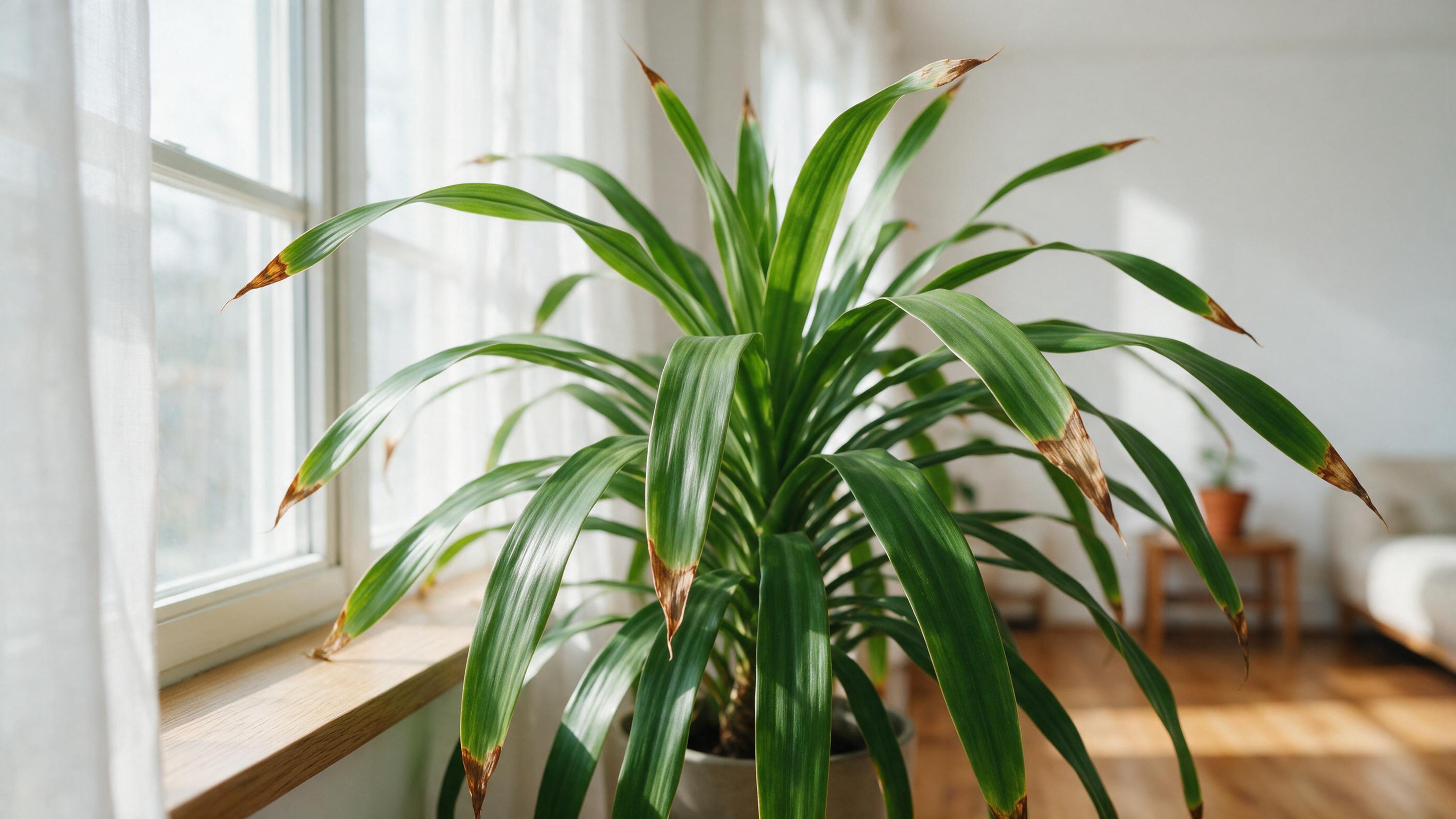
You walk past your dracaena and notice it — those crispy, brown tips creeping along otherwise healthy-looking leaves. It’s one of the most common complaints among houseplant owners in the United States, and the good news is that it’s almost always fixable once you know what you’re dealing with.
Dracaena brown tips are rarely caused by a single factor. In most cases, the primary drivers are inconsistent watering (especially underwatering between cycles), low ambient humidity below 40%, and fluoride or chloride accumulation in tap water. Understanding which of these is affecting your plant is the first step toward getting it back on track.
This guide walks you through every possible cause of brown tips on a dracaena, how to tell them apart, and exactly what to do about each one — including how to prevent the problem from coming back.
What Does It Mean When Your Dracaena Has Brown Tips?
Brown tips on a dracaena are the plant’s way of telling you something in its environment is off. Unlike desert succulents, dracaenas lack specialized water-storing tissues and rely on steady soil moisture and high atmospheric humidity to maintain pressure in their leaf cells. The leaf tip is the farthest point from the vascular bundle’s base, making it the most vulnerable to hydraulic failure. When water uptake slows — even briefly — the tip cells desiccate first, triggering irreversible browning.
Dracaena houseplants most commonly get brown tips due to watering problems, over-fertilizing, or low humidity. The brown tips are caused by the leaf tissue dying in response to a lack of water or toxicity. Brown tips will not recover, but good care will prevent brown tips on new foliage.
Think of brown tips as a diagnostic signal rather than a death sentence. Within 7–14 days of correcting the root cause — such as switching to filtered water, raising humidity to 50–60%, or adjusting irrigation frequency — new growth will emerge fully green. Pruning existing brown tips improves appearance but does not address the underlying stress; skipping diagnosis leads to recurrence in 2–3 weeks.
To understand why your specific plant is struggling, it helps to know a bit about where dracaenas come from. Dracaenas — including Dracaena fragrans (corn plant), Dracaena marginata (dragon tree), Dracaena reflexa (song of India), and Dracaena deremensis (Janet Craig) — are native to tropical East Africa and Madagascar, where they grow beneath forest canopies with steady warmth (65–85°F), high humidity (65–80%), consistent rainfall, and well-draining, humus-rich soil. Most American homes fall well short of those conditions, which is why brown tips are so common.
Is Brown Tipping in Dracaena Always a Sign of a Problem?
Not always. Some brown tipping is a completely normal part of a dracaena’s life cycle, and it’s worth knowing the difference before you start adjusting your care routine.
Some yellowing and browning is natural. If there is new growth on your plant and the yellowing and browning leaves are older, particularly at the bottom of the plant, this yellowing is natural — your plant sheds its old leaves and sends energy to new growth.
If leaves brown and fall off at the bottom of your dragon tree, and as long as it isn’t happening alarmingly fast and the plant is growing at the top, this may just be normal leaf regeneration. Bottom leaves eventually lose their usefulness. This is nothing to worry about.
The concern begins when brown tips appear on mid-plant or upper leaves, spread quickly across multiple leaves, or are accompanied by other symptoms like yellowing, mushiness, or stunted growth. A lot of new plant parents are under the false impression that brown tips can be prevented by some special techniques. While some techniques can slow the progression, leaf decay can never be completely avoided — leaves have a limited lifespan, which means long-term plant enjoyment comes from new leaves growing to replace older ones that die off. “Proper care” does not mean a plant will look perfect forever; it means the plant will grow new leaves as older ones die off.
Pro Tip: Check where the browning is happening first. Tips on lower, older leaves with healthy new growth at the top = normal aging. Tips on upper or mid-plant leaves = a care issue worth investigating.
Watering Issues Causing Dracaena Brown Tips
Water — both how much you give and what kind you use — is the single biggest factor behind dracaena brown tips. There are actually two separate water-related problems to consider: your watering habits and your water quality.
Underwatering and Overwatering
The most common cause of browning leaf tips among dracaena plants is under-watering, or allowing your dracaena to sit dry for extended periods of time. Overwatering can suffocate the roots by cutting off oxygen, leading to root rot and yellowing leaves. On the other hand, letting the soil stay too dry for too long can dehydrate the plant, causing the leaf tips to turn brown and crispy.
Knowing which one you’re dealing with matters. With underwatering, the soil pulls away from pot edges, leaves feel papery and stiff, and browning starts sharply at the tip and extends inward in a straight line with no yellowing or softening. With overwatering, the soil remains soggy more than four days after watering, lower leaves yellow before browning, the stem base feels mushy, and there may be a faint sour odor from the soil.
Water only when the top 1.5 inches of soil feel dry to the touch — use your finger, not a moisture meter, as many give false readings in dense, fibrous dracaena soil. When watering, saturate thoroughly until water runs freely from drainage holes, then discard all excess in the saucer within 15 minutes.
Tap Water Quality
Even if your watering schedule is perfect, your tap water itself could be causing the problem. Dracaenas are among the most fluoride-sensitive houseplants known. Fluoride accumulates in leaf tips because it’s non-mobile in plant tissue — it cannot be redistributed once absorbed.
Municipal tap water commonly contains 0.1–0.7 ppm fluoride (added for dental health) and 0.5–4.0 ppm chlorine. Over time, these compounds disrupt cell division in meristematic zones at leaf edges, causing irreversible browning. Many cities across the U.S. fluoridate their water supply, making this a widespread issue for American dracaena owners.
You can check your local water utility’s annual Consumer Confidence Report (CCR) online by searching “[Your City] water quality report fluoride ppm.” Levels above 0.25 ppm fluoride or 100 ppm chloride are problematic for dracaenas.
Use filtered water or allow your tap water to sit out uncovered overnight before watering so chemicals such as chlorine can evaporate. Keep in mind that this trick only removes chlorine — fluoride remains stable even after sitting overnight, so filtered, distilled, or rainwater is the better long-term solution. Never use softened water — it replaces calcium and magnesium with sodium, which dehydrates roots and worsens tip burn.
Pro Tip: Collect rainwater in a clean bucket during storms and use it to water your dracaena. It’s free, free of fluoride, and your plant will respond noticeably within a few weeks.
Light Conditions Behind Dracaena Brown Tips
Light is a surprisingly common contributor to dracaena brown tips, and it can work in both directions — too much or too little can cause problems.
Dracaenas prefer indirect light. Keep them away from direct sunlight, which can scorch the leaves. If you have low light, consider using a grow light to supplement.
Too much direct sunlight will scorch the leaves, so aim for bright, indirect light in a spot that will keep your plant thriving without risking leaf damage. A south- or west-facing window in a U.S. home during summer can push a dracaena into direct sun for several hours — enough to cause brown, scorched tips that look crispy and bleached rather than evenly tan.
Dracaenas thrive in bright, indirect light. Without enough light, the leaves may turn yellow or brown. Place your dracaena in a spot where it gets at least six hours of indirect sunlight daily, and avoid direct sunlight, as it can scorch the leaves.
If your home doesn’t get much natural light, a dracaena can still do well. Check out this guide to the best houseplants for low-light areas to see how dracaenas compare with other low-light-tolerant options. You can also use a light meter app to check whether your plant’s spot is truly “bright indirect” before moving it.
Soil, Nutrients, and Root Health Causing Dracaena Brown Tips
What’s happening below the soil surface has a direct impact on what you see at the leaf tips. Poor soil structure, fertilizer misuse, and root problems all show up as browning.
Soil Mix and Drainage
Use a well-draining mix with 30–40% coarse materials like perlite, pumice, or sand to prevent soggy soil. However, there’s a catch: fluoride toxicity can come from potting soils with perlite or from using a fertilizer with superphosphate. If your dracaena is already sensitive to fluoride in water, a perlite-heavy mix can compound the problem. A basic, well-draining tropical potting mix without perlite works well for most dracaenas.
Fertilizer and Salt Buildup
Improper fertilization can also cause brown tips. Too little fertilizer may cause nutrient deficiencies, making the leaves pale and weak and eventually dry at the edges. Too much fertilizer — over-fertilization — leaves behind salts that build up in the soil, drawing moisture out of the roots and burning the leaf tips.
Feed your dracaena during its growing season, from spring through early fall, using a balanced, water-soluble fertilizer diluted to half or even a quarter of the recommended strength. Avoid fertilizing in winter when growth slows. To prevent salt buildup, flush the soil occasionally with clean water.
If you notice an accumulation of white deposits on the outside of the pot, especially near the drainage holes, this is a sign of excess salts. Use rainwater or distilled water to flush out excess salt.
Root Health
It’s important to discard any excess water in the saucer and not to let your plant sit in any standing water. Your dracaena does not like “wet feet,” which will cause the roots to rot and lead to the eventual death of the plant. A pot-bound plant — one where roots have outgrown the container — can also restrict water uptake and contribute to tip browning. If roots are circling the bottom of the pot or poking through drainage holes, it’s time to repot into a container one size larger.
Environmental Stress Triggering Dracaena Brown Tips
Your dracaena’s immediate surroundings — the humidity, temperature, and air quality in the room — play a big role in its leaf health.
Low Humidity
Most dracaena species come from tropical regions of Africa, where the air is naturally warm and humid, usually between 50% and 70%. In dry indoor environments, especially when heaters or air conditioners are running, the air can become too dry, causing the leaf tips to turn brown and crisp.
Average indoor winter humidity in heated U.S. homes is 25–35%; central AC in summer drops it to 30–40%. Both scenarios fall short of the 50–60% range dracaenas prefer. Brown tips appearing from December through March — even with correct watering — are almost always humidity-related.
To raise humidity around your plant, you have several practical options:
- Pebble tray: Line a saucer with pebbles and water and place the plant on it. The water evaporates and enhances ambient moisture without drowning the roots.
- Plant grouping: Cluster five or more medium-sized plants on a shared pebble tray filled with water. Evaporation raises localized humidity by 10–15%.
- Room humidifier: Choose an ultrasonic model with an auto-humidistat set to 55%. Avoid steam vaporizers — they raise temperature unevenly and risk mineral dust deposition on leaves.
- Misting: Misting the leaves of your dracaena often will increase the humidity, though this is a short-term fix compared to a humidifier or pebble tray.
Temperature and Drafts
These tropical plants thrive in temperatures of 70 to 80 degrees Fahrenheit (21–26°C) and can experience leaf browning in cooler temperatures. Keep your dracaena away from cold windows in winter, air conditioning vents in summer, and exterior doors that let in cold drafts. Keep plants away from direct air vents or heaters, as they tend to dry out the air around them.
Pests and Disease Leading to Dracaena Brown Tips
While environmental causes account for the majority of dracaena brown tips, pests and fungal disease can also be responsible — especially when the plant is already stressed.
Common Pests
A weakened or stressed dracaena is more susceptible to insect infestations. Sap-sucking bugs like spider mites can drain your plant of moisture. Common dracaena pests include mealybugs, aphids, and spider mites, which feed on the plant’s sap and weaken its leaves. Inspect both sides of the leaves and along the stems for tiny insects, webbing, or sticky residue.
If not killed early on, these small pests proliferate and move all along frond parts into nooks and crannies. The piercing mouths of the insects exhaust your plant and accelerate yellowing, especially if your dracaena is already unhealthy from poor lighting, a nutrient deficiency, or improper soil moisture.
If you spot pests, wipe them off with a cotton swab dipped in diluted neem oil or insecticidal soap. Repeat the treatment weekly until the pests are gone and your plant looks healthy again. You can also learn more about keeping pets away from houseplants during treatment, since cats and dogs can sometimes disrupt pest-control applications.
Fungal Disease
Fusarium leaf spot affects many types of plants including ornamentals. It is a fungal disease that thrives in moist, warm temperatures and survives in soil for many seasons. Young dracaena leaves are brown to reddish-brown with yellow halos. As the disease progresses, the older leaves will develop lesions.
If you see small brown spots trimmed in yellow, your plant might have Leaf Spot Disease. The attacking fungus or bacteria leaves small brown spots trimmed in yellow where it’s feeding on the leaves. Immediately remove the affected leaves and isolate your dracaena from your other plants for the time being. To treat Leaf Spot Disease, try a homemade remedy of putting a tablespoon or two of baking soda and a teaspoon or two of mineral oil in a spray bottle of water. Shake the solution well and then spray all areas of the plant that are infected with brown spots.
Important Note: Pest- or disease-related browning usually looks different from care-related browning. Pests leave spotty, irregular discoloration often with visible residue or webbing. Disease causes brown spots with yellow halos. Care issues (water, humidity, fluoride) produce clean, dry browning that starts at the very tip of the leaf.
How to Diagnose Why Your Dracaena Is Getting Brown Tips
Since so many different problems produce the same symptom, a systematic approach saves time and prevents you from “fixing” the wrong thing. Work through these steps before making any changes to your care routine.
- Check where the browning is located. Tips only on lower, older leaves with healthy new growth = likely natural aging. Tips on upper or mid-plant leaves = an active care problem.
- Examine the soil. Underwatering: soil pulls away from pot edges, leaves feel papery and stiff, browning starts sharply at the tip and extends inward in a straight line. Overwatering: soil remains soggy more than four days after watering, lower leaves yellow before browning, stem base feels mushy, faint sour odor from soil.
- Check your water source. Look up your local water utility’s annual Consumer Confidence Report online. Search “[Your City] water quality report fluoride ppm.” Levels above 0.25 ppm fluoride or 100 ppm chloride are problematic for dracaenas.
- Assess humidity. Use a digital hygrometer placed 6 inches from the plant — not on a windowsill or near a heater — to get an accurate reading. Anything below 40% is a red flag.
- Inspect for pests. Inspect both sides of the leaves and along the stems for tiny insects, webbing, or sticky residue.
- Review your fertilizer history. If you notice an accumulation of white deposits on the outside of the pot, especially near the drainage holes, this is a sign of excess salts.
- Consider recent changes. Did you move the plant, repot it, turn on the heat, or change your watering schedule? Environmental shifts often trigger browning within a week or two.
Using a plant identification app can also help you confirm your dracaena variety, since different species have slightly different tolerances. There are also great Android apps for identifying plants that can walk you through symptom-based diagnosis.
How to Fix a Dracaena That Has Brown Tips
Once you’ve identified the cause, here’s how to address each one effectively. Remember: once the leaf tips have turned brown, they won’t turn green again. However, you can trim them to restore your plant’s neat appearance. Use clean, sharp scissors or pruners. Follow the natural shape of the leaf — make one angled cut from one side, then another from the opposite side.
Trim off brown leaf tips or spots with clean shears. Cut off only the damaged tips or spots, leaving a tiny margin of brown so as not to damage the remaining healthy foliage. If the entire leaf has turned brown, remove individual leaves at their base.
Fixing Watering Problems
Use the “bottom-watering soak” method: place the pot in a shallow tray with 1 inch of room-temperature water for 20–30 minutes, then remove and drain thoroughly. This ensures even moisture throughout the root ball without overwatering. In the winter, you can allow your plant to dry out more between waterings, but be sure to boost humidity with regular misting, a humidifier, or pebble tray.
Fixing Water Quality
Switch to filtered, distilled, or collected rainwater immediately. Use rainwater, distilled water, or reverse-osmosis (RO) filtered water exclusively. If using tap water, let it sit uncovered for 24 hours to off-gas chlorine — but note that fluoride remains stable and will not evaporate. Also flush the soil with distilled water to remove accumulated mineral deposits.
Fixing Humidity
Raise ambient humidity to the 50–60% range using a pebble tray, plant grouping, or a room humidifier. Low humidity and dry soil cause leaves to droop and brown on their edges, later followed by entire yellowing, browning, and leaf drop. Misting the leaves often will increase the humidity. You could also use a pebble tray for a long-term increase in humidity, or use a humidifier.
Fixing Fertilizer Overload
If salt buildup is the culprit, flush the soil thoroughly. Use distilled or rainwater to water the plant thoroughly, allowing water to run through the pot and flush out the salts. Then hold off on fertilizing until the growing season resumes, and resume at half-strength or less.
Fixing Pest Infestations
Isolate the plant from other houseplants immediately. For an eco-friendly approach, spray with neem oil or a mild soap solution against pests. Treat weekly for at least three to four weeks to break the pest life cycle. Sterilize your pruning shears so you won’t transfer any disease from one plant to another, and if spots turn brown, separate the infected plant from the others in case the disease spreads.
How to Prevent Dracaena Brown Tips Going Forward
Prevention is far easier than treatment, and most of it comes down to establishing consistent habits. Here’s a practical checklist to keep your dracaena healthy long-term.
- Use the right water every time. Commit to filtered, distilled, or rainwater as your default. If you use tap water, let it sit uncovered for 24 hours at minimum — but consider upgrading to a simple filtered pitcher for your plants.
- Water by feel, not by schedule. Before watering, always check the soil moisture. Insert your finger about an inch deep — if it feels dry at that depth, it’s time to water. Seasonal changes in your home’s temperature and humidity will shift how quickly the soil dries out.
- Monitor humidity year-round. Brown tips appearing December through March — even with correct watering — are almost always humidity-related. Keep a small digital hygrometer near your plant and add a humidifier or pebble tray before winter heating season begins.
- Fertilize lightly during the growing season only. Feed your dracaena during its growing season, from spring through early fall, using a balanced, water-soluble fertilizer diluted to half or even a quarter of the recommended strength. Avoid fertilizing in winter when growth slows.
- Keep the plant away from vents and drafts. Heating and cooling vents are some of the worst spots for a dracaena. Keep plants away from direct air vents or heaters, as they tend to dry out the air around them.
- Flush the soil every few months. To prevent salt buildup, flush the soil occasionally with clean water. Run water slowly through the pot until it flows freely from the drainage holes, then let it drain completely.
- Inspect leaves weekly. Inspect both sides of the leaves and along the stems for tiny insects, webbing, or sticky residue. Catching pests early makes treatment much simpler.
- Rotate the plant every month or two. Rotate your plant to level out all sides and provide light evenly. This prevents one side from getting too much direct sun while the other side weakens from low light.
If you enjoy growing other low-maintenance houseplants alongside your dracaena, check out these guides on different types of rubber plants and types of spider plants — both of which share similar care preferences and can be grouped with dracaenas to naturally boost humidity. You might also find it helpful to browse types of plants to find other varieties that thrive in the same indoor conditions.
Key Insight: The single most impactful change most U.S. dracaena owners can make is switching from tap water to filtered or distilled water. In cities where fluoride levels exceed 0.25 ppm — which includes many major metro areas — this one change can stop recurring brown tips within a few weeks.
Frequently Asked Questions
Can I cut off the brown tips on my dracaena?
Yes. The brown tips are dead and serve no purpose for the plant. They can be snipped away with a pair of clean scissors, though the leaf tip will be slightly deformed. It’s normally best not to cut into the healthy leaf tissue, but trim the brown tips, leaving a small margin of brown tissue instead. This will prevent the newly cut leaf tip from turning brown again.
Will brown tips on my dracaena turn green again?
Once the leaf tips have turned brown, they won’t turn green again. The goal of treatment is to stop new browning from developing on healthy tissue and on new leaves as they emerge.
How often should I water my dracaena?
There’s no single answer — it depends on your home’s temperature, humidity, pot size, and season. The most common cause of browning leaf tips is under-watering, or allowing your dracaena to sit dry for extended periods. Water your dracaena when the top 75% of the soil in the pot is dry. In most U.S. homes, that works out to roughly every 7–14 days in summer and every 14–21 days in winter.
Is tap water safe for dracaena?
The quality of your water could be causing your dracaena’s leaves to brown. Dracaena plants are sensitive to the chemicals found in most tap water. Use filtered water or allow your tap water to sit out uncovered overnight before watering so chemicals such as chlorine can evaporate. For fluoride, only filtered, distilled, or rainwater will help — letting water sit does not remove fluoride.
Why does my dracaena have brown tips even though I water it correctly?
Correct watering frequency is only one piece of the puzzle. Dracaena leaves develop brown tips primarily due to inconsistent watering, fluoride or salt buildup in water or soil, low humidity below 40%, or exposure to cold drafts or direct hot sun. If your watering is dialed in, check your water quality, ambient humidity, proximity to vents, and fertilizer use.
What dracaena varieties are most prone to brown tips?
Dracaena houseplants include the hugely popular Dracaena fragrans (corn plant), Dracaena marginata (dragon tree), and the newly reclassified Dracaena trifasciata (snake plant). Although they have diverse looks, they generally have similar care requirements and are susceptible to the same kinds of problems, including the development of brown tips on their leaves. Dracaena marginata is generally considered the most sensitive to fluoride among common varieties.
Can I use softened water on my dracaena?
No. Never use softened water — it replaces calcium and magnesium with sodium, which dehydrates roots and exacerbates tip burn. Stick to filtered, distilled, or rainwater.