16 Pieces of Traditional Ukrainian Clothing and the Stories They Tell

November 20, 2026
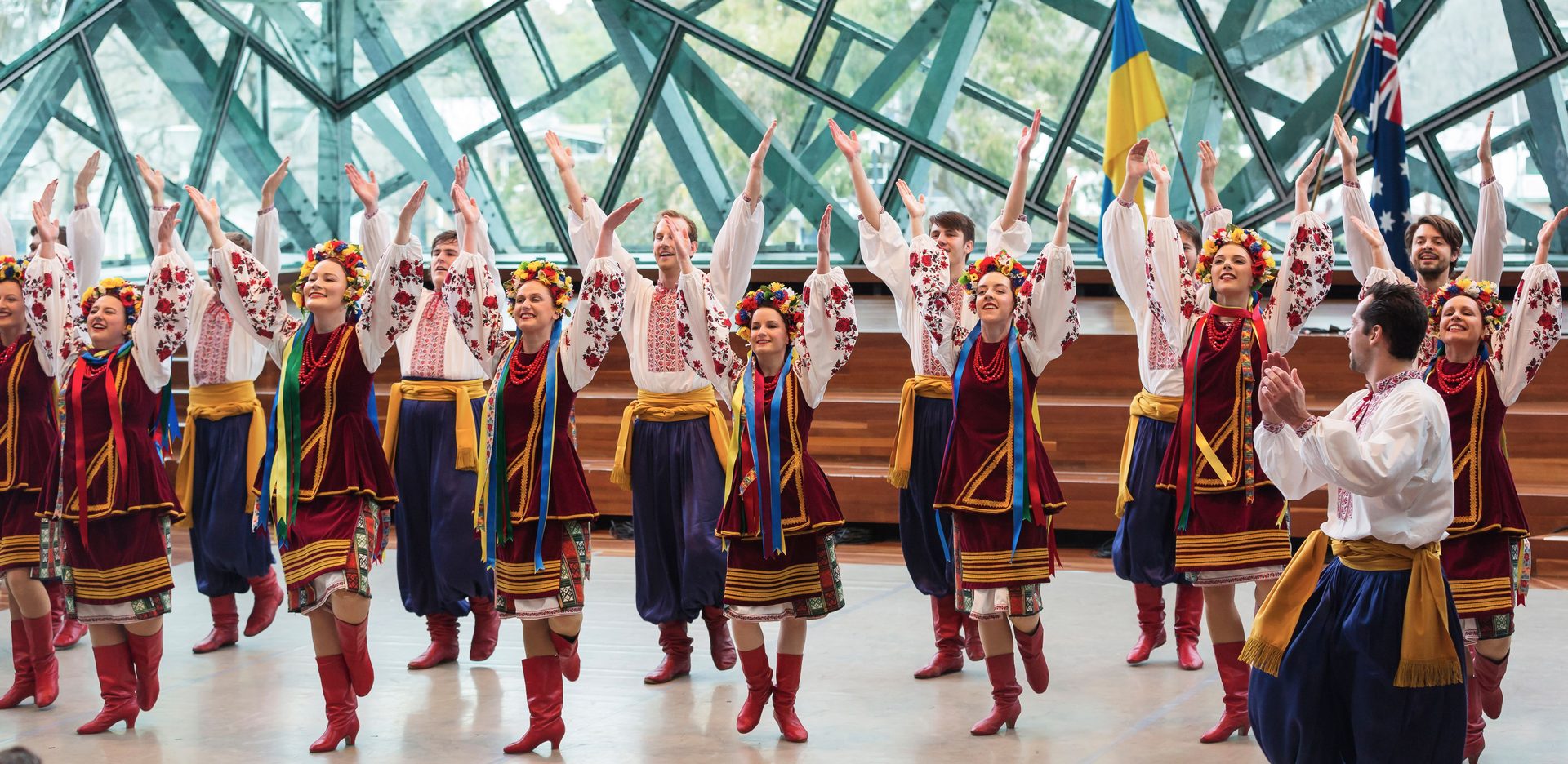
Long before embroidery became a global fashion statement, it was a survival skill, a wedding ritual, and a quiet act of resistance in Ukraine. Traditional Ukrainian clothing carries that history in every stitch, from the red-and-black thread of a vyshyvanka to the woven bark of a peasant’s sandal. Each garment below once told strangers exactly who you were: your village, your marital status, even whether you had buried a parent that year.
Ukrainian national clothing is the clothing worn by people living in Ukraine, mainly ethnic Ukrainians, and the most famous Ukrainian clothing items are the embroidered shirt (vyshyvanka), a cloth sash and a vinok flower crown. What makes the wardrobe so rich is its regional variety. The clothing styles differed between the four macroregions of Ukraine: Polissia, Lisostep, Step and Carpathians, and a trained eye could once place a stranger’s home village just by reading their sleeve pattern or headscarf knot.
This piece walks through 16 of the most recognizable garments and accessories in that wardrobe, organized roughly from the shirt outward to the feet. Readers curious about how these traditions compare to other national dress around the world may also want to look at Indian traditional clothing or German traditional clothing, both of which share surprising parallels with Ukraine’s wraparound skirts and woolen outerwear.
- Polissia – northern marshland region known for white linen and simple headwraps
- Lisostep (forest-steppe) – central farming belt famous for dense, colorful embroidery
- Step (steppe) – southern plains with looser, more Cossack-influenced dress
- Carpathians – mountain region with heavy wool, sheepskin, and fur accents
1. Vyshyvanka
The vyshyvanka is the garment most people picture when they hear “traditional Ukrainian clothing,” and for good reason. Vyshyvanka, the Ukrainian word for an embroidered shirt or dress, is the central feature of Ukraine’s traditional clothing, traditionally made of linen with designs that are often ornate and colorful and represent features of Ukraine’s landscape or cultural values. The shirt’s embroidery was never just decoration; it was concentrated on the parts of the body believed most vulnerable to harm.
The primary object of clothing decorated with embroidery was the shirt, with the embroidery mostly placed on the sleeves, and also on the neck, bosom, and cuffs. Color carried its own vocabulary. Black was said to symbolize Ukraine’s fertile soil, while white in Ukrainian embroidery was associated with purity, innocence, and holiness. Blue thread had a more protective job: vyshyvankas with blue embroidery were traditionally worn by men, especially those going to war, as the color blue was considered a kind of amulet that protects against diseases and brings peace of mind.
Pro Tip: Geometric rhombus patterns on an older vyshyvanka are not random decoration. Abstract patterns featuring only geometric shapes, such as rhombuses, were said to be associated with fertility, and a young unmarried woman would traditionally have worn this kind of vyshyvanka.
The garment’s history stretches back much further than the 19th century revival most people associate it with. Ukrainian embroidery traces its origins to the pre-Christian era of the Trypillian culture around 5000–3000 BCE, and archaeological findings such as pottery and figurines reveal geometric patterns that resemble early embroidery designs, including zigzags, diamonds, and solar symbols carrying spiritual significance. The Cossack period from the 16th to 18th centuries marked a golden age for the vyshyvanka, as embroidery became a marker of social status and regional pride during Ukraine’s strengthening cultural identity.
The 20th century was harder on the garment. During the Soviet period from the 1920s to 1991, Ukrainian cultural expressions faced suppression, and vyshyvankas were sometimes dismissed as relics of “bourgeois nationalism,” though rural communities and diaspora groups continued the craft in secret, with underground workshops and family traditions keeping it alive. Since Ukraine’s independence in 1991, the vyshyvanka has experienced a renaissance, and today it is celebrated with its own holiday. The modern Vyshyvanka Day tradition started in 2006 with one student in Chernivtsi who wore an embroidered shirt to class on an ordinary day, and other students copied the idea; the celebration is now marked in over 70 countries, according to the language-learning resource Ukrainian Lessons . Regional differences remain striking: the western regions are among the most colorful corners of Ukraine, often with ten or more colors on a single shirt, with dense patterns featuring rhombuses, stars, zigzags, and crosses, and Bukovyna is famous for shirts so heavily embroidered they’re the heaviest in Ukraine. For a broader look at why embroidered dress became a cultural flashpoint, the Kyiv Independent’s coverage of the shirt’s meaning is worth reading in full.
2. Sharovary
If the vyshyvanka is the shirt everyone recognizes, sharovary are the trousers that go with it in nearly every Cossack costume. Sharovary are a kind of loose traditional Ukrainian men’s pants, fitted at the waist and ankles but loose at the hips and legs, and they may be accompanied by a wide silk belt. The silhouette is not unique to Ukraine; it belongs to a family of billowy trousers found across Eurasia, similar in cut to the shalwar trousers worn in Pakistani traditional clothing.
The pants are tied specifically to Cossack identity. Sharovary are part of the stereotypical national dress of the Zaporozhian Cossacks, and their presence in Cossack dress was noted by the German ambassador Erich Lassota as early as the 16th century. Color choice often signaled status or occasion rather than practicality alone, since the wide cut made riding and dancing easier than narrow trousers would.
Key Insight: Sharovary survive today mainly through folk dance. The wide-legged, high-energy squats and kicks associated with Ukrainian Cossack dance troupes are only physically possible because of the trouser’s loose construction at the hip.
3. Kozhukh
Winter in Ukraine’s forest-steppe and Carpathian regions demanded something heavier than linen, and the kozhukh filled that role. A kozhukh is a traditional Ukrainian fur coat, generally worn in the winter and normally made of sheepskin, sometimes decorated with embroidery and with leather, cords, tassels, and other accessories. The coats were tight at the waist and sometimes very long, with two main variations: those with straight backs and those with detached backs.
The garment appears in some of the oldest references to Ukrainian dress. Medieval chronicles describing the lands of Kyivan Rus’ mention the svytka, kozhukh, and sharovary together as a basic male outfit, and a related overcoat called the kobeniak was often layered on top for extra warmth. Kobeniak is a Ukrainian traditional male outer garment, and it was the widest garment of its kind, wide enough to be worn even on top of a kozhukh. Wool coats of this weight have obvious parallels to the shearling and felted outerwear found in German traditional clothing from Alpine regions.
4. Kozhushanka
Where the kozhukh was the men’s winter coat, the kozhushanka was its female counterpart. The kozhushanka is a traditional Ukrainian sheepskin coat, worn as winter attire by women typically in the middle Dnieper River region, including the Left-Bank and steppe areas, and also in the Lemko region, and it is thought to have originated in the Cossack Hetmanate period.
Construction and decoration varied by region, but Lemko versions were particularly elaborate. It was often made of cherry-colored velvet, lined with homemade coarse cloth or linen, with edges trimmed in black sheepskin or other dyed material, and embellished with bouquets of color and embroidery, particularly on the chest. The coat traveled with Ukrainian immigrants far beyond Europe. In Canada, Ukrainian immigrants were often singled out by their sheepskin coats, a detail that shows how visually distinctive the garment remained even outside its home region, much the way certain silhouettes in traditional American clothing marked specific immigrant communities on sight.
5. Kuchma
No Cossack costume is complete without a hat, and the kuchma is the classic choice. This tall, cylindrical fur cap, typically made from lambskin or sheepskin, sat high on the head and was often finished with a fabric crown in a color that could signal rank or regiment. Its silhouette is instantly recognizable in paintings of Cossack leaders, standing in for authority the same way a crown or ceremonial headpiece does in other cultures.
Regional variations existed alongside the kuchma. Hutsul men in the Carpathians favored a different style entirely. A hutsul could be easily spotted by his kresanya, a black felt hat decorated with a buckle and with a feather sticking out from beneath it. Both hats share a purpose with tall fur or felt headwear found elsewhere in Eurasia, including the structured winter hats seen in parts of traditional Chinese clothing.
6. Plakhta
Turning to women’s garments below the waist, the plakhta is one of the most visually striking pieces of traditional Ukrainian clothing. It is a wraparound skirt made from two lengths of checkered, handwoven woolen fabric, folded and secured around the waist rather than sewn into a single tube. Traditional dress for women in this style includes the plakhta, described simply as a wraparound skirt, and it was typically worn over an underskirt with the embroidered hem of the vyshyvanka peeking out beneath.
The bold, woven checks of a plakhta functioned almost like a woven business card, since specific color combinations and weave patterns were associated with particular regions and even particular weaving families. The concept of a single length of fabric wrapped rather than tailored into shape is far from unique to Ukraine; it echoes the draped simplicity found in Indian traditional clothing, where a sari is similarly wrapped rather than cut and sewn.
7. Obgortka
The obgortka is often confused with the plakhta, and the confusion is understandable since both are wraparound skirts worn over an underskirt. The key difference is construction: where the plakhta is stitched partway up the center from two woven panels, the obgortka is typically a single rectangular piece of cloth, wrapped fully around the body and tied or pinned at the waist without the plakhta’s partial center seam.
Important Note: Regional terminology for wraparound skirts in Ukraine is inconsistent across ethnographic sources, and some researchers use “obgortka,” “zapaska,” and “horbatka” to describe closely related but locally distinct garments. Readers researching a specific region’s dress should expect some overlap in naming.
Like the plakhta, the obgortka tended to be simpler and more common in everyday peasant dress, while more elaborately woven versions were reserved for festivals and church holidays. The general concept of a single-panel wrap skirt has resurfaced in modern fashion coverage of contemporary wrap-skirt styling, which borrows the same no-sew logic for a very different wardrobe.
8. Ochipok
Headwear in Ukrainian tradition was never just practical; it announced a woman’s marital status at a glance, and the ochipok was the clearest signal of all. Traditional dress for women included the ochipok for married women, a fitted cap designed to fully cover the hair, since a married woman’s uncovered hair was considered improper to show in public. It was a headdress that covered the entire head, often with a slit in the back and laces that pulled it tightly around the skull.
Ochipoks ranged from simple linen caps for daily wear to richly embroidered versions stiffened with cardboard or wire for festive occasions, sometimes worn underneath a khustka for extra formality. The idea of a cap that functions as both practical head covering and status marker shows up in other folk wardrobes too, including certain structured headpieces within traditional Japanese clothing.
9. Namitka
Older and more ceremonial than the ochipok, the namitka is a long strip of fine white linen wrapped around a woman’s head and shoulders, with roots that likely predate the fitted cap entirely. In the Polesia region, women traditionally wore a white headband known as the namitka, wound in a specific manner that could take considerable skill and time to tie correctly.
The namitka carried heavy ritual weight, particularly at weddings, where the style of wrapping could mark the transition from unmarried girl to married woman within a single ceremony. Fine, sheer linen wraps of this kind have functional and symbolic cousins in head-covering traditions found in German traditional clothing from rural Alpine communities, where structured headscarves similarly signaled age and status.
10. Khustka
The khustka is the most enduring of Ukraine’s headwear traditions, largely because it never really went out of use. This square scarf, folded into a triangle and tied under the chin or at the back of the neck, was worn by women of nearly every age and region, with color and pattern adjusted for the occasion.
A bright floral khustka signaled a festival or wedding, while plain dark colors were reserved for mourning or daily farm work. Older women in Ukrainian villages still wear the khustka today largely unchanged from its historical form, making it one of the few garments on this list that never fully retreated into ceremonial-only use.
Common Mistake: Many sources treat “khustka” and “namitka” as interchangeable, but they are not the same object. The khustka is a folded square scarf for everyday and festive use; the namitka is a long, unfolded linen strip tied in a specific ceremonial wrap, historically reserved for married women on formal occasions.
The basic logic of a folded square scarf worn over the hair appears across many cultures, including head-covering customs found within traditional Pakistani clothing, though the symbolism attached to each differs considerably by region and faith.
11. Vinok
Where the ochipok and namitka marked married women, the vinok belonged entirely to the unmarried. Traditional Ukrainian dress reserved the wreath for unmarried girls, and it stands alongside the embroidered shirt as one of the most famous items of Ukrainian national clothing. The Ukrainian wreath , as it is sometimes called in English, is a floral crown woven from fresh or silk flowers, often finished with long, colorful ribbons called stricky that trail down the back.
Flower choice was not arbitrary. Periwinkle, marigold, and wheat ears each carried meanings tied to purity, protection, and prosperity, and a bride’s wedding vinok was typically more elaborate than the everyday version worn to festivals. The flower crown has had an unexpected second life internationally, surfacing repeatedly in bridal and festival fashion coverage the same way floral headpiece trends cycle in and out of mainstream style.
12. Rushnyk
Not every important piece of Ukrainian textile tradition is worn on the body. The rushnyk is a long, narrow ritual cloth, embroidered along both ends, that functions more like a ceremonial towel than a garment. Embroidered products, especially a rushnyk, are greatly symbolic for a series of ceremonies and rituals of Ukraine, and no major life event traditionally passed without one.
A rushnyk might be draped over an icon, tied around a loaf of bread presented to guests, wrapped around the joined hands of a bride and groom during a wedding, or laid beneath a coffin at a funeral. Ukrainian embroidery was an everyday art in common people’s lives until the 19th century, when it became more of a craft, mostly used for decorating clothing and fabrics as well as homes and churches, and the rushnyk sits at the center of that domestic embroidery tradition. The same impulse to mark major life events with specially made textiles appears in quilting and heirloom-linen customs within traditional American clothing and craft traditions.
13. Cherevyky
Moving down to footwear, the cherevyky are low-cut leather shoes, often with a small heel, worn primarily by women for festive and semi-formal occasions. They were typically made from dyed leather, with red and black being especially common, and laced or buckled rather than pulled on like a boot.
Cherevyky represented a step up from everyday footwear in both cost and status, since good leather and dye were not cheap for a peasant household. A pair reserved for church, weddings, or market days signaled that a family had the means to own shoes beyond the bare minimum, a distinction similar to how formal lacquered footwear is treated within traditional Japanese clothing for ceremonial wear.
14. Choboty
The choboty are taller leather boots, reaching to the calf or knee, worn by both men and women depending on the region and occasion. Men’s choboty tended toward sturdy black or brown leather built for riding and farm work, while women’s versions, particularly in parts of central Ukraine, were sometimes dyed a striking red, a color closely associated with festive dress.
Durability mattered more for choboty than for the dressier cherevyky, since these boots were expected to handle mud, snow, and long days on foot or horseback. The table below compares all four traditional footwear styles covered in this guide side by side.
| Footwear | Material | Typical Wearer | Occasion |
|---|---|---|---|
| Cherevyky | Dyed leather | Women | Festive, semi-formal |
| Choboty | Sturdy leather | Men and women | Daily work, riding, festive (red versions) |
| Postoly | Untanned rawhide | Peasants, mountain communities | Everyday farm and field work |
| Lychaky | Woven bark fiber | Poorest peasants | Everyday use, especially in Polissia |
For readers interested in how footwear signaled status across other national dress traditions, the outback boot culture referenced in traditional Australian clothing offers a useful comparison of practicality trumping decoration in rural dress.
15. Postoly
Below the choboty and cherevyky in cost and formality sat the postoly, a simple moccasin-style shoe made from a single piece of untanned rawhide gathered around the foot and tied with leather straps or cord that wound up the ankle and sometimes the lower leg. Unlike cherevyky or choboty, postoly required no dye, buckles, or fine leatherwork, making them affordable for even the poorest rural households.
Postoly were especially common in the Carpathian foothills and other mountain or forest communities, where the simple construction could be repaired or replaced using materials on hand. The basic concept of a single-piece wrapped foot covering tied with cord has close parallels in indigenous and folk moccasin traditions found within traditional American clothing.
16. Lychaky
At the simplest end of Ukrainian footwear sat the lychaky, woven sandals made not from leather at all but from strips of linden or birch bark. Peasants who could not afford even the rawhide needed for postoly turned to lychaky, weaving the bark strips into a sole and lacing them up the leg with long cords wrapped crosswise, similar in principle to the woven bast shoes known elsewhere in Eastern Europe.
Lychaky were most strongly associated with the poorer, marshier Polissia region, where leather was scarcer and the birch and linden needed for weaving grew in abundance. While far less durable than leather footwear, a worn-out pair could simply be rewoven from fresh bark, making lychaky one of the few garments on this list defined entirely by necessity rather than display. In that sense they sit at the opposite end of the spectrum from the richly embroidered vyshyvanka and vinok that opened this guide, a reminder that traditional Ukrainian clothing reflected not just regional identity but also the everyday realities of who could afford what.