Traditional Scottish Clothing: 18 Pieces of Highland Dress Explained

November 17, 2026
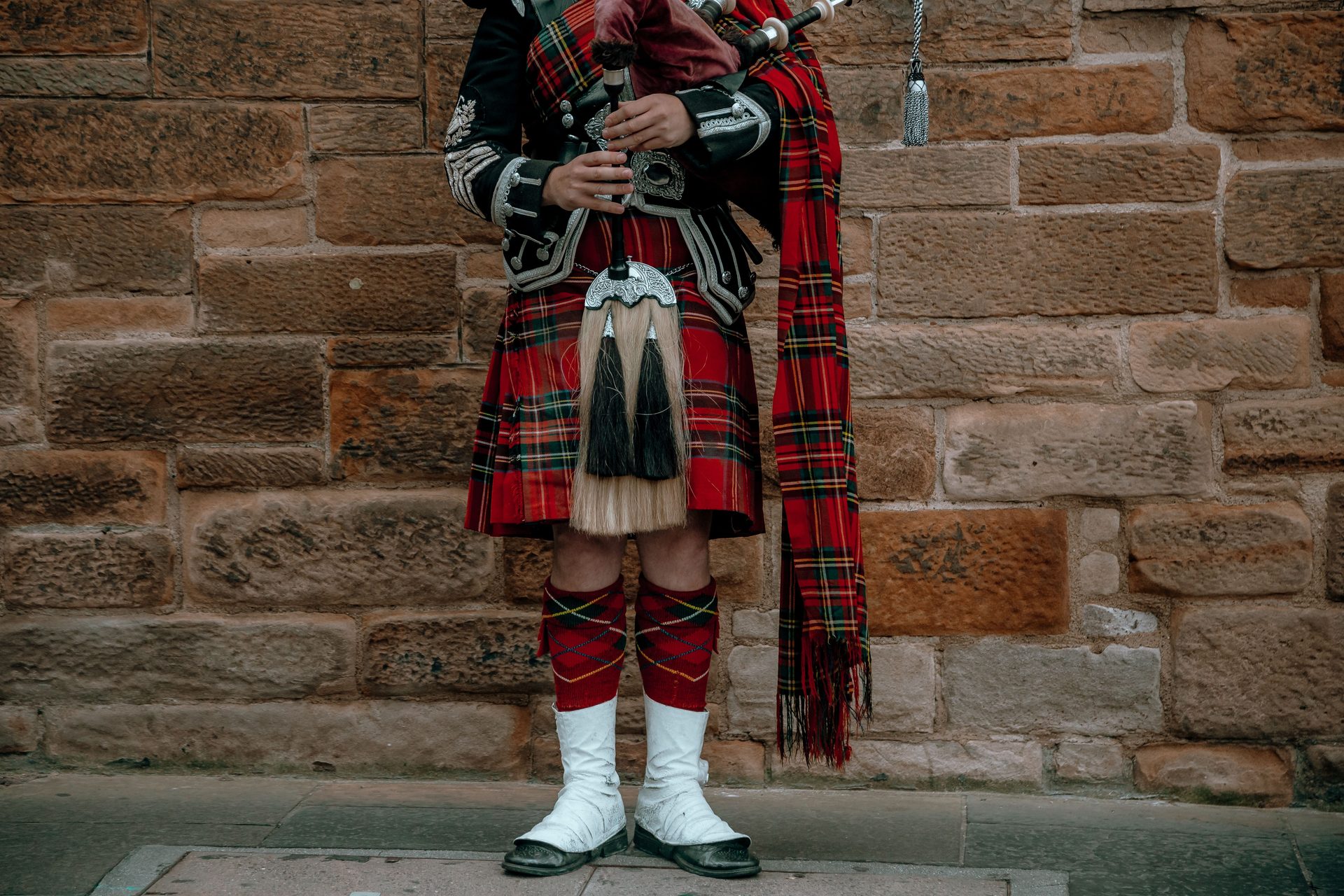
A full Highland outfit carries more individual pieces than almost any other national dress in Europe, and each one earns its place for a reason beyond decoration. Traditional Scottish clothing grew out of a working wardrobe built for a wet, cold, mountainous country, then was reshaped by royal visits, military regiments, and Victorian romanticism into the formalwear seen at weddings and Highland Games today.
This guide walks through 18 pieces of Highland dress in the order a person might put them on, from the kilt itself down to the accessories that finish the look. Readers researching traditional clothing styles from around the world will notice some familiar patterns: practical origins, symbolic colors, and a revival driven as much by pride as by fashion.
1. Kilt
The kilt is the single garment most people picture when they think of Highland dress, and its construction has not changed much in over a century: a knee-length, pleated wrap skirt made from wool tartan, fastened with straps and buckles at the waist. The modern kilt descends from a longer, simpler garment rather than appearing fully formed.
Highlanders in the late 16th century wore the belted plaid, a single long piece of cloth pleated and belted around the body, with the upper half doubling as a cloak. Clan.com’s history of the garment notes that the great kilt, or féileadh mòr, emerged in the late 16th century as a versatile garment made from a five- to six-metre length of tartan cloth that was pleated at the waist, secured with a leather belt, and draped over the shoulder. The shorter, tailored version familiar today did not become common until the following century.
Wikipedia’s entry on the history of the kilt points out that the earliest written source that definitely describes the belted plaid or great kilt comes from 1594, and that the great kilt was mostly associated with the Scottish Highlands, but was also used in poor Lowlands rural areas. For readers comparing national dress across cultures, the kilt’s evolution from workwear to formal symbol mirrors patterns seen in traditional German clothing, where regional work garments were similarly elevated into festival dress.
2. Trews
Trews are tight-fitting tartan trousers, and they are older than most people assume; historians generally treat them as a companion garment to the kilt rather than a later alternative. They were especially practical for riding, since a long kilt could be awkward on horseback, and they let wearers keep a clan’s tartan pattern without bare legs in harsh weather.
Historic UK’s overview of tartan groups trews with the kilt as core traditional items, noting that tartan was used to make the items of clothing which are today considered traditional Scottish dress, including the philabeg, or kilt, and of course the trews. Earlier still, Highlanders layered woollen leggings under cloaks; Clan.com’s research describes how early Highlanders, including the Picts and Gaels, wore layered woollen tunics, leggings (trews), and cloaks (brats), often fastened with intricately designed brooches. Trews remain part of formal Highland wear today, especially for pipe bands and for anyone who prefers trousers to a kilt. Readers interested in how other regions adapted trousers into formal dress may find parallels in traditional Pakistani clothing, where loose-fitting trousers carry similar regional identity.
3. Belted Plaid
The belted plaid, known in Gaelic as the breacan an fhéilidh, is the ancestor of the modern kilt and a distinct garment in its own right. It consists of a long length of tartan fabric, pleated by hand and belted at the waist, with the remaining cloth thrown over the shoulder as a cloak.
The Clan Buchanan’s attire history explains that at the end of the 16th century, the kilt first appeared as the belted plaid or great kilt, a full-length garment whose upper half could be worn as a cloak draped over the shoulder or brought over the head as a hood. The garment served multiple roles at once, a point echoed by Fashion Kilt’s history of the garment , which notes it was worn for warmth, protection from the elements, and as a makeshift bedroll when camping in the wilds of Scotland. The belted plaid is still worn today for formal and ceremonial occasions, usually paired with a matching fly plaid.
Pro Tip: A belted plaid takes considerably longer to put on than a modern kilt since the pleats are arranged by hand each time. Anyone planning to wear one for an event should practice beforehand or ask an experienced piper or re-enactor for guidance.
4. Fly Plaid
The fly plaid is a smaller piece of tartan fabric, roughly the size of a small blanket, pinned at the shoulder and worn draped down the back over formal Highland dress. Unlike the full belted plaid, it is purely ceremonial and worn with a modern kilt rather than in place of one.
It is most commonly seen at weddings, military functions, and piping competitions, where it adds visual weight to formal jacket outfits without the bulk of a true plaid. The fly plaid is usually fastened with a decorative brooch, often matching the clan crest worn elsewhere in the outfit, and the fabric typically matches the kilt’s tartan for a coordinated look. Among global traditions, ceremonial draped cloth plays a similar symbolic role in traditional Australian clothing, where formal garments often carry a single statement textile piece.
5. Tartan
Tartan is the woven pattern, not the garment itself, and it is the single most recognizable element of Scottish dress worldwide. Technically, the word describes any cloth woven with criss-crossing bands of color in both the warp and weft, creating the repeating checked pattern known as a sett.
Tartan’s roots go back much further than most assume. Lochcarron’s history of tartan notes that a piece of cloth found buried in a pottery jar along the Antonine Wall near Falkirk is one of the earliest evidence of tartan in Scotland and dates back to 250 AD, though it is believed the material was not commonplace until the 16th century, when it was worn by highlanders to identify different Scottish clans.
Key Insight: The idea of one fixed tartan per clan is newer than the clans themselves. The Scots Magazine reports that it wasn’t until around 1815 that tartan’s association with different Scottish clans and family names became a concept, and the notion of clan tartan is now considered an elaborate work of fiction by most historians. Many patterns were formalized later by commercial weavers rather than passed down unchanged for centuries.
Military use also shaped the system. Wikipedia’s entry on regimental tartan explains that regimental tartans, along with regional or district ones, led to the development of clan tartans in the late 18th to mid-19th century. Today, people choose a tartan based on family name, clan affiliation, district, or simple preference. The same instinct to encode identity in woven pattern shows up in traditional Chinese clothing, where specific motifs and colors historically marked rank, region, or occasion.
6. Prince Charlie Jacket
The Prince Charlie jacket is the most formal Highland jacket, a short black tailcoat-style jacket worn with a matching waistcoat for evening events, weddings, and black-tie occasions. It typically has silver or gilt buttons, satin lapels, and a cutaway front that sits above the sporran.
Named after Charles Edward Stuart, the jacket belongs to the same wave of formalized Highland wear that produced much of today’s standard kilt outfit. Celtic Studio’s guide to Scottish kilt outfits notes that formal Highland dress developed its “correct” rules for day and evening wear as part of the same 19th-century revival that reshaped tartan use generally. The jacket is almost never worn on its own; it is paired with a wing-collar shirt, bow tie or cravat, and a dress sporran for full formality.
7. Argyll Jacket
The Argyll jacket is the more versatile cousin of the Prince Charlie, suitable for day events, semi-formal occasions, and everyday wear with a kilt. It is cut from tweed or wool rather than the satin-finished fabric of its formal counterpart, and it has a rounded front rather than a sharp cutaway.
Kiltman Kilts’ history of the garment describes how Highland dress today is a powerful symbol of identity, pride, and tradition, whether it’s worn at a wedding, a Highland Games event, or a cultural celebration, and the Argyll jacket is the piece most likely to show up at the more casual end of that range. It can be worn with buttoned cuffs, flapped pockets, and a plain tie, making it the default choice for day weddings and Highland Games attendance.
| Feature | Prince Charlie Jacket | Argyll Jacket |
|---|---|---|
| Formality | Black tie, evening events | Day events, semi-formal |
| Fabric | Barathea wool with satin lapels | Tweed or plain wool |
| Front cut | Sharp cutaway | Rounded, buttoned |
| Typical pairing | Wing-collar shirt, bow tie, dress sporran | Collared shirt, tie, day sporran |
8. Sporran
The sporran is the pouch worn at the front of the kilt, hanging from a leather strap or chain around the waist, and it exists because a kilt has no pockets. Early versions were simple leather bags carried by Highlanders for coins, food, and small tools while working or traveling.
Kiltmakery’s history of the kilt frames the original garment and its accessories as functional first, noting that the kilt “actually started out as a functional item of clothing” before later becoming associated with ceremony and status. Modern sporrans come in a few main styles:
- Day sporran – plain leather, worn for casual or daytime Highland dress
- Dress sporran – fur-fronted with decorative tassels and a cantle, worn with the Prince Charlie jacket
- Semi-dress sporran – a middle option combining leather and fur detailing, suited to the Argyll jacket
Comparable carried accessories appear across many cultures’ formal dress, including the decorative pouches sometimes worn as part of traditional Indian clothing for ceremonial occasions.
9. Kilt Hose
Kilt hose are the thick, knee-high woollen socks worn with a kilt, usually in a neutral cream, grey, or ivory color that sets off the tartan rather than competing with it. They are turned down just below the knee and folded to create a clean cuff.
Traditionally hand-knitted from wool, kilt hose were originally a practical response to Scotland’s climate, offering warmth and protection for bare lower legs under a knee-length garment. Today, most hose are ribbed or diced (checkerboard-patterned) and chosen to coordinate with the jacket and sporran rather than matching the tartan exactly, which helps avoid an overly matched look at formal events.
10. Garter Flashes
Garter flashes are small fabric tabs, usually cut from the same or a complementary tartan, tied around the kilt hose just below the knee to hold them in place. They are purely decorative today, since modern hose have enough elastic to stay up without them, but they remain a required detail in formal Highland dress.
Color coordination between flashes, tartan, and jacket is one of the small details that separates a well put-together outfit from a mismatched one. A guide to Scottish clan and tartan traditions notes that the most common colors used in clan tartans are red, green, blue, yellow, and black, which gives a useful starting palette when matching flashes to an outfit.
Pro Tip: Garter flashes should generally echo a secondary color in the tartan rather than the dominant one, so the accent reads as intentional rather than an exact repeat of the kilt pattern.
11. Kilt Pin
The kilt pin is a decorative, weighted pin fastened to the front apron of the kilt, roughly two inches from the bottom corner, where it adds a small amount of weight to help the fabric hang properly. Despite a common misconception, it is not meant to pin the front apron to the layer beneath it, since this can tear the fabric over time.
Kilt pins range from simple silver bars to elaborate designs featuring clan crests, Celtic knotwork, thistles, or regimental badges, and many families treat them as heirloom pieces passed down with a specific tartan. They became a standard part of formal Highland dress alongside the broader 19th-century formalization of kilt-wearing rules, a period when aristocratic patronage and royal visits turned a working garment into recognized national costume.
12. Ghillie Brogues
Ghillie brogues are the traditional leather shoes worn with a kilt, instantly recognizable by their long laces and the complete absence of a tongue. The laces wrap around the ankle several times and tie above the ankle bone, a design originally meant to keep the shoes secure while walking through wet Highland terrain.
The lacing pattern follows a specific method rather than a simple bow:
- Thread the long laces through the eyelets, crossing them with each pass up the shoe
- Wrap the laces around the ankle, crossing at the back
- Bring the laces to the front and tie them in a bow above the ankle, tucking the ends under the wrap
Without a tongue, the open-fronted design lets water drain quickly rather than soaking into the shoe, which made ghillie brogues genuinely practical footwear for crossing streams and boggy ground long before they became formalwear.
13. Glengarry
The Glengarry is a boat-shaped woollen cap, creased flat down the center, usually finished with ribbons trailing from the back and sometimes a small toorie (pompom) on top. It takes its name from the Glengarry valley and is closely tied to military Highland dress, having been adopted widely by Scottish regiments as a practical alternative to the bulkier bonnet styles worn earlier.
Highland regiments carried many pieces of traditional dress into modern military use, and Kiltman Kilts’ history of Highland dress notes that Highland dress survived in part due to its continued use by Scottish regiments in the British army even after civilian Highland dress was restricted. The Glengarry is still worn today by pipe bands, Highland dancers, and anyone assembling a full formal outfit. Readers curious about how Scottish naming traditions connect to this heritage may enjoy exploring Scottish boy names with clan and Highland roots.
14. Balmoral Bonnet
The Balmoral bonnet is a soft, round, flat wool cap, traditionally dark blue, with a toorie on top and a ribbon cockade on one side, often decorated with a clan badge or feathers for formal wear. Unlike the creased Glengarry, the Balmoral sits looser and rounder on the head.
Its name ties directly to the royal patronage that reshaped Highland dress in the 19th century. The Metropolitan Museum of Art’s essay on the kilt explains that aristocratic patronage continued to provide cachet for Highland style throughout the nineteenth century, and from the 1840s it was given new impetus through Queen Victoria’s cult of the Highlands; in 1852 Prince Albert bought Balmoral Castle in Aberdeenshire. The bonnet’s name reflects that same royal association with the Highlands during the period.
15. Jabot
The jabot is a cascade of lace or fabric ruffles worn at the throat in place of a necktie, typically paired with a Prince Charlie jacket for the most formal Highland dress and increasingly chosen by women wearing tartan evening outfits. It is usually fastened at the collar with a small brooch or cravat pin.
Borrowed from 18th-century European court dress rather than originating in the Highlands specifically, the jabot entered formal Scottish attire as part of the broader 19th-century effort to give Highland dress a polished, aristocratic register for balls and state occasions. Today it functions as the female and alternative-formal equivalent of the bow tie or cravat worn by men in the same outfit.
16. Earasaid
The earasaid is a traditional women’s garment, a long length of tartan or plain wool wrapped and belted around the body, worn over a dress or blouse much as the belted plaid was worn by men. It could be draped over the shoulder or pulled up over the head for warmth, and it was typically secured at the chest with a large brooch, sometimes bearing a clan badge or family motif.
Women and girls in Highland dress traditionally did not wear kilts; instead, the earasaid, along with tartan skirts and sashes, formed the main female equivalent of men’s Highland wear. The garment largely fell out of everyday use by the 18th century but remains part of historical reenactment and some formal Highland dance costume. Loose, wrapped garments belted at the body appear across many traditions, including some styles within traditional American clothing drawn from colonial-era settler dress.
17. Tonnag
The tonnag is a smaller shawl, essentially a scaled-down version of the earasaid, worn draped over the shoulders and pinned at the front with a brooch. Where the earasaid wrapped the whole body, the tonnag covers just the upper body, making it a lighter, more practical option for everyday wear or milder weather.
Tonnags are typically woven in tartan or a simple check and remain part of women’s formal Highland dress today, often paired with a kilted skirt for Highland dancing, pipe band performances, or clan gatherings. Like the fly plaid for men, the tonnag lets the wearer display a clan or family tartan without the bulk of a full-length wrap.
18. Maud
The maud is a thick woollen plaid or wrap, traditionally associated with shepherds in the Scottish Borders rather than Highland clan dress specifically, used as an all-purpose outdoor covering against wind and rain. It was typically woven in a simple black-and-white or grey check rather than a colorful clan tartan, reflecting its working-class, practical origins.
Shepherds wrapped the maud around the shoulders during the day and used it as bedding at night, making it one of the most purely functional garments on this list. The piece survives today mostly in textile history and reenactment rather than modern Highland formalwear, standing as a reminder that traditional Scottish clothing was never one single uniform look. From the practical maud to the ceremonial fly plaid, each piece reflects a different corner of Scotland’s regional, working, and formal dress traditions, all of which continue to inform how Highland dress is worn at weddings, Highland Games, and clan gatherings today.