Inside a Traditional Georgian Breakfast: From Khashi to Khachapuri

November 24, 2026
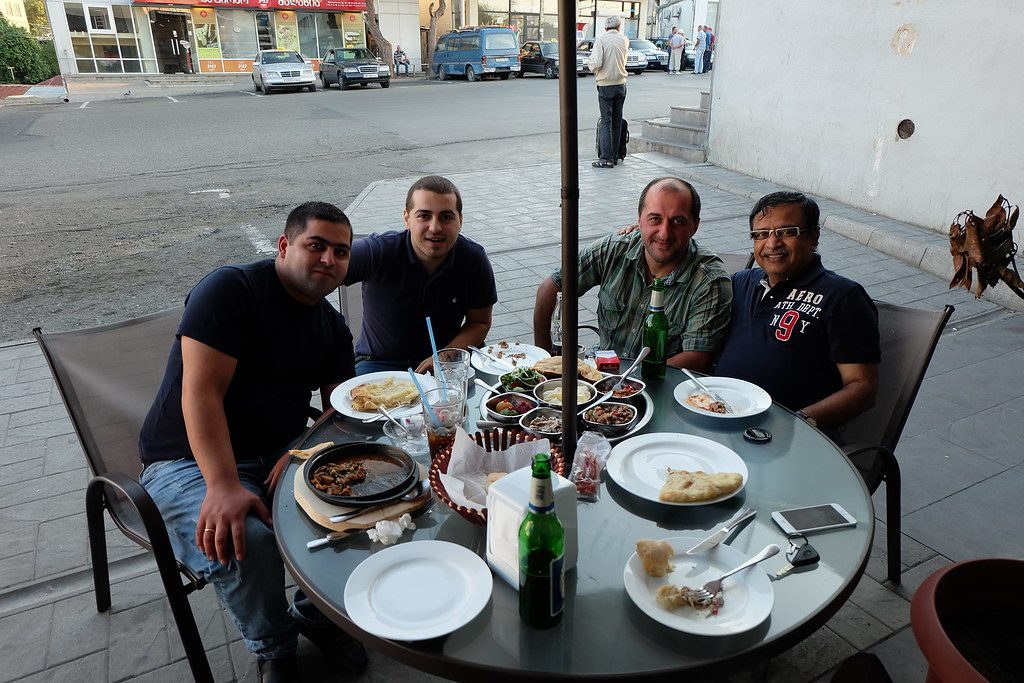
A traditional Georgian breakfast rarely starts with cereal or pastries. In many households it begins with a steaming bowl of tripe soup eaten before sunrise, or a slab of cheese bread pulled straight from a clay oven. Georgia sits at the crossroads of Europe and the Caucasus, and its morning table reflects that mix of mountain shepherd food, Black Sea dairy, and centuries-old wine culture.
This guide walks through six dishes that define the traditional breakfast table in Georgia, from a hangover-curing soup eaten at dawn to the fermented yogurt that shows up in nearly every Georgian kitchen. Each dish carries its own regional story, its own ritual, and its own place in the daily rhythm of Georgian life.
Important Note: Georgian cuisine does not organize itself around a fixed breakfast menu the way some food cultures do. Georgian cuisine doesn’t really have dedicated breakfast dishes the way other cultures do, and a typical morning meal for locals consists of eggs, bread, butter, cheese, thick jam, and tea or coffee. The six dishes below are the closest things to breakfast specialties, pulled from both home kitchens and Tbilisi’s growing breakfast-cafe scene.
1. Khashi
Khashi is the dish most associated with a genuine, old-style Georgian breakfast, and it has almost nothing in common with a Western morning meal. It is a soup made from cow’s feet and tripe, simmered overnight until the broth turns milky white and thick with gelatin. Diners eat it hot, early, and usually in silence before the garlic and salt hit the bowl.
Khashi is known for its nourishing and restorative properties, especially after festive celebrations, hence its nickname “hangover soup.” In Georgia, khashi is traditionally served for breakfast to energize you for the day. Some cities even have dedicated khashi houses, since special establishments called Sahashi serve khashi and other dishes that help customers recover from hangovers.
The ritual around the dish is as fixed as the recipe. The Georgian version has its own distinct character: no spices in the pot, garlic and salt added only at the table, and always eaten in the morning. Ordering it at dinner would strike most Georgians as backwards, since timing is part of the tradition, not an afterthought. Similar slow-simmered, bone-heavy soups show up elsewhere in European peasant cooking too, including the German one-pot stew tradition that likewise turns humble cuts into a hearty, restorative meal.
Pro Tip: Khashi is traditionally eaten with torn pieces of dry bread soaked in the broth rather than a spoon alone, which helps cut through the richness of the gelatin-heavy soup.
Versions of this soup exist well beyond Georgia’s borders. The name likely comes from the Turkish word for “to boil,” and versions of this soup exist across the entire Caucasus and Middle East, with Armenians calling it khash and Azerbaijanis eating it too. What makes the Georgian bowl distinct is the strict morning-only etiquette and the near-total absence of seasoning until it reaches the table.
2. Kikliko
If khashi is the old, rural face of Georgian breakfast, kikliko is its modern, cafe-friendly cousin. A kikliko is essentially eggy bread, similar to French toast, crisped in a pan and topped with savoury fillings. It has become popular enough in Tbilisi that at least one cafe was built entirely around it.
The preparation is simple but distinct from its French cousin. Kikliko consists of sliced day-old bread dipped in an egg batter and then fried in a pan. The word also means a cockerel’s crow, and the finished dish is usually served savoury, with sulguni cheese melted on top rather than syrup.
| Feature | Kikliko | Classic French Toast |
|---|---|---|
| Typical bread | Day-old white bread | Brioche or challah |
| Dip mixture | Egg, milk, salt | Egg, milk, sugar, cinnamon |
| Usual topping | Sulguni cheese, ham, mushrooms | Maple syrup, fruit |
| Flavor profile | Savory, salty | Sweet |
Cafe menus have expanded well past the original cheese-and-bread formula. Some kitchens build their entire menu around kikliko variations, serving it with melted sulguni cheese and ham, a three-cheese blend with sour cream, or sweeter versions with almonds and citrus jam. Travelers who enjoy comparing egg-soaked bread dishes across cultures might also look at the traditional Japanese breakfast table, where rice and grilled fish take the place of bread, or revisit the classic French approach to morning pastry and bread that kikliko loosely echoes.
3. Chizhi-Bizhi
Chizhi-bizhi is Georgia’s answer to scrambled eggs with vegetables, and it shows up on breakfast menus far more often than khashi does. Chizhi-bizhi is eggs cooked with tomatoes, herbs and sometimes cheese, a bit like a Georgian shakshuka. The texture stays looser and softer than a typical Western scramble, closer to a wet curd than firm eggs.
Regional naming adds a layer of confusion for visitors. Chizhi-bizhi is eggs scrambled with grated tomato, onion and herbs, and Adjara’s version of the same idea is called chirbuli. Both dishes lean on ripe, grated tomato rather than diced pieces, which lets the egg cook into a soft, almost sauce-like consistency.
Egg-and-vegetable breakfasts appear in nearly every food culture in some form, which makes chizhi-bizhi a useful entry point for comparing regional styles. Readers curious about other spiced egg traditions might enjoy the traditional Indian breakfast dishes built around similarly bold spicing, or the traditional Egyptian morning table, where fava beans and eggs play a comparable role.
4. Machkatebi
Machkatebi are Georgian cottage-cheese pancakes, and they sit at the gentler, sweeter end of the breakfast spectrum compared to khashi or chizhi-bizhi. Machkati are the cottage cheese pancakes that cafe menus often call syrniki, served alongside kikliko and chizhi-bizhi as one of the handful of dishes that count as Georgian breakfast food. The curd gives the pancakes a slightly tangy flavor and a denser crumb than a standard flapjack.
Home cooks typically bind fresh curd cheese with egg, a small amount of flour, and a pinch of sugar or salt depending on whether the batch leans sweet or savory. The pancakes are pan-fried in butter until the outside turns golden and slightly crisp while the inside stays soft. Honey, sour cream, or fruit preserves are the most common toppings at the table.
Curd-based breakfast pancakes aren’t unique to Georgia, but the technique and dairy source vary widely by region. For a point of comparison, the traditional South African breakfast table includes its own distinct approach to morning starches and dairy, shaped by very different climate and farming traditions.
5. Khachapuri
No discussion of Georgian food, breakfast or otherwise, skips khachapuri. The dish is a bread filled or topped with cheese, and bakeries across the country sell it fresh throughout the morning for workers heading to their jobs. The Imeretian version is round and filled with tangy cheese, while the boat-shaped Adjarian khachapuri arrives with an egg and a pat of butter melted into the center, meant to be mixed in with bread at the table.
Bakeries that sell khachapuri by the slice have become a breakfast staple in cities like Tbilisi and Batumi, functioning much like a bakery croissant would in a European morning routine. The bread is sturdy enough to eat on the move, which makes it a practical choice for anyone skipping a sit-down meal before work or school.
Common Mistake: Travelers often assume all khachapuri is the same dish, but regional versions differ significantly in shape, filling, and whether an egg is included. Ordering “khachapuri” without specifying a region can lead to a very different plate than expected.
Cheese-filled breads show up across the wider Mediterranean and Balkan region in different forms, from phyllo pastries to flatbreads. Readers interested in that broader tradition might also enjoy the traditional Greek foods guide, which covers its own line of savory, cheese-forward pastries eaten at breakfast and beyond.
6. Matsoni
Matsoni is the fermented milk product that anchors much of Georgian cooking, and it shows up at breakfast on its own, drizzled with honey, or poured over bread and cornmeal dishes. It is thicker and tangier than commercial yogurt, and most households either make it at home or buy it fresh from a local producer rather than a mass-market brand. The culture used to ferment matsoni has been passed down for generations in many families, often starting a new batch from a spoonful of the last one.
Beyond breakfast, matsoni works its way into sauces, soups, and baked goods throughout Georgian cuisine, making it one of the more versatile dairy staples in the kitchen. Fermented dairy plays a similar foundational role in several other food cultures worth comparing, including the kefir and soured-milk drinks common across the traditional Russian drink repertoire.
Pro Tip: Matsoni ferments best at a warm, steady room temperature rather than in the refrigerator, so Georgian households often leave a fresh batch covered on the counter overnight before chilling it the next morning.
Matsoni rounds out a breakfast table that moves from heavy, savory soup at one end to light, tangy dairy at the other. Together with khashi, kikliko, chizhi-bizhi, machkatebi, and khachapuri, it shows how much variety fits inside what looks, from the outside, like a single culinary tradition.
Visitors planning a trip to Georgia should expect this table to shift depending on the household, the region, and even the season, rather than a fixed menu repeated every morning. Anyone building out a wider world-breakfast itinerary might also enjoy pairing this research with other morning traditions, from a seasonal breakfast spread closer to home to the contrasting flavors of a traditional Malaysian breakfast on the other side of the world. Georgian mornings reward slow eating, strong coffee, and, on the right day, a bowl of khashi before the sun is fully up.