
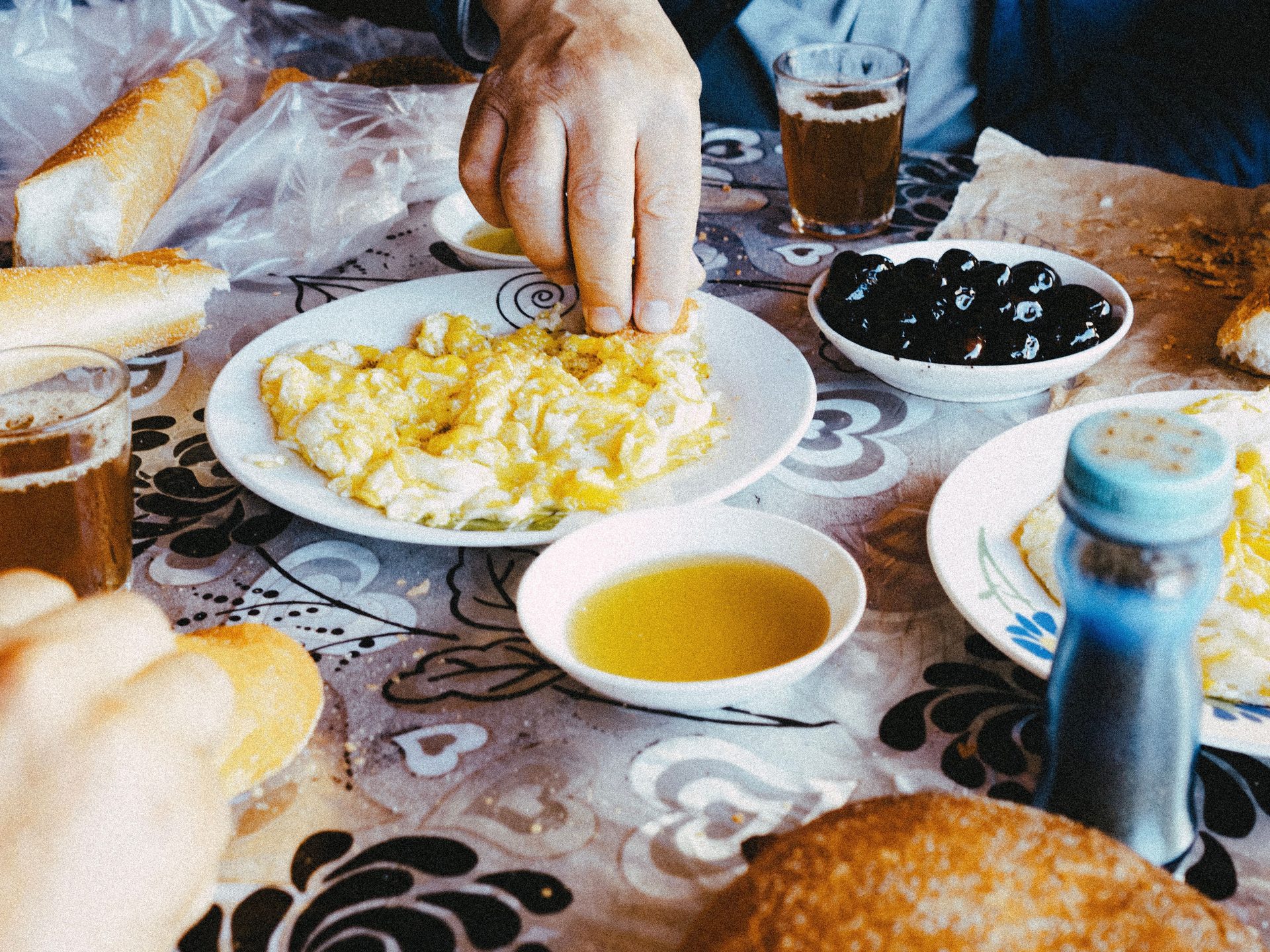
In Libya, mornings rarely start with cereal or toast. Many households begin the day with a spoonful of roasted grain paste that nomads once carried across the Sahara, or a skillet of eggs simmered gently in a spiced tomato sauce passed down through generations. A traditional Libyan breakfast draws on North African, Berber, and Mediterranean cooking traditions , and in coastal cities like Tripoli, Italian habits have left their mark on the morning table too.
This piece walks through seven dishes and drinks that regularly appear at a Libyan breakfast table, from an ancient grain powder older than written history to a frothy half-coffee, half-milk drink poured in small glasses. Readers curious about how other cultures approach the first meal of the day can also browse this site’s collection of breakfast traditions from around the world, or compare notes with the egg-and-bread habits common across Greek morning meals.
| Dish | Type | Core Ingredients | Commonly Paired With |
|---|---|---|---|
| Baryoosh | Sweet bread roll | Flour, yeast, sugar, butter | Jam, cheese, tea |
| Fasouliyah | Bean stew | White beans, tomato, garlic, cumin | Flatbread |
| Nus-Nus | Coffee drink | Strong coffee, steamed milk | Baryoosh or bsisa |
| Bsisa | Roasted grain paste | Barley, wheat, legumes, olive oil | Fresh or fried dates |
| Chakchouka | Egg dish | Eggs, tomato, peppers, onion, spices | Crusty bread |
| Date Juice | Natural drink | Dates, water or milk | Served on its own |
| Fresh Fruit Frappé | Blended drink | Seasonal fruit, milk or ice | Served chilled |
1. Baryoosh
Baryoosh is the soft, lightly sweet bread roll that shows up in Libyan bakery windows before sunrise. The name itself is widely believed to be a local adaptation of the French word brioche, a small linguistic souvenir of the wider Mediterranean exchange of baking traditions that shaped North African bread culture. Libyan bread-making in general spans everything from humble daily flatbreads to richer pastries, and these breads are often enjoyed alongside tea or coffee rather than as a standalone meal.
A fresh baryoosh roll is torn open and spread with butter, apricot or fig jam, or a slice of soft cheese. Children often dunk pieces straight into a glass of warm milk or sweet tea before school. Because the dough is enriched with a little sugar and fat, baryoosh keeps its tender crumb for a day or two, making it a practical choice for busy households that bake every other morning rather than daily. Readers interested in how other cultures treat enriched breakfast breads might enjoy comparing notes with the pastry habits described in this site’s guide to traditional French food, given the shared brioche lineage.
2. Fasouliyah
Fasouliyah is a thick white bean stew simmered with tomato paste, garlic, cumin, and a generous pour of olive oil until the beans turn creamy and the sauce clings to a torn piece of bread. It is substantial enough to serve as a full meal, which is exactly why Libyan families lean on it for breakfast when the day ahead calls for real fuel rather than something light. Street vendors in several Libyan cities sell bowls of fasouliyah early in the morning to laborers and students heading out for the day.
The dish usually starts with dried white or butter beans soaked overnight, then simmered slowly with onion, garlic, and a spoonful of harissa or dried chili for warmth. A squeeze of lemon and a drizzle of fresh olive oil finish the bowl just before serving. Hearty legume-based breakfasts are not unique to Libya; a similar logic drives the one-pot stews featured in this site’s look at German eintopf traditions, where a single simmered pot also does the work of feeding a household through a long morning.
Pro Tip: If dried beans are not on hand, canned white beans simmered for 15 minutes with tomato paste, garlic, and cumin make a quick weeknight version of fasouliyah without an overnight soak.
3. Nus-Nus
Nus-nus simply means “half-half” in Arabic, and the drink lives up to its name: equal parts strong brewed coffee and warm steamed milk, poured together into a small glass until the color settles into a soft caramel brown. It sits somewhere between an espresso and a light latte, strong enough to wake a household but gentle enough to sip slowly while bread is passed around the table.
Cafés across Libya serve nus-nus as the default accompaniment to a morning plate of baryoosh or a spoonful of bsisa, and the ritual of sitting over a small glass rather than rushing through a large mug reflects a slower, more social approach to the first meal of the day. Coffee-and-milk rituals built around precise ratios appear in plenty of other breakfast cultures too, including some of the drink traditions covered in this site’s piece on traditional Russian drinks.
4. Bsisa
Bsisa (also spelled bsissa) is a fine powder made from roasted barley and legumes that dates back to antiquity, and travelers and nomads historically carried it across North Africa because it was nutritious and easy to carry in powder form on long desert journeys. The grains and legumes are roasted first, then ground into flour and stored in a jar, ready to be mixed with liquid whenever needed rather than baked fresh each time.
To eat it, the powder is worked into a thick paste with light olive oil, and in the city of Zwara, a particularly popular local recipe blends chickpeas, green lentils, fennel seeds, wheat, and turmeric into the mix. The paste is almost always served alongside dates, and in many Libyan households lightly fried dates eaten with bsisa were, until recently, a thoroughly ordinary breakfast before Western-style breakfasts began replacing some older dishes .
Bsisa is not made the same way everywhere in Libya. A few regional quirks worth knowing:
- In Benghazi, bsisa is traditionally the related powder called howira mixed with date paste, while howira itself is made with extra cumin.
- In Misurata, Zliten, and Khoms, the dish called bsisa is actually fried date paste served warm on its own, a different preparation from the eastern version.
- In western Libya, a related powder called zummeeta is sometimes eaten dry with fresh green onions, tomatoes, and chili rather than mixed into a paste.
Bsisa also carries deep significance for Libya’s historic Jewish community, who prepared a version for Rosh Chodesh Nisan, the eve of the Hebrew month that opens the Passover season.
Important Note: During the Nisan ceremony, the family’s head traditionally stirs the mixture with a house key rather than a spoon while reciting a blessing, a ritual still remembered in Libyan Jewish communities today , and the same powder is referenced in the Wikipedia entry on Bsisa’s ties to the Nisan calendar .
Nutritionally, the grain-and-legume formula packs a real punch. A nearly identical dish across the border in Tunisia, called bsissa, contains an estimated 15 to 18 grams of protein per 100 grams , which helps explain why this ancient paste has stayed on breakfast tables for so many centuries. For readers curious about other grain-and-legume breakfast staples, this site’s rundown of traditional Indian foods covers a few lentil-based dishes built on similar nutritional logic.
5. Chakchouka
Chakchouka, also spelled shakshouka, is the dish most outsiders associate with Libyan mornings: eggs poached directly in a savory sauce built from tomatoes, bell peppers, and hot peppers , usually finished with a scatter of fresh herbs. The sauce simmers in a skillet until it thickens into a jammy, slightly tangy base, and the eggs are cracked in near the end so the whites set while the yolks stay soft. In its Libyan form, the dish often includes bits of dried lamb or beef stirred into the sauce for extra depth.
The dish is typically served straight from the cast iron skillet it was cooked in , which keeps it warm at the table and turns it into a colorful centerpiece rather than something plated quietly on the side. Chakchouka is also claimed, with some regional variation, across much of Arab North Africa and the Levant, and Libyan, Tunisian, Algerian, Moroccan, Egyptian, and Levantine cooks each have their own version of the same basic idea.
Key Insight: Food historians trace an early version of this egg-and-tomato dish to North Africa in the mid-16th century, with Libyan and Tunisian cooks later carrying it into other Mediterranean kitchens, which helps explain why so many countries claim it as their own.
Because the ingredients are simple and the method is forgiving, chakchouka works just as well on a rushed weekday as it does for a lazy weekend brunch. Readers who enjoy comparing how neighboring cuisines handle eggs for breakfast can look at this site’s guide to traditional Egyptian food, where a closely related egg-and-tomato dish shows up under a different name.
6. Date Juice
Libya’s palm groves produce dates that are harvested, dried, and stored to last through the rest of the year, and families eat them as they are, turn them into syrup, or pair them with milk for a simple, sustaining treat. Date juice takes that same stored fruit and turns it into a thick, naturally sweet drink, usually made by blending softened dates with water or milk and straining out the fibrous bits.
Because dates are calorie-dense and naturally sweet, the juice needs no added sugar, and a small glass alongside bsisa or baryoosh rounds out a breakfast without reaching for anything processed. Some households flavor the blend with a little cinnamon or a splash of milk to soften the intensity. Fruit-based morning drinks built around a single dominant ingredient show up elsewhere too, including the citrus and hibiscus drinks covered in this site’s piece on traditional Egyptian drinks.
7. Fresh Fruit Frappé
Along Libya’s Mediterranean coast, particularly in Tripoli, café culture carries a clear Italian fingerprint, and the fresh fruit frappé is one of the clearest examples. Blended from whatever fruit is in season, bananas, strawberries, mango, or orange, together with milk or crushed ice, the drink is poured thick and frothy into a tall glass and often topped with a few extra pieces of fruit.
Unlike the heavier breakfast dishes on this list, a fruit frappé is a warm-weather choice, popular in summer months when a cold, sweet drink feels more appealing than a hot stew or a skillet of eggs. It pairs easily with a light pastry rather than replacing a full meal outright. Readers who enjoy fruit-forward morning drinks might also like browsing this site’s look at traditional South African food and its tropical fruit traditions, or the fresh juice culture described in the guide to traditional Venezuelan food.
Taken together, these seven dishes show that a traditional Libyan breakfast is rarely just one thing. It can be a quiet bowl of bean stew eaten in minutes before work, a ceremonial scoop of bsisa tied to centuries of history, or a chilled fruit frappé sipped slowly on a hot morning. Anyone curious about how differently the first meal of the day can look around the world might enjoy comparing these dishes with the rituals described in this site’s guide to traditional Japanese breakfast, or even borrow a Libyan-style spread for a change of pace on a Valentine’s Day breakfast table. Whichever dish comes first, the Libyan morning table rewards anyone willing to slow down and actually sit with it.