Why Are My Onion Leaves Falling Over? Causes, Fixes, and Prevention

September 8, 2026
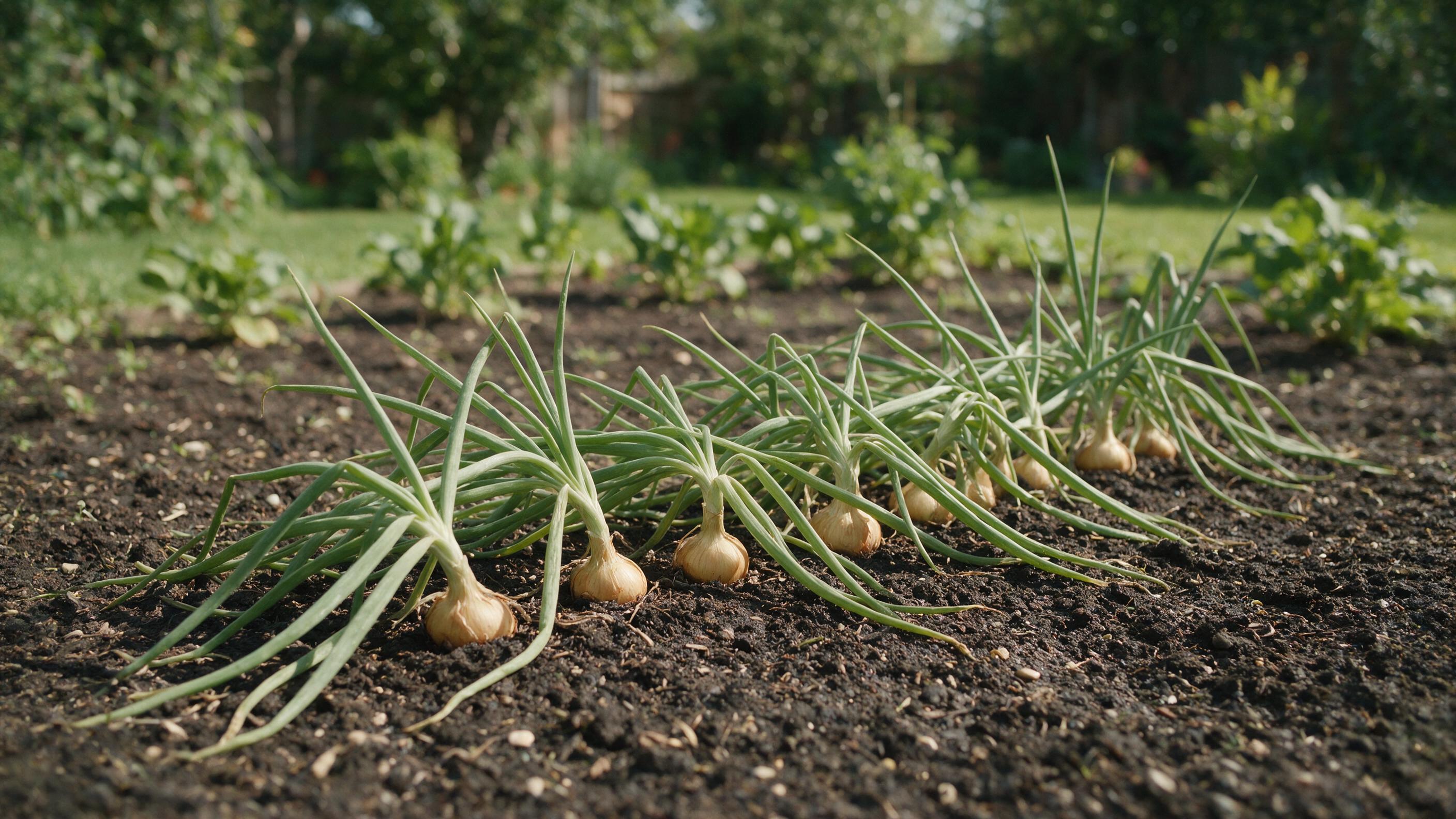
You step outside to check on your garden and notice your onion leaves are no longer standing upright — they’re bent, drooping, or lying flat on the soil. It’s a jarring sight, especially when you’ve put weeks of care into your crop. The good news is that falling onion leaves don’t always mean something is wrong.
Understanding why onion leaves fall over is one of the most useful skills you can develop as a home vegetable grower. Sometimes the cause is completely natural, and sometimes it’s a signal that your plants need help. This guide walks you through every possible reason, how to tell them apart, and exactly what to do about it — whether you’re growing bulb onions in a backyard garden bed or green onions in containers on a patio.
What Does It Mean When Your Onion Leaves Are Falling Over?
When onion leaves start to droop, bend, or lie flat, it usually means one of two things: the plant has reached maturity and is ready to harvest, or something in the growing environment has stressed the plant. Onion leaves fall over when the plant is mature and the bulb is ready for harvest, which happens after the leaves have sent their energy to the bulb to make it grow bigger. That’s a completely normal and expected part of the growing cycle.
However, not every case of drooping leaves is harvest-related. If your onions aren’t mature, onion leaves might start drooping due to lack of water, attacks from pests and diseases, and inadequate growing conditions. The key is figuring out which situation you’re dealing with — and the timing of the drooping is your first clue.
Onions (Allium cepa) are relatively forgiving vegetables, but they do communicate stress through their foliage. A droop that appears late in the growing season almost always means harvest time. A droop that appears weeks or months too early is a warning sign worth investigating. Check out this guide on how to plant onions for a full overview of the growth timeline, which helps you put leaf behavior in proper context.
Is Falling Over in Onions Always a Sign of a Problem?
No — and this is the most important thing to understand before you panic. Onion tops naturally curl and wilt at the end of the growing season. If they’re wilting early, they may be experiencing damage from pests, diseases, or improper care. Timing is everything here.
Short and intermediate-day onions, planted in the fall, mature over the winter and spring. Long-day onions, planted in late winter, finish growing in the summer. While short-day types work well in southern states, long-day types are best in the northern ones. Intermediate-day onions work well in between. Knowing which type you’re growing tells you when to expect natural leaf fall.
A “perfect” onion has 13 layers and 13 leaves — one leaf for each layer. Once the onion bulbing process begins, no more leaves are made. So you want the plant to produce all 13 leaves before bulbing to get the largest onions possible. If the leaves are falling over before you’ve seen that full leaf count develop, something may be cutting the growing cycle short.
Pro Tip: Never force the process. There is no reason to bend or knock over the leaves of onions before it happens naturally. They will fall over by themselves when they are ready. In fact, bending the onion leaves before they are ready may be detrimental to bulb formation.
Watering Issues Causing Onion Leaves to Fall Over
Water is the most common controllable cause of drooping onion leaves, and both too much and too little can produce the same drooping result — though for different reasons.
Overwatering is a frequent culprit. Overwatering is a common issue that can lead to serious problems for your onion plants. Symptoms include yellowing leaves, mushy roots, and noticeable leaf droop. Excess moisture in the soil creates poor oxygen availability, which stresses the plant and causes its leaves to droop. Excess water is difficult for onion roots to handle. They drown without access to air, turning mushy and brown. As they die out, the tops begin yellowing before turning mushy and falling over.
Underwatering creates a different but equally damaging chain reaction. Dry conditions will cause early bulbing in onions. Once the bulb starts to form, leaf growth will stop, and the leaves will fall over. According to Oregon State University Extension, “Onions are shallow rooted. If allowed to dry out, they bulb early and small size is the result.”
Young seedlings are especially sensitive. Young onion seedlings will quickly get dehydrated, especially when grown in small modules that don’t hold on to a lot of water. But the good news is they recover just as fast. Start watering them from below and they should spring back in a matter of hours.
- Check soil moisture by pushing a finger about one inch deep — water when it feels dry at that depth
- Water deeply and less frequently rather than light daily watering
- Ensure the soil stays consistently moist, but not soggy, during the growing season. One easy way to conserve soil moisture is with organic mulches like compost, leaf mold, or straw.
- Make sure containers and garden beds have adequate drainage holes or channels
Light Conditions Behind Onion Leaf Drooping
Onions are sun-loving plants, and insufficient light is a direct path to weak, floppy leaves. Green onions need 6–8 hours of sunlight daily for strong growth. When they don’t get it, the plant stretches toward whatever light it can find, producing tall but structurally weak foliage that bends under its own weight.
This is especially common for onions started indoors under grow lights. It can get pretty warm underneath grow lights, so if you’re growing them indoors, make sure to check the temperature. Heat stress from lights placed too close can compound the problem, causing both wilting and physical damage to leaf tissue.
Evaluate your planting location to ensure your green onions receive at least 6–8 hours of direct sunlight daily. Check for nearby obstructions like trees or buildings that may block sunlight. This easy assessment can make a significant difference in your plants’ health.
Pro Tip: If you’re growing onions in containers, rotate the pot every few days so all sides of the plant receive even light exposure. Uneven light leads to leaning and eventually drooping toward the brightest side.
For gardeners managing indoor plant setups alongside outdoor crops, the best houseplants for low-light areas guide is a helpful reference for understanding how different plants respond to light deficiency.
Soil, Nutrients, and Root Health Causing Onion Leaf Drooping
The soil your onions grow in directly affects how well their leaves stand up. Rich, porous, and absorbent soil is crucial for maintaining a moist culture. Dense clay is particularly difficult to grow these bulbs in, as it doesn’t drain well. Plant them in a well-drained loamy mix for the best results.
Nutrient deficiencies are another major factor. Nutrient deficiencies can significantly affect the health of your onion plants. Common culprits include nitrogen and potassium deficiencies, which can lead to drooping leaves. Here’s how each deficiency shows up:
| Nutrient | Role in Leaf Structure | Deficiency Symptoms |
|---|---|---|
| Nitrogen | Supports leaf development and overall vigor | Pale green leaves, stunted growth, and leaf drop |
| Potassium | Regulates water balance and cell strength | Leaf tip burn, yellowing edges, and increased susceptibility to disease |
| Calcium | Builds strong cell walls in leaf tissue | Weak, limp new growth; leaves fail to stand upright |
| Zinc | Supports enzyme function and growth regulation | Dimpled, bending leaves; onions are sensitive to zinc levels |
A zinc deficiency could be a result of too high a soil pH. Soils with high organic matter may make a zinc deficiency worse. High phosphorus levels may limit zinc uptake. Cold and wet conditions can also cause zinc deficiencies to worsen. A basic soil test from your local cooperative extension office can identify these imbalances before they cause lasting damage.
Planting depth also matters for root stability. According to the Texas A&M University Extension, onion transplants should be planted at least 1 inch (2.5 centimeters) deep. This leaves enough soil to anchor the plant and keep it from falling over.
Environmental Stress Triggering Onion Leaf Drooping
Even well-watered, well-fed onions can develop drooping leaves when the surrounding environment puts them under stress. Extreme temperature fluctuations can significantly impact your onions. High heat or unexpected frost can stress the plants, leading to leaf fall. Maintaining a stable environment is key to keeping your onions healthy and thriving.
Wind is another underappreciated factor. Onion seedlings may fall over due to inadequate support or environmental stressors like strong winds. Staking the seedlings and adjusting watering can help stabilize them. In exposed garden beds across the Midwest or Great Plains, wind can physically beat young onion tops into the ground before they’ve had a chance to develop strong stems.
Overcrowding in seed trays or densely planted beds limits airflow and root development, both of which contribute to weak, floppy stems. Onion seedlings falling over can be due to inadequate support, weak root development, improper watering, overcrowding in seed trays, insufficient light exposure, and temperature fluctuations.
If you’re in a region prone to drought stress or erratic weather — common across much of the US Southwest and Southeast — knowing how to select drought-tolerant plants can help you design a garden that’s more resilient overall, which benefits your onion crop as a companion planting strategy. You might also find value in reading about wind-tolerant plants if your site is especially exposed.
Pests and Disease Leading to Onion Leaf Drooping
When onion leaves droop mid-season without any obvious watering or environmental cause, pests and disease should move to the top of your suspect list.
Onion maggots are one of the most damaging pests. Some pests might cause drooping to your plant. Some of the most common are maggots. These insects feed on the roots of onions and lay their eggs on the stems of your plants. If you notice your bulbs turning yellow and their leaves wilting, you might be dealing with maggots.
Thrips are another serious concern. Onion thrips are tiny, elongated insects that can wreak havoc on your plants. They leave behind silver streaks on leaves, indicating their presence. These pests feed on leaf tissue, weakening the plants and causing drooping foliage. Regular inspections can help catch these infestations early.
On the disease side, two fungal conditions are the primary culprits:
- Downy mildew: You may see yellow areas on the leaves of your plants, which means they suffer from downy mildew. The condition is usually hard to treat. However, you can try preventing it. Avoid overwatering your plants and make sure your soil drains well. Alternatively, consider planting resistant onion varieties.
- White rot: Common diseases like downy mildew and white rot can lead to drooping leaves and overall plant decline. Watch for symptoms such as discolored patches or a foul smell from the soil.
Organic options like neem oil and insecticidal soap are effective and safe for your garden. Regular monitoring and trapping methods can help catch pests early. Using a plant identification resource alongside your own visual inspection helps confirm whether you’re dealing with a pest, a disease, or both.
How to Diagnose Why Your Onion Leaves Are Falling Over
A methodical look at your plants takes only a few minutes and can save your entire crop. Work through these diagnostic steps before reaching for any treatment.
- Check the season and timing. If it is late in the season, maturity of the onion bulb is the most likely reason that the leaves are falling over. If it’s early in the growing cycle, keep investigating.
- Feel the soil. A simple soil moisture test can help; stick your finger into the soil to check for dampness. Soggy soil points to overwatering; bone-dry soil points to underwatering.
- Inspect the roots. Look for visual cues like yellowing leaves and mushy roots, which indicate that your plant is struggling. To confirm overwatering, examine the roots for signs of rot.
- Look at leaf color and texture. Nutrient deficiencies can manifest in various ways. Pay attention to leaf color and texture; pale leaves or stunted growth often signal a nitrogen deficiency.
- Scan for pests. Keep an eye out for signs of damage, including holes in leaves or sticky residue. Regular inspections are key to catching these pests early.
- Check drainage. Well-draining soil is essential to prevent waterlogging, which can lead to root issues. To test drainage, dig a hole and observe how quickly water is absorbed; this will give you insight into your soil’s texture and drainage capabilities.
If you’re having trouble identifying exactly what you’re seeing, a plant identification app can help you cross-reference symptoms quickly. Both the best iPhone apps for identifying plants and the best Android apps for identifying plants can give you a second opinion right from your garden.
Key Insight: When diagnosing drooping onion leaves, always rule out natural maturity first. A mid-season droop with yellowing in a late-season plant is almost always harvest time — not a crisis.
How to Fix an Onion Plant That Is Falling Over
Once you’ve identified the cause, the fix is usually straightforward. Here’s how to address each scenario.
If it’s overwatering: Adjust your watering schedule to ensure the soil dries out between waterings. Improving drainage is also crucial; consider adding organic matter to your soil to enhance its structure. If root rot has already set in, remove affected plants to prevent spread to healthy neighbors.
If it’s underwatering: Look for signs like wilting leaves, dry soil, and drooping foliage. If you suspect underwatering, increase your watering frequency. Regularly monitor soil moisture to keep your plants hydrated and healthy.
If it’s a nutrient deficiency: Common culprits include nitrogen and potassium deficiencies, which can lead to drooping leaves. To combat this, conduct soil tests to assess nutrient levels. Apply a balanced fertilizer formulated for vegetables and follow the label instructions carefully to avoid nutrient burn.
If it’s a light problem: Consider relocating pots or adjusting your garden layout to ensure they receive adequate light. Pruning surrounding plants can also improve light access.
If it’s pests or disease: Diseases like downy mildew and white rot can lead to significant leaf droop in onions. Early identification is key to managing these issues effectively. If you spot symptoms of disease, act promptly by applying appropriate fungicides. This proactive approach can help save your plants from further damage.
If it’s natural maturity: When the leaves on the first few plants begin to fall over, stop watering and let the onions sit in the ground for 7 to 14 days (depending on how dry or humid your area is) to mature. In simple words, stop watering onions before harvesting. Then dig them up, cure them in a warm, airy spot for 2–3 weeks, and store them in a cool, dry location.
For physical support during recovery, staking isn’t just for tomatoes. For your onions, a simple bamboo stick or a skewer can act as a trusty sidekick. Push the stake gently into the soil near the plant’s base, careful not to damage the roots. Then, loosely tie the leaves to the stake with soft twine or strips of cloth. This is especially useful for companion planting setups where your onions share a bed and can’t easily be moved.
How to Prevent Onion Leaf Drooping Going Forward
Prevention is far easier than treatment. Building good habits from the start of each growing season keeps your onion leaves standing tall through harvest.
- Choose the right variety for your region. Short and intermediate-day onions, planted in the fall, mature over the winter and spring. Long-day onions, planted in late winter, finish growing in the summer. Short-day types work well in southern states, long-day types are best in the northern ones.
- Plant at the correct depth. Remember not to plant your onions deeper than one inch in the ground to allow enough space to grow and enough soil to anchor the plant.
- Mulch your beds. Plant your onions in fertile and well-draining soil and consider adding a layer of mulch around them to increase water retention and improve drainage. Doing so will also increase the soil’s nutrient content. It will also contribute to keeping weeds at bay.
- Water deeply and consistently. Establish a consistent watering schedule. Aim for deep watering once a week, adjusting based on rainfall to prevent both overwatering and underwatering.
- Test your soil before each season. A soil test catches pH imbalances and nutrient gaps before they cause leaf problems. Managing and adjusting phosphorous levels, zinc levels, and organic matter levels appropriately will help.
- Inspect plants regularly. Regularly check your onion seedlings for signs of wilting, yellowing leaves, or pest infestations. Daily inspections and bi-weekly maintenance can help address any problems promptly.
- Trim seedlings when needed. Trimming the tops of onions signals their roots to grow stronger and send more growth. Some gardeners swear by this method and claim it leads to more growth rings and bigger onions as a result.
Understanding the full lifecycle of your plants also helps. Exploring the types of plants and their growth habits gives you a broader framework for reading plant behavior — including why different vegetables signal stress in different ways. You can also explore the types of leaves guide to better understand what healthy foliage looks like across species.
FAQ
Should I be worried if my onion leaves are falling over late in the season?
If you notice your onion leaves’ tops falling over, don’t worry: it is a sign your bulbs are ready to harvest. Under such conditions, your onions will stop growing. Harvest promptly to prevent the bulbs from rotting in the ground.
Can I make my onion leaves stand back up after they’ve fallen?
If the cause is watering or nutrition, yes — correcting the issue usually brings the leaves back upright within a few days. If the leaves have fallen because the plant is mature, they won’t stand back up, and that’s fine. You can use a soft stake and twine for temporary physical support while you address underlying care issues in younger plants.
Why are my onion seedlings flopping over indoors?
The taller onion seedlings get, the harder it is to support their own weight, so they tend to bend from the middle and flop over. This is normal behavior. Some gardeners choose to trim their onion seedlings as soon as they’re starting to fall over and continue to trim them regularly. There are no hard and fast rules on how to trim your onion seedlings. You can go as low as one inch from the soil, or stay on the conservative side and trim the top 2 inches off.
How long does it take for onions to grow from seed to harvest?
Onions are a long-growing crop that takes 100–120 days from seed to harvest of a whole bulb. Harvesting time from transplants or sets is 60–80 days. Knowing where you are in that window helps you determine whether drooping leaves are a problem or a harvest signal.
What should I do after harvesting onions whose leaves fell over?
Onions need to be cured after harvest so they will store longer. According to the University of Michigan Extension, you should harvest your onions when about half of the leaves have dried out and fallen over. Cure them in a warm, well-ventilated space for two to three weeks before moving them to long-term storage.
Can I still eat onions whose leaves fell over from disease?
It depends on the disease and how far it has progressed. Onions affected by surface fungal issues like downy mildew may still be usable if the bulb itself is firm and undamaged. Onions showing signs of white rot or soft, foul-smelling bulbs should be discarded and not composted, as the pathogens can persist in soil for years.