Traditional Brazilian Clothing: Baiana Dress, Bombachas, and 11 More Iconic Styles

November 19, 2026
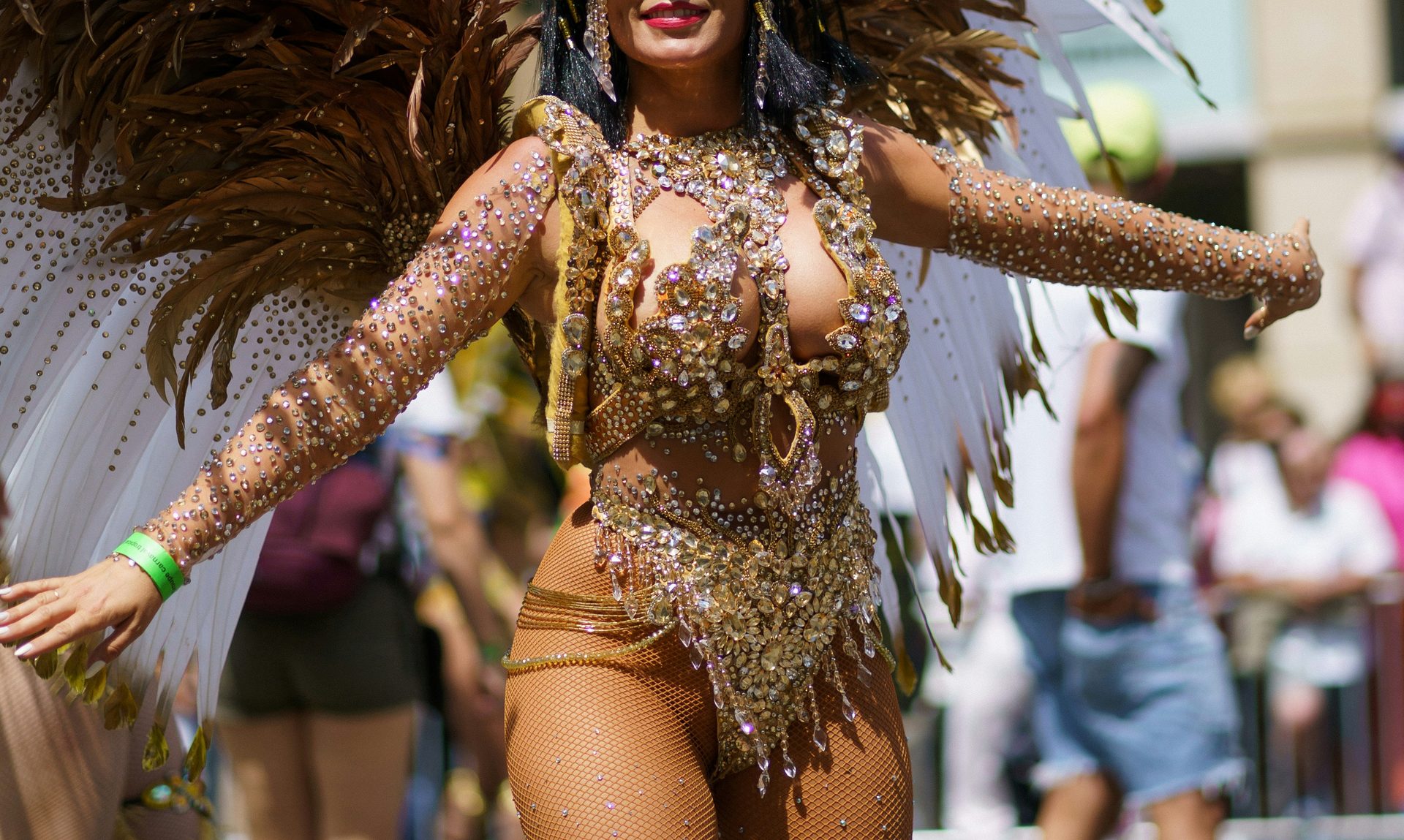
Brazil is roughly the size of the continental United States, and its traditional clothing reflects that scale. A gaucho on the southern grasslands dresses nothing like a street vendor in Salvador or a dancer at Carnival in Rio de Janeiro. Traditional Brazilian clothing is less a single national costume than a patchwork of regional styles shaped by Indigenous, African, and Portuguese colonial history.
This piece walks through 13 garments and costume traditions that still define Brazilian cultural identity today, from everyday rural wear to elaborate festival dress. Readers curious about how other nations express identity through dress may also want to compare notes with traditional Indian clothing or traditional Japanese clothing, both of which show similarly strong regional variation.
1. Baiana Dress
The Baiana dress is one of Brazil’s most recognizable traditional garments, tied closely to the northeastern state of Bahia and its capital, Salvador. Bahia’s treasured costume, Baiana de Acarajé, is an extravagant piece of clothing worn by the women of Bahia, a group centered in Salvador on Brazil’s northeastern coast. The style is inseparable from Candomblé, the Afro-Brazilian religion that took shape in Bahia in the late 19th century. Candomblé formed in Bahia among enslaved people, with larger groups drawn from Yorubaland, the Dahomey kingdoms of present-day southwestern Nigeria and Benin, and Bantu Africa.
A complete Baiana ensemble layers several distinct pieces. It typically consists of a white camizu (blouse), a long saia (skirt), a wrapped ojá (headtie), and various ileki (beaded necklaces). The silhouette’s European inspiration sits alongside visible African and Islamic influence. The style’s inspiration traces to European Baroque fashion, with white lace and heavy layering, while the headwraps made of white lace can be traced to the dress’s Afro-Islamic roots.
The term “baiana” carries double meaning in Bahia. It literally means a woman from the northeastern state but more specifically refers to an Afro-Brazilian woman who, since colonial times, has sold food on the streets of Salvador and Rio de Janeiro, as well as to priestesses of Candomblé. Today, these vendors remain a familiar sight. The baiana street vendor, with her colorful trays of traditional sweets, still appears along the streets, hillsides, and beaches of Salvador, as well as at Candomblé rituals and festivals such as the Lavagem do Bonfim. Readers interested in how religious practice shapes everyday dress elsewhere might compare this with traditional Pakistani clothing, where faith-linked garments serve a similar dual role.
Pro Tip: If you encounter a baiana vendor at a Bahia street market, the all-white version of the dress usually signals a Candomblé connection, while more colorful variants are worn for tourism and general celebration.
2. Bombachas (Baggy Gaucho Pants)
Bombachas are the loose, gathered trousers worn by gauchos across Brazil’s southern grasslands, particularly in Rio Grande do Sul. Cinched at the ankle and roomy through the leg, the pants were built for long hours on horseback, letting riders move freely while keeping dust and brush out of the fabric. The style shares clear roots with similar gaucho trousers worn across neighboring Argentina and Uruguay, a reminder that the pampas culture of South America’s far south crosses national borders.
Bombachas are almost always worn tucked into leather boots and paired with a wide leather belt, often stamped with silver coin decorations. The practical, workwear origin of the garment separates it from more ceremonial Brazilian dress; bombachas remain genuinely functional clothing in rural ranching communities rather than a costume reserved for festivals. Anyone comparing utilitarian traditional wear across cultures might also look at traditional Australian clothing, where stockmen’s gear developed along similar lines for similar reasons.
3. Pala/Poncho
The poncho, sometimes called a pala in parts of southern Brazil, is a rectangular woven cloth with a center opening for the head, draped over the shoulders like a cape. It developed as practical protection against the cold winds and rain of the southern highlands, where temperatures drop far lower than in Brazil’s tropical north.
Woven from wool, often in deep solid colors or simple striped patterns, the poncho doubles as a blanket on overnight cattle drives, which made it standard gaucho equipment long before it became a recognizable cultural symbol. Its design overlaps with Andean poncho traditions found across Peru, Bolivia, and Chile, underscoring how clothing patterns traveled with trade and migration across South America’s interior.
4. Carmen Miranda Costume (Modified Baiana Dress)
The Carmen Miranda costume is a theatrical, exaggerated reworking of the Baiana dress, built for the stage rather than the street or the terreiro. Miranda, a Portuguese-born Brazilian singer and actress, became internationally famous in the 1930s and 1940s wearing towering fruit-topped turbans and brightly sequined versions of Bahian dress.
The connection to the original garment is explicit in her signature performance. The costume she wore performing “O que é que a baiana tem?” referenced the baiana, a term referring to Afro-Brazilian women who have sold food on the streets of Salvador and Rio de Janeiro since colonial times, and to Candomblé priestesses. Her arm and hand movements while performing the song became closely associated with her screen persona. According to a 1996 report in News From Brazil, composer Dorival Caymmi taught Miranda to move her arms and hands with the music, which became her trademark. The song and performance turned a sacred, community-rooted garment into a global shorthand for “Brazilian” glamour, a transformation that still shapes how Carnival costumes and tourist souvenirs depict Baiana style today.
5. Pano Da Costa (Traditional Wrap)
Pano da Costa is a rectangular length of cloth used by Afro-Brazilian women, most often in Bahia, as a wrap draped over the shoulders or tied around the waist. The name translates loosely to “cloth of the coast,” pointing to its West African origins and the transatlantic routes that carried the textile tradition into Brazil alongside enslaved populations.
The fabric is typically patterned in bold, vibrant designs and is worn over or alongside the Baiana dress during religious ceremonies connected to Candomblé, where it carries meaning well beyond decoration. For Candomblé practitioners, the choice of pattern and the way the cloth is tied can signal devotion to a particular orixá, or deity, making the Pano da Costa as much a spiritual marker as a fashion item.
6. Renda De Bilro (Bobbin Lace Garments)
Renda de bilro, or bobbin lace, is a handmade lace technique brought to Brazil’s northeastern coast by Portuguese settlers and now closely associated with the state of Ceará. Lacemakers use small wooden bobbins to weave intricate thread patterns, a slow, highly skilled craft traditionally passed down through generations of women in fishing communities.
Garments and accessories finished with renda de bilro, including blouses, shawls, and trim for festival dresses, carry a textured, almost web-like lace pattern distinct from machine-made lace. The craft has become a recognized symbol of Ceará’s cultural heritage, and lacemaking cooperatives in coastal towns continue to produce pieces for both local wear and the wider Brazilian fashion market. Readers interested in other hand-lace traditions tied to regional identity may find a useful comparison in traditional German clothing, where embroidery and lacework carry similar regional pride.
7. Wide-Brimmed Straw/cowboy Hat
The wide-brimmed straw or leather hat is a near-universal accessory across Brazil’s rural traditional dress, worn by gauchos in the south and vaqueiros in the semi-arid northeast alike. Its broad brim shields the face and neck from direct sun during long days spent herding cattle across open land.
Construction varies by region and climate. Southern gaucho hats tend toward felt or leather with a rounded crown, while northeastern vaqueiro hats are often built from tougher leather to withstand thorny scrubland vegetation known as the caatinga. In both cases, the hat signals more than practicality; it marks the wearer as part of a specific working culture with its own customs, music, and dress code, not unlike how traditional American clothing uses the cowboy hat as a similar regional and occupational marker.
8. Gaúcho Pilcha (Southern Traditional Outfit with White Shirt, Poncho, Leather Boots)
Pilcha is the term used in Rio Grande do Sul for the complete traditional gaucho outfit, worn as everyday rural clothing and, increasingly, as formal dress for regional festivals and rodeo-style events called rodeios. Rather than a single garment, pilcha describes a full head-to-toe look built from several coordinated pieces.
- White shirt – loose-fitting and typically long-sleeved, worn tucked into the bombachas
- Bombachas – the baggy trousers described above, cinched at the ankle
- Poncho – draped over the shoulders, both for warmth and as a style marker
- Leather boots – sturdy, low-heeled, built for riding rather than walking long distances
- Wide leather belt – often decorated with silver coins or buckles
- Bombacha-style scarf or neckerchief – tied loosely at the throat
In Rio Grande do Sul, wearing full pilcha is taken seriously enough that some rural clubs and gaucho traditionalist organizations set formal dress codes around it, treating the outfit as a marker of regional pride comparable to how tartan functions in Scottish dress culture.
9. Canga (Wrap-Around Skirt/beach Cover-Up)
The canga is a lightweight rectangular piece of fabric, usually cotton or a cotton-synthetic blend, that Brazilian women wrap, tie, or knot around the body in dozens of configurations. Originating as practical beachwear along Brazil’s Atlantic coast, it functions as a skirt, dress, sarong, or simple cover-up depending on how it is tied.
Cangas are typically printed in bold tropical patterns, solid bright colors, or beach-themed motifs, and vendors along coastal boardwalks in cities like Rio de Janeiro sell them as both practical clothing and souvenirs. The garment’s flexibility has made it a staple well beyond the beach, often doubling as a tablecloth, picnic blanket, or light shawl, which explains why it remains one of the most commercially visible pieces of Brazilian traditional dress today.
10. Vaqueiro Clothing (Gibão, Chapéu De Couro, Arreio, Espora)
Vaqueiros are the cattle-herding cowboys of Brazil’s semi-arid northeastern interior, and their traditional dress developed specifically to survive the region’s thorny caatinga scrubland. Unlike the cotton-and-wool pilcha of the south, vaqueiro clothing is built almost entirely from thick, protective leather.
- Gibão – a full leather jacket or long coat covering the torso and arms, protecting the rider from thorns while moving through dense brush
- Chapéu de couro – a leather hat, often with a rounded or slightly peaked crown, providing sun and thorn protection for the head
- Arreio – leather tack and harness gear for the horse, closely tied to the vaqueiro’s working identity
- Espora – leather spurs, used for horse control during long herding runs through difficult terrain
Entire vaqueiro outfits, including leather leggings and gloves, are sometimes referred to collectively as gibão de couro, and the look remains active working dress in states such as Ceará and Pernambuco, not a costume preserved only for display. Several Brazilian museums and cultural festivals now feature vaqueiro gear alongside other regional attire to highlight how distinct the northeastern interior’s clothing tradition is from the better-known southern gaucho look.
11. Indigenous Amazonian Attire (Natural Fiber Garments with Beadwork)
Indigenous communities across the Brazilian Amazon maintain clothing traditions built almost entirely from natural, locally sourced materials rather than woven cloth. Garments and body adornments are typically made from plant fibers, bark cloth, feathers, seeds, and beads, reflecting both the resources available in the rainforest and specific cultural and spiritual meanings tied to particular animals, colors, and patterns.
Beadwork is especially significant, often using seeds, shells, and natural pigments to create necklaces, headdresses, and body ornaments that can signal a wearer’s community, status, or role in ceremonial life. Feather headdresses, frequently associated with groups across the Amazon basin, are reserved for specific ceremonial or leadership contexts rather than everyday wear. Because Brazil is home to hundreds of distinct Indigenous peoples, attire varies enormously from one community to the next, making broad generalizations about “Amazonian dress” less accurate than recognizing it as dozens of separate, living traditions.
Important Note: Indigenous Amazonian clothing traditions are not uniform across Brazil. Specific garments, beadwork patterns, and ceremonial uses vary significantly between distinct peoples and regions, and outsiders should avoid treating any single style as representative of all Indigenous Brazilians.
12. Carnival Costumes (Feathered, Jeweled Carnival Wear)
Carnival costumes represent the most visually extravagant branch of Brazilian traditional dress, built by samba schools in cities like Rio de Janeiro for parades that take months of planning and construction. These costumes typically combine elaborate feather headpieces, sequined bodysuits, crystal and rhinestone detailing, and oversized decorative wings or capes, all designed to read clearly from a distance during the parade.
Each samba school designs its costumes around an annual theme, called an enredo, with colors, materials, and silhouettes chosen to support the story being told through dance and music. Feathers, often ostrich or marabou, remain a signature material, partly inherited from the exaggerated, theatrical Baiana-inspired look popularized internationally by performers like Carmen Miranda. Costume ateliers employ hundreds of seamstresses, featherworkers, and jewelers in the months leading up to Carnival, making costume production itself a significant part of the local economy in parade cities. Those curious how festival dress compares across cultures might also look at traditional Chinese clothing, where festival-specific garments carry a similarly theatrical, symbolic role.
13. Bumba Meu Boi Festival Costumes
Bumba meu boi is a folk celebration built around the story of an ox that is killed and then brought back to life, and the costumes associated with it are among the most elaborate in Brazilian folk tradition outside Carnival. While the first recorded performance dates to 1840 near Recife, Pernambuco, the pageant likely originated in the seventeenth and eighteenth centuries on northeastern coastal plantations, adapted by enslaved Africans from an Iberian folk tradition.
The costume tradition changes year to year by design. Each year, the groups involved reinvent the celebration, recreating songs, comedies, costumes, and embroideries for the occasion. The ox figure itself is the visual centerpiece. The central figure is the boi, or ox, performed by an actor wearing the animal’s head alongside a costume built like a skirted hobby horse. Surrounding costumes for human characters are just as detailed. The velvet, hand-beaded ox costumes and the massive beaded, feathered, and ribboned hats worn by performers rival those seen at Carnival in Rio.
Regional variants carry their own names and costume styles. These include boi-bumbá in Pará and Amazonas, boi de mamão or melão in Santa Catarina, boi de chita in Minas Gerais, and reis de boi in Rio de Janeiro. In the Amazon, the tradition grew into a full festival rivalry. Brazil’s Amazon city of Parintins turned a centuries-old cowboy tale into an annual festival of music, color, and imagination that rivals Carnival. UNESCO recognized the tradition’s cultural weight by adding it to its list of intangible cultural heritage, noting that the practice continues to evolve each year rather than being preserved as a fixed historical artifact.
| Variant Name | Region | Costume Focus |
|---|---|---|
| Bumba meu boi (classic) | Maranhão | Beaded, embroidered ox costume with feathered headdress |
| Boi-bumbá | Pará, Amazonas | Elaborate ox headdress built for Parintins-style parade competition |
| Boi de mamão/melão | Santa Catarina | Simplified, lighter ox figure with comic character costumes |
| Boi de chita | Minas Gerais | Printed cotton (chita fabric) ox covering |
Traditional Brazilian clothing, taken as a whole, works less like a single national uniform and more like a living record of who settled where, and why. The Baiana dress and Pano da Costa trace African and Candomblé roots, bombachas and gaúcho pilcha mark the ranching culture of the far south, vaqueiro leather gear answers the specific demands of the northeastern caatinga, and Amazonian beadwork reflects Indigenous traditions far older than the country itself. Carnival and Bumba meu Boi costumes, in turn, show how these regional threads get reworked into performance every year. Readers wanting a broader sense of how global traditional dress compares across continents can also explore more clothing and style coverage on related cultural traditions.