20 Types of Traditional Thai Clothing That Define Thailand’s Chut Thai

November 18, 2026
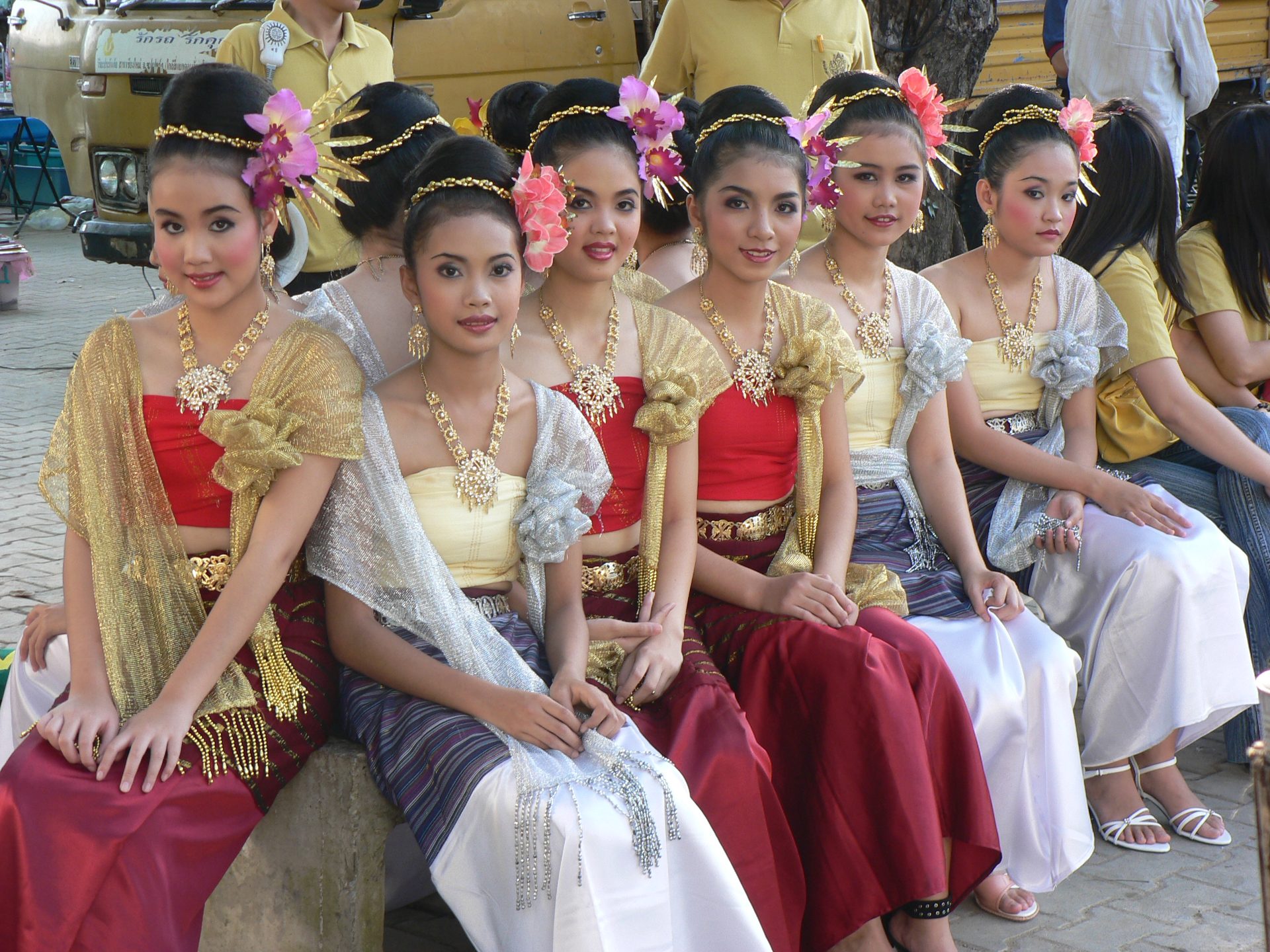
Long before Thailand had a single word for “national dress,” its people were already wrapping, draping, and tying cloth into some of Southeast Asia’s most recognizable silhouettes. Traditional Thai clothing, known collectively as Chut Thai (ชุดไทย), grew out of centuries of trade, royal patronage, and regional adaptation rather than a single design decision. Traditional Thai clothing refers to the traditional styles of dress worn by the Thai people , and it can be worn by men, women, and children alike.
What makes Chut Thai fascinating is how many distinct garments sit under that one umbrella term. A simple wrapped skirt, a diagonal shoulder cloth, a checkered multipurpose scarf, and six formally codified royal gowns all count as traditional Thai clothing, each tied to a different era, region, or social class. This guide walks through 20 of the garments and costume sets that make up that history, from everyday wraps still seen in rural markets to the ceremonial sets worn at state banquets.
1. Chong Kraben
The chong kraben is one of the oldest and most practical garments in Thai dress history. Historically, both Thai males and females dressed themselves with a loincloth wrap called chong kraben , and the garment was worn differently depending on gender and status.
The technique itself involves taking a length of cloth, wrapping it around the waist, then passing one end between the legs and tucking it at the back, which creates a loose, trouser-like silhouette. Men wore their chong kraben to cover the waist to halfway down the thigh, whilst women wore their chong kraben down the waist to well below the knee . This method of wrapping did not originate in Thailand; the sampot chong kben has also been adopted in Thailand and Laos, where it is known as a chong kraben , reflecting a shared Khmer textile heritage across the region.
In daily use, the chong kraben suited farming, walking, and other physical activity far better than a fitted tube skirt. This style was more practical and suitable for everyday wear or activities that required greater movement , which explains why it remained common across both rural and royal households for so long.
Important Note: The chong kraben fell out of everyday fashion during the early twentieth century as Western-style dress spread through Thai society, but it is still worn today for weddings, classical dance performances, and cultural festivals.
2. Pha Nung
Pha nung refers to the broader category of wrapped lower garments that chong kraben belongs to, and the two terms are often used interchangeably in casual conversation. It is a long strip of cloth, described in 1921 by the US vice-consul as “a piece of cotton cloth 3 by 10 feet” , wrapped around the waist and reaching below the knee.
What separates a plain pha nung from a chong kraben is the finishing: a pha nung can simply be wrapped and left hanging, while the chong kraben variation tucks the trailing end between the legs. The garment is normally paired with a sabai or pha hom , a complementary cloth used to cover the upper body, which is why the two pieces are so often discussed together in Thai costume history.
The fabric quality of a pha nung historically signaled social rank. According to the Formal Thai national costume entry, the Pha Nung is a foundational garment with intricate weaving and embroidery which indicates the wearer’s status , and during the Ayutthaya era it was often woven from gold- and silver-threaded fabrics for royal and noble use. This same layered logic of plain cloth for commoners and ornate cloth for royalty shows up across many Southeast and South Asian clothing traditions, where draped fabric rather than tailoring was the original marker of rank.
3. Pha Sin
The pha sin is a tubular skirt rather than a wrapped-and-tucked cloth, and it became the dominant women’s lower garment in the early twentieth century. During the early-1900s, King Chulalongkorn encouraged Thai women to wear long hair instead of traditional short hair, a trend that continued under King Vajiravudh along with wearing pha sin instead of the chong kraben cloth wrap.
Unlike the chong kraben, a pha sin is sewn into a continuous tube, which makes it quicker to put on and gives it a more modest, straight-hanging silhouette. This shift away from loose, trouser-like wraps toward a fitted tube skirt mirrored broader modernization pushes happening across the region at the time, including shifts seen in traditional Chinese dress as both countries balanced local custom against Western fashion pressure.
Today, the pha sin remains the standard lower garment paired with a blouse for everyday formal wear, classical performances, and the more structured Chut Thai sets discussed later in this guide. Regional weaving traditions still produce distinct pha sin patterns, with silk brocade versions associated with northern and northeastern Thailand standing apart from the plainer cotton styles once worn for daily chores.
4. Pha Thung
The pha thung is the most casual member of the wrapped-skirt family, and it is still a familiar sight across Thailand rather than a museum piece. The pha thung is popular in daily life throughout Thailand due to its comfort, ease of wear, and versatility, often used at home, in markets, and even for bathing.
Because it is loose, unfitted, and quick to adjust, the pha thung works for chores, lounging, and even swimming in rivers or canals, roles that a more structured pha sin cannot fill as easily. Pattern and fabric choice vary enormously by region, with checkered cotton versions being the most common for everyday use.
| Garment | Construction | Typical Use |
|---|---|---|
| Chong Kraben | Single cloth wrapped and tucked between the legs | Historic everyday wear, festivals, classical dance |
| Pha Nung | Long cloth wrapped around the waist, left hanging | Formal and ceremonial lower garment, often paired with a sabai |
| Pha Sin | Sewn tube skirt | Everyday formal wear and modern Chut Thai sets |
| Pha Thung | Loose, unfitted wrapped cloth | Household chores, bathing, casual rural wear |
5. Sabai
The sabai is arguably the most photographed piece of traditional Thai dress, instantly recognizable by its diagonal drape across the chest. Sabai, also known as Pha biang, is a traditional Thai shawl-like garment worn by both women and, occasionally, men, typically made of silk and consisting of a long rectangular piece of fabric, approximately one foot wide, draped diagonally across the chest, covering one shoulder, with the end hanging down the back.
The garment carries real historical weight beyond its decorative appearance. While in the past, a sabai could be worn on its own, it is now more commonly layered over a blouse or a shirt for modesty and formality , a shift that tracks closely with Thailand’s broader move toward Western-influenced dress codes in the late nineteenth and early twentieth centuries.
The sabai’s origins are not purely Thai. Historical accounts note that its form and the materials used to create it, such as silk and cotton, were significantly influenced by Indian textiles and fashion such as the sari and dupatta, a connection worth remembering given how much Southeast Asian and Indian clothing traditions share in terms of draped, unstitched fabric. Trade routes through early kingdoms like Dvaravati carried not just textiles but entire techniques of draping cloth across the body.
Key Insight: The sabai’s single-shoulder drape and the Indian sari’s pleated wrap both rely on uncut fabric rather than tailoring, a technique common across South and Southeast Asia before Western-style sewing became widespread.
6. Tabengman
The tabengman belongs to a smaller, less documented category of traditional under-layer cloths once worn beneath outer garments in parts of Thailand. Rather than functioning as outerwear, it acted as a supporting wrap, offering coverage and structure before a sabai, blouse, or outer wrap was added on top.
Garments in this category tend to vary by region and era, since they were rarely the focal point of formal portraits or court records the way the sabai and pha nung were. What survives in costume studies is mostly descriptive: a simple wrapped cloth worn close to the body, functionally similar in spirit to the underlayer pieces found across other wrapped-cloth traditions in mainland Southeast Asia.
Because so few photographed or written records isolate the tabengman specifically, most of what is known about it today comes through its relationship to better-documented pieces like the sabai and suea pat, which were typically layered over it.
7. Suea Pat
The suea pat is a wrap-style jacket that bridges the gap between the bare-shouldered sabai look and a fully tailored blouse. Basic components of the suea pat include a collar, front panels, back panels, sleeves, and tie strings , with tassels sometimes added along the sides.
Material choice reflected both climate and status. Suea pat is traditionally made with indigo-dyed cotton, silk, or velvet , and there are different variations of the suea pat among various Tai-speaking people, meaning the exact cut and decoration differs across Thailand, Laos, and neighboring Tai communities.
In practice, the suea pat was often worn as an underlayer with the sabai draped over it, giving a more modest silhouette for formal or ceremonial settings. Some northern Thai styles pair tailored, collared jackets in a way that echoes the structured outer layers seen in traditional Chinese garments, a resemblance historians attribute to centuries of overland trade and migration between the regions.
8. Banong
The banong, like the tabengman, falls into the category of regional wrap garments with a far thinner historical paper trail than pieces like the sabai or chong kraben. It is generally described as a style of cloth sash or wrap used in specific local or ceremonial contexts rather than as a nationally standardized garment.
Because detailed, well-sourced descriptions of the banong are scarce outside specialist costume archives, it is best understood as part of the same family of wrapped and draped cloths that define so much of pre-modern Thai dress. Rather than being cut and sewn to a fixed pattern, pieces in this category depended heavily on how the wearer chose to fold, twist, or secure the fabric, which is part of why regional variation was so pronounced before standardized sets like the Chut Thai Phraratchaniyom, discussed later, began to formalize national dress.
9. Khrui
The khrui sits firmly in the realm of royal and ceremonial dress rather than everyday wear. In the royal court, royalty and nobility men wore khrui, a light outer garment worn as a gown or robe in certain ceremonial settings , often paired with the lomphok headdress described in the next section.
As an outer layer rather than a base garment, the khrui was typically worn over a chong kraben and other foundational pieces, adding both visual grandeur and a visible marker of court rank. Its loose, robe-like cut bears some resemblance to the ceremonial outer robes found in traditional Japanese dress, where a similarly structured outer layer signals formality and status rather than everyday practicality.
Illustrated manuscripts and early European accounts of the Siamese court frequently depict the khrui alongside other formal regalia, reinforcing how tightly it was bound to ceremony rather than daily life even centuries ago.
10. Lomphok
The lomphok is a distinctive pointed hat rather than a piece of clothing in the strict sense, but it was such a consistent part of formal male court dress that no overview of traditional Thai attire is complete without it. The lomphok is a tall pointed hat, made of white cloth wrapped around a bamboo frame , worn by royalty and nobility in the royal court.
Its construction, white cloth stretched over a bamboo skeleton, made it both lightweight and strikingly tall, a visual cue that helped distinguish high-ranking court officials in formal portraits, murals, and early photographs. The hat was almost always paired with the chong kraben and often the khrui robe, forming a complete ceremonial look rather than standing alone.
Pro Tip: If you are trying to date an old photograph or painting of Siamese court life, the presence of a lomphok is a strong visual clue that the scene depicts formal or royal ceremony rather than everyday dress.
11. Pha Khao Ma
Few garments capture the practicality of traditional Thai textiles better than the pha khao ma. Pha khao ma, or Thai checkered cloth, is a traditional textile widely used all over Thailand , and wherever you travel in the country, the distinctive checkered pattern is hard to miss.
Unlike most garments on this list, the pha khao ma is defined more by its versatility than any single way of wearing it. This rectangular woven cloth, measuring around 75 centimeters wide and 125 centimeters long, has a unique colorful checkered pattern that sets it apart from other traditional textiles . It can be tied as a loincloth, slung over the shoulder as a towel, used as a head covering, or knotted into a makeshift sack.
Regional weaving communities have made the cloth their own over generations. Each province also adds its own creative twist to pha khao ma, resulting in exclusive patterns and colors that reflect the unique preferences of the local communities, with one well-known hundred-color variety woven specifically in Kanchanaburi Province. The closest comparison outside Thailand is the all-purpose checkered or plaid cloth found in traditional Pakistani clothing, where a similar multipurpose scarf serves equally varied everyday functions.
12. Chut Rat Pattane
Chut rat pattane marks a turning point where Western tailoring first entered formal Thai menswear. The name raj pattan comes from a blend of the word raj, meaning “royal,” and the English word “pattern,” adapted into Thai pronunciation, and the resulting outfit became a defining men’s formal look for decades.
This was not a minor fashion update but a deliberate royal initiative. This formal outfit for men was introduced during the reign of King Rama V (1868-1910), a period defined by rapid modernization across Siamese society.
The construction blended a European jacket shape with traditional lower-body dress. It consists of a white Nehru jacket with five buttons, traditionally worn with a chong kraben, knee-length socks, and clothing shoes. That mix of a stiff, buttoned upper jacket paired with a wrapped lower cloth put it in interesting company alongside other colonial-era formal hybrids, including the structured jacket styles that emerged in traditional German dress during roughly the same industrializing era.
13. Suea Phra Ratcha Than
The suea phra ratcha than, literally a “royally bestowed shirt,” grew directly out of the chut rat pattane tradition rather than replacing it outright. It kept the raised, buttoned collar associated with the earlier Nehru-style jacket but simplified the overall construction into a more wearable shirt suited to modern office and ceremonial use.
Its name reflects its original role: garments in this style were historically associated with royal patronage and formal occasions where a lightweight, standing-collar shirt was more practical than a full jacket. Thai civil servants and officials have long worn variations of this mandarin-collar shirt style for government functions, national holidays, and other occasions calling for smart, unmistakably Thai formalwear rather than a Western business suit.
Compared to the stiffer chut rat pattane, the suea phra ratcha than trades some formality for comfort, which is likely why it has had more staying power in everyday professional settings well into the modern era.
14. Sanap Phlao
The sanap phlao represents another of the more regionally specific, lightly documented garments within the broader Chut Thai family. It is generally understood as a style of wrapped or prepared cloth tied to particular ceremonial or regional contexts, following the same unstitched-cloth logic as the pha nung and chong kraben rather than introducing an entirely separate construction method.
As with the tabengman and banong, detailed records distinguishing the sanap phlao from its better-known relatives are limited outside specialist Thai costume scholarship. What ties all of these lesser-documented wraps together is that they represent the everyday, regionally varied reality of Thai dress before the twentieth century, a reality far more fragmented and locally specific than the standardized national costume sets that followed.
15. Chut Thai Chakri
Chut Thai Chakri is widely considered the most formal and recognizable of the modern national dress sets, the one most often shown in tourism materials and royal portraits. The look combines a fitted, often brocade pha sin skirt with a sabai draped diagonally across one shoulder, leaving the other shoulder bare in the style associated with Ayutthaya-era royal dress.
This set belongs to a group Thai cultural institutions describe under the heading of Chut Thai Phraratchaniyom, a set of national costumes developed in the mid-twentieth century under royal patronage to give Thailand a codified, internationally presentable national dress. Chakri is generally reserved for the most prestigious state occasions, including royal banquets and official evening functions, where its sweeping brocade skirt and bare-shoulder drape read as unmistakably ceremonial rather than everyday formal.
16. Chut Thai Chitralada
Chut Thai Chitralada is, by design, the simplest of the national dress sets, intended for daytime wear rather than evening ceremony. It pairs a long-sleeved blouse with a straight, fitted pha sin skirt, skipping the sabai shoulder drape that defines the more formal sets.
The restrained silhouette makes it practical for daytime official functions, morning ceremonies, and situations where a full evening gown would be impractical or overly ornate. Its name references Chitralada Royal Villa, tying the set’s identity to a specific royal residence rather than a historical era or region.
17. Chut Thai Boromphiman
Chut Thai Boromphiman keeps the clean, high-necked silhouette of Chitralada but raises the formality level considerably through fabric choice and fit. The set typically features a fitted, long-sleeved top with a high collar paired with a long, straight skirt, without the diagonal sabai seen in Chakri or Siwalai.
Because it omits the shoulder drape while still using richer fabrics than Chitralada, Boromphiman occupies a middle ground, formal enough for daytime state functions but more understated than the evening-oriented sets that follow. Its name comes from the Boromphiman Mansion within the Grand Palace complex.
18. Chut Thai Siwalai
Chut Thai Siwalai reintroduces the sabai shoulder drape but combines it with a fitted jacket rather than leaving the shoulders bare, creating a look suited to formal daytime or early evening governmental events. The fitted jacket adds structure and coverage that the bare-shoulder Chakri set deliberately avoids.
This combination of structured jacket and draped sabai makes Siwalai a practical choice for diplomatic functions where full ceremonial dress would be excessive but a plain blouse-and-skirt combination would read as too casual. The name references Siwalai Garden within the Grand Palace grounds.
19. Chut Thai Dusit
Chut Thai Dusit shifts toward evening wear, built around a more fitted bodice and a fuller, often more elaborately patterned skirt paired with the sabai drape. The overall silhouette reads closer to a Western-style evening gown than the straighter daytime sets like Chitralada or Boromphiman.
Its styling made it well suited to formal evening receptions and gala-style events where Thailand’s royal family and diplomatic representatives needed dress that read as elegant on an international stage while still remaining unmistakably Thai. The name comes from Dusit Palace, one of Bangkok’s royal residences.
20. Chut Thai Amarin
Chut Thai Amarin ranks among the most ornate of the national dress sets, typically featuring a richly patterned brocade skirt paired with the sabai drape and finished with heavier, more elaborate detailing than Dusit or Siwalai. It was designed for the highest tier of formal state occasions, alongside Chakri.
The set takes its name from the Amarin Winichai Throne Hall, one of the ceremonial halls within the Grand Palace, which signals the level of formality the design was meant to match. Together with Chakri, Amarin represents the upper end of the national dress scale, reserved for state banquets and the most significant royal ceremonies rather than routine official functions.
| Chut Thai Set | Key Features | Typical Occasion |
|---|---|---|
| Chakri | Bare one shoulder, brocade pha sin, sabai drape | State banquets, the most formal royal occasions |
| Chitralada | Long-sleeved blouse, straight skirt, no sabai | Daytime official functions |
| Boromphiman | High collar, fitted long sleeves, straight skirt | Formal daytime state events |
| Siwalai | Fitted jacket with sabai drape | Governmental and diplomatic functions |
| Dusit | Fitted bodice, fuller skirt, sabai drape | Formal evening receptions |
| Amarin | Elaborate brocade skirt, heavy detailing, sabai | State banquets, major royal ceremonies |
Across all 20 of these garments and sets, a clear pattern emerges: Thai dress has always balanced practicality with status, whether that meant choosing a loose chong kraben for farm work or a brocade Chakri set for a royal banquet. Many of these pieces have faded from daily wear in favor of modern Western clothing, a shift one Reddit discussion on Thai fashion described as largely confined to universities, government offices, and cultural events rather than everyday streetwear. Yet the underlying techniques, wrapping rather than tailoring, draping rather than cutting, remain visible every time a pha khao ma gets knotted over a shoulder or a bride chooses a Chakri set for her wedding portraits.
Understanding this range also helps explain why Thai traditional dress draws so many comparisons to its regional neighbors. The shared vocabulary of wrapped skirts and shoulder drapes connects Thai dress to clothing traditions across the wider Asia-Pacific region, even as each culture developed its own distinct names, fabrics, and ceremonial rules around strikingly similar techniques.