Traditional Albanian Clothing: 13 Garments That Define the National Costume

November 18, 2026
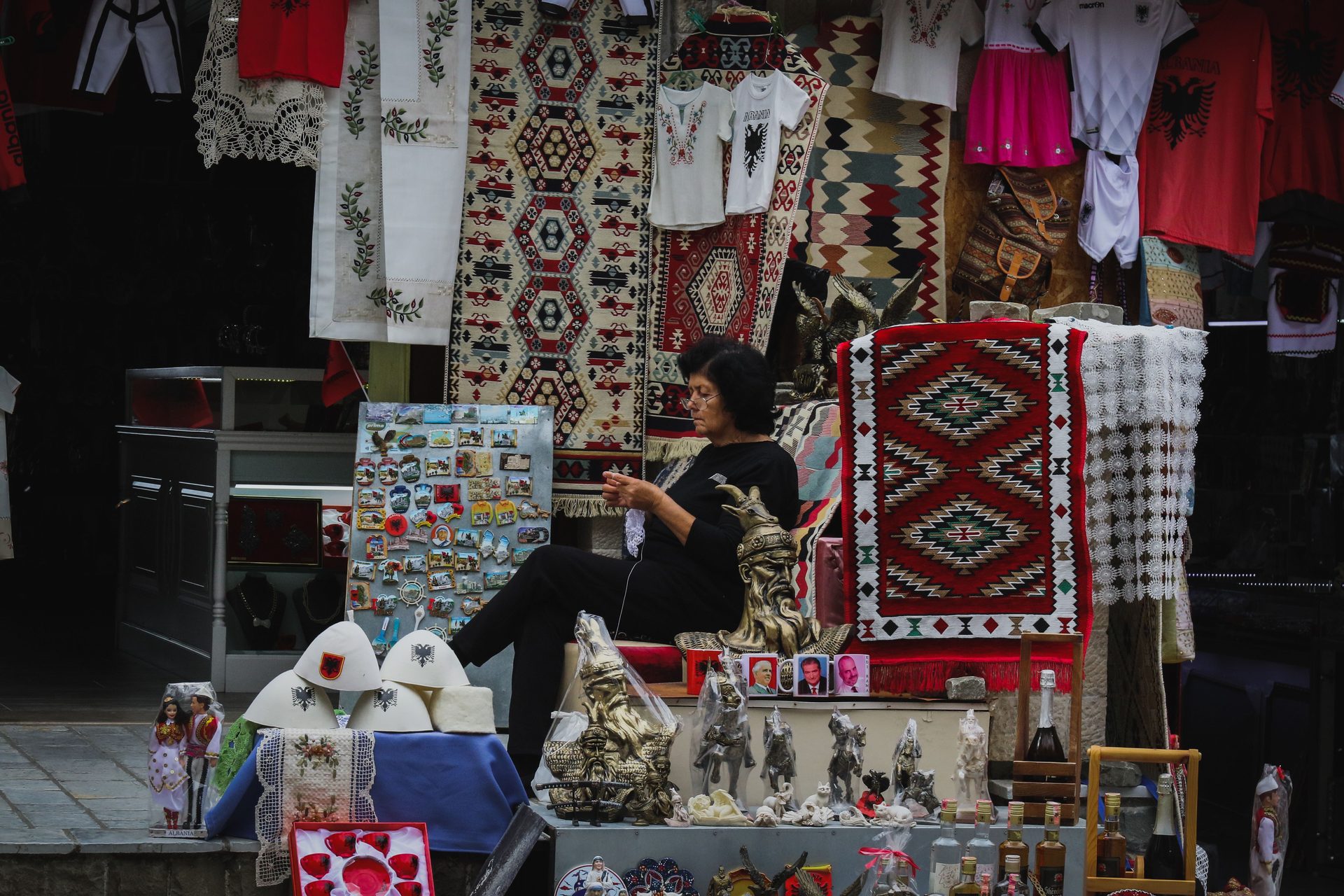
Albania does not have a single national costume so much as a patchwork of regional wardrobes, each one shaped by mountains, trade routes, and centuries of Ottoman, Illyrian, and Balkan influence. A highlander from Mirdita dressed nothing like a farmer from the plains near Myzeqe, and traditional Albanian clothing still reflects that diversity today in festivals, weddings, and folk dance performances.
This guide walks through the 13 garments that make up the backbone of Albanian national dress, from the pleated men’s skirt known as the fustanella to the bell-shaped xhubleta that UNESCO recognized as cultural heritage in 2022. Readers curious about how Albanian food traditions pair with these customs can also check out this guide to traditional Albanian food for additional cultural context.
1. Fustanella
The fustanella is the most recognizable piece of men’s traditional Albanian clothing: a white, pleated, skirt-like garment that falls to around knee length and resembles a kilt. It was historically worn in southern Albania and among Albanian communities in Greece, and the number of pleats in a well-made fustanella was often tied to the wearer’s social standing or military rank.
The garment did not stay confined to Albanian lands. Following Greek independence, the fustanella and its accompanying embroidered vests were adopted by the Greek army and later declared official court dress, which is why the style is sometimes mistaken for a purely Greek invention rather than a shared Albanian-Greek tradition. In Albania, it remains a centerpiece of folk dance troupes and national holiday celebrations.
Pro Tip: If you see a fustanella with dozens of tightly pressed pleats at a festival, it is likely a ceremonial or performance version rather than everyday historical wear, since the pleat count was traditionally a marker of status.
2. Xhubleta
The xhubleta is an undulating, bell-shaped skirt traditionally worn by Albanian women in northern Albania, Kosovo, North Macedonia and Montenegro . Unlike many Balkan folk garments, it has no close equivalent outside Albanian-speaking territory, which is part of why UNESCO singled it out for protection.
In November 2022, the skills and craftsmanship behind the xhubleta were added to UNESCO’s Intangible Cultural Heritage list, specifically the “List in Need of Urgent Safeguarding” category reserved for traditions at risk of disappearing. The garment is built from between 13 to 17 strips of wool and five pieces of felt, hung from the shoulders by two straps , with the bell shape most pronounced at the back.
Color carries meaning: black xhubletas were worn by married women, while white versions signaled unmarried girls. The craft nearly disappeared under state collectivization policies in the mid-20th century, which disrupted wool supplies and the mother-to-daughter teaching process that had kept the skill alive for generations.
Key Insight: The xhubleta’s UNESCO listing in 2022 was specifically an “urgent safeguarding” designation, meaning the craft is formally recognized as at risk, not simply celebrated as heritage.
| Garment | Typically Worn By | Primary Region | Core Material |
|---|---|---|---|
| Fustanella | Men | Southern Albania | Linen or cotton |
| Xhubleta | Women | Northern highlands, Kosovo | Wool and felt |
| Qeleshe | Men | Nationwide, highlands especially | Felted wool |
| Guna | Men (shepherds) | Mountain regions | Heavy wool |
3. Qeleshe
The qeleshe is a white, brimless felt skull cap traditionally worn by Albanians , with its height and exact shape changing from one region to the next. Its name comes from the Albanian word for wool, and the cap is sometimes called plis or qylaf depending on the area.
The cap’s roots reach back further than most Albanian garments. The Swiss scholar Johann Jacob Hofmann described a similar conical cap in his 1689 work Lexicon Universale, comparing it to ancient headwear and calling it the “Pileus Epiroticus seu Albanus,” or the Epirote-Albanian cap. Some historians trace the design even further, to a felt cap worn by the ancient Illyrians , the people most linguists and historians consider ancestral to modern Albanians.
Production was a specialized craft handled by qeleshexhijte, dedicated cap makers who shaped the wool felt over ceramic molds. The style those for Albanians closer to the coast or in central lowlands differs from the taller, blunter caps seen in the northern mountains, which is part of why the qeleshe became a recognized national symbol during the Albanian Renaissance rather than a single fixed design.
4. Tirq
Tirq refers to the tight-fitting woolen trousers worn by Albanian men, usually in white or off-white wool, and they appear alongside the fustanella as one of the two main categories of traditional men’s lower-body clothing. In regions where the fustanella was less common, tirq served as the everyday alternative, cut narrow through the leg and often finished with decorative black braiding or cord along the seams.
The trousers were practical for mountain life, allowing freedom of movement for herding and farm work while still looking sharp enough for formal occasions when paired with a vest and sash. Narrow woolen leg coverings appear across many folk traditions for similar reasons, a pattern also visible in the wide-legged styles found in traditional Pakistani clothing, where climate and daily labor shaped the cut just as strongly.
5. Opinga
Opinga are the traditional handmade shoes worn across much of the Albanian-speaking Balkans, typically crafted from a single piece of raw leather gathered and laced over the foot, sometimes with a slightly upturned toe. They were worn by both men and women and paired with thick woolen socks for insulation in the colder highland regions.
Because they were made at home or by local cobblers rather than imported, opinga varied in exact shape from village to village, but the basic construction method stayed consistent: soften the hide, cut it to the foot’s outline, and lace it tight with leather cord. Handmade leather footwear built this way shows up in folk traditions well beyond the Balkans, including the sturdy boots found in traditional German clothing, where similar practical concerns drove the design.
6. Brez
The brez is a wide woven belt or sash worn around the waist over a shirt or vest, often in bright colors or with metallic thread woven through the fabric. For men, it typically held practical items in place; for women, it cinched the waist of longer dresses and added a decorative splash of color against otherwise muted garments.
A well-made brez in many Albanian regions served more than one purpose:
- Securing a small knife, pouch, or coins during travel or market days
- Marking regional identity through its weave pattern and color choices
- Adding structure to loose-fitting shirts and vests for a more fitted silhouette
- Serving as a visible marker of craftsmanship, since fine weaving indicated the weaver’s skill
The idea of a wide decorative sash marking status and function is not unique to Albania. A comparable role appears in the obi sash central to traditional Japanese clothing, where width, knot style, and pattern likewise communicate social information at a glance.
7. Xhamadan
A xhamadan is a traditional vest worn by Albanian men, and it has one of the widest geographic footprints of any garment on this list. It is worn throughout Albania, in Kosovo, among Albanians in North Macedonia, Albanians in Serbia, Albanians in Montenegro, and in the Arbëresh villages of Italy , making it one of the few garments that stayed remarkably consistent across the Albanian diaspora.
The vest sits over a shirt and under a heavier coat when needed, and it was commonly decorated with black braided trim or embroidery along the edges and buttonholes. Short, fitted vests worn over shirts appear in folk dress well outside the Balkans too, including the embroidered waistcoats found in traditional Chinese clothing, where vest layering served similar practical and decorative purposes.
8. Dzurdin
The dzurdin is a traditional outer garment worn in parts of Albania’s highland regions, generally described as a heavier coat or cloak layered over the shirt and vest for added warmth during colder months. Regional naming for outer layers like this can shift considerably between valleys, so descriptions of the dzurdin sometimes overlap with other heavy wool coats documented under slightly different local names.
Important Note: Documentation on regional outer-layer garments like the dzurdin is less standardized than for widely studied pieces such as the fustanella or xhubleta, since naming and construction details can vary from one highland community to the next.
What stays consistent across these accounts is the garment’s purpose: a practical, insulating layer built from local wool, meant for herders and farmers who spent long hours outdoors in mountain weather rather than for ceremonial display.
9. Çorape
Çorape are the hand-knitted wool socks that complete most traditional Albanian outfits, worn by men and women alike underneath opinga or other footwear. Far from plain, these socks were often knitted with colorful geometric patterns that, like the brez sash, could hint at the wearer’s home region.
Pro Tip: Look at the knitted pattern around the ankle and calf of a pair of çorape at a folk festival; distinctive motifs passed down through families often double as a quiet regional signature.
Knitting these socks by hand was traditionally a skill passed from mother to daughter, much like weaving the brez or constructing the xhubleta, reinforcing how much of Albanian folk dress depended on textile knowledge taught within the household rather than bought ready-made.
10. Guna
The guna is a heavy wool overcoat or cloak worn primarily by shepherds and men working in exposed mountain terrain, built thick enough to shed rain and block wind during long hours outdoors. Some versions included a hood or an extra wide collar that could be pulled up for additional protection.
Because it was a working garment first, the guna tended to be plainer than ceremonial pieces like the fustanella, prioritizing warmth and durability over decoration. Heavy felted wool outerwear built for similar pastoral conditions appears in many cold-climate folk traditions, including some of the wrapped cloaks found in traditional American clothing among frontier and indigenous communities who faced comparable weather demands.
11. Qylafe
Qylafe is the name used in Kosovo for essentially the same white felt skullcap known elsewhere as the qeleshe. In Kosovo the qelesh is called qylaf , and while the core construction stays the same, the exact height and finish can differ slightly from the versions worn in central and southern Albania.
This naming split is a useful reminder that Albanian traditional clothing is not one uniform wardrobe shared equally everywhere. The same essential item can carry two or three different names depending on whether it was documented in Shkodra, Tirana, or Prishtina, which also explains why some sources list qeleshe and qylafe as separate entries even though they describe closely related headwear.
12. Brekushe
Brekushe are a type of traditional trouser or breeches recorded in Albanian folk dress sources as a garment worn by both men and women , distinguishing it from pieces like the xhubleta that were strictly for women. The garment generally sat as an underlayer or lighter alternative to tirq, suited to warmer weather or everyday work rather than formal display.
Because brekushe served a more utilitarian role, it tends to receive less attention in festival photography and folklore writing compared to showier pieces like the fustanella or the embroidered vests worn over it, even though it was just as essential to a complete, practical outfit.
13. Fez
The fez is a red felt cap, often finished with a tassel, that is frequently confused with the white qeleshe but has a distinctly different history and audience. According to the Albanian Folklore project’s research on traditional headwear, the fez came into fashion much later than the qeleshe and was imported from Italy, worn mainly by wealthier town residents rather than rural highlanders.
The contrast between the two caps maps closely onto Albania’s social and geographic divides of the era:
- Qeleshe: white, wool felt, associated with highland shepherds and rural identity
- Fez: red, often tasseled, associated with urban elites and Ottoman-era trade connections
- Qylafe: the Kosovo regional name for the same cap family as the qeleshe
That split between rural wool caps and imported urban headwear echoes a pattern seen in other national dress traditions, where class and geography produced two or more distinct hat styles under one country’s folk costume umbrella, a dynamic also visible in parts of traditional Indian clothing with its regional turban variations.
Taken together, these 13 garments show that Albanian national dress was never a single fixed outfit but a living system that adapted to geography, climate, and social rank. Travelers interested in exploring the food side of this same regional diversity might enjoy this overview of Albanian fruits, which reflects a similar pattern of local produce shaping local tradition. For readers comparing folk dress across cultures more broadly, the clothing and style section offers additional context on how traditional garments evolve alongside modern fashion, and those researching Oceania’s folk traditions may also want to look at traditional Australian clothing for a point of comparison.