Traditional Guatemalan Clothing: 8 Pieces of the Maya Traje Explained

November 18, 2026
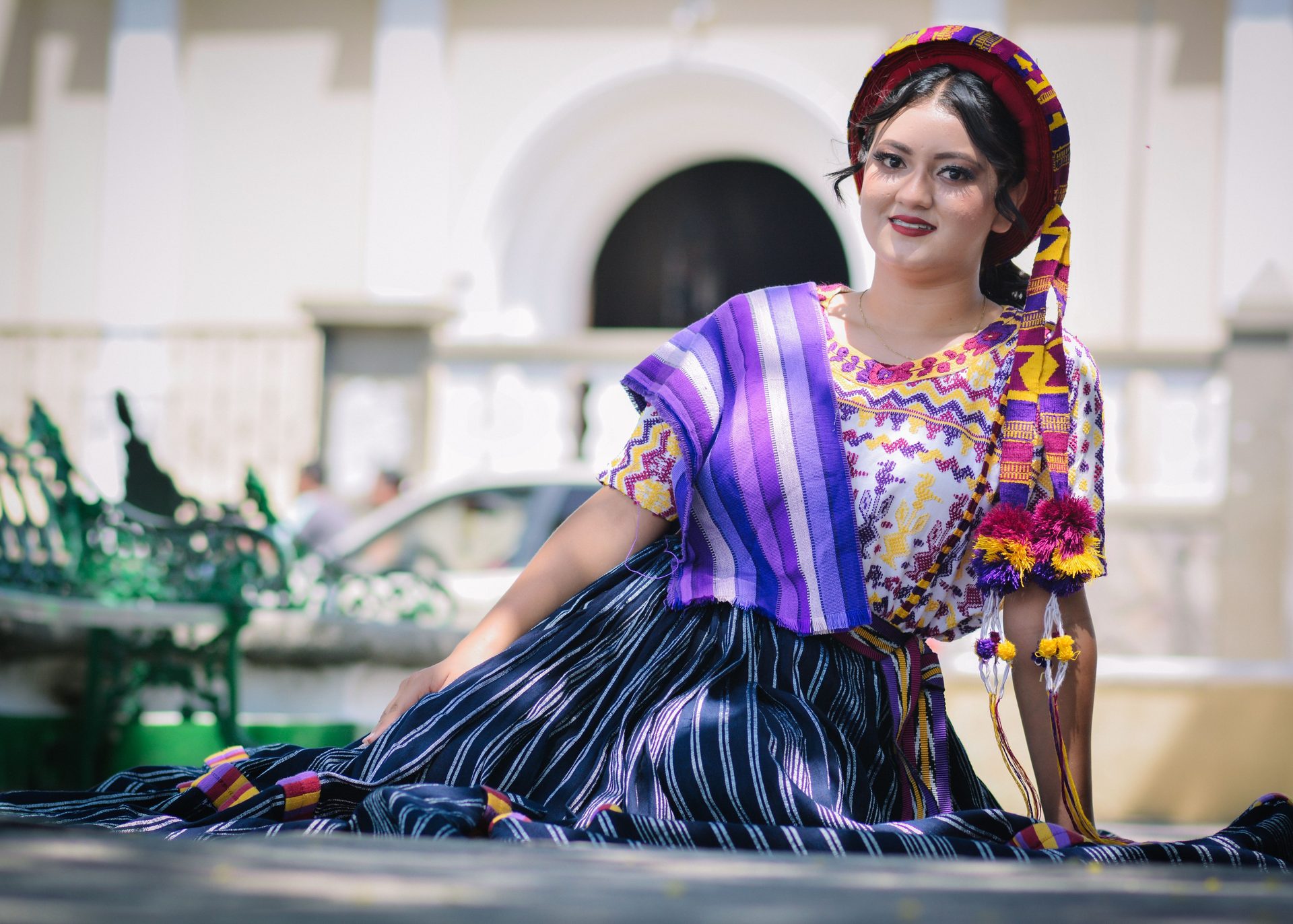
Traditional Guatemalan clothing changes from one town to the next, sometimes within a few miles of the same mountain road. There are more than 800 different styles of indigenous clothing in Guatemala. Pattern, color, and even the way a skirt is folded can tell a stranger exactly which community a woman calls home.
Eight pieces make up the full wardrobe behind this tradition: a handwoven blouse, a wrap skirt, a sash, a multipurpose cloth, two kinds of hair wrap, a woolen overskirt worn by men, and the general term that ties the whole ensemble together. Each one carries its own construction method and regional symbolism. The sections below break down what every piece is called, how it is made, and what it means to the Maya communities who still weave and wear it.
1. Huipil (Blouse)
The huipil is the most recognizable piece of traditional Guatemalan clothing, and it is usually the first garment visitors notice. The word huipil, derived from the Nahuatl huipilli, means “my covering” and refers to a type of blouse used by women throughout meso-America since pre-Hispanic times. It is pronounced “wee-peel,” and the name alone signals how old this tradition is, a point also made by Coe Arts Center’s research on the huipil .
Construction follows a method that predates Spanish contact. Weaving occurs within the home on a traditional waist loom, where one tip is fastened to a tree or pillar and the other fitted behind the kneeling weaver’s waistline. Before colonization, weavers relied on a single local fiber. The cloth was made from the fibers of the upland or Mexican cotton, Gossypium hirsutum, which was also grown, spun, and dyed by the weavers. With the arrival of the Spaniards, new materials such as wool and silk were fused with indigenous fibers.
Pattern and color are never random. In Chimaltenango, one of the main features of the huipil design is wide red stripes around the shoulders, with detailed geometric animal designs woven in. Elsewhere, zigzag motifs carry different meaning entirely: zigzags can represent volcanoes or mountains, or the feathered serpent god Gucumatz, who the Maya believe created humanity. This kind of symbolic weaving has a cousin in traditional Indian clothing, where motif and color also carry specific regional meaning.
Pro Tip: Check the neckline and collar trim first. These two details change more between villages than almost any other part of the huipil, making them one of the fastest ways to guess where a piece was woven.
2. Corte (Skirt/wraparound)
The corte pairs with the huipil to complete the lower half of the outfit. It is a traditional skirt, woven on a floor loom today, made from a length of fabric folded around the waist and secured with a belt. Historically, the fabric came from a very specific dye process.
The corte is an indigo-dyed wrap skirt, and its seams are traditionally embroidered with an intricate floral or geometric pattern called randa, a detail covered in Caravan Tours’ overview of Guatemalan traje . The randa is not purely decorative; it also conceals the seam where two panels of hand-loomed fabric are joined.
Quality and price vary by region and technique, with hand-embroidered cortes generally commanding more value than those woven entirely on a foot loom. A similar regional pride in weaving skill shows up in traditional Chinese clothing, where hand embroidery versus machine work often marks the line between everyday and ceremonial garments.
3. Faja (Belt/sash)
The faja holds the whole lower half of the outfit together. It is the handwoven belt used to secure a corte to the waist, as noted in Thread Caravan’s glossary of Guatemalan textiles . Despite its practical job, the faja is rarely plain.
The faja is a decorative belt or sash that keeps the corte in place, and weavers traditionally create it in black with white stripes to represent the Milky Way. That cosmological reference places the wearer under the night sky every time the belt is tied. A faja is a striped fabric belt tied at the waist of the outfit, and many traditional Mayan cultures use black and white for the faja to represent the night sky, or humanity’s place in the universe.
Men wear a faja too, though theirs secures a shirt and trousers rather than a skirt. This sash-as-belt concept shows up widely in traditional dress worldwide; it plays a similar structural role in traditional Japanese clothing, where the obi performs almost the same securing function for a kimono.
4. Tzute (Multi-Purpose Cloth, Headwrap/baby Carrier)
No piece of traditional Guatemalan clothing does more jobs than the tzute. Tzutes are flat handwoven cloths used for both ceremonial and utilitarian purposes by native Guatemalans. The same cloth might cover a market basket in the morning and wrap a sleeping baby by afternoon.
It functions as a multipurpose cloth used to shield the head from the sun, tie up food or a baby, or serve as a mat to sit on. Men and women use it differently: ceremonial tzutes worn by men in Mayan religious ceremonies are wrapped around the head similar to a kerchief and tied in the back, a style documented by Las Manos Magicas’ survey of Guatemalan tzutes and cintas .
In the Lake Atitlán area, the cloth takes on a local name. Women in the Sololá department use a tzute on the head, also called ixcaco, a piece of cloth they make by hand themselves as part of a very old custom. One textile serving several household functions is a practice echoed in traditional German clothing, where aprons and headscarves historically did double duty as both garment and tool.
5. Cinta (Headband)
The cinta is a hair accessory with more cultural weight than its small size suggests. A cinta is a traditional Maya hair ribbon worn by indigenous Guatemalan women, typically wrapped around the crown of the head or woven into braids. It is one of the simplest pieces of the traje to put on, yet one of the most varied in style.
Some regions attach specific cosmology to the ribbon. In certain regions it carries cosmological meaning, representing Kukulkán, the Feathered Serpent, connecting a daily hair accessory to a central figure in Maya mythology. Naming also shifts from town to town: in Chichicastenango, people call this piece a cinta, or ribbon, while neighboring villages sometimes use a different word for a nearly identical item.
Decoration ranges from understated to elaborate. A cinta can be worn in different ways depending on the village, and some are plain while others are embellished with glitter, more elaborate designs, tassels, or pom-poms. This kind of regional headwear variation has a close parallel in traditional Pakistani clothing, where head coverings similarly shift in style and ornamentation by province.
6. Tocoyal (Head Ribbon)
The tocoyal is a longer, more structural relative of the cinta. It is a headdress that serves multiple purposes and is most commonly associated with the traje of the women of Santiago Atitlán. Rather than a short ribbon, it is a long woven band wound around the head repeatedly.
The tocoyal is wrapped around a woman’s head and looks very much like a hat but without a crown. Length carries personal meaning. The length of the tocoyal represents the length and fullness of the wearer’s life, and an older woman may wear a tocoyal that is 20 meters long, according to Trama Textiles’ research on Maya hair traditions . A young woman’s tocoyal is shorter simply because she has not lived as long.
Important Note: Terminology for Maya headwear is not standardized across Guatemala. The same basic item may be called a tocoyal in one village and a cinta in another, so descriptions found in different sources can look contradictory when they are really just describing local naming differences.
The symbolic weight placed on hair-wrap length and craftsmanship has an echo in traditional Australian clothing, where some Indigenous ceremonial items similarly encode personal and community status through material and construction rather than words.
7. Rodillera (Woolen Wrap for Men)
The rodillera is one of the few pieces of men’s traditional Guatemalan clothing still worn regularly in parts of the western highlands. In communities such as Sololá and Nahualá, men traditionally wear a heavy black wool wraparound garment over their trousers, styled like a short overskirt and held in place with a leather or woven belt. The dense, undyed wool offers real warmth in a region where highland temperatures drop sharply after dark.
The color itself is practical rather than symbolic in most communities. It reflects the natural tone of local sheep’s wool rather than the dyed brightness seen in huipiles and cortes. Men typically pair the rodillera with a woven camisa shirt and a faja at the waist, continuing the shared vocabulary of sashes and wraps found throughout the ensemble.
Important Note: Terminology varies by source. One overview of Guatemalan traditional clothing for men lists a camisa (shirt), rodilleras (short pants), and a faja (woven belt) as the core pieces, using “rodillera” for trousers rather than a woolen overskirt. Readers researching this garment should expect the exact meaning to shift from one regional account to the next.
Similar ambiguity in regional terminology for men’s traditional garments appears in traditional American clothing, where names for older, region-specific garments often vary even when describing nearly identical items.
8. Traje (General Term for Traditional Dress Ensemble)
Traje is the umbrella term that ties every piece above into a single word. Trajes are traditional clothing ensembles designed and worn by Mayan women in Mexico, Guatemala, and Belize. The word itself is simply Spanish for “suit” or “dress,” but in the Guatemalan highlands it carries far more cultural weight than that translation suggests.
Wearing traje has never been just about aesthetics. Wearing traje tipico has long been encouraged by prominent Indigenous women, such as Rigoberta Menchú, who wore her traje when she received her Nobel Peace Prize in 1992, bringing her culture to the world stage, a moment documented by Nuya’s overview of indigenous clothing in Guatemala . That choice turned a daily garment into an international statement of Maya identity.
| Garment | Worn By | Primary Function |
|---|---|---|
| Huipil | Women | Blouse or tunic |
| Corte | Women | Wraparound skirt |
| Faja | Women and men | Sash or belt |
| Tzute | Women and men | Multipurpose cloth |
| Cinta | Women | Hair ribbon or headband |
| Tocoyal | Women | Long head wrap |
| Rodillera | Men | Woolen overskirt |
| Traje | Women and men | Full ensemble term |
Today, traje is sustained mostly by women. Traditional Guatemalan clothing for men and women differed, and men do not practice the traditional backloom weaving the outfits are made with; instead, women keep the practice alive. That is one reason most of the pieces in the table above, aside from the rodillera and faja, are specifically women’s garments. Readers comparing how other cultures organize a full traditional outfit around a single umbrella term may find useful context in this broader look at traditional clothing styles from around the world.
Traditional Guatemalan clothing is not a costume reserved for festivals. In many highland communities, it is everyday wear that happens to carry centuries of symbolism in its thread count, dye, and fold. From the handwoven huipil to the woolen rodillera, every piece answers a practical need while quietly marking out community, status, and personal history, which is exactly why the traje remains one of the most studied and respected dress traditions in the Americas.