16 Pieces of Traditional Khmer Clothing That Define Cambodian Culture

November 17, 2026
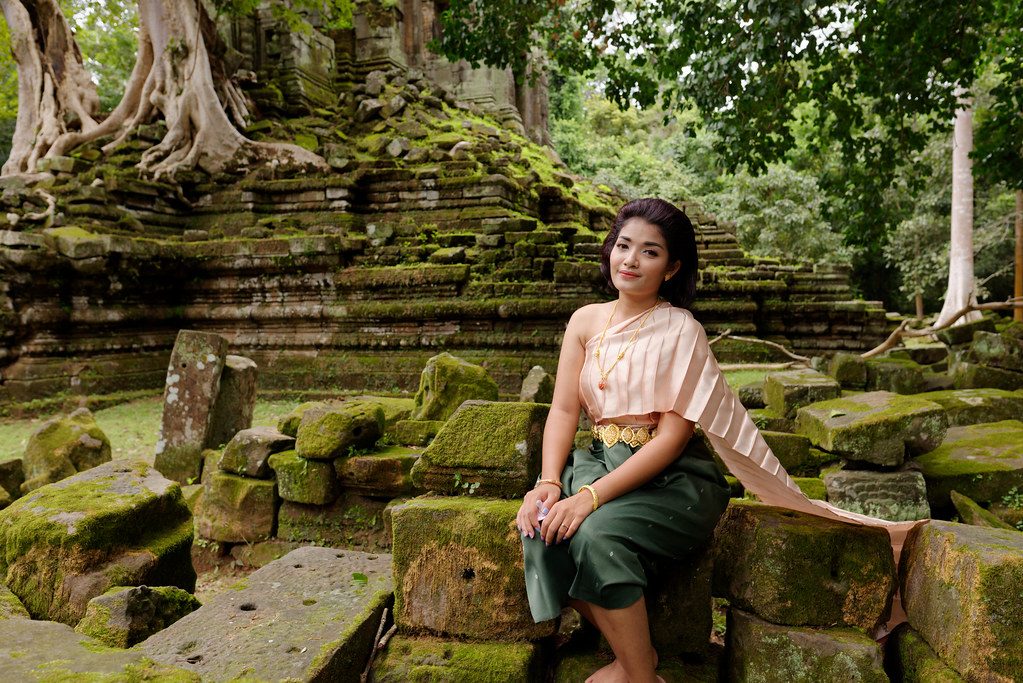
Long before Angkor Wat rose from the Cambodian jungle, Khmer weavers were already wrapping cloth around the body in ways that still shape Cambodian dress. A third-century Chinese envoy to the kingdom of Funan noted the custom directly: Kang Tai and Zhu Ying, a third-century Chinese envoy to Funan, reported that the people were “naked” with women wearing only “tube-shaped” cloth.
That tube-shaped cloth became the sampot, and traditional Khmer clothing has been built around it ever since. From the royal court silks of the Angkor era to the everyday cotton krama scarf, each garment in Cambodia’s wardrobe carries its own name, weaving technique, and social meaning. This guide walks through sixteen of the most important pieces, from the national sampot down to the ceremonial mokot crown.
1. Sampot
The sampot is the foundation of traditional Khmer clothing, and it is not a tailored garment at all. In Cambodia, the sampot (សំពត់) is an uncut length of fabric, usually in silk or silk-like material, approximately one metre wide and up to two metres and a half long. It is wrapped, folded, or knotted around the lower body rather than cut and sewn into a fitted shape.
The sampot dates back to the Funan era, making it one of the oldest continuously worn garment forms in Southeast Asia. Scholars studying the garment’s many regional variations have drawn direct comparisons to South Asian dress: it is acceptable to contend that the Khmer sampot chong kben corresponds to the dhoti, the sampot samluy fashioned with bunched pleats corresponds to the sari, and the knotted version of the sampot corresponds to the lunghi. Readers curious about those South Asian counterparts can compare them directly in this overview of traditional Indian clothing.
Pro Tip: The word “sampot” describes the cloth itself, not a single style. How it is folded, knotted, or pleated determines which of the specific garments below it becomes.
2. Sampot Chong Kben
Sampot chong kben is the most structured way of wearing the sampot, and it is worn by both men and women. Sompot chong kben is a unisex lower-body wraparound garment. It originated in ancient Cambodia and was later adopted in neighbouring countries including Laos and Thailand, where it became known locally under different names.
The wrapping process is distinctive: it is worn by wrapping it around the waist, stretching it away from the body and twisting the knot. The knot is then pulled between the legs and held by a metal belt. The name itself describes the technique, since in Khmer, “chong” means the area of cloth that’s twisted into a bunch, and “kben” is the bunch’s role in concealing “private parts.” Scholars conclude it can be contended that the Khmer chong kben corresponds to the dhoti worn in the Indian subcontinent.
Chong kben was once far more than special-occasion wear. Sampot chang kben was the preferred choice of clothing for women of upper and middle classes for daily wear. This practice of daily wear died out in the beginning of the twentieth century. Today it survives mainly for weddings, festivals, and classical dance, and the same draped-trouser silhouette appears in neighboring Thai court dress as chong kraben.
3. Sampot Samloy
Where chong kben is pulled between the legs like trousers, sampot samloy stays a simple wrapped skirt. Sampot chong samloy is a draped sampot tied in a free-hanging, “wraparound skirt” or “tube skirt” style, as opposed to pants-like chong kben. Sampot samloy is depicted in Khmer sculpture going all the way back to Funan, and often feature pleats and folds.
The style has become lighter and more feminine over time. Today the samluy, a thinner sampot than that of the chong kben, is worn mostly by women, and one fashion writer studying the garment describes it simply: the sampot samloy is a narrower piece of cloth worn as a wraparound skirt by women. A variant called sampot bot secures the fabric with a flat fold along the side rather than a front knot, a change some historians link to Western influence on Cambodian dress during the colonial period.
4. Sampot Hol
Sampot hol is the garment most associated with Cambodia’s ikat weaving tradition. There are two kinds of sampot hol, one is a wrapping skirt that uses a technique called chong kiet and twill weave. Influenced by the Indian patola, it developed patterns and techniques over the centuries to become a genuine Khmer art style.
The weaving process itself is painstaking. Sampot hol is associated with Cambodia’s highly skilled hol weaving tradition, a form of resist-dyeing commonly described as ikat. Threads are carefully dyed before weaving, allowing intricate patterns to emerge as the textile is created. The result is a textile catalog of its own: the sampot hol has over 200 patterns combined with three to five colors, yellow, red, brown, blue, and green.
Hol silk also carried diplomatic weight. When Siam sent gifts to the United States in the 1850s, the finest pieces included Khmer work: King Mongkut and his Second King Phra Pin Klao presented US President Franklin Pierce three woven pairs of Khmer silk sampot chong kben of hol variety, in addition to “a similarly-patterned silk shoulder cloth.” A Thai king himself ranked the imported Khmer silk above his own country’s weaving for that gift, underscoring how prized hol technique already was across the region. Readers interested in how other Asian courts used silk for status can see a parallel in traditional Japanese clothing, where formal kimono weaving carries similar ceremonial weight.
5. Sampot Anlonh
Sampot anlonh belongs to the family of named weaving patterns produced within Cambodia’s phamuong textile tradition. Khmer weavers catalog phamuong silk by its decorative motif, and anlonh is one of several recognized styles alongside others: these patterns are divided into some variations such as chorcung, kaneiv, rabak, bantok, and anlounh.
Important Note: Documentation distinguishing sampot anlonh’s specific motif from its sibling phamuong patterns is limited in English-language sources. It is best understood as one named variation within the broader phamuong weaving family rather than a fully separate garment category.
6. Sampot Charobab
Sampot charobab, also spelled sarabap, is among the most luxurious sampot fabrics woven in Cambodia. One fashion of sampot chang samluy involves the textile sarabap (also charobab), a brocaded silk with gold and silver thread worn by Khmer ballerinas, royalty, and for formal occasions.
The fabric’s most elaborate fold is reserved for the most significant life events. Female roles in Khmer ballet, as well as brides on their wedding day, may wear sampot sarabap ka’at kbal neak (“folded like the head of naga”), referring to how the draped bundle of folded pleats look like a naga’s head. The naga, a mythical serpent central to Khmer royal symbolism, gives the style its name and its ceremonial status.
7. Sampot Tep Apsara
Sampot tep apsara connects directly to the carved art of the Angkor Empire. Sampot tep apsara is a type of sampot from the Khmer Empire era associated with courtly apsaras. Its depiction can still be seen on the bas-reliefs of Angkor Wat.
The garment is built from a distinctive double-knot technique. Generally, the sampot tep apsara is both knotted at the waist and secured with a belt. Long pleats are gathered at the front, running the full length to the wearer’s ankles. The sampot tep apsara is actually knotted twice at the waist, one on the left and one on the right; the left knot is longer, while the right knot is more decorative. Today, the sampot tep apsara is worn by traditional dancers in modern Cambodia, keeping the Angkor-era silhouette alive on stage.
8. Phamuong
Phamuong is frequently called the most prestigious of all Khmer silks. Phamoung is often dubbed the “king of Cambodian silks,” prized for its opulence. This heavy, gold silk textile is lavishly patterned, with up to 22 different colors making up its complex designs. Often used in ceremonies, Phamoung is a fabric reserved for occasions of grandeur, including traditional weddings, royal ceremonies, or significant religious festivals.
The weaving technique itself is twill, and the color range is extensive: sampot phamoung is a very popular weaving fabric from Cambodia, and on the sampot phamuong there are 52 different colors used, twill weaved on the surface. Among its variants, the Phamuong Chorabap is a luxurious fabric using up to 22 needles to create, and yellow silk, the main material for a phamuong, is the most famous silken satin in the Kingdom of Cambodia due to its excellent quality. Readers comparing silk traditions across the region may also find it useful to browse traditional Chinese clothing, where silk brocade carries a similarly elevated status.
| Sampot Style | Weaving Technique | Typical Occasion |
|---|---|---|
| Sampot hol | Ikat (chong kiet) resist-dyeing | Ceremonies, formal wear |
| Phamuong | Twill, solid or multi-color | Weddings, royal ceremonies |
| Sampot charobab | Brocade with gold and silver thread | Royal events, ballet, weddings |
| Sampot chong kben | Plain or patterned weave, wrapped as trousers | Daily wear (historic), festivals (today) |
9. Krama
The krama is the most recognizable everyday textile in Cambodia, a checkered cotton scarf that has little in common with the silk ceremonial garments above. Unlike phamuong or charobab, the krama is woven for durability rather than display, and it is worn by farmers, market vendors, and city dwellers alike across the country.
Its versatility is part of its identity. A single krama can serve as a head covering against the sun, a sling for carrying produce or infants, a towel, or a sash tied around the waist. Where the ceremonial sampot styles mark class and occasion, the krama represents the practical, shared side of traditional Khmer clothing that cuts across social lines.
10. Sbai
The sbai is a shoulder cloth traditionally worn alongside a sampot rather than as a standalone garment. Historical photographs document the pairing directly: Khmer royal ladies wore sompot chong kben and sbai in the mid-1800s. It is typically draped diagonally across one shoulder and the chest, leaving the other shoulder bare in formal settings.
The sbai’s prestige was recognized well beyond Cambodia’s borders. When Siam’s royal court sent gifts to the American president in the 1850s, the silk pieces included a similarly-patterned silk shoulder cloth alongside the woven sampot. In both construction and function, the sbai plays a role comparable to the dupatta found in traditional Indian clothing, draped for modesty and ceremony rather than warmth.
11. Sarong Kor
Sarong kor refers to a simpler, seamless wraparound skirt style within the broader sampot family, worn without the elaborate knotting of chong kben or the diagonal draping of chong samloy. It is generally associated with everyday or lightly formal wear rather than royal or ceremonial settings.
Important Note: English-language documentation of sarong kor as a distinct named style is limited compared to better-documented forms like sampot hol or phamuong. It is best understood as part of the broader wrapped-skirt tradition rather than a separately codified ceremonial garment.
12. Av Pay
In Khmer, “av” is the general word for a blouse or shirt, and av pay describes one of the fitted blouse styles traditionally paired with a sampot for the upper body. These blouses are typically close-fitting through the waist, buttoned at the front, and made to complement the drape and color of the sampot worn beneath.
Blouse styles like av pay historically signaled social standing alongside the sampot itself, since fabric quality and fit varied by class in earlier centuries. Today, such blouses appear mainly at weddings, cultural performances, and formal portraits rather than daily wear.
13. Av Ko Trung
Av ko trung is another traditional Khmer blouse style, generally cut with a more structured collar and fitted bodice than everyday tops. It is commonly worn for formal or ceremonial occasions, paired with one of the dressier sampot styles such as phamuong or charobab.
As with other named av styles, the precise construction details of av ko trung vary somewhat by region and era, reflecting the broader pattern seen across Khmer blouse traditions where regional tailoring shaped small but meaningful differences in fit and decoration.
14. Av Bampong
Av bampong is a further variation within the Khmer blouse tradition, typically associated with wedding attire and other milestone ceremonies. Like av pay and av ko trung, it is worn above a wrapped sampot rather than as a standalone piece, completing the two-part structure common to most formal Khmer outfits.
Together, these three blouse styles illustrate a consistent principle in traditional Khmer clothing: the sampot defines the lower body, while the av defines the upper body, and the specific pairing of the two signals the occasion, the era, and sometimes the wearer’s social position.
15. Sava
The sava is one of the oldest documented accessories in Khmer dress history, predating many of the sampot styles above. During the Chenla era, from 550 to 802, garments were not all that different from those popular in the Funan era, but the sampot evolved in new directions, and noble women added a band of beads called a sava.
As a beaded band rather than a woven textile, the sava marks an early example of jewelry functioning as a marker of status alongside clothing in Khmer court dress, a pattern that continued through later eras with gold accessories and crowns.
16. Mokot
The mokot is the ceremonial crown associated with Khmer royalty, classical dance, and wedding costume. Tiered and often gold or gilded, its tapering form echoes the spired towers of Angkor-era temple architecture, linking the wearer visually to the same courtly world depicted in the Angkor Wat bas-reliefs that preserve garments like sampot tep apsara.
In modern Cambodia, the mokot survives mainly in two contexts: classical Apsara dance performances, where it completes the dancer’s full costume, and traditional weddings, where brides and grooms may wear a simplified version during specific ceremonial moments. Both uses connect directly back to the royal court traditions described throughout this guide.
Traditional Khmer clothing is not a single garment but an entire vocabulary, built from the uncut sampot, named weaving techniques like hol and phamuong, companion pieces like the sbai and krama, and accessories like the sava and mokot. Each piece carried specific meaning tied to class, occasion, and era, and many survive today in weddings, classical dance, and cultural festivals even after daily wear shifted toward Western-style clothing in the twentieth century. For readers exploring how other cultures built similarly layered dress traditions, the overviews of traditional clothing styles on this site offer a useful starting point for comparison.