Traditional Belgian Clothing: Barada, Bleu Sårot, Apertintaille, and Sabots

November 17, 2026
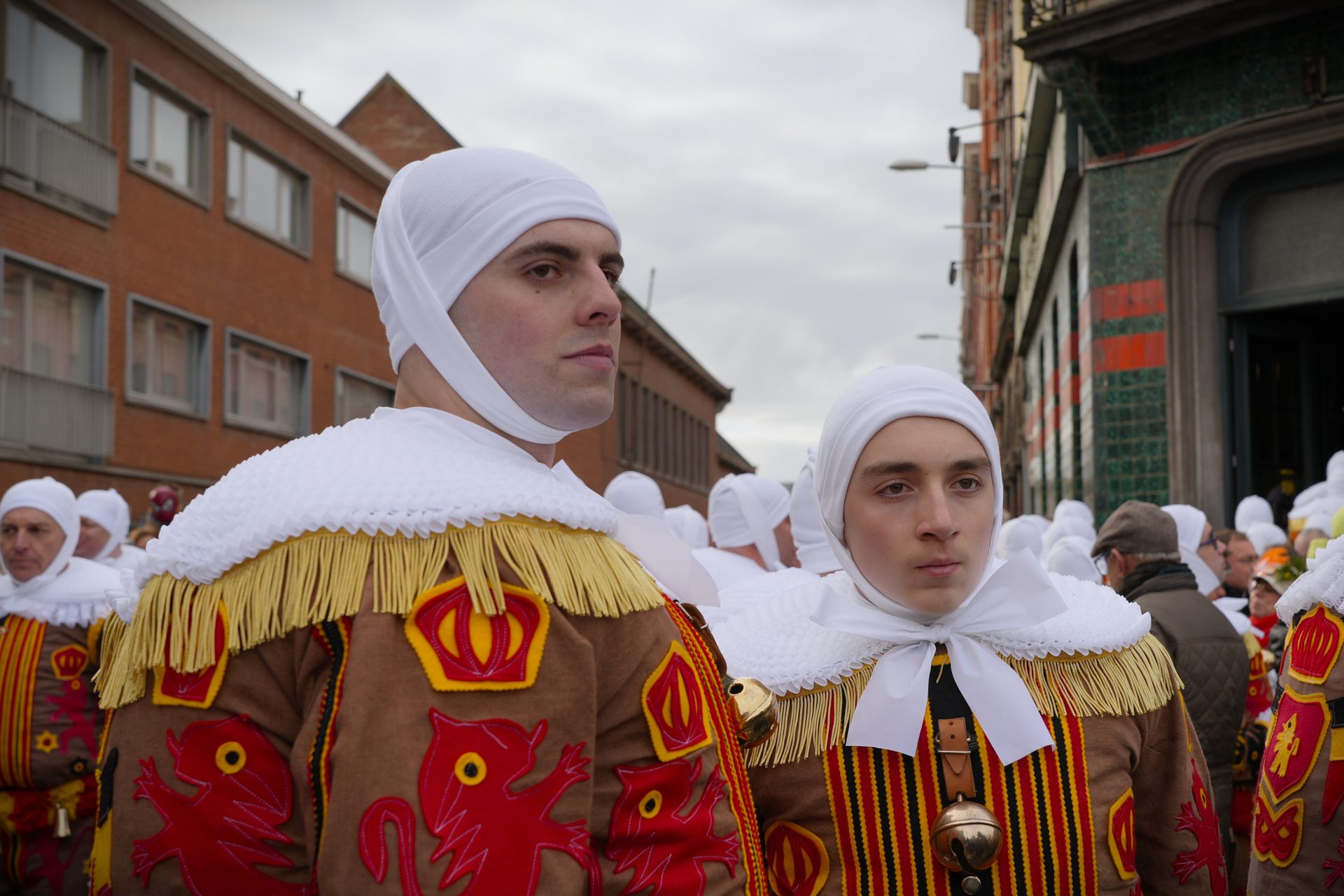
Belgium has no single national dress the way Scotland has the kilt or Japan has the kimono — Belgium does not have a single national costume in the way that Scotland has the kilt or Japan has the kimono . Instead, traditional Belgian clothing survives as a patchwork of regional garments, shaped by the country’s split between Dutch-speaking Flanders and French-speaking Wallonia. As one costume archive notes, Belgium’s traditional dress is regionally diverse, with distinct characteristics in Flanders and Wallonia, though both share quality fabrics, embroidery, and craftsmanship rooted in local identity. Four garments in particular capture that diversity: the Barada headdress, the indigo Bleu sårot smock, the fitted Apertintaille bodice, and the carved wooden Sabots. Each piece tells a different story about farm life, craft work, and festival tradition in the Low Countries. You can still find traces of all four at folklore events and heritage museums across the country, even though Belgian traditional clothing is nowadays only worn on special occasions, i.e. festivals or special celebrations . For readers exploring how other cultures define everyday dress, the broader clothing traditions found around the world offer useful points of comparison to what follows below.
1. Barada
The Barada belongs to the headwear side of Belgian regional dress — the caps, bonnets, and lace headpieces that once signaled a woman’s village, marital status, or working role at a glance. Belgian traditional clothing experts group these pieces under the broader umbrella of regional costume, noting that Belgian traditional clothing covers three main threads: the Flemish klederdracht with its lace headdresses and farmer’s caps, the Walloon costume shaped by French occupation, and the Gilles of Binche that anchors the national carnival identity .
In Wallonia specifically, the everyday version of this headwear was kept simple. The typical Walloon woman’s working outfit paired a printed cotton skirt and laced bodice with a simple white bonnet or a straw hat for outdoor work. Names for these caps varied from village to village, and Barada appears to be one of several local terms used within that tradition for a woman’s starched or lace-edged cap.
Important Note: Hyper-local garment names like Barada are often preserved only in regional dialect records or museum archives rather than standardized costume histories. Readers researching a specific village tradition should consult a regional folklore museum or textile archive for the most precise terminology.
What is well documented is the broader pattern these caps belonged to: smocks and headwear that marked regional identity through color and pattern rather than written labels. Smocks and head coverings often carried colors and patterns that showed where the wearer was from, a visual shorthand that reflected the wearer’s regional culture rather than personal taste. This same logic — dress as a quiet marker of home village — shows up in other folk traditions too, including the layered regional variations found in traditional German clothing just across Belgium’s eastern border.
2. Bleu Sårot
The Bleu sårot is the most recognizable piece of traditional Belgian clothing to survive into the modern era. It is a dark indigo smock-frock, and Wikipedia’s reference entry on rural smocks states plainly that Walloon bleu sårot is a dark blue smock worn by men in parts of Belgium as part of national dress . The garment sits generously around the body, falling to roughly knee length, and was traditionally cut from heavy linen.
Museum records trace a specific surviving example to the 1820s. A dark blue work blouse held in the Royal Military Museum’s collection is described as sitting generously around the body and coming down to the knees, made of linen with mother-of-pearl buttons, produced sometime between 1825 and 1830, just before the Belgian Revolution. That timing matters: in the 19th century, craftsmen, farmers, and painters across the region wore blue smocks as their default work outfit, and in Belgium the garment moved from everyday workwear into revolutionary symbolism, becoming part of the compulsory Civic Guard uniform during the kingdom’s first decade. The French-origin name reflects its function. The French dictionary Le Robert defines the related French word “sarrau” simply as a “Blouse de travail en grosse toile, courte et ample” — a short, loose work blouse made of coarse cloth, confirming the smock’s working-class origins rather than any ceremonial start.
The Bleu sårot also lives on as a folklore costume rather than just a museum piece. In Liège, the smock is the signature garment of Tchantchès, a well-known puppet character who personifies the city’s stubborn, festive local spirit, while in Brussels the giant figure called Bompa wears a blue smock at the traditional Meyboom tree-planting celebration every year. The indigo dyeing tradition behind the smock has a near-equivalent on the other side of the world, in the deep blue textiles that define parts of traditional Japanese clothing, where natural indigo similarly marked working-class, rural dress for generations.
| Region | Garment Equivalent | Primary Material | Typical Wearer |
|---|---|---|---|
| Wallonia | Bleu sårot (blue smock) | Indigo-dyed linen | Men, farm and craft workers |
| Flanders | Kiel (smock) | Blue or grey wool/cotton | Men, farm laborers over a suit |
| Both regions | Sabots / Klompen | Carved willow or poplar wood | Farm workers, both sexes |
3. Apertintaille
The Apertintaille belongs to a different category of traditional Belgian clothing: the fitted, waist-shaping bodices worn by women over a blouse or chemise. Belgian klederdracht generally paired a long dark skirt with a fitted bodice over a white linen blouse, and the Apertintaille represents the more tailored, corset-like end of that pairing — a garment built specifically to shape and narrow the waistline rather than simply cover it.
The closest documented relative of this style is a dress Belgian costume researchers call the Eponin. Descriptions of the Eponin note that it was a slimming dress with a narrow waist, stitched with fully lined cotton twill, and finished with a square neck and matching trim. Crucially, each side of the Eponin was laced up with grommets, which gave the wearer the ability to adjust the fit at the waist — the exact mechanism that waist-focused bodices like the Apertintaille relied on to achieve their fitted silhouette.
Pro Tip: If you come across a laced, grommet-sided bodice in a Belgian costume collection, check the neckline first. A square neck with matching trim is one of the clearest identifying features linking it to this waist-cinching family of garments rather than a looser, everyday blouse.
This kind of structured, laced bodywear is far from unique to Belgium. Similar fitted vests and bodices appear across traditional Indian clothing in the form of the choli, and comparable laced or fitted vests also show up in traditional Pakistani clothing, where regional tailoring likewise uses the waist as a focal point of the silhouette. What sets the Belgian version apart is its pairing with the heavier wool and linen fabrics suited to a colder, farm-based climate rather than the lighter textiles common in South Asian dress.
4. Sabots
No piece of traditional Belgian clothing is more immediately recognizable than the wooden clog, known as the sabot in Wallonia and the klomp in Flanders. These were made from carved blocks of wood — often willow or poplar — that protected feet from mud, cold, and heavy labor in farming and workshops. Belgian sabots and klompen were typically left unpainted, sturdy, and shaped purely for daily use rather than decoration.
Clogs were not a regional quirk confined to one half of the country; they were the default farm footwear everywhere. Wooden clogs were universal for farm work in both Flanders and Wallonia, worn with wool trousers or skirts, linen shirts, and aprons regardless of which language the wearer spoke at home. The industry behind them was substantial for a time: Belgium’s clog industry reached its peak in the 1880s, with several hundred carvers working across both regions. That peak did not last. The craft declined rapidly after the First World War as leather boots became affordable and farms mechanized, and today fewer than twenty traditional clog makers remain active in Belgium, most of them working for heritage sites, folklore groups, and the Gilles of Binche carnival.
Footwear carved for hard labor rather than fashion is a recurring theme in folk dress worldwide. Comparable wood or hard-soled traditional footwear shows up in various forms within traditional Chinese clothing and in the practical boots of traditional American clothing, both shaped less by aesthetics than by the physical demands of the work they were made for.
Belgium’s Regional Dress Today
Taken together, the Barada, Bleu sårot, Apertintaille, and Sabots sketch out a country whose traditional clothing was never meant to be uniform. Each piece grew out of practical farm and craft life in either Flanders or Wallonia, and each survived not because a government declared a national costume, but because folklore festivals, museums, and regional pride kept the garments alive long after daily work clothing moved on. The smock that once protected a painter’s shirt still appears on a Liège puppet; the wooden clog that once saved a farmer’s feet from mud now sits mostly in heritage collections.
That same pattern — regional garments outliving their original working purpose to become festival and heritage dress — plays out in traditional costume traditions around the globe, from the structured silhouettes of traditional Australian clothing to the agricultural roots still visible in many European folk costumes. Belgium’s version is simply quieter about it, tucked into carnival crowds in Binche and museum drawers in Antwerp rather than worn on any ordinary street.