Traditional Jamaican Clothing: 10 Garments That Define the Island’s Heritage

November 17, 2026
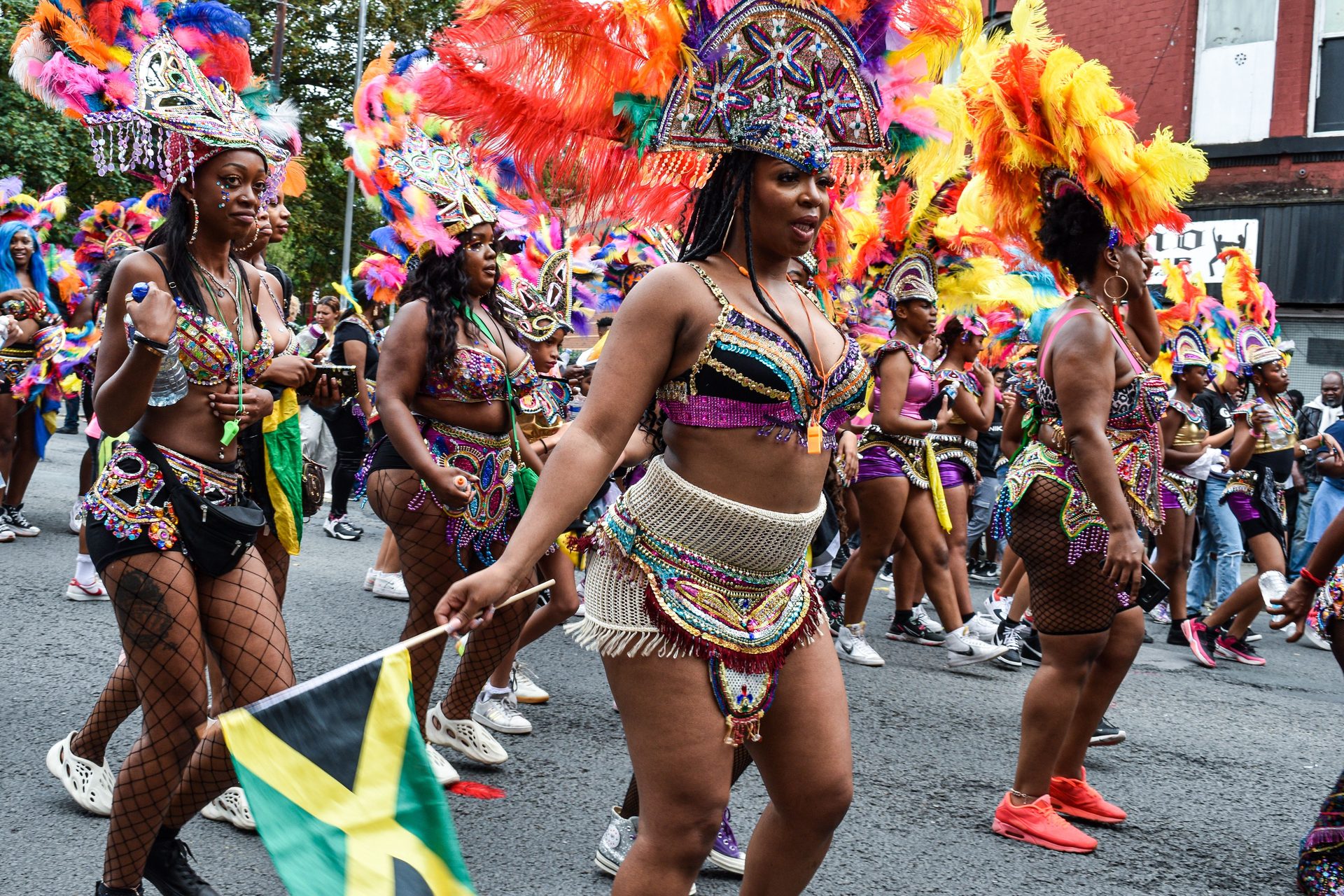
Traditional Jamaican clothing tells a story that starts long before the island became a tourist postcard of beaches and reggae. Every ruffled skirt, knotted headwrap, and knitted cap carries fingerprints of West African resilience, European colonial rule, and a post-independence push to define a distinctly Jamaican identity. These garments still appear at Heroes Day parades, church ceremonies, and cultural festivals across the island today.
This piece walks through ten garments that anchor Jamaica’s traditional dress tradition, from the plaid quadrille costume worn by folk dancers to the humble rope-soled sandals once common in rural parishes. Each one reflects a different chapter of how Jamaicans turned necessity, rebellion, and faith into fashion.
1. Quadrille Costume (Bandana Costume)
The quadrille costume is the closest thing Jamaica has to a formal national dress for women. It grew out of the quadrille, a folk dance adapted from eighteenth-century French ballroom steps and reshaped with African rhythm and movement. According to Wikipedia , the quadrille dress is referred to as a bandana skirt and is typically made from cotton in a checked or plaid pattern, often incorporating red, white, and blue madras fabric, usually worn with a ruffled blouse and a matching head tie.
The madras plaid itself has a surprising backstory. The fabric traces back to India, and this Indian textile connection is part of a broader pattern seen in traditional Indian clothing, where block-printed and plaid cottons have traveled across trade routes for centuries. In Jamaica, the pattern took on new meaning entirely, becoming a marker of rural pride rather than an imported novelty.
| Component | Material | Typical Colors |
|---|---|---|
| Skirt | Cotton madras plaid | Red, white, maroon, or blue |
| Blouse | White cotton with ruffles | White |
| Head Tie | Matching madras cloth | Same as skirt |
Pro Tip: The quadrille costume is performance wear rather than everyday clothing, so it mostly surfaces during folk dance showcases, Heroes Day events, and Independence celebrations rather than daily life.
2. Headwrap/head Tie (Madras or Bandana Cloth)
Long before the headwrap became a global fashion statement, it served a practical purpose in Jamaica: keeping hair contained and the sun off the scalp during long days of field work. A Jamaica Experience notes that people would wear hats or headbands to keep their hair contained and the sun out of their faces, a habit that eventually folded into formal dress as well.
The head tie paired with the quadrille costume is tied in elaborate knots using the same madras or bandana cloth as the skirt. Head coverings carry similar layered meaning in many cultures, a theme also explored in traditional Pakistani clothing, where veils and scarves signal everything from modesty to regional identity. In Jamaica, the specific knot and fabric pattern historically hinted at a woman’s marital or social standing within her community.
3. Kariba Suit
Few garments carry as much political weight as the Kariba suit. It emerged in the early 1970s as a deliberate break from the wool suits Jamaican men had inherited from British colonial dress codes. Wikipedia describes it as a two-piece suit for men created by Jamaican designer Ivy Ralph in the early 1970s to be worn on business and formal occasions as a Caribbean replacement for the European-style suit and a visual symbol of decolonisation.
Ralph, who trained at the Fashion Institute of Technology in New York, built the design around comfort as much as politics. The Jamaica Gleaner reports she wanted a more comfortable style of dress for men, to help them get away from the jacket-and-tie routine to something far more comfortably suited to the island’s climate. The suit soon moved from fashion statement to political symbol.
- Early 1970s: Ivy Ralph designs the Kariba as a lightweight alternative to European tailoring.
- 1972: Prime Minister Michael Manley adopts the suit, popularizing it across government and business settings.
- Later 1970s: The style spreads to other Caribbean and African nations as a model for post-colonial professional dress.
The design logic behind the Kariba echoes a pattern seen elsewhere, where national dress gets revived or reinvented to signal cultural independence, much as regional revivals have shaped traditional German clothing movements tied to local identity. In Jamaica’s case, though, the message was unmistakably anti-colonial rather than nostalgic.
4. Rastafarian-Inspired Clothing (Red, Green, Gold)
Rastafarian dress turned a spiritual movement into a visible, wearable identity. The color scheme is the clearest signal: red, gold, and green dominate shirts, dresses, and accessories across the island. A Jamaica Experience explains that these colors are popular specifically because red, gold and green, the colors of the Ethiopian flag, are popular among Rastafarians, reflecting the movement’s spiritual connection to Ethiopia and its former emperor, Haile Selassie.
Natural fibers matter here too. Many followers favor cotton, hemp, and linen over synthetic materials, aligning clothing choices with Rastafari beliefs about living simply and in harmony with nature. This isn’t costume in the performance sense of the quadrille outfit; it’s everyday dress rooted in faith, and it has shaped Jamaican streetwear well beyond the Rastafari community itself.
5. Tam (Knitted Rasta Hat)
The tam is the most recognizable Rastafarian accessory outside of the colors themselves. This knitted cap was originally practical rather than symbolic. A Jamaica Experience’s rundown of traditional dress notes that alongside the red, gold, and green color scheme, tams, or knit caps are a standard part of the wardrobe.
The tam’s original job was containing long dreadlocks, a hairstyle tied closely to Rastafarian spiritual practice. Over time the cap became a style statement on its own, often crocheted in oversized, slouchy shapes and dyed in the same red-gold-green palette. It now shows up far outside Jamaica, worn as a general symbol of reggae culture and Rastafari identity.
6. Dashiki
The dashiki isn’t originally Jamaican at all. It’s a loose-fitting, often brightly embroidered tunic that traces back to West Africa, where it has been everyday and ceremonial wear for generations. Jamaica adopted it through the same Pan-African consciousness that shaped Rastafari culture, treating the dashiki as a visible link to African ancestry rather than a Caribbean invention.
That adoption pattern isn’t unique to Jamaica. African garments and motifs spread through diaspora communities worldwide during the twentieth century’s civil rights and Black pride movements, a shift that also touched traditional American clothing trends in the 1960s and 1970s. In Jamaica today, the dashiki remains common at cultural festivals, reggae events, and African heritage celebrations, usually in bold prints with contrasting embroidery at the collar and cuffs.
7. Wompers (Rubber/rope Sandals)
Wompers are about as practical as traditional Jamaican footwear gets. Before manufactured shoes were widely affordable, rural Jamaicans needed something durable, cheap, and suited to hot, often muddy terrain. A Jamaica Experience describes how men and women alike wore organic fashions, with traditional slippers being made from leaves and grass, and later on, Jamaicans would wear “wompers,” which consisted of rubber or plastic sole and rope that tied them to the feet.
The name itself has become shorthand in Jamaican Patois for cheap or simple sandals, and the garment represents working-class ingenuity rather than ceremonial dress. Unlike the quadrille costume or Kariba suit, wompers never carried political symbolism. They were, and in some rural communities still are, simply functional footwear built from whatever materials were on hand.
8. Calico Cloth Dresses
Calico cloth sits at the center of Jamaica’s everyday traditional wardrobe, distinct from the plaid bandana fabric used in quadrille costumes. According to A Jamaica Experience , traditional Jamaican women’s dress includes tiered quadrille or “bandana” skirts and colorful headscarves made of calico, and the fabric’s roots stretch back to India just like madras.
The same source clarifies a common point of confusion: calico and bandana cloth aren’t always separate fabrics. As the article puts it, bandana cloth is another name for calico, though the terms get used slightly differently depending on the pattern and context. Calico dresses tend to favor simpler, solid-colored cotton for daily wear, reserving the bold plaid bandana print for festive or performance occasions.
9. Apron (Worn Over Skirt for Ceremonial Purposes)
The apron adds a layer of ceremony to traditional Jamaican women’s dress, worn over the skirt during cultural presentations, church functions, and heritage events rather than daily life. It typically echoes the same madras or calico fabric as the rest of the outfit, creating visual continuity between the skirt, blouse, and head tie.
While aprons appear in traditional dress across many cultures as a nod to domestic labor and household pride, in the Jamaican quadrille context the apron functions more as decorative framing than a practical kitchen garment. It reinforces the layered, structured silhouette that defines the bandana costume as a whole, adding texture without overwhelming the plaid pattern underneath.
10. Sash (Tied Around Waist)
A sash tied around the waist finishes off the traditional Jamaican ensemble, adding contrast and a bit of structure to an otherwise loose-fitting silhouette. Like the apron, it usually matches or complements the bandana or madras fabric used elsewhere in the outfit, often in a contrasting color to make the waistline pop during quadrille dance performances.
Important Note: Styling details for accessories like the sash and apron vary by dance troupe, parish, and event, since no single governing body standardizes Jamaica’s folk costume the way some countries formalize national dress.
Beyond aesthetics, the sash serves a functional role during the quadrille dance itself, helping define the dancer’s waistline and adding movement as the skirt swings through the dance’s quick turns and figures.
Looking at Jamaica’s Dress Traditions as a Whole
Taken together, these ten garments map out two parallel threads in Jamaican identity: the folk costume tradition built around the quadrille dance, and the Rastafarian-influenced everyday wardrobe built around color, natural fiber, and Pan-African symbolism. Both threads reject the idea that Jamaican style is simply a copy of European or American fashion.
Readers curious about other facets of Jamaican culture can also explore Jamaican baby boy names and Jamaican baby names for girls, both of which carry similar layers of African heritage, colonial history, and local pride found in the island’s traditional clothing.