Why Are My Strawberry Leaves Turning Yellow? Causes and Fixes

August 24, 2026
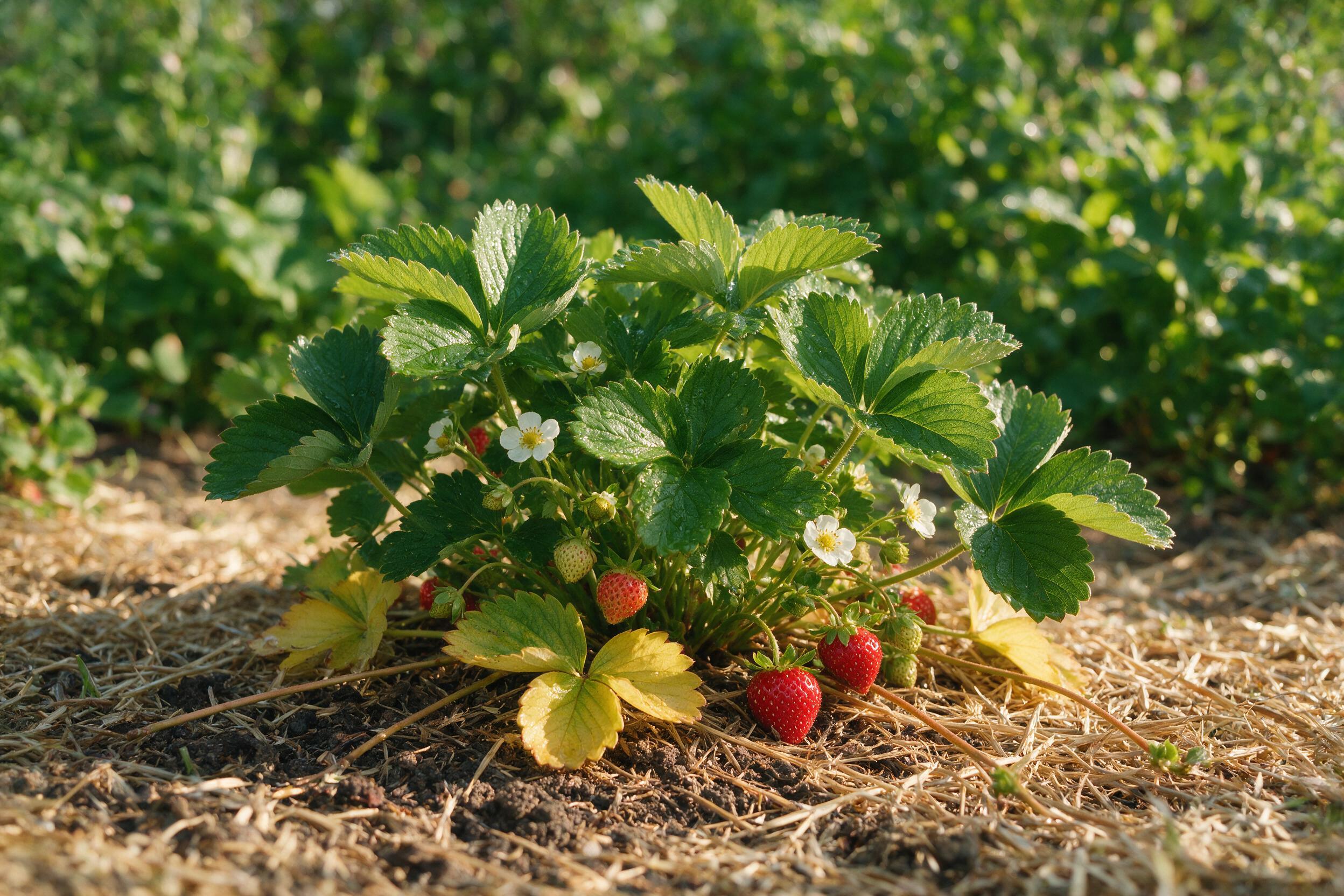
You step outside to check on your strawberry patch and notice the leaves have gone from a rich, healthy green to a worrying shade of yellow. It’s one of the most common complaints among home gardeners across the United States — and the good news is that yellow strawberry leaves are almost always fixable once you know what you’re dealing with.
Yellowing leaves, also known as chlorosis, are a symptom of underlying issues such as nutrient deficiencies, improper care, or pest damage. The tricky part is that many different problems produce the same visual result, so the fix for one cause can actually make another cause worse. This guide walks you through every major reason your strawberry leaves might be turning yellow, how to tell them apart, and exactly what to do about each one.
What Does It Mean When Your Strawberry Leaves Are Turning Yellow?
Strawberry leaves play a bigger role in plant health than most gardeners realize. Strawberry leaves are the powerhouse of the plant, driving photosynthesis to produce energy for growth and fruit development. Healthy leaves are typically dark green, glossy, and free of spots or discoloration. They absorb sunlight, convert it into energy, and transport nutrients to the roots, stems, and developing berries.
When leaves turn yellow, it disrupts this process, weakening the plant and reducing fruit yield. The scientific term for this yellowing is chlorosis — a loss of the green chlorophyll pigment that the plant needs to photosynthesize. In practical terms, it means something is preventing your plant from functioning normally, whether that’s a watering problem, a missing nutrient, a pest, or a disease.
The pattern and location of the yellowing is your biggest diagnostic clue. Yellowing that starts on older, lower leaves points to something different than yellowing that appears first on young leaves near the crown. Edges yellowing while veins stay green tells a different story than uniform fading across the whole leaf surface. Pay close attention to where the yellow appears — that detail will guide you to the right solution.
Pro Tip: Before reaching for a fertilizer or pesticide, take a few minutes to observe which leaves are yellowing, where on the leaf the color change starts, and whether the rest of the plant looks healthy. That pattern is your fastest path to the right diagnosis.
Is Yellowing in Strawberry Plants Always a Sign of a Problem?
Not always. Sometimes yellowing leaves are just part of the plant’s natural cycle — especially the outer, older ones. As strawberries grow, they shed older foliage to redirect energy toward flowers, fruit, and new leaves. If only a few lower leaves are yellowing while the rest of the plant looks great, there’s probably nothing to worry about.
Transplant shock is another situation where temporary yellowing is expected. If your strawberry plants are newly planted or recently moved, yellowing leaves might be a result of transplant shock. It’s tough for roots to adjust to new surroundings, especially in hot or windy weather, and the stress can show up in the foliage. In most cases, the growth rate will decrease and the yellow leaves will fall from the plant and it will start growing normally after that.
While occasional yellowing of older leaves is normal, widespread or sudden discoloration indicates a problem that needs immediate attention. If yellowing is spreading across multiple leaves, affecting younger growth, or accompanied by wilting, spots, or stunted growth, that’s when you need to dig deeper into the cause.
Watering Issues Causing Strawberry Leaves to Turn Yellow
Inconsistent watering is one of the most common reasons for strawberry leaves turning yellow, and both overwatering and underwatering can be the culprit. The two problems look similar at first glance, but there are key differences that help you tell them apart.
Overwatering
Overwatering restricts the absorption of oxygen and effectively drowns the plant. This prevents the production of chlorophyll and consequently turns the leaves yellow. The classic symptom of overwatering will be yellow leaves that are soft in texture and often turn dark brown on the edges. This can develop into root rot, which can be seen around the lower portions of the plant crown or runners directly around the crown.
Overwatering is especially true for strawberries that have less soil drainage, such as those planted in clay soil or in containers. If you press a yellow leaf between your fingers and it feels soft and mushy rather than crisp, overwatering is likely your problem.
Underwatering
Too little water results in dry, wilting leaves that turn yellow or brown. Unlike overwatered leaves, which feel soft, underwatered leaves tend to feel dry and papery, with yellowing that starts at the tips and edges. It is thought that strawberry plants want an inch of water a week, though that can alter during periods of hot weather.
Whether out in the ground or you are watering plants in containers, always check the soil an inch or two under the surface to better assess moisture levels in the soil. Consider drip irrigation for consistent moisture without overwatering. This method delivers water directly to the root zone and is especially effective for strawberry beds in warmer US climates like the Southeast and Southwest.
Pro Tip: Stick your finger one to two inches into the soil near the base of the plant. If it feels dry, it’s time to water. If it feels soggy or smells musty, hold off and check your drainage situation before watering again.
Light Conditions Behind Strawberry Leaves Turning Yellow
Light is often overlooked as a cause of yellowing, but it plays a real role in strawberry health. Strawberries are sun-loving plants that need full sun to thrive — generally six to eight hours of direct sunlight per day. When they don’t get enough light, photosynthesis slows, chlorophyll production drops, and leaves begin to pale and yellow.
Too much shade causes a gradual, uniform yellowing across the plant, often starting with lower leaves that are blocked by other foliage or a nearby structure. If you move your plant from one place to another — for example, bring it from someone else’s house or a nursery — the plant may go under stress. The reason is simple: the plant might not get the same amount of light exposure it was getting earlier.
On the other end, intense afternoon sun in hot climates (above 85°F) can cause light scorch, where leaf edges bleach to a pale yellow or white. This is more common in southern states during summer. If you’re growing strawberries in containers, you have the advantage of being able to move them to a spot that gets morning sun but is protected from the harshest afternoon rays. For in-ground plants, you can create more drainage and better growing conditions by planting them in mounds or in raised beds positioned to maximize morning light exposure.
Check out our guide to plants that handle low light if you’re dealing with a shaded garden spot and wondering which edibles might do better there.
Soil, Nutrients, and Root Health Causing Strawberry Leaves to Turn Yellow
Nutrient problems are among the most frequent causes of yellow strawberry leaves, and the specific pattern of yellowing tells you which nutrient is missing. Getting the diagnosis right here matters — applying the wrong amendment won’t help and may make things worse.
Nitrogen Deficiency
Nitrogen deficiency is the most common reason for yellow strawberry leaves, and the diagnostic key is which leaves are affected first. Nitrogen is a mobile nutrient: when the plant runs short, it actively strips nitrogen from older tissue and redirects it to support new growth. The oldest, lowest leaves go pale first while the crown stays green.
A nitrogen deficiency is manifest in the middle-aged leaves. The yellow strawberry plant leaves occur in these middle-aged leaves, primarily, and not the new, still-green leaves emerging from the crown. According to StrawberryPlants.org , the old agricultural rule of thumb is that strawberry plants with yellow leaves indicate nitrogen-deficient soil.
To correct a nitrogen deficiency, you can feed your strawberries with a balanced fertilizer or apply composted manure. Organic options like blood meal or fish emulsion also work well. Just be careful not to overdo it — too much nitrogen can lead to lush leaves and few fruits. Scratch in a balanced granular fertilizer (10-10-10 at 1 lb per 100 sq ft) or apply liquid fertilizer diluted to half strength.
Iron Deficiency
Iron deficiency causes young leaves to yellow while veins remain green, a condition called interveinal chlorosis. It’s common in alkaline soils, which strawberries struggle with. This is the opposite pattern from nitrogen deficiency — if your newest leaves are yellowing between the veins while the older leaves look fine, suspect iron.
Iron becomes more available as soil pH decreases, according to Cornell University. Where your plant has an iron deficiency, your plant’s soil pH is too alkaline (above 6.5); apply acidic amendments such as sand, peat moss, and coffee grounds. For quick relief while soil pH adjusts, spray chelated iron on the foliage every 10–14 days. Not all chelated iron products perform equally in high-pH soil — EDDHA-form chelates remain effective up to pH 9, making them the right choice for alkaline gardens.
Potassium and Other Deficiencies
If your strawberry leaves have yellow or brown edges and the fruits are more runt than robust, potassium might be the missing piece. Weak stems are another telltale sign. Potassium deficiency symptoms first show up on mature leaves, particularly on the leaf margins. The damage works its way inward between the veins and eventually necrosis occurs.
Magnesium deficiency leads to yellowing between veins on older leaves. Apply potassium sulfate or Epsom salts (magnesium sulfate) based on soil test results, and follow package instructions to avoid over-fertilization.
Soil pH and Root Health
Strawberries are picky about their soil’s pH level. Aim for the sweet spot between 5.5 and 6.5. Outside that range, nutrients become chemically locked in the soil and unavailable to roots, even if those nutrients are physically present. A soil test from your local cooperative extension office is the most reliable way to confirm pH and nutrient levels before making any amendments.
Caused by pathogens like Phytophthora or Rhizoctonia, root rot sets in when the soil stays too wet for too long. It often starts with yellowing outer leaves and progresses to wilting and collapse, even if the soil still feels damp. Dig up a troubled plant and examine the roots — if they’re dark, mushy, or have a foul smell, rot is likely. The best prevention is excellent drainage and proper spacing so air can circulate around the roots.
| Nutrient | Which Leaves Yellow First | Other Symptoms | Fix |
|---|---|---|---|
| Nitrogen | Older/middle-aged leaves | Uniform pale yellowing; red petioles in severe cases | Balanced fertilizer (10-10-10) or blood meal |
| Iron | Youngest leaves | Interveinal chlorosis (veins stay green) | Chelated iron spray; lower soil pH |
| Potassium | Mature leaves, edges first | Brown leaf margins; weak stems; small fruit | Potassium sulfate; soil test first |
| Magnesium | Older leaves, between veins | Interveinal yellowing on mature foliage | Epsom salts (magnesium sulfate) |
Environmental Stress Triggering Strawberry Leaves to Turn Yellow
Strawberries can start to get yellow leaves if the weather is getting too hot or cold — usually above 80°F or below 60°F. Both extremes stress the plant, slow metabolic processes, and cause foliage to pale. In the US, this is especially relevant in early spring when temperatures swing wildly between warm days and cold nights, and again in midsummer heat waves.
Temperature stress tends to produce generalized yellowing without a clear pattern on specific leaf ages. If your plants yellowed suddenly after an unusual cold snap or a stretch of 90°F days, environmental stress is the most likely explanation. The good news is that healthy plants typically recover once temperatures stabilize.
Overfertilizing is another environmental stressor that’s easy to overlook. Excess fertilizer salts disrupt nutrient uptake and cause leaves to turn yellow or brown at the tips, mimicking deficiency symptoms. Flush the soil with plain water to help wash away excess salts and allow the plant to reset.
Wind exposure and low humidity can also contribute, particularly for container-grown plants on exposed patios or decks. Good mulches to use for strawberries are leaves, straw, and pine needles — these help buffer soil temperature, retain moisture, and reduce the environmental stress that leads to yellowing. You can explore our roundup of wind-tolerant plants if you’re gardening in a particularly exposed spot and want to plan companion plantings that provide some shelter.
Pests and Disease Leading to Strawberry Leaves Turning Yellow
Insects and fungal pathogens can both cause yellowing, and they each leave behind distinctive clues that help you identify them.
Common Pests
Pests are a common problem for strawberries and the usual suspects include aphids, spider mites, thrips, lacewings, and ladybugs. All of these can suck sap out of the foliage and cause leaves to turn yellow. Check the undersides of leaves carefully — that’s where most of these insects feed and hide.
- Aphids — Aphids cause curling leaves and leave behind a sticky residue. They weaken plants and can lead to further stress if not addressed.
- Spider mites — Spider mites create fine webbing and stippled leaves. Their presence reduces photosynthesis and overall vitality. They’re most active in hot, dry weather.
- Thrips — These tiny insects rasp leaf tissue, causing a silvery or bronzed discoloration that can progress to yellowing, especially on young leaves.
Spray neem oil or insecticidal soap for spider mites and aphids. Introduce beneficial insects like ladybugs for natural control. You can also explore plants that repel wasps and other garden pests as part of a companion planting strategy. Our guide to plants to grow with tomatoes also covers companion planting principles that apply to strawberry beds.
Verticillium Wilt
Verticillium wilt is one of the most serious diseases affecting strawberries in the US, particularly in the Midwest and Pacific Northwest. The garden strawberry (Fragaria × ananassa) is susceptible to this soilborne fungus, and the damage can be severe. The outer and older strawberry leaves wilt and dry, turning a reddish yellow to dark brown at the margins and between the veins. The inner leaves remain green and turgid until the plant dies. This symptom helps distinguish verticillium wilt from root and crown diseases caused by Phytophthora species, in which both the young and mature leaves wilt.
According to Ohio State University Extension , the fungus can survive in soil, and once it becomes established in a field or garden, it may remain alive for 25 years or longer. Never plant strawberries where other crops susceptible to the fungus have been planted within five years. This includes tomato, pepper, potato, and eggplant.
Other Fungal Diseases
White fluffy patches on leaves are powdery mildew. Powdery mildew attacks young leaves, flowers, and fruit. While powdery mildew more often causes distortion and white coating than pure yellowing, heavily infected leaves can pale and drop. Spray your plants once a week with a mixture of 1 part milk to 2 parts water as an organic control option, or use a fungicide labeled for strawberries.
Root rot caused by Phytophthora and Rhizoctonia is another disease culprit. Red stele root rot is routinely mistaken for ordinary overwatering because both involve wet conditions — but the pathogen is specific and the visual clues differ. Look for older leaves that turn yellow and then reddish prematurely while younger leaves develop a metallic blue-green sheen. Slice a root in half: if the central core (the stele) is dark red rather than white or cream, you are looking at Phytophthora fragariae. Ohio State University Extension identifies this red interior as the most reliable indicator, distinguishing red stele from all other common root diseases.
How to Diagnose Why Your Strawberry Leaves Are Turning Yellow
Diagnosing the cause correctly before you act saves you time, money, and the risk of making the problem worse. Work through these steps in order.
- Look at which leaves are yellowing. Older, lower leaves yellowing first = likely nitrogen deficiency or natural senescence. Newest leaves yellowing first = likely iron deficiency or root rot. All leaves yellowing evenly = likely watering or temperature stress.
- Check the yellowing pattern on individual leaves. Uniform yellowing across the whole leaf = nitrogen or temperature. Yellowing between veins while veins stay green = iron or magnesium deficiency. Yellowing edges or margins = potassium deficiency or overwatering.
- Feel the soil and the leaves. Soggy soil + soft yellow leaves = overwatering. Bone-dry soil + crispy yellow edges = underwatering. Overwatering causes soggy, yellow leaves with soft roots, while underwatering leads to dry, crispy yellow leaves.
- Inspect the undersides of leaves for pests. Look for tiny moving dots (spider mites), clusters of soft-bodied insects (aphids), or fine webbing. Use a magnifying glass if needed.
- Test your soil. Soil testing is your first move in the nutrient detective game. Home test kits are widely available at garden centers across the US, or you can send a sample to your state’s cooperative extension service for a more detailed analysis. You can also use a plant identification app or Android plant app to help cross-reference symptoms.
- Check for disease signs. Look for reddish-yellow wilting on outer leaves with green inner leaves (Verticillium wilt), white powdery coating (powdery mildew), or dark mushy roots (root rot).
Key Insight: According to Blooming Expert , the detail that separates a quick recovery from a lost planting is reading location and pattern: which leaves are yellowing, where on the leaf, and what else the plant is showing you.
How to Fix a Strawberry Plant That Is Turning Yellow
Once you’ve identified the cause, here’s how to act on it. The approach varies significantly depending on what’s driving the yellowing.
Fixing Watering Problems
For overwatering, stop watering immediately and improve drainage. You can improve the soil’s drainage by drilling more holes in the pot or amending the soil. For strawberries planted in the ground, you can create more drainage by planting them in mounds or in raised beds. If root rot has set in, unfortunately, once root rot sets in, the plant is usually done for. Remove affected plants promptly to protect neighboring ones.
For underwatering, resume regular watering and apply mulch to retain moisture. Water deeply but infrequently, aiming for 1–2 inches per week during dry periods. Use mulch (straw or pine needles) to retain moisture and prevent root stress.
Fixing Nutrient Deficiencies
Always start with a soil test so you’re targeting the right nutrient. For nitrogen, apply a balanced fertilizer (e.g., 10-10-10) or organic options like composted manure — use 1–2 pounds per 100 square feet, applied evenly. For iron deficiency, use chelated iron supplements or foliar sprays for quick results, and adjust soil pH if it’s too alkaline.
If overfertilization is the problem, flush the soil with plain water to help wash away excess salts and allow the plant to reset. Going forward, prefer using compost or slow-release organic fertilizers, which feed more gently over time. Overfertilizing stresses the whole plant and can even reduce fruit flavor.
Fixing Pest and Disease Problems
For pest infestations, prune the infected leaves and use natural solutions such as neem oil, or enlist the help of natural predators of the pest (for example, ladybugs eat aphids). For fungal diseases, remove and dispose of infected plant material — do not compost it. Apply fungicides labeled for strawberries (e.g., captan) and improve air circulation by spacing plants 12–18 inches apart.
For Verticillium wilt specifically, in Verticillium-infested soil, set out only certified, disease-free strawberry plants of tolerant or resistant cultivars. According to Penn State Extension , the use of resistant varieties is one of the most important control methods for this disease.
Fixing Yellowed Leaves Themselves
Once leaves turn yellow due to nutrient deficiencies or stress, they rarely recover. Focus on correcting the underlying issue to promote healthy new growth. Simply prune away the dying leaves to keep the plant tidy and reduce disease risk. New growth coming in green after you’ve addressed the root cause is your confirmation that the fix is working.
How to Prevent Strawberry Leaves from Turning Yellow Going Forward
Prevention is far easier than treatment. Building good habits into your routine growing season will keep yellow leaves from becoming a recurring problem.
- Test your soil before planting. It is recommended to test the pH of the soil and also test for any nutrient deficiencies prior to planting crops. Aim for a pH of 5.5–6.5 and amend accordingly.
- Water consistently, not excessively. Watering is less about routine and more about reading the soil. Establish a consistent watering schedule that takes into account the weather, the plant’s growth stage, and the soil’s moisture level.
- Fertilize on a schedule. Fertilize at planting, then monthly during the growing season with a balanced 10-10-10 fertilizer. Avoid over-fertilizing, which can harm plants.
- Mulch your beds. Organic mulch like straw or wood chips can be a game-changer, keeping the soil moist and cool. It also suppresses weeds that compete for nutrients.
- Rotate your crops. Never plant strawberries where other crops susceptible to soil-borne fungi have been planted within five years. This includes tomato, pepper, potato, and eggplant. According to the UC IPM Program , crop rotation with broccoli and incorporating residue during warm parts of the year has been shown as an effective way to reduce Verticillium in the soil.
- Space plants properly. Good air circulation between plants reduces humidity around foliage and lowers the risk of fungal disease. Space strawberry plants 12–18 inches apart in rows 2–3 feet wide.
- Monitor regularly. By identifying the cause early, you can prevent further damage and ensure your plants remain productive. A weekly walk through your garden patch, checking both the tops and undersides of leaves, catches problems before they escalate.
- Choose resistant varieties. If Verticillium wilt is a known problem in your area, resistant June-bearing varieties include Allstar, Catskill, Delite, Earliglow, Guardian, Lester, Rechief, Scott, Sunrise, Surecrop, and Tennessee Beauty.
Taking care of your strawberry plants is part of the broader joy of growing your own food. If you’re expanding your garden, our guide to types of plants is a great resource for planning what to grow alongside your strawberries. You might also find our article on types of leaves helpful for understanding leaf anatomy and spotting symptoms more accurately.
Frequently Asked Questions
Can yellow strawberry leaves turn green again?
Once leaves turn yellow due to nutrient deficiencies or stress, they rarely recover. Focus on correcting the underlying issue to promote healthy new growth. Pruning yellow leaves off the plant helps it redirect energy toward producing new, healthy foliage.
Why are only the edges of my strawberry leaves turning yellow?
Yellowing edges often indicate potassium deficiency or overwatering. Test your soil and adjust watering to keep soil moist but not soggy. A soil test will confirm which issue is at play before you apply any amendments.
Why are my strawberry leaves turning yellow in the middle of the growing season?
Mid-season yellowing is most often tied to nitrogen depletion, which accelerates when plants are actively fruiting. Fruit set suffers when plants are nitrogen-deficient — deficient plants produce fewer and smaller berries, and runner production slows. A mid-season application of a balanced fertilizer usually resolves this quickly.
Are potted strawberries more likely to get yellow leaves?
Potted plants are typically more at risk for most problems associated with strawberries due to the limited space, difficulty in maintaining appropriate moisture levels, and overcrowding. Container-grown strawberries need more frequent watering and fertilizing than in-ground plants, and their drainage must be excellent to prevent root rot.
Could my strawberry plant’s yellow leaves be caused by a disease?
Yes. Initial symptoms of Verticillium wilt appear rapidly in late spring, especially in periods of environmental stress. The outer and older strawberry leaves wilt and dry, turning a reddish yellow to dark brown at the margins and between the veins. Powdery mildew and root rot diseases can also cause yellowing. If nutrient and watering fixes don’t improve the plant, disease is worth investigating — contact your local cooperative extension service for diagnosis help.
How do I tell overwatering from underwatering when both cause yellow leaves?
Overwatering causes soggy, yellow leaves with soft roots, while underwatering leads to dry, crispy yellow leaves. Check the soil moisture at least one inch below the surface and examine the roots if you’re unsure — healthy roots are white and firm, while overwatered roots are brown and mushy.
What is the best soil pH for strawberries?
Strawberries thrive in slightly acidic soil, pH 5.5–6.5. Test your soil and amend with sulfur or lime as needed. Sulfur lowers pH for alkaline soils, while lime raises pH for soils that are too acidic. Most US garden centers carry both products as well as affordable home soil test kits.