Why Are My Zucchini Plants Dying? Causes, Fixes, and Prevention

September 15, 2026
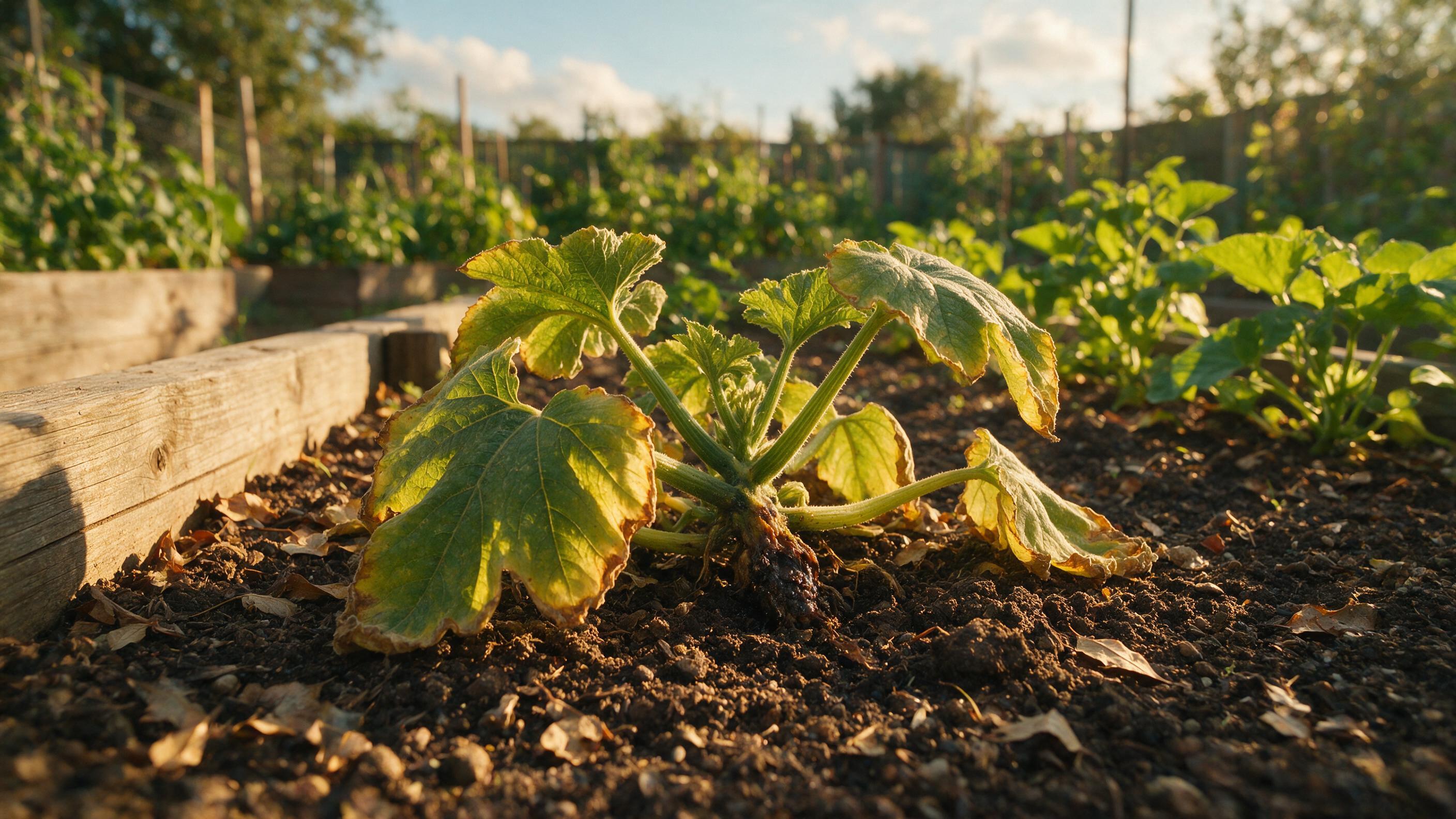
You walked out to your garden this morning expecting to find healthy, leafy zucchini — and instead you found a plant that looks like it’s giving up. Whether the leaves are wilting, yellowing, collapsing, or simply rotting at the base, a dying zucchini plant is one of the most frustrating sights in a summer garden.
The good news is that most causes are diagnosable, and many are fixable — especially when you catch them early. This guide walks you through every major reason why your zucchini plants might be dying, how to tell them apart, and exactly what to do about each one. Whether you’re a first-time gardener or you’ve been growing squash for years, you’ll find practical answers here.
What Does It Mean When Your Zucchini Plant Is Dying?
Homegrown zucchini (Cucurbita pepo) will droop, fall, or sag for various reasons, and none of them are pleasant to deal with. “Dying” can mean a lot of different things depending on what you’re seeing. The plant might be wilting dramatically on a hot afternoon, slowly yellowing over several days, collapsing at the base, or rotting from the inside out. Each pattern points to a different cause.
Wilting is a fairly generic symptom that can indicate a range of issues. The most obvious and easy-to-fix problem is underwatering. But the same wilted appearance can also signal a vine borer tunneling through the stem, bacterial wilt spread by cucumber beetles, or root rot from waterlogged soil. That’s why reading the full picture — not just one symptom — matters so much.
Regardless of what’s plaguing your plant, the first step is being able to notice early on that something is wrong. That’s why you should head out to your garden regularly and look over your plants. Then, if you notice something unusual, you can identify the problem and figure out what to do about it.
Is Dying in Zucchini Always a Sign of a Problem?
Not always — and knowing the difference saves you a lot of unnecessary worry. Some things that look alarming are completely normal parts of the zucchini life cycle.
Oversize fruit turning yellow is one example. A zucchini left too long on the plant eventually turns yellow-orange. This is maturity, not disease. Harvest it immediately — leaving oversized fruit in place signals the plant to slow production, and regular harvesting keeps output high through the season.
Keep in mind that slight wilting of leaves during a heat wave is normal. Everybody feels a little “weighed down” in abrasive sunlight. If your plant perks back up by evening, that midday droop is just the plant managing heat stress — not a sign of disease. The same goes for older leaves at the base of a mature plant; they naturally yellow and die off as the season progresses.
Where you should pay attention is when the wilting persists through the night, when multiple leaves collapse at once, or when you see discoloration, spots, holes, or frass (pest waste) alongside the drooping. Those are the signals that a real problem is underway.
Watering Issues Causing Zucchini to Die
Watering errors drive more zucchini problems than any other single factor. Poor watering does not just stress the plant directly — it creates conditions where disease and pests move in faster and recovery becomes harder.
Underwatering
The most obvious and easy-to-fix problem is underwatering. While they do excel in hot weather, zucchini plants are fairly thirsty and quickly wilt when they get dehydrated under ultra-hot conditions. Drought stress is never good for vegetable crops, and zucchinis require consistent, even soil moisture throughout the growing season. If nature doesn’t supply your garden with at least one inch of water per week, it’s your job to add supplemental irrigation.
Overwatering and Root Rot
Zucchini like moist soil, however overly wet soil is the leading cause of root rot. Allow the soil to dry out slightly before watering again, and then when giving your plant a drink, do so thoroughly. Zucchini does best with about one inch of water each week.
In saturated soil, the air pockets between soil particles fill with water and oxygen disappears. Without oxygen, roots cannot generate the energy to absorb water and nutrients — they begin dying from oxygen starvation before any pathogen even arrives. Once the root system weakens, soil-borne pathogens — primarily Phytophthora and Pythium species — move in and accelerate the decay.
Healthy roots are usually firm, white, and have a fresh smell. In contrast, rotting roots may appear brown or black, feel mushy, and emit a foul odor. If you dig around the base of the plant and find those signs, overwatering is your likely culprit.
Pro Tip: Water deeply and infrequently rather than a little every day. Deep waterings encourage roots to reach further into the ground, creating strong plants with fewer problems. Shallow waterings encourage short roots that are less resilient to drought.
Watering Technique
Avoid watering the leaves of zucchini from above. This keeps leaves wet and allows fungal spores to bloom. Drip irrigation is more useful for target watering and to keep leaves in good condition. A soaker hose delivers water directly to the root zone without wetting foliage, which dramatically reduces fungal and bacterial disease pressure.
Light Conditions Behind Zucchini Dying
Though it isn’t the worst problem you might face, lack of sun can definitely affect plant health and production. Zucchini plants need a minimum of six to eight hours of full sun per day. Lower light levels can result in long, lanky plants with pale green foliage and reduced yields.
A zucchini plant that isn’t getting enough light will gradually weaken. You’ll notice it stretching toward any available sun, producing fewer flowers, and becoming more susceptible to disease because a stressed plant simply can’t defend itself as well. In the United States, gardens shaded by fences, trees, or neighboring structures are common culprits — especially in urban and suburban settings.
Too much intense afternoon sun combined with drought stress can also push plants over the edge. Keep plants cool during heat waves with shade cloth, and maintain warmth during frosts with greenhouse plastic or row covers. If you’re growing in a region with extreme summer heat, a light shade cloth during peak afternoon hours can protect plants without sacrificing the morning sun they need.
Pro Tip: When choosing a planting spot, observe how sunlight moves across your garden throughout the day. A spot that looks sunny in the morning may be heavily shaded by afternoon — and vice versa. Zucchini needs full sun across the bulk of the day, not just a few hours of it.
Soil, Nutrients, and Root Health Causing Zucchini to Die
Zucchini performs best in soils that are high in organic matter with a soil pH around 6.5. If your pH is too far off that target, the plants may fail to produce quality fruit because soil pH affects the availability of many different nutrients.
A basic soil test from your local cooperative extension office (usually $15–20) tells you pH, nitrogen, phosphorus, potassium, and often magnesium. Amending blindly wastes money and can create new nutrient imbalances. Adjust pH to 6.0–6.5 before the season starts; most nutrient availability problems in zucchini trace back to pH being out of range.
Nutrient Deficiency Symptoms to Watch For
Watch for early deficiency symptoms: yellowing leaves (nitrogen), purple discoloration (phosphorus), brown leaf margins (potassium), interveinal yellowing (iron or magnesium), and black lesions on fruit (calcium). These signs tell you what’s missing before the plant declines too far to recover.
The Fertilizer Problem
Zucchini plants do not need high amounts of nitrogen, which can result in lush, healthy foliage and little to no fruit. Excess nitrogen also causes blossom end rot on zucchini squash, as it blocks the absorption of calcium. Avoid high nitrogen fertilizers and ammonia fertilizers (such as fresh manure) that will stimulate foliage growth, add more salt to the soil, and block the absorption of calcium.
Applying high nitrogen fertilizers can send green growth into overdrive at the expense of roots and fruits. A pH level between 6.0 and 7.0 (slightly acidic to neutral) is ideal for calcium uptake. Levels that are much higher or much lower can block that nutrient’s availability.
Before you plant zucchini, add some compost or well-rotted manure into the planting site to enrich the soil and always grow the plants in a sunny and sheltered spot. This sets up the soil structure before any problems have a chance to develop. You can also explore companion planting strategies to naturally improve soil health and pollinator access around your vegetable beds.
Environmental Stress Triggering Zucchini to Die
Environmental stress is often the hidden factor that tips an otherwise manageable situation into a dying plant. Heat, cold, crowding, and poor air circulation all weaken zucchini — and a weakened plant is far more vulnerable to every other problem on this list.
Temperature Extremes
This commonly occurs early or late during the growing season. Lingering spring frosts and early fall freezes shock zucchini plant roots. This also happens during excessive heat waves in dry beds. The hot temperatures affect water availability, which affects nutrient transfer and absorption.
Overcrowding
Thin zucchini plants to provide at least 2 to 3 square feet per plant. If plants are crammed too close together, it can cause stress and competition. Overcrowding also traps moisture on leaf surfaces, creating ideal conditions for powdery mildew and bacterial diseases. Good air circulation is key in preventing powdery mildew. Make sure your zucchini has plenty of room to spread, and don’t let weeds creep in around your plants.
Pollination Failure
Summer squash plants produce both male and female flowers, and for squash fruit to fully develop, pollinators need to transfer pollen from the male flowers to the female ones. If the female flowers don’t receive adequate pollination, fruits begin to grow and then suddenly wrinkle up and die or drop from the vine. Cool, rainy weather is often responsible for poor pollination because it inhibits pollinator activity.
You can hand-pollinate using a small brush or cotton swab. This ensures that pollen contacts the female flower, increasing the chances of fertilization and fruit production. If you want to attract more pollinators naturally, planting flowering companions near your vegetable beds draws in bees and other beneficial insects throughout the season.
Pro Tip: Squash plants often produce male flowers first but later go on to make females too. If you’re not seeing fruit early in the season, wait a couple of weeks before assuming pollination has failed.
Pests and Disease Leading to Zucchini Dying
Pests and diseases are responsible for some of the most dramatic and sudden plant deaths in the zucchini patch. The key is knowing what to look for and acting fast.
Squash Vine Borers
Squash vine borers are the most destructive single pest for zucchini, capable of killing an entire plant within 48 hours of larval entry. They lay eggs at the plant’s crown, where the main stem meets the soil’s surface. When the larvae hatch, they tunnel into the stem to feed, wrecking the plant’s vascular system. Once these chubby white caterpillars with brown heads get established, the plant is doomed, with the main stem weakening until it collapses.
You’ll see crumbly, sawdust-like waste collected below a small hole at the base of the plant. That frass is your clearest diagnostic sign. To prevent squash vine borers, protect the lower portion of the stem with a wrap of aluminum foil, or cover the plants with floating row cover until they come into bloom to keep the female moths away from egg-laying sites.
Squash Bugs
When it comes to insects that attack squash, none are more difficult to control than squash bugs. These shield-shaped, brown insects suck out plant juices with their needle-like mouthpart, causing stippling, yellowing, and browning of the leaves. Squash bugs are first seen as clusters of bronze, football-shaped eggs followed by gray nymphs that feed in groups.
The best way to manage squash bugs is to head to the garden every day and inspect the top and bottom of your zucchini leaves for clusters of bronze-colored, football-shaped eggs. Squash bugs are resistant to most pesticides, but very young nymphs can be controlled with applications of insecticidal soap or horticultural oil.
Bacterial Wilt
Bacterial wilt in zucchini is caused by the bacterium Erwinia tracheiphila. It causes the entire plant to wilt, and leaves may turn dark green and dull, with discoloration on the stems. It sometimes starts with a few wilting leaves or runners here and there, but it can rapidly expand to take over entire plants. Bacterial wilt is spread by spotted and striped cucumber beetles, so keeping them away is your first line of attack.
Once the plant is infected, there isn’t anything you can do. Pull it out of the garden to prevent the disease from spreading to other squash plants.
Powdery Mildew
The dreaded powdery mildew is caused by a variety of fungi. The types that most commonly impact zucchini include Erysiphe cichoracearum, Sphaerotheca fuliginea, and Podosphaera xanthii. It thrives in warm, humid conditions. Symptoms usually appear in mid- to late summer. You’ll first notice pale yellow spots on the leaves, followed by a powdery coating that looks like someone dusted your plants with flour.
Remove the leaves that are infected with powdery mildew and other fungal diseases to prevent spread. Do not compost these, as some fungal diseases will persist. Use copper dust or spray every ten days to keep many fungal diseases in check.
Aphids
Aphids are tiny, pear-shaped, yellow, pink, brown, gray, green, or black bugs that congregate in groups on the undersides of leaves. They suck the sap out of the stems and leaves, causing stunted growth and deformity. The zucchini yellow mosaic virus is spread by aphids, so keep them away from your plants.
A strong jet of water directed at leaf undersides knocks aphids off, and many do not survive the fall — this is effective for early-stage colonies. For persistent populations, apply insecticidal soap directly to leaf undersides, ensuring full coverage of the colony. Avoid broad-spectrum insecticides, which kill parasitic wasps and ladybugs that provide more sustained long-term aphid control than chemical treatments.
Fusarium and Root Rots
If your plant has Fusarium crown and foot rot, you’ll notice wilting leaves followed by the entire plant wilting. Within a few days, the plant may die. This disease is caused by the fungus Fusarium solani. Fusarium is a fungal disease that can attack many types of plants. Zucchini plants will wilt and die as the disease attacks the root system.
How to Diagnose Why Your Zucchini Plant Is Dying
Before you treat anything, you need to know what you’re actually dealing with. A systematic check takes about five minutes and can save you from applying the wrong fix — or giving up on a plant that could still be saved.
- Check the soil moisture first. Push your finger two inches into the soil near the base of the plant. If it’s bone dry, underwatering is your starting suspect. If it’s soggy and compacted, overwatering and root rot are more likely. The soil should feel like a well-wrung out sponge.
- Look at the base of the stem. Crumbly, sawdust-like waste collected below a small hole at the base of the plant points directly to squash vine borers. A soft, mushy, discolored stem suggests root rot or Fusarium.
- Inspect the leaves — top and bottom. By scouting your plants once a week and looking both on the top and the underside of the leaves, you’ll be able to spot any discoloration, rotting, or dead material. While out in the yard, look at the foliage color, look at the quality of stems, and pay close attention to any signs of damage or wilting, or irregular growth patterns.
- Check for pests. Look for bronze egg clusters (squash bugs), tiny pear-shaped insects on leaf undersides (aphids), or frass at the stem base (vine borers). Use a plant identification app if you’re not sure what you’re looking at.
- Do the water test for bacterial wilt. Try giving your plant a good soak with the garden hose and cross your fingers that it perks up. If not, you probably have a case of bacterial wilt on your hands.
- Examine the roots if all else fails. Carefully remove the plant from the soil. Gently loosen the soil around the roots to avoid causing further damage. Yellowing leaves and wilting indicate root rot; check for root damage. Healthy roots are firm and white; rotting roots are brown and mushy.
| Symptom | Most Likely Cause | Quick Check |
|---|---|---|
| Wilts midday, recovers at night | Underwatering or vine borer | Check soil moisture; look for stem frass |
| Wilts despite watering, stays wilted | Bacterial wilt or root rot | Water test; check roots for mushy texture |
| White powdery coating on leaves | Powdery mildew | Check air circulation and overhead watering |
| Yellow leaves, stippled or spotted | Aphids, squash bugs, or nutrient deficiency | Inspect leaf undersides for insects or eggs |
| Sawdust-like frass at stem base | Squash vine borer | Slice stem gently to confirm larvae |
| Dark, sunken spots on fruit ends | Blossom end rot (calcium/watering issue) | Review watering consistency and soil pH |
| Sudden total collapse | Bacterial wilt or vine borer | Check for cucumber beetles; inspect stem |
How to Fix a Zucchini Plant That Is Dying
The right fix depends entirely on your diagnosis. Here’s what to do for each major cause:
Fix Watering Problems
If the plant is underwatered, give it a thorough, deep soak immediately. To prevent future wilting issues, use a mulch to conserve soil moisture. Amend with plenty of compost or rotted manure before planting to improve soil water retention. A 2–3 inch thick layer of mulch helps stabilize soil moisture levels and can reduce the need to irrigate during the hot summer months.
If overwatering is the problem, stop watering immediately and let the soil dry out. Improve drainage by working compost into the bed. Unfortunately, when root rot occurs, it is often too late to save your plant. Yet, there are ways to prevent it from occurring. Taking precautions in addition to changing your watering routine may help it survive long enough to harvest.
Fix Nutrient and Soil Issues
Before planting, test your soil nutrient and pH levels and amend the soil with organic matter like compost or worm castings as needed. When fertilizing, opt for a slow-release, organic blend with a little more phosphorus and potassium than nitrogen.
For blossom end rot specifically, you simply need to get the calcium that’s already in your soil to your plants’ roots where it’s needed. Do this with a few deep watering sessions — rather than several short-and-shallow ones — and the problem should subside.
Fix Pest Infestations
For squash vine borers already inside the stem: remove the larvae by feeling the base of the stems to see if it feels hollow. If it does, take a knife and gently cut into the stem. Inside you will see the white larvae. Remove all the larvae you see by hand and then cover the open wound with moist soil.
For aphids, blast your plants with a strong spray of water from the hose. Often, if you knock aphids loose, they might not survive the deluge or they’ll move on to other plants. Next, try spraying plants with a 1:10 solution of dish soap and water. Do this once a day for two weeks.
For powdery mildew, remove the leaves that are infected to prevent spread and apply a copper-based fungicide or diluted neem solution. You can also explore companion plants that naturally deter certain pests.
Fix Disease Problems
If the disease has already taken hold of your plant, pull and destroy it to avoid further spread of disease throughout your garden. Don’t compost the zucchini. Be sure to clean up the area where the plant was growing so that the pathogen doesn’t overwinter in debris in the soil. For bacterial wilt, there is no treatment once the plant is infected — removal is the only option.
How to Prevent Zucchini from Dying Going Forward
The secret to preventing all crop diseases is growing a healthy plant to begin with. Just like a healthy lifestyle prevents you from getting sick, a robust thriving plant is far more resilient under stress. Plant stressors include exposure to pathogens, pests, drought, and extreme weather. While you can’t control the weather, you can do your best to nurture the healthiest plants possible by providing ideal conditions for growth.
- Rotate your crops. In general, no matter what disease you’re targeting, it’s a good idea to practice crop rotation. Don’t plant something in the squash family in the same place for more than two years in a row.
- Choose resistant varieties. Some varieties are more disease- and pest-resistant. When selecting zucchini varieties for your garden, be sure to seek out disease and pest resistance whenever possible. Varieties with a high level of natural resistance often perform better and produce longer.
- Use floating row covers early. Use floating row covers from transplanting until first female flowers open. This single intervention blocks squash vine borers, squash bugs, cucumber beetles, and aphids during the highest-risk establishment period.
- Space plants properly. Space plants 36 inches apart. Crowding drives powdery mildew, reduces airflow for pest inspection, and makes early diagnosis harder when plants overlap.
- Clean up at season’s end. Viral diseases are harbored in the soil and the pests that introduce them live in the dropped leaf and plant debris in the soil. To avoid many zucchini issues, practice crop rotation and clean up the previous year’s debris, which may harbor disease and pests that transmit disease.
- Scout weekly. Examine your plants once a week for signs of disease, since early action is important for putting a stop to it. Catching problems in their first stages is almost always the difference between a fixable situation and a lost plant.
- Water at the base. Try to water at the base of plants, not on the leaves. This goes a long way toward preventing fungi and mold from getting a foothold on your plants.
- Add companion plants. Nasturtiums draw aphids away from zucchini; marigolds deter root nematodes; borage attracts pollinators and improves fruit set. Pairing your zucchini with the right neighbors makes a real difference. You can find more ideas in this guide to plants that grow well together in the vegetable garden.
Once your zucchini is thriving and producing, you’ll want to make the most of your harvest. Check out some great ideas for what to serve with zucchini, or try these recipes for zucchini noodles, grilled zucchini, and zucchini fritters.
Frequently Asked Questions
Why did my zucchini plant suddenly die overnight?
Sudden collapse is most commonly caused by bacterial wilt — spread by cucumber beetles — or squash vine borer damage inside the stem. Both can cause what looks like an overnight death in a plant that appeared healthy the day before. Check the stem base for frass (vine borers) or try the water test (bacterial wilt) to narrow down the cause.
Can a dying zucchini plant be saved?
It depends on the cause. For the most part, once a plant has collapsed or fallen over, it’s too late to do much to revive it. That’s why it’s so important to pay attention to these potential causes before the damage is done. However, plants suffering from underwatering, mild nutrient deficiencies, early-stage powdery mildew, or small aphid colonies can often be rescued with prompt action.
Why are my zucchini leaves turning yellow and dying?
Inspect leaf undersides for insects and eggs if you see yellow-green stippling. Mosaic virus causes irregular yellow mottling accompanied by leaf distortion and curling. Uniform yellowing of older leaves at the base is often just natural aging, while yellowing that starts at the veins and spreads inward points to a nutrient deficiency. Yellowing that comes with wilting and mushy roots indicates root rot.
How often should I water my zucchini?
It’s much better to give a thorough, deep soaking once every three or four days than to water a little bit every day. Adjust based on your local weather — in the heat of a US summer, you may need to water more frequently, but always check soil moisture before adding more water.
What kills zucchini plants most often in the US?
In most parts of the United States, squash vine borers and bacterial wilt are the top killers of otherwise healthy zucchini plants. Squash vine borers are most present in the critical growth phase of your zucchini between June and July. Powdery mildew is the most common disease that weakens plants over time, while overwatering and poor drainage cause more quiet, gradual decline.
Should I remove a dying zucchini plant?
Yes — if the plant has bacterial wilt, a viral disease like mosaic virus, or severe root rot. Once a plant has a viral disease, you can’t cure it. The plant will eventually die and you could lose your entire harvest. Remove diseased plants to prevent it from spreading. For other causes like pest damage or nutrient issues, try to treat the plant before removing it.
Can I use a plant identification app to help diagnose my zucchini?
Yes — a good plant app can help you identify pest species and disease symptoms when you’re not sure what you’re looking at. Check out this roundup of the best iPhone apps for identifying plants or the best Android plant ID apps for options that work well in the garden.