Why Are My Strawberry Plants Not Producing Fruit? Causes and Fixes

September 10, 2026
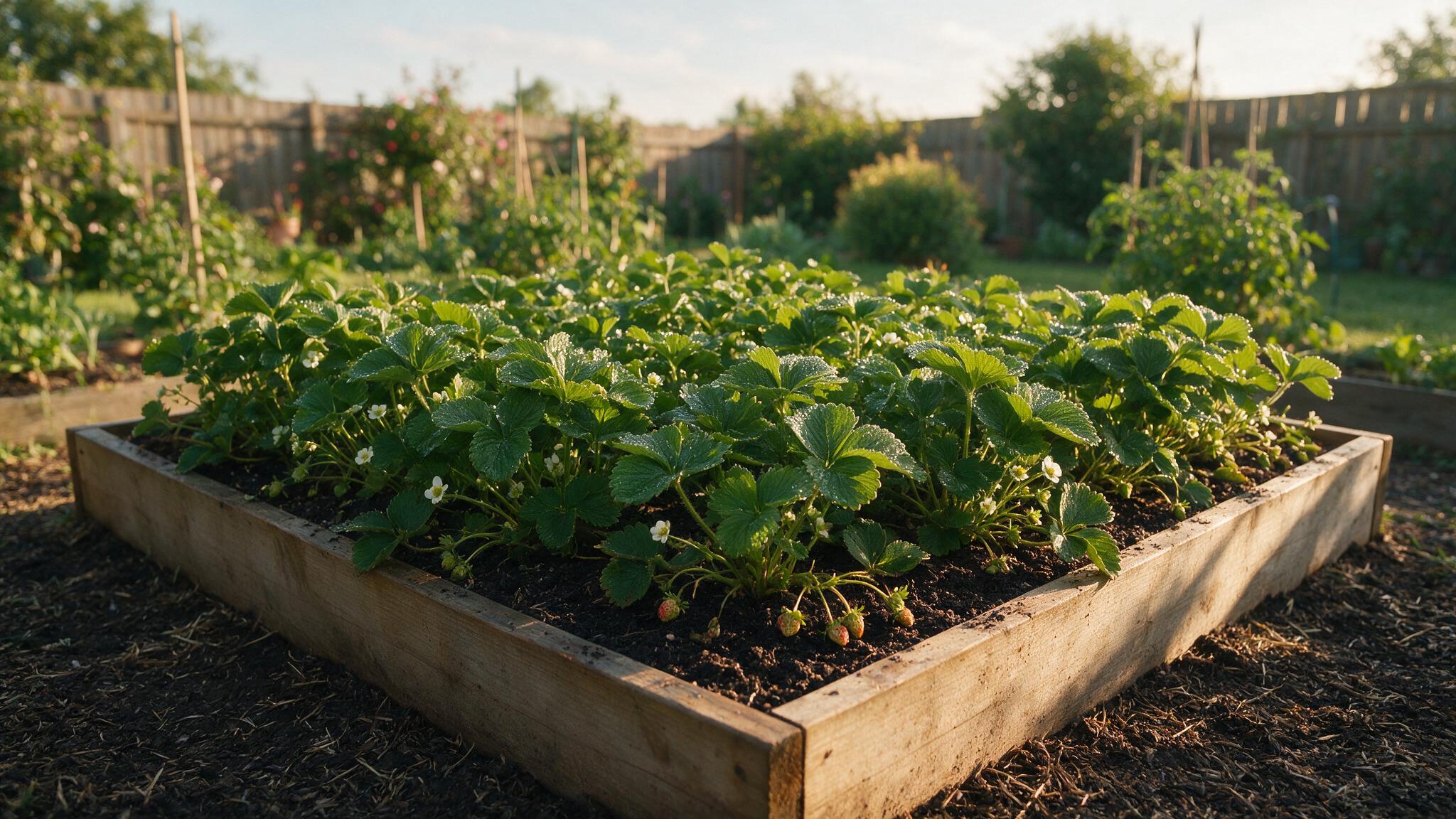
You planted your strawberry patch with high hopes, watered faithfully, and watched the green leaves spread — but the berries never came. It is one of the most common frustrations in home gardening across the United States, and the good news is that it is almost always fixable.
Strawberry plants (Fragaria × ananassa) are relatively forgiving, but fruit production is the first thing to suffer when something is even slightly off. Whether your plants are flowering with nothing to show for it, or skipping blooms altogether, this guide walks you through every likely cause and the practical steps to turn things around.
What Does It Mean When Your Strawberry Plants Are Not Producing?
“Not producing” can mean a few different things, and pinpointing which category you are in makes troubleshooting much easier. Some gardeners have plants with lush foliage but zero flowers. Others see plenty of blooms that never set fruit. A third group gets tiny, misshapen berries that dry up before ripening.
The cause could be an environmental issue, a cultivation problem, or something as simple as timing. Each scenario points to a different fix, so it helps to take a step back and observe what is actually happening before reaching for a fertilizer bag or a watering can.
The three most common patterns are:
- No flowers at all — usually tied to excess nitrogen, too little sunlight, or plant age
- Flowers but no fruit — most often a pollination or temperature problem
- Small, aborted fruit — typically caused by heat stress, poor pollination, or inconsistent watering
Understanding which pattern you are dealing with narrows your diagnosis significantly before you even look at the soil.
Is Not Producing in Strawberry Plants Always a Sign of a Problem?
Not always. Sometimes the absence of fruit is completely normal and expected based on the variety you planted and where you are in the growing season.
Many varieties of strawberry, especially June-bearing varieties, do not produce fruit in their first year. Instead, they focus their energy on getting larger and putting out runners, and sometimes growing flower buds for the next year. So if your strawberries are still in their first year of life, they could flower but will not produce any fruits.
If you have June-bearing strawberries and it is already mid-summer, that could explain why your plants are flowering but not producing fruit. The plants might still flower but lack the energy to produce more fruit. June-bearing varieties often produce flower buds in the late summer or early fall. These buds stay on the plant over winter and then bloom in early spring, eventually turning into berries.
Pro Tip: Before troubleshooting, identify your strawberry type. June-bearing varieties produce one concentrated crop in early summer. Everbearing types fruit in spring and fall. Day-neutral varieties like Albion and Seascape produce throughout the season regardless of day length. Expecting year-round fruit from a June-bearer is a setup for disappointment.
Strawberry plants are perennial, but fruit yield decreases as the plants age. Strawberry plants can produce a good crop for at least five years. That said, horticulturist Faith Redcay of Longwood Gardens recommends replacing your plants every two to three years for the most abundant harvest.
Watering Issues Causing Strawberry Plants to Stop Producing
Water is one of the most underestimated factors in strawberry fruit production. Both too much and too little can shut down fruiting, but for different reasons.
Although strawberries can still be overwatered, the problem more often tends to be underwatering. Strawberries have very shallow root systems, which usually only extend a few inches into the soil. The top few inches of soil tend to dry out fairly quickly, which means strawberries may need more frequent watering than other plants.
Keep your soil consistently moist, but never soggy, to promote healthy, juicy fruit. Watering is especially important from the time flowers appear until fruit ripens, about four weeks later. During normal weather conditions, strawberries need water equal to 1 to 1.5 inches of rain each week. Container-grown plants often need daily watering in warm weather.
Overwatering is just as damaging. Waterlogged soil reduces the efficiency of nutrient uptake. When the roots are deprived of oxygen, they cannot absorb essential nutrients like potassium, nitrogen, and phosphorus effectively. This can stunt plant growth and lead to deficiencies that affect both the quality and size of your strawberries.
Root rot is the result of “wet feet” because the plant has been overwatered or the soil does not drain properly. If you notice yellowing leaves alongside a lack of fruit, waterlogged roots are often the culprit. Always water at the base of the plant, and water early in the day so that foliage dries well before nightfall.
Pro Tip: Use the finger test before watering. Push your finger an inch into the soil near the crown. If it feels dry at that depth, water deeply. If it still feels damp, wait another day. Consistent moisture — not constant wetness — is the goal.
Light Conditions Behind Strawberry Plants Not Producing
Sunlight is non-negotiable for strawberry fruit production. Strawberry plants thrive in full sun and yield less fruit in shady areas. To keep fruit production robust, plant strawberries in a location that receives at least eight hours of full sun each day.
If your strawberries are not producing, the cause is often not enough sunlight — less than 8 hours. Shade from fences, trees, or neighboring structures is a frequent culprit in suburban US gardens, where planting space is limited and sun patterns shift with the seasons.
Strawberry plants need access to adequate sunlight for photosynthesis and overall growth. Insufficient sunlight limits the plants’ ability to produce enough energy for fruiting. If the strawberry bed is located in a shaded area or if neighboring plants obstruct the sunlight, it can contribute to a lack of fruit.
If you are growing in containers, you have an advantage here — you can move pots to follow the sun. In-ground beds are trickier. Consider whether nearby trees or shrubs have grown larger since you first planted, gradually stealing the light your strawberries need. You can learn more about matching plants to their light needs in this guide to best houseplants for low-light areas, which illustrates just how much light requirements vary between species.
Soil, Nutrients, and Root Health Causing Strawberry Plants to Stop Producing
Soil quality is one of the most common — and most overlooked — reasons strawberry plants fail to fruit. Getting this right is foundational to everything else.
Soil pH
Strawberries thrive in well-draining, slightly acidic soil with a pH range between 5.5 and 6.5. Loamy soil enriched with organic matter, such as compost or aged manure, is ideal for promoting healthy root development and fruit production. According to Cornell University’s horticulture department , a soil pH of 6.2 is considered optimal for strawberries.
If soil pH strays outside the ideal range, key nutrients will not release to the strawberry plants. This results in stunted growth and little to no fruit. A simple soil test from your local cooperative extension office can confirm your pH and recommend the right amendment — lime to raise pH, sulfur to lower it.
The Nitrogen Trap
Excess nitrogen fertilizer pushes plants to produce lush, green foliage at the expense of flowers and fruit. According to UC ANR, over-fertilization is a common cause of poor strawberry production. This is one of the most common mistakes US home gardeners make — using an all-purpose, high-nitrogen lawn fertilizer on their strawberry patch.
If you see lots of healthy leaves but no flowers, your plants probably have enough nitrogen and phosphorus but lack potassium. Potassium aids the movement of water and sugars in plants and is necessary for flower and fruit development. Try applying a quick-release potassium-rich fertilizer.
Strawberries need a fertilizer that contains little to no nitrogen, as nitrogen leads to heavy leaf growth and little or no fruit. Phosphorus and potassium support vigorous root growth and abundant, tasty, sweet fruit. Look for a fertilizer labeled 0-10-10 or a berry-specific blend at your local garden center.
Soil Structure and Drainage
When strawberries are grown in heavy, compacted soil or dense clay, they may be too stressed to properly flower and fruit. Their roots need plenty of drainage and organic matter to get established and sustain berry production through the summer.
According to the University of Minnesota Extension , for many soil types, yields are more frequently reduced from lack of water, poor soil drainage, and poor soil physical properties than from a lack of fertilizer. Amending with compost and ensuring raised beds or mounded rows drain freely goes a long way.
You should also avoid planting strawberries where tomatoes, peppers, eggplants, or potatoes have grown in the past three years. To prevent strawberries from becoming infected by the soil-borne disease verticillium wilt, avoid planting in an area where you have grown tomatoes, peppers, eggplants, potatoes, raspberries, or melons within the last three years.
Environmental Stress Triggering Strawberry Plants Not Producing
Strawberries are sensitive to temperature extremes at both ends of the thermometer, and US gardeners from Minnesota to Florida deal with very different environmental challenges.
Frost Damage
According to Marvin Pritts, professor of horticulture at Cornell University, “The most common cause of insufficient fruiting in strawberry plants is frost during the flowering stage, which can kill the reproductive parts of the flowers that would later develop into fruit.” A sign of frost damage is a black, rather than yellow, flower center.
Check the USDA hardiness zone map to learn your region’s first and last frost date, especially once your strawberries start flowering. Cover your plants with a floating row cover to protect them from unexpected spring frosts. A good rule of thumb is to use frost protection if temperatures dip below 37 degrees Fahrenheit. One layer of frost cover can raise the temperature about 3 degrees Fahrenheit.
Heat Stress
Strawberries thrive in temperatures between 60°F and 80°F. Extreme heat can cause flowers to drop, while frost can damage blossoms, both of which can significantly reduce fruit yield.
Strawberry flowers need bee activity and moderate humidity (40–70%). When temperatures exceed 85°F for several days, pollen viability drops significantly. The ovary does not swell, and the tiny fruit desiccates. This is a particular issue in the South and Southwest during summer. Provide afternoon shade with a 30% shade cloth during heat waves. Hand-pollinate with a small paintbrush in the morning by tapping inside each flower. Ensure consistent soil moisture not just at the surface but 6 inches deep. Mulch with straw to keep the root zone cool.
Wrong Variety for Your Region
When specialized cultivars are developed for specific regions, buying a strawberry developed for Michigan growers, for example, may not grow well in southern Florida. When the plants do not thrive, they often do not fruit. Always buy varieties recommended for your USDA hardiness zone from a local nursery or your state’s cooperative extension service.
Key Insight: Runner management also affects fruit production. According to Faith Redcay of Longwood Gardens, strawberry plants produce prolific amounts of spreading stolons — horizontal stems that grow from the main plant and produce new plants on their nodes. Cut and train stolons into a streamlined row to allow the plant to concentrate its energy on fruit production instead of vegetative growth.
Pests and Disease Leading to Strawberry Plants Not Producing
Quite a few pests and diseases can affect strawberry plants and interfere with the natural production of fruit. The tricky part is that many of these problems cause damage before you notice a drop in yield.
Common Pests
Common strawberry pests include slugs, spittlebugs, strawberry clipper weevils, and tarnished plant bugs. Tarnished plant bugs and Lygus bugs are especially damaging because they feed on the flowers and developing fruits, leading to distorted berries or no fruit at all.
Check plants regularly for signs of pests like chewed leaves, damaged fruit, or discoloration, says Redcay. Because pests hide on common backyard weeds like dandelions, she advises keeping your garden free of weeds and debris to help prevent infestations.
Aphids are another concern. Clusters of small, soft-bodied insects on new growth, sticky residue on leaves, and curled or distorted new leaves are signs of aphid presence. Aphids rarely kill strawberry plants but can spread viral diseases and weaken plants. A strong spray of water or an application of neem oil handles most aphid problems early on.
Fungal Diseases
Strawberries are susceptible to several diseases that can affect fruit production, including gray mold, powdery mildew, verticillium wilt, and fusarium wilt. Common signs of disease in strawberries include stunted growth, discoloration, blotches on fruit, curling or scorched leaves, and powdery or fuzzy growth.
Gray mold (Botrytis) and powdery mildew are the most common fungal issues for home gardeners. Fungal diseases can be a potential issue. Try to keep plant foliage as dry as possible to prevent or alleviate this issue. Adjusting airflow around your plants can make a big difference.
Anthracnose is a serious concern in warm, humid parts of the US. According to a study published by the National Institutes of Health , anthracnose diseases, caused by Colletotrichum spp., are considered among the most destructive diseases affecting strawberry production globally and can cause up to 70% yield loss in North America.
To prevent diseases from impacting your strawberries, Redcay recommends choosing disease-resistant cultivars. Many modern varieties bred for the Southeast and Pacific Coast come with built-in resistance to the most common fungal threats.
How to Diagnose Why Your Strawberry Plants Are Not Producing
Good diagnosis means working through the problem systematically rather than guessing. Use this step-by-step approach to identify the root cause before making any changes.
- Identify your variety and its fruiting season. Confirm whether you have a June-bearing, everbearing, or day-neutral type. If it is a June-bearer and it is July, the season is simply over.
- Check plant age. Strawberry plants decline after 2 to 3 years, producing fewer berries and smaller fruit. If your plants are older than three years, age may be the primary issue.
- Assess sunlight hours. Use a sun calculator app or simply observe the bed at 2-hour intervals throughout the day. Anything under 6 hours of direct sun is a red flag.
- Inspect the flowers. Are there flowers? Do the centers look yellow (healthy) or black (frost-damaged)? Are flowers forming but fruit aborting as tiny brown nubs?
- Check for pollinators. Sit near the patch for 10 minutes on a warm morning. Are bees visiting? According to North Carolina State University Extension, self-pollination and wind will only cause 60% to 70% of maximum pollination, so bee activity matters.
- Test your soil. A basic soil test from your county extension office costs very little and tells you pH, nitrogen, phosphorus, and potassium levels. This one step eliminates a huge amount of guesswork.
- Examine leaves and crowns. Look for discoloration, spots, powdery coatings, or wilting that could indicate disease or pest pressure.
- Review your fertilizer history. If you have been using a high-nitrogen fertilizer, that is likely pushing leafy growth at the expense of fruit.
You can also use a plant identification app or a plant ID app for Android to help identify pest or disease symptoms you cannot immediately recognize.
How to Fix a Strawberry Plant That Is Not Producing
Once you have identified the cause — or narrowed it down to two or three possibilities — these targeted fixes will get your plants back on track.
Fix Pollination Problems
One solution is to plant attractive flowers near your strawberries. Plant some other flowering plants or trees in your garden near your strawberries to attract more bees. That way, the bees have more reasons to stop by and will hopefully pollinate the strawberries while they are in the area. Marigolds, alyssum, phacelia, and calendula are all excellent pollinator magnets.
Another solution is to use an electric toothbrush on each of the flowers on your strawberry plant. This vibration simulates a bee’s vibrating wings and will cause the male part of the flower to release pollen onto the female part. Although not as efficient as having a strong bee population, it is best to repeat this process every day or two for the best possible strawberry yield.
Correct Nutrient Imbalances
If you have been over-applying nitrogen, you may be able to save over-fertilized plants by overwatering them for a few days to flush out the extra fertilizer. Repotting or transplanting may also help the situation. Going forward, switch to a low-nitrogen, high-phosphorus and potassium blend — a 0-10-10 ratio is ideal during the fruiting phase.
If your soil pH is off, add lime or dolomite to raise soil pH if it is too acidic (below 5.5). Increasing calcium content by mixing in wood ash or bone meal is another effective solution. For pH that is too high, work elemental sulfur into the soil well before planting season.
Improve Watering Practices
Set up a drip irrigation system if you can — strawberry plants require a continuous supply of water during periods of active growth, and drip irrigation is the most efficient method for slowly applying small amounts of water directly to the strawberry plant’s root zone during the pre-bloom, bloom, and harvest period.
If drip irrigation is not practical, water deeply at the base of the plant, avoid wetting the foliage, and mulch around the crowns with straw to retain moisture and regulate soil temperature.
Manage Pests and Disease
Sometimes you can manage pest issues by manually removing pests. You can apply homemade pest controls such as neem oil sprays to reduce pest numbers. For fungal diseases, remove affected foliage promptly, improve airflow by thinning crowded plants, and avoid overhead watering. If disease is severe, a copper-based fungicide or a product labeled for gray mold can help.
Renovate or Replace Old Plants
Replace plants older than 4 years — peak yield is years 2 to 3. After the harvest season, renovate June-bearing beds by mowing off old foliage, thinning plants to 6 inches apart, and applying a post-harvest nitrogen application to fuel runner production and next year’s flower buds.
How to Prevent Strawberry Plants from Not Producing Going Forward
Prevention is far easier than correction. Building good habits into your routine each season keeps your strawberry patch consistently productive.
| Preventive Action | When to Do It | What It Prevents |
|---|---|---|
| Soil test | Before planting; every 2–3 years | pH imbalance, nutrient deficiency |
| Choose region-appropriate varieties | At purchase | Climate mismatch, low yield |
| Plant in full sun (8+ hours) | Site selection | Low energy for fruiting |
| Use low-nitrogen fertilizer during fruiting | Spring through harvest | Excess foliage, no fruit |
| Apply floating row cover during frost | When temps drop below 37°F in spring | Frost-damaged blossoms |
| Trim runners regularly | Throughout the growing season | Energy diverted from fruit |
| Replace plants every 2–3 years | Fall or early spring | Age-related yield decline |
| Plant pollinator-attracting flowers nearby | At planting; each spring | Poor pollination |
| Water 1–1.5 inches per week | Throughout the growing season | Drought stress, root rot |
| Inspect plants weekly for pests and disease | Spring through fall | Unchecked infestations |
As new plants settle in, pinch off flowers that appear the first two weeks or so. This helps focus growth on roots instead of fruits while strawberries get established — and you will enjoy better harvests later on. This single habit, though counterintuitive, pays dividends in year two and beyond.
Keeping your garden healthy overall also protects strawberries. Weeds compete with strawberry plants for water, nutrients, and light. Plus, weeds often harbor insect pests and diseases. A weed-free bed is one of the simplest preventive measures you can take. If you grow other plants nearby, understanding which plants work well together — and which do not — can also protect your strawberry patch. Our guide on companion planting with tomatoes covers some of the same soil-health principles that apply to strawberries.
Finally, consider your broader garden environment. Some gardeners deal with wildlife pressure from deer, birds, and rodents eating their fruit before harvest. Deer-tolerant plant choices for the surrounding garden can reduce overall wildlife traffic near your strawberry patch, and physical barriers like bird netting are often the most reliable protection for the berries themselves.
FAQ
Why Are My Strawberry Plants Producing Runners but No Fruit?
This usually means the plant is channeling energy into vegetative spread rather than reproduction. It is common in first-year plants and in plants receiving too much nitrogen. Trim the runners, reduce nitrogen, and ensure the plant gets at least 8 hours of sun daily. Many everbearing and day-neutral varieties such as Albion, San Andreas, and Seascape have been bred to prioritize fruit over runners, so if you want more berries and fewer runners, these are worth trying.
How Many Hours of Sun Do Strawberries Need to Produce Fruit?
Choose a planting site that gets at least six to eight hours of full direct sun each day — ten hours or more is even better. The more sun your plants get, the more fruit they will produce. Afternoon shade in midsummer is tolerable in hot climates, but morning sun is non-negotiable.
Can I Hand-Pollinate Strawberries?
Yes, and it works well. You can hand-pollinate strawberry flowers by rubbing a paintbrush around in each blossom. An electric toothbrush is even more effective because its vibration mimics a bee’s wingbeat, shaking pollen loose onto the stigma. Do this in the morning when flowers are fully open and repeat every couple of days during the bloom period.
Should I Remove Flowers from First-Year Strawberry Plants?
Pinch off flowers that appear the first two weeks after planting. This helps focus growth on roots instead of fruits while strawberries get established, and you will enjoy better harvests later on. For June-bearing varieties, many experienced gardeners remove all first-year flowers to build a stronger plant for the following season.
What Fertilizer Should I Use to Get Strawberries to Fruit?
Avoid high-nitrogen fertilizers once plants are established. In general, use a balanced 12-12-12 NPK slow-release fertilizer or compost at the beginning of the growing season for optimum strawberry plant health. Once flowering begins, switch to a low-nitrogen, high-potassium blend. Potassium is the nutrient most directly tied to flower and fruit development.
Why Do My Strawberry Flowers Turn Brown and Fall Off?
Brown flower centers that drop off are the classic sign of frost damage. According to Professor Marvin Pritts of Cornell University, frost during the flowering stage “can kill the reproductive parts of the flowers that would later develop into fruit.” If temperatures are dropping below 37°F while your plants are in bloom, use floating row cover to protect them overnight.
How Old Is Too Old for a Strawberry Plant?
Strawberry plants decline after 2 to 3 years, producing fewer berries and smaller fruit. While a well-maintained plant can survive longer, peak production happens in years two and three. If your plants are four years or older and producing poorly despite good care, replacing them with fresh transplants is the most practical solution. You can explore a wide range of plant types to diversify your garden while you wait for new strawberry plants to establish.